
How to Get Orbeez Out of a Sink Drain Quickly and Safely
To quickly and safely remove Orbeez from a sink drain, first turn off the water and block the drain to prevent further swelling. Wear gloves and use a flashlight to locate visible beads. You can either remove the stopper or P-trap for manual retrieval or use tools like needle-nose pliers, a Zip-It tool, or a wet/dry vacuum with a rag for sealing. Afterward, gently flush with cold water to shrink any remaining beads. Avoid using hot water or harsh chemicals, as they may worsen the clog. Follow these steps for effective removal and prevention tips.
What to do immediately when Orbeez go down the sink
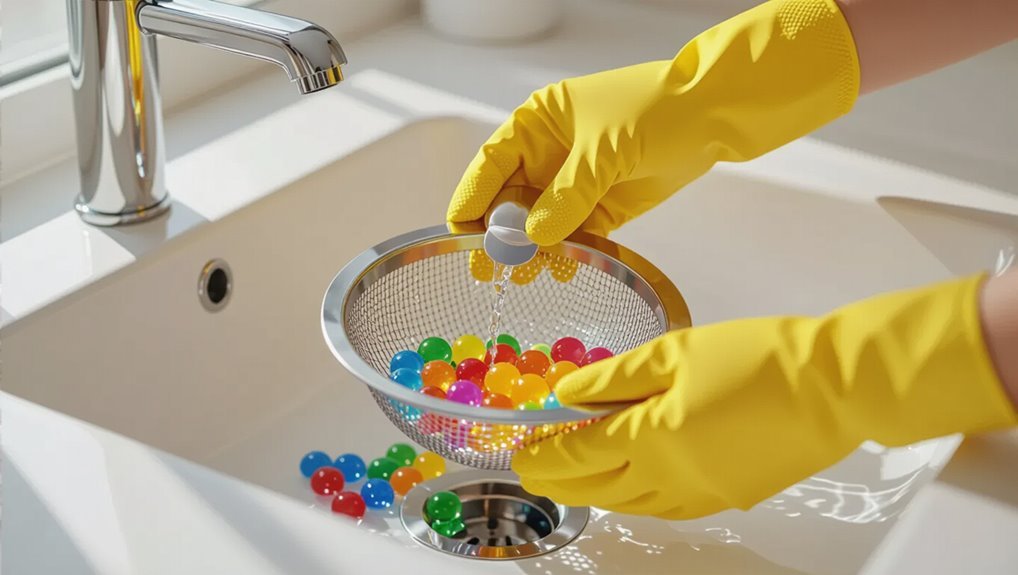
First, a quick safety checklist should be observed: turn off water, wear gloves, and keep chemicals away.
Next, act quickly to prevent Orbeez from swelling further by stopping water flow and removing standing beads.
Finally, prepare simple tools or call for help before attempting extraction to avoid pushing beads deeper.
Quick safety checklist before attempting removal
If Orbeez are seen or suspected to have entered a sink drain, the immediate priority is to stop further movement and protect plumbing and household occupants: assess presence visually, halt water use, warn others, and remove pets or children from the area.
Gather gloves, a flashlight, pliers, and a bucket. Note chemical cleaners are avoided.
Keep instructions on how to get Orbeez out of sink drain ready.
Fast actions to prevent further clogging
Stop all water flow immediately and block the drain opening with a dry cloth or suction cup to prevent Orbeez from moving deeper into the plumbing.
Then turn off nearby faucets, remove standing water with a shallow cup, and avoid running garbage disposals or plungers that could push beads further.
Call a plumber if beads remain unseen, or proceed with gentle manual extraction using gloves and tweezers.
How Orbeez behave in drains and why they’re problematic
Orbeez are superabsorbent polymer beads that swell by absorbing water and can shrink again when dehydrated, so their size in a drain changes with moisture.
Temperature and water pressure influence that behavior: warm water and higher pressure speed swelling and movement, while cold or low-flow conditions can leave beads smaller and more likely to lodge.
They commonly catch on trap bends, strainer baskets, and U‑bend junctions, where repeated swelling can cause partial or complete blockages.
What Orbeez are made of and how they expand/shrink
Hydrogel beads are composed of superabsorbent polymers—usually sodium polyacrylate—that soak up water and swell to many times their dry size.
In drains, absorbed water causes beads to soften and enlarge, creating jams and resisting flushes. When dehydrated they shrink and harden, becoming brittle but still obstructive.
Their elasticity and water retention make removal difficult without mechanical extraction or dissolving agents.
How water temperature and pressure affect Orbeez
Building on how hydrogel beads change size with hydration, water temperature and pressure further determine their behavior in drains and explain why they cause persistent blockages.
Warm water softens and slightly expands beads, increasing adherence to pipe walls; cold water contracts them but can make them firmer and lodged.
High pressure can push beads deeper; low flow allows accumulation, both promoting obstruction and complicating removal.
Common drain types and parts where Orbeez can lodge
Drain systems vary by fixture and design, and each has distinct traps, strainers, and pipe connections where expanding polymer beads can become trapped.
Common lodging points include sink strainers, pop-up assemblies, P-traps, tailpieces, and narrow trap arms.
Orbeez swell, stick to surfaces, and cluster at bends or joints, causing partial clogs, reduced flow, and difficult retrieval without disassembly.
Step-by-step methods to remove Orbeez from a sink drain
The following section outlines practical, ordered methods to remove Orbeez from a sink drain, starting with the least invasive options and progressing to more involved steps.
Each method targets common blockage locations and uses readily available tools or simple plumbing access. Readers should choose an approach based on the drain configuration and personal comfort with basic tools.
- Manual retrieval from the pop-up stopper or drain cover.
- Using pliers or a drain-pickup tool (zip-it) to extract beads.
- Employing a wet/dry vacuum to suck Orbeez from the drain.
- Flushing with cold water to shrink beads or removing the P-trap for direct access.
Method 1 Manual retrieval from pop-up stopper or drain cover
Begin by removing the sink’s pop-up stopper or unscrewing the drain cover to gain direct access to trapped Orbeez. This straightforward step lets one visually locate and reach the beads for manual retrieval.
Wearing gloves, grasp visible Orbeez individually, using a flashlight for depth. Collect beads in a container, inspect the drain for residue, and rinse the stopper before reassembly.
Method 2 Use pliers or a drain pickup tool (zip-it) safely
Use pliers or a flexible drain pickup tool (often called a Zip-It) to reach and extract Orbeez lodged beyond the pop-up stopper without disassembling the drain.
Wear gloves, insert tool gently, hook and withdraw beads slowly to avoid pushing them deeper.
Use steady light pressure; repeat until clear.
Sanitize the tool afterward and run water to confirm flow restoration.
Method 3 Using a wet/dry vacuum to extract Orbeez
Employ a wet/dry vacuum to pull Orbeez from the drain when manual reach tools can’t retrieve beads lodged deeper in the pipes.
Seal around the drain with a damp rag or adapter, set vacuum to liquid mode, and use a narrow hose attachment.
Run brief suction bursts, checking collected debris.
Empty tank outdoors and repeat until no beads appear.
Turn off and clean equipment.
Method 4 Flushing with cold water to shrink beads (when safe)
If suction fails to reach deeply lodged Orbeez, shrinking the beads with cold water can make them small enough to wash through the trap or be flushed further down the line where they can be caught or dissolved.
Apply a steady stream of cold tap water for several minutes, monitor flow and backup, avoid hot water or drain cleaners, and stop if drainage worsens or leaks appear.
Method 5 Removing P-trap to access and clear trapped Orbeez
Disconnecting the P-trap provides direct access to the section of drain where Orbeez most often collect, allowing for straightforward removal without forcing beads further into the plumbing.
Wear gloves, place a bucket beneath, loosen slip nuts, and carefully remove the trap.
Retrieve beads and rinse the trap.
Inspect for residual fragments, reassemble seals snugly, and run water to confirm clearance.
Method 6 Using a snake/auger for deeper blockages
After removing the P-trap and clearing visible beads, a plumbing snake (auger) becomes the next tool for reaching Orbeez lodged further down the drain line.
Insert a coated snake gently, feed while rotating to snag gel masses, then retract slowly. Repeat until clear.
Flush with hot water to confirm flow. Sanitize tools and inspect the drain for remaining residues.
Method 7 When and how to use enzymatic drain cleaners (safe options)
Consider enzymatic drain cleaners when mechanical methods can’t reach soft gel residues: these products contain bacteria or enzymes that break down organic matter and some bio-based gels without harsh chemicals, making them safer for pipes, septic systems, and finished surfaces than caustic or solvent cleaners.
Choose a labeled enzyme cleaner, follow dwell time, keep drains warm and moist, repeat as directed, and flush with hot water.
Tools and supplies you’ll need
The article lists the basic hand tools and protective gear required for safe removal, such as gloves, pliers, and a flashlight.
It then covers recommended drain tools and common household items that can help retrieve Orbeez, including a drain snake, tweezers, and a wet/dry vacuum.
Finally, it warns which chemical products to avoid to prevent damage to plumbing and the environment.
Essential hand tools and protective gear
Gathering the right hand tools and protective gear prevents injury and speeds removal when Orbeez clog a sink drain.
Gloves protect hands from residue; safety glasses shield eyes from splashes; a flashlight reveals trapped beads; a small container holds removed Orbeez.
Visualize tools ready and worn before work begins.
- Nitrile gloves
- Safety glasses
- Flashlight
- Small container
Recommended drain tools and household items
Several basic drain tools and common household items will speed removal and reduce the risk of pushing Orbeez further into the plumbing.
Recommended supplies include small handheld tools and containment materials for safe extraction.
- Needle-nose pliers for gripping individual beads.
- Zip-top bags to contain removed Orbeez.
- Wet/dry vacuum with narrow nozzle.
- Plastic drain snake or dental pick for maneuvering.
What chemical products to avoid
Any household chemicals that react with superabsorbent polymers or corrode plumbing should be avoided when removing Orbeez from a sink drain.
Strong acids, concentrated alkalis, drain cleaners with sodium hydroxide, and bleach mixtures can damage pipes and create hazardous reactions.
Solvents and oil-based cleaners may not dissolve beads and complicate cleanup.
Use mechanical removal and mild, neutral cleaners instead.
How to protect plumbing while removing Orbeez
Careful handling preserves sink finishes and seals when extracting Orbeez. Techniques such as using plastic tools, soft cloths, and gentle prying reduce the risk of scratching or dislodging components.
If water seepage appears, fittings are corroded, or removal requires excessive force, stopping and calling a plumber is advised.
Techniques to avoid scratching or damaging sink components
How can one remove Orbeez without harming the sink or its fixtures?
Use soft, nonabrasive tools—plastic picks, silicone-tipped tweezers, and rubber-tipped pliers—to extract beads.
Protect surfaces with microfiber cloths and painter’s tape over metal edges.
Avoid metal scrapers and abrasive pads.
Work slowly to prevent chipping finish, and rinse gently to flush residual particles without force that could rub or scratch components.
How to prevent leaks when removing the P-trap
Loosen the slip nuts slowly and support the P-trap to prevent sudden shifts that can dislodge seals or spill water; before loosening, place a bucket beneath the trap, close nearby drains, and wrap threads with plumber’s tape or a clean rag to catch drips and protect finishes.
Inspect washers, loosen joints evenly, and keep spare gaskets and a towel handy to reseal connections promptly after removing Orbeez.
Signs you should stop and call a professional
When warning signs appear during removal, it is time to pause and seek professional help.
If drains back up, water leaks persist, pipes crack or fittings strip, or tools cannot reach obstructions, stop.
Persistent odors, slow drainage after attempts, or visible corrosion indicate risk.
A licensed plumber can assess damage, prevent flooding, and safely extract Orbeez without worsening pipe integrity.
When removal attempts fail: deciding to call a plumber
If DIY methods fail, a professional can identify persistent clogs and hidden buildup that home tools miss.
The homeowner should note what was tried, how long the blockage has persisted, and any unusual sounds or smells to help the plumber diagnose the issue quickly.
Expect a range of service options and fees—from a flat call-out charge for inspection to hourly rates or fixed prices for repairs—so obtaining an estimate before work begins is advisable.
Troubleshooting persistent clogs and hidden buildup
Persistent obstructions and hidden residue can persist despite thorough DIY efforts, signaling the need for professional assessment.
A plumber brings specialized tools and diagnostic experience to locate lodged Orbeez, inspect trap and pipe integrity, and address buildup that home methods can miss.
They evaluate risks of pipe damage, determine whether mechanical removal, hydro-jetting, or targeted cleaning is appropriate, and provide a timeline and cost estimate.
What to tell the plumber to speed repairs
After multiple DIY efforts and a professional assessment indicating lodged Orbeez or stubborn residue, contacting a plumber requires clear, specific information to speed repairs.
Provide placement (kitchen/bath), visible symptoms (slow drain, gurgling, odor), prior actions taken (snaking, plunging, chemicals), size and color of beads, and whether traps were removed.
Note any fragile fixtures or recent plumbing work.
Estimated costs and service options
Several factors determine the likely cost and service path when Orbeez removal requires a plumber: location of the blockage (sink, basin, or further in the trap), severity and accessibility of the obstruction, whether video inspection or removal of the trap and pipe sections is needed, and local labor rates.
Typical options range from brief service calls to camera inspection and partial pipe replacement.
- Small trap cleanout
- Camera inspection
- Trap removal and reassembly
- Sectional pipe repair/replacement
Preventing future Orbeez drain incidents
Preventing future Orbeez drain incidents focuses on practical steps to reduce risk.
Recommended measures include safe play practices and secure storage, installing drain guards or strainers, and supervising or limiting access for children and pets.
Implementing these precautions can markedly lower the chance of spills and clogged drains.
Safe play practices and storage suggestions
Many caregivers and supervisors can reduce Orbeez-related plumbing issues by establishing clear play rules and consistent storage habits; designate specific containers or play mats for Orbeez activities, require supervision for young children, and prohibit use near sinks, toilets, or drains.
Storage should be labeled, sealed, and out of reach.
Suggested visuals:
- Small plastic tray with edges
- Clear lidded bin on shelf
- Supervised play at table
- Empty catch basin for cleanup
Installing drain guards and strainers
A simple drain guard or strainer provides an effective first line of defense against Orbeez entering household plumbing.
Homeowners should choose fine-mesh covers sized to sinks, tubs, and floor drains, install them securely, and clean debris regularly.
Removable models allow quick maintenance; permanent inserts require occasional inspection.
Consistent use reduces clog risk and simplifies cleanup after play sessions.
Child and pet safety tips with Orbeez
When supervising Orbeez play, caregivers should set clear rules and designated play areas to keep beads away from sinks, toilets, and floor drains.
Portable play trays or shallow bins provide controlled containment and make collection easier.
Store Orbeez in sealed containers out of children’s and pets’ reach.
Supervise young children, teach not to flush or pour beads, and promptly clean up spills to prevent ingestion and drainage clogs.
Common mistakes and risks to avoid during cleanup
Cleanup should proceed cautiously to avoid worsening a blockage or damaging plumbing.
Pouring boiling water or harsh drain cleaners can warp pipes or cause Orbeez to swell and bind, while poking with inappropriate tools risks pushing beads farther down or scratching the drain.
The following images help illustrate common pitfalls to avoid.
- A bottle of chemical drain cleaner being poured and steam rising.
- A plunger pressed hard, beads compacting below the surface.
- A metal coat hanger forced into the drain, pushing particles deeper.
- A cracked PVC joint from thermal stress after hot-water application.
Why pouring hot water or harsh chemicals can make things worse
Although hot water and strong chemicals may seem like quick fixes, they can worsen a clogged drain by causing Orbeez to swell further, loosen pipe seals, or react with residual cleaners to produce corrosive byproducts.
These outcomes increase obstruction, damage plumbing materials, and create hazardous fumes or residues that complicate safe removal.
Instead, mechanical extraction with gentle tools and controlled flushing minimizes swelling and chemical hazards.
Dangers of forcing Orbeez deeper with inappropriate tools
Forcing Orbeez deeper into a drain with inappropriate tools — such as narrow, rigid rods, pressurized sprays, or blunt hooks — risks compacting the gel beads against pipe walls or into traps, making extraction far harder and potentially causing permanent blockages.
Attempting to push, jab, or blast them can damage seals, deform PVC, spread beads into lateral lines, and necessitate costly professional repairs.
Quick troubleshooting guide for related problems
A concise troubleshooting section helps identify and fix issues that can follow Orbeez blockages. The quick symptom-to-action table below highlights steps for slow drains, odors, and leaks to speed recovery. Refer to each row for targeted actions and safety notes.
| Symptom | Likely Cause | Recommended Action |
|---|---|---|
| Slow drain | Residual Orbeez fragments or soap buildup | Remove visible beads, flush with hot water, use a drain snake if needed |
| Foul odor | Trapped organic matter around beads | Clean U-bend, run enzyme cleaner, ventilate area |
| Leak under sink | Dislodged trap or damaged seal | Tighten fittings, replace worn washers, call a plumber if persistent |
Symptom-to-action table for slow drains, odors, and leaks
When a sink shows signs like slow drainage, persistent odors, or visible leaks, a short symptom-to-action table helps pinpoint likely causes and the next practical steps to take.
| Symptom | Action |
|---|---|
| Slow drain | Remove stopper, use plunger, inspect trap |
| Odor | Clean trap, flush with baking soda/vinegar |
| Leak | Tighten fittings, replace gasket or call plumber |
Conclusion
Immediate action prevents worsening clogs, yet some readers worry a quick attempt will damage pipes. Calmly, the sensible steps outlined — shut off water, avoid chemical drain cleaners, use a bucket, plunger, zipper or snake, or remove the trap — minimize risk while targeting the squishy beads. If these fail, a professional plumber resolves persistent blockages safely. With precautions and patience, Orbeez can be removed without costly repairs or reckless shortcuts.