How to Get Pipe Dope Out of Clothes: Fast, Safe Stain-Removal Steps
To effectively remove pipe dope from clothes, act quickly. First, identify the fabric and check the care label. Blot any excess dope and gently scrape off solid residues. For washable fabrics, pretreat the stain with dish soap or a solvent-safe stain remover, rinse, and then launder on the hottest setting safe for the fabric. For delicate or dry-clean-only items, dab with a minimal amount of solvent and consult a professional cleaner. Always wear gloves and ensure good ventilation when using stronger solvents. If you need more detailed instructions, further guidance is available.
What Pipe Dope Is and Why It Stains Clothing
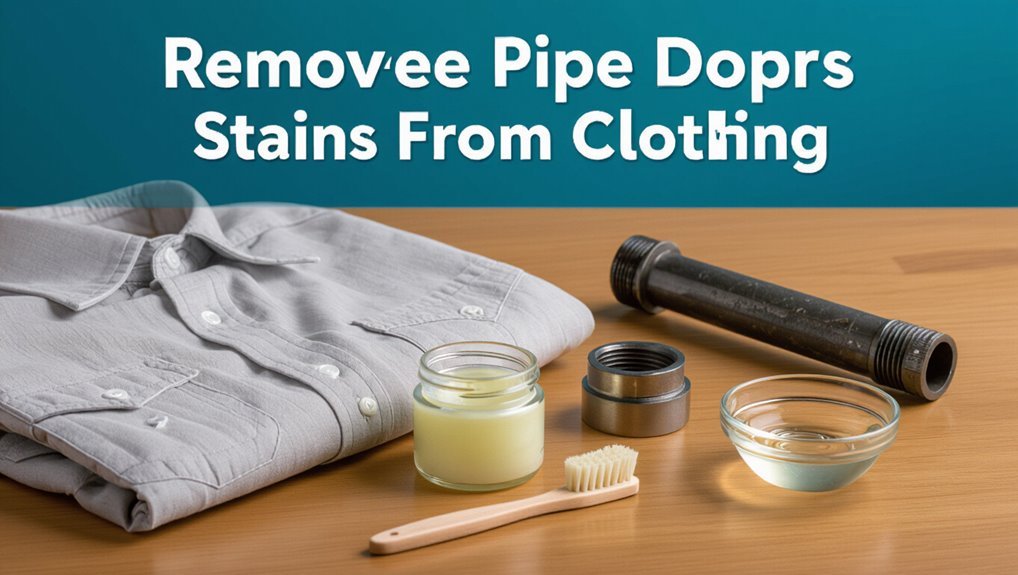
Pipe dope is a blend of oils, solvents, and fillers formulated to seal threaded pipe joints.
These ingredients interact differently with fabrics—oils and solvents penetrate natural and synthetic fibers at varying rates while fillers can leave gritty residues.
Stains typically appear dark and oily, often setting quickly if not treated promptly.
Common ingredients in pipe dope (oils, solvents, fillers)
A blend of oils, solvents, and particulate fillers gives pipe dope its sealing and lubricating properties, but those same components make it prone to staining fabric.
Typical oils (mineral or synthetic), volatile solvents, and clay or metal fillers create greasy, penetrating stains.
Understanding these ingredients helps readers focus on how to get pipe dope out of clothes using degreasers, solvent-safe pretreatment, and laundering.
How these components interact with different fabrics
Because its oils, solvents, and particulate fillers each interact differently with textile fibers, pipe dope can behave unpredictably across fabrics.
Natural fibers like cotton and linen absorb oils and may retain residues; wool and silk resist some solvents but can felt or discolor.
Synthetic fibers often repel water yet trap oily films.
Fillers abrade or embed in weaves, complicating removal.
Typical stain appearance and how quickly it sets
Oils, solvents, and mineral fillers in pipe dope typically produce dark, greasy smears with grainy edges that vary from faint translucent films to opaque black streaks depending on formulation and fabric.
Fresh stains appear glossy and spreadable; they darken as solvents evaporate and oils penetrate fibers.
Natural fibers absorb and set faster than synthetics, making prompt blotting and solvent treatment critical for removal.
Assessing the Stain Before Treatment
Before any cleaning begins, the fabric type and care label should be checked to determine acceptable treatments.
The stain should be evaluated to estimate whether the pipe dope is oil-based or water-soluble, since that influences solvent choice.
A small, inconspicuous colorfastness test with the chosen cleaner will confirm it is safe to proceed.
Identifying fabric type and care label instructions
When evaluating a pipe-dope stain, the first step is to identify the fabric and read its care label to determine safe cleaning methods.
Check fiber content—cotton, synthetics, wool, silk—and note temperature, bleach, and dry-cleaning symbols.
Use only recommended solvents and avoid heat on delicate fibers.
Document restrictions before applying any stain remover to prevent damage or color loss.
Determining pipe dope composition (oil-based vs. water-soluble)
Because the cleaner required depends on its base, the next step is to determine whether the pipe dope is oil-based or water-soluble.
Inspect the residue: oily, greasy feel and dark sheen suggest oil-based compounds; thinner, sticky or powdery residues often indicate water-soluble formulations.
Check product labels or available containers when possible, and note odor—solvent-like scents point toward oil-based products.
Testing for colorfastness and solvent safety
If the fabric’s dyes or finishes are not assessed first, cleaning agents can cause irreversible color loss or fabric damage.
A hidden test on an inconspicuous seam or hem verifies colorfastness: apply the chosen solvent or detergent, blot with a white cloth, wait a few minutes, and check for transfer or fading.
If dye migrates, select milder cleaners or seek professional help.
Quick Immediate Actions for Fresh Pipe Dope Stains
On fresh pipe dope stains, prompt actions—gentle blotting to remove excess and careful scraping of solids—can prevent the mark from setting.
The person should avoid heat, vigorous rubbing, and common mistakes like using colored cleaners that can spread the stain.
Keeping emergency supplies such as paper towels, a dull knife or spoon, stain remover, and a small container of cold water on hand speeds effective treatment.
Blotting and scraping: do’s and don’ts
Act quickly: for fresh pipe dope spills, gently blot excess with a clean, dry cloth rather than rubbing, which can push the paste deeper into fibers.
Use a dull edge or spoon to lift semi-solid residue—work from outer edges inward.
Do not scrub, smear, or press hard.
Dispose of contaminated cloths safely and proceed to appropriate stain-treatment steps promptly.
Items to avoid (heat, rubbing, common household mistakes)
Several common responses make fresh pipe dope stains worse: applying heat, vigorous rubbing, and household “quick fixes” like tossing the garment into a dryer or using powdered stain removers without testing.
Avoid ironing, hot water, and scrubbing that embeds residue deeper.
Do not mix cleaners (bleach plus ammonia) or delay treatment; these increase set-in risk and can damage fibers or colors.
Emergency supplies to have on hand
After noting what not to do, preparing a small emergency kit makes immediate, safe treatment far more likely to remove fresh pipe dope stains before they set.
Keep a compact kit ready:
- Nitrile gloves, disposable cloths, and a small brush for gentle lifting
- Mild dish soap, rubbing alcohol, and stain remover pens
- A sealable bag for contaminated clothing and used wipes
Step-by-Step Removal Methods by Stain Type
The following section outlines specific, step-by-step methods for removing pipe dope based on stain type and fabric care instructions.
It covers treating oil-based pipe dope on machine-washable items, handling delicate or dry-clean-only pieces, and safe use of solvent-based cleaners with recommended products and procedures.
Guidance on when enzymatic and surfactant cleaners are appropriate and how to apply them is also provided.
Removing oil-based pipe dope from washable fabrics
Identify the fabric and the stain type before attempting treatment: oil-based pipe dope requires different approaches depending on whether it is a fresh slick, a set greasy mark, or a crusted/particulate deposit.
For washable fabrics, blot excess, pretreat with dish soap or solvent-safe stain remover, rinse, then machine wash.
Visualize stages:
- Shiny wet smear on cotton
- Dull greasy ring on denim
- Flaky crust near seams
Removing oil-based pipe dope from delicate or dry-clean-only fabrics
Moving from washable items to more sensitive fabrics requires greater care and different techniques.
For delicate or dry-clean-only garments, blot excess dope, protect fibers, and consult a professional when uncertain.
When attempting at-home action, use minimal moisture and gentle agents; test inconspicuously first.
- silk tucked under a collar
- wool sleeve with faint sheen
- embroidered hem with tiny beads
Removing pipe dope with solvent-based cleaners (recommended products and procedures)
Begin by choosing a solvent-based cleaner suited to the pipe dope’s composition—typically mineral spirits, lacquer thinner, or a commercial adhesive remover—and verify fabric compatibility on an inconspicuous area.
Work in a ventilated space, blot excess, apply sparingly, and rinse solvent with mild detergent.
Recommended procedure includes:
- Dabbing with a clean white cloth
- Gentle agitation to loosen residue
- Air-drying away from heat
Using enzymatic and surfactant cleaners when appropriate
When oil- or protein-based pipe dope stains resist solvent treatment, enzymatic and surfactant cleaners offer a targeted alternative: enzymes break down organic binders while surfactants lift loosened particles into solution.
Apply per label, agitate gently, let dwell, then rinse and launder. Choose pH-safe formulas for fabric.
- amber enzyme gel seeping into fibers
- sudsy surfactant lifting residues
- damp cloth blotting away loosened matter
Homemade and Natural Remedies
Next, homemade and natural remedies are presented as practical first options for treating pipe dope stains.
The guide outlines a dish soap and baking soda paste for lifting residues, the timed use of cornstarch or talc to absorb fresh oily spots, and clear cautions plus proper application for vinegar and hydrogen peroxide.
Each method includes brief instructions and warnings about fabric sensitivity and colorfastness.
Dish soap and baking soda method
A simple paste of dish soap and baking soda offers an effective, natural way to lift pipe dope from fabric without harsh chemicals.
Mix equal parts liquid dish soap and baking soda to form a paste, apply to the stain, gently rub with a soft brush, let sit 10–15 minutes, then rinse and launder as usual.
Repeat if residue persists.
Cornstarch or talc for oil absorption (how to use and timing)
Several tablespoons of cornstarch or talcum powder can be used to draw oil-based pipe dope from fabric before washing.
Sprinkle generously, press gently to embed powder, and let sit 15–30 minutes to absorb oil.
Brush off residue and repeat if needed.
After most oil lifts, launder per garment care using a degreasing detergent; air-dry to confirm stain removal.
Vinegar and hydrogen peroxide cautions and usage
Many household stain-removal guides recommend vinegar and hydrogen peroxide as accessible, inexpensive options for breaking down and lifting oil-based pipe dope, but they require caution: both can discolor or weaken fabrics, especially dyed or delicate fibers.
Test inconspicuously first, dilute appropriately, and avoid mixing them together (risking chemical reactions).
Rinse thoroughly after treatment and launder per garment care instructions to remove residues.
Machine Washing and Post-Treatment Care
Before placing treated garments in the washer, the fabric should be rinsed to remove excess pipe dope and a commercial stain-removal pretreater applied to the affected areas.
Washing should follow label instructions using the hottest safe temperature, a heavy-duty detergent, and an extra rinse if available.
Garments must be inspected before drying; if any residue remains, repeat pretreatment and washing, since heat can set the stain permanently.
Pre-treatment rinsing and stain-removal pretreaters
Start by flushing as much fresh pipe dope as possible from the fabric with cold water.
Then apply a targeted stain remover to the affected area so the washing machine can work more effectively.
Allow the pretreater to sit per product instructions, gently blotting—never rubbing—to lift residue.
For stubborn spots, a soft brush can agitate fibers.
Rinse again before laundering.
Optimal washing settings and detergents
A load should be washed on the hottest water safe for the fabric with a heavy-duty detergent to break down remaining pipe dope oils; consult the garment’s care label and, when in doubt, use warm rather than hot to prevent shrinkage or damage.
Use an extra dose of detergent for oily residues, choose enzymatic or degreasing formulas, and select a long, high-agitation cycle.
Inspecting before drying and when to repeat treatment
After washing, the garment should be inspected thoroughly while still damp to confirm all pipe dope traces are gone and to decide if further treatment is needed; any remaining odor, grease spots, or discoloration means the item must not be machine-dried, as heat can set residues permanently.
If stains persist, repeat spot treatment and wash again, checking between cycles until clean before drying.
Treating Persistent or Set-In Pipe Dope Stains
For stubborn or set-in pipe dope stains, stronger solvents and commercial stain removers may be considered, taking care to verify safety and fabric compatibility before application.
If home treatments fail or the garment is delicate, professional dry cleaning is the next appropriate option.
For color loss or uneven fading, techniques such as dye restoration or color-safe bleaching can be explored by a specialist to preserve appearance.
Stronger solvents and commercial stain removers (safety and fabric compatibility)
When basic household treatments fail, stronger solvents and commercial stain removers can dissolve stubborn pipe dope residues.
However, they must be chosen and used with care to avoid fabric damage, skin exposure, or inhalation hazards.
Test on an inconspicuous area first.
Use gloves and ventilation.
Rinse thoroughly after treatment.
- a small bottle of solvent with a warning label
- a faded cuff showing cautious testing
- a ventilated workspace with gloves
When to try professional dry cleaning
How should one decide that professional dry cleaning is necessary for pipe dope stains?
Consider dry cleaning when stains persist after safe home treatments, when fabric care labels advise dry cleaning only, or when garments are delicate, structured, or expensive.
Professionals can use specialized solvents and spotting techniques to avoid damage.
Obtain an estimate and describe prior treatments to the cleaner to prevent solvent interactions.
Techniques for dye restoration or color-safe bleaching
If professional cleaning is not chosen or has not fully removed set-in pipe dope, carefully considered dye restoration or color-safe bleaching can recover fabric appearance without further harm.
Test an inconspicuous area first. Use oxygen-based bleaches on washable fibers and diluted color run removers for blended dyes.
Follow manufacturer instructions, limit exposure time, rinse thoroughly, and air-dry.
Repeat sparingly; if uncertain, consult a pro.
Preventing Pipe Dope Stains in the Future
Future stain prevention focuses on simple, proactive practices that reduce contact and speed cleanup.
Workers should use protective clothing and barriers, follow safe handling procedures for pipe dope, and keep a quick-action checklist on hand for spills and smears.
Consistent application of these measures minimizes staining risk and preserves work clothes.
Protective clothing and barriers for plumbing work
Wearable barriers reduce the risk of pipe dope stains by creating a dedicated layer between the technician and the work area.
Durable coveralls, disposable sleeves, and neoprene gloves shield fabric and skin. Clear barriers and placement protect surroundings.
- thick coveralls with reinforced knees
- single-use nitrile gloves and sleeve protectors
- temporary plastic drop cloths and magnetic trays
Proper handling and cleanup of pipe dope on the job
Handle pipe dope deliberately and cleanly to minimize stains and maintain a safe workspace.
Workers should dispense small amounts, use dedicated tools, and avoid overapplication. Wipe excess immediately onto disposable rags.
Keep a labeled disposal bin and solvent supply for controlled cleanup.
Inspect clothing after shifts and launder contaminated gear separately.
Regular training reinforces consistent, spill-conscious habits.
Quick-action checklist to minimize staining risk
When spills occur, a short, prioritized checklist helps workers act immediately to reduce staining: remove contaminated clothing, blot excess compound with a paper towel, rinse fabric under cold water, apply appropriate solvent or detergent, launder promptly, and inspect before drying.
Report the incident, restock cleanup supplies, and review handling procedures to prevent recurrence. Consistent, rapid response minimizes permanent damage.
Troubleshooting Common Problems
Troubleshooting common problems covers issues like stain spreading or residual ghosting that can appear after treatment.
It also addresses minimizing fabric damage from strong solvents and when to use gentler methods or protective steps.
Finally, guidance is provided on recognizing permanent stains and practical alternatives such as repurposing the garment or applying patches.
Stain spreading or ghosting after treatment
If solvents or aggressive scrubbing are used without proper rinsing, pipe dope residues can spread into a faint halo or “ghost” stain around the treated area.
To address ghosting, reapply a mild detergent solution, blot outward from the center, rinse thoroughly, then launder per care label.
Repeat targeted cleaning and full rinse cycles until discoloration diminishes; avoid rubbing that widens the halo.
Fabric damage from solvents’ how to mitigate
Ghosting can sometimes indicate that stronger solvents were used; those same chemicals may weaken fibers, remove finishes, or cause color loss.
To mitigate, rinse thoroughly, neutralize with mild detergent and water, and air dry away from heat.
Test future removers on an inconspicuous area first.
For delicate fabrics, consult a professional cleaner to assess structural or color restoration options before further treatment.
When a stain is permanent and alternatives (repurposing, patches)
Accept a permanent pipe-dope stain as an end point and evaluate practical alternatives rather than continuing aggressive removal that could further damage the garment.
Consider repurposing stained items as rags, workwear, or craft fabric.
Apply decorative patches, embroidery, or fabric paint to conceal marks.
If replacement is preferable, salvage buttons, zippers, or trims.
Document costs to decide repair versus discard.
Recommended Products and Tools
The article next outlines recommended products and tools for removing pipe dope from different fabrics, matching solvent- and enzyme-based stain removers to cotton, synthetics, and delicates.
It also lists practical tools—plastic scrapers, stiff-bristled brushes, absorbent pads, and disposable cloths—that aid stain lifting without spreading residue.
Brief usage notes and safety tips for each product and tool are provided to help readers choose the right approach.
Best stain removers for pipe dope by fabric type
Because pipe dope formulas vary and fabrics react differently, selecting stain removers by fabric type guarantees effective cleaning without damage. For cotton use solvent-based pre-treats; for synthetics opt for enzyme cleaners; for delicate fibers choose mild detergent or oxygen bleach. Test first. Recommended examples:
| Fabric | Remover Type | Example |
|---|---|---|
| Cotton | Solvent pre-treat | Goo Gone |
| Synthetic | Enzyme cleaner | Zout |
| Delicate | Oxygen bleach/mild | OxiClean |
Useful tools (scrapers, brushes, absorbents)
Gathering the right tools streamlines removing pipe dope from clothing and reduces the risk of fabric damage.
Essential items include gentle scrapers to lift residue, stiff nylon brushes for woven fabrics, and absorbents to blot oils. Choose nonmetallic, soft-edge scrapers, medium-bristle brushes, and oil-absorbing pads or corn starch for pretreatment.
- plastic scraper
- nylon brush
- oil-absorbent pads
Safety Precautions and Environmental Notes
When using solvents to remove pipe dope, the writer recommends working in a well-ventilated area and wearing gloves and eye protection to minimize inhalation and skin contact.
Solvent-soaked rags and materials should be sealed and disposed of according to local hazardous-waste guidelines to prevent fires and environmental contamination.
Where possible, the writer suggests choosing biodegradable or low-toxicity cleaners and noting their limitations compared with stronger chemical solvents.
Proper ventilation and protective gear when using solvents
Adequate ventilation and appropriate protective gear are essential before using solvents to remove pipe dope from clothing; failing to guarantee either increases the risk of inhalation, skin absorption, and chemical splashes.
Work outdoors or in a well-ventilated area, use chemical-resistant gloves and eye protection, and consider a respirator rated for organic vapors.
Follow manufacturer guidelines and avoid prolonged exposure.
Safe disposal of solvent-soaked materials
Dispose solvent-soaked rags and materials as hazardous waste rather than tossing them in regular trash, because many common solvents are flammable, toxic, and can leach into soil and waterways.
Store used rags in sealed, labeled metal containers until disposal.
Follow local hazardous-waste collection rules or take items to a certified facility.
Do not burn or bury solvent-soaked materials.
Eco-friendly cleaner alternatives and risks
Consider biodegradable, plant-based cleaners and simple household solutions—such as diluted vinegar, baking soda paste, or mild castile soap—as lower-toxicity alternatives for removing pipe dope stains.
However, recognize they have limits on effectiveness against heavy petroleum- or resin-based compounds.
Test fabrics first, use adequate ventilation, and avoid mixing with bleach.
Dispose of residues per local regulations to prevent environmental contamination and aquatic harm.
Conclusion
Like a gardener tending a stubborn weed, the careful cleaner kneels before marred cloth, choosing tools and patience over panic. Each measured step—assessment, prompt flushing, solvent selection, gentle blotting—resembles pruning toward renewed fabric life. Simple household allies and safer commercial products act as sunlight and water, while prevention keeps the roots shallow. With steady hands and respect for materials, even pipe dope’s dark stain can be coaxed back into quiet, useful cloth.