How to Dispose of an Old Water Heater: Step-by-Step Guide and Recycling Options
To safely dispose of an old water heater, follow these steps: first, turn off the power or gas supply and close the cold-water inlet. Next, drain the tank and disconnect any plumbing and electrical connections. Check for hazardous materials, remove any surrounding items, and either lift the heater yourself or hire professionals for safety. Disposal options include retailer haul-away services, municipal bulky-waste programs, scrap-metal recycling, donation, or contacting licensed hazardous waste contractors. Remember to keep any disposal receipts and permits for your records. For detailed instructions, local regulations, and cost-saving tips, continue reading.
How to Dispose of an Old Water Heater Safely and Legally
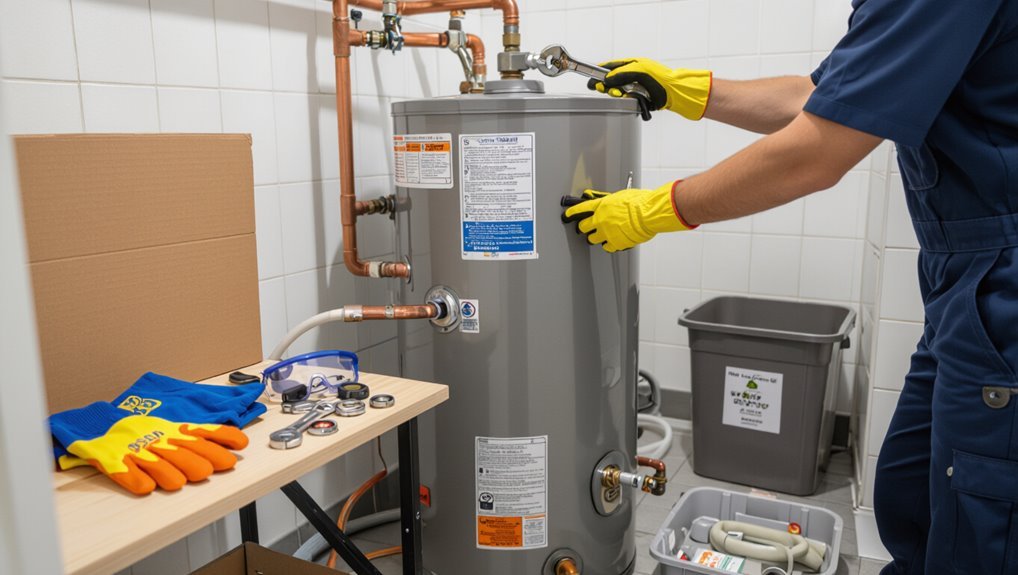
The section outlines disposal options at a glance—recycling, municipal pickup, retailer take-back, and hauling services—so readers can compare paths quickly.
It then notes common signs that replacement is preferable to repair, such as persistent leaks, corrosion, or failing components.
Finally, it highlights key legal and safety checks to perform first, including local regulations, required permits, and proper gas or electric disconnection.
Quick overview: options at a glance
Consider several disposal paths before removing an old water heater: recycle for scrap metal value, return through a retailer or manufacturer take-back program, arrange bulk pickup or drop-off via local waste management, donate or sell if still functional, or hire a licensed hazardous-waste contractor for units with chemical or PCB concerns.
A concise checklist helps determine how to dispose of old water heater based on condition, local rules, and fees.
When to replace versus repair before disposal
After weighing disposal routes and local rules, homeowners must decide whether repair or replacement is more appropriate before removing a water heater.
Consider age, warranty status, repair cost versus replacement price, energy efficiency, and frequency of failures.
If the unit is over 10–15 years, repairs exceed 50% of replacement, or efficiency is poor, replacement prior to disposal is typically recommended.
Legal and safety considerations to check first
Before attempting removal, homeowners should verify local regulations and safety requirements that apply to water heater disposal, including plumbing and electrical permits, utility shutoff procedures, and restrictions on where and how tanks may be transported or recycled.
Confirm permitting, required licensed contractor involvement, and hazardous material rules for gas lines, refrigerants, or insulation.
Ascertain proper draining, ventilation, secure transport, and documentation for pickup or recycling facilities.
Preparing the Water Heater for Removal
Before removal, the homeowner should gather basic tools and materials—wrenches, hose, bucket, screwdriver, and appropriate PPE—and review the procedure.
They must shut off electricity or gas and close the water supply, then follow a step-by-step draining process to empty the tank safely.
Finally, the unit and surrounding insulation should be inspected for hazardous materials such as asbestos or PCB-containing components and handled per local regulations.
Tools and materials you’ll need
Gather the correct tools and materials to guarantee a safe, efficient water heater removal: adjustable wrenches, pipe cutters or a reciprocating saw, a drain hose, bucket, pliers, screwdrivers, pipe sealant or Teflon tape, replacement fittings if needed, work gloves, safety goggles, and a sturdy dolly or appliance hand truck.
Additional items include absorbent rags, a flashlight, hose clamp(s), an adjustable strap, and a small first aid kit.
How to turn off power and water supply
With tools and safety gear ready, attention shifts to isolating power and water to the heater. The technician locates the electrical breaker or shuts off gas, then closes the cold-water shutoff and relieves minor pressure at a nearby faucet. Confirm absence of power and water flow before proceeding.
| Calm | Caution | Closure |
|---|---|---|
| Relief | Focus | Resolve |
| Silence | Safety | Ready |
How to drain the tank step-by-step
Start by attaching a garden hose to the heater’s drain valve and routing the other end to a safe drainage point—floor drain, outside slope, or a sturdy bucket—ensuring the hose won’t kink.
Open a hot water tap to admit air, then open the drain valve slowly.
Monitor flow until clear, close valve when empty.
Detach hose, cap fittings, and wipe up residual water.
Inspecting for hazardous materials (asbestos, PCB-containing insulation)
Before removal, inspect the water heater for hazardous materials—most importantly asbestos in pipe insulation or furnace cement and any PCB-containing foam or sealants—because their presence changes disposal methods and requires special handling.
Visually examine joints, insulation wrap, adhesive residues, and exterior panels.
If suspect materials are found, stop work, isolate the unit, and contact a licensed abatement or hazardous-waste contractor for testing and removal.
Step-by-Step Removal Process
The removal process begins with safely disconnecting plumbing and electrical connections and detaching any flue or venting components.
Proper lifting techniques and equipment should be used to move the heavy unit without injury.
Any remaining water and sludge must be drained and contained before transport or disposal.
Disconnecting plumbing and electrical connections
Shut off power and water to the unit, then verify both are fully isolated before any disconnection work begins.
The technician drains remaining water, removes supply and outlet fittings, and caps or isolates pipes to prevent leaks.
For electric heaters, the electrician disconnects the circuit at the junction box and labels wires.
For gas units, gas supply is shut and line capped by a qualified professional.
Detaching flue or venting components
After power, water, and fuel lines are secure and fittings removed, attention turns to the flue or venting assembly. The technician inspects joints, loosens clamps, and removes the vent pipe upward, sealing the opening to prevent drafts. Corroded sections are cut and separated for recycling; label asbestos concerns and arrange professional abatement if present.
| Step | Tool | Note |
|---|---|---|
| Inspect | Flashlight | Look for corrosion |
| Detach | Wrench | Loosen clamps |
| Seal | Tape/cover | Prevent drafts |
Safe techniques for moving and lifting the unit
Begin by evaluating the unit’s weight, size, and surrounding clearance to determine required manpower and equipment: a two-person lift may suffice for smaller tanks, while electric hoists, appliance dollies, straps, and lifting belts are necessary for heavier or awkward systems.
Secure panels and connections, use protective gloves and steel-toe boots, employ dollies or hoists, maintain proper lifting posture, and plan a clear route.
What to do with residual water and sludge
Drain the tank methodically to remove leftover water and sediment, starting by turning off power and gas and attaching a garden hose to the drain valve that leads to an appropriate outdoor discharge or a floor drain capable of handling hot water. After flushing, neutralize sludge, collect contaminated water if required, and dispose per local regulations.
| Step | Action |
|---|---|
| 1 | Cool and power off |
| 2 | Drain slowly |
| 3 | Flush until clear |
| 4 | Collect sludge |
| 5 | Dispose legally |
Disposal and Recycling Options
Disposal and recycling options vary by locality and include municipal bulk-trash pickup, curbside scrap-metal collection, and designated drop-off sites such as transfer stations and recycling centers.
Some manufacturers and retailers offer take-back or haul-away services at purchase or replacement, while licensed contractors and junk-removal companies can handle removal and proper disposal.
Homeowners should check local rules and available services to choose the simplest compliant option.
Municipal waste pickup and bulk trash rules
When local ordinances permit, many homeowners can arrange for municipal waste services or scheduled bulk-trash collections to remove an old water heater; however, rules vary widely on pickup eligibility, size limits, item preparation, and fees.
Municipal programs often require notification, specific placement at curbside, draining and disconnection, proof of ownership, or payment of a bulk-item fee.
Verify local guidelines before scheduling.
Curbside recycling and scrap metal pickup
Check local curbside recycling and scrap-metal programs to determine whether an old water heater qualifies for pickup, what preparation is required, and any size or scheduling limits.
Record pickup schedules, required documentation, and accepted appliance conditions (drained, disconnected, or cut).
Securely attach any tags or permits and follow placement rules.
Confirm whether metals will be salvaged for scrap value or taken for municipal processing.
Drop-off locations: transfer stations and recycling centers
If curbside pickup is not available or preferred, many homeowners can take an old water heater directly to local transfer stations or recycling centers that accept appliances.
Facilities often require appointment, proof of residence, and a small fee. Staff can advise on draining, disconnection, and metal separation.
Some centers recycle steel, copper, and insulation; others arrange scrap metal resale. Check hours and acceptance policies.
Manufacturer take-back and retailer haul-away services
Many manufacturers and large retailers offer take-back or haul-away services for old water heaters, often coordinating direct pickup at installation or providing drop-off programs at authorized centers.
These programs may include decontamination, component salvage, and recycling partnerships. Eligibility, fees, and scheduling vary by brand and store.
Consumers should verify program terms, prepare the unit per instructions, and obtain documentation of proper disposal.
Hiring a licensed contractor or junk removal service
For homeowners who prefer a hands-off option beyond manufacturer or retailer programs, hiring a licensed contractor or professional junk removal service can simplify removal, transport, and proper disposal of an old water heater.
Professionals guarantee safety, drain and disconnect according to code, obtain permits if required, and deliver units to appropriate recycling or disposal facilities.
Confirm licensing, insurance, and transparent pricing beforehand.
Donating or selling if still functional
When a water heater still operates reliably, donating or selling it extends its service life and reduces waste.
Owners should verify safety, document age and condition, and remove personal fittings before transfer. Local charities, online marketplaces, and appliance stores often accept usable units; pick-up options vary and disclosure of defects is required.
- Confirm functionality and safety
- Describe condition and age
- Arrange transport or pick-up
Recycling Details and Environmental Benefits
The article outlines which water heater components are commonly recyclable—primarily steel tanks and fittings, copper elements, and some insulation materials—and notes how salvageable parts can be separated for recovery.
It summarizes a typical recycling workflow: draining and safe removal, disassembly and sorting of metals and insulation, and transport to metal recyclers or hazardous-waste facilities for proper handling.
The piece also highlights the environmental risks of improper disposal, including metal waste in landfills and contamination from residual chemicals or insulation materials.
Parts and materials that can be recycled (steel, copper, insulation)
Salvageable components of an old water heater—chiefly the steel tank, copper tubing, and insulation—offer straightforward recycling opportunities that reduce waste and conserve resources.
- Steel tank: high scrap value, widely accepted by metal recyclers.
- Copper tubing: valuable and easily reclaimed for reuse.
- Insulation: polyurethane or fiberglass can be diverted from landfill, often repurposed or processed.
Typical recycling process for water heaters
Begin by draining and disconnecting the unit to separate fluids and hazardous components before transport.
Recyclers inspect, depressurize, then deconstruct tanks, salvaging steel, copper, brass, and electronic parts.
Insulation and anode rods are removed for proper handling.
Materials are sorted, shredded, and melted or processed into raw materials.
Facilities document recycling to guarantee regulatory compliance and resource recovery.
Environmental impact of improper disposal
Improper disposal of water heaters can release contaminants and squander recoverable materials, compounding environmental harm beyond lost recycling value.
Leaking insulation, residual water, and trapped metals contaminate soil and groundwater.
Missed reclamation wastes steel, copper, and energy embodied in manufacturing.
Responsible recycling reduces landfill volume, lowers resource extraction, and cuts greenhouse gas emissions by reclaiming materials and avoiding energy-intensive production of new components.
Cost Considerations and Possible Refunds
Disposal of an old water heater can carry several costs, including municipal or private disposal fees, recycling charges, and haul-away or labor expenses.
Some units offer scrap metal value—typically a modest amount based on weight and current metal prices—that can offset part of the cost.
Additionally, homeowners should check for utility or manufacturer rebates and incentives that may reduce overall outlay.
Typical fees for disposal, recycling, and haul-away
Several factors determine the typical fees associated with removing an old water heater, including local landfill or recycling center rates, whether the unit contains hazardous components, and if a professional haul-away service is required.
Costs commonly range from a small drop-off fee to $50–$200 for pickup and disposal; additional charges may apply for permits, decontamination, or expedited service, varying by region and provider.
Scrap metal value: what to expect
Beyond haul-away and landfill charges, many homeowners can offset part of the cost by selling the retired tank for scrap.
Scrap value depends on weight, material (steel, copper, brass), and local commodity prices. Expect modest returns—typically between $10 and $50 for steel tanks, more if valuable fittings are present.
Preparation (drain, remove nonmetal parts) improves payout and acceptance.
Utility or manufacturer rebates and incentives
If homeowners replace an old water heater with a more efficient model, utilities and manufacturers often offer rebates or incentives to reduce the net cost.
Eligible programs vary by region and may require specific efficiency ratings, proof of installation, or licensed contractor receipts.
Claiming rebates can offset purchase and disposal expenses.
Check utility websites, manufacturer promotions, and local energy-efficiency programs before disposal.
Regional and Local Regulations to Check
Disposal requirements for water heaters vary by state and municipality, so readers should verify local rules and permit needs before proceeding.
Certain units or their components may be classified as hazardous waste and require special handling or transport.
Local recycling centers and municipal websites are the primary resources for specific drop-off locations, accepted materials, and any applicable fees.
State and local disposal rules and permits
Because state and local governments set specific rules for handling and transporting retired water heaters, homeowners should verify regional regulations and permit requirements before removal. Check local public works, building departments, and transfer stations for permits, transportation limits, and drop-off rules. Consult municipal websites or call agencies to confirm fees and documentation.
| Agency | Permit? | Notes |
|---|---|---|
| City | Sometimes | Fees possible |
| County | Often | Transport limits |
| State | Varies | Reporting rules |
Hazardous waste classification and special handling
Many jurisdictions classify components of retired water heaters—such as insulation, electrical parts, and any residual fluids—as hazardous or special waste, triggering strict handling, transport, and disposal requirements.
Local regulations may mandate labeling, containment, and use of licensed transporters; some materials require testing or treatment before disposal.
Obligations, penalties, and approved facilities vary by region, so compliance verification is essential.
How to find local recycling centers and rules
Where can a homeowner locate approved recycling centers and learn applicable rules?
The homeowner should consult municipal solid waste websites, state environmental agency portals, and local utility or public works departments for licensed facilities, drop-off schedules, fees, and documentation requirements.
Call centers directly to confirm acceptance of water heaters.
Review regional hazardous waste ordinances and recycling program guides to guarantee compliance with transport, preparation, and disposal rules.
Common Mistakes and Safety Risks to Avoid
Disposing of an old water heater carries specific hazards, including the risk of pressurized water or trapped combustible gases remaining in the tank.
Improper disconnects, dropping the unit, or using incorrect tools can cause property damage and personal injury.
Following proper procedures and local codes prevents fines, violations, and safety incidents.
Risks of leaving pressure or combustibles in the tank
Leaving pressure or combustible materials in an old water heater can create immediate hazards: trapped pressure may cause ruptures or spray scalding, while residual fuel, oil, or vapors can ignite during transport or cutting.
Such hazards endanger handlers and responders; proper depressurization, thorough draining, and ventilation before moving or dismantling are essential to eliminate blast, burn, and inhalation risks.
Mistakes that can cause property damage or injury
Failing to follow basic safety steps or cutting corners when handling an old water heater can quickly turn a routine disposal into costly damage or serious injury. Common mistakes include neglecting to drain residual water, ignoring gas/electrical isolation, and improper lifting techniques. Observe proper tools, helpers, and ventilation; secure permits if required.
| Mistake | Consequence | Prevention |
|---|---|---|
| Not draining | Leaks, mold | Fully drain |
| Live connections | Fire, shock | Shut off power/gas |
How to avoid fines and code violations
Many localities enforce specific codes and permit requirements for water heater removal, and overlooking them can lead to fines, forced remediation, or delays.
Research local regulations, obtain required permits, and schedule mandated inspections. Use licensed contractors when codes demand certified technicians.
Document disposal receipts and recycling certificates. Follow gas, plumbing, and electrical shutdown protocols to demonstrate compliance and avoid citations.
Practical Tips to Streamline Disposal
Practical steps can reduce costs and hassle when disposing of an old water heater, such as draining and disconnecting the unit before pickup to avoid extra service fees.
Scheduling removal to coincide with delivery or installation of a replacement minimizes downtime and duplicate labor.
Kept records—receipts, transfer paperwork, and photos—protect warranties and provide proof of proper disposal.
Preparing the unit for pickup to reduce fees
Drain the tank completely and disconnect utilities before pickup so the unit is safe, lighter, and cheaper to transport.
Remove peripheral items—insulation blankets, hoses, and mounting brackets—to decrease weight and recycling charges.
Cap open pipes to prevent spills.
Document model and serial numbers for scrap yards offering variable rates.
Bundle small metal parts separately to maximize accepted material value and minimize handling fees.
Timing removals to coordinate with new installation
After preparing the old heater for pickup, timing its removal to coincide with the new unit’s arrival minimizes downtime and handling costs. Coordinating delivery, installer schedule, and disposal pickup prevents double handling. Confirm arrival windows, allow buffer for delays, and notify removal service of installation timing. Use concise communication to guarantee one-site swap and reduced fees.
| Task | Responsible | Timing |
|---|---|---|
| Delivery | Supplier | Day of install |
| Removal | Disposal service | Same day |
| Inspection | Installer | After swap |
How to document disposal for records or warranties
Document disposal promptly to protect warranty rights and maintain clear records for future reference.
The owner should record date, model and serial numbers, removal method, recipient (recycler, landfill, or installer) and any disposal receipts.
Photographs of condition and tags provide evidence.
Retain digital and printed copies with appliance manuals and warranty documents.
Note transfer-of-ownership details if disposal accompanies sale or replacement.
Checklist: Final Steps After Disposal
After removal, the area should be cleaned and inspected for leaks, debris, or damaged flooring.
Records and any remaining warranty details ought to be updated to reflect the disposal.
Recycling receipts and proof of proper disposal should be kept for future reference or compliance.
Site cleanup and inspection
Begin by conducting a systematic sweep of the work area to remove debris, tools, and any remaining tank components, ensuring all fittings, insulation, and hazardous residues are collected for proper disposal. Then inspect flooring, walls, and surrounding systems for leaks, corrosion, stains, or damage; document findings and address repairs or professional follow-up.
| Area | Checkpoint | Action |
|---|---|---|
| Floor | Stains/level | Clean/repair |
| Walls | Corrosion | Treat/paint |
| Pipes | Leaks | Tighten/replace |
| Debris | Residues | Dispose safely |
Updating records and warranties
Why confirm remaining paperwork and warranty details now?
The homeowner should document serial numbers, removal date, installer contact, and any transfer or cancellation of warranties.
Update appliance inventories and home records, noting replaced unit specifications.
Notify the warranty provider if required and retain copies of invoices and disposal confirmations.
Guarantee future claims or insurance needs are supported by accurate, accessible documentation.
Recycling receipts and proof of proper disposal
Several essential documents should be collected and organized to prove an old water heater was recycled or disposed of properly.
These records support warranty claims, local regulations, and resale documentation. Keep originals and digital copies in a dedicated folder for easy access.
- Recycling receipt with facility details and weight
- Disposal or transfer certificate from a hauler
- Photos showing pre-removal condition and serial number
Conclusion
Disposing of an old water heater need not be intimidating: by following safety steps, confirming local rules, and choosing recycling or responsible disposal, the owner protects people and the environment. If cost or inconvenience seems prohibitive, many municipalities, retailers, or scrap yards offer pickup, rebates, or trade-in credits that offset effort. Ultimately, a methodical, informed approach saves time, reduces hazards, and recovers valuable materials while ensuring legal compliance.