
How to Work Hydro Jetting: A Step-by-Step Guide for Effective Drain and Sewer Cleaning
Hydro jetting is an effective method for clearing drains and sewer lines by using high-pressure water to eliminate grease, scale, roots, and heavy buildup, outperforming traditional snaking. To perform hydro jetting, operators inspect the pipes with a camera, set the appropriate pressure and flow rates, attach the correct nozzles and hoses, and advance the nozzle while monitoring resistance. Safety gear and confined-space protocols are essential. After completing the job, flushing the system, cleaning equipment, and documenting the work are necessary steps. Below, you’ll find detailed procedures, precautions, and troubleshooting tips to ensure successful hydro jetting.
What Hydro Jetting Is and When to Use It
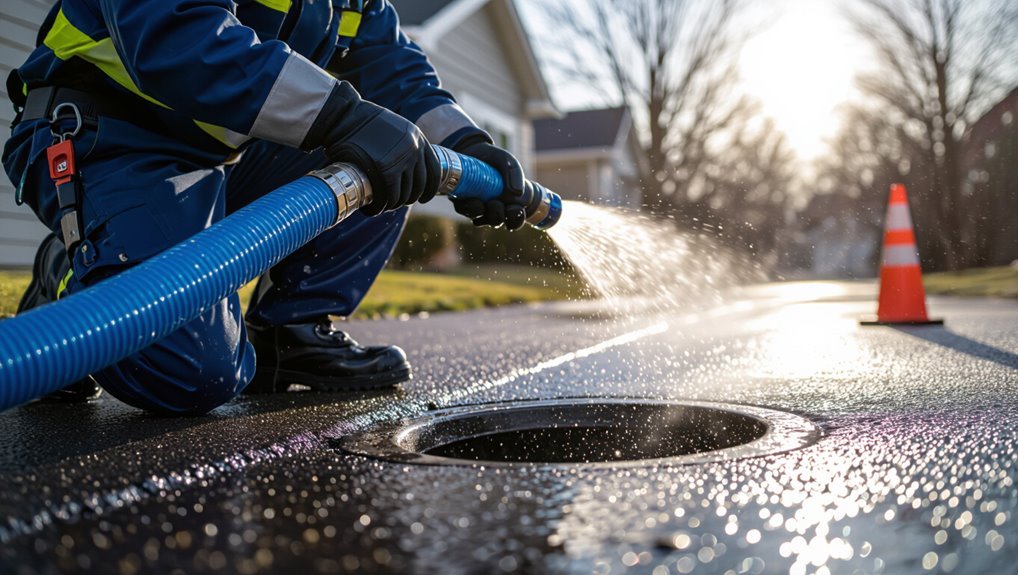
Hydro jetting is a high-pressure water cleaning method that uses a nozzle to blast away grease, scale, roots, and other buildups from pipes.
It is commonly employed for kitchen and sewer lines, commercial drains, and stormwater systems where thorough removal is required.
Indicators that hydro jetting is preferable to snaking include recurring clogs, slow drainage despite snaking, persistent odors, and root intrusion.
Definition and basic principles of hydro jetting
High-pressure water jetting, commonly called hydro jetting, is a mechanical cleaning method that forces a concentrated stream of water through pipes to remove blockages, buildup, and sediment.
It relies on adjustable pressure, nozzle design, and directional spray patterns to cut deposits and scour interiors.
Professionals learning how to work hydro jetting emphasize flow control, safety protocols, and proper inspection before and after service.
Common applications for drain and sewer cleaning
A versatile cleaning method, hydro jetting is applied across a range of drain and sewer scenarios where mechanical removal of debris, scale, grease, roots, or sediment is required.
Typical uses include municipal sewer mains, commercial kitchen grease lines, residential sewer laterals, storm drains, and industrial process lines.
It restores flow, removes buildup, cuts roots, and prepares pipes for inspection or rehabilitation without chemical solvents.
Signs your plumbing needs hydro jetting instead of snaking
When should a homeowner choose water-blast cleaning over a standard snake?
Persistent slow drains, recurring clogs, heavy grease buildup, tree root intrusion, or sediment accumulation indicate snaking won’t suffice.
Hydro jetting clears scale, biofilm, and roots throughout pipe interiors, restoring flow and preventing recurrence.
It suits main sewer lines and commercial systems; use after video inspection confirms extensive blockage or lining damage.
Benefits and Limitations of Hydro Jetting
Hydro jetting offers a thorough, nonabrasive alternative to mechanical rodding and harsh chemical cleaners, often clearing build-up more completely and reducing repeat clogs.
It is not recommended for older, fragile piping, very small-diameter lines, or systems with extensive tree-root intrusion without prior assessment.
The method also carries environmental and safety advantages by minimizing chemical discharge and reducing worker exposure to caustic substances.
Advantages over mechanical rodding and chemical cleaners
Although rooted in different mechanics, high‑pressure water jetting offers distinct advantages compared with mechanical rodding and chemical cleaners: it removes scale, grease, and biofilm from pipe interiors rather than simply punching a hole through blockages, minimizes chemical exposure and corrosion risk, and can restore near‑original flow capacity in a single pass while reducing repeat service calls.
- Thorough cleaning of pipe walls
- Reduced chemical usage
- Lower corrosion potential
- Fewer repeat visits
- Effective on varied deposits
Situations where hydro jetting is not recommended
Why might high‑pressure water jetting be inappropriate for some jobs?
It is unsuitable for older, fragile pipes, compromised joints, or clay and cast‑iron lines with corrosion.
Hydro jetting can dislodge roots beyond control or worsen unseen structural damage.
It is also inappropriate when access is limited, for small lateral lines, or where local codes or risk of contamination prohibit high‑pressure cleaning.
Environmental and safety advantages
Given the limitations of high‑pressure cleaning in fragile or restricted systems, attention turns to its environmental and safety profile.
Hydro jetting minimizes chemical use, reducing toxic effluent and ecological damage. Properly operated equipment lowers spill and leak risks, while targeted cleaning restores flow, preventing overuse of excavation.
Trained technicians and safety protocols mitigate injury and property harm, enhancing overall sustainability and operational safety.
Essential Equipment and Materials
The section outlines the core hydro jetting machine components and their specifications, including pump types, horsepower, and flow rates.
It then covers nozzle varieties and selection criteria, followed by hoses, fittings, and their required pressure ratings.
Finally, it emphasizes necessary personal protective equipment and other safety gear for operators.
Hydro jetting machine components and specifications
When preparing to operate a hydro jetting system, technicians must understand the machine’s core components and their specifications to guarantee safe, effective cleaning. Key elements include the high-pressure pump, hose reel, nozzle assortment, pressure and flow gauges, and safety controls, each rated by maximum pressure (psi or bar), flow rate (gpm or lpm), and material compatibility.
Additionally, consider engine type, filtration, hose burst ratings, and control ergonomics.
Nozzles types and selection criteria
Although nozzle selection might seem straightforward, choosing the correct hydro jetting nozzle is critical to match cleaning objectives, pipe conditions, and safety limits.
Nozzles vary by spray pattern (forward, rotary, or rear-facing), orifice size, pressure rating, and material, and these factors determine cutting force, coverage, and susceptibility to clogging or wear.
- Forward nozzles for heavy root and scale removal
- Rotary nozzles for agitation and wall cleaning
- Rear-facing for propulsion and rinsing
- Orifice sizing for flow/pressure balance
- Material choice affects abrasion resistance
Hoses, fittings, and pressure ratings
Selecting the correct hoses and fittings is as important as choosing the nozzle, because they control flow, withstand pressure, and determine overall system reliability.
Hoses must match pump pressure and flow, resist abrasion and kinking, and include proper burst safety margins.
Fittings and couplings require compatible materials, secure seals, and pressure ratings equal to or exceeding system maximums to prevent failures and leaks.
Personal protective equipment and safety gear
Adequate personal protective equipment (PPE) is essential for hydro jetting to protect operators from high-pressure water, flying debris, and chemical exposure.
Operators must select certified gear, inspect it before use, and replace damaged items promptly. Training on proper fit and decontamination reduces incidents and contamination risks.
- Safety goggles or face shield
- Cut-resistant gloves
- Waterproof protective suit
- Steel-toe boots
- Hearing protection
Pre-Job Inspection and Preparation
Before starting hydro jetting, the technician inspects pipe condition and material to confirm suitability and identify vulnerabilities such as corrosion, joint types, or thin-walled sections.
They locate cleanouts and access points, clear the area, and protect fixtures and finished surfaces to prevent water or debris damage.
The technician then communicates the job scope, potential risks, and any required precautions to the property owner to obtain informed consent and coordinate access.
How to assess pipe condition and material
A careful inspection of the pipe system establishes the baseline for safe, effective hydro jetting by identifying material type, joint condition, diameter, age, and any existing damage or deposits that could influence pressure selection and nozzle choice.
Technicians verify pipe material (PVC, clay, cast iron), measure diameter, note corrosion, cracks, root intrusion, scale, and prior repairs to determine safe pressure limits and required cleaning approach.
Locating cleanouts and access points
Locating cleanouts and access points is a critical step in pre-job inspection, as precise identification of entry points determines equipment setup, hose routing, and safety measures.
Technicians map cleanout locations, verify access caps, note pipe orientation and depth, and confirm upstream/downstream valves. They document obstructions, potential structural concerns, and any required permits, ensuring hose length and nozzle selection match identified entry conditions.
Preparing the work area and protecting fixtures
Preparation of the work area begins with establishing a clear perimeter and removing or shielding any fixtures, furnishings, and surfaces that could be damaged by water, debris, or equipment.
Technicians inspect access points, verify ventilation, position containment mats, and stage tools for safe, efficient operation.
- Cover floors and walls with waterproof barriers
- Protect nearby electronics
- Remove loose items
- Secure pets and occupants
- Guarantee adequate lighting
Communicating risks and scope with the property owner
With the work area secured and sensitive items protected, the technician reviews the job scope and potential hazards with the property owner before any hoses or equipment are engaged.
The technician explains expected outcomes, limits of hydro jetting, necessary access points, possible pipe damage, water intrusion risks, and contingency steps.
Consent, questions, and written acknowledgment are obtained before operations commence.
Step-by-Step Hydro Jetting Procedure
The technician begins with a precise blockage diagnosis and camera inspection to map the obstruction before any equipment is engaged.
Machine pressure and flow are then set to match pipe material and condition. The nozzle and hose are securely attached and tested.
The nozzle is carefully inserted and advanced using controlled techniques, with periodic backflushing employed to dislodge persistent deposits.
Initial blockage diagnosis and camera inspection
Before any water is run, a technician assesses the blockage location and severity by gathering site information, reviewing pipe layouts, and confirming access points.
A CCTV camera is deployed to inspect pipe condition, identify obstruction type, measure distance to the clog, and detect defects or intrusions.
Findings are documented, communicated, and used to plan entry, nozzle selection, and targeted cleaning strategy.
Setting machine pressure and flow based on pipe type
Properly matching pressure and flow to pipe material and diameter is essential for effective hydro jetting and to prevent damage. Operators select lower pressure for older clay or cast iron, moderate for PVC, higher for steel. Flow adjusts to clear debris without erosion. Consult specs and use incremental increases while monitoring pipe integrity.
| Pipe Type | Pressure Range | Flow Rate |
|---|---|---|
| Clay | Low | Low |
| PVC | Moderate | Moderate |
| Steel | High | High |
| Cast Iron | Low–Moderate | Low–Moderate |
Attaching and testing the nozzle and hose
Attach the selected nozzle and lay out the hose following the planned routing, ensuring connections are hand-tight and safety clips or locking collars are engaged.
Inspect hose and nozzle for damage, verify O-rings and fittings are clean, and confirm machine outlets match hose ratings.
Perform a low-pressure water bleed to check for leaks and secure all controls before increasing to operational pressure.
Inserting the nozzle and safe advancement technique
Guide the nozzle into the drain with steady, controlled movements, keeping hands clear of the hose entry point and maintaining visual contact with the hose’s leading section.
Operators advance incrementally, pausing after each feed to confirm alignment and check for resistance. If resistance occurs, retract slightly, adjust angle, and re-attempt.
Maintain communication with any team members and monitor pressure gauges throughout advancement.
Backflushing and addressing stubborn deposits
With the nozzle positioned and advance confirmed, the operator initiates backflushing to dislodge compacted material and verify flow restoration.
Controlled reverse pulses and variable pressure cycles break adherent grease, mineral scale, and ragging. Mechanical agitation via nozzle rotation complements hydraulic action.
The operator monitors debris extraction, adjusts pressure progressively, and documents resistance points for targeted repeat passes until acceptable clearance is achieved.
Final camera inspection and verification of flow
One final camera pass is performed to confirm internal cleanliness and document flow restoration. The inspector advances the push rod or reel at a steady rate while observing live footage for residual deposits, joint integrity, and any damage incurred during cleaning.
Notes are recorded, measurements and video clips archived, and a flow test verifies unobstructed discharge. Any anomalies trigger targeted re-cleaning or repair recommendations.
Safety Protocols and Risk Mitigation
The section outlines safety protocols for hydro jetting, emphasizing proper handling of high-pressure equipment and adherence to procedures that minimize injury risk.
It covers techniques to prevent pipe damage and the signs that indicate imminent failure, along with precautions for confined spaces and wastewater exposure.
Finally, it describes emergency shutdown procedures and spill response steps to guarantee rapid, controlled mitigation of incidents.
High-pressure hazards and safe handling procedures
High-pressure hydro jetting poses immediate physical dangers—lacerations, puncture wounds, and projectile hazards—plus secondary risks such as pressurized backflow and equipment failure.
Operators must use PPE, maintain hose control, employ remote triggers, secure work zones, and follow lockout procedures.
Regular inspections and clear communication protocols reduce incidents; emergency shutoffs and training guarantee rapid response.
- PPE: face shield, cut-resistant gloves
- Hose anchoring
- Remote operation
- Workzone exclusion
- Emergency shutoff training
Preventing pipe damage and recognizing warning signs
Inspect pipelines for vulnerability and adapt jetting pressure and nozzle selection to the pipe material and condition to prevent damage.
Operators should monitor pipe age, joints, and prior repairs; use reduced pressures on brittle or corroded sections.
Watch for unusual vibrations, sudden pressure drops, or discharge changes indicating collapse or breach.
Stop immediately on warning signs and document location for targeted assessment and repair.
Confined space and wastewater exposure precautions
Many confined-space entries during hydro jetting involve hazardous atmospheres and contact with untreated wastewater, so personnel must treat each entry as potentially life-threatening and follow strict protocols.
Entry requires atmospheric testing, continuous ventilation, confined-space permits, attendant monitoring, and rescue-ready arrangements.
Workers must wear appropriate PPE—respiratory protection, chemical-resistant suits, gloves, and boots—practice hygiene decontamination, and guarantee vaccination and training records are current.
Emergency shutdown and spill response steps
Begin shutdown immediately when system failure, uncontrolled discharge, or exposure is detected; this minimizes pressure, stops flow, and limits contamination.
Personnel isolate equipment, close valves, and secure power. Evacuate affected area and establish exclusion zone.
Notify supervisor and emergency services if needed.
Contain spills with absorbents or berms, collect waste in labeled containers, document incident, and initiate decontamination and post-incident review.
Common Problems and How to Troubleshoot Them
The guide outlines common hydro jetting problems and practical troubleshooting steps, including remedies for nozzle or hose kinks and blockages.
It addresses persistent grease and mineral scale removal methods, strategies for confronting roots or collapsed and severely damaged pipes, and indicators that warrant cessation of work.
Clear criteria for when to call a plumbing or sewer specialist are provided to prevent further damage and guarantee safety.
Nozzle or hose kinking and blockage solutions
Inspecting the hose and nozzle for kinks or blockages is a critical first step when hydro jetting problems arise; restricted flow reduces cleaning efficiency and can damage equipment.
Technicians should clear debris, straighten hoses, and replace damaged nozzles promptly. Safety protocols minimize injury during inspection.
- Shut down pressure before handling
- Visually locate kinks or bends
- Flush line to dislodge debris
- Use manufacturer tools for blockages
- Replace worn sections immediately
Persistent grease buildup and scale removal techniques
After resolving hose and nozzle kinks, attention shifts to persistent grease buildup and mineral scale that resist standard passes. These deposits reduce nozzle effectiveness and raise required pressures, risking equipment strain.
Operators select degreasing agents compatible with system materials, apply repeated low-pressure flushing, then incrementally increase pressure and use rotating or penetrating nozzles.
Monitor flowback, repeat cycles, and inspect with a camera until deposits clear.
Handling roots, collapsed, or severely damaged pipes
Address severe obstructions by first evaluating pipe integrity with a camera to determine whether roots, partial collapses, or complete failures are present and to map the obstruction’s extent and location.
Use controlled low-pressure jetting to remove intrusive roots, avoiding aggressive settings that worsen fractures.
Inspect continuously; stabilize compromised sections with lining or mechanical repairs if jetting dislodges debris.
Document findings for follow-up maintenance.
When to stop and call a plumbing or sewer specialist
When should jetting be halted and a specialist called?
Jetting must stop if obstructions persist despite proper technique, if pressure drops or equipment malfunctions, if unusual odors or sewage backups occur, or if visual inspection reveals collapsed, cracked, or root-infested pipes.
Also call a specialist when customers report repeated blockages, structural concerns, or when camera inspection indicates damage beyond routine cleaning.
Maintenance, Aftercare, and Recordkeeping
A concise post-job cleaning and equipment maintenance checklist helps guarantee no residue or wear is overlooked and prolongs tool life.
Clear guidance on recommended hydro jetting frequency for residential, commercial, and industrial systems aids in scheduling preventive service.
Standardized documentation templates for before/after reports and camera logs provide an auditable record of work and condition.
Post-job cleaning and equipment maintenance checklist
Checklist-driven post-job cleaning and equipment maintenance guarantees system longevity, safety, and traceable performance records.
A concise checklist guarantees contamination control, component inspection, and accurate recordkeeping for warranty and compliance.
- Rinse and flush hoses, nozzles, and reel assemblies
- Inspect for wear, cracks, and corrosion
- Lubricate fittings, seals, and reel bearings
- Sanitize tools and PPE; dispose of waste properly
- Log job details, parts replaced, and next inspection date
Recommended frequency of hydro jetting for different systems
Because system type, usage intensity, and water quality directly influence buildup rates, recommended hydro jetting intervals vary widely across applications. Commercial kitchens, hospitals, and industrial lines need frequent schedules; residential and low-use systems require less frequent attention. Tailor intervals based on inspections, odor, flow, and grease.
| System Type | Typical Interval | Notes |
|---|---|---|
| Commercial | 1–3 months | High grease |
| Residential | 12–36 months | Low use |
Documentation templates: before/after reports and camera logs
Technician documentation should include standardized before/after reports and camera logs that record conditions, actions, and outcomes in a concise, consistent format.
Templates list site details, date/time, crew, equipment, pressure/settings, observed blockages, and cleaning steps.
Camera logs note pipe location, footage timestamps, defect types, measurements, and image references.
Completed records support warranty claims, maintenance scheduling, regulatory compliance, and client transparency.
Cost Considerations and When to Hire a Pro
Cost considerations for hydro jetting hinge on pipe size, obstruction severity, trip charges, and regional labor rates, with typical residential jobs often ranging from a few hundred to over a thousand dollars.
A clear decision guide weighs equipment rental and safety risks against the thoroughness and warranty of a professional service.
Homeowners should ask contractors about licensing, insurance, experience with hydro jetting, equipment specifications, and written guarantees before hiring.
Typical pricing factors and cost ranges
Pricing for hydro jetting varies widely based on several clear factors: pipe diameter and length, severity and type of blockage, accessibility of the line, equipment and water pressure required, and regional labor rates.
Typical residential jobs range $300–$700; complex or commercial jobs can reach $1,000–$3,000+.
Additional costs may include camera inspection, travel fees, permits, and emergency or after-hours surcharges.
DIY vs professional service decision guide
After outlining how factors affect hydro jetting prices, homeowners must weigh whether to attempt a DIY approach or hire a professional.
Cost, risk, equipment access, clog severity, and warranty implications guide the choice.
Professionals suit complex, high-risk, or large-diameter jobs; DIY may fit minor, accessible clogs with rental gear.
- Cost comparison
- Safety and liability
- Equipment needs
- Job complexity
- Long-term value
Questions to ask and credentials to verify for contractors
Who should a homeowner trust to run a hydro jet through their pipes, and what proof should be demanded before work begins?
The homeowner should verify contractor licensing, insurance (general liability and workers’ comp), hydro-jetting experience, references, and written estimates.
Ask about equipment make/model, damage prevention protocols, warranty terms, and disposal practices.
Confirm permits and a clear contract before scheduling service.
Case Examples and Real-World Scenarios
The article presents concise case examples to illustrate practical hydro jetting applications and outcomes.
One example covers a residential kitchen grease clog with a stepwise resolution.
Another describes municipal sewer line scale removal including methods and results.
A third outlines a prevention plan for a commercial kitchen with recurring clogs.
These scenarios highlight decision points, typical equipment settings, and measurable outcomes to inform reader choices.
Residential kitchen grease clog’ stepwise resolution
Diagnosing and clearing residential kitchen grease clogs proceeds through a clear, stepwise process that prioritizes safety, containment, and progressive escalation of methods.
Technicians first assess symptom patterns and access points, then employ mechanical agitation, targeted hydro jetting, and chemical treatments as appropriate while monitoring for pipe integrity and downstream impact.
Subsequent steps include debris extraction, inspection camera verification, odor control, and homeowner education on maintenance.
Municipal sewer line scale removal’ approach and outcomes
Municipal crews approach sewer line scale removal with coordinated assessment, targeted hydro jetting, and post-cleaning verification to restore capacity and prevent recurrence.
Teams document pipe condition via CCTV, select nozzle pressures to dislodge mineral buildup, and schedule follow-up inspections.
Case outcomes show restored flow rates, reduced backups, and extended pipe life when combined with chemical treatment and routine maintenance protocols.
Commercial kitchen frequent clog prevention plan
Implementing a tailored clog prevention plan in busy commercial kitchens hinges on routine practices, staff training, and targeted equipment choices that together reduce grease buildup and service interruptions.
Managers schedule daily sink skimming, weekly enzymatic treatments, and monthly hydro-jet inspections.
Staff follow hand-scraping, designated grease bins, and filter maintenance.
Records track trends, trigger pro-grade cleaning, and minimize emergency downtime through proactive intervention.
Best Practices to Prevent Future Clogs
Regular scheduled inspections and flushing are recommended to keep lines clear for both homeowners and businesses.
Adjusting habits—such as avoiding grease down the drain and limiting fibrous food scraps—reduces buildup between service visits.
Installing complementary devices like root barriers, strainers, and grease traps provides additional protection and extends the intervals between hydro jetting.
Routine maintenance tips for homeowners and businesses
Several simple preventative measures can markedly reduce the likelihood of future clogs and extend the effectiveness of hydro jetting for both homeowners and businesses.
Regular inspections, scheduled hydro jetting intervals, and proper filtration protect lines. Promptly address odors or slow drains. Maintain accessible cleanouts and document service history.
- Schedule routine inspections
- Use strainers and traps
- Keep cleanouts accessible
- Promptly address slow drains
- Log maintenance and services
Dietary and usage habits that reduce grease and debris buildup
Mindful kitchen and restroom habits greatly reduce grease and debris entering plumbing systems, lowering the frequency of clogs and the need for hydro jetting.
Users should scrape plates into compost or trash, avoid pouring fats or oils down sinks, run hot water with detergent after greasy tasks, limit fibrous and starchy waste down disposals, and discard sanitary products and wipes in trash receptacles.
Complementary technologies: root barriers, strainers, and traps
Preventive hardware—root barriers, strainers, and traps—serves as a frontline defense against the common causes of sewer and drain blockages by intercepting roots, solids, and grease before they enter pipe systems.
Installing root barriers protects pipes from intrusion; strainers catch hair and debris at fixtures; grease traps separate fats in commercial and residential kitchens.
Regular inspection and maintenance guarantee long-term effectiveness and reduce reliance on reactive hydro jetting.
Conclusion
Hydro jetting offers a powerful solution for stubborn clogs and thorough pipe maintenance when used appropriately. Its effectiveness depends on correct equipment, inspection, and operator skill, with limits for fragile or old systems. For example, a municipal crew cleared a recurring commercial kitchen backup by hydro-jetting a grease-compacted main, restoring flow and preventing repeat closures. With proper aftercare and periodic checks, hydro jetting can extend pipe life and reduce future emergency repairs.