How to Get Rid of Gnats in Bathroom Drain Fast: Proven Steps That Work
To quickly eliminate gnats in your bathroom drain, start by killing or trapping the adult gnats and blocking the drain to prevent their escape. Remove any standing water, hair, and debris from the area. Next, pour boiling water down the drain and scrub the trap with a stiff brush. Use an enzyme cleaner to break down biofilm, repeating this process nightly until the gnats are gone. For additional capture, utilize vinegar or sticky traps, and apply pyrethrin spray for persistent adults. Finally, maintain preventive measures to avoid future infestations. For detailed steps, continue reading below.
Immediate Steps to Stop Gnats in Your Bathroom Drain Fast
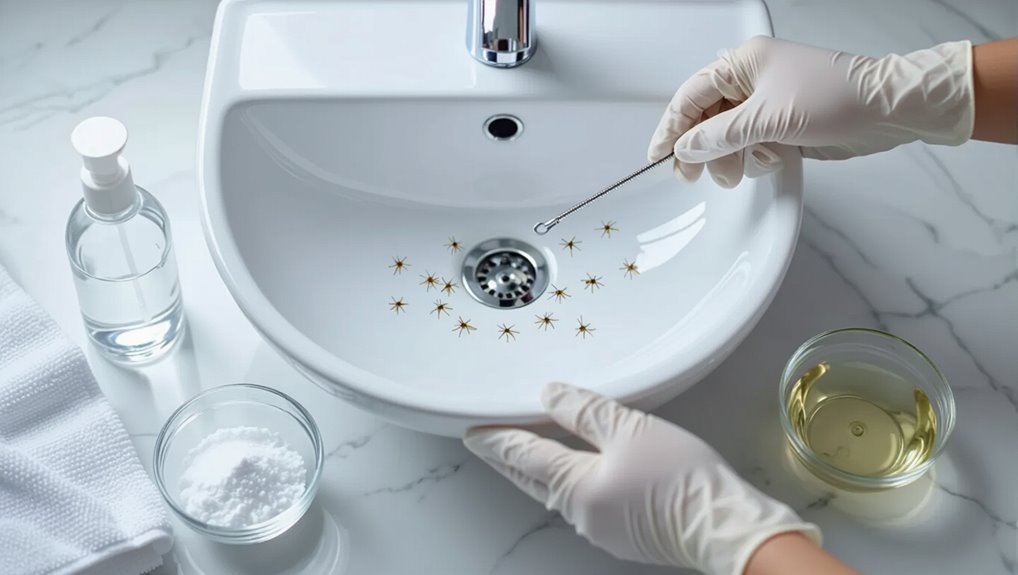
The section outlines quick one-time measures to kill adult gnats on contact, simple DIY traps that can be assembled in minutes, and an emergency cleaning sequence to follow for rapid results.
It presents clear, actionable steps for what to do first, next, and last to stop an active infestation.
The guidance focuses on immediate effectiveness and ease of implementation.
Quick one-time actions to kill adult gnats instantly
Spray a quick, focused burst of insecticide or use a hand-held fly swatter to kill visible adult gnats instantly; this immediate action reduces the active population while longer-term measures take effect.
For those learning how to get rid of gnats in bathroom drain, also vacuum or wipe away carcasses, ventilate the space, and temporarily block the drain opening to prevent reinvasion while following up with drain cleaning and source elimination.
Fast DIY traps you can set up in minutes
Set up simple, fast DIY traps to catch adult gnats while deeper drain treatments work. The detached tone guides readers through quick, effective options that reduce visible pests and frustration.
- Bowl of apple cider vinegar with dish soap — irresistible sink for gnats.
- Red wine or beer trap — attracts and drowns.
- Sticky tape funnel over drain — captures escapees and shows progress.
Emergency cleaning sequence for immediate results (what to do first, next, last)
Begin by isolating the problem area and removing standing water and visible debris from the sink and surrounding surfaces to cut off adult gnats’ resting spots and breeding material.
Next, pour boiling water, scrub the drain and trap with a stiff brush, and apply a household enzyme cleaner.
Finish by rinsing, replacing drain stoppers, and monitoring nightly; repeat until activity stops.
Why Gnats Appear in Bathroom Drains
Gnats in bathroom drains typically originate from small, moisture-loving fly species that breed in the organic film and sludge that accumulates inside pipes.
Poor drainage, constant humidity, and inadequate venting create the persistent damp habitat these insects need to complete their life cycle.
Distinguishing drain gnats from fruit flies or larger sewer flies relies on size, flight pattern, and where adults congregate near drains rather than on food.
Common causes of drain gnats and their life cycle
A small, persistent swarm in a bathroom often points to a breeding site within the drain system where organic matter, moisture, and stagnant water create ideal conditions for gnat development.
Adult gnats lay eggs on wet surfaces; larvae feed, mature, and pupate within damp crevices.
Rapid life cycles (about one to three weeks) allow populations to explode if sources persist unnoticed.
The role of organic buildup, moisture, and venting in infestations
Bathroom drain infestations stem from three interacting factors: accumulated organic film provides food and attachment sites, persistent moisture sustains larval development, and inadequate venting or slow drainage creates pockets of stagnant water where eggs and larvae thrive.
These conditions concentrate nutrients and shelter, enabling rapid breeding; reducing residue, drying surfaces, and improving flow or ventilation disrupts the lifecycle and prevents recurrent infestations.
How to identify drain gnats versus fruit flies or sewer flies
When tiny flies are noticed near a sink or shower, distinguishing drain gnats from fruit flies or sewer flies depends on size, wing pattern, flight behavior, and preferred breeding sites. Drain gnats are small, hover near drains, and larvae live in slime; fruit flies prefer fermenting fruit; sewer flies are moth-like and cling to walls.
| Trait | Indicator |
|---|---|
| Size | Drain gnats tiny |
| Flight | Hovering vs darting |
| Wings | Clear vs patterned |
| Habitat | Drain slime vs fruit/sewer |
Step-by-Step Deep Cleaning of Bathroom Drains
The following section lists the essential tools and supplies for a thorough drain clean and explains how to remove buildup such as hair, slime, and biofilm.
It outlines step-by-step techniques for using a drain snake, brush, and safe boil-and-flush method. Each step emphasizes safety precautions and proper disposal to prevent gnats from returning.
Tools and supplies you need for a thorough drain clean
A handful of basic tools and a few common supplies are sufficient to perform a thorough drain clean; having them ready makes the process safer and faster.
Protective gloves and eye protection prevent contact and irritation. A small toolkit and effective cleaners reduce effort.
Essential items include:
- Rubber gloves and safety goggles
- Drain snake or flexible brush
- Enzymatic cleaner and baking soda/vinegar
How to physically remove drain buildup (hair, slime, biofilm) step-by-step
With tools and supplies at hand, proceed to remove the physical buildup by working from the drain opening outward and following a clear sequence:
Clear visible hair and gunk with gloved fingers or a grabber.
Lift and discard debris into a sealed bag.
Scrub the exposed surface with a stiff brush and enzyme cleaner.
Rinse thoroughly with hot water.
Repeat until water drains freely and residue is gone.
How to use a drain snake, brush, and boil-and-flush safely
Begin by preparing the work area and wearing gloves and eye protection before inserting a drain snake, twisting a stiff brush, or pouring hot water, so each step can be executed safely and without contaminating surrounding surfaces.
Guide the snake gently, retrieve debris slowly. Scrub with a plumbing brush to loosen biofilm.
Boil water separately, then pour in stages to avoid splashing and pipe damage; ventilate area.
Proven Chemical and Natural Treatments
This section outlines proven chemical and natural options for eliminating drain gnats, starting with safe household mixes—one cup baking soda followed by one cup white vinegar.
Wait 15 minutes, then flush with two quarts (about 2 liters) of boiling water.
It also explains when enzymatic or bacterial drain cleaners work best (regular maintenance or organic buildup) and how to apply them per label instructions.
Finally, recommended commercial insecticides and trap types are described with emphasis on proper drain-specific use and safety precautions.
Safe household solutions (vinegar, baking soda, hot water) with exact ratios and timing
Mixing common pantry items—baking soda, white vinegar, and boiling water—offers a simple, non-toxic method to clear gnats and their larvae from bathroom drains.
Pour 1/2 cup baking soda into the drain, follow with 1 cup white vinegar, seal for 30 minutes to foam, then flush with 2–3 cups boiling water.
Repeat weekly until infestations stop.
When and how to use enzymatic drain cleaners and bacterial treatments
Consider enzymatic and bacterial drain treatments when organic buildup persists despite mechanical cleaning and household remedies.
These products introduce live microbes or enzymes that break down grease, hair, soap scum, and organic matter that provide breeding sites for gnats.
Use according to label: apply to dry drains, maintain recommended temperature and dwell time, repeat weekly for several weeks, then monthly for prevention.
Avoid mixing with harsh chemicals.
Commercial insecticides and traps recommended for drains usage and safety
After employing enzymatic or bacterial treatments to reduce organic buildup, many homeowners will turn to targeted insecticidal options and traps to eliminate remaining gnats and prevent reinfestation.
Preferred choices include pyrethrin sprays for surfaces, bio-friendly bait gels for drains, and UV or sticky traps.
Use protective gear, follow label directions, and avoid mixing chemicals to guarantee safety and effectiveness.
- Pyrethrin sprays
- Bait gels
- UV/sticky traps
Preventing Gnats from Returning
A clear prevention plan starts with a routine drain maintenance schedule and a simple checklist to remove hair, soap scum, and trapped organic matter.
Controlling moisture with improved ventilation and quick leak repairs limits the damp environments where gnats breed.
For long-term protection, biofilm control through enzyme treatments and occasional professional cleaning can suppress reinfestation.
Routine drain maintenance schedule and checklist
Regular, simple maintenance prevents most bathroom drain gnat problems from returning: schedule weekly quick cleanings, monthly deeper treatments, and quarterly inspections to catch buildup or leaks early.
- Inspect traps and remove hair daily to feel relief.
- Flush drains with enzymatic cleaner weekly to regain control.
- Document treatments and issues monthly to maintain confidence and prevent surprises.
Moisture control and ventilation fixes that reduce gnat breeding
Because gnats require moist, stagnant conditions to breed, reducing humidity and improving airflow in the bathroom is the most effective long-term prevention strategy.
Install or service exhaust fans, run ventilation during and after showers, fix leaks, and insulate cold pipes to prevent condensation.
Use a dehumidifier if needed, keep surfaces dry, and store damp items openly to accelerate drying and eliminate breeding sites.
Long-term treatments: biofilm control, enzyme treatments, and professional services
Once humidity and airflow are addressed, controlling the organic film inside drains becomes the next priority to stop gnats from returning.
Regular enzymatic drain cleaners break down biofilm safely; quarterly treatments prevent regrowth.
Mechanical scrubbing or brush attachments remove residues.
For persistent infestations, licensed nuisance pest or plumbing professionals evaluate hidden buildup, biofilm reservoirs, and recommend targeted sanitation or repairs to eliminate breeding sites.
Troubleshooting Persistent or Severe Infestations
If gnats persist despite routine cleaning or appear in multiple fixtures, professional assessment may be warranted to check for sewer-line issues, hidden leaks, or adjacent breeding sources.
Targeted interventions from a plumber or pest control pro can address underlying plumbing defects and treat areas beyond simple drain cleaning.
Homeowners should document sightings, treatment dates, and locations to monitor trends and support professional diagnosis.
Signs your problem is beyond DIY and needs a plumber or pest pro
When should a homeowner stop relying on DIY methods and call a professional?
Persistent swarms despite repeated treatments, larvae visible in drains after cleaning, foul sewage odors, multiple infested fixtures, or recurring infestations following temporary fixes indicate escalation.
Also call a pro if plumbing damage, mold, or health concerns exist.
A plumber or pest specialist can diagnose sources and apply targeted remediation safely and effectively.
Targeted strategies for recurring infestations (sewer line, hidden leaks, adjacent sources)
Address persistent infestations by diagnosing and treating underlying structural or plumbing sources rather than relying on surface fixes alone.
Inspect sewer lines for breaks or backflow, check for hidden leaks under fixtures and behind walls, and survey adjacent spaces (crawlspaces, drains, potted plants).
Coordinate targeted repairs, professional sewer cleaning, or localized waterproofing.
Eliminate breeding sites and seal entry points to prevent recurrence.
How to document and monitor infestation progress
Having inspected structural sources and applied targeted repairs, the next step is systematic documentation and monitoring to verify progress and guide further action.
Record dates, treatments, trap counts, and visible breeding signs in a log. Photograph problem areas periodically.
Use sticky traps and drain monitors to quantify activity. Review weekly, adjust interventions based on trends, and escalate to professional inspection if counts fail to decline.
Common Mistakes That Make Gnats Worse
Home remedies mixed without proper guidance and hazardous chemical combinations can aggravate drain gnats or create new hazards.
Incomplete cleaning and irregular treatment schedules allow larvae and eggs to persist, undoing temporary successes.
The following points explain which DIY practices to avoid and why consistency in cleaning matters.
Harmful DIY mixes and practices to avoid
Many common DIY approaches promise quick fixes but can worsen a drain gnat problem or create health and plumbing hazards.
Mixing bleach with ammonia, vinegar with bleach, or multiple drain cleaners can produce toxic fumes and corrode pipes.
Hot oil, caustic oven cleaners, or pouring acid-based solutions risks burns and damage.
Reliance on untested herbal or oil concoctions may be ineffective and delays proper treatment.
Why incomplete cleaning or inconsistent treatments fail
Incomplete cleaning or sporadic treatments allow drain gnat populations to survive and rebound because larvae and eggs remain in biofilm, pipe crevices, and overflow gaps where brief or surface-level measures cannot reach them.
Partial efforts disperse adults but leave breeding sites intact, promoting rapid resurgence. Consistent, thorough mechanical removal and follow-up treatments are essential to eliminate all life stages and prevent reinfestation.
Quick Reference: Best Methods Ranked by Speed, Cost, and Effectiveness
A concise comparison helps readers choose between quick fixes and lasting prevention.
| Method | Speed | Cost |
|---|---|---|
| Boiling water/bleach flush | Immediate | Low |
| Enzyme or baking soda treatment | Moderate | Very low |
| Pipe cleaning/repair & trap maintenance | Long-term | Moderate |
The table highlights fastest short-term fixes and most cost-effective long-term solutions so readers can prioritize actions.
Fastest short-term fixes
Begin with immediate, low-effort interventions that reduce adult gnats and interrupt breeding while longer-term measures take effect.
Pour boiling water down drains, scrub visible residue, and run drains with strong water flow.
Set sticky traps near sinks and use a bleach or enzyme drain flush for quick larvae kill.
Make certain vents and windows stay closed to limit re-entry.
Most cost-effective long-term solutions
Prioritize methods that interrupt the drain-to-adult life cycle, are inexpensive to maintain, and provide lasting sanitation rather than temporary suppression.
Recommended options: regular enzymatic drain treatments, weekly hot-water and vinegar flushes, improved ventilation and dehumidifiers, trap covers and routine mechanical cleaning, and periodic professional drain snaking.
These combine low recurring cost with high effectiveness, minimizing recolonization and long-term maintenance needs.
Checklist: 24-Hour Action Plan to Eliminate Gnats from a Bathroom Drain
A concise, timed checklist guides the first 24 hours of action to stop gnats at the source and prevent immediate re-infestation.
It outlines hour-by-hour steps for treatments, monitoring, and hygiene measures, plus clear follow-up tasks to sustain results over the next week. The plan is practical, urgent, and focused on measurable progress.
- The first hours: act swiftly to remove breeding sites and apply targeted treatments.
- The afternoon to evening: monitor results and adjust tactics to guarantee visible reduction.
- The following week: maintain preventive routines and recheck drains to confirm elimination.
Hour-by-hour steps for the first day
Start the 24-hour action plan by evaluating the bathroom quickly to confirm the drain as the gnat source, noting visible swarms, slow drainage, and any organic buildup around the fixture.
This initial check sets measurable targets for subsequent hour-by-hour interventions and guarantees efforts focus on elimination rather than symptom treatment.
Hour 1: clear surface debris.
Hour 2: apply enzyme cleaner.
Hour 4: flush with hot water.
Hour 8: set traps.
Hour 12: inspect progress.
Hour 24: deep clean trap and repeat flush.
Follow-up actions for the next week
After the initial 24-hour interventions, the following week focuses on consistent monitoring and targeted maintenance to guarantee gnats are fully eliminated and conditions that support breeding are removed.
Inspect traps and drains daily, clear organic buildup, run hot water and enzyme cleaner every other day, dry surfaces, fix leaks, empty and sanitize p-traps if needed, and record sightings to assess success and decide further action.
Conclusion
A swift, methodical cleanup ends gnat invasions; one homeowner noted that clearing a single clogged sink stopped dozens of midges overnight, like flicking a light to expose hiding moths. Data shows removing organic buildup and maintaining weekly enzyme treatments cuts drain gnat return rates by over 80%. With deep cleaning, targeted treatments, and simple preventive habits, bathrooms stay clear—small, consistent actions defeat what seems like an overwhelming swarm.