
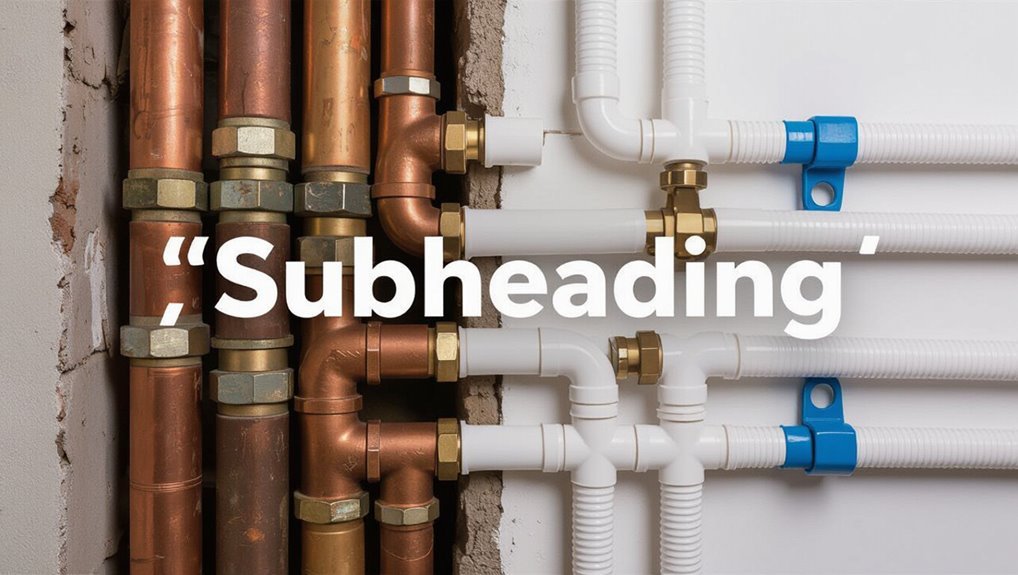
When Did Homes Stop Using Copper Pipes? History & Replacement Guide
Copper plumbing started to decline in popularity from the late 1970s to the 1990s as builders increasingly chose cheaper and quicker-to-install alternatives like PEX, PVC, and CPVC. While some regions, particularly metropolitan areas and those prone to high corrosion, transitioned to plastic pipes sooner, many rural and older urban homes continued to utilize copper into the 2000s. Although copper is still found in many homes today, its status as the dominant plumbing material has been diminished for decades. Continue reading for practical signs of plumbing issues, associated risks, and replacement options.
Who This Guide Is For and How to Use It

This guide is designed for homeowners, property managers, and maintenance professionals who need a clear, practical reference on copper plumbing—its history, common issues, and replacement options—and for readers deciding whether to repair, replace, or retrofit existing systems.
It summarizes relevant timelines, material characteristics, inspection priorities, and decision criteria.
Readers will find signs of deterioration, typical failure modes, cost and disruption comparisons, and retrofit pathways with pros and cons.
Use it to triage problems, prepare questions for contractors, and weigh short- versus long-term strategies.
Technical terms are defined succinctly; appendices indicate where to find codes, standards, and trusted resources.
Short Answer: When Did Homes Stop Using Copper Pipes?
Copper’s dominance in residential plumbing began to wane in the late 20th century as plastic piping materials like PEX and PVC became more common.
The decline accelerated due to lower material and installation costs, easier handling, and evolving building codes that favored plastics. Adoption timelines varied by region, with some areas shifting in the 1980s–1990s and others retaining copper longer.
Rise Of Plastic Piping
By the late 1970s and into the 1980s, builders and plumbers increasingly favored plastic piping—primarily PVC, CPVC, and later PEX—because it was cheaper, easier to install, and resistant to corrosion.
The industry adopted plastics for supply and drain lines; manufacturers promoted flexibility, faster assembly, and lower labor costs. Homeowners saw fewer soldered joints and more solvent-weld or crimp connections. Codes evolved to permit plastic in many applications.
Advantages included chemical resistance and freeze tolerance with PEX, while limitations prompted selective use.
Typical considerations included:
- Cost and installation speed
- Compatibility with existing systems
- Long-term performance and warranties
Decline Of Copper Use
Generally, domestic construction shifted away from copper piping during the late 1970s through the 1990s as plastic alternatives—PVC, CPVC, and later PEX—became more economical and easier to install.
The decline accelerated as labor costs rose and soldering skill demands conflicted with faster push-fit and crimp systems.
Corrosion concerns in certain water chemistries, rising copper prices, and the desire for quieter, flexible runs also reduced copper specification.
Building codes adapted to permit plastics for potable and waste systems.
Regional Adoption Timelines
Regional shifts in when builders moved away from copper reflect local economics, code changes, and water chemistry rather than a single nationwide date. Regions phased out copper at different times: some metropolitan areas progressed in the 1980s, others retained copper into the 2000s where water quality favored it. Homeowners and inspectors should check local code histories and utility corrosion reports to date plumbing.
- Urban centers: earlier progressions tied to cost and code updates.
- Rural areas: slower change; copper persisted where supply lines favored it.
- High-corrosion zones: moved away sooner due to accelerated pipe failures.
Should You Replace Your Copper Pipes? A Quick Decision Framework
Deciding whether to replace copper pipes requires weighing pipe condition, water quality, and cost against disruption and remaining service life.
Inspect for pinhole leaks, corrosion, green-blue staining, reduced pressure, and discolored water; any of these signal evaluation.
Test water chemistry for acidity or high dissolved solids that accelerate corrosion.
Estimate remaining lifespan based on age, installation quality, and past repairs.
Compare repair vs. partial or full replacement costs, factoring labor, access, and potential mold or finish work.
Prioritize replacement when leaks are recurrent, contamination risk exists, or cumulative repair costs approach replacement expense.
Obtain professional inspection and written estimates.
Copper vs PEX vs CPVC: Head-to-Head Comparison
A concise comparison of copper, PEX, and CPVC helps homeowners weigh durability and expected lifespan against ease of installation and system flexibility.
Cost differences and routine maintenance needs further distinguish which material suits a given budget and long-term plan.
The following sections examine these factors to guide practical replacement choices.
Durability And Longevity
Often the choice between copper, PEX, and CPVC hinges on expected lifespan and failure modes, so a clear comparison of durability and longevity is essential.
Copper often lasts 50+ years when water chemistry is stable; it resists UV and high temperatures but corrodes with aggressive water.
PEX resists corrosion and endures freeze-thaw cycles better, with expected lifespans of 25–40 years depending on formulation and UV exposure.
CPVC offers similar corrosion resistance to PEX and withstands higher temperatures but can become brittle over decades.
- Copper: long-lived, corrosion-sensitive
- PEX: flexible, corrosion-resistant
- CPVC: heat-tolerant, may embrittle
Installation And Flexibility
When comparing installation and flexibility, copper requires soldering or compression fittings and rigid routing that favors straight runs and elbows, while PEX installs with push-fit or crimp rings and can bend around obstacles to reduce joints, and CPVC is solvent-welded into fixed runs that are easier to shape than copper but less forgiving than PEX. Installers note copper’s precise measured cuts and thermal sensitivity, PEX’s rapid layout and fewer connections, and CPVC’s predictable fittings and solvent cure time. Choice often depends on access, retrofit constraints, and local code acceptance.
| Material | Connection Type | Routing |
|---|---|---|
| Copper | Solder/compression | Rigid |
| PEX | Crimp/push-fit | Flexible |
| CPVC | Solvent weld | Semi-rigid |
Cost And Maintenance
Frequently, homeowners and contractors weigh upfront material and installation costs against long-term maintenance and repair expenses when choosing between copper, PEX, and CPVC.
Copper costs more initially and resists UV and heat, reducing leak-related repairs; PEX is inexpensive and flexible but can be damaged by sunlight and rodents; CPVC sits between, affordable with good chemical resistance yet brittle in extreme cold.
Consider expected lifespan, regional water chemistry, and local labor rates.
Typical trade-offs include:
- Copper: high material/labor cost, low corrosion risk, long lifespan
- PEX: low cost, easy repairs, sensitivity to UV and pests
- CPVC: moderate cost, chemical resistance, cold fragility
How to Tell If Your Home Still Has Copper Plumbing
A quick visual inspection of exposed plumbing—under sinks, in basements, or near the water heater—can reveal whether a home uses copper.
Copper pipes appear reddish-brown when clean and develop greenish-blue verdigris with age.
Look for smooth, rigid tubing and soldered joints; fittings labeled “C” or “Type L” indicate copper.
Flexible braided lines are usually not copper.
Home inspection reports, plumbing plans, or building permits can confirm materials.
Where pipes are painted or insulated, check at connections or fixture inlets.
If uncertain, a small magnet test helps: magnets do not stick to copper, distinguishing it from ferrous metals.
Signs You Need to Replace Existing Copper Now (Urgent Red Flags)
Green or blue discoloration on copper pipes can indicate active corrosion and mineral buildup that compromise the plumbing.
Noticeable drops in water pressure may signal internal pipe narrowing or leaks from deteriorating copper.
A persistent metallic taste in the water is a health-related warning that often accompanies advanced pipe corrosion and warrants immediate replacement.
Green/Blue Pipe Discoloration
Blue-green staining on copper plumbing signals more than cosmetic wear; it often indicates active corrosion or chemical reactions that can compromise pipe integrity. Observers should treat widespread discoloration as an urgent red flag.
The color can stem from oxidization, acidic water, or galvanic corrosion where dissimilar metals meet. Immediate inspection identifies leaks, pinhole failures, or deteriorated fittings.
Replacement may be required when stains accompany soft spots, recurring leaks, or visible verdigris flakes. Typical homeowner actions include contacting a plumber, testing water chemistry, and isolating affected sections to prevent spread.
- Call a licensed plumber promptly
- Test for acidic or chlorinated water
- Inspect nearby metal connections
Low Water Pressure
Often the first clear sign of failing copper plumbing is persistently low water pressure at multiple fixtures, which indicates internal narrowing from corrosion, mineral buildup, or pinhole leaks that restrict flow.
Homeowners may notice weak showers, slow-filling tubs, or reduced flow at sinks and outdoor spigots despite normal municipal supply.
Pressure loss that worsens over weeks or appears after localized repairs suggests advancing pipe degradation.
Temporary fixes like aerator cleaning or pressure regulator adjustment won’t address narrowed or compromised copper.
Prompt inspection and pressure testing can confirm internal deterioration; replacement is advised when multiple runs show reduced capacity or recurring pressure drops.
Persistent Metallic Taste
A persistent metallic taste in drinking water can signal urgent copper corrosion that is leaching ions into the supply and requires immediate attention.
Residents may notice bitterness, staining, or headaches after consumption; these are red flags for degraded plumbing.
Immediate testing and inspection by a licensed plumber or water specialist is advised.
Replacement often resolves contamination and prevents health risks.
Consider these indicators when deciding on action:
- Sudden onset of metallic flavor after stagnant periods or repairs
- Blue-green stains on sinks, fixtures, or laundry
- Elevated copper results on certified water tests
Swift replacement protects health and property.
Partial Repipe vs Full Repipe: Which Is Right for You?
Which option makes more sense for a homeowner: replacing only the problematic sections of plumbing or replacing the entire system? Decision hinges on pipe condition, age, and distribution of failures.
Partial repipe targets localized corrosion, leaks, or sections with lead or damaged fittings; it minimizes disruption and preserves functional piping.
Full repipe addresses widespread deterioration, chronic leaks, pressure loss, or plans for long-term ownership, providing uniform materials and simplified future maintenance.
Inspection, water testing, and consulting a licensed plumber inform the choice.
Balancing immediate needs, long-term risk reduction, and disruption determines whether partial or full repiping is appropriate.
Cost to Replace Copper With PEX or CPVC (Ballpark Figures)
Estimated costs for replacing copper with PEX or CPVC typically range from several hundred to several thousand dollars depending on home size and scope.
Material choice, labor rates, access to plumbing runs, and whether a partial or full repipe is needed are primary cost drivers.
Comparing PEX and CPVC, PEX often lowers labor time and overall expense, while CPVC material cost and installation complexity can be higher in some situations.
Typical Replacement Costs
Several factors determine the ballpark cost to replace copper with PEX or CPVC, including house size, piping complexity, local labor rates, and whether walls or floors must be opened. Typical national averages often fall within ranges reflecting materials and labor; smaller homes commonly see lower totals, while full re-pipes cost more. Homeowners should expect variability by region and contractor.
- Small home partial re-pipe: often a few hundred to a few thousand dollars.
- Full re-pipe with PEX: commonly several thousand to over ten thousand dollars.
- Full re-pipe with CPVC: similar to PEX, sometimes slightly higher material cost.
Cost Factors Compared
Compared side-by-side, the primary cost drivers for replacing copper with PEX or CPVC are material choice, labor intensity, the scope of the job (partial vs. full re‑pipe), and the extent of wall or floor access required.
PEX typically costs less per linear foot and installs faster with fewer fittings, reducing labor.
CPVC material is modestly priced but requires more joints and careful fire-coded handling, slightly raising labor.
Full repipes and multi-story homes increase hours and disruption, raising permits and restoration costs.
Fixture replacement, shutoff upgrades, and local code inspections add variable charges.
Regional labor rates and contractor experience create the largest price spread.
Typical Repipe Timelines for Different Home Sizes
Typical repipe timelines vary primarily with home size and layout complexity; a straightforward single-family bungalow often requires one to two days, while larger multi-story homes can take three to five days or more depending on access and fixtures.
Work duration depends on pipe routing, number of fixtures, wall access, and required permits.
Older homes with plaster or complex beam structures add time.
Planning and staging materials shorten downtime.
Typical examples include:
- Small homes: 1–2 days for main runs and fixture reconnections.
- Medium homes: 2–4 days with partial wall opening and multiple bathrooms.
- Large/multi-story: 4–7+ days for extensive routing and testing.
DIY vs Pro: When You Can Replace Pipes Yourself
The decision between DIY and hiring a professional hinges on a homeowner’s actual plumbing skills, the local permit and code requirements, and access to proper tools.
Time availability and the total projected cost—factoring materials, permits, and potential mistakes—also influence whether a self-repipe is practical. Weighing these factors together helps determine when a professional is the safer, more efficient choice.
Assess Your Skill Level
How can a homeowner determine whether a copper-pipe replacement is a DIY project or requires a licensed plumber? An honest skills inventory helps: evaluate plumbing knowledge, tool familiarity, and comfort with soldering or fittings.
Small, accessible sections with simple joints and no mains tie-ins may suit a competent DIYer. Complex layouts, hidden walls, structural work, or unfamiliar leak diagnosis point to professional help. Consider time, risk tolerance, and warranty loss if done incorrectly.
- Basic soldering and leak testing experience
- Access to proper tools and materials
- Willingness to stop and call a pro if unsure
Permit And Code Requirements
In many jurisdictions, local building codes and permit requirements determine whether a homeowner may legally replace copper pipes without a licensed plumber.
Regulations often distinguish between minor repairs and full replacements or alterations to supply lines, requiring permits, inspections, and adherence to materials and joining methods.
Failure to obtain required approvals can void insurance or cause failed inspections at sale.
Homeowners should consult local code offices, review applicable plumbing standards, and verify permit thresholds before starting work.
When in doubt, hiring a licensed contractor guarantees compliance, documented inspections, and transfer of liability for code-conforming installations.
Tools, Time, Cost
After confirming permit and code obligations, homeowners must weigh the practical requirements of replacing copper pipes: the specific tools, the time involved, and the total cost compared to hiring a professional. Assessments should consider skill level, system complexity, and potential hidden damage.
Basic repairs can be DIY; full repiping usually demands pros.
- Essential tools: tubing cutter, torch or crimp tools, fittings, flux/solder or push-fit connectors, pipe supports.
- Time: minor sections a day; whole-house repipe several days to a week including inspections.
- Cost: DIY saves labor but risks mistakes; professionals add warranty, speed, and compliance.
Step-by-Step: Replace a Copper Branch With PEX
Replacing a copper branch with PEX requires clear planning, the right tools, and basic plumbing skills; this step-by-step guide outlines a safe, code-conscious process for cutting out the old run, installing PEX, and making secure connections that restore reliable service.
First, shut off water and drain the branch.
Cut and remove the copper section, deburr remaining pipe, and guarantee access.
Measure and cut PEX, allow for expansion and fittings.
Install appropriate fittings (crimp, clamp, or push-fit) and secure with manufacturer-recommended tools.
Pressure-test the new run, check for leaks, insulate exposed lines, and restore normal service once verified.
Common Mistakes When Swapping Copper for PEX or CPVC
A frequent error is selecting PEX or CPVC with the wrong diameter, which reduces flow and can cause pressure problems in branch lines.
Equally common are improper adaptor connections between copper and plastic, where incompatible fittings or poor soldering/adhesive technique lead to leaks. Awareness of correct sizing and using approved, properly installed adaptor fittings prevents most failures.
Incorrect Pipe Sizing
Homeowners and contractors frequently misjudge pipe diameters when converting copper systems to PEX or CPVC, leading to reduced flow, pressure loss, or noisy operation. Incorrect sizing often stems from assuming nominal sizes match flow capacity; PEX and CPVC have different internal diameters and friction characteristics.
Proper planning requires calculating fixture units, run lengths, and acceptable pressure drop. Oversized piping raises cost and stagnation risk; undersized piping causes complaints and possible code violations. Common consequences include uneven distribution and accelerated wear on pumps or valves.
- Measure actual internal diameters and compare capacity
- Calculate pressure drop for long runs
- Balance cost versus performance
Poor Transition Connections
When joining new PEX or CPVC runs to existing copper, improper adapter fittings and techniques are a leading source of leaks, corrosion, and code failures.
Installers often mix materials without dielectric unions or approved adapter fittings, allowing galvanic corrosion where dissimilar metals contact.
Crimp rings set incorrectly, push-fit adapters stuck halfway, or threaded joints without proper sealing compound create seepage and pressure loss.
CPVC solvent-welds to copper via improper primers or fittings fail.
Codes require listed adapter devices and proper support, clearance, and testing.
Correct adapters use manufacturer-specified adapters, dielectric isolation, and pressure-tested joints to ensure durable, code-compliant connections.
Permits, Inspections, and Code Requirements for Repiping
Before repiping begins, most municipalities require permits and inspections to guarantee work meets local plumbing codes and safety standards.
Documentation assures proper materials, pressure ratings, and approved joining methods are used; inspections verify leak-free connections and adequate support. Homeowners should expect timelines for permit approval and final inspection sign‑off before concealed walls are closed.
- Confirm local code references and acceptable pipe types (copper, PEX, CPVC).
- Schedule rough‑in and final inspections; retain permit paperwork.
- Be aware of required seismic straps, backflow prevention, and insulation standards.
Failure to comply can delay occupancy approvals and affect insurance claims.
How to Hire a Plumber and What to Ask
Who should be hired for a repipe depends on scope, materials, and code familiarity; hiring a licensed, insured plumber with specific experience in copper systems minimizes risk.
The homeowner should verify license numbers, insurance certificates, and local references.
Ask about prior copper repipe projects, timelines, written estimates, and warranty terms for labor and materials.
Confirm who obtains permits and schedules inspections.
Request a clear scope of work, cleanup procedures, and contingency charges for hidden damage.
Obtain multiple bids to compare skills and pricing rather than choosing lowest cost.
Document agreements in a written contract before work commences.
Financing Options and Budget Strategies for Full Repipes
Regarding financing a full repipe, homeowners should evaluate cost, cash flow, and long-term value to choose an approach that balances immediate affordability with property protection.
Options include paying cash, low-interest home equity loans, contractor financing, or government/local improvement programs.
Decisions hinge on interest rates, tax implications, timeline, and emergency reserves.
Practical budgeting involves getting multiple estimates, prioritizing critical areas, and scheduling work to smooth cash flow.
- Compare loan terms and monthly impact before committing.
- Factor warranty transferability and resale value.
- Keep a contingency fund for unexpected issues during the repipe.
Repipe Project Checklist: Plan, Hire, Finish
A concise repipe checklist outlines the project scope and timeline, ensuring homeowners know which pipes will be replaced and how long the work will take.
It recommends hiring a licensed plumber with verifiable references, insurance, and clear contract terms.
The checklist concludes with final inspection and cleanup steps to verify workmanship, restore the site, and document the completed system.
Project Scope And Timeline
When will the repipe begin and how long will it take? The project scope defines rooms served, pipe materials, and access needs; the timeline estimates prep, demolition, installation, and inspections. Clear milestones reduce surprises and support homeowner planning.
- Prework: site prep, permits, and material delivery.
- Main work: removal of old piping, installation of new lines, and system testing.
- Finish: wall repairs, cleanup, final inspection, and homeowner orientation.
A concise schedule typically spans one to five days for a single-family dwelling, longer for complex layouts; contingencies for hidden damage and permit delays should be built into the plan.
Hiring A Licensed Plumber
With a clear scope and schedule established, the homeowner must engage a licensed plumber to carry out the repipe work professionally and legally.
The selection process should verify license status, insurance, and local references, confirm experience with the chosen material (PEX, copper, or CSST), and obtain itemized bids.
Contract terms must specify start and completion dates, payment schedule, change-order procedures, warranty coverage, and permit responsibilities.
Ask for a written labor warranty and manufacturer warranties transfer details.
Communicate site access, protection measures, and expected disruptions.
Retain copies of all permits, contracts, and communications for project records and future resale documentation.
Final Inspection And Cleanup
Following the repipe, homeowners and the contractor should jointly complete a final inspection and cleanup to confirm systems function correctly and the site is returned to pre-project condition.
They verify water pressure, test hot and cold lines, check for leaks at fittings, and make certain fixtures operate.
Documentation is updated: warranties, permit sign-offs, and as-built notes.
Cleanup restores surfaces, removes debris, and vacuums fine particles.
A clear punch list closes outstanding items.
- Verify pressure, flow, and leak-free joints.
- Confirm permits, warranties, and final paperwork are completed.
- Restore finishes, remove debris, and sanitize affected areas.
How Repipe Work Affects Home Value and Disclosure Rules
In evaluating a home’s marketability, repipe work can both increase appeal and complicate sales depending on timing, quality, and documentation. Properly executed repiping often raises value by eliminating leaks, improving water quality, and reducing buyer perceived risk.
Conversely, incomplete, poorly documented, or nonpermitted work can deter buyers, trigger renegotiation, or complicate mortgage and insurance approval. Clear records—permits, inspection certificates, contractor warranties, and itemized invoices—help validate investment.
Sellers should disclose repipe details per local laws; real estate agents and inspectors typically review plumbing history. Accurate disclosure and professional documentation streamline transactions and protect both parties from post-sale disputes.
Maintenance Tips to Extend the Life of Remaining Copper Pipes
After documenting any repipe work and resolving permit or inspection issues, attention should turn to preserving the remainder of a home’s copper plumbing.
Routine inspection identifies pinhole leaks, corrosion, and loose fittings before they worsen. Water chemistry should be tested; adjusting pH and hardness reduces erosion and mineral buildup. Insulate exposed pipes in unheated spaces to prevent freezing and thermal stress.
- Flush lines periodically to remove sediment and check flow.
- Replace worn solder joints or corroded valves promptly with compatible materials.
- Maintain moderate household water pressure and address hammering with arrestors.
Consistent, targeted maintenance prolongs service life and delays full replacement.
Durability: Copper vs PEX vs CPVC (Expected Lifespans & Failure Modes)
How long will plumbing last and why do different materials fail? Service life varies: copper commonly endures 50–70 years; PEX often lasts 25–40 years; CPVC typically reaches 25–40 years.
Failure modes differ. Copper corrodes with aggressive water chemistry and pitting accelerates leaks; pinhole failures can appear after decades.
PEX degrades under UV, can be damaged by rodents, and may harden or crack after long-term oxidative exposure or high temperatures.
CPVC is prone to brittle fracture from thermal cycling and stress corrosion in certain chemical environments. Installation quality, water chemistry, and temperature extremes determine real-world longevity.
Leak Risk: Copper vs PEX vs CPVC Joint Failures
Typically, joint failures are the most common source of leaks regardless of pipe material, but the mechanisms and symptoms differ between copper, PEX, and CPVC. Copper commonly leaks at soldered or compression fittings when joints crack or solder fails; signs include greenish stains and slow weeps. PEX failures often stem from improper crimping or damaged rings, producing sudden sprays or pinhole leaks near fittings. CPVC tends to fracture at solvent-welded joints or threaded connections when stressed, showing hairline leaks or splits.
- Copper: solder joint fatigue, corrosion-related seepage.
- PEX: crimp/crimp-ring failures, quick bursts.
- CPVC: brittle fractures, slow cracks.
Corrosion and Water Chemistry: Why Copper Fails in Some Areas
Copper pipe longevity depends heavily on local water chemistry and how pipes are connected to other metals.
Acidic or soft water can etch copper, thinning walls and accelerating pinhole leaks.
Galvanic corrosion occurs when copper contacts dissimilar metals in the presence of conductive water, creating localized attacks at fittings and joints.
Acidic Water Effects
Often unnoticed, acidic water accelerates corrosion by dissolving the protective oxide layer that normally shields plumbing metal. Copper exposed to low pH water experiences pitting, pinhole leaks, and increased metal release, shortening service life and affecting water quality. Influence varies with temperature, dissolved oxygen, and mineral content. Mitigation requires testing and targeted treatment to stabilize pH and alkalinity.
Practical considerations include:
- Regular water testing to detect low pH and aggressive chemistry.
- Corrosion control options such as neutralizing filters or pH adjustment.
- Monitoring for early signs: blue-green stains, metallic taste, and unexplained leaks.
Galvanic Corrosion Risk
Acidic water can leave copper surfaces weakened and more susceptible to other attack mechanisms, including electrochemical interactions with dissimilar metals. Galvanic corrosion occurs when copper contacts a more noble or less noble metal in conductive water, creating a cell that accelerates metal loss at the anodic member.
Plumbing assemblies mixing copper with steel, brass, or aluminum are vulnerable if electrical continuity and protective coatings are absent. Water chemistry—pH, dissolved oxygen, chloride, and conductivity—controls current flow and pit formation.
Mitigation includes dielectric fittings, proper grounding, corrosion inhibitors, and material selection matched to local water chemistry and electrical conditions.
Health and Safety: Copper’s Pros and Cons for Drinking Water
Frequently, homeowners and public-health officials weigh copper plumbing’s benefits against its potential risks when evaluating drinking-water safety. Copper resists bacterial growth yet can leach into water under acidic or soft-water conditions, posing health concerns at high concentrations. Regulatory limits and testing guide acceptable exposure; corrosion control and proper installation reduce leaching.
Maintenance and water chemistry management matter more than pipe age alone. Consider these practical points:
- Monitor water pH and hardness to limit copper dissolution.
- Test water periodically, especially in older systems or after changes.
- Replace severely corroded sections or install certified fixtures to guarantee safety.
Energy Efficiency and Heat Conduction Differences
Compared side-by-side, copper and plastic plumbing differ markedly in how they conduct and retain heat, which affects both energy use and system performance. Copper transfers heat rapidly, reducing hot-water wait times but increasing heat loss along exposed runs. Plastic (PEX, CPVC) insulates better, retaining water temperature and lowering standby losses, though slower heat transfer can lengthen fixture delivery time. Selection influences insulation needs, routing, and water-heater workload. Installers balance thermal conductivity with system design to optimize efficiency.
| Property | Effect |
|---|---|
| Thermal conductivity | Copper: high; Plastic: low |
| Heat retention | Copper: poor; Plastic: good |
| Delivery speed | Copper: faster; Plastic: slower |
| Energy impact | Copper: higher losses; Plastic: lower losses |
Typical Lifespan: Copper Versus PEX and CPVC in Homes
Heat-handling differences between copper and plastic pipes also influence how long each material lasts in service. Copper commonly endures 50–70 years in typical conditions; PEX often reaches 30–50 years depending on sunlight and chlorine exposure; CPVC usually lasts 25–40 years but can be shortened by brittle failure or high-temperature stress. Lifespan depends on installation quality, water chemistry, and mechanical wear.
Typical considerations include:
- Environmental sensitivity: PEX resists corrosion; CPVC can degrade with UV and certain chemicals.
- Thermal cycling: Copper tolerates heat changes better; plastics can creep.
- Maintenance and repairs: Joint types affect longevity and leak risk.
Cost Drivers: How Copper Price Changes Affect Repipe Costs
Even modest swings in the market price of copper can materially change the cost of a full home repipe because copper tubing and fittings constitute a large portion of material expenses and are priced per pound.
Commodity prices influence supplier quotes, inventory stocking decisions, and markup strategies.
Larger homes amplify exposure as longer runs demand more metal.
Volatility can prompt contractors to hedge by raising estimates or requiring material cost clauses.
Salvage and scrap values also affect net project cost when old pipes are removed.
Regional supply constraints, tariffs, and global demand for electronics and construction further drive price movements and buyer behavior.
Installation Labor and Time: Copper vs Modern Alternatives
In many homes, installation labor and total project time differ noticeably between copper piping and modern alternatives such as PEX or CPVC. Copper requires soldering, fittings, and often more careful routing, increasing skilled-labor hours. Flexible polymers allow faster runs, fewer joints, and easier retrofits, reducing time and crew size. Labor differences affect disruption, access work, and finishing costs.
- Copper: more joints, soldering, rigid routing, longer install time.
- PEX/CPVC: flexible, fewer fittings, quicker runs, simpler repairs.
- Project factors: house layout, accessibility, installer experience, and required shutdowns.
Building Codes and Regulations That Reduced Copper Use
Across jurisdictions, evolving building codes and regulatory decisions played a key role in reducing copper pipe use by formally recognizing and endorsing alternative materials, updating allowable materials lists, and tightening limits tied to water quality and installation practices.
Model codes like the International Residential Code and Uniform Plumbing Code incorporated plastic and PEX standards, enabling local adoption.
Health and corrosion standards reduced copper mandates where water chemistry risked leaching.
Cost-benefit assessments in code committees weighed lifecycle costs and installer qualifications.
Certification requirements, labeling, and inspection protocols guaranteed alternatives met performance benchmarks, prompting municipalities to revise specifications and permit fewer copper-only installations.
Regional Differences: Where Copper Remained Popular Longer
Historically, certain regions persisted with copper plumbing longer than others due to a mix of local water chemistry, labor availability, economic conditions, and cultural preference. Areas with hard water favored copper for corrosion resistance, while communities with skilled trades maintained copper installations where labor costs justified metal work. Wealthier suburbs and older cities often retained copper longer than rapidly developing exurban zones. Material availability and import patterns also influenced choices.
- Mountain and desert regions: hard, mineral-rich water encouraged copper.
- Northeastern cities: tradition and local trades kept copper common.
- Rural districts: slower adoption of alternatives due to supply lines.
Why People Stopped Asking for Copper in New Builds
Regional preferences dwindled as economies, supply chains, and technology shifted, making alternatives to copper more attractive for new construction. Builders and developers favored plastic and PEX for lower material and installation costs, faster labor, and resistance to corrosion.
Code changes and manufacturer warranties validated nonmetal options, while copper price volatility and theft concerns discouraged its specification. Water-conserving fixtures and simplified piping layouts reduced the perceived need for copper’s durability.
Market forces, contractor training, and homeowner priorities—cost, speed, and maintenance—converged, so new builds increasingly specified flexible, affordable materials instead of traditional copper piping.
Early Copper Plumbing: 19th- to Early 20th-Century Overview
Beginning in the mid-1800s, copper emerged as a preferred plumbing material in urban and affluent buildings for its combination of malleability, relative corrosion resistance, and ability to be joined by soldering. Installations relied on hand-formed fittings and skilled solderers; pipes were often thick-walled and intended for long service lives. Municipal water quality and lead concerns encouraged copper use in certain districts.
Maintenance practices favored patching over replacement. Early production methods and joining techniques defined performance and lifespan.
Typical characteristics included:
- Visible seams and artisan solder joints
- Heavy gauge tubing compared with modern standards
- Longevity when water chemistry remained non-aggressive
The 1980s Turning Point: Rise of Plastic Plumbing Materials
As urban plumbing matured through the mid-20th century, a significant shift occurred in the 1980s when plastic piping systems—chiefly PVC, CPVC, and PEX—gained wide acceptance for residential and light commercial use. Cost, ease of installation, corrosion resistance, and improved manufacturing standards drove adoption.
Builders favored lighter materials that reduced labor time and joint complexity. Municipal codes and testing protocols evolved to certify plastics for potable water and waste lines.
Market momentum, combined with effective marketing and warranty offerings, shifted specification practices. Copper persisted in certain applications, but plastics redefined standard practice for new construction and many retrofit projects.
Conclusion
By the late 20th century copper’s dominance waned, yet its legacy persists in many older homes. One striking statistic: by 1990 plastic piping had grown from near-zero to over 40% of new residential installations in just a decade—an abrupt shift that transformed building practice and homeowner expectations. That rapid replacement underscores both progress and loss: improved affordability and ease of installation came at the expense of a material long prized for durability and recyclability.
