How to Unlock a Gas Meter Lock Safely and Legally: Step-by-Step Guide
If you encounter a locked gas meter, it’s essential to handle the situation safely and legally. Do not attempt to unlock it yourself. Instead, contact your gas provider immediately. They will send a licensed technician to assess the situation, check for safety issues, and restore service if possible. Meanwhile, inspect the area for any gas odors or damage and document your observations. Unauthorized access to a gas meter can lead to legal penalties and pose safety risks. Follow the guidance provided for proper documentation and steps to take as a homeowner.
What It Means When a Gas Meter Is Locked
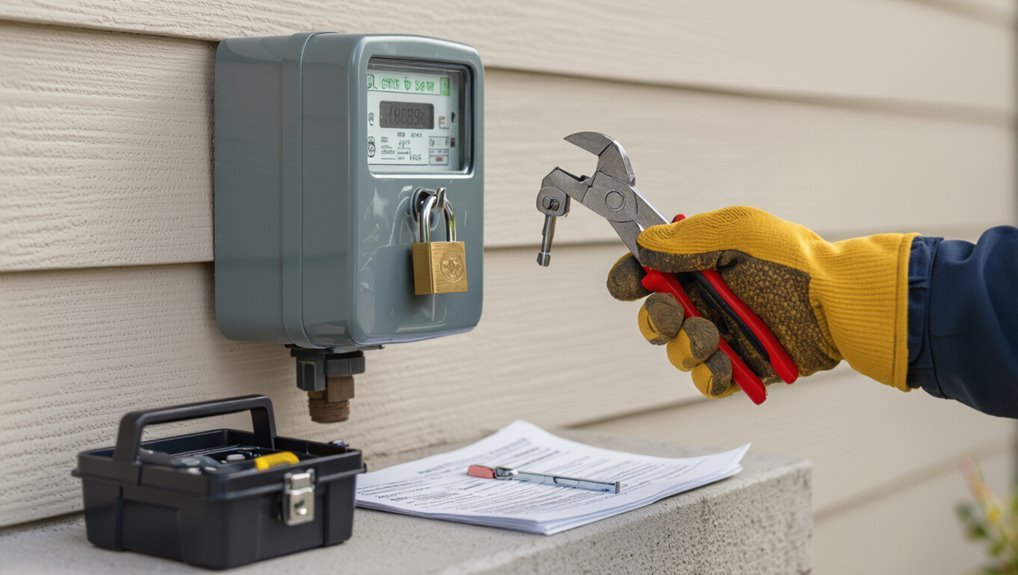
A locked gas meter can indicate several situations, including safety shutoffs after detected leaks, utility-initiated locks for non-payment, or seals applied to prevent suspected tampering.
Different locks and seals—from padlocks and meter boxes to electronic shutoff devices—function by physically restricting access or cutting supply.
Before attempting to restore service, the legal status of the lock and potential safety hazards must be confirmed with the utility or a qualified technician.
Common reasons for gas meter locks (safety, non-payment, tampering)
When a gas meter is secured, it usually signals one of three situations: a safety shutoff due to a detected leak or unsafe installation, a disconnection for unpaid bills, or an enforcement action after suspected tampering or meter fraud. Guidance on how to release a gas meter lock depends on the cause and requires contacting the utility and following verified procedures.
| Reason | Action |
|---|---|
| Safety shutoff | Contact utility immediately |
| Non-payment | Settle bill or arrange plan |
| Tampering | Await inspection/enforcement |
| Scheduled maintenance | Utility notification provided |
| Dispute | Provide documentation to utility |
Types of gas meter locks and how they work
Following confirmation of why a meter was secured, attention turns to the physical devices used to lock gas meters and the mechanisms by which they prevent flow or access.
Common types include padlocks on external boxes, tamper-evident seals, clamp-style lockouts that immobilize valves, and utility-installed shutoff caps.
Each either blocks valve operation, seals fittings, or physically restricts access to internal components.
Legal and safety considerations before attempting to unlock
Several circumstances can justify a locked gas meter, but attempting to release it without proper authorization carries legal and safety risks that must be understood beforehand.
A locked meter may indicate nonpayment, suspected tampering, or safety shutoff. Unauthorized interference can breach law, void service agreements, and create explosion or leak hazards.
Contact the utility, document issues, and wait for certified personnel to restore access.
Who Is Authorized to Unlock a Gas Meter
Authority to access a gas meter typically rests with the utility company, which follows established procedures and respects customer rights.
Exceptions occur when law enforcement or emergency responders act to guarantee safety or preserve evidence.
In many situations, a licensed technician is required to perform or approve accessing to verify code compliance and safe reconnection.
Utility company procedures and customer rights
Utility companies and licensed technicians typically hold primary authority to remove gas meter locks, performing releases after verifying account status, safety conditions, and proper identification.
Customers may request service or oversee the process but generally cannot legally or safely remove locks themselves, except in jurisdictions that explicitly permit homeowner action or where emergency responders intervene for safety reasons.
Company procedures include documented requests, identity checks, fee disclosures, scheduled appointments, and safety inspections prior to releasing.
When law enforcement or emergency services intervene
In emergency situations, law enforcement officers and emergency responders may be empowered to access a gas meter to eliminate immediate hazards or to preserve public safety. Authorized personnel typically act under legal authority, documented incident protocols, and coordination with utilities. Clear identification and incident reports follow any forced entry.
| Role | Typical Authority |
|---|---|
| Firefighters | Immediate hazard mitigation |
| Police | Scene control, legal enforcement |
| Paramedics | Safety support |
| Utility liaisons | Technical guidance |
| Incident commander | Decision authority |
When a licensed technician is required
Call a licensed technician whenever lock removal involves gas shutoff, meter tampering, suspected leaks, or any procedures that could affect service safety or integrity.
Only certified utility employees or licensed plumbers with gas credentials may legally access or alter meters.
They have training, tools, and authority to restore service, issue permits, document work, and coordinate with the gas company to guarantee compliance and public safety.
Immediate Steps to Take If Your Gas Meter Is Locked
If a gas meter is found locked, the first step is to confirm the reason by contacting the gas provider.
They should also inspect the meter for visible signs of tampering or damage without touching anything.
Before taking any further action, a brief safety checklist—checking for the smell of gas, ensuring ventilation, and evacuating if necessary—should be followed.
Confirm the lock reason (contacting your gas provider)
One clear step is to contact the gas provider to verify why the meter was locked and to confirm account details, outstanding balances, or safety concerns that prompted the lock.
The provider can confirm authorization, explain required actions, arrange payment plans, or schedule a safety inspection or reconnection.
Keep records of names, dates, reference numbers, and any agreed next steps for follow-up.
Check for visible signs of tampering or damage
Several quick visual checks can reveal whether a gas meter lock was forced, damaged, or tampered with.
Inspect the lock, seal, and surrounding meter box for bent metal, fresh scratches, cut seals, mismatched fasteners, or pry marks.
Note displaced or missing labels, loose wiring, or paint disturbance.
Photograph findings, record time and date, and report evidence to the gas provider without attempting further interference.
Safety checklist before any action (smell of gas, ventilation, evacuation)
A clear safety checklist should be completed before any attempt to access a locked gas meter.
Inspect for gas odor; if detected, do not operate switches, avoid flames, and evacuate immediately.
Guarantee the area is well ventilated.
Notify the gas company and emergency services before returning.
Confirm evacuation and ventilation are complete and await professional clearance prior to any further action.
Step-by-Step Legal and Safe Unlocking Process
The article outlines the legal and safe steps homeowners should follow when a gas meter is locked, beginning with contacting the gas provider to verify account status.
It explains how to schedule an official inspection or reconnection and describes what to expect during a technician’s visit.
The paragraph also notes temporary safety measures to observe while waiting for a qualified professional.
Contacting your gas provider and verifying account status
Contacting the gas provider and confirming account status is the essential first step before attempting any lock removal; it guarantees legality, safety, and coordinated service restoration.
The customer should call the provider, verify account identity, inquire about reasons for lock placement, confirm outstanding balances or safety holds, and document reference numbers.
Follow provider instructions and obtain written confirmation before further action.
Scheduling an official inspection or reconnection
Once account status and any required authorizations are confirmed with the gas provider, the customer should request an official inspection or reconnection appointment.
The provider schedules a certified technician, assigns a date and time window, and explains any preparatory steps or documentation needed.
Fees, estimated timelines, and safety protocols are clarified.
Confirmation and reference numbers should be obtained and recorded for follow-up.
What to expect during a technician visit
When the technician arrives, they verify identification and account authorization, explain safety checks, and outline the release steps before beginning work.
They inspect the meter and surrounding fittings, test for leaks and proper pressure, confirm shutoff procedures, and obtain consent to proceed.
The technician uses approved tools, documents the action, restores service per protocol, and provides follow-up instructions and contact information.
Temporary safety measures while waiting for a professional
If a professional cannot arrive immediately, occupants should take a few specific temporary safety steps to minimize risk until a qualified technician can perform a legal release.
Ventilate the area by opening windows and doors, avoid open flames or electrical switches, evacuate if smell of gas is strong, shut off appliance valves if trained, and contact the gas company to report the delay and receive further instructions.
DIY Actions You Can Legally Perform (Limited and Safe)
The author outlines a few limited DIY steps a homeowner can legally take before contacting the utility.
These include documenting the lock with photos for records, clearing vegetation or obstructions and improving lighting to allow safe inspection, and strictly avoiding prohibited actions that could endanger safety or violate law.
The section will clarify which minor tasks are acceptable and which require professional or utility intervention.
Documenting the lock and taking photos
Documentation provides a clear record of a locked gas meter before any lawful DIY actions are taken.
The person should photograph the lock, meter serial number, surrounding piping, and any warning labels from multiple angles.
Note date, time, and location; include a brief written description of condition and any visible tampering.
Secure images safely for proof and to share with the utility or authorities if required.
Clearing access to the meter and ensuring good lighting
Clear any obstructions around the gas meter—such as vegetation, debris, or parked vehicles—to provide an unobstructed, safe workspace and to allow clear sightlines for inspection.
Guarantee portable or fixed lighting illuminates the meter face and surrounding fittings without glare.
Maintain stable footing and avoid using ladders on uneven ground.
Keep tools and documentation nearby for efficient, uninterrupted work.
What not to do: prohibited actions that risk safety or legality
Avoid attempting repairs, modifications, or forced entry on a gas meter or its lock, since these actions can cause leaks, ignite gas, damage utility property, and violate laws or utility agreements. Only clear access, photograph issues, and contact the utility. Do not tamper, weld, use power tools, bypass seals, or disconnect piping. Report concerns promptly.
| Prohibited | Reason |
|---|---|
| Tampering | Leak/ignition |
| Forced entry | Property damage |
| Welding | Fire risk |
| Bypassing | Legal violation |
| Disconnecting | Service danger |
Preventing Future Meter Locks
To reduce the risk of future meter locks, the homeowner should keep the account current and use available payment plans or assistance programs.
They should also take steps to protect the meter from tampering and weather damage through proper enclosures and routine inspections.
Prompt communication with the gas provider about billing disputes or errors can prevent escalations that lead to locks.
Maintaining account in good standing and payment options
Regular, timely account management and selecting an appropriate payment option are the most effective ways to prevent future gas meter locks.
The consumer should monitor bills, enroll in autopay or budget billing, and notify the provider about financial hardship to arrange payment plans.
Keeping contact information current and responding to notices promptly reduces disconnection risk and maintains uninterrupted service.
Protecting the meter from tampering and weather damage
When protecting a gas meter from tampering and weather damage, homeowners and property managers should prioritize simple, preventative measures that reduce the risk of forced lockouts and costly repairs.
Secure enclosures, tamper-evident seals, and locked cages deter interference.
Regular inspections, clearing debris and vegetation, and applying weatherproof coatings extend equipment life.
Document maintenance and report suspicious activity promptly to the utility.
Communicating with your provider about disputes or billing errors
After securing the meter against tampering and weather, attention should turn to clear communication with the utility about any billing discrepancies or disputes that might otherwise lead to locks.
The customer should document bills, dates, meter readings, and contacts, submit formal disputes in writing, request payment arrangements or investigation, and follow up persistently.
Keep records of all responses to prevent future lock actions.
Resolving Disputes and Emergencies
The section explains how a customer can formally dispute a lock or reconnection fee with their gas provider, including required documentation and appeals channels.
It also outlines immediate steps to take if a gas leak is suspected after reconnection, such as evacuating the premises and contacting emergency services.
Finally, it summarizes legal recourse and consumer protection resources available to contest improper disconnections or unsafe reconnections.
How to dispute a lock or reconnection fee with your provider
Customers seeking to contest a gas meter lock or reconnection charge should promptly gather evidence—billing statements, payment records, photos of the meter tag, and any correspondence—and contact the provider in writing to request a formal review, citing specific dates, account numbers, and the reason for the dispute.
If unresolved, escalate to a supervisor, file a recorded complaint with the regulator or ombudsman, and keep all records.
Emergency steps if you detect a gas leak after reconnection
If a person smells gas or hears hissing after a reconnection, they should immediately evacuate everyone from the premises and move to a safe distance upwind.
They must avoid ignition sources, not operate electrical switches, and refrain from using phones indoors.
From a safe location, call the gas emergency number and emergency services.
Do not re-enter until the utility confirms it is safe.
Legal recourse and consumer protection resources
After ensuring everyone is safe and the utility has declared the premises secure, attention should turn to legal options and consumer protection resources available to address improper reconnection, safety violations, or damages.
Document incidents, obtain photos and reports, contact the utility’s formal complaints line, and file a complaint with the state public utility commission.
Consider small claims court or legal aid for compensation or injunctions against unsafe practices.
Cost, Timeframes, and Documentation
Typical reconnection involves payment of account arrears plus a service fee, and customers are given an estimated timeframe for restoration that varies by provider and urgency.
It is advisable to retain receipts, written communications, and any technician reports as records of the process.
If fees, delays, or conduct seem unreasonable or unresolved, escalation to the regulator or an ombudsman should be considered.
Typical fees and timelines for reconnection
When reconnection is required, utilities generally charge a fixed reconnection fee plus any outstanding account balance and applicable deposits. These amounts vary by provider and jurisdiction but commonly range from modest administrative fees to several hundred dollars for service restoration.
Scheduling often depends on payment confirmation and technician availability: same-day to several business days. Required identification and proof of residence expedite processing; emergency restorations may incur premium charges.
Records to keep (receipts, communication logs, technician reports)
Alongside fees and scheduling details, keeping organized records supports faster resolution of disputes and smoother reconnection.
Retain payment receipts, timestamps of calls and emails, technician names and visit notes, and meter photographs. Log reference numbers and promised timelines.
Store originals and digital backups in a single folder. Clear, chronological documentation aids verification, billing corrections, and proof of compliance without unnecessary delays.
When to escalate to regulators or an ombudsman
How long should a customer wait before involving outside authorities? A customer should escalate after documented attempts to resolve the lock issue exceed supplier response timeframes (typically 7–14 days) or after unreasonable costs.
Include invoices, timestamps, communication logs, technician reports, and photos. Regulators or an ombudsman may require formal complaints; expect their review to take weeks.
Provide clear, chronological evidence for faster resolution.
Real-World Scenarios and Examples
The section presents concise, real-world examples that illustrate typical reasons a gas meter may be locked and the practical responses required.
Each example focuses on the sequence of actions, responsible parties, and expected outcomes. Readers are encouraged to compare these scenarios with their own situation to identify the appropriate next steps.
- Locked meter due to unpaid bill: stepwise resolution including notification, payment options, and reconnection procedures.
- Locked meter after suspected tampering: required inspections, evidence collection, and coordination with the utility and authorities.
- Emergency lock during safety recall: immediate steps for isolation, customer notification, and technician-led remediation.
Locked meter due to unpaid bill stepwise resolution
Several common scenarios lead to a gas meter being locked for nonpayment, each requiring a clear, stepwise approach to restore service:
Contact provider, verify account, request repayment plan; schedule reconnection; confirm technician visit.
| Step | Action |
|---|---|
| 1 | Verify outstanding balance and identity |
| 2 | Arrange payment or hardship plan |
| 3 | Schedule and confirm reconnection visit |
Locked meter after suspected tampering required inspections
When a gas utility suspects meter tampering, it typically locks the device and orders an inspection to protect safety and preserve evidence.
Technicians then document damage, test for leaks or bypasses, and determine whether service can be restored or must remain disconnected pending repairs and investigation.
Records are forwarded to compliance units; customers are notified of findings, required repairs, potential charges, and any legal referrals before reconnection is authorized.
Emergency lock during safety recall immediate steps
Acting swiftly, utility crews impose emergency locks on affected meters during a safety recall to isolate risk and prevent accidental gas flow.
Customers receive immediate notice outlining the hazard, expected duration, and instructions for safe behavior.
Technicians schedule prioritized inspections, communicate restoration criteria, and coordinate temporary service alternatives.
Customers are instructed not to tamper, to report concerns, and to await certified reactivation only by authorized personnel.
Practical Safety Tips for Homeowners
The section outlines how to identify gas leak indicators—such as rotten-egg odor, hissing sounds, or dead vegetation—and the immediate steps to take, including shutting off sources of ignition and leaving the premises.
It also summarizes essential home safety gear and preparations like a flashlight, battery-powered detector, and a shutoff wrench.
Guidance is provided on when to evacuate and who to contact first, typically the gas company and emergency services.
Recognizing gas leak signs and immediate actions
Homeowners should learn to recognize the key signs of a natural gas leak—an unusual rotten-egg odor, hissing sounds near pipes or the meter, dead or discolored vegetation by buried lines, or unexplained physical symptoms like dizziness, headache, nausea, or shortness of breath—and take immediate, specific actions to reduce risk and summon qualified help.
Evacuate immediately, avoid sparks or electronics, shut off gas only if safe, and call emergency services and the gas utility.
Basic home safety equipment and preparations
After recognizing and responding to a suspected gas leak, attention should turn to equipping the household with basic safety gear and preparations that reduce risk and speed recovery.
A compact kit should include a flashlight with fresh batteries, a battery-powered carbon monoxide detector, a multi-purpose tool, fire extinguisher rated for home use, first-aid supplies, and sealed containers for important documents.
Review emergency plans regularly.
When to evacuate and who to call first
Recognize signs that demand immediate evacuation—strong gas odor, hissing noises near appliances or meters, unexplained health symptoms such as dizziness or nausea, visible gas appliance damage, or an ignition source—and leave the premises promptly without using electrical switches, phones, or open flames; once at a safe distance, call the gas utility emergency number and local emergency services to report the suspected leak.
| Action | Contact |
|---|---|
| Evacuate | Leave immediately |
| Gas utility | Emergency line |
| Emergency services | 911/local |
| Neighbors | Warn nearby occupants |
Conclusion
A locked gas meter can feel like a stubborn gatekeeper and a needed safeguard. The homeowner’s frustration meets the utility’s duty to guarantee safety and payment, creating a tension that demands clear action. By following authorized channels, documenting interactions, and prioritizing safety, one navigates between urgency and regulation. In that balance, resolution arrives: service restored, risks minimized, and both individual need and public protection acknowledged.