How to Unclog a Sewer Drain in the Basement Fast: DIY Steps That Actually Work
To quickly unclog a sewer drain in your basement, start by ensuring your safety: check for sewage, gas odors, and electrical hazards. Equip yourself with gloves, eye protection, a respirator, and waterproof boots. Stop the flow of water, seal off the area, and use a plunger on the nearest cleanout or fixture. If that doesn’t work, insert a drum auger or handheld snake into the cleanout, cranking it to break the blockage. Use a wet/dry vacuum to remove any debris. Finally, disinfect the surfaces and dispose of waste properly. If the clog persists or poses a risk, it’s best to call a professional.
How to Quickly Unclog a Basement Sewer Drain: Immediate Actions for Safety and Speed
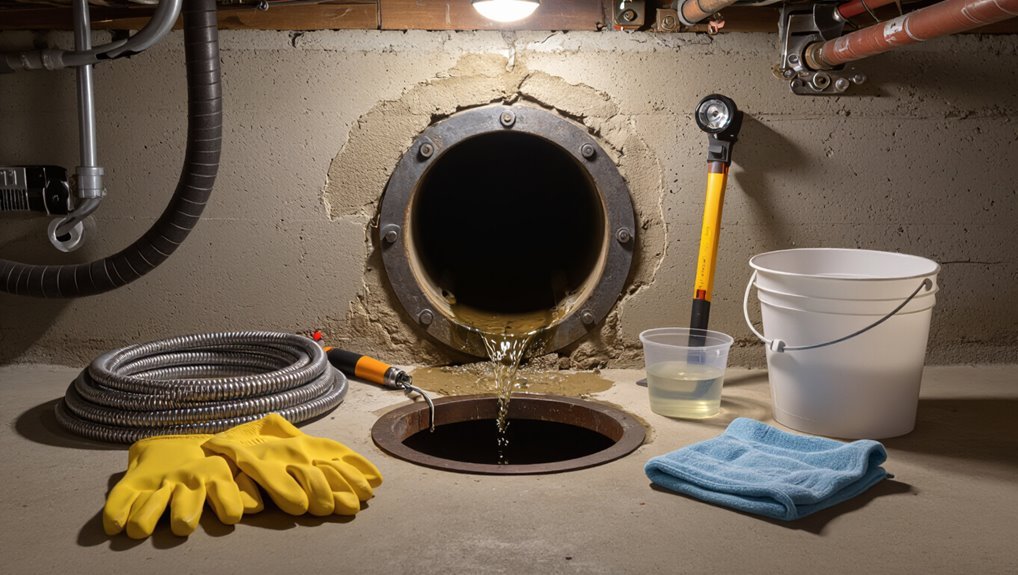
Before attempting any repairs, the situation should be assessed for hazards such as sewage backup, gas odors, or electrical risks and isolated if necessary.
If the clog is severe, water is backing up into multiple fixtures, or hazards are present, an emergency plumber should be contacted rather than continuing DIY efforts.
Gather basic items immediately—gloves, eye protection, a plunger, drain auger, buckets, and disinfectant—and consider temporary measures like shutting off water and using low-tech catch basins to limit damage.
Assess the situation safely before starting
Survey the scene methodically to determine hazards and scope before touching any tools.
The person checks for standing sewage, gas odors, electrical risks, and structural issues while noting access to the basement sewer cleanout.
Gloves, eye protection, boots, and a mask are prepared.
This assessment frames safe, efficient steps for how to unclog a sewer drain in the basement without worsening damage.
When to call an emergency plumber instead of DIY
After completing the safety assessment and preparing protective gear, the homeowner must recognize scenarios that exceed DIY capabilities and warrant an emergency plumber.
Call immediately if sewage backup persists despite basic attempts, multiple fixtures are affected, raw sewage floods the basement, visible sewer line collapse or severe odors suggest gas, the main cleanout is inaccessible, or structural damage and electrical hazards are present.
What to have on hand right now (tools, protective gear, temporary fixes)
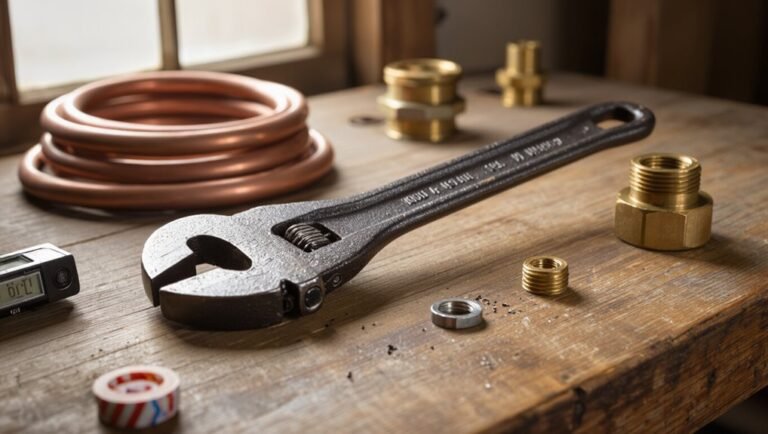
A compact kit of the right tools, basic protective gear, and a few temporary fixes can make the difference between a quick containment and a worsening mess; prioritize rubber gloves, waterproof boots, eye protection, a flashlight, a plunger, a manual drain snake (or hand auger), a bucket, heavy-duty garbage bags, and a cleanout wrench or adjustable pliers.
Ready items:
- Gloves, boots, eye protection
- Plunger, snake, wrench
- Bucket, bags, sandbags or towels for temporary barriers
Fast DIY Methods to Clear a Basement Sewer Drain
This section outlines fast DIY options for clearing a basement sewer drain, including a step-by-step plunger method and proper use of a plumbing snake or auger.
It also covers suction removal with a wet/dry vacuum, the realistic timelines for enzyme and bacterial cleaners, and which homemade mixtures to avoid and why.
Practical safety tips and effectiveness comparisons accompany each method.
Plunger method step-by-step
Start by positioning a flange or deep-cup plunger over the drain to create a tight seal. Then guarantee any nearby fixtures are closed to prevent air escape.
Push down gently to expel trapped air, then pump vigorously with steady strokes for 15–20 seconds.
Release seal sharply to observe water flow.
Repeat up to three cycles; if backup persists, stop and assess other tools or call a pro.
Using a plumbing snake or auger safely and effectively
If plunging fails to restore flow, the next tool is a plumbing snake or auger, suited for deeper or more stubborn blockages in a basement sewer.
Wear gloves and eye protection, feed the cable slowly, rotate to engage debris, and avoid forcing past resistance.
Withdraw periodically to clear material.
Clean and disinfect tools and work area after use to prevent contamination and odors.
Wet/dry vacuum technique for suction removal
A wet/dry vacuum can remove loose water and soft obstructions from a basement sewer outlet by creating strong suction at the drain opening.
The technician fits a tight seal over the grate or pipe, uses a wet setting, and vacuums debris into a collection tank.
Inspect seals, empty the tank, and repeat until flow resumes.
Wear gloves and eye protection.
Enzyme and bacterial drain cleaners: do they work fast?
How quickly do enzyme and bacterial drain cleaners restore flow? They act slowly, often taking several hours to days as microbes break down organic buildup.
Effective on hair, grease, and organic residues in moderate clogs, they won’t dissolve heavy blockages or nonorganic debris.
Safe for pipes and septic systems, they’re better as maintenance or follow-up treatment rather than emergency, fast-acting solutions.
Homemade mixtures to avoid (and why)
When tackling a basement sewer drain quickly, homeowners should steer clear of certain homemade mixtures because they can worsen clogs, damage pipes, or create hazardous reactions.
Avoid vinegar and baking soda for heavy blockages, boiling water on PVC, and bleach combined with acids or ammonia.
These combinations may corrode pipes, produce toxic gases, or set hardened clogs.
Professional methods are safer.
Step-by-Step Guide: Using a Drain Snake in the Basement
Before using a drain snake in the basement, the area should be prepared and floors protected to contain splashes and debris.
The user should be shown how to feed, rotate, and retrieve the snake carefully to avoid pipe or floor damage, with techniques for addressing stubborn blockages and when repeated snaking is necessary.
After clearing the line, the snake must be thoroughly cleaned, disinfected, and stored properly to prevent corrosion and contamination.
Preparing the area and protecting floors
Clear the work area around the basement drain and lay down waterproof coverings to protect floors and nearby surfaces.
Remove rugs, furniture, and stored items; seal off vents and nearby openings to limit dust and odor.
Position bright, stable lighting and keep a bucket, towels, gloves, and eye protection close.
Guarantee non-slip footwear and clear, unobstructed access to the drain and exit route.
How to feed, rotate, and retrieve the snake without causing damage
Begin by positioning the snake at the drain opening and securing a firm, comfortable grip on the handle. The operator should feed the cable slowly, maintaining steady pressure to prevent kinking.
Rotate the drum gently clockwise to advance, feel for resistance, pause if binding occurs, then back off slightly.
When withdrawing, reverse rotation, pull evenly, and wipe the cable to remove debris before coiling.
Clearing stubborn blockages and repeated snaking
When the initial pass with the snake fails to restore flow, the operator should methodically tackle a stubborn blockage by alternating controlled feeding, measured rotation, and strategic retraction to break apart and extract compacted material without stressing the cable or fittings.
Persist with short, purposeful pushes and pulls, periodically withdraw to clear debris, adjust torque to avoid kinking, and repeat until steady flow resumes.
Cleaning and storing the snake after use
After persistent snaking and removal of compacted debris, attention turns to properly cleaning and storing the cable to prevent corrosion, damage, and future jams.
The operator rinses the snake with water, applies a mild detergent, and scrubs away residue.
Drying thoroughly follows, then lightly oiling the cable.
Finally, the coil is wound neatly, secured, and stored in a dry, ventilated area away from chemicals.
Dealing with Severe Backups and Sewage: Safety and Cleanup
Severe sewer backups require strict personal protective equipment and contamination precautions to minimize health risks.
Containing and removing contaminated water and solids, then disinfecting affected surfaces and properly handling waste materials, are essential to prevent lingering hazards.
If contamination is extensive or the occupant is uncertain about safe cleanup, a professional sewage remediation service should be contacted.
Personal protective equipment and contamination precautions
Personal protective equipment and strict contamination controls are essential before anyone approaches a sewage backup; appropriate gear—gloves, impermeable boots, eye protection, N95 or higher respirator, and disposable coveralls—reduces exposure to pathogens and hazardous chemicals.
Individuals should limit entry, establish clean/dirty zones, and document hazards; trained personnel manage tasks and decontamination.
- Limit entry and log personnel
- Use buddy system and hand hygiene
- Seal off HVAC and electrical sources
Containing and removing contaminated water and solids
Containment and removal of contaminated water and solids begin with isolating the affected area, stopping additional inflow, and establishing controlled discharge paths to protect unaffected spaces and systems.
Use pumps and wet/dry vacuums to transfer sewage into approved containers, segregate solids for proper disposal, block off vents and drains to prevent spread, and document volumes and locations for waste management or contractor handoff.
Disinfecting surfaces and handling contaminated materials
Before disinfecting, responders should don appropriate PPE and guarantee the area is ventilated to minimize inhalation and contact risks.
Surfaces are scrubbed with detergent, rinsed, then treated with EPA-registered disinfectant or bleach solution at proper concentration and contact time.
Porous materials contaminated by sewage should be bagged, sealed, labeled, and disposed of per local biohazard guidance; non-salvageable items must be replaced.
When to consider professional sewage cleanup
When should a professional be called in for sewage cleanup?
A professional is required for large-scale backups, repeated blockages, sewage entering living areas, contaminated structural materials, or compromised septic systems.
Call when health risks, strong odors, or uncertain sources exist.
Professionals handle hazardous waste, structural drying, mold prevention, permits, and repairs safely.
DIY limits and personal safety dictate prompt escalation.
Diagnosing Why the Basement Sewer Drain Clogged
The homeowner should consider common causes such as tree roots, grease buildup, and foreign objects when evaluating a basement sewer clog.
Determining whether the blockage sits in the trap, the lateral line, or the main sewer helps narrow the required repair.
Observable signs—multiple fixtures backing up or sewage at cleanouts versus a single slow drain—distinguish larger sewer-line failures from localized clogs.
Common causes of basement sewer clogs (tree roots, grease, foreign objects)
Several frequent culprits account for basement sewer clogs: invasive tree roots that breach pipe joints, congealed grease that narrows flow, and assorted foreign objects that obstruct passage.
Roots force blockages and crack lines; grease solidifies into sticky masses that trap debris; and items like wipes, toys, or construction debris create complete stoppages.
Recognizing these causes guides appropriate clearing methods and prevention.
How to identify location of the clog (trap, lateral, main line)
After noting likely causes such as roots, grease, or foreign objects, determining where the obstruction sits—trap, lateral, or main line—guides the correct repair approach.
Inspect individual fixtures: one slow drain suggests a trap or local pipe; multiple fixtures or basement cleanout backup point to the lateral; street-side backups and multiple home drains implicate the main line.
Use visual checks and testing to localize.
Signs of larger sewer line issues vs. localized drain clogs
How can one tell if a basement sewer drain is a symptom of a localized clog or a failing main line?
Observed signs: single fixture backup, gurgling only near that drain, or slow but isolated drainage suggest a localized clog.
Multiple fixtures backing up, sewage odors throughout, wet spots in yard, or chronic recurring backups indicate mainline failure requiring camera inspection and professional repair.
Tools and Products Worth Buying for Faster, Reliable Unclogging
Choosing the right tools and products can make unclogging a basement sewer drain faster and more reliable while reducing the risk of damage.
Practical options include hand and power augers or snakes for different blockage types, a wet/dry vacuum with specific features for extraction, and safe chemical or enzymatic cleaners for maintenance.
The following highlights key categories to evaluate before purchasing.
- Heavy-duty drum augers, handheld snakes, and compact power augers suited to sewer lines
- Wet/dry vac with high CFM, durable seals, and removable filter for wet pickup
- Biodegradable enzymatic cleaners and milder chemical options formulated for sewer use
Recommended types of augers, snakes, and power tools
When tackling persistent sewer clogs, selecting the right combination of manual snakes, drum augers, and powered machines can drastically cut repair time and reduce repeat visits. Each tool type addresses different blockages and pipe conditions, so matching tool capabilities to the job is essential.
Compact hand snakes suit minor bends. Drum augers handle longer runs. Sectional cable machines and mini power rodders clear roots and heavy build-up. Protective gloves and eye protection are mandatory.
Wet/dry vac features to look for
After discussing augers and snakes that mechanically break through obstructions, attention turns to wet/dry vacs as complementary tools for extracting loosened debris and clearing shallow clogs.
Look for strong airflow (CFM) and suction (inches of water), a water-safe motor, durable tank capacity (6–12+ gallons), multiple nozzle attachments, a HEPA or fine dust filter, and easy drainage ports for rapid cleanup.
Safe chemical and enzymatic cleaners to keep on hand
A small selection of reliable chemical and enzymatic drain cleaners can make routine maintenance and minor clogs quicker to resolve without resorting to mechanical tools.
Choose enzyme-based formulations for organic buildup, mild biodegradable solvents for hair and grease, and oxidizing cleaners for slow drains.
Keep one enzyme product, one non-corrosive solvent, and a peroxide-based oxidizer; always follow label safety and ventilation instructions.
Preventing Future Basement Sewer Backups
Preventing future basement sewer backups begins with a proactive maintenance plan that includes a routine schedule and simple monthly checks of drains and cleanouts.
Homeowners should consider installing backflow prevention devices and accessible cleanouts, manage landscaping and tree roots to protect sewer lines, and clearly understand what not to flush or pour down basement fixtures.
These measures reduce blockage risk and make problems easier and cheaper to address when they occur.
Routine maintenance schedule and simple monthly checks
Consistency matters when it comes to avoiding basement sewer backups; a simple, monthly maintenance routine keeps minor issues from becoming emergencies.
Inspect visible drains, test basement fixtures for slow flow, and run water through rarely used drains. Clear hair and debris from traps, monitor for odors, and note changes.
Maintain records to track trends and schedule professional inspection if problems recur.
- Inspect drains and traps
- Run water through unused drains
- Log findings and actions
Installing backflow prevention and cleanouts
Several practical upgrades considerably reduce the risk of basement sewer backups: installing backflow preventers and accessible cleanouts.
A backflow preventer (check valve or gate valve) stops sewage from reversing into the home during municipal or onsite system surges.
Installing threaded or removable cleanouts provides quick access for clearing blockages and inspecting lines.
Professional installation guarantees proper placement, orientation, and code compliance.
Landscaping and root management to protect sewer lines
Alongside mechanical safeguards like backflow preventers and cleanouts, yard design and plant selection play a significant role in protecting sewer lines from damage.
Trees with aggressive roots should be planted far from sewer routes; choose shallow-rooted shrubs instead.
Install root barriers and use periodic professional inspections and targeted root cutting.
Maintain proper grading and limit irrigation near pipe zones to reduce intrusion and corrosion.
What to avoid flushing or draining down basement fixtures
Avoid flushing or pouring anything down basement fixtures that could solidify, entangle, or overload the sewer system:
fats, oils, and grease;
coffee grounds;
paint and paint thinners;
solvents and motor oil;
menstrual products, diapers, wipes (even those labeled flushable);
hair;
and excessive amounts of food scraps or laundry lint.
Regular disposal and use of strainers, grease containers, and proper hazardous-waste channels reduce risks.
Cost, Time, and When to Hire a Professional
This section compares typical DIY time and material costs with the expense of hiring a professional, and outlines warning signs that require immediate plumbing assistance.
It also lists key questions homeowners should ask a plumber before arrival to clarify scope, pricing, and guarantees.
The goal is to help readers decide when a job is suitable for DIY and when to call a licensed professional.
Typical DIY time and material costs vs. professional service costs
Most homeowners can clear a simple sewer clog with basic tools and 30–90 minutes of labor, spending roughly $10–$60 on materials like a plunger, drain snake, gloves, and enzyme cleaner, while more persistent blockages require rented or purchased augers ($40–$200) or hydro-jet attachments that raise costs and complexity.
| Task | DIY Cost | Pro Cost |
|---|---|---|
| Quick clear | $10–$60 | $100–$250 |
| Auger rental | $40–$200 | $150–$400 |
| Complex job | $100+ | $300–$1,000+ |
Red flags that mean you should call a licensed plumber immediately
When sewage backs up into fixtures, emits strong gas odors, or causes repeated slow drains despite attempted DIY fixes, a licensed plumber should be contacted without delay; these symptoms often indicate major blockages, collapsed pipes, or sewer-line breaches that require specialized equipment and expertise.
Additionally, multiple fixture backups, sewage in the basement, sinkholes, or water meter anomalies warrant immediate professional assessment and repair.
Questions to ask a plumber before they arrive
How much will it cost, how long will it take, and is a professional really needed—these are the core questions homeowners should prepare before a plumber arrives.
Ask for an estimate, hourly versus flat rates, diagnostics fees, and parts cost.
Request expected duration, necessary permits, warranty details, and insurance proof.
Clarify scope: emergency vs. scheduled repair and whether DIY steps remain safe to attempt.
Quick Troubleshooting Checklist for Common Problems
A concise troubleshooting checklist helps identify why issues persist after an apparent unclogging.
It should note slow drainage following clear, gurgling sounds or multiple affected fixtures, and lingering sewer odors after cleaning.
Each symptom points to different causes and next steps, from partial blockages to venting or sewer line problems.
If water drains slowly after unclogging
If water still drains slowly after the main clog appears cleared, the problem often lies beyond the visible trap or involves partial obstructions, venting issues, or residual buildup that restricts flow.
A quick, systematic checklist helps pinpoint whether the cause is a secondary blockage, a damaged pipe, or inadequate venting so the right corrective step can be taken.
Check downstream cleanouts, run a longer snake, inspect for collapsed or narrowed pipe, flush with hot water, and verify vent openings are clear before calling a pro.
If gurgling or multiple fixtures are affected
Several indicators—sudden gurgling sounds, slow drains in more than one fixture, or toilets that bubble when sinks empty—point to a shared venting or main-line issue rather than an isolated trap clog.
Check roof vents for obstructions, inspect cleanouts and basement floor drains, and run a hose through accessible cleanouts.
If multiple fixtures remain affected, contact a professional plumber for camera inspection and main-line clearing.
If odors persist after cleaning
When odors linger after cleaning despite no visible blockages, the problem often lies with lingering biological buildup, a dry trap, or a hidden leak rather than the main line.
Inspect and pour water into traps, clean trap and accessible trap arm with enzymatic cleaner, check for slow-draining fixtures, inspect vent pipe for obstructions, and scan for leaks or sewage stains.
Repeat treatment if needed.
Visual Guide and Safety Reminders for Basement Sewer Work
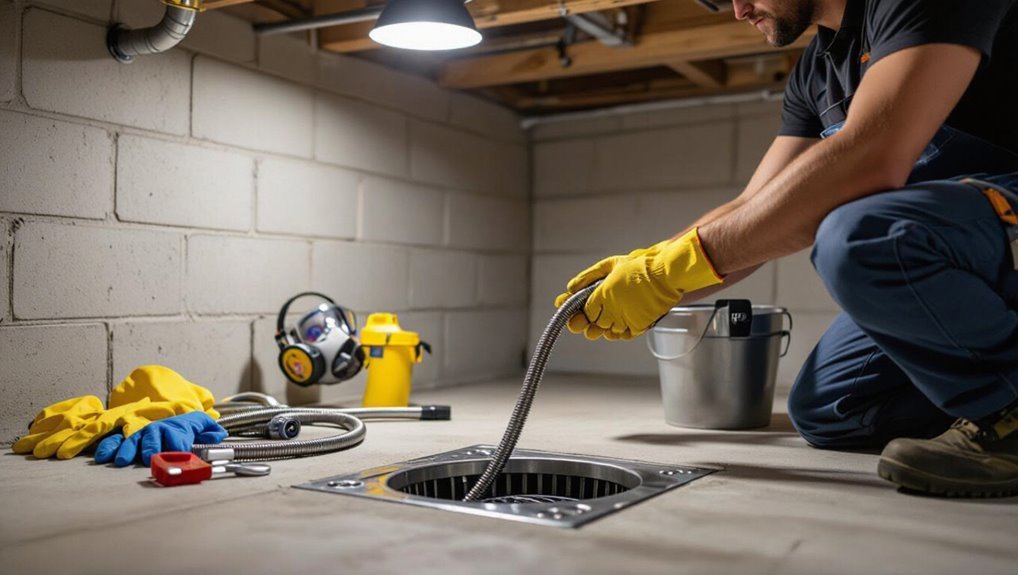
Begin by surveying the basement work area to identify the sewer cleanout, visible pipe connections, and any standing water or leaks that signal active backup.
Wear gloves, eye protection, and a respirator if odors are strong. Use waterproof boots and disposable coveralls.
Keep a flashlight, hand tools, and a phone nearby. Mark hazards, ventilate the space, and avoid confined-space entry without professional help.
Conclusion
Basement sewer clogs demand prompt, careful action; about 10 percent of homeowners report a sewer backup at some point, underscoring how common and disruptive this problem can be. Quick DIY steps—safety first—often resolve minor blockages, while severe backups require professional intervention. Regular maintenance and simple prevention habits markedly reduce recurrence. When time, tools, or health risks are concerns, calling a licensed plumber prevents damage and protects household health.