How to Light a Pilot Light on a Propane Furnace Safely: Step-by-Step Guide
To safely light the pilot light on your propane furnace, follow these steps: Ensure the area is well-ventilated, check for any propane odor or leaks, and briefly shut off the gas supply. Wear protective eyewear and gloves. Set the control to “pilot,” press the knob while using a long lighter to ignite the flame. Hold the button down for 30–60 seconds, then release it to confirm a steady blue flame and proper burner operation. For detailed instructions, continue reading.
What a Pilot Light Is and Why It Matters for a Propane Furnace
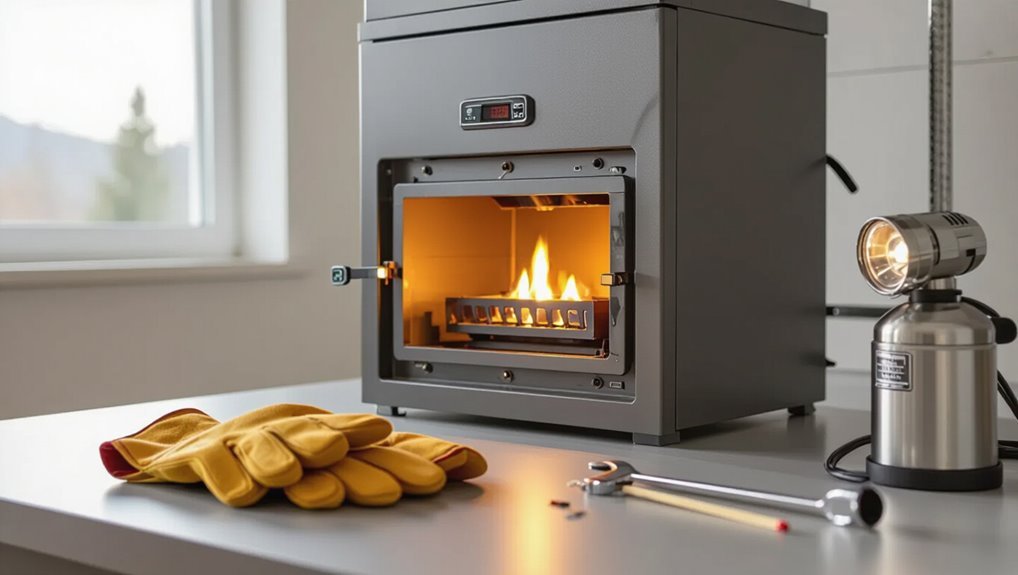
A pilot light is a small, continuously burning flame that ignites the main burner when a propane furnace calls for heat.
Common signs of a malfunctioning or extinguished pilot include no heat, a weak or yellow flame, and frequent cycling.
Because a faulty pilot can allow gas buildup or prevent proper combustion, it poses both fire and carbon monoxide hazards.
How a pilot light works in a propane furnace
Understanding a pilot light begins with recognizing it as a small, continuously burning flame that ignites the main burner in a propane furnace.
It guarantees reliable ignition, maintains safety interlocks, and prevents gas buildup.
Procedures like how to light a pilot light on a propane furnace involve placing the flame near the thermocouple so heat keeps the safety valve open, allowing steady burner operation.
Signs your pilot light is out or malfunctioning
When the pilot light on a propane furnace goes out or begins to fail, the appliance typically shows clear, observable signs that indicate a problem.
Common indicators include loss of heat, furnace cycling without ignition, faint or absent pilot flame, unusual clicking as the system attempts to light, and higher energy use from repeated start attempts.
Inspecting promptly helps diagnose the issue.
Safety risks of a faulty pilot light
Recognize that the pilot light is a small, continuously burning flame used to ignite the main burner on a propane furnace, and its failure creates several safety hazards.
A faulty pilot can cause gas buildup, increasing explosion and asphyxiation risk, enable incomplete combustion producing carbon monoxide, and trigger repeated cycling that damages components.
Prompt diagnosis and professional repair reduce these dangers.
Safety Precautions Before Attempting to Relight the Pilot
Before attempting to relight the pilot, the reader should gather required tools and wear basic protective equipment such as gloves and eye protection.
They should then check for the distinct odor of propane and perform a visual inspection for leaks, leaving the area and calling the gas company immediately if a leak is suspected.
If the furnace has repeated pilot outages, visible damage, or the homeowner feels unsure, a licensed technician should be contacted rather than attempting a relight.
Required tools and protective equipment
A small set of basic tools and proper protective gear is essential for safely relighting a propane furnace pilot; these items minimize risk and make the procedure more efficient.
Necessary items include flame-resistant gloves, eye protection, and a long-reach lighter or match.
Recommended list:
- Flame-resistant gloves
- Safety glasses or goggles
- Long-reach lighter or pilot lighting tool
Checking for propane smell and gas leaks
When any faint odor of propane is detected or the pilot has been out for an extended period, the area should be treated as potentially hazardous and not approached until a thorough leak check is completed.
Ventilate by opening windows and doors, avoid sparks, extinguish flames, and shut off the propane supply at the tank or appliance.
Use a soap solution or approved gas detector to inspect fittings and connections.
When to call a professional instead of relighting
How should one proceed if relighting the pilot seems risky?
If lingering gas odor, multiple unsuccessful relight attempts, visible damage, or malfunctioning controls occur, a qualified HVAC technician should be contacted.
If carbon monoxide alarms trigger or occupants feel unwell, evacuate and call emergency services and the gas utility.
Professionals assess leak sources, repair components, and guarantee safe, code-compliant operation before restarting the furnace.
Preparing the Furnace for Relighting
Before relighting, the thermostat should be switched to off and the furnace power completely disconnected to prevent accidental ignition.
The propane supply must be shut off and a brief waiting period observed to allow any residual gas to clear.
Finally, the pilot assembly and its access panel should be located so the relighting procedure can proceed safely.
Turning off the thermostat and power to the furnace
A few simple safety steps must be taken before relighting the pilot: the thermostat should be set to OFF or the lowest setting and all electrical power to the furnace must be shut off at the switch or circuit breaker.
Confirm the display is blank, label the breaker if needed, and wait a few moments for capacitors to discharge.
Proceed only when power is fully off.
Shutting off the propane supply and waiting period
With electrical power disconnected and the thermostat set to off, the next step is to isolate the propane supply to prevent gas flow while the pilot is being relit.
The service valve at the tank or regulator should be closed fully.
Wait at least five minutes to allow residual gas to dissipate.
During the wait, avoid sparks, open windows, and ventilate the area.
Locating the pilot assembly and access panel
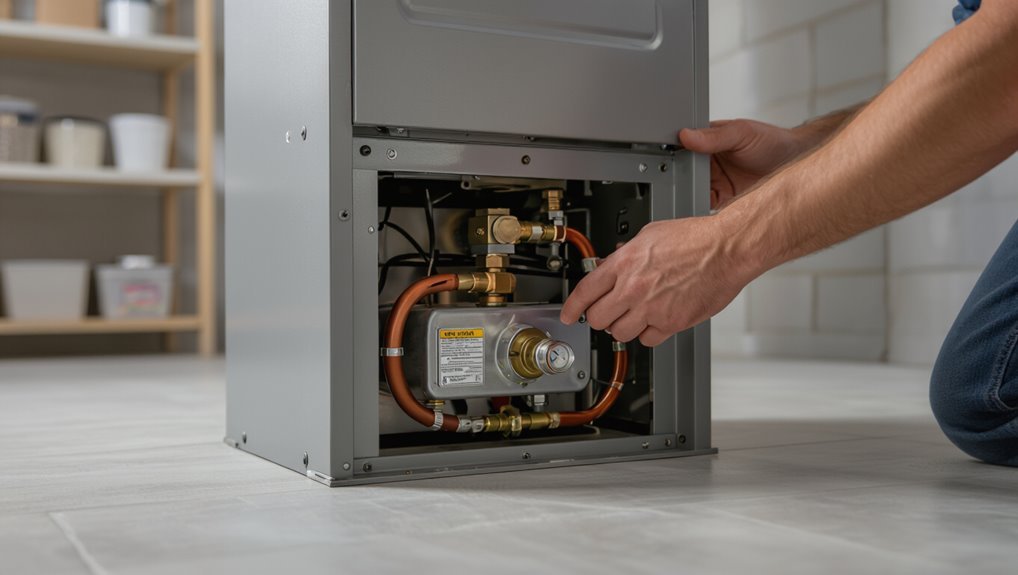
Several components cluster near the burner area, and identifying the pilot assembly is the first practical step: remove the furnace access panel (usually secured by screws or clips) to expose the burner compartment.
Then locate a small metal tube terminating at a tiny flame or a pilot hood mounted beside the main burners—the pilot assembly will include the pilot tube, the thermocouple or flame sensor, and a manual gas valve or knob labeled “pilot.”
Step-by-Step Guide to Relight the Pilot Light on a Propane Furnace
The following concise steps outline how to relight a propane furnace pilot safely and in the correct sequence.
First, set the gas control to Off and wait 5–10 minutes.
Then move the control to Pilot and ignite the pilot using a long lighter or match.
While holding the pilot button, confirm a steady flame, release the button, and observe the flame for 30–60 seconds.
Step 1: Set gas control to Off and wait 5 to 10 minutes
Turn the gas control knob to the “Off” position and leave it alone for 5 to 10 minutes to allow any residual propane to dissipate.
During this interval, the person should ventilate the area if safe, avoid open flames or sparks, and observe for the smell of gas.
Only proceed once the space is clear of odor and vapors.
Step 2: Turn control to Pilot position
After confirming no gas odor, the operator locates the furnace’s gas control knob and rotates it from “Off” to the “Pilot” position.
They press and hold the knob inward to enable gas flow to the pilot assembly, maintaining steady pressure for the required safety delay.
Visual confirmation of the pilot setting is made before proceeding to ignition in the next step.
Step 3: Ignite the pilot with a long lighter or match
Carefully bring a long-reach lighter or a long-stem match close to the pilot opening while the gas control knob remains depressed in the “Pilot” position.
Ignite once, observing for immediate flame at the pilot orifice. If no flame appears, release and wait a few minutes before retrying.
Maintain steady, controlled motions to avoid stirring gas and keep face and hands clear of the burner area.
Step 4: Hold the pilot button and confirm steady flame
Once a flame appears at the pilot orifice, the person should continue holding the gas control knob in the “Pilot” position and observe the pilot for at least 30 seconds.
They verify the flame is steady, blue, and centered on the thermocouple tip.
Any sputtering, yellowing, or frequent extinguishing indicates a problem; if observed, release the knob and consult the furnace manual or a qualified technician.
Step 5: Release the pilot button and observe for 30 to 60 seconds
Release the pilot button slowly and watch the pilot assembly for 30 to 60 seconds to confirm the flame remains steady and blue without dropping out.
If the flame stays lit, it indicates the thermocouple detects heat and the safety valve will allow normal operation.
If the flame extinguishes, repeat lighting steps after waiting several minutes, and inspect for draft, dirt, or faulty components before trying again.
Step 6: Set control to On and restore power to furnace
Turn the control knob from “Pilot” to the “On” position to allow gas flow to the main burner, then restore electrical power to the furnace at the circuit breaker or switch.
Observe the furnace as it cycles; the burner should ignite within seconds.
If ignition fails, turn the system off, wait several minutes, then repeat pilot lighting steps or contact a qualified technician for inspection and repairs.
Troubleshooting Common Problems During Relighting
When the pilot flame will not stay lit, common causes include a faulty thermocouple, a dirty pilot orifice, or insufficient gas pressure, each with its corresponding fix.
A weak, yellow, or flickering pilot flame usually indicates incomplete combustion or contamination and should prompt cleaning and adjustment or professional inspection.
Clicking, hissing, or other unusual noises after relighting can signal loose connections, gas flow issues, or ignition problems and warrant immediate attention to rule out leaks or component failure.
Pilot won’t stay lit likely causes and fixes
If the pilot lights but then goes out, several common issues are usually to blame: a dirty or misaligned pilot orifice, a weak thermocouple, drafts near the furnace, or insufficient gas pressure.
Inspect and clean the pilot orifice, reposition or replace the thermocouple, seal nearby drafts, and verify gas pressure and valve function.
If uncertainty persists, contact a qualified technician for safe diagnostics and repair.
Weak or yellow pilot flame what it indicates
A weak or yellow pilot flame signals incomplete combustion or airflow problems and should be treated as a diagnostic clue rather than a minor annoyance.
It indicates possible propane/air mixture imbalance, clogged pilot orifice, low gas pressure, or excessive drafts.
Recommend inspection, cleaning of the pilot assembly, checking regulator/pressure, and contacting a qualified technician if discoloration persists to prevent carbon monoxide risk.
Clicking, hissing, or unusual noises after relighting
Several distinct noises—clicking, hissing, or other unusual sounds—after relighting a propane furnace often point to specific mechanical or gas-flow issues that require prompt attention.
Clicking may indicate faulty ignition or stuck contacts; hissing suggests a gas leak or excessive pressure; rattles or grinding indicate loose components or blower problems.
Stop operation, shut gas, ventilate, and contact a qualified technician immediately.
Maintenance Tips to Prevent Future Pilot Light Issues
Regular maintenance helps prevent recurring pilot light problems by keeping the pilot assembly and thermocouple free of soot and corrosion.
Routine professional inspections and tune-ups can catch worn components and gas flow issues before they cause failures.
Guidance on when to replace the thermocouple or the entire pilot assembly will minimize emergency repairs and maintain safe operation.
Regular cleaning of pilot assembly and thermocouple
Routine maintenance of the pilot assembly and thermocouple greatly reduces the chance of ignition failures and unsafe operation.
Periodically turn off gas and power, inspect for soot or corrosion, and clean with a soft brush or compressed air. Make sure connections are tight and components align.
Replace damaged parts promptly.
- Clean soot and debris
- Verify tight fittings
- Confirm proper thermocouple alignment
Scheduled professional inspections and tune-ups
After homeowners complete basic cleaning and part checks, scheduling professional inspections and tune-ups provides a higher level of assurance that the pilot light and overall propane furnace system remain safe and reliable.
Certified technicians detect leaks, test gas pressure, verify burner performance, tighten connections, adjust safety controls, and replace worn components. Routine service reduces unexpected failures, improves efficiency, and documents system condition for warranty and resale purposes.
When to replace the thermocouple or pilot assembly
Monitor the pilot flame and ignition behavior to determine when the thermocouple or pilot assembly needs replacement: a weak or unstable flame, a pilot that frequently goes out, slow or inconsistent ignition, or a thermocouple that fails to keep the gas valve open despite a steady flame are clear indicators.
Replacement is warranted if cleaning and adjustment don’t restore reliable operation; use OEM parts and consult a technician.
Safety Checks After Relighting
After relighting, the technician inspects the pilot flame for a steady, blue cone of the correct size.
They then cycle the furnace and check that the thermostat and burners respond properly.
Finally, the area is monitored for any lingering propane odors or other warning signs before concluding the procedure.
Verifying proper flame color and size
Once the pilot is relit and the burner cycles on, the technician inspects the flame color and height to confirm safe combustion.
A steady blue flame with minimal yellow tips indicates correct air–fuel mixture; excessive yellow or flickering suggests soot, blockage, or improper combustion.
Flame height should match manufacturer specifications; unusually large or weak flames prompt immediate adjustment or professional service to prevent carbon monoxide risks.
Testing furnace operation and thermostat response
Start the furnace and observe its startup sequence to confirm the pilot reliably ignites the main burners and the blower engages at the correct time.
Verify thermostat settings call for heat and that temperature rises correspond; listen for unusual noises and guarantee cycles complete without short-cycling.
Check warm-air outlets for steady flow and consistent warmth.
Record any irregularities and reset controls if needed.
Monitoring for gas odors or warning signs
Following confirmation that the furnace cycles, ignites the main burners, and delivers steady warm air, attention shifts to detecting gas odors and other warning signs that indicate a leak or malfunction.
The operator should quietly inspect for rotten-egg smells, hissing, dead vegetation near outdoor lines, or unusual soot or flames.
If any are present, shut off propane, ventilate, and contact a qualified technician immediately.
Comparison: DIY Relight vs. Professional Service
A brief comparison helps readers weigh whether to relight a pilot light themselves or hire a professional, focusing on cost, safety, time, and warranty trade-offs. The following table summarizes key considerations to guide that choice. Ultimately, the decision depends on the homeowner’s comfort with basic gas appliance tasks and the terms of any active warranty.
| Factor | DIY Relight | Professional Service |
|---|---|---|
| Cost | Lower upfront expense | Higher upfront, possible value |
| Safety | Higher risk without experience | Lower risk with trained techs |
Cost, safety, time, and warranty considerations
While relighting a propane furnace pilot can save money and time for a confident homeowner, choosing between a DIY attempt and hiring a professional hinges on clear trade-offs in cost, safety, duration, and warranty implications. DIY lowers expense and time but raises risk and may void warranties; professionals cost more, take longer, preserve warranties, and guarantee safety.
| Aspect | Comparison |
|---|---|
| Cost | DIY: low; Pro: higher |
| Safety | DIY: elevated risk; Pro: safer |
| Time | DIY: quicker; Pro: scheduled |
| Warranty | DIY: possible void; Pro: preserved |
| Confidence | DIY: needs skill; Pro: assured |
Quick Reference: Condensed Relighting Checklist
This condensed relighting checklist gives a step-by-step summary for safely lighting a propane furnace pilot, focusing on essential checks and actions to minimize risk and time.
Verify gas off, smell test, and ventilation. Confirm manual reset and read manufacturer notes.
Follow pilot lighting procedure, observe steady flame, then restore thermostat.
- Check for leaks and odor
- Guarantee proper ventilation
- Confirm stable pilot flame
Conclusion
Relighting a propane furnace pilot light restores safe, efficient heating when done correctly. Though some may worry that DIY attempts are risky or will void warranties, following safety steps, using proper tools, and knowing when to stop minimizes danger and preserves equipment. If uncertainty persists or problems recur—like smelling gas, repeated outages, or ignition failure—a licensed technician should be called. Regular maintenance prevents most issues and keeps the furnace reliable and safe.