How to Keep Cabin Pipes From Freezing: Simple, Proven Prevention Tips
To prevent cabin pipes from freezing, combine insulation, consistent heating, and strategic plumbing adjustments. Insulate exposed pipes, seal any drafts, and position pipes away from exterior walls. Keep indoor temperatures above 55°F, open cabinet doors to promote air circulation, and let a small trickle of water run during extreme cold. Consider installing frost-proof sillcocks, shutoff valves with drains, or self-regulating heat tape on vulnerable sections. By following these straightforward tips, you can effectively safeguard your cabin’s plumbing. For more detailed guidance, specific product recommendations and step-by-step preparations are available.
Why Cabin Pipes Freeze and Why Prevention Matters
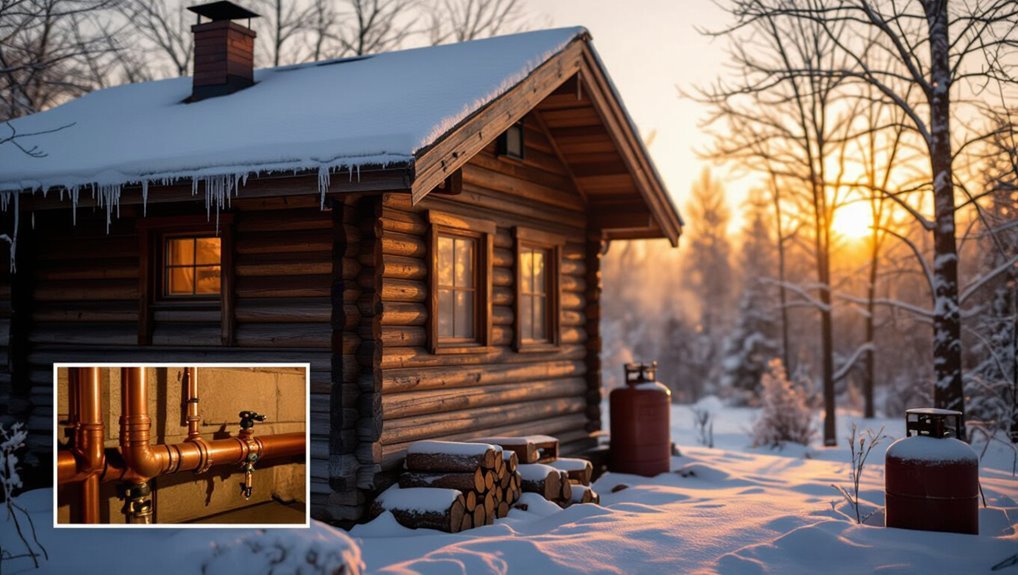
Freezing water expands and can crack pipes, burst fittings, and damage valves and fixtures, creating costly leaks and potential mold problems.
Pipes typically risk freezing when exposed to temperatures at or below 20°F (about -7°C), with higher risk in windy conditions, rapid temperature drops, or prolonged cold spells.
Cabins are especially vulnerable when located in exposed sites, when insulation is incomplete or compromised, or when plumbing is left unused for long periods.
How freezing damages pipes and plumbing systems
When water inside pipes freezes, it expands and creates pressure that can crack pipes, damage joints, and burst fittings throughout a cabin’s plumbing system.
Resulting leaks, water loss, and mold contamination lead to costly repairs and downtime.
Understanding how to keep cabin pipes from freezing emphasizes preventive insulation, controlled heat, and prompt maintenance to avoid structural damage and service interruptions.
Typical temperatures and conditions that cause freezing
Although pipes can begin to ice at or near 32°F (0°C), damage often occurs at temperatures well below freezing—typically between 20°F and 0°F (−7°C to −18°C) when exposure is prolonged.
Wind, rapid temperature drops, and sustained cold nights increase freezing risk. Slow-moving water and partially filled lines freeze faster.
Duration of cold and consecutive nights below freezing are key determinants of pipe failure.
Common cabin vulnerabilities (location, insulation gaps, usage patterns)
Cabins commonly present a mix of vulnerabilities—exposed exterior walls, crawlspaces, and attic rafters—that concentrate cold around water lines and fixtures.
Poor or missing insulation, gaps around plumbing chases, and uninsulated sill plates create localized freeze points.
Seasonal occupancy and intermittent heating allow temperatures to plunge.
Low-use fixtures, outdoor hose bibs and poorly routed supply lines increase freeze risk and complicate mitigation.
Quick Checklist to Prevent Frozen Cabin Pipes (Direct Action Steps)
A concise checklist helps owners take direct action to protect cabin plumbing before and during cold weather and to respond quickly if freezing is suspected.
The following steps focus on immediate pre-snap preparations, simple daily habits while staying in the cabin, and emergency measures to limit damage. Implementing these items reduces the chance of burst pipes and costly repairs.
- Shut off and drain exterior hoses, insulate exposed pipes, and set thermostats to a safe minimum before a cold snap.
- Keep a slow trickle of warm water running from faucets, open cabinet doors for heat circulation, and monitor indoor temperatures daily.
- Keep basic tools and materials on hand: a hair dryer, pipe heating tape, pipe insulation, and a small space heater with auto-shutoff.
- If freezing is suspected, open faucets, apply gentle heat to affected sections, and shut off the main water supply if pipes are bulging or leaking.
Immediate actions to take before a cold snap
When a hard freeze is forecast, take a focused sequence of actions to protect plumbing: shut exterior valves, drain outdoor hoses and irrigation lines, open cabinet doors for interior access, set thermostat no lower than 55°F, insulate exposed pipes with foam or heat tape, locate and mark main shutoff, and run a trickle of cold water on vulnerable faucets until temperatures stabilize.
Daily habits to reduce freeze risk during winter stays
Following the immediate freeze preparations, daily habits during winter stays help maintain those protections and reduce the chance of a costly pipe burst.
Occupants should keep thermostats steady above 55°F, open cabinet doors to warm plumbing, run a trickle of faucets during extreme cold, monitor interior temps and insulation integrity, clear vents, and report drafts or moisture promptly for repair.
Emergency measures if you suspect pipes are freezing
Act quickly if there is suspicion that pipes are freezing: shut off the water main to limit pressure and potential flooding.
Open faucets to relieve trapped pressure and allow any ice to pass.
Apply gentle heat (hair dryer, space heater, or warm towels) along the affected pipe starting from the faucet end toward the frozen section.
Inspect for bulging, odors, or leaks; if present, contact a plumber and keep occupants safe.
Insulation and Heat Retention Strategies
Effective insulation and targeted heat retention are central to preventing frozen cabin pipes.
The discussion covers selecting appropriate pipe insulation, insulating walls, crawl spaces, attics, and ceilings around plumbing, and the proper use of heat tape or heat cables.
It also addresses sealing air leaks and improving the cabin’s overall thermal envelope to keep temperatures stable.
Choosing the right pipe insulation materials
Selecting appropriate pipe insulation is a key step in preventing frozen pipes in a cabin, because material type, thickness, and installation method determine heat retention and durability under cold, damp conditions.
Foam sleeves, rubber, and fiberglass offer varied R-values and moisture resistance; closed-cell foam resists condensation.
Match thickness to exposure, choose UV- and crush-resistant materials for exposed runs, and secure joints and seams to maintain continuous coverage.
Insulating walls, crawl spaces, attics, and ceilings around plumbing
Having chosen appropriate pipe insulation, attention shifts to the surrounding building envelope where heat loss and cold infiltration often undermine those protections.
Walls, attics, ceilings and crawl spaces should receive continuous, properly fitted insulation and sealed air barriers.
Insulate exterior wall cavities, rim joists and ducted openings; add soffit baffling and vapor control in attics; close gaps around penetrations to maintain steady ambient warmth.
Using heat tape and heat cables safely
Install heat tape and heat cables as a targeted supplement where insulation and air-sealing alone cannot prevent freezing, but only after verifying the product type, electrical requirements, and manufacturer instructions.
Apply approved self-regulating or thermostatic cable directly to pipe surface, secure with manufacturer-recommended fasteners, maintain proper spacing, avoid overlap, use GFCI-protected circuits, and inspect connections for damage before seasonal use.
Sealing air leaks and improving overall cabin thermal envelope
Seal gaps and bolster insulation to reduce heat loss and prevent cold air from reaching vulnerable pipes; a well-sealed thermal envelope is the first line of defense against freezing.
Inspect and caulk around windows, doors, plumbing penetrations, and rim joists.
Add attic, wall, and crawlspace insulation.
Install weatherstripping and vent seals.
Maintain consistent interior temperatures and reduce drafts that accelerate pipe cooling.
Plumbing Layout and System Modifications
Attention to plumbing layout and targeted system changes can greatly reduce freeze risk in a cabin.
Rerouting vulnerable runs away from exterior walls, installing recirculation lines and insulating valves, and adding drain-back or frost‑proof faucets with outdoor shutoffs are practical modifications.
Choosing larger‑diameter pipe or flexible PEX for exposed sections further lowers the chance of freezing.
Rerouting vulnerable pipes away from exterior walls
One practical strategy is to reroute vulnerable water lines inward from exterior walls to more insulated, central areas of the cabin where ambient temperatures remain steadier.
Relocating supply and drain runs into interior framing, ceilings, or utility closets reduces exposure to cold.
Shorter exterior runs, consolidated manifolds, and thoughtful routing around heat sources minimize freeze risk while simplifying future access and maintenance.
Installing recirculation lines and insulating valves
Install recirculation lines and insulate valves to keep warm water circulating and prevent pockets of stagnant, freeze-prone plumbing.
A small pump on a timed or demand controller returns warm water through a loop, reducing cold spots.
Insulate exposed valves, unions, and tees with foam or removable covers.
Locate access points for maintenance and balance flow to avoid continuous energy waste while ensuring freeze protection.
Adding drain-back or frost-proof faucets and outdoor shutoffs
After adding recirculation loops and insulating valves, the next step is to modify outdoor plumbing so exposed fixtures cannot trap water and freeze.
Install frost‑proof sillcocks or drain‑back faucets and place indoor shutoff valves with downstream drains. These prevent standing water in exposed lines, allow seasonal isolation, and minimize burst risk.
Test operation before winter and label valves for easy access.
Using larger-diameter pipes or PEX to reduce freeze risk
Consider increasing pipe diameter or switching to cross-linked polyethylene (PEX) as effective strategies to reduce freeze risk in exposed or poorly heated runs.
Larger-diameter pipes hold more water, slowing freezing; PEX is flexible, more freeze-tolerant and less prone to bursting.
Combining increased diameter with PEX, routing toward warmer areas, and insulating remaining exposed sections provides a resilient, economical approach to mitigating pipe freeze damage.
Heating Solutions to Protect Pipes
Effective protection of cabin plumbing begins with maintaining a minimum indoor temperature and using thermostat strategies to prevent overnight and unattended chill.
Options range from targeted solutions—space heaters and pipe-specific heaters with safe placement—to passive measures like solar gain and thermal mass that distribute residual heat.
For seasonal cabins, consider whole-cabin heating systems that balance cost, reliability, and freeze protection when unoccupied.
Maintaining a minimum indoor temperature and thermostat strategies
Maintain a consistent minimum indoor temperature to prevent pipe freezing, as fluctuating heat and extended drops overnight or during absences greatly increase risk.
Set thermostats to a steady baseline (around 55–60°F/13–16°C as a guideline), use programmable or smart controls to avoid setbacks, monitor remotely when possible, and prioritize zones with plumbing.
Balance energy use with protective minimums to reduce freeze incidents.
Space heaters, pipe-specific heaters, and safe placement
Use targeted heating—portable electric space heaters or pipe-specific heat tapes—near vulnerable plumbing to raise local temperatures without overtaxing whole-house systems.
Position heaters on stable, noncombustible surfaces, keep clearances per manufacturer instructions, and avoid extension cords.
Insulate nearby exposed pipes after heating installation.
Install thermostatically controlled tape for automatic protection and monitor devices regularly for damage or overheating to guarantee safe, continuous operation.
Passive heat sources: solar gain, thermal mass, and heat distribution
After recommending localized electric heating, attention can shift to passive strategies that reduce reliance on powered devices.
South-facing windows, interior glazing and reflective surfaces capture solar gain.
Dense materials (stone, concrete, water tanks) store heat and release it overnight.
Gentle air circulation—vents, door undercuts, thermal chimneys—redistributes warmth to pipe runs and crawlspaces, minimizing cold spots without continuous energy input.
Whole-cabin heating options for seasonal cabins
Several whole-cabin heating approaches can keep seasonal cabins above freezing and protect plumbing without requiring constant manual attention.
Options include efficient mini-split heat pumps, propane or natural gas wall furnaces with thermostats, electric baseboard or radiant systems, and wood stoves with thermal buffering.
Remote thermostatic controls, programmable setbacks, and backup low-power heat sources guarantee reliability during outages and extreme cold.
Seasonal Preparation and Maintenance Checklist
A concise seasonal checklist helps guarantee cabin plumbing survives long vacancies and cold snaps.
It lists concrete steps to take before leaving for extended periods—shutting off and draining water, setting thermostats, and adding antifreeze where appropriate.
Regular inspections and simple maintenance tasks, performed before and after winter, reduce the risk of frozen pipes.
Winterizing the cabin for long vacancies
When preparing a cabin for an extended vacancy, owners should follow a concise seasonal checklist that prioritizes plumbing protection, heat management, and ongoing security.
This includes draining or antifreezing water lines, setting thermostats to safe minimums, insulating exposed pipes, and arranging for periodic inspections or neighbor checks to detect problems early.
Additional measures: shut off main water, winterize appliances, seal drafts, protect exterior faucets, and document emergency contacts.
Steps to take before leaving for extended periods
Before leaving a cabin for an extended period, owners should complete a focused seasonal checklist that secures plumbing, heating, and access:
shut off main water, drain lines, open faucets and valves, and add antifreeze where appropriate;
set thermostats to a safe minimum with backup power or remote monitoring;
insulate exposed pipes and vents;
lock exterior access points and leave contact information with a local caretaker or neighbor.
Routine inspections and maintenance tasks to prevent freezing
Conducting regular inspections and targeted maintenance keeps cabin plumbing resilient against freezing temperatures.
Technicians or owners should check insulation, seals, and exposed pipes; test heat tape and thermostats; drain outdoor lines; clear vents and crawlspaces; inspect the water heater and pressure relief valve; and schedule seasonal professional evaluations.
Promptly repair leaks, replace deteriorated insulation, and document maintenance dates to guarantee consistent protection.
Monitoring, Detection, and Emergency Response
The section outlines practical monitoring and detection measures, including placement of temperature and leak sensors in attics, crawlspaces, near shutoff valves, and at vulnerable pipe runs.
It describes how to distinguish early signs of freezing from indicators of a burst pipe and summarizes safe thawing methods while warning against common mistakes like using open flames.
Guidance is given on when to shut off the water and call a professional to prevent damage and guarantee safe repairs.
Temperature and leak sensors to install in critical spots
Several strategically placed temperature and leak sensors form the backbone of an effective monitoring system for cabin plumbing.
Place temperature probes near exposed pipes, in crawlspaces, and at hose bibs; install water sensors under sinks, along floor drains, and beneath water heaters.
Use wireless, battery-backed units with alerts to phone or central hub, and test batteries and connectivity seasonally to guarantee reliable early warning.
Signs of freezing vs. signs of a burst pipe
With sensors in place and alerts configured, attention shifts to distinguishing early signs of freezing from indications that a pipe has already burst.
Reduced water flow, colder pipe surfaces, and localized frost suggest imminent freezing.
Sudden loss of pressure, continuous running water, pooling, or visible spray indicate a rupture.
Immediate shutoff and assessment follow burst indicators; freezing signs prompt insulation or gentle heat checks.
Safe thawing methods and avoiding common mistakes
Begin thawing cautiously: responders should confirm the water supply is shut off and any visible leaks contained before applying heat, then monitor temperature and pressure continuously while using safe, low-intensity methods (warm air, electric heat tape, or heated towels) to restore flow.
Avoid open flames, high-temperature sources, and rapid thawing. Work outward from access points, check joints for stress, and document progress.
When to shut off water and call a professional
If water flow remains restricted after cautious thawing or if visible leaks, bulging pipes, or rising pressure are detected, the supply should be shut off immediately and a qualified plumber contacted.
Owners should also call a professional upon smelling sewage, noticing frozen mains, or finding recurrent freezes despite insulation.
Prompt shutoff limits damage; professionals assess structural risks, replace compromised sections, and restore safe service.
Cost-Effective Solutions and ROI Considerations
Cost-effective choices—insulation, localized heating, or plumbing upgrades—are compared by upfront cost, expected lifespan, and reduction in freeze risk to guide practical decisions. The following table summarizes typical cost ranges, benefits, and longevity to frame return-on-investment considerations. Readers are encouraged to weigh immediate expenses against long-term savings and damage avoidance.
| Solution Type | Estimated Cost Range | Typical Lifespan / Benefit |
|---|---|---|
| Insulation (pipe wrap, cavity) | $50–$500 | 5–20 years; reduces heat loss, low maintenance |
| Localized Heating (heat tape, small heaters) | $30–$600 | 3–15 years; immediate freeze prevention, energy costs |
| Plumbing Upgrades (re-routing, insulated lines) | $500–$5,000+ | 10–50 years; highest durability, reduces repair risk |
Comparison of insulation, heating, and plumbing upgrades
Weighing insulation, heating, and plumbing upgrades requires comparing upfront expenses, ongoing energy or maintenance costs, and expected lifespan to determine which interventions deliver the best return on investment for a cabin. Decision-makers balance cost, reliability, and disruption risks; priorities vary by climate, usage, and budget. Emotional peace from fewer leaks often guides choices.
| Cost | Comfort | Confidence |
|---|---|---|
| Low | Moderate | Uneasy |
| High | High | Secure |
Estimated costs vs. expected benefits and longevity
A clear tally of upfront expenses, ongoing energy or maintenance costs, and expected service life helps owners judge which freeze-prevention measures deliver the best return on investment.
Cost-effective choices balance installation price with durability: foam insulation and pipe sleeves offer low cost and long life; heated cables increase energy bills but prevent costly burst repairs; professional repiping is expensive yet durable, reducing recurring risks.
Common Mistakes That Lead to Frozen Pipes and How to Avoid Them
Owners often rely on quick fixes that fail under prolonged cold or misuse of supplemental heat. These errors commonly precipitate frozen pipes.
Misapplied heat tape or improper placement of electric heaters can create hazards or leave sections unprotected.
Infrequent maintenance and assuming a rarely used cabin is safe increase the risk and complicate repairs.
- Misplaced trust in short-term fixes
- Improper use of heat tape and electric heaters
- Neglecting maintenance on rarely used cabins
- Failing to inspect and insulate vulnerable pipe runs
Misplaced trust in short-term fixes
Many cabin owners rely on quick fixes—space heaters, temporary insulation wraps, or running water intermittently—hoping to stave off frozen pipes.
However, these stopgap measures often fail when temperatures drop unexpectedly or power is lost. Reliance on temporary solutions delays proper winterizing: thorough insulation, sealed drafts, and professional assessments prevent recurrence.
Short-term tactics create false security and increase the risk of costly damage.
Improper use of heat tape and electric heaters
Short-term fixes often lead cabin owners to lean on heat tape and portable electric heaters as quick remedies, but improper use of these devices can make freezing more likely rather than prevent it.
Incorrect installation, damaged insulation, overloaded circuits, and reliance on intermittent power create hazards and failures.
Instead, follow manufacturer guidelines, use thermostat-controlled models, inspect regularly, and combine with proper pipe insulation for reliable protection.
Neglecting maintenance on rarely used cabins
Neglecting routine maintenance on cabins that see little use is a leading cause of frozen pipes, because systems left idle can develop undetected issues—draining seals, corroding valves, rodent damage, and depleted heat sources—that make plumbing vulnerable when temperatures drop.
Periodic inspections, winterizing, maintaining residual heat, protecting entry points, and testing shutoffs prevent deterioration and identify problems before cold weather causes pipe bursts.
Product and Material Recommendations
A concise selection of insulation materials, from closed-cell foam to fiberglass wrap, can markedly reduce freezing risk in cabin plumbing.
Specific heat tapes, temperature sensors, and smart thermostats that offer frost protection and automated alerts are recommended for vulnerable runs.
When installation or complex retrofits are needed, homeowners should seek plumbers or contractors with cold-climate experience, proper licensing, and positive references for similar work.
Best pipe insulation products for cabins
When selecting insulation for cabin plumbing, prioritize materials that combine high R-value, moisture resistance, and ease of installation to minimize freeze risk and long-term maintenance.
Closed-cell foam pipe sleeves, elastomeric rubber, and high-density polyethylene (HDPE) jackets perform well.
Consider foil-faced polyethylene for added radiant barrier.
For exterior lines, insulated pipe covers with integrated vapor barriers or foam-in-place kits offer durable protection in exposed, wet, or variable conditions.
Recommended heat tape, sensors, and thermostats
Insulation choices set the baseline for freeze protection, but active systems—electric heat tape, temperature sensors, and dedicated thermostats—are often required for reliably preventing frozen pipes in variable cabin conditions.
Recommend self-regulating heat tape rated for outdoor use, wired thermostats controlling tape or space heaters, and wireless or wired temp sensors with alerts.
Prioritize UL listing, GFCI protection, proper installation, and manufacturer compatibility.
Professional services to look for in a plumber or contractor
Because cabins present unique exposure and access challenges, selecting a plumber or contractor should prioritize demonstrated experience with cold-climate systems and specific products.
Seek licensed professionals offering heat-trace installation, insulated pipe routing, and reliable thermostat integration.
Verify references for winterized plumbing, emergency on-call services, and local code knowledge.
Request written warranties, clear scope, and documented freeze-prevention testing before hiring.
Real-World Scenarios and Solutions
The text shifts to practical scenarios that commonly challenge cabin owners: rarely used seasonal properties, off-grid sites with limited power, and lakefront or high-wind-exposed locations.
For each scenario, concise, cost-effective solutions and prioritization strategies are outlined. Recommendations emphasize reliability, low-maintenance options, and methods suited to constrained power or harsh exposure.
Protecting rarely used seasonal cabins
How can a seasonal cabin be kept frost-free when left unattended for weeks or months?
Owners should winterize: drain and blow out water lines, shut off and drain fixtures, and add non-toxic antifreeze to traps.
Insulate exposed pipes, seal drafts, and install a battery- or propane-powered temperature monitor with alerts.
Periodic caretaker checks or remote-controlled backup heat prevent prolonged freezing and costly damage.
Tips for off-grid cabins with limited power
For off-grid cabins with limited power, winter protection requires different trade-offs than for mains-connected seasonal properties: where draining, insulating, and passive measures remain useful, solutions must minimize energy draw and rely on fail-safe design.
Emphasize gravity drainage, slope and shutoff valves, heavy pipe insulation, heat tape only on low-wattage circuits with thermostat control, and simple passive solar/wind buffering around plumbing.
Strategies for lakefront or high-wind-exposed cabins
Many lakefront and high-wind-exposed cabins face amplified freeze risk from cold gusts and evaporative cooling off open water.
So strategies must prioritize windproofing, elevation, and redundancy rather than relying solely on insulation or electric heat.
Employ windbreaks, seal gaps, and orient piping away from prevailing winds.
Elevate pipes above splash zones, insulate with heat tape and closed-cell foam, and add remote temperature monitoring plus backup water shutoff.
Final Quick Reference: 10 Essential Steps to Prevent Frozen Cabin Pipes
Ten clear, actionable steps provide a concise checklist to prevent cabin pipes from freezing, covering inspection, insulation, heat management, and emergency measures.
The list includes regular inspections, sealing drafts, adding insulation, maintaining heat, insulating outdoor lines, using heat tape, draining unused systems, keeping cabinet doors open, monitoring remotely, and preparing emergency thawing tools.
- Inspect regularly
- Seal drafts
- Insulate pipes
- Maintain heat
Conclusion
Preventing frozen cabin pipes is likened to tucking a sleeping child in with blankets: consistent, small measures keep the system safe. Regular insulation, strategic heat routing, and proactive maintenance form a reliable defense, while thoughtful layout changes and simple heating solutions plug common vulnerabilities. When owners act before the temperature drops, costly damage and inconvenient repairs are avoided, and a few routine checks preserve functionality and comfort throughout cold seasons.