
How to Hook Up a Hot Water Heater to a Generator Safely: Step-by-Step Guide
To safely hook up a hot water heater to a generator during an outage, you’ll need a licensed transfer switch and a generator that matches the heater’s wattage. The process involves isolating the heater, setting up a dedicated circuit, connecting via a transfer switch, grounding the system, and checking voltage and breaker loads. Ensuring proper connections is crucial to avoid risks like backfeed, electrocution, or fire. Follow the detailed steps and safety checks for comprehensive guidance on equipment and troubleshooting.
Why You Might Need to Hook a Hot Water Heater to a Generator
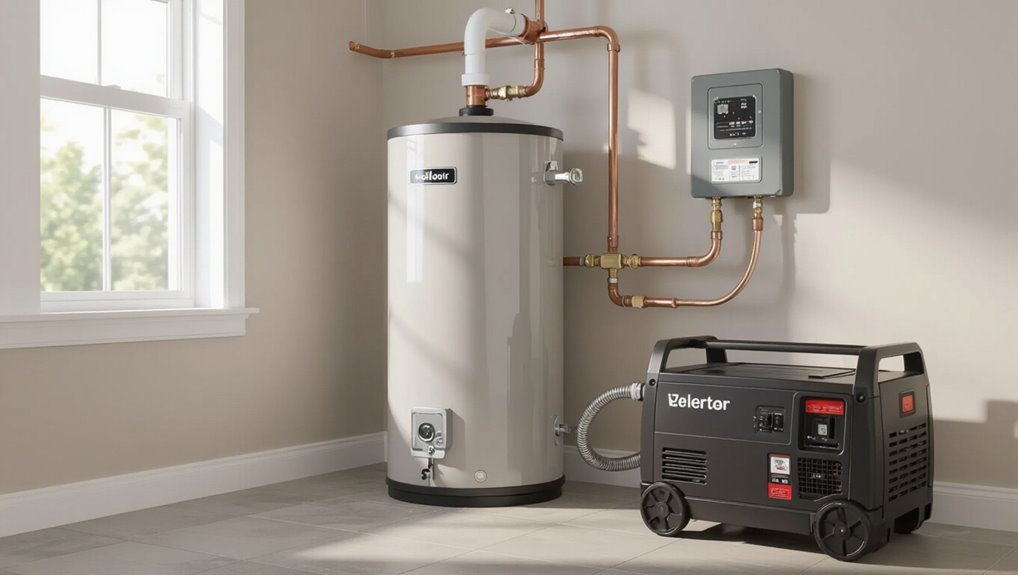
Power outages from storms, grid failures, or planned maintenance can make hot water access critical for hygiene and sanitation.
Different heater types—tank, tankless, electric, and gas—have varying electrical demands and compatibility considerations when tied to a generator.
Improper connections can overload equipment, cause backfeed into the grid, or create fire and carbon monoxide hazards, so understanding these risks is essential.
Common outage scenarios where hot water matters
When severe weather, grid failures, or planned maintenance interrupt electrical service, access to hot water can quickly become a practical concern for cooking, sanitation, and medical needs.
Typical outages include winter storms causing frozen pipes, extended utility blackouts, hurricane-related power loss, and localized infrastructure failures.
Understanding how to hook up hot water heater to generator enables continued hygiene, food safety, wound care, and comfort during such emergencies.
Types of hot water heaters and generator compatibility
Different hot water heater technologies—tank-based electric, gas-fired with electric controls, tankless (on-demand), and heat-pump models—have distinct electrical needs and compatibility considerations for generator operation.
Tank electric units demand significant continuous wattage; tankless require high surge and sustained power.
Gas units need minimal electrical for ignition and controls.
Heat-pumps need moderate continuous power plus proper voltage and grounding from the generator.
Risks of improper generator connection
Connecting a hot water heater to a generator without proper precautions can create serious safety, equipment, and legal hazards.
Improper wiring risks electrocution, fire, backfeeding the grid, and damage to the heater or generator. Overloading or using incorrect transfer equipment voids warranties and may violate codes.
Liability, fines, and rescue costs can result.
Professional installation and code-compliant transfer switches mitigate these risks.
Quick Safety Answer: Can You Run a Water Heater on a Generator?
A water heater can be run on a generator in safe setups that use the correct generator size, proper transfer equipment, and secure connections; improvised or overloaded arrangements are unsafe.
If the generator cannot handle the heater’s starting and running watts, or if a transfer switch and wiring are not installed correctly, the risk of equipment damage, fire, or backfeed is significant.
A licensed electrician should be called for sizing, installation of a manual or automatic transfer switch, and any wiring changes.
Short summary of safe vs unsafe setups
Safety hinges on matching the generator’s capacity and transfer method to the water heater’s electrical requirements.
Safe setups use a generator rated for the heater’s startup and running watts, a proper transfer switch or interlock, and correctly sized wiring and breakers.
Unsafe setups include undersized generators, DIY backfeeding, improper connections, or inadequate protection, all risking damage, fire, or electrocution.
When to call a professional electrician
Matching generator capacity and using correct transfer equipment will not always be enough—there are clear situations when a licensed electrician should be called before attempting to power a water heater from a generator.
Hire a professional if panel reconfiguration, dedicated circuits, or transfer switch installation is needed; if wiring is old, unclear, or noncompliant; for multi‑unit systems; or when permits and inspections are required to guarantee safety and code compliance.
Essential Basics Before You Begin
Before attempting any hookup, the reader should understand key electrical terms—voltage, watts, amps—and the role of a transfer switch.
They must verify the water heater’s power requirements and match them to a generator’s capacity and type (portable versus standby).
Finally, local electrical codes and permit requirements should be checked to confirm the installation is compliant and safe.
Electrical terms you should know (voltage, watts, amps, transfer switch)
Understanding a few basic electrical terms is essential before attempting to connect a hot water heater to a generator.
Voltage denotes electrical pressure (volts), current is the flow measured in amps, and watts equal volts times amps (power).
A transfer switch safely isolates generator and utility circuits, preventing backfeed.
Familiarity with these terms aids communication with electricians and guarantees correct component selection.
Determining your water heater’s power requirements
To determine a water heater’s power requirements, one must identify the heater’s voltage and wattage ratings, calculate the current draw in amps, and account for startup or heating-cycle demands to size a generator and transfer equipment correctly.
Next, note label data (e.g., 240V, 4500W), divide watts by volts for amps, include any simultaneous loads, and verify circuit breaker rating.
Generator capacity and type (portable vs standby)
When sizing a generator for a water heater, select a unit that reliably supplies the heater’s steady-state watts plus any additional household loads anticipated during operation.
Consider portable units for temporary, lower-demand use and standby generators for automatic, whole-house coverage.
Match continuous output to calculated load, include surge capacity for element startup, and factor fuel type, runtime, and installation complexity when choosing between portable and standby.
Local codes and permit considerations
Why check local codes before starting any hookup? Local codes and permit requirements determine approved connection methods, required transfer switches, grounding, and inspection schedules.
Compliance prevents unsafe installations, fines, and insurance denial. A licensed electrician should verify jurisdictional rules, obtain permits, and schedule inspections.
Documentation guarantees legal operation and occupant safety. Ignoring codes risks liability and equipment damage.
Required Equipment and Materials
The section outlines the specific equipment and materials needed to connect a hot water heater to a generator safely.
It covers transfer switch choices and their safety implications, inlet boxes, power inlets and generator cords, as well as required breakers, grounding components, and connectors.
A concise tools and PPE checklist is also provided to guarantee proper installation and personal safety.
Transfer switch options and why they matter
A transfer switch is the central safety device that controls how a generator connects to a home’s electrical circuits, preventing backfeed to the utility grid and protecting equipment and line workers.
Options include manual, automatic, and interlock kits. Choice depends on load size, convenience, code compliance, and budget.
Properly sized switches isolate hot water heater circuits and guarantee safe, reliable operation during generator use.
Inlet box, power inlet, and generator cords
Select reliable inlet hardware and properly rated cords to guarantee a safe, code-compliant connection between the portable generator and the home’s transfer switch.
Choose a weatherproof inlet box sized for the generator’s amperage, matching the transfer switch and cord gauge.
Use heavy-duty, outdoor-rated generator cords with correct plug types and strain relief.
Verify secure mounting, labeled connections, and compliant installation practices.
Circuit breakers, grounding materials, and connectors
Install appropriate overcurrent protection and reliable grounding components to guarantee safe operation between the generator and water heater.
Include a dedicated circuit breaker sized to the heater’s load, a compatible transfer switch or inlet device, and properly rated grounding rod, clamp, and conductor.
Use corrosion-resistant connectors, insulated lugs, and locknuts.
All components must match local electrical codes and manufacturer specifications for ratings and installation.
Tools and PPE checklist
Several essential tools and pieces of personal protective equipment are required to safely wire a hot water heater to a generator.
A concise checklist guarantees safety and efficiency. Recommended items include:
- Insulated screwdrivers, adjustable wrench, and wire strippers.
- Multimeter and clamp meter.
- Lockout/tagout kit and voltage tester.
- PPE: insulated gloves, safety glasses, ear protection, and flame-resistant clothing.
Step-by-Step Safe Connection Process
The procedure begins with powering down and isolating the water heater, then verifying that the generator and heater are compatible.
Next, a transfer switch (manual or automatic) is installed, followed by wiring a dedicated circuit for the water heater.
Finally, the generator is connected to an inlet box and grounding and operation are tested.
Step 1 Turn off power and isolate the water heater
Before any electrical work begins, power to the water heater must be shut off and the unit isolated from the home’s electrical system to prevent backfeed and electrical shock.
The technician verifies breaker-off status at the main panel, locks and tags the breaker if possible, and confirms zero voltage at the heater using a tested meter.
Water supply remains attached; drains are unnecessary.
Step 2 Confirm generator and heater compatibility
With the heater de-energized and isolated, the next step is to confirm that the generator and water heater are electrically compatible.
Verify voltage (120/240V), phase (single vs. three), and frequency match appliance requirements.
Check generator continuous wattage meets heater startup and running loads, confirm proper grounding, and guarantee breaker amperage and wiring gauge align with heater specifications before proceeding.
Step 3 Install a manual or automatic transfer switch
Once a compatible generator and water heater have been verified, install a transfer switch to safely isolate and route power between utility and generator sources.
Choose a manual or automatic switch rated for the heater’s wattage and local code.
Mount near the main panel, follow manufacturer instructions, and label circuits.
Verify grounding and bonding.
Have installation inspected or performed by a licensed electrician.
Step 4 Wire a dedicated circuit for the water heater
Begin by planning and marking the route for a dedicated circuit that will feed only the water heater, ensuring cable length, conduit runs, and access points are clearly identified.
Install appropriately sized wire and conduit, mount a dedicated breaker in the transfer switch or panel, and use correct connectors and strain relief.
Label the circuit and follow local code for ampacity, conduit fill, and junction box accessibility.
Step 5 Connect generator to inlet box and test grounding
Establish the physical and electrical connection between the generator and the inlet box, verifying proper grounding before applying load.
Securely fasten the generator cord to the inlet, confirm tight connections and correct pin alignment, then measure continuity between generator frame, inlet box, and home grounding electrode.
Address any fault with bonding straps or grounding conductor.
Document readings and lock covers before proceeding.
Step 6 Start generator, switch power, and verify operation
Start the generator and allow it to reach stable operating speed and voltage while monitoring for abnormal noises, smells, or vibrations.
Confirm generator output matches expected voltage and frequency with a meter.
Switch the inlet box or transfer switch to generator position, energize the water heater circuit, then observe water heater pilot/element operation and breaker status.
Recheck grounding and connections for heat or loose terminals.
Step 7 Shut down and safe disconnection procedure
Power should be removed in a controlled sequence to prevent equipment stress and safety hazards: the generator is first unloaded by turning off the water heater’s breaker or transfer switch.
Allow the heater to cool and finish any heating cycle.
Shut down the generator per manufacturer instructions, disconnect shore power, and re-engage utility power.
Secure connections, inspect for leaks or damage, and store equipment safely.
Wiring Diagrams and Example Setups
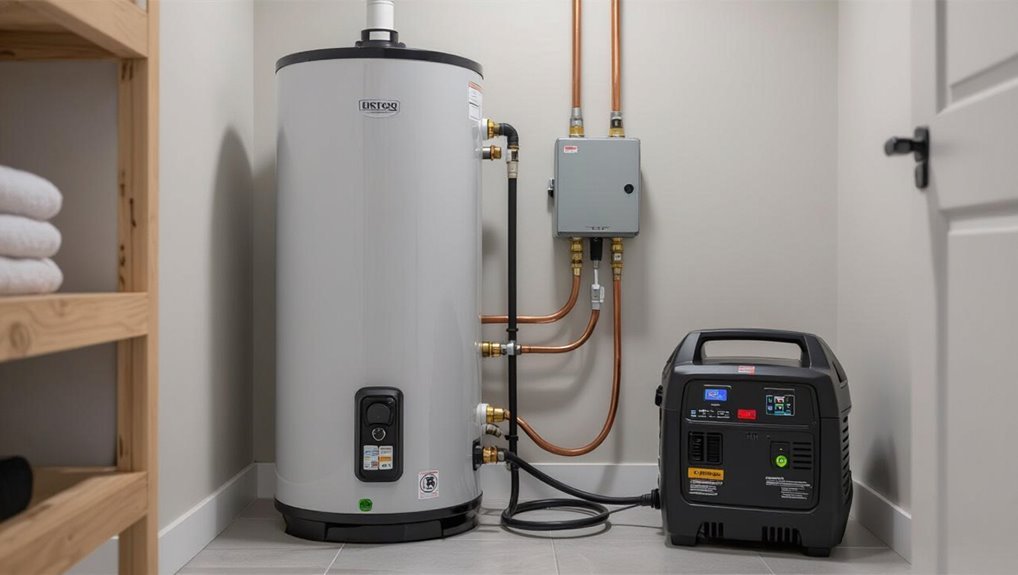
The section presents concise wiring diagrams and typical layouts for three common scenarios: a portable generator powering a tank-type electric water heater, a standby generator with whole-house automatic transfer, and gas water heaters that need electrical power for controls or circulation pumps.
Each example highlights required transfer equipment, breaker sizing, grounding, and safety interlocks.
Readers are guided to compare diagrams against their installation and consult a licensed electrician for final design and code compliance.
Portable generator powering tank-type electric water heater
When a portable generator supplies a tank-type electric water heater, careful wiring and load management are essential to prevent overloads, equipment damage, and safety hazards.
Recommended setups include using a dedicated heavy‑duty extension or transfer switch, matching generator capacity to heater amperage, installing a properly rated disconnect and GFCI protection, and sequencing loads to avoid simultaneous high draws.
Follow manufacturer and local electrical codes.
Standby generator with whole-house automatic transfer
Describe typical wiring layouts and practical example setups for a whole-house standby generator tied to an automatic transfer switch (ATS), emphasizing safe, code-compliant connections and load management.
Diagrams show generator feed to ATS, ATS to main panel, and separate critical loads subpanel. Include dedicated breaker for the electric water heater or load-shedding on ATS.
Grounding, neutral handling, and licensed electrician installation are required for compliance.
Gas water heaters requiring power for controls or pumps
Many gas water heaters incorporate electrical components—such as electronic ignition controls, thermostatic controllers, or circulation pumps—that must be powered during an outage.
So wiring diagrams for generator backup should show separate circuits and clear transfer arrangements to prevent backfeed and guarantee proper neutral/ground handling.
Diagrams depict dedicated breaker, transfer switch or interlock, GFCI where required, and labeled wiring to isolate gas valve/control and pump loads safely.
Troubleshooting Common Issues
When the generator fails to start or cannot sustain the water heater load, the cause may be fuel, choke, or engine issues and should be checked before testing electrical connections.
Tripped breakers or an overloaded generator require inspecting circuit breakers, load distribution, and whether the heater exceeds the generator’s rated output.
Voltage fluctuations can damage the element or controls and may explain no hot water even when the generator runs, so verifying voltage stability and element continuity is recommended.
Generator won’t start or maintain load
Troubleshooting a generator that refuses to start or cannot sustain a load begins with methodically isolating fuel, ignition, and electrical causes.
Inspect fuel supply, filter, and primer; check spark plugs, coils, and battery voltage.
Verify oil level and low-oil shutdown.
Test output with a multimeter and reduce connected loads.
Address loose wiring, corroded terminals, or a faulty voltage regulator before seeking professional service.
Tripped breakers or overloaded generator
Start by identifying whether the generator is repeatedly tripping its circuit breakers or simply struggling under an excessive load.
If breakers trip, inspect for short circuits, damaged wiring, or a faulty breaker.
If the generator is overloaded, reduce connected appliances, prioritize the water heater, and redistribute loads.
Verify generator rated capacity and consult a qualified electrician if trips persist or capacity appears insufficient.
Voltage fluctuations and effects on water heater
Following investigation of tripped breakers or perceptible overload, attention should turn to voltage stability, because fluctuations can damage heating elements, thermostats, and controls or cause erratic operation.
Measure generator output under load with a reliable meter; watch for sustained under‑ or overvoltage, frequency drift, and spikes.
Persistent instability warrants generator service, voltage regulation, or isolation devices to protect the water heater.
No hot water despite running generator
When a generator runs but the water remains cold, focus first on whether electricity is actually reaching the heater: confirm the generator’s breaker(s) and any transfer switch are engaged, check for a tripped breaker or blown fuse at the heater, and verify the unit is receiving the correct voltage under load.
Also inspect the element(s)/thermostat for failure, guarantee proper grounding, and test for continuity.
Safety Hazards and How to Avoid Them
The section outlines key safety hazards associated with powering a hot water heater from a generator, including carbon monoxide exposure, backfeeding risks, electrical shock, and fire from improper wiring.
It emphasizes proper ventilation and generator placement to prevent toxic exhaust buildup.
It also stresses using transfer switches, correct grounding, and certified wiring to avoid illegal connections, electrocution, and ignition hazards.
Carbon monoxide and proper ventilation
Because portable generators produce exhaust containing carbon monoxide (CO), users must guarantee hot water heater connections are established only with adequate ventilation and strict adherence to placement guidelines; otherwise, CO can accumulate quickly and pose lethal risks.
Install detectors, keep generators outdoors away from doors, windows, and vents, and allow unobstructed airflow.
Regularly inspect exhaust paths and follow manufacturer clearance recommendations to minimize CO exposure.
Backfeeding risks and illegal connections
Following ventilation precautions, attention must also turn to electrical hazards—specifically backfeeding and illegal generator hookups.
Backfeeding sends generator power into utility lines, endangering line workers and damaging equipment. Illegal connections bypass transfer switches and violate codes.
Use a proper transfer switch or interlock device, follow local regulations, and hire a licensed electrician to install and inspect to prevent hazards and legal liability.
Shock and electrocution prevention
Prevent electric shock and electrocution by treating all generator and water heater connections as live circuits until a qualified person verifies they are de-energized.
Use insulated tools, wear appropriate PPE (rubber gloves, dielectric boots), and lock out/tag out the generator and panel.
Maintain clear warning labels, keep the area dry, and prohibit untrained personnel from accessing wiring.
Test circuits with a rated tester before work proceeds.
Fire hazards from improper wiring
Improper wiring when connecting a hot water heater to a generator can ignite insulation, wooden framing, or nearby combustibles through overheated connections, arcing, or overloaded conductors.
Faulty splices, undersized conductors, loose terminals, and lack of protection devices increase risk.
Risks are minimized by using correct gauge wiring, proper connectors, GFCI/overcurrent protection, secure terminals, and adherence to code; inspections confirm safe installation.
Alternatives and Temporary Solutions
The article outlines practical alternatives when a full hot water heater hookup is impractical, including heating water manually or with portable appliances.
It recommends prioritizing essential circuits to match limited generator capacity and avoid overloads.
It also compares small on‑demand electric units with gas options to identify the most efficient temporary solution.
Heating water manually or with portable appliances
Explore simple, temporary methods for heating water when a generator cannot power a household heater: boiling on a camp stove, using portable propane or electric kettles (with appropriate generator capacity), and employing solar thermal bags or insulated heat-retention containers.
Use safe fuel handling, outdoor ventilation, and stable surfaces.
Prioritize small batches, monitor temperatures, and avoid overloading circuits or unattended flames to reduce burn and fire risks.
Prioritizing circuits for limited generator capacity
After covering temporary water‑heating methods, attention shifts to allocating a generator’s limited capacity among home circuits so critical needs are met.
The homeowner should rank loads, isolate nonessential circuits, and balance startup versus running watts.
Consider:
- Refrigerator/freezer
- Well pump or water heater (if prioritized)
- Heating/cooling essentials
- Lighting and communication devices
Limit simultaneous starts to prevent overload.
Using a small on-demand electric vs gas options
When comparing small on‑demand electric units to portable gas or propane tankless heaters, homeowners should weigh fuel availability, installation complexity, and power requirements.
Electric models offer simpler hookups and cleaner operation but demand significant continuous amperage, whereas gas options provide higher flow rates with lower electrical draw yet require ventilation and fuel storage.
Decision hinges on generator capacity, runtime, local codes, and emergency fuel access.
Cost, Time, and When to Hire a Pro
Typical parts for a generator-to-water-heater hookup and electrician labor range from modest DIY costs to several hundred dollars for professional work.
DIY installations often take a few hours for experienced homeowners, while licensed electricians can complete safe, code-compliant hookups more quickly but with higher labor charges.
Guidance on choosing a qualified electrician should focus on licensing, insurance, experience with generator connections, and clear written estimates.
Typical costs for parts and electrician labor
Estimating costs for connecting a hot water heater to a generator requires accounting for parts, labor rates, and the complexity of the installation.
Typical parts—transfer switch, conduit, wiring, breakers, connectors—range $150–$600.
Electrician labor usually runs $75–$150 per hour; total labor often totals 2–6 hours depending on circuit complexity.
Permits or upgrades can add $50–$300.
Time estimates for DIY vs professional installation
Although a homeowner might save money by doing the hookup themselves, the time required varies widely with skill level, tools on hand, and the chosen transfer method; a competent DIYer can expect 4–10 hours for a straightforward manual transfer hookup and 8–20+ hours for installing a full automatic transfer switch.
In contrast, a licensed electrician usually completes either job in 2–6 hours.
Additional time covers permitting, inspections, troubleshooting, and sourcing parts.
How to choose a qualified electrician
When should a homeowner call in a licensed electrician for a generator-to-water-heater hookup depends on factors of cost, time, and risk:
Complex transfer systems, unfamiliar electrical work, or local code requirements generally justify hiring a pro.
Select electricians with valid licenses, insurance, and references; verify experience with transfer switches and water heaters.
Compare quotes, confirm permits, agree on timeline, and insist on written warranties.
Checklist Before and After Hookup
Before and after connecting a hot water heater to a generator, a concise checklist guarantees safety, code compliance, and reliable operation.
Suggested items to review include:
- Verify electrical isolation and code-compliant transfer equipment.
- Confirm generator capacity and correct wiring before startup.
- Run startup verification procedures and monitor for faults.
- Schedule routine maintenance and inspections post-connection.
The checklist should be followed methodically and documented for future reference.
Pre-connection safety and compliance checklist
A concise, prioritized checklist guarantees the hot water heater and generator are connected safely and in compliance with codes and manufacturer requirements.
Verify power is off and locked out, confirm generator capacity and transfer switch compatibility, inspect wiring, grounding, and bonding, ascertain correct fuel storage and ventilation, check relief valve orientation, obtain required permits, and document manufacturer instructions and local code references before making electrical or plumbing connections.
Startup verification checklist
With the pre-connection checklist completed and documentation verified, the startup verification checklist guides a methodical sequence of checks immediately prior to energizing and after initial operation.
Verify generator grounding, correct voltage and frequency, isolation of utility feed, and proper transfer switch position.
Inspect all connections for tightness and correct polarity.
Confirm water heater controls, leak-free plumbing, venting, and clearances.
Record initial readings.
Maintenance and inspection schedule
One clear, consistent maintenance and inspection schedule guarantees safe, reliable operation of a hot water heater when connected to a generator. It specifies tasks to perform immediately before hookup, during initial startup, and after extended operation.
Include checklist items: verify fuel, electrical connections, and transfer switch; inspect venting, pressure relief valve, and hoses; log hours, test safety devices monthly, and perform annual professional inspection.
Real-World Scenarios and Case Examples
The article presents three practical scenarios to illustrate safe hookup practices: a single-appliance portable generator powering only the water heater, a whole-house standby generator supplying multiple circuits including the heater, and a summary of lessons learned from common mistakes.
Each case contrasts capacity planning, transfer switching, and grounding requirements to highlight different risks and solutions.
Readers are encouraged to compare their own setup to these examples to identify applicable precautions.
Single-appliance portable generator scenario
Several common household situations call for powering just a single hot water heater with a portable generator, such as during brief outages, remote job sites, or targeted maintenance.
In such cases the operator isolates the heater circuit, uses a properly rated extension or transfer switch, confirms generator output matches heater requirements, grounds equipment, and monitors run time and fuel to prevent overload, backfeed, or damage.
Whole-house standby generator scenario
Moving from single-appliance setups to whole-house standby systems shifts the focus from isolated circuit management to integrated automatic power restoration, load prioritization, and permanent transfer equipment.
Technicians assess service capacity, sequence large inductive loads like water heaters, and configure subpanel circuits.
Compliance with local codes, maintenance of automatic transfer switches, and fuel supply reliability guarantee safe continuous operation and coordinated protection of the electrical system.
Lessons learned from common mistakes
Reviewing real-world mistakes reveals the practical hazards and corrective measures installers and homeowners repeatedly encounter when connecting hot water heaters to generators.
Common errors include improper transfer switch use, undersized generator capacity, sloppy wiring, and neglecting code-compliant bonding and grounding.
Case examples show ricocheting damage from backfeed, tripped breakers, and burned elements; corrective measures emphasize professional installation, load calculation, and routine inspection.
Quick Reference Tables for Sizing and Compatibility
Quick reference tables summarize generator wattage versus common water heater element sizes and recommend transfer switch options for typical setups, allowing quick assessment of compatibility. The tables below present nominal element ratings, estimated starting and running loads, and suggested transfer switch types for single- and dual-element heaters. Users should verify exact specifications on their equipment and consult a licensed electrician for final selection.
| Element Size (W) | Estimated Load (W) | Recommended Transfer Switch |
|---|---|---|
| 1500 | 1500 running / 1500 start | 30 A manual transfer |
| 3000 | 3000 running / 3000 start | 50 A manual or 30 A with load shed |
| Dual 2×4500 | 9000 running / 9000 start | 100 A manual or automatic with load management |
Generator wattage vs heater element sizes
When matching a generator to an electric hot water heater, the key variable is whether the generator can supply the continuous wattage required by the heater element(s) without exceeding its rated output.
Reference tables align common element sizes (1500W, 3000W, 4500W) with generator capacities.
Include starting surge, simultaneous loads, and a safety margin (typically 20%) to prevent overload and voltage drop.
Recommended transfer switch options by setup
Several common transfer switch configurations suit typical water heater setups: manual transfer switches for single-circuit hookup, single-pole automatic transfer switches for whole-house systems with limited loads, and load-managing or subpanel-integrated switches for simultaneous heavy-draw appliances.
Match generator capacity, heater element watts, and breaker size. Use 30A or 50A single-circuit switches for dedicated heaters; whole-house needs 100–200A ATS or managed panels with prioritization.
Conclusion
Connecting a hot water heater to a generator can be a practical emergency measure when done correctly. Like threading a needle in dim light, it requires attention, proper equipment, and adherence to safety rules—transfer switch use, correct wattage, ventilation, and fuel management. Follow the outlined steps, verify compatibility with manufacturer guidance, and consider hiring a licensed electrician for complex setups. With preparation, risks are minimized and hot water remains reliably available during outages.
