How to Get Rid of Mosquitoes in Bathroom Drains: Fast, Safe Solutions That Work
To effectively get rid of mosquitoes in bathroom drains, start by eliminating standing water, scrubbing traps and pipes, and treating larvae with BTI or diluted bleach. You can trap or vacuum adult mosquitoes and seal entry points with mesh. Additionally, use enzyme cleaners monthly, fix any leaks, and improve ventilation to prevent future breeding. Avoid mixing chemicals and address any nearby stagnant water. If the problem persists or involves structural issues, consult a professional. Detailed step-by-step methods and product options are provided below.
Why Mosquitoes Breed in Bathroom Drains and How to Recognize an Infestation
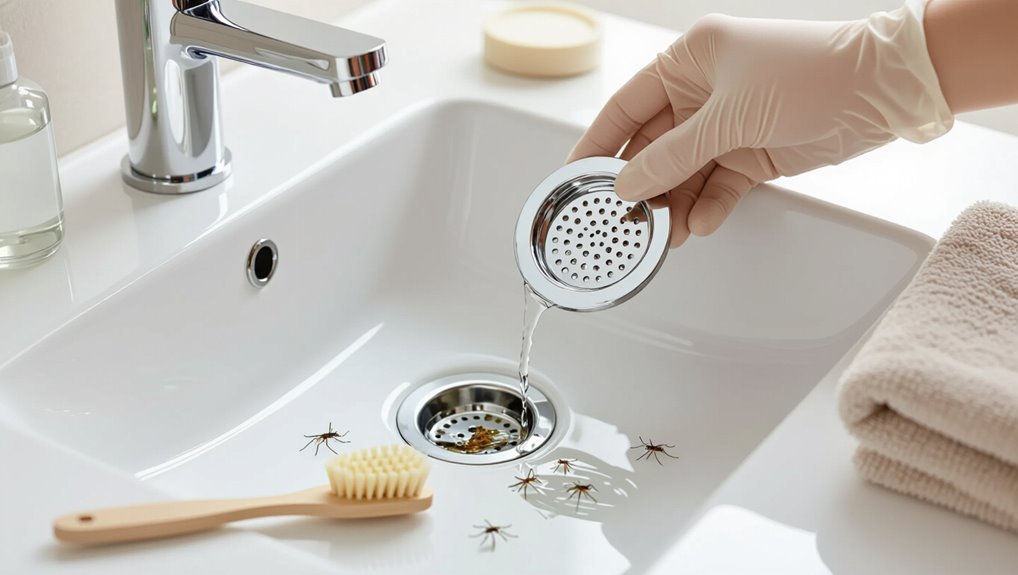
Certain small mosquito species, particularly Culex and some Aedes, complete early life stages in the protected, organic-rich water found in bathroom drains.
Signs of an infestation include adult sightings near sinks or showers, wriggling larvae in slow-moving water, musty odors, and peak activity at dawn or dusk.
Persistent standing water, soap and hair buildup, and high humidity create ideal conditions for breeding.
Common drain-breeding mosquito species and life cycle
Several small mosquito species commonly exploit bathroom drains as breeding sites, especially Culex and some Aedes and Culiseta species that tolerate low, organic-rich water.
Larvae develop in standing drain water, pupate quickly, and emerge as adults within days.
Identifying species aids control choices; integrated measures—cleaning, drying, traps—support how to get rid of mosquitoes in bathroom drains effectively and sustainably.
Signs you have mosquitoes in drains (sightings, larvae, odors, timing)
Knowing which mosquito species prefer drains helps explain the warning signs of an infestation. Observers may notice adult mosquitoes emerging near sink or shower drains, especially at dusk.
Larvae or wriggling pupae visible in shallow drain water confirm breeding. Faint musty or moldy odors can accompany decay.
Repeated, time-specific sightings indicate an active, localized drain source requiring attention.
Conditions that attract mosquitoes to bathroom drains (standing water, organic build-up, humidity)
When bathroom drains hold even a thin film of stagnant water combined with decomposing hair, soap scum, and organic residue, they become attractive breeding sites for some mosquito species.
Warm, humid environments and slow or blocked drainage prolong standing water, concentrating nutrients that support larvae.
Cracks, unused fixtures, and infrequent cleaning increase risk, so infestations often correlate with poor ventilation and neglected plumbing.
Fast, Safe First-Aid Steps to Eliminate Adult Mosquitoes Immediately
Immediate, low-risk actions can remove adult mosquitoes quickly, such as using sticky traps, a swatter, or a handheld vacuum to capture or kill visible insects.
Simple chemical-free barriers and air movement—temporary mesh screens, sealing gaps around windows, or running a fan—help prevent further incursions.
If infestation persists, brief, targeted use of bathroom-safe insecticide sprays may be warranted, applied only according to label instructions and with ventilation.
Quick physical removal methods (traps, swatting, vacuuming)
Acting quickly, one can remove adult mosquitoes from bathroom drains using simple physical methods—traps to capture, a swat for direct kills, or a handheld vacuum to suck them out—each suited to different situations and levels of precision.
Traps (sticky pads or small containers) catch multiple insects. A swift swat or vacuum clears visible adults immediately.
Dispose of captures and check the drain for survivors.
Temporary chemical-free measures (screens, fans, window seals)
A few simple, chemical-free measures can stop adult mosquitoes in their tracks: installing fine mesh screens over drains and vents, running a small fan to create airflow that deters flying insects, and sealing gaps around windows and pipes to eliminate entry points.
These immediate steps reduce mosquito presence, interrupt access and resting sites, and buy time before longer-term elimination or professional action is initiated.
When to use short-term insecticide sprays safely in bathrooms
When an urgent reduction of adult mosquitoes is required in a bathroom, short-term insecticide sprays can serve as a fast, limited-response option if used correctly.
They are appropriate for immediate infestations when nonchemical measures fail.
Occupants should exit, cover toothbrushes and open products, ventilate thoroughly after the labeled dwell time, and avoid repeated applications.
Choose low-toxicity aerosol formulations labeled for indoor use.
How to Clean Bathroom Drains to Remove Larvae and Breeding Sites
The section outlines the tools and supplies needed for safe drain cleaning and a clear step-by-step process to remove mosquito larvae and breeding sites.
It begins with inspecting and removing visible debris, proceeds through mechanical cleaning with brushes or drain snakes, and then describes flushing techniques such as hot water or high-pressure rinses to dislodge larvae.
Finally, it covers non-toxic disinfection options—vinegar, baking soda, or enzyme cleaners—to sanitize the drain without hazardous fumes.
Tools and supplies you need for a safe drain cleaning
Prepare a compact kit of tools and supplies to guarantee drain cleaning is effective and safe, prioritizing items that remove larvae, clear debris, and protect skin and lungs.
Essential components include protective gear, basic tools, and larvicide options:
- Nitrile gloves, goggles, N95 mask
- Drain snake, small brush, tweezers
- Disposable towels, bucket, sealable bags
- EPA-registered larvicide or enzyme drain treatment
Step 1: Inspecting and removing visible debris
Begin by removing the drain cover and visually scanning the opening and immediate pipe interior for hair, soap scum, organic gunk, and any visible larvae or pupae.
Using gloved hands and a disposable tool, extract and dispose of debris in a sealed bag.
Rinse the area with hot water to flush loose particles.
Repeat until no visible organic material remains.
Step 2: Mechanical cleaning techniques (brushes, drain snakes)
Use a stiff brush or a drain snake to dislodge and extract the built-up gunk that shelters mosquito larvae and their food sources.
Work deep into the trap and along pipe walls, rotating and scraping to remove biofilm, hair, and sludge.
Retrieve debris and repeat until water flows freely.
Sanitize tools after use and dispose of waste in a sealed bag to prevent recontamination.
Step 3: Flushing methods to dislodge larvae (hot water, high-pressure)
Flush the drain with concentrated flows of hot water or a high-pressure jet to sweep out larvae and loosen biofilm, targeting the trap and the adjacent pipe walls where mosquitos breed.
Repeated short bursts are more effective than a single pour. Direct the nozzle down the drain, work from multiple angles, and follow with cold water to flush dislodged material toward the sewer line.
Step 4: Disinfecting the drain without toxic fumes (vinegar, baking soda, enzyme cleaners)
Disinfecting the drain with non-toxic agents removes residual organic matter and discourages re‑colonization without introducing harmful fumes.
A mix of baking soda followed by vinegar, allowed to fizz, loosens grime; flush with hot water.
Enzyme cleaners break down organic residues safely over time.
Repeat weekly after mechanical cleaning.
These methods reduce breeding material while avoiding corrosive chemicals and toxic vapors.
Safe Chemical and Natural Treatments to Prevent Reinfestation
The section compares natural and chemical approaches for preventing drain reinfestation, weighing effectiveness, safety, and ease of use.
It highlights proven natural options such as BTI biological larvicides and plant-based repellents like peppermint and eucalyptus, alongside safer chemical choices including pyrethrins and measured household bleach precautions.
Guidance is also provided on signs that warrant contacting a professional pest control service.
Comparison of natural vs chemical options
Several practical treatments—both natural and chemical—can reduce mosquito breeding in bathroom drains, but they differ in speed, persistence, safety, and environmental impact. Natural options tend to be gentler and lower risk but may require more frequent application; chemical treatments act faster and last longer but carry greater toxicity concerns and disposal considerations.
| Attribute | Comparison |
|---|---|
| Speed | Natural: slower; Chemical: faster |
| Persistence | Natural: short; Chemical: longer |
Effective natural repellents and larvicides (BTI/biological larvicides, peppermint oil, eucalyptus)
Considered safer alternatives to harsh insecticides, natural repellents and biological larvicides target mosquitoes with minimal risk to humans and plumbing.
Bacillus thuringiensis israelensis (BTI) kills larvae in stagnant drain water without harming pipes.
Peppermint and eucalyptus oils repel adults when applied diluted around drains or on cotton wads.
Regular application and drain maintenance prevent reinfestation while preserving household safety and aquatic life.
Safe chemical options and proper usage (pyrethrins, household bleach precautions)
While natural measures like BTI and essential oils provide low-risk control, some situations call for targeted chemical options to stop adults and larvae more quickly.
Pyrethrin sprays or aerosols can kill adults; apply briefly, ventilate, and avoid skin contact.
Household bleach can disinfect drains and kill larvae when diluted and flushed cautiously; never mix bleach with ammonia or acids and use gloves and eye protection.
When to call a professional pest control service
When should a professional be contacted? A pest control service is recommended if mosquitoes persist despite thorough cleaning, repeated safe treatments, or if infestations spread beyond drains.
Call professionals when structural issues (broken traps, persistent standing water) exist, when occupants face allergies or disease risks, or when extensive larval breeding is found.
Licensed technicians assess causes, apply targeted treatments, and prevent reinfestation.
Long-Term Preventive Measures to Keep Drains Mosquito-Free
Long-term prevention combines physical repairs, regular upkeep, moisture control, and exterior modifications to stop drains from becoming mosquito habitats.
Addressing trap seals, drain covers, and proper pipe slope prevents indoor breeding while a routine maintenance schedule and removal of stagnant water reduce lingering risk.
Coordinated landscaping and exterior measures further limit mosquito entry and reinforce indoor efforts.
Structural fixes (trap seals, drain covers, slope correction)
Because drains provide predictable entry points and breeding microhabitats, structural corrections—sealing trap gaps, installing fine drain covers, and ensuring proper pipe slope—are foundational for preventing mosquitoes from establishing in bathroom plumbing.
Professional inspection verifies trap integrity, rubber or mechanical seals replace failing components, mesh or perforated covers block adults while allowing flow, and correcting fall prevents standing water that enables larval development.
Routine maintenance schedule for drains
A simple, regular maintenance schedule keeps bathroom drains inhospitable to mosquitoes by preventing standing water, organic buildup, and entry points from recurring.
Inspections, cleaning, and minor repairs on a set cadence stop larvae and adults.
Recommended routine:
- Weekly: remove visible debris and hair.
- Monthly: scrub with brush and enzyme cleaner.
- Quarterly: flush with hot water.
- Annually: inspect seals and traps.
Reducing bathroom humidity and stagnant water sources
Reduce humidity and eliminate stagnant water to make bathrooms unattractive to mosquitoes; these measures address the environmental conditions that allow larvae to develop and adults to rest.
Install exhaust fans, use dehumidifiers, fix leaks promptly, and guarantee proper ventilation.
Remove standing water from trays, buckets, and shower pans.
Keep drains flowing with regular flushing and consider trap seals or drain covers to prevent pooling.
Landscaping and exterior measures to limit mosquito entry
Controlling indoor humidity and eliminating standing water helps, but outdoor conditions largely determine how many mosquitoes reach bathroom drains.
Strategic landscaping—drainage improvements, removing low spots, and trimming dense shrubs—reduces mosquito habitat.
Eliminate containers holding water, maintain gutters, and install screens or fine-mesh vents.
Introducing predators (fish in ponds) and using larvicides in unavoidable stagnant pools further lowers mosquito populations approaching the home.
Common Mistakes That Keep Mosquitoes Coming Back
Many people rely on surface sprays while leaving drains and nearby standing water untreated, which allows mosquito populations to rebound.
Hazardous results can follow from mixing household chemicals in an attempt to kill larvae or improve drainage.
Overlooking adjacent indoor or outdoor breeding sites — such as plant saucers, gutters, or neglected floor drains — also undermines control efforts.
Overreliance on sprays without addressing breeding sites
Relying mainly on aerosol sprays and foggers provides a quick visual fix but often fails to stop drain-breeding mosquitoes at their source.
Temporary knockdown masks larvae in standing water within pipes and traps.
Persistent infestations need targeted actions: remove organic buildup, flush drains, install covers, and use larvicides or biological controls as directed.
Otherwise adults quickly return despite repeated surface spraying.
Unsafe mixing of household chemicals
A surprising number of household attempts to eliminate drain-breeding mosquitoes involve combining cleaners or DIY concoctions that create toxic fumes, corrosive reactions, or neutralized treatments.
These practices not only endanger occupants and plumbing but also fail to address larvae effectively.
Mixing bleach with acids or ammonia, or pouring incompatible solvents, can produce hazardous gases and damage pipes.
Safe, targeted larvicide or professional guidance is preferable.
Ignoring adjacent indoor or outdoor breeding sources
Homeowners’ efforts to treat bathroom drains often fail when nearby indoor or outdoor breeding sites are overlooked.
Mosquitoes exploit standing water in plant saucers, gutters, clogged outdoor drains, humid basements, and neglected containers.
Effective control requires inspecting and eliminating these sources, maintaining dry conditions, and coordinating drain treatment with broad habitat reduction.
Otherwise, populations rebound despite localized drain interventions.
Signs That a Problem Is Bigger Than a Single Drain
If mosquitoes persist despite treating the bathroom drain, it may indicate a wider household or plumbing infestation.
Other indoor breeding sites—potted plants, unused containers, sump pits and hidden standing water—should be inspected for larvae and adults.
Professional help from a plumber or pest control expert is warranted when multiple sites are found, the source cannot be located, or treatments fail.
Indicators of a wider household or plumbing infestation
How can a single slow drain signal a much larger mosquito problem?
Visible larvae or adults near multiple fixtures, recurring sink or shower clogs, unexplained dampness or mold, and persistent biting despite local treatments indicate broader infestation.
Sewer odors, backflow, or mosquitoes active during daytime suggest systemic breeding in plumbing or hidden standing water, warranting whole-house inspection and professional plumbing evaluation.
Inspecting other potential indoor breeding spots (plants, unused containers, sump pits)
Signs that mosquitoes are breeding beyond a single slow drain should prompt a systematic check of other indoor water sources.
Inspect houseplants for soggy saucers or overwatered soil, empty and dry unused containers, check under appliances and storage for pooled water, and examine sump pits, basement corners and utility trays.
Remove standing water, improve drainage, and monitor regularly for recurrence.
When to escalate to a plumber or pest control expert
Call for professional help when isolated fixes fail or when evidence indicates a larger infestation or plumbing failure.
Persistent mosquito activity despite drain cleaning, multiple affected rooms, foul sewage odors, recurring larval sightings, or visible pipe leaks warrant escalation.
A plumber diagnoses hidden leaks, standing water, or trap issues; pest control locates breeding hotspots, treats infestations, and advises prevention measures beyond DIY scope.
Quick Reference: Tools, Products, and Timeline for Getting Rid of Drain Mosquitoes
A concise checklist outlines what to do now and next to eliminate drain mosquitoes.
Recommended steps include a rapid-response kit and schedule:
- Immediate actions (first 24 hours)
- Follow-up actions (first week)
- Ongoing maintenance (monthly/seasonal)
- Tools and products to have on hand
The following section explains each item and a simple timeline for execution.
Immediate actions (first 24 hours)
Begin by stopping further breeding: isolate affected drains, reduce water pooling, and remove visible larvae or standing water within 24 hours.
Flush drains with hot water, scrub drain covers and visible biofilm, and use a cup of diluted bleach or enzymatic drain cleaner per product instructions.
Install temporary drain strainers and run faucets periodically to prevent reaccumulation while preparing follow-up treatments.
Follow-up actions (first week)
After initial measures quell active larvae and reduce standing water, follow-up actions in the first week focus on eliminating residual breeding sites and confirming progress.
Inspect drains daily, run hot water and enzyme cleaner twice, and use a drain brush to remove biofilm.
Replace or repair leaking fixtures, clear nearby traps or p-traps, and set sticky traps or check mosquito activity each evening to verify reduction.
Ongoing maintenance (monthly/seasonal)
While occasional inspections suffice initially, consistent monthly and seasonal maintenance prevents drain mosquito resurgence by addressing biofilm buildup, moisture sources, and entry points.
The routine should list specific tools (drain brush, plumbing snake, enzyme cleaner, caulk/sealant, dehumidifier), recommended products (biodegradable enzyme treatments, unscented bleach for occasional use, adhesive traps), and a clear timeline (monthly biofilm removal and enzyme treatment, quarterly trap and trap-seal checks, seasonal deep-clean and fixture repair) so homeowners can follow a simple, repeatable schedule that minimizes breeding sites and monitoring effort.
Monthly: scrub drains, run enzyme cleaner.
Quarterly: inspect seals, traps.
Seasonal: deep-clean, fix leaks, replace damaged fixtures.
Helpful Resources and Further Reading
The article points readers to manufacturer and safety guides for the specific drain treatments recommended, emphasizing label instructions and precautions.
It also suggests consulting links to local vector control agencies and public health departments for area-specific identification and reporting.
These resources provide authoritative, practical next steps for safe and effective mosquito control.
Manufacturer and safety guides for recommended products
Several manufacturers provide product-specific safety data sheets and user manuals that detail proper use, disposal, and first-aid measures for drain treatments and insecticides.
Consult labels before application, follow PPE recommendations, and keep documentation for emergencies.
Recommended items to review:
- SDS for chemical composition and hazards
- Label instructions and dosages
- Storage and disposal guidance
- Emergency and first-aid procedures
Links to local vector control and public health guidance
Local vector control agencies and public health departments offer authoritative, region-specific guidance on mosquito prevention, disease risks, and reporting procedures.
Links to local resources, seasonal advisories, and contact information help residents address infestations and request inspections.
Recommended references include:
- Local vector control website
- County public health page
- State health department vector pages
- National CDC mosquito guidance
Conclusion
The bathroom drain, once a quiet well, can become a humming nursery; its cure requires steady, simple action. By removing organic buildup, treating standing water, and sealing entry points, the household restores order and breathes clarity back into tiled corners. Routine checks and targeted treatments act like a gardener pruning a stubborn hedge—small, deliberate steps that prevent relapse. When these measures are kept, the drain returns from chaos to calm.