How to Unclog a Toilet From Paper Towels Quickly and Safely: Step-By-Step Fixes
If your toilet is clogged with paper towels, follow these quick and safe steps to resolve the issue. First, stop flushing and turn off the toilet’s water supply to avoid overflow. Next, remove any excess water using a small container and wear gloves for protection. Gently attempt to remove any visible paper towel fibers manually. If that doesn’t work, use a flange plunger with firm, controlled thrusts. You can also try adding hot (but not boiling) water and dish soap to help break down the blockage. If the clog persists, carefully use a toilet auger or snake, and be sure to sanitize the area afterward. For more detailed step-by-step fixes and prevention tips, continue reading.
Fast Assessment: Is the Toilet Clog from Paper Towels?
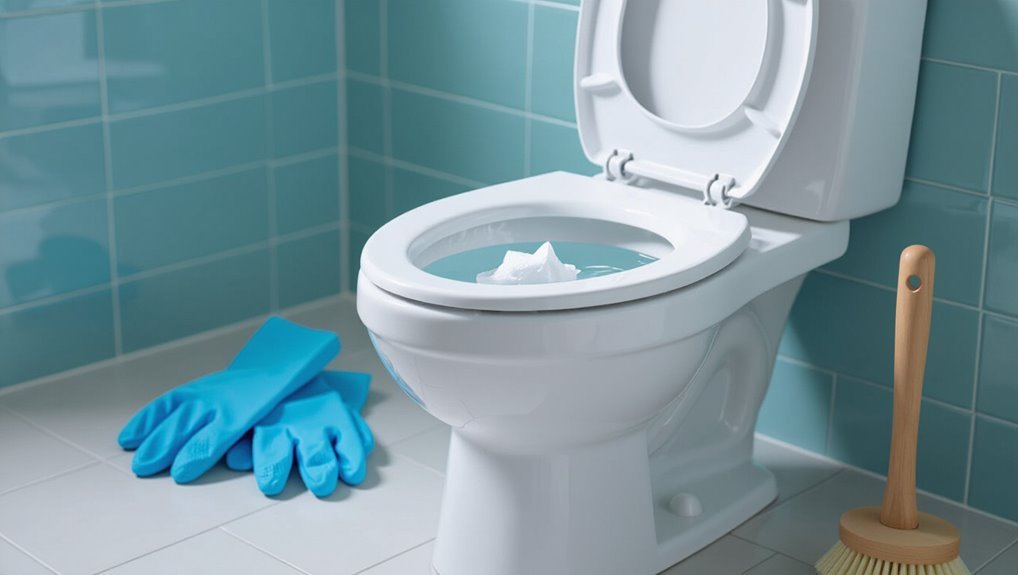
A quick visual and sensory check can indicate whether a clog is caused by paper towels rather than toilet paper or solid waste: look for non-dissolving fibrous material in the bowl, slow drainage with standing water, or paper towel fragments when attempting a minor flush.
Before any intervention, the person should put on gloves, eye protection, and a mask if odors are strong, and clear the surrounding area to avoid slips.
Small tools like a plunger or bucket should be sanitized before and after use to limit contamination.
Signs that paper towels’ not toilet paper or solids’ are causing the blockage
When a toilet refuses to clear after a single flush, and water remains unusually slow to drain, these immediate performance clues often point away from ordinary toilet paper and toward denser materials like paper towels.
Discerning this quickly helps decide whether to try simple plunging or call a plumber. Other signs include gurgling, repeat backups, or paper towel fragments visible at the trap—key to knowing how to unclog a toilet from paper towels.
Safety and hygiene precautions before starting
Before attempting any intervention, one should assess the scene for overflow risk, visible solids, and signs that paper towels—rather than ordinary toilet paper—are present.
Then put on protective gloves and eye protection to minimize exposure to contaminated water.
Close bathroom doors, ventilate the area, remove pets and children, use disposable tools where possible, and have disinfectant, thick trash bags, and hand sanitizer ready.
Immediate Quick-Fix Steps to Try Now
The next section outlines practical, low-risk actions to try immediately to clear a paper-towel clog without worsening it.
It covers correct plunger technique and common mistakes, safe use of hot (not boiling) water with dish soap, and when a toilet or closet auger is appropriate along with basic operation steps.
These concise options prioritize simple fixes first and escalate to tools only if initial efforts fail.
What to try first to avoid making it worse
Start by evaluating the overflow risk and shutting off the water supply at the toilet’s shutoff valve to prevent accidental flooding.
Next, remove excess water with a small container or cup into a bucket to lower the bowl level.
Wear gloves, avoid chemical mixtures, and refrain from flushing again.
If visible obstruction is reachable, try gentle manual removal without forcing debris further.
Using a plunger effectively (steps and common mistakes)
Grab a flange or bell-shaped plunger and position it over the drain to form a tight seal. Then push down gently to expel trapped air before using firm, rhythmic thrusts.
Maintain the seal, avoid excessive force that can damage the bowl or force debris deeper, and pause after several pumps to see if water level drops or noise indicates movement.
If water clears, flush slowly; repeat if needed.
Using hot (not boiling) water and dish soap safely
If plunging fails to shift the paper-towel blockage, try a quick, safe chemical-free remedy using hot (not boiling) water and dish soap.
Pour a generous squirt of liquid dish soap into the bowl to lubricate the mass.
Heat water to comfortably hot (not boiling), then pour slowly from waist height.
Wait 15–20 minutes; flush gently.
Repeat once if needed.
When to try a toilet auger / closet auger and how to use it
When plunging, hot water and soap, or repeated flushes fail to clear the paper-towel clog, it is time to contemplate a toilet (closet) auger: a specialized, hooked cable tool designed to reach and either break up or retrieve stubborn obstructions without damaging the porcelain or trap.
Insert the auger into the bowl, crank the handle clockwise to advance, feel for resistance, then pull back while rotating to extract or dislodge.
Tools and Supplies You Might Need
A compact set of tools and supplies can make clearing paper-towel clogs faster and safer. Recommended items include a flange plunger or toilet auger for mechanical removal, common household aids such as dish soap, a bucket, and disposable gloves to assist the process, and basic protective gear plus sanitation supplies like disinfectant and absorbent towels for cleanup.
Selecting the right combination depends on the clog’s severity and the user’s comfort with manual versus tool-based methods.
Recommended plungers and augers for paper-towel clogs
Several reliable plungers and augers can greatly increase the chances of clearing a paper-towel clog without damaging the toilet.
A flange plunger creates a strong seal for bowl drains; a soft-rubber cup avoids scratching.
For persistent blockages, a hand-crank closet auger with a protective boot reaches and dislodges paper towel safely.
Choose corrosion-resistant materials and appropriate lengths for toilet models.
Household items that can help (dish soap, bucket, gloves)
If dealing with a paper-towel clog, having a few simple household items on hand can make the job safer and faster: dish soap to lubricate and break up fibers, a sturdy bucket to bail or catch water, and disposable gloves to protect hands and improve grip.
A sponge or towel handles minor spills; a plastic bag holds removed debris; a flashlight helps inspect the trap.
Protective gear and sanitation supplies
Building on the household items listed above, protective gear and sanitation supplies keep the job safe and sanitary while handling paper-towel clogs.
Essential items include waterproof gloves, safety goggles, disposable shoe covers, and a face mask to limit splashes and aerosols.
Add bleach or disinfectant, disposable towels, sealable trash bags, and hand sanitizer to properly clean and dispose of contaminated materials afterward.
Step-by-Step Guide: Removing Paper Towels Manually and Mechanically
Before beginning, the area should be prepared and the water level managed to prevent overflow.
If the obstruction is reachable, it can be removed manually with gloves and a bucket; otherwise, a plunger used with proper technique is the next step.
If plunging fails, a toilet auger should be inserted, rotated, and retrieved, and a plumbing snake can be fed from the drain line as a last resort.
Preparing the area and preventing overflow
Several clear steps should be taken to secure the bathroom and prevent overflowing while preparing to remove paper towels from a clogged toilet.
Close nearby doors, turn off the toilet’s water supply, and clear floor surfaces and rugs.
Place absorbent towels around the base and position a bucket for spills.
Confirm adequate lighting and ventilate the room before proceeding with unclogging tools.
Manual removal with gloves and a bucket (when accessible)
Put on heavy-duty, water-resistant gloves and prepare a sturdy bucket before attempting manual removal of paper towels; this minimizes contact with contaminated water and gives a place to deposit debris.
Slowly reach into the bowl, grasp soggy paper towels firmly, and lift them out in small batches.
Place removed material into the bucket, seal waste in a heavy-duty bag, and wash hands thoroughly afterward.
Clearing the trap with a plunger detailed technique
After removing accessible paper towels by hand and securing waste, attention shifts to restoring flow by clearing the toilet trap with a plunger.
Position a flange plunger squarely over the outlet, guarantee a tight seal, then plunge with controlled, forceful strokes—compress then pull—maintaining the seal.
Repeat until water drains freely. Rinse and sanitize the plunger and surrounding surfaces afterward.
Using a toilet auger insertion, rotation, retrieval
Begin by assembling the toilet auger and positioning it so the curved end aligns with the bowl outlet; this tool reaches beyond the trap to dislodge or hook paper towels that a plunger cannot clear.
Feed the cable slowly, rotate the handle clockwise to entangle debris, then reverse slightly and withdraw steadily.
Inspect and repeat until flow resumes, sanitizing the auger afterward.
Using a plumbing snake from the drain line if auger fails
If the toilet auger cannot clear a stubborn wad of paper towels, access the home’s drain line to work from downstream with a plumbing snake, which often permits better leverage and a straighter path to the obstruction.
Locate and remove the cleanout plug, feed the snake into the main line, advance while rotating, retrieve loosened material, flush to confirm clearance, and reseal the cleanout.
Alternative Safe Methods and What to Avoid
The article notes that chemical drain cleaners are generally ineffective on paper towels and can harm porcelain and plumbing seals.
It explains that enzyme-based products can be safer but may require repeated applications and several hours to work.
It warns against DIY tactics that use excessive force or metal tools, which can crack the bowl or damage the trap.
Why chemical drain cleaners are usually ineffective and risky here
Avoid using chemical drain cleaners on paper-towel clogs because they are rarely effective and carry real hazards.
These products target organic waste; paper towels form dense, non-dissolving masses. Concentrated caustics and oxidizers can damage porcelain, seals, and plumbing, and produce dangerous fumes or burns if misused.
Emergency responders may be needed for spills or reactions, making them an unsuitable first choice.
Using enzyme cleaners when they help and time required
Since chemical drain cleaners are inappropriate for paper-towel clogs, enzyme-based cleaners present a safer alternative in specific situations.
They use bacteria or enzymes to break down organic matter but work slowly and are ineffective on large masses of non-biodegradable paper towels.
Use them only for mixed organic buildup, follow label directions, and allow 8–24 hours (sometimes multiple applications) before reassessing the blockage.
Avoiding DIY methods that can damage the toilet (e.g., excessive force, metal hooks)
Use caution when attempting DIY fixes, because excessive force, improvised metal hooks, and power tools can chip, crack, or misalign porcelain and damage internal components.
Home remedies that involve sharp or rigid tools risk scratching the trapway, breaking the bowl, or tearing seals.
Prefer plunger, flange tools, flexible drain snakes designed for toilets, or call a professional to avoid costly repairs.
When to Call a Professional Plumber
If repeated plunging, a snake, or home remedies fail, or if sewage backs up, foul odors persist, or water rises unpredictably, professional help is warranted.
A plumber can use motorized augers, hydro-jetting, and camera inspection to remove paper-towel blockages and assess damage, with costs varying by time and required equipment.
When calling, the homeowner should succinctly report the blockage cause (paper towels), symptoms (slow drain, backups, odors), and any prior attempts to fix it to guarantee the right service and estimate.
Warning signs that indicate you need professional help
When a clog resists basic remedies or causes recurring backups, it signals that professional help may be necessary.
Persistent odors, slow drains across multiple fixtures, gurgling sounds, sewage smells, water rising into other drains, or repeated clogs after temporary fixes all indicate a deeper issue.
Visible damage, cracks, or leaking at the base of the toilet also warrant immediate professional assessment.
What a plumber will do differently (tools, techniques, costs)
After the warning signs indicate a problem beyond DIY fixes, a professional plumber brings specialized tools, methods, and billing practices that homeowners typically don’t have.
They use motorized augers, inspection cameras, hydro-jetting, and sealed retrieval equipment to remove paper-towel blockages safely. Techniques minimize pipe damage and recurrence.
Expect diagnostic fees, hourly or flat rates, parts costs, and clear estimates before work begins.
How to describe the problem to get the right service quickly
How should the situation be summarized to get the right help fast?
Describe toilet model, exact symptoms (backup, slow drain, gurgling), how many paper towels flushed and when, presence of odors or sewage, any prior attempts and tools used, water level behavior, and accessible cleanout locations.
Note urgency (overflow risk) and whether other fixtures are affected to prioritize dispatch and appropriate equipment.
Cleaning, Sanitizing, and Restoring Function After Clearing the Clog
After the clog is cleared, attention turns to proper sanitation of the bowl, seat, floor, and any tools used to prevent germs from spreading.
Controlled flushing tests should then verify that water flows freely without backing up.
Removed paper towels and contaminated disposable materials must be sealed and discarded according to local waste guidelines.
Proper sanitation steps for the toilet and surrounding area
Begin by securing the area and removing any visible debris.
Wear gloves and eye protection.
Disinfect bowl, seat, handle, and exterior with EPA-registered cleaner or diluted bleach, following contact time.
Clean surrounding floor, base, and nearby surfaces.
Dispose of waste in sealed bags.
Launder or discard contaminated linens.
Ventilate until dry.
Wash hands thoroughly after removing PPE.
Flushing tests to confirm full flow restored
With the area sanitized and contaminated materials removed, attention shifts to verifying that the toilet’s flushing performance has been fully restored.
Run several test flushes using plain water, observing bowl evacuation speed, refill timing, and absence of gurgling or slow drain.
Inspect trap and vent function visually and by smell.
Repeat until consistent full-flow performance is achieved before concluding the repair.
Disposing of removed paper towels and contaminated materials safely
Once the clog is cleared and visible debris removed, all paper towels and contaminated materials should be contained and discarded in a way that minimizes pathogen spread and protects sanitation workers.
Gloves should be removed into a sealed bag, double-bagging contaminated items. Non‑reusable tools and waste go to general trash per local rules; reusable tools are disinfected.
Hands and surfaces must be thoroughly washed and disinfected afterward.
Preventing Future Clogs from Paper Towels
Paper towels do not disintegrate like toilet paper and tend to bunch, snag, and form blockages in household plumbing.
Clear household practices—such as posting simple signage for guests and keeping a covered waste bin nearby—can greatly reduce the risk of accidental flushing.
Offering and explaining alternatives, like composting or trash disposal, guarantees paper towels are discarded properly and prevents repeat clogs.
Why paper towels cause clogs and how they behave in plumbing
Clogs result from a mismatch between what household plumbing is designed to dissolve and what it is asked to carry; paper towels are engineered to resist breaking apart, so they remain intact and trap other debris as they move through pipes.
Their fibrous weave absorbs liquid, swells, and tangles on bends or compressions, forming dense, impermeable masses that impede flow and resist chemical breakdown.
Best household practices and signage for guests
How can households prevent paper-towel blockages before they start? Clear, visible signs near toilets instruct guests not to flush paper towels and explain alternatives briefly.
Keep a covered bin stocked with liners and place it within sight.
Host communications (rental listings, event invites) note disposal rules.
Regularly check bathrooms and replace signage or bins as needed to maintain compliance.
Alternatives to flushing paper towels and proper disposal methods
Many households can prevent toilet blockages by offering clear alternatives and straightforward disposal methods:
Provide covered waste bins in bathrooms, label them for paper towels, and empty regularly.
Promote use of toilet-paper-only policies via signage.
Offer compostable or biodegradable wipes if desired and instruct disposal in bins.
Encourage guests and residents to respect rules; include spare liners and hand sanitizer for hygiene.
Troubleshooting Common Complications
If slow drainage persists after removing paper towels, further inspection and repeat clearing techniques may be necessary to guarantee the line is fully open.
If water begins to overflow while plunging, immediate steps—such as shutting off the water supply and lowering the water level—should be taken to prevent flooding.
If a cracked bowl or damaged seals are discovered, the issue should be identified promptly and professional repair or replacement should be arranged to avoid leaks and further damage.
Persistent slow drains after clearing the clog
When a toilet continues to drain slowly after an apparent clog has been removed, it usually indicates residual partial blockage, a venting issue, or a problem farther down the line such as a sewer pipe restriction.
Diagnosing which requires observing water level behavior, testing nearby fixtures, and checking for gurgling or slow drains elsewhere to distinguish localized toilet obstruction from broader plumbing or venting failures.
If localized, re-plunge, use a closet auger, or snake the trap; if multiple fixtures are affected, inspect roof vents or call a plumber to evaluate main line issues, avoiding chemical drain cleaners that can damage pipes and complicate repairs.
Overflow during plunging immediate mitigation steps
A sudden rise of water during plunging signals an immediate risk of overflow and requires quick, calm actions to prevent spillage and sewage exposure.
Stop plunging. Turn off the toilet’s water supply valve behind the bowl.
Remove excess water with a small container or wet/dry vacuum. Wear gloves and clean any spills with disinfectant.
Call a plumber if water remains high or flow is obstructed.
Cracked bowl or damaged seals identifying and responding
Several visible signs can indicate a cracked toilet bowl or failing seals: hairline fractures, water pooling at the base, persistent dampness despite flushing, or a slow drip from the tank-to-bowl connection.
Inspect ceramic for cracks, feel around the base and bolts, and check for warped or hardened sealant.
Stop use if structural damage appears; replace the flange, wax ring, or bowl and consult a professional.
Quick Reference Checklist
The Quick Reference Checklist summarizes immediate actions and essential tools for handling a paper-towel clog efficiently.
Follow this ordered emergency checklist, then confirm the tool kit is ready for future incidents:
- Turn off water and remove excess debris safely.
- Use a plunger or drain snake as directed.
- Test flush and repeat if needed.
- Restock or replace tools for next time.
Step-by-step emergency checklist to follow in order
Begin by gathering essentials and securing the area: gloves, a stiff plunger, a bucket, protective eyewear, and plastic bags, while keeping bystanders—especially children—away from the bathroom.
Turn off water supply, remove excess water with bucket, attempt controlled plunging, inspect bowl with a flashlight, use a drain snake if needed, bag and dispose of waste, sanitize surfaces, ventilate room.
Tool checklist to keep on hand for future incidents
After completing the emergency steps, attention should shift to assembling a compact toolkit for future blockages.
Essential items: rubber gloves, flange plunger, hand auger (3–6 ft), bucket, heavy-duty trash bags, disposable wipes, adjustable wrench, pipe seal tape, and a flashlight.
Store in a labeled waterproof bin near the bathroom.
Inspect tools quarterly and replace damaged items promptly.
Comparison of Methods
A concise comparison frames how a plunger, auger, chemical treatments, and manual removal fare on effectiveness, speed, risk, and cost. The following quick table highlights contrasting outcomes to prompt a practical choice. Readers can weigh trade-offs and select the approach that matches their priorities.
| Method | Feeling evoked |
|---|---|
| Plunger — quick, low-risk | Relief |
| Auger — effective, moderate effort | Determination |
| Chemical — risky, mixed results | Unease |
Plunger vs. Auger vs. Chemical vs. Manual removal effectiveness, speed, risk, cost
When facing a toilet clogged with paper towels, choosing between a plunger, auger, chemical drain cleaner, or manual removal hinges on effectiveness, speed, risk, and cost:
A plunger is fast, low-cost, moderate effectiveness;
an auger is more effective for stubborn clogs, slower, pricier, low risk;
chemicals are risky, variable effectiveness, quick but can damage pipes;
manual removal is most effective, slow, messy, low cost.
Conclusion
When a toilet is clogged with paper towels, resolve arrives like a steady tide: patience, the right tools, and safe technique clear the way. Start with quick, noninvasive steps, progress to plunging or a closet auger if needed, and only remove material manually with gloves and care. Avoid harsh chemicals and excessive force. With proper prevention and timely action, future clogs become less likely and peace of mind is restored.