How to Fix Yellow Well Water: Simple Tests and Proven Solutions
If you’re dealing with yellow well water, it typically indicates the presence of iron, manganese, or organic tannins. To address this issue effectively, start by inspecting the water’s color and odor, and conduct simple tests for pH, hardness, and iron/manganese using test strips. For immediate relief, consider flushing your pipes, cleaning faucet aerators, backwashing filters, or shock chlorinating if bacteria are a concern. For long-term solutions, explore options like oxidizing filters, water softeners, activated carbon, or reverse osmosis systems. If the problem continues, it’s advisable to consult a professional for a thorough evaluation.
Why Your Well Water Is Yellow Quick Overview
Yellow well water commonly results from iron, manganese, or organic material carried into the well.
It can be purely cosmetic at low concentrations but may indicate contamination posing health risks when accompanied by odor, sudden color changes, or unusual taste.
Immediate professional help is advised for persistent discoloration, visible sediment, or any signs of illness among household members.
Common causes of yellow discoloration
Several common factors can cause well water to appear yellow, each linked to different sources and requiring different remedies.
Typical causes include iron or manganese oxidation, decaying organic matter like tannins from leaves, disturbed sediments, and corroding pipes.
Identifying the cause guides how to fix yellow well water—options range from filtration and water softeners to shock chlorination or pipe repair.
When yellow water is a health risk versus cosmetic
When should discoloration prompt concern rather than mere annoyance?
Yellow tint from iron or tannins is often cosmetic, affecting taste and staining but not acute health.
Concern rises if discoloration coincides with metallic taste, odor changes, gastrointestinal symptoms, or vulnerable occupants (infants, immunocompromised).
Consistent, unexplained color warrants testing for contaminants to distinguish harmless stains from potential health hazards.
Signs you need immediate professional help
Even a faint amber tint can signal issues that require prompt professional assessment: sudden or widespread discoloration, concurrent changes in taste or odor, visible sediment, or any signs of bacterial contamination (cloudiness, sliminess, or a rotten-egg smell) warrant immediate attention.
Other red flags include staining fixtures, low well pressure, unexplained illness in household members, or suspected chemical contamination—call a qualified well professional.
Simple Tests You Can Do Right Away
A few quick, inexpensive checks can reveal the likely cause of yellow well water and guide next steps.
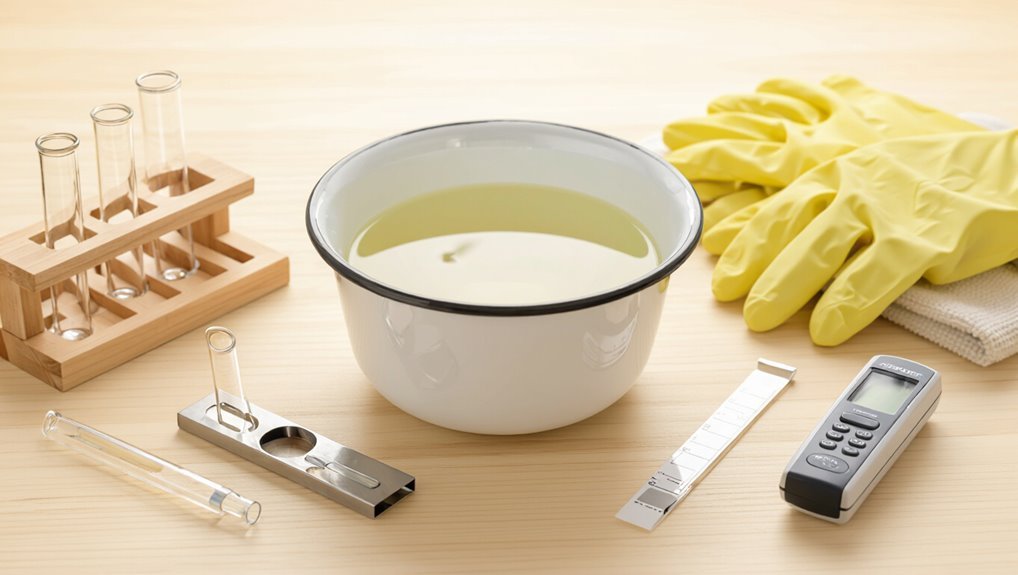
A visual and smell inspection, a sediment settling test in a clear jar, and simple home kits for pH, hardness, iron, and manganese provide immediate clues, while instructions for using and interpreting strips should be followed carefully.
For definitive results, collect a proper sample and send it to a certified lab for analysis.
Visual and smell check: what to look for
How should one quickly assess yellow well water before calling a pro?
Observe color intensity, noting if yellow is pale, tea-colored, or rusty.
Check for cloudiness or visible particles and test multiple taps.
Smell for metallic, musty, or sulfur (rotten egg) odors.
Record when and where discoloration appears and any recent well, pump, or plumbing work.
Sediment settling test (glass jar test) step-by-step
Several simple steps let a homeowner determine whether yellow water contains suspended sediment or dissolved colorants:
Fill a clear glass jar with a fresh tap sample, cap it, and set it undisturbed on a flat surface.
Observe over 24–48 hours for particles settling to the bottom.
Note layer clarity and measure settled volume.
Photograph results and compare to later samples for consistency.
pH test and hardness test using home kits
When homeowners suspect yellow well water, quick pH and hardness checks using inexpensive home kits provide immediate, actionable information about water chemistry.
The pH strip or drop test reveals acidity or alkalinity that can mobilize metals, while hardness kits measure calcium and magnesium concentrations affecting scale and staining.
Follow kit instructions, test fresh samples, compare results to ranges, and record values for treatment decisions.
Iron and manganese test strips how to use and interpret
Because iron and manganese are common causes of yellow to brown well water, homeowners can use simple test strips to quickly determine their presence and approximate concentration.
Dip a strip per instructions, wait the specified time, then compare colors to the chart. Note free versus total iron readings and manganese scale.
Record results, repeat for consistency, and decide if treatment or professional testing is warranted.
Collecting and sending a water sample to a certified lab
Collect a representative water sample carefully and follow lab instructions to guarantee accurate results.
The person should use sterile containers, flush the tap as directed, and avoid contamination by handling only caps.
Label samples with date, time, and location. Refrigerate if required and courier promptly.
Include completed chain-of-custody forms and contact information so the certified lab can process and report results accurately.
Interpreting Test Results and What They Mean
Test results help distinguish iron-related yellowing, tannins, and other organic matter by comparing color, odor, and laboratory iron/tannin readings.
They also indicate whether contamination is from surface sources (transient spikes, bacteria present) or from the aquifer (consistent chemistry over time).
Signs of corrosion—high dissolved metals, low pH, or blue-green stains—point toward plumbing or well component issues rather than the groundwater itself.
Iron-related yellowing versus tannins versus organic matter
When well water appears yellow, distinguishing iron-related staining from tannins or other organic matter hinges on specific test results and observable clues:
Iron yields rusty orange or brown residues, positive ferrous/ferric tests, and metallic taste.
Tannins produce yellow to tea-colored water, negative iron tests, and no metallic taste.
Other organics may vary; chromatography or lab analysis confirms complex organics versus simple tannins.
Distinguishing between surface contamination and aquifer issues
Having distinguished iron, tannins, and other organics, attention turns to whether yellowing originates from surface contamination or from deeper aquifer sources.
Short-term spikes after rain, nearby surface water, or shallow well construction suggest surface infiltration; persistent, consistent discoloration across seasons or multiple nearby wells points to aquifer-origin.
Correlate lab results, turbidity, and temporal patterns to decide remediation scope and monitor progress.
Corrosion indicators and plumbing vs well source problems
How can homeowners and technicians tell whether yellowing and metallic tastes stem from corroding pipes or from the well itself?
Visual clues, location and timing help: staining isolated to hot water or single fixtures suggests plumbing corrosion; uniform discoloration and matching wellhead tests indicate aquifer-derived iron or manganese.
Corrosion testing (pH, conductivity, dissolved oxygen) plus iron speciation distinguishes source and guides targeted repairs.
Immediate Short-Term Fixes You Can Try
After reviewing test results, homeowners can try several immediate, short-term actions to reduce yellowing while arranging longer-term fixes.
Simple steps include flushing the system by running taps to clear discolored water, cleaning or replacing faucet aerators and showerheads, and backwashing or cleaning pressure tanks and sediment filters.
If bacteria are suspected, a carefully performed shock chlorination can help but requires following safety precautions and post-treatment testing.
Flushing the system and running taps procedure and expectations
Flush the plumbing system by opening every cold and hot tap, starting at the highest point in the house and working downward, until water runs clear and air pockets dissipate; this purges discolored water and trapped sediments that often cause yellowing.
Run each tap several minutes, then check distant fixtures and appliances. Expect temporary sputtering, brief increased turbidity, and improvement within one to two complete house flush cycles.
Cleaning or changing faucet aerators and showerheads
Once the system has been flushed and discoloration reduced, individual fixtures should be inspected for trapped sediment that can continue to cause yellow-tinted flow. Faucet aerators and showerheads are common collection points.
Remove aerators and showerheads, soak in vinegar to dissolve mineral deposits, scrub with a brush, rinse thoroughly, and reassemble.
Replace corroded or clogged parts if staining persists to restore clear flow.
Backwashing or cleaning pressure tanks and sediment filters
Check pressure tanks and sediment filters for accumulated debris and perform backwashing or cleaning as an immediate short-term remedy to reduce yellow discoloration.
Inspect housings, drain and rinse sediment, and follow manufacturer procedures for backwashing media filters.
Replace damaged cartridges or worn tank components.
Monitor water clarity after service; repeat cleaning if particulate returns.
Document maintenance dates for future reference.
Shock chlorination for bacterial contamination precautions
Consider shock chlorination as a targeted short-term measure to address bacterial contamination that can cause yellowing in well water; it involves introducing a strong, measured dose of household bleach into the well and distribution system to disinfect pipes, pump, and storage before thoroughly flushing and testing.
Precautions: follow label dilution, isolate/ventilate, avoid mixing chemicals, protect plants, wait required contact time, and confirm bacteria-free samples before reuse.
Proven Long-Term Treatment Solutions
Long-term treatment for yellow well water focuses on targeted systems that address specific causes such as iron, manganese, tannins, and dissolved organics.
Options include oxidizing filters (greensand, BIRM, and air injection), water softeners where appropriate, activated carbon for tannins, and reverse osmosis or point-of-use polishers for final clarity.
Selection depends on contaminant type and concentration, system maintenance needs, and overall water usage.
Iron removal systems: oxidizing filters, greensand, BIRM, air injection
Iron removal systems—such as oxidizing filters, greensand, BIRM, and air-injection units—use chemical or physical oxidation followed by filtration to convert dissolved ferrous iron into particulate ferric iron that can be trapped and removed. Selection depends on iron concentration, water chemistry, and maintenance capacity.
| System | Strength |
|---|---|
| Oxidizing filter | Low-maintenance |
| Greensand | Effective, needs regeneration |
| BIRM | Cost-effective |
| Air injection | Simple, robust |
Manganese removal options and differences from iron treatment
Addressing manganese in well water requires different approaches than iron treatment because manganese oxidizes more slowly, forms finer particles, and often demands stronger oxidants or longer contact times.
Effective options include stronger oxidants (chlorine, potassium permanganate), catalytic media filters, greensand with proper regeneration, and manganese dioxide beds.
Treatment design emphasizes longer retention, pre-oxidation, and precise pH control to prevent filter fouling and guarantee removal.
Water softeners: when they help and when they don’t
Manganese demands different chemistry than iron, and water softeners similarly occupy a specific niche in well-water treatment rather than serving as a universal fix.
They effectively remove hardness (calcium, magnesium) and can reduce soluble ferrous iron before oxidation, but they do not remove particulate iron, manganese, or organics.
Proper testing, sizing, and maintenance determine usefulness; misapplication wastes money and fails to clear yellow staining.
Activated carbon filters for tannins and organic color
Activated carbon filters remove tannins and many dissolved organic compounds by adsorbing them onto a porous carbon bed, providing a reliable long-term option for persistent yellow or tea-colored well water.
Proper sizing, regular media replacement, and prefiltration for particulates maintain performance. They reduce color and odor without altering mineral content, are low-maintenance compared with chemical treatments, and suit whole-house installations when tannin levels are moderate.
Reverse osmosis and point-of-use polishing systems
Many households rely on reverse osmosis (RO) and point-of-use polishing systems to remove residual color, dissolved organics, and fine particulates that whole-house treatments may leave behind.
These systems, installed at taps or under sinks, provide high-efficiency contaminant reduction and improved taste.
Regular membrane replacement and prefiltration prevent fouling; periodic testing confirms performance.
They suit drinking and cooking water where local treatment doesn’t fully clear yellowing.
Whole-house filtration system design considerations
While point-of-use RO and polishing units can address residual color at taps, whole-house filtration provides a proven long-term approach by treating all incoming water before it reaches plumbing and appliances.
System design considers contaminant profile, flow rate, peak demand, media selection (carbon, greensand, manganese dioxide, or ion exchange), prefiltration, backwash requirements, maintenance access, and plumbing layout to guarantee consistent removal, regulatory compliance, and serviceability.
Choosing the Right Treatment: Comparison and Cost Estimates
Selecting the right treatment requires comparing effectiveness, maintenance needs, and expected lifespan to match water quality and household needs. Typical installation and operating costs vary widely and should be weighed alongside indicators that a combination system is necessary, such as persistent staining or mixed contaminants. The table below summarizes common options for quick comparison.
| Treatment Type | Typical Cost Range | Notes on Use/Lifespan |
|---|---|---|
| Iron filter (oxidizing) | $800–$4,000 install; $50–$200/yr oper. | Effective for dissolved iron; media replacement every 3–7 years |
| Water softener | $600–$3,000 install; $20–$100/yr salt | Reduces hardness and some iron; resin lasts 10–15 years |
| Combination systems | $1,500–$6,000+ install; $100–$400/yr | Used when multiple contaminants or visible staining persist |
Effectiveness, maintenance, and lifespan comparisons
Various treatment options for yellow well water differ markedly in effectiveness, required maintenance, and operational lifespan; understanding these trade-offs helps homeowners match solutions to water chemistry, budget, and long-term goals. Performance varies: filters may need frequent cartridge changes, iron filters require backwashing and media replacement, greensand or oxidation systems last years with periodic recharge, and whole-house treatments demand professional upkeep.
| Option | Key trait |
|---|---|
| Cartridge filter | Low lifespan, high replacement |
| Iron filter | Moderate upkeep, durable |
| Oxidizer/greensand | Effective, periodic recharge |
| Water softener | Maintenance cycles, resin life |
| Chlorination | Ongoing dosing, variable lifespan |
Typical installation and operating cost ranges
Many homeowners can expect a wide cost spread when addressing yellow well water because treatment choice, system size, local labor rates, and water chemistry all influence both upfront installation and ongoing operating expenses.
Point-of-entry filters or simple oxidizers often cost $500–$3,000 installed; ion exchange or UV units range $1,000–$4,500.
Annual operating costs typically add $50–$600 for media replacement, electricity, and service.
Signs a combination system is needed
When yellowing stems from multiple causes—such as dissolved organics, iron and manganese, or bacterial activity—or when a single contaminant fluctuates seasonally or with well drawdown, a combination treatment becomes necessary; indicators include persistent discoloration despite single-method fixes, concurrent metallic taste or staining, recurring filter clogs, variable lab results showing mixed contaminants, or coliform-positive tests that accompany iron-related issues.
A combination system is advised when multiple indicators persist.
When to Call a Professional and What to Ask
If yellowing persists after basic treatments or tests indicate complex issues, a qualified well water specialist or licensed plumber should be contacted.
The homeowner should ask about the technician’s certifications, diagnostic methods, recommended solutions with costs and timelines, and any warranty or maintenance terms.
It is also important to confirm required permits, inspection responsibilities, and compliance with local water and building regulations.
Criteria for hiring a well water specialist or licensed plumber
Because yellow well water can stem from a range of causes—iron, manganese, organic matter, or mechanical issues—a homeowner should know clear criteria for hiring a well water specialist or licensed plumber.
Evaluate state licensing and insurance, specific experience with private wells, water testing credentials, references and reviews, transparent written estimates, warranty terms, and willingness to coordinate with labs.
Prioritize contractors who document findings.
Essential questions to ask about diagnosis and proposed solutions
How should a homeowner prioritize questions when a specialist diagnoses yellow well water and recommends fixes?
The homeowner should ask:
- what is the confirmed cause,
- what tests support that diagnosis,
- which remedies are recommended,
- expected effectiveness and timeline,
- costs and alternatives,
- maintenance needs,
- warranty and service terms,
- risks or disruptions,
- and whether follow-up testing is included.
Clarify who handles permits or inspections.
Permits, inspections, and local regulations to check
Several jurisdictions require permits or inspections before work on a well, pump, pressure tank, or treatment system begins, so homeowners should verify local rules early in the process.
Check county health department, state water resources, and building permit offices for required permits, setbacks, and contractor licensing.
Ask professionals for proof of permits, inspection scheduling, code compliance, warranty implications, and expected timelines before hiring.
Preventing Future Yellowing and Maintaining Water Quality
A clear prevention plan combines a regular testing schedule and a seasonal maintenance checklist for the well and pump to catch problems before they cause yellowing.
Proper landscaping and drainage practices that direct surface water away from the well reduce contamination risk.
Consistent recordkeeping of tests, maintenance actions, and observations creates a traceable history that guides future decisions.
Regular testing schedule and checklist
Establishing a regular testing schedule is essential for preventing yellowing and preserving well water quality. Homeowners should commit to a concise checklist that tracks test type, frequency, recent results, and corrective actions.
A practical checklist includes:
- Annual lab test for bacteria and nitrates
- Quarterly iron and manganese checks
- Monthly total dissolved solids (TDS) readings
- Post-treatment verification after fixes
- Record dates, results, and follow-ups
Seasonal maintenance tasks for wells and pumps
Following the testing checklist, seasonal maintenance tasks keep wells and pumps operating reliably and prevent the conditions that produce yellow water.
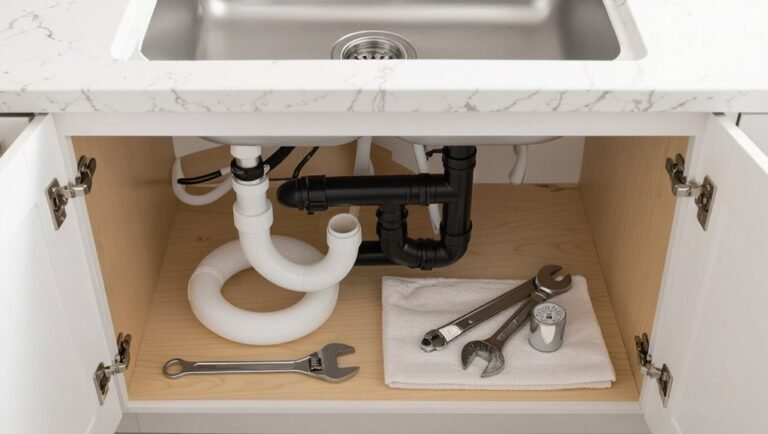
Inspect and tighten electrical connections, check pump seals and pressure switches, clean or replace intake screens, lubricate moving parts per manufacturer guidance, flush the system after long inactivity, and schedule professional seasonal inspections.
Prompt repairs and recordkeeping reduce contamination risk and extend equipment life.
Best practices for landscaping and drainage to protect the well
Protecting a well through thoughtful landscaping and proper drainage minimizes surface runoff, prevents soil erosion, and reduces the entry of sediment, organic matter, and contaminants that can cause yellowing.
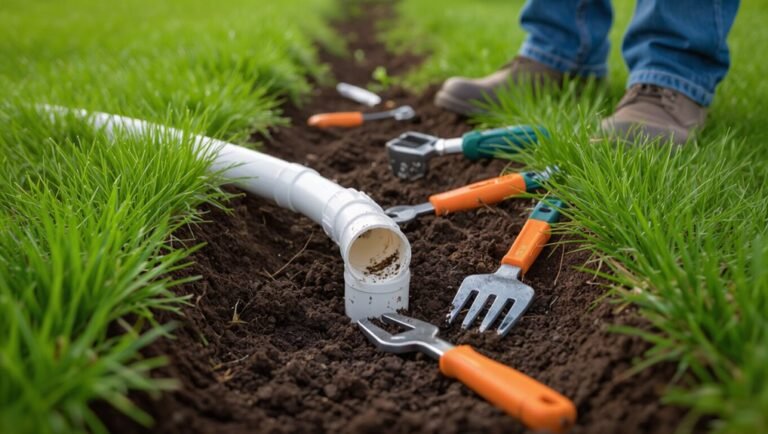
Establish graded slopes away from the well, install swales or French drains, maintain a gravel or paved apron, plant deep-rooted native vegetation, and avoid low spots or impervious surfaces near the casing to preserve water clarity and quality.
Recordkeeping: what to log and why it matters
Why keep detailed records of well inspections, treatments, and local conditions? Records document dates, test results (iron, manganese, bacteria), treatment types and dosages, service visits, water clarity changes, and nearby land use or weather events.
Consistent logs enable trend analysis, faster diagnosis of recurring yellowing, verification of warranty or regulatory compliance, and informed decisions for preventive maintenance and treatment adjustments.
Real-World Examples and Troubleshooting Scenarios
Several real-world cases illustrate common causes and fixes for yellow well water, including an iron surge following a pump replacement that required flushing and filter adjustments.
Another example contrasts temporary tannin staining after heavy rains with long-term treatment options like carbon filtration and source management.
The section also addresses strategies for diagnosing and resolving recurring yellowing when standard treatments fail.
Case: iron surge after pump replacement diagnosis and fix
One common scenario involves a sudden iron surge and yellowing that appears immediately after a well pump is replaced.
Technicians often find the disturbance is caused by dislodged iron-rich sediment in the well or a change in pump placement that alters flow dynamics.
Diagnosis includes well video, water sampling, and checking pump depth.
Fixes: flush and shock the well, adjust pump position, and install sediment or iron filtration as needed.
Case: tannin stain after heavy rains temporary and permanent fixes
After heavy rains, tannin-stained water can appear suddenly as surface organic matter—decaying leaves, peat, and soil humic acids—washes into the well or infiltrates the recharge zone, tinting water yellow to brown without metallic taste or odor.
Temporary fixes: flush lines, increase chlorination, run well until clear.
Permanent fixes: seal annulus, deepen screen, install activated carbon or anion exchange tannin filter sized for flow and load.
How to handle recurring yellowing despite treatment
When yellowing returns despite flushing, chlorination, or a newly installed tannin filter, the situation usually reflects an overlooked source, sizing or maintenance problem.
The writer recommends systematic checks: inspect wellhead seals, storage tanks, and surface runoff paths; retest for iron, manganese, and organics; verify filter media size and flow rates; confirm routine backwashing and shock chlorination schedules; document changes and consult a hydrogeologist if unresolved.
Quick Buyer’s Guide: Selecting Filters and Service Providers
A concise buyer’s guide helps homeowners choose the right filtration system and reliable service provider for yellow well water.
Key considerations include performance specs, necessary certifications and warranties, and a clear method for comparing bids.
Use the checklist below to evaluate options quickly and consistently:
- Filter features to prioritize (flow rate, media type, maintenance interval)
- Certifications and credentials to require (NSF/ANSI, state licensing)
- Warranty terms and service guarantees (coverage length, parts vs labor)
- Transparent proposal elements (scope, timelines, itemized costs)
- References and post-installation support (reviews, service contracts)
Filter features to prioritize
Prioritize filter features that directly address the well’s specific contaminants, flow-rate needs, and maintenance capacity to guarantee effective, reliable treatment.
Consider certified media types (iron/manganese, sediment, organic), appropriate micron ratings, and corrosion-resistant housing.
Verify capacity and backwash or cartridge replacement intervals match household demand.
Look for low pressure-drop designs, clear performance data, and straightforward user access for routine checks and parts replacement.
Credentials and warranties to demand
Verify credentials and warranties before purchasing filters or hiring service providers to assure accountability and long-term protection.
Require licensure, insurance, and references; check certifications (NSF, ANSI) for equipment.
Demand written warranties covering parts, labor, and performance guarantees with clear durations and transferability.
Insist on documented service agreements, warranty registration, and dispute resolution terms to prevent future liability and assure reliable remediation.
Checklist for comparing quotes and proposals
With credentials confirmed and warranties documented, the next step is a focused checklist for comparing quotes and proposals.
The buyer evaluates scope, itemized costs, timelines, parts and labor specifics, water testing frequency, maintenance plans, references, emergency response, and permit handling.
Compare total cost of ownership, expected performance metrics, and clear cancellation or change terms before selecting a filter or contractor.
Conclusion
In conclusion, when well water takes on a sun‑touched hue, homeowners are gently reminded that nature is merely communicating. Simple tests and sensible fixes can restore clarity, while thoughtful long‑term treatments offer lasting reassurance. Professionals step in when the message grows insistent, and routine care keeps the conversation pleasant. With calm attention and modest investment, the household enjoys water that no longer whispers of concern but rather quietly fulfills its daily duties.