
How to Remove Grease From Kitchen Drain Pipes Quickly and Safely
To quickly and safely remove grease from kitchen drain pipes, start by running the hottest tap water for several minutes. Then, add a squirt of dish soap and flush with boiling water. If that doesn’t work, try pouring baking soda followed by vinegar, let it sit for 15–20 minutes, and rinse with hot water. For tougher clogs, use a plunger or drain snake, and consider cleaning the P-trap. There are also enzyme cleaners available if needed. Further options for stronger solutions and prevention methods are outlined below.
What Causes Grease Buildup in Kitchen Drains and Why It’s a Problem
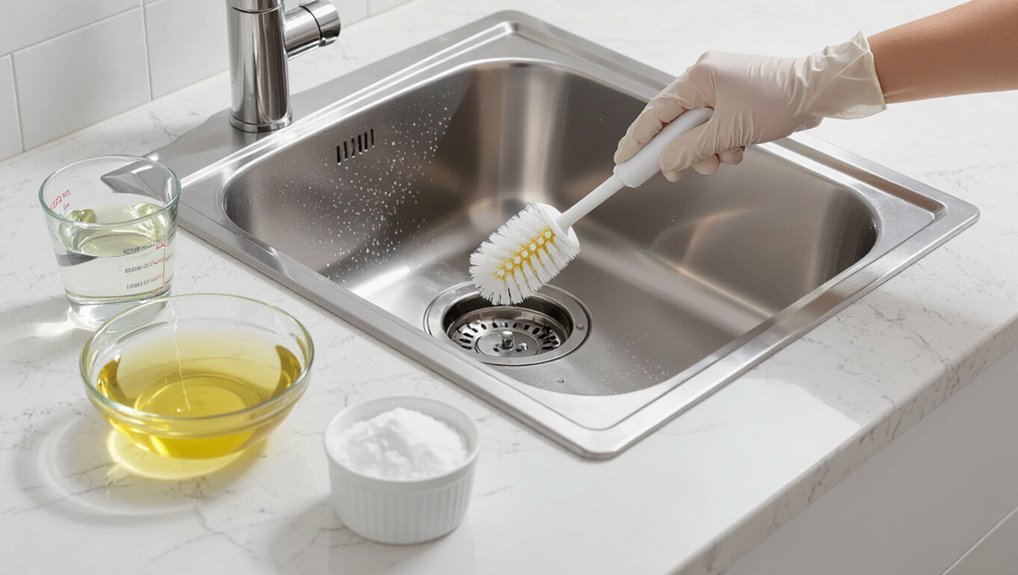
Cooking fats and oils cool and congeal as they move through pipes, adhering to pipe walls and trapping food particles that gradually narrow drains.
Typical signs of a grease-clogged drain include slow draining, persistent odors, and gurgling sounds from nearby fixtures.
Left unchecked, accumulated grease can cause foul smells, attract pests, and lead to costly plumbing failures or sewage backups.
How cooking grease behaves in pipes
When hot oils and fats wash down a kitchen sink, they travel as a liquid but cool and congeal on pipe walls, clinging to rough spots and gradually narrowing the flow path.
Over time, layered deposits trap food particles and harbor bacteria; odors and slower drainage result.
Understanding grease behavior helps prioritize routine cleaning and informs choices about how to remove grease from kitchen drain pipes efficiently and safely.
Common signs of grease-clogged drains
Recognize a grease-clogged drain by slow or gurgling drainage, persistent foul odors, and recurring backups that worsen after washing oily dishes.
Additional signs include water pooling around the sink, sporadic siphoning sounds, and greasy residue on strainers.
Drains may require repeated plunging or snaking, and hot-water flushing gives only temporary relief.
Early detection prevents progressive narrowing and frequent blockages.
Health, odor, and plumbing risks from grease buildup
Many household kitchens accumulate significant amounts of fats, oils, and grease (FOG) washed down sinks over time, and this buildup poses several interrelated problems.
FOG coats pipe interiors, trapping food debris and promoting bacterial growth that emits foul odors and airborne pathogens.
Progressive accumulation reduces flow, causes blockages, backups, and overflows, increasing costly repairs, mold risk, and potential contamination of living spaces and municipal systems.
Quick Immediate Steps to Clear Grease Safely
The section outlines immediate, safe actions a homeowner can take to clear grease from a kitchen drain, starting with simple hot water flushes and the dish soap plus boiling water technique.
It also covers using a plunger for stubborn grease blockages and explains when a drain snake is more appropriate than quick remedies.
Each step is presented clearly and concisely to guide prompt, effective action without unnecessary tools.
Step-by-step: Hot water flush method
Begin by running the hottest tap water the plumbing can safely handle for several minutes to soften and flush away recent grease buildup.
This quick hot-water flush is a first-response method designed to liquefy fats so they move through the trap and into the sewer rather than congeal and cause a blockage.
Maintain steady flow, check for slow drainage, repeat as needed, and avoid pouring cold liquids afterward to prevent re-solidification.
Step-by-step: Dish soap and boiling water technique
If a hot-water flush fails to clear softened fats completely, a quick follow-up using dish soap plus boiling water can be applied to break down grease and wash it through the trap.
Pour a generous squirt of concentrated dish soap into the drain, wait two minutes, then slowly pour boiling water in stages.
Repeat once if needed; avoid pouring continuously to prevent splashing.
Step-by-step: Plunger use for grease blockages
Grab a cup plunger and guarantee the sink has enough standing water to cover the rubber cup; this creates the seal needed to dislodge softened grease without forcing it further into the pipes.
Position the plunger over the drain, plunge firmly 10–15 times, then lift sharply.
Repeat after adding a little hot (not boiling) water until flow improves, then flush with hot water and dish soap.
When to use a drain snake vs. other quick methods
After attempting a plunger and hot-water flush, assess the blockage’s persistence and location to decide whether a drain snake is appropriate or a quicker remedy will suffice.
If water retreats slowly or odors persist, a snake can reach deeper clogs.
For surface grease near the trap, repeat hot water and a biodegradable degreaser or enzyme cleaner first; reserve mechanical snaking for entrenched obstructions.
Effective Homemade Solutions Using Safe Household Ingredients
The following section outlines practical, homemade options for breaking down kitchen grease with safe household ingredients.
It covers exact baking soda-and-vinegar proportions and timing, how to prepare citrus- or vinegar-based grease dissolvers, and when enzyme cleaners are preferable to harsher chemical alternatives.
Clear safety precautions for mixing and using these cleaners are also provided.
Baking soda and vinegar method exact proportions and timing
Combine precise amounts of baking soda and vinegar with timed pauses to loosen and flush grease from kitchen drain pipes:
sprinkle 1/2 cup of baking soda down the drain, pour 1 cup of white vinegar slowly over it, wait 15–20 minutes for foaming and chemical action, then flush the line with 2–3 cups of boiling water to carry away dissolved residue.
Repeat monthly if buildup recurs.
Enzyme-based cleaners vs. chemical cleaners: what to use
How should one choose between enzyme-based cleaners and harsh chemical drain treatments when tackling grease buildup in kitchen pipes?
Enzyme-based cleaners use microbes to break down fats slowly, are safer for pipes, septic systems and the environment, and suit regular maintenance.
Chemical cleaners act fast on severe clogs but can corrode plumbing, harm seals, and pose health risks.
Select based on clog severity and safety priorities.
How to make a grease-dissolving citrus or vinegar solution
When a less aggressive approach is preferred or clogs are not severe, homemade citrus- or vinegar-based solutions offer a safe, effective way to break down grease using household ingredients.
Combine 1 cup white vinegar with 1 cup hot water and 1 tablespoon dish soap, or use 1 cup lemon juice plus 1 cup hot water and a tablespoon of baking soda added slowly.
Pour, wait, flush.
Safety precautions when mixing or using household cleaners
Exercise caution: even common household ingredients can produce harmful fumes or reactions if mixed improperly, so users should treat every homemade cleaner as a potential hazard.
Wear gloves and eye protection, guarantee ventilation, label containers, never mix bleach with acids or ammonia, measure precisely, store ingredients separately, test small areas first, and keep products away from children and pets.
Seek medical help for exposures.
Commercial Products That Work Best on Grease
Commercial degreasers and enzymatic or caustic drain cleaners offer different mechanisms for breaking down grease and clogs.
Selection should consider pipe material—PVC, metal, or older, fragile plumbing—to avoid corrosion or damage.
Clear instructions and protective measures are essential when using chemical cleaners to minimize health and pipe risks.
Types of commercial degreasers and drain cleaners
Several categories of commercial degreasers and drain cleaners are formulated to tackle grease buildup, each using distinct chemistries and application methods.
Common types include enzymatic formulations, caustic cleaners, solvent-based degreasers, and mechanical foams. Their strengths, risks, and required precautions differ, influencing effectiveness and safety.
- Enzymatic
- Caustic
- Solvent-based
- Foam-based
How to choose a product for PVC, metal, or older pipes
After outlining the major chemistries available, choosing the right product requires matching the cleaner’s action and hazards to the pipe material and age.
For PVC, prefer enzyme or mild alkaline formulas; avoid strong acids or heat-based treatments.
For metal pipes, compatible alkalis or solvent blends work but avoid prolonged acidic exposure.
For older or corroded systems, use noncaustic enzymatic cleaners or consult a plumber.
Proper use and safety instructions for chemical drain cleaners
When using chemical drain cleaners to tackle grease, users should follow product instructions precisely and observe basic safety precautions to prevent injury and pipe damage.
Wear gloves and eye protection, guarantee ventilation, and never mix chemicals. Apply recommended amounts and wait specified times. Rinse thoroughly after use.
Avoid frequent use on old or compromised pipes; consult a professional for recurring clogs.
Deep Cleaning the P-Trap and Drain Trap Assembly
A concise list of tools and materials — bucket, plumber’s wrench, gloves, brush, and cleaning agent — prepares the reader for safe work on the trap.
The procedure covers loosening and removing the P-trap, emptying and scrubbing away grease, and rinsing before inspection.
Reassembly instructions include hand-tightening joints, a leak check, and tips for neutralizing residual odors.
Tools and materials needed
Several basic tools and a few common materials make deep cleaning a P-trap and drain trap assembly efficient and safe.
Required items include adjustable wrench or channel-lock pliers, bucket, disposable gloves, safety goggles, plumber’s tape, and replacement washers or slip-nut gaskets.
Cleaning supplies: stiff brush, old toothbrush, biodegradable degreaser or baking soda and vinegar, rags, and a flashlight.
Step-by-step: Removing and cleaning the P-trap
With tools and supplies gathered, attention shifts to the P-trap itself: this curved section of pipe sits under the sink and commonly collects grease and debris.
Close water, place a bucket, loosen slip nuts, and remove the trap.
Empty contents into the bucket.
Scrub interior with brush and degreasing solution, rinse thoroughly, inspect washers and threads, and replace damaged parts before preparing for reassembly.
Reassembly, leak checks, and odor elimination
Begin reassembling the trap by aligning the cleaned P‑trap and slip nuts to the tailpiece and drain outlet, hand‑threading nuts until snug to guarantee proper seating of washers and threads.
Tighten slightly with pliers, avoid overtightening. Run water, inspect joints for drips. If leaks persist, reseat washers or replace fittings.
Flush with baking soda and vinegar, then hot water to neutralize odors.
Professional Solutions and When to Call a Plumber
If slow drainage, repeated backups, foul odors, or failed DIY fixes persist, professional help is warranted.
Plumbers can use camera inspections to locate blockages and hydro-jetting or motorized augers to remove hardened grease.
Service visits typically include diagnosis, a quoted repair plan, and a fee that varies by region and the complexity of the job.
Signs a DIY attempt isn’t enough
Persistent slow drains, recurring backups, foul odors that resist home remedies, or visible sewage are clear indicators that simple DIY grease removal has failed and professional intervention is needed; these signs often mean grease has hardened deep in the pipes, formed persistent clogs, or damaged components beyond what plunging, hot water, or store-bought solvents can fix.
Other warning signs include frequent reoccurrence, gurgling, or water pooling around fixtures.
What plumbers do for grease clogs (hydro-jetting, camera inspection)
When homeowners call a plumber for grease-clogged drains, technicians typically respond with diagnostic inspection and high-pressure cleaning to address buildup that household methods cannot remove.
A camera inspection pinpoints blockages, pipe condition, and grease accumulation.
Hydro-jetting uses pressurized water to scour grease, roots, and debris.
Technicians may follow with targeted cleaning, minor repairs, or recommendations for preventative maintenance.
Typical costs and what to expect during a service visit
A typical service visit for a grease-clogged drain combines inspection, cleaning, and a clear cost estimate: technicians generally begin with a camera inspection ($100–$300) to locate buildup and assess pipe condition.
Then they perform hydro-jetting or mechanical snaking ($250–$800 or more depending on severity and access), with final charges reflecting travel, labor, and any parts or minor repairs.
Expect written estimates, warranty details, and post-service advice.
Preventing Grease Buildup Long-Term
Long-term prevention focuses on simple daily habits that keep grease out of drains, such as wiping plates and using strainers to catch food particles.
Proper disposal of cooking fats—cooling and discarding them in the trash or recycling them where accepted—reduces buildup at the source.
A regular maintenance schedule, including periodic use of recommended enzymatic cleaners and inspection of traps, helps prevent recurrence.
Daily habits to keep grease out of drains
Adopting simple daily habits can prevent grease from entering kitchen drains and forming stubborn blockages.
Regularly pour hot water down the drain after cooking, run the garbage disposal with cold water for brief rinses, and wipe cookware with a paper towel before washing.
Promptly clean spills, avoid pouring oily liquids into sinks, and schedule periodic inspections to detect early buildup and odors.
Simple kitchen practices: strainers, wipe plates, and proper disposal
Install and use simple tools like strainers, wipe plates clean with disposable towels, and dispose of grease properly to prevent buildup in kitchen drains.
Kitchens should catch solids at sinks, transfer cooled grease into sealable containers, and never pour fats down drains.
Routine wiping after cooking, immediate emptying of strainers into trash, and educating household members reduce long-term blockages and costly repairs.
Regular maintenance schedule and recommended products
When a simple routine is established, kitchens stay largely free of grease-related clogs. A regular maintenance schedule—combined with a small set of proven products—keeps drains flowing and reduces the need for emergency plumbing.
Schedule weekly hot-water flushes, biweekly enzyme treatments, and monthly biodegradable degreasing soak.
Recommend mesh strainers, silicone sink plugs, plant-based enzyme cleaners, and a handheld drain snake for occasional manual clearing.
Mistakes to Avoid When Dealing with Grease in Drains
Common errors compound grease problems: mixing unknown chemicals or attempting aggressive DIY treatments can produce toxic reactions and damage pipes.
Pouring fats and oils down the sink seems convenient but accelerates clogs as they solidify and cling to pipe walls.
Relying on temporary fixes like repeated hot-water flushes or low-grade enzyme products often masks the issue and leads to more extensive, costly repairs.
Unsafe chemical mixes and harmful attempts
Mixing household chemicals or attempting drastic DIY fixes can create dangerous reactions and damage plumbing. People should avoid combining drain cleaners, bleach, ammonia, or acids; fumes, heat, or explosions may result.
Do-it-yourself methods that involve boiling water under pressure, makeshift tools, or improvised solvents risk burns, pipe corrosion, and toxic exposure.
Safer, tested alternatives and professional help are recommended.
Why pouring fats down the sink is worse than you think
Pouring cooking fats and oils down the sink may seem convenient, but it initiates a chain of problems that quickly surpass simple clogs: greases cool and solidify inside pipes, trap food particles, create stubborn blockages, and encourage bacterial growth and foul odors.
Over time, hardened fat narrows flow, stresses seals and joints, prompts repeated repairs, and can back up sewage into the home.
Temporary fixes that cause long-term damage
After explaining why fats solidify and build up inside pipes, attention turns to the short-term fixes homeowners often try that actually make matters worse.
Pouring harsh chemical drain cleaners, flushing hot water alone, or using forceful mechanical plunging can erode pipe joints, dissolve seals, and push clogs deeper.
Temporary remedies often create costly corrosion, leaks, and persistent blockages requiring professional repair.
Quick Reference Cleaning Checklist
A concise checklist helps homeowners respond quickly to sudden slow drainage and stay on top of routine care.
- Immediate steps for sudden slow drainage
- Weekly grease-prevention habits
- Monthly deeper cleaning tasks
- Annual inspections and professional servicing
Following this list improves performance and reduces the chance of costly blockages.
Emergency steps for sudden slow drainage
Act quickly when a sink begins to drain slowly: stop using the fixture, remove standing water with a cup or bowl, and clear any visible debris from the strainer or stopper to restore flow and prevent further buildup.
Next, plunge gently, try a sink-safe drain snake for shallow clogs, flush with hot water to dissolve grease, and if unresolved, shut off water and call a plumber.
Weekly, monthly, and annual maintenance actions
How often should the drain be checked and cleaned to prevent grease buildup? Weekly: flush with hot water and a mild degreasing solution; wipe strainers. Monthly: remove and clean P-trap, use enzyme drain cleaner, inspect for slow flow. Quarterly: check vents and deeper lines for odor or backup. Annual: professional inspection and thorough pipe descaling to prevent long-term accumulation.
Comparison Table of Methods by Speed, Cost, Safety, and Effectiveness
Compare common grease-removal methods across four practical criteria—speed, cost, safety, and effectiveness—to help readers choose the best approach for their situation. A concise table summarizes typical outcomes; professional service is fastest and safest but costliest, enzymatic cleaners balance safety and cost, boiling water is cheap and quick but limited, and mechanical snaking is effective for blockages.
| Method | Typical result |
|---|---|
| Professional service | Fast, safe, expensive |
| Enzymatic cleaners | Moderate speed, safe, affordable |
| Boiling water | Quick, low cost, limited |
| Mechanical snake | Effective for clogs, moderate cost |
Conclusion
Like a small creek gradually choked by fallen leaves, a kitchen drain suffocates when grease gathers and refuses to move. Wise hands act like spring rain—soft, steady, and persistent—washing the stubborn film away without tearing the bank. With household remedies, careful tools, and routine care as a steady stream, the drain regains its clear flow. Neglect, by contrast, lets the water stand; attention restores motion and keeps the passage open.