
How to Tell If a P-Trap Is Dry: Quick Signs, Causes, and Easy Fixes
A dry P-trap occurs when the water seal meant to block sewer gas is missing, allowing odors and pests to enter your home. To identify a dry P-trap, look for signs such as sewer smells near fixtures, gurgling noises, an increase in flies, or visible dry metal in exposed traps.
Common causes include evaporation from infrequent use, leaks, siphoning due to venting issues, or poor installation. To fix a dry P-trap, simply pour water into the drain to restore the seal, consider installing a primer or seal, or replace a damaged trap. Further solutions are available below.
What It Means When a P-Trap Is Dry
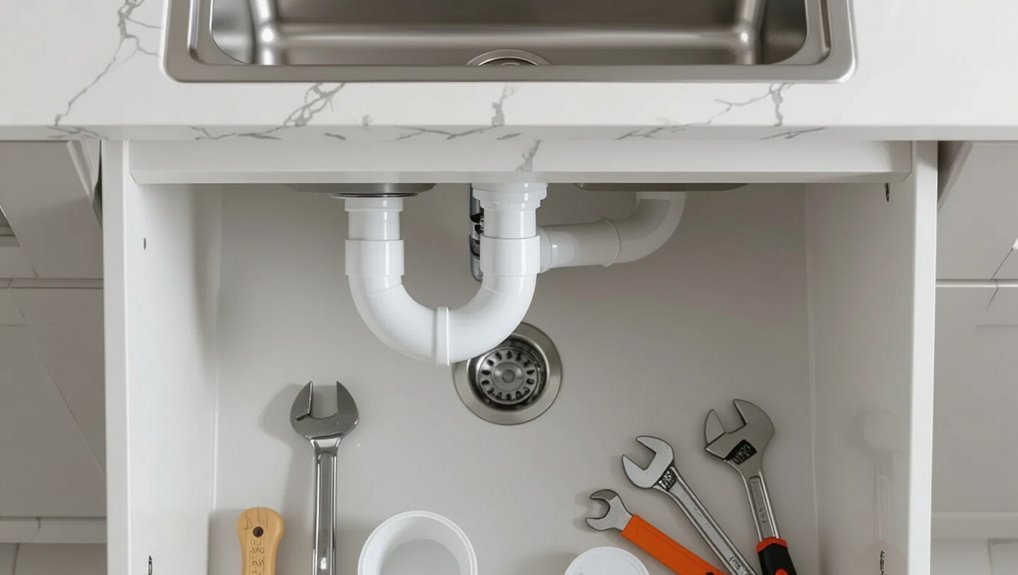
A functioning P-trap retains a small water seal that prevents sewer gases and odors from traveling back into a building.
When that seal has dried out, users can experience noticeable odors, potential health irritation from contaminated air, and an increased chance of insects or rodents entering through the pipe.
The following section examines how the trap usually works and the immediate risks associated with a dry P-trap.
How a P-Trap Normally Works to Block Sewer Gas
The P‑trap holds a small reservoir of water that creates a sealed barrier between the plumbing system and indoor spaces, preventing sewer gases from entering the building.
It relies on that water seal and simple geometry to trap odors. Regular use replenishes the seal; lack of use or evaporation can break it.
Homeowners checking how to tell if p trap is dry should inspect for absent water.
Immediate Risks of a Dry P-Trap (Odor, Health, Pest Entry)
When a P‑trap loses its water seal, sewer gases can pass into the living space, producing strong odors and increasing exposure to harmful compounds like hydrogen sulfide and methane.
In addition, airborne pathogens and allergens may elevate respiratory irritation risks.
Persistent dryness also permits insects and rodents entry through drains, enabling infestations and contaminating surfaces.
Prompt restoration of the trap prevents these immediate health and nuisance hazards.
Quick Signs a P-Trap Is Dry
A few clear indicators can suggest a P-trap has lost its water seal. Noticeable sewer odors near fixtures, gurgling or siphoning sounds during drainage, increased flies, gnats, or rodent activity around drains, and exposed dry pipe or metal parts in visible traps all point to the same problem.
These signs warrant a quick inspection and prompt corrective action.
Detecting Sewer Odor Near Fixtures
How can one quickly identify a dry P-trap by smell near a fixture? A persistent, musty sewer odor localized at a sink, shower, or floor drain suggests evaporated trap water.
The scent may intensify when doors are closed. Inspect nearby traps, pour water into each drain, and note immediate odor reduction; persistent smell implies a deeper leak, blockage, or venting issue requiring further investigation.
Gurgling or Siphoning Sounds When Draining
Why does a sink gurgle or emit a sucking sound as water drains? Such noises often indicate air entering the drain because the trap’s water seal is low or absent, allowing siphoning.
Intermittent bubbling from nearby fixtures, slow drainage, or louder gurgles on heavy flow point to trap depletion or venting issues.
Restoring the trap’s water seal typically stops the sounds.
Flies, Gnats, or Rodent Activity Around Drains
Ever noticed insects or rodents congregating near a sink drain? Such activity often indicates a weakened or absent water seal in the P-trap, allowing sewer gases and organic residue to attract pests.
Frequent sightings, especially around multiple drains, suggest chronic drying or leaks. Inspect traps, check for evaporation, and repair or rehydrate the seal to eliminate odor sources and discourage infestations.
Visible Dry Pipe or Metal Components in Exposed Traps
Pest activity near drains often accompanies more obvious visual cues: when an exposed P-trap shows dry-looking pipe surfaces or bare metal fittings where water should be pooling, the trap’s seal has likely failed.
Visible dryness, mineral crusts, or corrosion on joints indicates prolonged exposure and potential leaks.
Prompt inspection can confirm loss of water seal; replacement or reseating of fittings restores proper function.
Common Causes of a Dry P-Trap
A dry P-trap can result from several predictable issues.
Common causes include infrequent use or evaporation in low-use drains such as guest bathrooms and floor drains, siphoning from venting problems, leaks or cracked trap seals, and incorrect trap installation or slope.
Identifying which factor applies helps target the appropriate repair or prevention steps.
Infrequent Use of Fixture
How often a fixture is used directly affects whether its P-trap retains water. Rarely used sinks, tubs, or laundry drains may go long periods without flow, allowing seals to fail or water to be displaced by small leaks or siphoning during other plumbing events.
Regular use maintains the trap seal; infrequent operation increases the chance that the trap becomes dry and loses its barrier.
Evaporation from Low-Use Drains (Guest Bathrooms, Floor Drains)
Why does a trap in a guest bathroom or seldom-used floor drain go dry?
Evaporation gradually removes the water seal when fixtures sit unused. Warm, dry indoor air and small trap volumes accelerate loss.
Over weeks to months the water level falls below the trap weir, permitting sewer gases to enter.
Regularly running the fixture or adding water restores the seal.
Siphoning Caused by Plumbing Venting Issues
When venting is obstructed or improperly configured, rapid drainage from one fixture can pull the water seal out of an adjacent trap through negative pressure—a process known as trap siphonage.
This allows sewer gases into living spaces and leaves drains smelling. Causes include blocked roof vents, undersized venting, or long horizontal runs without auxiliary vents.
Correct venting restores pressure balance and preserves the trap seal.
Leaks or Cracked Trap Seals
Several common failures—corroded fittings, hairline cracks in plastic traps, or loose slip-nuts—allow the trap seal to leak away over time.
Leaks steadily drain water, breaking the protective seal and permitting sewer gas entry.
Detecting dampness, mineral deposits, or steady dripping pinpoints the source.
Replacing damaged sections, tightening connections, or reseating washers restores the seal and prevents recurrence.
Incorrect Trap Installation or Slope
Improper installation or incorrect slope of the trap assembly frequently causes a P-trap to dry by preventing wastewater from collecting at the lowest point where the seal forms.
If the trap arm rises, tilts, or lacks proper fall toward the drain, water drains away instead of pooling.
Misaligned fittings, excessive horizontal run, or improper pitch during installation lead to intermittent or persistent loss of the water seal.
Blockages Downstream Causing Pressure Changes
Blockages downstream can create pressure imbalances in the drainage system that siphon water from a P-trap or force it out.
Partial or intermittent clogs alter flow dynamics, producing suction during sudden drainage or backpressure during surges. This can empty traps or push water past seals, causing odors.
Inspect for buildup, tree roots, or collapsed pipes; clear obstructions to restore normal pressure and trap function.
How to Check If Your P-Trap Is Dry
Before inspecting a P-trap, the person should follow basic safety precautions such as turning off water and wearing gloves to prevent exposure to contaminants.
A quick check includes a visual inspection for leaks or wetness, a smell test for sewer odors, and listening for gurgling sounds that indicate a dry or blocked trap.
If signs are inconclusive, removing the trap for direct inspection or contacting a professional plumber is recommended.
Safety Precautions Before Inspecting
One simple rule applies: prioritize safety before examining a P-trap.
The inspector should shut off water supply, wear gloves and eye protection, and guarantee adequate lighting.
Place a bucket beneath the trap and have towels ready for spills.
Verify electrical devices are kept dry and unplugged nearby.
If odors or sewer gas are strong, ventilate the area and consider professional assistance.
Visual Inspection for Leaks and Moisture
With safety measures in place, the inspector proceeds to a visual check of the P-trap for signs of leaks and moisture.
They scan joints, slip nuts, and the trap body for drips, corrosion, mineral deposits, or wet spots on surrounding surfaces.
Any dampness, water stains, or active seepage is noted for tightening, seal replacement, or section replacement to prevent dry-trap issues.
Smell Test and Listening for Gurgles
How can a smell test and attentive listening reveal a dry P-trap? A persistent sewer odor near fixtures indicates evaporated trap water allowing sewer gases upward.
Quietly run water in nearby drains and listen: gurgling, bubbling, or air-sucking noises suggest air entering the drain and an empty trap.
Combined, odor and gurgling reliably point to a compromised or dry P-trap needing attention.
Removing the Trap for Direct Inspection
If odors and gurgling point to a possible dry trap, the next step is a direct inspection by removing the P-trap.
Turn off water, place a bucket, and loosen slip nuts. Detach the trap, check for standing water, debris, and corrosion.
Clear blockages, clean with a brush, and reassemble with new washers if needed.
Test for leaks and proper siphoning.
When to Call a Professional Plumber
When should a homeowner stop troubleshooting and call a professional plumber?
Persistent odors, repeated dry traps, slow drainage after basic fixes, visible leaks, damaged or corroded trap components, or inability to access the trap warrant professional help.
A plumber is also needed if plumbing vents or sewer issues are suspected.
Prompt professional assessment prevents health risks and costly structural damage.
Easy Fixes for a Dry P-Trap
A dry P-trap can usually be resolved with a few straightforward measures that restore or retain the water seal. Options include simply refilling the trap or adding mineral oil, installing anti-evaporation trap seals (mechanical or liquid), replacing damaged or leaking traps, clearing clogs that cause siphoning, or adjusting venting or adding an air admittance valve.
Each remedy targets a specific cause and can be chosen based on the underlying problem and homeowner skill level.
Simple Refill: Pouring Water or Adding Mineral Oil
Pour water slowly into the drain until the U-shaped bend fills and the gurgling or sewer odor stops.
If evaporation recurs, pour a cup of mineral oil after water to slow evaporation; oil forms a thin seal without blocking flow.
Repeat after long inactivity.
Avoid excessive quantities that could stain fixtures; mineral oil is non-toxic and safe for most household drains.
Using an Anti-Evaporation Trap Seal (Mechanical or Liquid)
How can a long-term seal be maintained without repeatedly refilling the trap? An anti-evaporation trap seal—mechanical float valves or liquid barriers—prevents water loss and sewer gas.
Mechanical seals open for flow, close afterward; liquid seals use heavier immiscible fluid to block evaporation.
Installation is straightforward on low-use fixtures; select compatible materials and test for proper operation and leakage before finalizing.
Replacing a Damaged or Leaking P-Trap
Begin by shutting off the water supply and placing a bucket beneath the trap to catch residual water; replacing a damaged or leaking P-trap is a straightforward, low-cost fix that restores the seal and prevents sewer gas intrusion.
The process involves removing slip nuts, inspecting threads and tailpiece, fitting a matching replacement trap, hand-tightening fittings, testing for leaks, and retightening as needed.
Clearing Clogs to Prevent Siphoning
After replacing a damaged P-trap, the homeowner should check for blockages that can still allow siphoning and evaporative drying. Clogs in the trap or downstream pipe prevent water from holding and can let sewer gas through.
Use a basin wrench to remove the trap. Clear debris with a hand auger or brush, flush with hot water, reassemble, and test flow to confirm the seal restores.
Adjusting Venting or Installing an Air Admittance Valve
Check the plumbing venting and consider installing an air admittance valve (AAV) when a P-trap keeps drying despite being intact and clear of clogs.
A vent blockage or insufficient venting can cause siphoning; inspect roof vents, clean debris, and guarantee proper pitch.
If vent modification is impractical, a code-approved AAV near the fixture can equalize pressure and prevent trap seal loss.
Preventive Measures to Keep Traps Wet
Preventive measures can help guarantee P-traps retain water and block sewer gases.
Simple habits like running water through low-use fixtures and following seasonal maintenance for vacation homes reduce evaporation and buildup.
For longer-term protection, professionals may recommend trap primers for floor drains and appliances and confirm proper fixture and vent installation.
Regularly Running Water Through Low-Use Fixtures
Run a small amount of water through seldom-used sinks, tubs, and floor drains at least once a week to replenish the trap seal and block sewer gases.
Regular brief flows prevent evaporation, especially in dry or warm areas.
For toilets and rarely used fixtures, flushing or pouring a gallon into the fixture maintains water seals.
This simple routine reduces odor risk and plumbing issues.
Seasonal Maintenance Tips for Vacation Homes
When a property sits unused for weeks or months, routine seasonal checks are essential to guarantee drain traps retain their seals. Caretakers should inspect all fixtures, pour water into sinks, tubs, and floor drains, and clear debris from vents and grates.
Scheduling walkthroughs before and after vacancy, documenting conditions, and using timed water runs prevent evaporation and maintain trap seals during extended absences.
Installing Trap Primers for Floor Drains and Appliances
Installations of trap primers offer a dependable way to keep floor drain and appliance traps filled by automatically adding water whenever drainage is infrequent.
These devices connect to nearby fixtures or use pressure-activated valves to supply small, controlled amounts of water, preventing sewer gas entry.
Selection and placement should match local codes and drain layout; routine checks confirm primer operation and avoid clogging or leaks.
Proper Fixture and Vent Installation Guidelines
Beyond relying on trap primers, proper fixture and vent installation provides a long-term strategy to keep traps wet by ensuring consistent water seals and adequate airflow.
Install fixtures at correct heights, pitch drain lines toward traps, and maintain minimum trap arm lengths.
Provide venting per code, avoid undersized or blocked vents, and use air admittance valves where permitted to prevent siphoning and evaporation.
When a Dry P-Trap Indicates Bigger Plumbing Problems
A persistently dry P-trap can signal problems beyond routine evaporation, including vent stack blockage or damage that prevents proper air flow.
It may also indicate negative pressure and siphoning within the system, which pulls water from traps during drain cycles.
In some cases the issue points to structural leaks or corrosion in the trap or nearby piping that require repair or replacement.
Vent Stack Blockage or Damage
Vent stacks provide essential airflow for plumbing systems, and when they become blocked or damaged the result can be dry P-traps throughout a building.
Obstructions like debris, bird nests, or ice prevent proper venting, altering pressure and preventing traps from holding water.
Persistent odors, slow drainage, and simultaneous dry traps in multiple fixtures suggest inspection.
Professional assessment and clearing or repairing the vent stack resolve the issue.
Negative Pressure and Siphoning in the System
How can dry P-traps signal more serious issues?
Drying may result from negative pressure or siphoning within the drainage system, pulling water out of traps when fixtures discharge. This points to venting problems, long horizontal runs, or incorrect pipe slopes.
Left unaddressed, recurring siphonage permits sewer gas entry and odors; diagnosis requires smoke testing or inspection of venting and drainage configuration.
Structural Leaks or Corrosion Requiring Replacement
Inspecting a dry P-trap can reveal not only venting faults but also signs of structural leaks or corrosion that demand pipe replacement.
Visible cracks, pitting, rusty seams, persistent dampness, or foul odors indicate compromised integrity.
If deterioration is evident or repairs are temporary, a full trap and adjacent pipe replacement by a qualified plumber prevents recurrent drying, contamination, and more extensive water damage.
Cost and Time Estimates for Common Repairs
Typical DIY fixes like tightening connections or replacing a rubber washer often cost under $20 and take 15–45 minutes, while professional services for diagnosis and replacement range from $75–$300 and may take 1–3 hours. The following quick reference contrasts common options and timeframes:
| Repair Type | Typical Time/Cost |
|---|---|
| DIY minor fix | 15–45 min / <$20 |
| Professional service | 1–3 hours / $75–$300 |
Typical DIY Fixes vs. Professional Service Costs
When a dry P-trap is diagnosed, many homeowners can address the issue with simple, low-cost DIY steps—replenishing the trap with water, adding a few drops of mineral oil, or running the fixture periodically—each typically taking 5–15 minutes and costing under $10.
More complex problems (leaks, damaged traps, venting) often require a plumber; typical service calls range $75–$200 plus parts.
Expected Timeframes for Inspection, Repair, and Replacement
Although a dry P-trap can often be resolved quickly, the time and cost for diagnosis and repair vary by symptom and complexity:
Simple inspections and refill take 10–30 minutes and minimal cost;
Minor seal or trap nut repairs require 30–90 minutes and $20–150 in parts/labor;
Full trap replacement or access work may take 1–3 hours and $100–400, higher if extensive plumbing or specialty fixtures are involved.
Practical Troubleshooting Scenarios
The section presents concise scenarios and next steps for common P-trap issues.
Readers will find targeted guidance for:
- Guest bathroom used rarely — quick refill steps
- Floor drain in garage — evaporation and long-term fixes
- Persistent odor after refill — next diagnostic actions
- When to call a professional for persistent problems
Each scenario is framed for fast assessment and practical action.
Guest Bathroom Used Rarely Quick Refill Steps
How often does a guest bathroom go unused long enough for its P-trap to dry out? A simple routine prevents problems: run cold water in sink and shower for 30–60 seconds monthly, flush toilet, and pour a cup of water into seldom-used drains after extended absence.
For longer vacancy, use biodegradable trap seal or water-additive odor blocker to maintain the seal.
Floor Drain in Garage Evaporating Best Long-Term Solution
A garage floor drain can lose its water seal surprisingly quickly when exposed to heat, wind, or infrequent use, allowing sewer gases and pests to enter the space.
The best long-term solution balances reliable trap refilling with minimal maintenance. Installing an automatic refill device or a sealed trap primer tied to occasional water sources prevents evaporation.
Regular inspection and debris-proof covers reduce failures.
Persistent Odor After Refill Next Diagnostic Actions
When odors persist after refilling a P-trap, further diagnostics should shift from assuming an empty trap to systematically isolating other sources and failures. This begins with confirming an effective water seal, then proceeds to check nearby dry traps, vent blockages, sewer line issues, and contaminated trap or drain surfaces.
Next steps include inspecting trap seals, testing vents with smoke or airflow, cleaning biofilm, and calling a plumber if sewer gas or line problems are suspected.
Signs It’s Time to Replace the P-Trap Rather Than Repair
When a trap continues to dry out or leak shortly after attempted repairs, replacement should be considered.
Persistent corrosion, visible cracks, or repeated failures indicate the trap’s integrity is compromised beyond simple fixes.
Additionally, an older or noncompliant trap design that conflicts with current plumbing codes warrants swapping the unit for a modern, compatible model.
Recurrent Drying or Leaks After Fixes
Several episodes of a dry or leaking P-trap after attempted repairs indicate underlying deterioration rather than an isolated fault.
Recurrent issues despite proper sealing, regular water use, and correct installation suggest compromised material, misaligned fittings, or hidden damage.
Replacement is advisable when leaks return repeatedly after competent repairs, as continual fixes waste effort and risk persistent odors, water damage, and code violations.
Visible Corrosion, Cracks, or Multiple Failures
Persistent problems after repairs often point to deeper material failures that merit inspection for visible corrosion, cracks, or multiple compromised joints.
When metal shows pitting, rust perforations, hairline fractures, or solvent-weld plastics display stress marks and separated seams, replacement is safer than patching.
Multiple failure points indicate systemic degradation; a new trap restores seal integrity and prevents recurring leaks, odors, or water damage.
Incompatible or Outdated Trap Design for Current Plumbing Code
If a P‑trap predates current plumbing codes or uses an obsolete configuration—such as a deep seal trap, non‑vented assembly, or materials no longer permitted—a repair will likely be only a temporary fix.
Compliance issues, improper flow characteristics, and inspection failures are clear indicators that replacement is the prudent choice.
Persisting noncompliance, repeated service calls, or inability to meet venting and trap arm requirements justify full replacement to meet code.
Conclusion
A dry P-trap signals more than a momentary nuisance; it warns of potential sewer gas, pests, and deeper plumbing faults. Could a few simple checks and a cup of water save trouble and expense? Homeowners will find that routine use, minor repairs, or inexpensive seals often restore the water barrier quickly, while persistent dryness points to leaks, improper vents, or installation errors requiring professional attention to prevent health risks and escalating damage.
