
How to Know If Lateral Lines Are Clogged: Signs, Tests, and Fixes
To determine if your lateral lines are clogged, watch for signs like weak return flow, sputtering jets, uneven skimming, cloudy water, and slow recovery after disturbances. You can conduct simple tests such as checking return strength, listening for bubbling sounds, measuring pump pressure, or performing dye, backflow, or vacuum tests. For DIY fixes, start by clearing skimmers, flushing lines, or using a snake or shop-vac. If issues persist, consider using enzyme or mild acid cleaners, but consult a professional for ongoing or structural problems. More detailed steps are provided below.
What Does a Clogged Lateral Line Mean for Your Pool or Spa
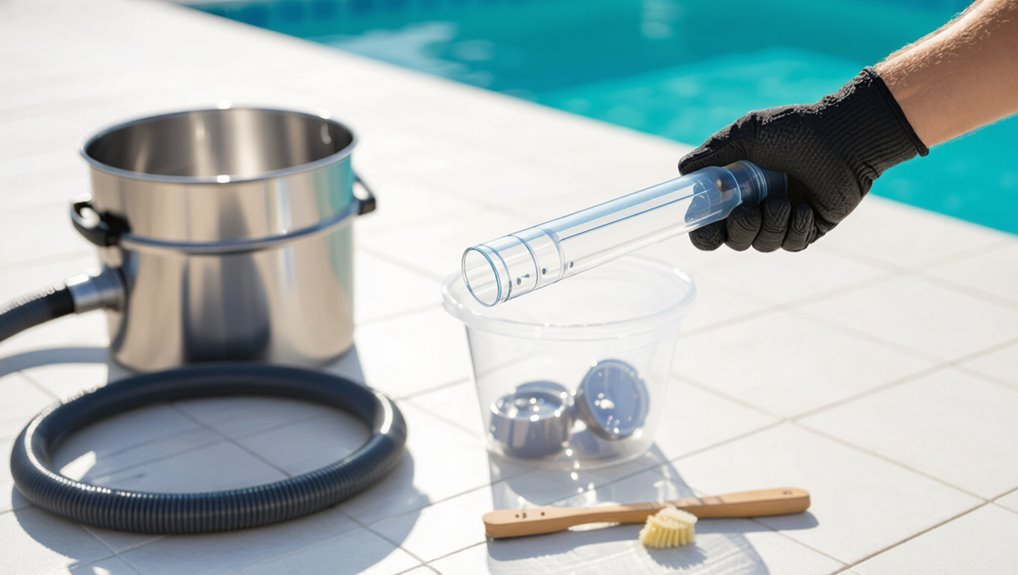
A clogged lateral line disrupts the pool or spa’s circulation by restricting water flow through the return and suction plumbing that balances filtration and heating.
Blockages commonly result from accumulated debris, mineral scale, biofilm, or broken fittings that trap particles.
Pipe material and layout—such as flexible PVC, long runs, or multiple bends—affect the likelihood and severity of clogs.
How lateral lines function in pool circulation and return systems
Understanding lateral lines’ role clarifies why clogged laterals compromise pool and spa circulation.
Lateral lines distribute filtered water back into the pool, balancing flow across returns and maintaining turnover.
Reduced or uneven return flow signals problems; technicians and owners assess pressure, skimmer behavior, and jet strength to determine how to know if lateral lines are clogged, restoring hydraulics for proper filtration and sanitation.
Common causes of lateral line blockages
Clogs in lateral lines typically stem from accumulated debris, biological growth, or mechanical failures that impede flow and undermine filtration efficiency.
Common contributors include leaves, hair, and sediment entering skimmer and suction lines; algae and biofilm forming on pipe walls; mineral scale from hard water; broken or collapsed laterals, fissures, and dislodged fittings that trap solids; and poorly maintained strainers or damaged pump impellers reducing suction.
Materials and layouts that affect clogging risk
Materials and pipe layouts play a significant role in how susceptible lateral lines are to blockage and what that blockage means for pool or spa performance.
Smooth PVC, shallow runs, and gentle slopes reduce debris accumulation and biofilm formation.
Old clay or corrugated piping, tight bends, long runs, and low gradients increase sediment trapping and flow restriction, worsening filtration efficiency and raising maintenance needs.
Immediate Signs That Your Lateral Lines May Be Clogged
A technician or pool owner can often spot clogged lateral lines by noting changes in water flow and circulation, such as weak returns, uneven skimming, or low pressure at the pump.
Visual and audible clues—sputtering or gurgling at returns and skimmers, visible debris buildup, or surface tugging—often accompany chemical imbalances like cloudy water, algae growth, or fluctuating sanitizer levels caused by poor return flow.
Comparing these signs with pump or filter behavior (steady pump noise, clean filter housing) helps distinguish lateral line clogs from equipment failures.
Water flow and circulation symptoms to watch for
How can one tell when lateral lines are not performing as they should?
Reduced turnover, sluggish circulation, and uneven water movement indicate impaired laterals.
Areas of stagnant water, persistent temperature layers, and slow recovery after splash or wind suggest diminished flow.
Pump pressure may rise while net flow drops.
Detecting these patterns helps distinguish lateral issues from filter or pump malfunctions.
Visual and audible indicators at returns and skimmers
When should one suspect clogged laterals by watching returns and skimmers?
Visible sputtering, weak or uneven return streams, and air being drawn at returns indicate partial blockages.
Skimmers that overflow, fail to hold surface debris, or produce gurgling and bubbling noises also suggest impaired suction from clogged laterals.
Prompt inspection and targeted cleaning are warranted to restore proper flow and prevent equipment strain.
Chemical and water-quality symptoms linked to poor return flow
Several water-quality and chemical signs can quickly point to restricted return flow from clogged laterals: persistent cloudy water, unexplained chlorine demand, fluctuating sanitizer readings, and localized algae growth near returns or skimmers.
Reduced turnover concentrates organics and metals, raising combined chlorine and turbidity. pH and cyanuric acid may drift anomalously.
Rapid chemical consumption, staining, and foul odors further indicate poor circulation requiring inspection.
How to distinguish lateral line clogs from pump or filter problems
Why do some circulation troubles point to clogged laterals rather than a failing pump or filter?
Observers note uneven return jets, pressure gauge stable but low flow, and isolated returns weak while pump noise and filter differential appear normal.
Clogs often produce intermittent sputtering, fine debris in return, and improved flow when individual laterals are manually backflushed—signs distinguishing lateral restriction from mechanical failure.
Simple Tests You Can Do to Confirm a Clogged Lateral Line
A sequence of simple tests can help confirm whether a lateral line is clogged. Technicians typically begin with a visual inspection of returns, skimmers, and the pump basket, then measure flow rate and pressure to isolate the problem.
If those checks are inconclusive, dye or tracer tests, backflow and vacuum tests can pinpoint obstructions. A professional diagnostic service should be called when results are ambiguous or repairs are beyond basic maintenance.
Visual inspection of returns, skimmers, and pump basket
Inspect the skimmer, pump basket, and return fittings for visible debris, air bubbles, or low flow—these simple observations often reveal a clogged lateral before opening the filter.
Note overflowing skimmer, frequent basket cleanings, trapped leaves, or persistent air in lines.
Check returns for uneven jets, weak streams, or discolored discharge.
Document findings and clear visible obstructions before further diagnostics.
Flow-rate and pressure checks to isolate the issue
Begin by measuring system performance: record pump-off and pump-on static pressure at the filter gauge, note flow rates from return fittings, and time how long it takes to refill the skimmer or a known-volume bucket.
Compare readings to expected values. Significant pressure rise with low flow suggests blockage downstream (laterals).
Repeat tests after isolating valves or bypassing components to pinpoint the restricted branch.
Dye and tracer tests to observe return flow behavior
How can a simple dye reveal where water is not flowing properly through a pool’s return lines? A technician injects harmless tracer dye near returns or skimmers, watches dispersion patterns, and notes stagnation or delayed appearance at expected outlets.
Concentrated dye near one return suggests blockage elsewhere. Repeating tests with different inlets isolates affected lateral(s), guiding targeted cleaning or inspection without invasive measures.
Backflow and vacuum tests to identify block locations
Performing backflow and vacuum tests offers a straightforward way to pinpoint which lateral is blocked without dismantling the plumbing.
The technician isolates a lateral, induces controlled reverse flow, and watches pressure response; a significant pressure drop or no movement indicates obstruction.
Vacuum testing measures suction transfer along the line; weak or absent vacuum beyond a point identifies the blockage location for targeted clearing.
When to call a professional diagnostic service
When should a homeowner escalate to a professional diagnostic service?
If simple tests (slow drainage, visible backups, inconsistent zones) persist after basic flushing and valve checks, or if multiple lateral lines show symptoms, professional diagnostics are warranted.
Call when inspections risk damage, leaks are suspected, or equipment like cameras, pressure gauges, or CCTV are required.
Timely escalation prevents larger repairs and wastewater hazards.
Step-by-Step DIY Methods to Unclog Lateral Lines
The following section outlines practical, step-by-step DIY methods for clearing clogged lateral lines, beginning with safety preparations and the basic tools required.
It covers manual suction and handheld cleaning tools, flushing techniques using a shop vac or pressure washer, and the safe, limited use of chemical line cleaners.
Procedures for removing and cleaning individual laterals from multiport or return assemblies are also described.
Safety preparations and tools needed
Before beginning any work on lateral lines, a clear safety plan and the right tools must be in place to prevent injury and avoid further system damage.
Wear protective gloves, eye protection, and waterproof boots.
Isolate and depressurize the irrigation zone.
Have a shovel, inspection mirror, probe, adjustable wrenches, replacement fittings, tubing, pipe tape, and a bucket.
Keep a first-aid kit nearby.
Using manual suction and handheld drain-cleaning tools
Start by assembling the chosen handheld tools—a manual suction pump, flexible drain snake, and inspection mirror—so each is within easy reach and functioning properly.
Wear gloves and eye protection.
Use the inspection mirror to locate visible buildup at cleanouts.
Apply suction to dislodge soft debris, then insert the snake gently, rotating to break obstructions.
Withdraw debris, re-inspect, and repeat until flow restores.
Flushing lines with shop vac or pressure washer techniques
Flush lateral lines using a shop vac or pressure washer to force out accumulated sediment and dislodged debris through cleanouts or accessible fittings.
Begin with low pressure, secure hoses, and test fittings for leaks. Gradually increase suction or pressure while monitoring discharge for solids.
Flush until clear water flows. Inspect seals and reassemble.
Repeat if necessary, avoiding damage to pipes or joints.
Chemical line cleaners: when to use and how to apply safely
After mechanical flushing has removed loose sediment and larger debris, chemical line cleaners offer a targeted way to break down remaining organic buildup and mineral scale that resist physical methods.
Choose enzyme or mild acid cleaners compatible with piping and pool finishes. Follow manufacturer dilution, contact time, and safety gear instructions.
Rinse thoroughly, neutralize residues, and test water chemistry before returning the system to regular operation.
Removing and cleaning laterals from a multiport or return assembly
Removing laterals from a multiport or return assembly requires careful disassembly and labeling to prevent misrouting during reassembly.
Technicians should depressurize the system, remove the valve or return fitting, extract laterals gently, and inspect for breaks.
Clean with low-pressure water, soft brushes, or air flushing to remove debris and biofilm.
Replace damaged laterals; keep parts organized for correct reinstallation.
Reassembling and testing after unclogging
Reassemble the lateral assembly carefully, ensuring each part returns to its original position and orientation to preserve flow balance and prevent leaks.
Tighten fittings to specified torque, replace gaskets or O‑rings, and secure clamps.
Restore system pressure gradually, inspect for leaks, and monitor pressure and flow.
Run a filtration cycle, observe clarity and even distribution, and retest after 24 hours for consistent performance.
Professional Solutions and Technical Repairs
When DIY methods fail, professionals offer hydrojetting and high-pressure flushing to clear stubborn blockages. They also provide camera inspection with targeted mechanical cleaning to pinpoint problem areas.
In cases of irreparable damage, technicians may recommend replacing individual lateral lines or entire lateral assemblies. Estimates vary widely, so cost ranges and factors such as access, pipe material, and extent of damage should guide repair decisions.
Hydrojetting and high-pressure flushing services
Although requiring specialized equipment and trained operators, hydrojetting and high-pressure flushing are the most effective professional methods for clearing grease, scale, and mineral buildup from lateral sewer lines.
These services use calibrated water jets to cut through obstructions and restore full flow without relying on chemicals. Technicians adjust pressure and nozzle types to prevent pipe damage, remove biofilm, and flush debris to downstream mains for reliable, long-lasting results.
Camera inspection and targeted mechanical cleaning
Several inspection passes with a CCTV camera allow technicians to pinpoint blockages, assess pipe condition, and plan targeted mechanical cleaning without unnecessary excavation.
Using flexible rodder-mounted cutters, milling heads, or burr tools, operators remove roots, encrustations, and localized debris.
Video documentation verifies clearance and identifies remaining defects. This approach minimizes disruption, targets repairs, and informs whether further rehabilitation or replacement is required.
Replacing damaged laterals or entire lateral assemblies
If camera inspection and targeted mechanical cleaning reveal irreparable damage, full replacement of a lateral or its assembly becomes the practical solution.
Technicians assess access, material compatibility, and flow characteristics before removing damaged laterals.
Replacement options include new PVC or HDPE laterals, manifold swaps, or entire assembly upgrades.
Post-installation pressure and leak testing confirm integrity and guarantee restored irrigation performance.
Cost ranges and factors that affect repair decisions
When evaluating repair options, cost estimates hinge on scope and complexity: simple lateral clearings and spot repairs often run considerably lower than full lateral or manifold replacements.
Material choice (PVC vs. HDPE), access difficulty, required permitting, diagnostic testing, and contractor rates drive pricing.
Warranty length, restoration needs (landscaping, paving), and emergency scheduling further influence decisions and long‑term value.
Preventive Maintenance to Keep Lateral Lines Clear
Routine cleaning schedules and seasonal inspections help catch early blockages before they affect system performance.
Proper filtration and skimmer practices, consistent water chemistry management, and targeted upgrades can all reduce debris entry, biofilm buildup, and long-term clog risk.
Implementing these preventive measures conserves resources and limits the need for extensive repairs.
Routine cleaning schedule and seasonal checks
Although lateral lines can appear to function normally, a consistent cleaning schedule and seasonal inspections are essential to prevent gradual buildup and blockages.
Operators should perform monthly visual checks, quarterly flow tests, and annual deep cleanings before heavy use seasons.
Record findings, note pressure or flow deviations, and replace deteriorated components promptly.
Timely attention reduces surprise failures and extends system life.
Filtration and skimmer best practices to reduce debris entry
Maintaining a consistent inspection and cleaning cadence reduces the likelihood of downstream blockages.
However, keeping debris out of the system in the first place greatly lowers maintenance burden on lateral lines.
Use appropriately rated filters, replace cartridges or clean sand/media per manufacturer intervals, install and regularly empty skimmer baskets, guarantee skimmer weirs function, and balance flow to prevent bypassing.
Inspect seals and fittings for leaks.
Water chemistry habits that minimize buildup and biofilm
When water chemistry is kept within recommended ranges, mineral deposits and microbial films are far less likely to form on lateral line surfaces; consistent pH, sanitizer residual, and alkalinity control inhibit scale and biofilm adhesion while reducing the nutrients that support microbial growth.
Regular testing, targeted adjustments, occasional shock treatments, and preventing phosphates and organic load via routine cleaning maintain clear lines and limit biofilm reestablishment.
Upgrades and modifications to reduce future clog risk
Upgrading fittings, retrofitting flow-control devices, and installing accessible cleanout points can significantly reduce the likelihood of lateral line blockages by improving flow dynamics and enabling easier maintenance access.
Regularly replacing worn components, adding strainers at inlets, and using larger-diameter or sloped laterals where feasible prevent sediment accumulation.
Periodic inspection ports and modular sections simplify targeted cleaning, lowering long-term clog risk and maintenance costs.
Signs of Complications and When to Escalate
If low flow persists despite repeated repairs, the situation warrants further investigation rather than repeated patching.
Recurrent clogs may point to a fundamental design or grading problem in the system.
Visible signs of structural or plumbing damage—cracked laterals, collapsed trenches, or separation at joints—indicate the need for excavation or component replacement.
Persistent low flow after multiple fixes
Detecting persistent low flow after multiple attempted fixes signals that clogging may be more complex than routine blockages. The system continues to underperform despite clearing visible debris, flushing, and pressure checks.
Persistent low flow after repeated interventions suggests hidden obstructions, damaged laterals, biofilm buildup, or collapsed sections.
Escalation to specialized diagnostics—camera inspection, tracer tests, or professional hydrostatic evaluation—is warranted to identify and address root causes.
Recurring clogs indicating system design issues
When clogs recur despite proper maintenance and successful repairs, could the problem lie in the system’s original design rather than in transient debris?
Recurrent blockages often indicate poor lateral layout, inadequate slope, undersized mains, or improper filtration leading to sediment buildup.
Diagnostics should shift from spot repairs to design review, flow modeling, and inspection of manifold configurations before escalating to major corrective actions or redesign.
Structural or plumbing damage signs requiring excavation or replacement
Escalation becomes necessary once signs point beyond routine blockages to structural or plumbing failure that cannot be resolved by cleaning or spot repairs.
Indicators include persistent sinkholes, collapsing trenches, severe root intrusion breaking pipes, repeated line fractures on camera inspection, corrosion or pinhole leaks, and sewage surfacing despite portable fixes.
Such findings typically mandate excavation, pipe relining replacement, or full lateral reconstruction by licensed contractors.
Quick Reference Checklists and Troubleshooting Flowchart
A concise set of reference tools helps homeowners move from symptom recognition to action.
The article provides a step-by-step quick checklist for basic inspections, a when-to-call-professional checklist for safety and escalation, and a troubleshooting flowchart to isolate the source of a clog.
These tools are designed for rapid use during an on-site assessment.
- A short sequence for visual checks and simple tests
- Clear criteria indicating professional intervention
- Branching questions that narrow down likely causes
- Actionable next steps tied to each outcome
Step-by-step quick checklist for homeowners
Start with a concise visual inspection and basic tests that let homeowners quickly determine whether lateral lines are clogged or require professional attention.
Follow a brisk, systematic checklist:
- Inspect visible valves, drains, and fittings for leaks or pooling.
- Run water at multiple fixtures, noting weak flow or gurgling.
- Check nearby cleanouts for backup or odor.
- Record findings and repeat after minor flushing or aeration.
When-to-call-professional checklist
When should a homeowner call a professional? A clear threshold exists: persistent symptoms, failed basic checks, or safety concerns warrant expert assessment.
Engage a licensed irrigation or plumbing technician when any of the following occur:
- Repeated low output after flushing and valves tested
- Standing water or soggy areas expanding
- Visible pipe damage or root intrusion
- Unfamiliar equipment faults or electrical issues
Troubleshooting flowchart for isolating the problem
One concise flowchart guides the homeowner through sequential checks to isolate whether a lateral line clog stems from pressure loss, valve failure, obstruction, or zone controller issues.
It directs measurement of mainline pressure, zone-by-zone valve activation, manual sprinkler inspection, and emitter flow tests.
Decision nodes recommend backflush, valve replacement, controller diagnostics, or professional service, with clear end-points for resolved versus unresolved conditions.
Comparison of Common Unclogging Methods
A concise comparison helps clarify trade-offs between DIY and professional unclogging approaches regarding effectiveness, cost, time, and risk. Below is a simple visual to frame those contrasts.
| DIY | Professional |
|---|---|
| Lower cost, variable effectiveness | Higher cost, more consistent effectiveness |
| Faster for small issues, slower if fails | Generally faster resolution for complex clogs |
Effectiveness, cost, time, and risk for DIY vs professional methods
Although homeowners can attempt many unclogging techniques themselves, choosing between DIY and professional options hinges on four practical criteria: effectiveness, cost, time, and risk. DIY often costs less and is faster for simple clogs but carries higher failure and damage risk; professionals offer higher success rates, diagnostic tools, and warranties at greater expense and scheduling time.
| DIY | Professional |
|---|---|
| Low cost, variable success | Higher cost, higher success |
| Fast for simple jobs | Slower, thorough diagnostics |
Conclusion
A clogged lateral line can quietly sap circulation and water quality, so prompt detection and action matter. Homeowners who recognize telltale symptoms, run basic tests, and try stepwise DIY fixes often resolve simple blockages; persistent or recurrent problems warrant professional repair. Regular maintenance prevents most issues, but when complications arise it’s best to call an expert rather than pour good money after bad. In short, timely care keeps pools and spas running like clockwork.
