How to Use Comet Cleaner on Your Sink: Step-by-Step Guide for a Sparkling, Streak-Free Finish
To achieve a sparkling, streak-free finish on your sink using Comet Cleaner, follow these simple steps:
Comet Cleaner, a powdered abrasive containing bleach and surfactants, effectively eliminates soap scum, hard water marks, and discoloration from durable sinks. To use it safely, ensure proper ventilation, wear gloves and eye protection, and pre-rinse the sink. Sprinkle the cleaner evenly over the surface, scrub along the grain with a soft pad, let it sit for 1–5 minutes, then rinse thoroughly and dry to avoid streaks. Avoid using Comet on delicate or painted finishes, and always test in a hidden area first. For additional tips on specific materials, troubleshooting, and maintenance, refer to the full guide.
What Comet Cleaner Is and When to Use It on Sinks
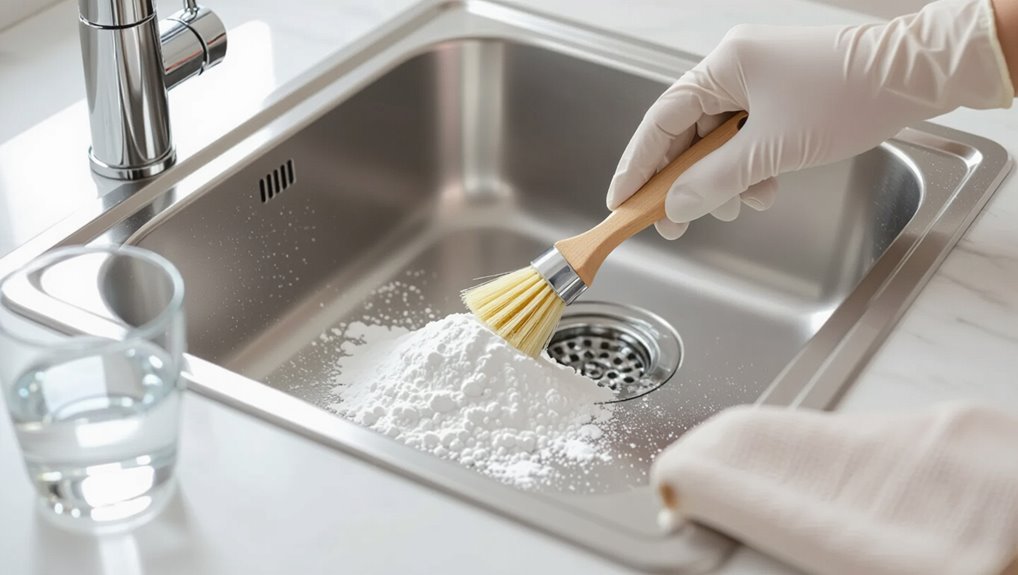
Comet is a powdered cleanser containing abrasives and bleach that chemically and mechanically removes common sink stains like soap scum, hard water deposits, and surface discoloration. It is generally safe for durable porcelain, stainless steel, and many ceramic finishes but can abrade soft metals, worn coatings, and specialty surfaces. Use should be avoided on painted, textured, or delicate finishes and in situations where manufacturers warn against abrasives or chlorine-based cleaners.
Active ingredients and how they work on common sink stains
A few household cleaners combine abrasive particles with bleaching agents, and Comet Cleaner pairs mild abrasives (typically calcium carbonate) with sodium hypochlorite and surfactants to break down grime, lift stains, and disinfect sink surfaces.
These components mechanically scrub away mineral deposits, oxidize organic stains, and emulsify grease.
For guidance on how to use comet cleaner on sink, follow label dilution and contact-time instructions.
Types of sinks and finishes compatible with Comet
Different sink materials react to cleaners in distinct ways, so selecting Comet Cleaner depends on the sink’s material and finish.
Comet’s mild abrasives suit glazed ceramic, porcelain, and uncoated stainless steel for stain and grime removal. It is generally compatible with durable, non-porous finishes; users should verify finishes are intact and test discreet spots before broader use to confirm no dulling occurs.
Situations where Comet is not recommended
Some surfaces and situations make use of Comet Cleaner inadvisable: sinks with delicate or treated finishes (such as matte, painted, lacquered, or powder-coated surfaces), natural stone (like granite or marble), sealed or waxed wood, and any porous materials can be damaged or dulled by its abrasive components and chlorine-based agents.
Avoid using Comet on vintage fixtures, colored enamel, or near rubber seals and soft plastics.
Quick Safety and Preparation Checklist
Before beginning, the user should guarantee adequate ventilation and wear appropriate personal protective equipment such as gloves and eye protection.
Gather tools and materials—cleaner, scrub brush, sponge, bucket, and a towel—so the task proceeds without interruption.
Protect faucets, drains, and nearby surfaces by covering or rinsing them as recommended to prevent damage or chemical contact.
Personal protective equipment and ventilation
A few simple items greatly reduce risk when using Comet cleaner on a sink: chemical-resistant gloves, eye protection, and adequate ventilation.
Users should wear nitrile or rubber gloves and splash-resistant goggles to prevent skin and eye contact.
Work with windows open or a fan running; avoid inhaling fumes.
If mixing cleaners is required, guarantee local exhaust and never combine with ammonia or bleach.
Tools and materials to gather before you start
Checklist items and tools should be assembled and inspected before cleaning begins to guarantee efficiency and safety.
Gather only necessary items, inspect for damage, and arrange for easy access.
Recommended items include:
- Comet cleaner (follow label)
- Nonabrasive scrub brush or sponge
- Disposable gloves and safety glasses
- Bucket, soft cloths, and paper towels
Protecting faucets, drains, and nearby surfaces
Shield faucets, drains, and surrounding finishes to prevent chemical damage and staining: cover metal fixtures with plastic wrap or painter’s tape, plug or loosely pack drains with a rag or drain stopper to keep cleaner from entering plumbing, and lay down towels or disposable cloths around the sink to catch splashes and granules.
Remove or protect nearby cosmetics, sponges, and toothbrushes; ventilate the area and wear gloves.
Step-by-Step Guide to Cleaning Your Sink with Comet
The following steps outline a concise procedure for cleaning a sink with Comet, beginning with pre-cleaning to remove debris and a rinse.
It then covers safe, even application of Comet, agitation of stains with an appropriate scrub tool, recommended dwell time, and final thorough rinsing.
Each step emphasizes safety and checking for any remaining residue before reuse.
Step 1 Pre-clean: remove debris and rinse
Begin by clearing the sink of loose items and food scraps so the cleaner can work on actual grime rather than debris.
Next, scrape away stuck-on residue with a rubber spatula or paper towel.
Rinse thoroughly with warm water to loosen remaining particles and cool residual oils.
Make certain drains are unobstructed and surfaces appear visibly free of loose matter before proceeding to cleaning.
Step 2 Apply Comet safely and evenly
Apply Comet in a well-ventilated area while wearing gloves to protect skin and avoiding contact with eyes.
Sprinkle a thin, even layer of powder or dispense cleanser along sink surfaces, keeping product off polished fixtures and drains.
Work from edges toward the center to guarantee coverage.
Do not mix with other cleaners.
Allow manufacturer-recommended dwell time before proceeding to agitation or rinsing.
Step 3 Agitate stains and soap scum with the right scrub tool
After the recommended dwell time, attention turns to loosening stains and soap scum with a scrub tool chosen for the sink surface.
Nonabrasive pads suit stainless steel and porcelain; soft brushes reach drains and seams.
Apply moderate pressure, using circular motions to lift grime without scratching. Rinse the tool frequently to prevent redepositing residue, and inspect progress until the surface appears uniformly clean.
Step 4 Dwell time: how long to let Comet sit
How long should Comet be left on the sink? A brief dwell period of one to three minutes allows the powder to loosen grime without drying.
For stubborn spots, extend to five minutes but never exceed label recommendations. Avoid prolonged exposure on delicate finishes; test inconspicuous areas first.
After the allotted time, proceed to the next step to remove cleaner and inspect surfaces.
Step 5 Thorough rinsing and checking for residue
Rinse the sink thoroughly with warm running water, directing the flow to wash away all Comet particles and dissolved residue from every surface and seam.
Inspect corners, the drain area, and faucet bases for lingering grit or foam.
Use a soft cloth or sponge to agitate spots, then flush again.
Repeat until water runs clear and no abrasive residue remains.
Step 6 Drying and buffing for a streak-free finish
Pat dry the sink with a clean, lint-free cloth or microfiber towel to remove remaining moisture and prevent water spots.
After drying, buff surfaces in circular motions to restore shine, focusing on edges and fixtures.
Use a dry microfiber for final polishing, applying light pressure to eliminate streaks and lint.
Inspect under varied light; repeat buffing if any dull patches remain.
Adjustments for Specific Sink Materials
The cleaning approach should be adjusted to the sink material to protect finishes and guarantee effective stain removal.
For example, porcelain requires gentle scrubbing and caution around chips.
Stainless steel needs scratch- and water-spot prevention.
Composite, granite, or enamel surfaces benefit from milder cleaners and nonabrasive pads.
Painted or otherwise delicate finishes may call for safer, nonabrasive alternatives or spot-testing before full cleaning.
Porcelain sinks: best techniques and cautions
When treating porcelain sinks with Comet Cleaner, apply gentle, nonabrasive motions to avoid scratching the glaze while still removing stains and mineral buildup.
Rinse thoroughly after light scrubbing to prevent residue dulling the finish.
Test on an inconspicuous area first for colorfastness.
Avoid prolonged contact, harsh scrubbing pads, and acidic cleaners; dry with a soft cloth to reduce water spots and preserve shine.
Stainless steel sinks: avoiding scratches and water spots
Treat stainless steel sinks with light, circular motions and a nonabrasive pad when using Comet Cleaner to remove spots without scratching the grain; always follow the metal’s brushed direction to preserve finish.
Rinse thoroughly to prevent residue dulling, then dry immediately with a microfiber cloth to avoid water spots.
Avoid steel wool, abrasive powders, and harsh scrubbing that can create scratches and trap grime.
Composite, granite, and enamel sinks: tailored approach
Many composite, granite, and enamel sinks require gentler, more targeted handling than stainless steel to prevent surface damage and preserve sealants.
Use a mild dilution of Comet, test an inconspicuous spot, and apply with a soft cloth or non-abrasive sponge.
Rinse thoroughly, dry with a microfiber cloth, and avoid prolonged scrubbing or harsh powders that can dull or etch these surfaces.
Painted or delicate finishes: safer alternatives
Some painted or delicate sink finishes require far gentler care than harder surfaces to avoid chipping, fading, or removing the topcoat.
For these, avoid abrasive powders like Comet. Instead, use mild dish soap or a vinegar-and-water solution applied with a soft cloth or sponge.
Test any cleaner on an inconspicuous area first.
Dry gently to prevent watermarks and preserve the finish.
Troubleshooting Common Problems
Common persistent issues include rust or hard water stains that resist standard scrubbing, cloudy or streaked finishes that appear after cleaning, and occasional finish damage from abrasive use.
The article outlines targeted methods to remove stubborn mineral deposits, restore shine without streaks, and evaluate whether a finish can be repaired or needs professional attention.
Readers are advised to follow material-specific precautions and test solutions on an inconspicuous area first.
Removing persistent rust or hard water stains
Persistent rust or hard water stains require targeted methods because standard Comet application may not fully remove mineral buildup or iron deposits.
Apply a paste of Comet and water, let sit 10–15 minutes, then scrub with a nylon brush.
For stubborn spots, use white vinegar or a lemon juice soak before reapplying paste.
Rinse thoroughly and dry to prevent recurrence.
Dealing with cloudy or streaked finishes after cleaning
A cloudy or streaked finish often indicates residue, improper rinsing, or abrasive contact with the surface; identifying the cause guides the corrective step—thorough rinsing, gentle buffing with a microfiber cloth, or repeating a mild Comet application followed by immediate rinsing can restore clarity without damaging the finish.
If streaks persist, inspect for mineral buildup and use a vinegar solution, then rinse and dry promptly.
What to do if Comet damages a finish
If Comet damages a finish, immediately stop using the product and assess the extent of the harm by noting discoloration, dulling, scratches, or surface etching. Photographic documentation can help track changes and guide repair decisions.
Determine material type, consult manufacturer care guidelines, and test mild remedies (neutral cleaner, baking soda paste) in an inconspicuous area.
For persistent damage, seek professional restoration or refinish recommendations.
Comparison: Comet vs. Other Sink Cleaners
Comet’s performance is often compared to other sink cleaners across several practical dimensions, including stain removal, surface compatibility, cost, and environmental impact. A concise table below summarizes key contrasts to guide selection based on priorities. Readers can weigh these factors when choosing the most suitable cleaner for their sink.
| Criterion | Comet | Other Cleaners |
|---|---|---|
| Effectiveness on stains | Strong on baked-on grime | Varies by formula |
| Surface safety & compatibility | Abrasive; avoid soft finishes | Some are gentler |
| Cost & availability | Inexpensive, widely sold | Range from budget to premium |
| Environmental & safety considerations | Contains bleach/abrasives | Some greener or less caustic |
Effectiveness on stains
When judged by stain-removal performance, Comet cleaner often matches or outperforms many common household sink cleaners on routine grime and mineral deposits.
Though heavy or set-in stains may require stronger or specialized formulations, it removes soap scum, light rust discoloration, and hard water rings effectively with scrubbing.
Comparatively, enzymatic or bleach-based products can be faster on organic or deeply oxidized stains.
Surface safety and compatibility
Although abrasive powders like Comet provide effective scrubbing, their gritty formulation can dull or scratch softer sink surfaces such as polished stainless steel, acrylic, or certain coated finishes.
Users should weigh abrasiveness against cleaning needs. Less abrasive alternatives—non-scratch creams, liquid cleaners, or microfiber and baking soda—offer safer routine maintenance.
Test in an inconspicuous spot and follow manufacturer care instructions.
Cost and availability
While price varies by retailer and package size, Comet generally sells at a lower per-use cost than many specialty non-scratch creams and branded liquid cleaners, making it an economical choice for users prioritizing raw affordability.
It is widely stocked in supermarkets, big-box stores, and online marketplaces; bulk and store-brand alternatives can further reduce expense, while availability may fluctuate by region and promotion.
Environmental and safety considerations
Compare the environmental and safety profiles of Comet and other sink cleaners by examining ingredients, toxicity, and disposal impacts.
Comet’s powdered formula often contains bleach and abrasives; it cleans effectively but can irritate skin, eyes, and respiratory systems and release chlorine compounds.
Alternatives may offer biodegradable surfactants and lower toxicity but sometimes compromise efficacy.
Proper dilution, ventilation, and disposal minimize risks for any product.
Preventive Maintenance for a Long-Lasting Sparkle
A simple preventive routine keeps a sink gleaming longer by combining brief daily wipes and a weekly quick-clean to remove soap and residue.
A monthly deep-clean with safe, nonabrasive products addresses hidden buildup and mineral stains before they set.
Avoid leaving acidic substances, standing water, or abrasive scrubbing tools on the surface to prevent staining and premature wear.
Daily and weekly quick-clean routines
Consistency keeps a sink looking cared-for and prevents grime from bonding to surfaces. A short daily and weekly routine preserves finish and reduces need for heavy scrubs.
- Rinse and wipe after each use with a soft cloth.
- Spray diluted cleaner for quick weekly wipe-downs.
- Pay attention to faucet bases and drain edges.
- Dry surfaces to avoid water spots and mineral buildup.
Monthly deep-clean schedule with safe products
Although deep cleans demand more time than daily touch-ups, a monthly regimen using gentle, purpose-made products prevents buildup and preserves fixtures.
A checklist includes descaling with mild acid cleaners for mineral deposits, nonabrasive paste for stains, soft-bristle scrub for seams, and a sanitizer safe for finishes.
Rinse thoroughly, dry to avoid water spots, and inspect seals for maintenance needs.
Habits to avoid that cause staining and buildup
When spills, toothpaste, and soap scum are left to dry on fixtures, they quickly harden into stubborn stains and mineral buildup that require harsher cleaners and more elbow grease to remove.
Avoid letting standing water sit, neglecting daily wipe-downs, leaving metal cans or wet sponges on surfaces, and using abrasive pads that scratch protective finishes.
Prompt rinsing prevents long-term damage.
Tips, Tricks, and Best Practices
Practical tips cover eco-friendly dilution and proper disposal to minimize environmental impact when rinsing and discarding residues.
Recommended tools—gloves, non-scratch pads, and a soft-bristled brush—can speed cleaning and protect surfaces and hands.
Guidance also notes signs that warrant hiring a professional, such as persistent stains, damaged fixtures, or chemical exposure concerns.
Eco-friendly dilution and disposal tips
Several simple adjustments can markedly reduce the environmental impact of using Comet Cleaner on sinks: dilute concentrated product per label instructions to minimize chemical load, rinse thoroughly with cold water to limit heat-driven volatilization, and collect excess solution for proper disposal rather than pouring large volumes down the drain.
Use minimal effective amounts, neutralize small alkaline residues with diluted vinegar if appropriate, and follow local hazardous-waste guidance.
Tools that make the job easier and safer
Although many homeowners tackle sink cleaning with only a sponge, a few purpose-made tools greatly improve safety and efficiency: gloves and eye protection prevent chemical exposure, non-abrasive scrubbing pads and nylon brushes remove grime without scratching finishes, a plastic scraper loosens stuck-on residue, and a long-handled brush or bottle brush reaches deep drains.
- Nitrile gloves
- Safety goggles
- Nylon bottle brush
- Plastic scraper
When to call a professional cleaner
When should a homeowner call a professional cleaner? A professional is advisable for stubborn stains, rust, deep mineral buildup, damaged finishes, or chemical exposure beyond household cleaner guidance.
Also seek help if plumbing issues, persistent odors, or concerns about hazardous residues arise.
Professionals guarantee safe, effective remediation, protect fixtures, and prevent voiding warranties or causing further deterioration.
Visual Guide and Step Sequence Images
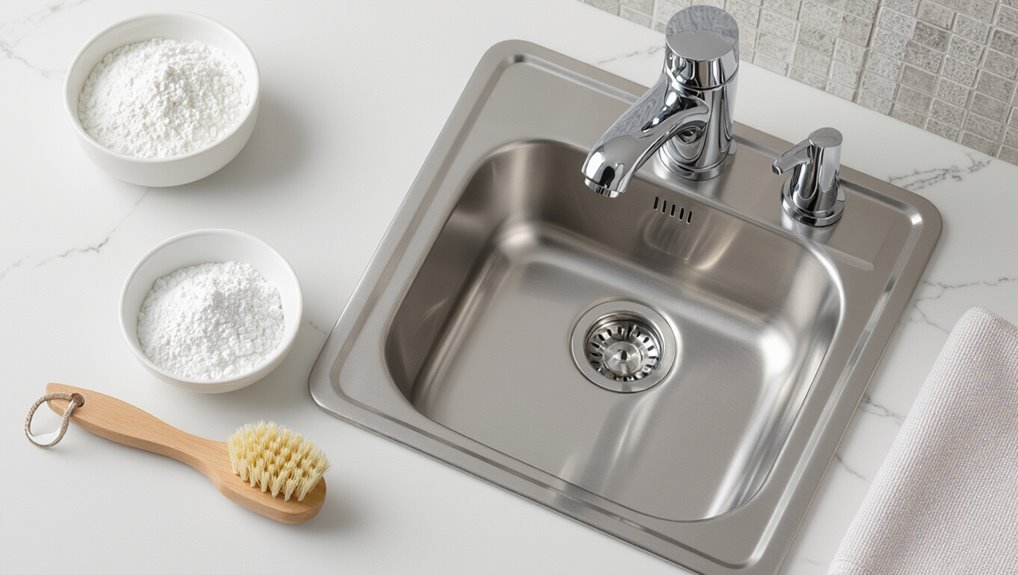
To clarify the cleaning process, the visual guide pairs clear photographs with numbered steps that show each action from start to finish.
Images focus on key moments: applying Comet, scrubbing technique, rinsing, and buffing.
Close-ups highlight hand positioning, product amount, and stain progression.
Captions give brief timing and safety notes.
A final before-and-after confirms expected results.
Conclusion
Comet cleaner leaves a sink gleaming like a newly polished coin, restoring surfaces efficiently when used correctly. Following safety steps, appropriate adjustments for sink material, and targeted techniques prevents damage while removing stains and buildup. Regular, gentle maintenance prolongs results and reduces heavy scrubbing, and troubleshooting tips help resolve discoloration or stubborn residues. Choosing the right product for the sink’s finish guarantees a streak-free, long-lasting sparkle with minimal effort.