How to Turn Off a Gas Water Heater Before Going on Vacation (Step-by-Step Guide)
To safely turn off your gas water heater before going on vacation, follow these steps: shut off the gas supply, turn off the cold-water inlet, and either extinguish the pilot light or set the gas control to OFF. This helps prevent leaks, energy waste, and safety hazards. Always check for gas odors, ensure proper ventilation, and relieve pressure by opening a hot faucet. Be sure to note any model-specific restart instructions and purge air before relighting the pilot. For more complex issues, refer to the manufacturer’s guidance or consult a professional.
Why You Should Turn Off a Gas Water Heater Before Vacation
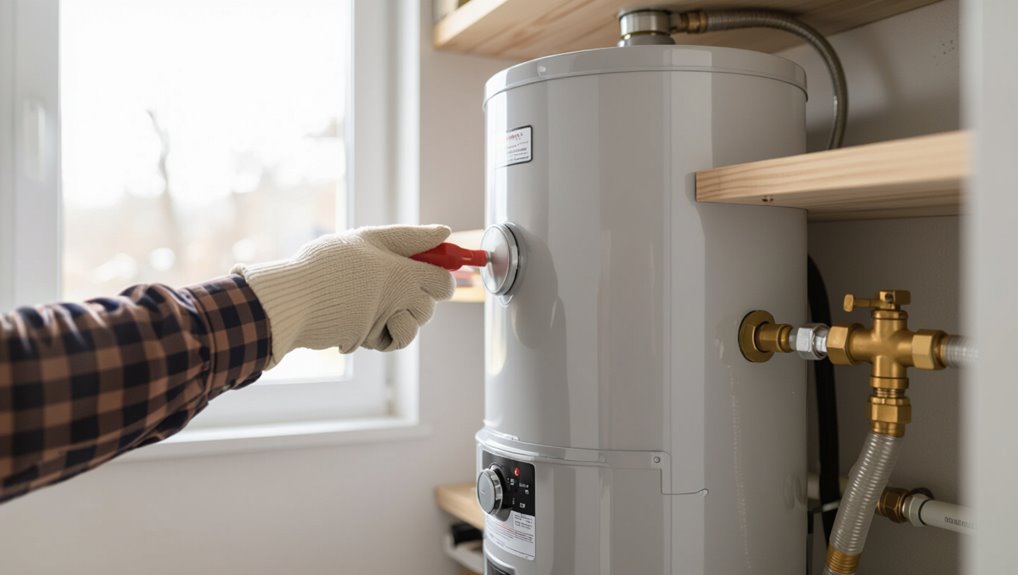
Leaving a gas water heater running during an extended absence can increase the risk of gas leaks, pilot light failures, or undetected malfunctions that may cause damage or hazardous conditions.
Turning the unit off reduces those safety risks, lowers energy costs by avoiding unnecessary heating, and can extend the appliance’s service life by reducing wear.
The following guidance explains how to shut down the heater properly and what precautions to take before leaving.
Risks of leaving a gas water heater on while away
Many homeowners underestimate the hazards of keeping a gas water heater running during an extended absence.
Leaving it on raises risks of gas leaks, pilot light failures, pressure buildup, and unnoticed water damage from leaks or valve failures.
Suspicious odors or corrosion can go undetected.
Instructions like how to turn off gas water heater for vacation help mitigate these preventable hazards before departing.
Benefits of shutting it down (safety, energy savings, appliance longevity)
Turning off a gas water heater before a vacation reduces safety risks, lowers energy consumption, and can extend the appliance’s service life.
Shutting it minimizes fire and carbon monoxide hazards, prevents pilot light or burner malfunctions, and reduces wear from constant cycling.
Energy savings cut utility bills during absence, while less operation slows corrosion and component failure, promoting longer, more reliable performance.
Quick Checklist What to Do Before You Leave
The homeowner should assemble essential tools and items—wrench, flashlight, gas shutoff tool, and a readable copy of the water heater manual—before leaving.
They should confirm the gas and water supply are turned off and pilot lights extinguished.
If there are signs of a leak, corrosion, or uncertainty about the shutoff, a professional should be contacted.
Essential tools and items to have
Before leaving the work area, a concise kit of tools and items should be assembled to safely shut off a gas water heater and address common issues: a clear checklist reduces errors and enables quick responses.
Essential items include basic hand tools, safety gear, and supply shutoff aids.
- Adjustable wrench and screwdriver set
- Work gloves, safety glasses, flashlight
- Teflon tape, pipe wrench, shutoff key
When to call a professional
Recognize situations that exceed routine maintenance and call a licensed plumber or gas technician when there are signs of persistent leaks, a strong gas odor, repeated pilot light failures, visible corrosion on the tank or connections, or any suspected carbon monoxide exposure.
If any of these occur, leave the area, shut off the gas if it can be done safely, and contact professionals immediately.
Additionally, schedule service for unusual noises, frequent pressure relief valve trips, or visible exhaust issues.
Step-by-Step Guide to Turning Off a Gas Water Heater
Before beginning, the user should identify the heater’s type and model to follow the correct procedures and locate the gas shutoff, water inlet, pilot assembly, and control valve.
Next, instructions cover safely closing the gas supply and, if present, extinguishing the pilot or setting the gas control to “off.”
Finally, directions explain how to shut the cold-water supply to the tank and verify that all controls are secured.
Confirm the type and model of your water heater
How can the correct shutdown procedure be determined without first identifying the heater’s type and model?
The reader locates the manufacturer label, model number, capacity, and fuel type. Serial numbers and production date help with manuals or online guides.
Variations in pilot systems, electronic ignition, and safety features depend on model specifics, so confirmation prevents incorrect steps and potential damage.
Locate important controls and components
Several key controls and components must be located before any shutdown steps begin: the gas shutoff valve, temperature control knob or thermostat, pilot assembly or electronic ignition module, pressure relief valve, and the cold-water supply and drain valves.
The observer should note locations, accessibility, and any labels to speed shutdown and restart.
- Visual confirmation of labels and markings
- Clear access paths and obstructions
- Condition and signs of leaks or corrosion
Turning off the gas supply safely
Next, the procedure for locating and operating the gas shutoff valve is explained.
The user should identify the valve on the gas line leading to the water heater, verify the type (ball or quarter-turn), and confirm the gas supply is unobstructed before turning.
To shut off gas, rotate the valve handle 90 degrees so it is perpendicular to the pipe.
Then check that the burner goes out and no gas odor is present.
How to use the gas shutoff valve
Locate the gas shutoff valve on the pipe leading to the water heater and confirm its position before touching it.
Turn the valve perpendicular to the pipe using an adjustable wrench or by hand if designed for manual operation.
Verify closure by listening for gas or using a leak detector.
Relight the pilot only after professional inspection or when safe per manufacturer instructions.
Turning off the water supply to the heater
Shut off the cold-water inlet to isolate the tank before any further work on the gas water heater.
Close the supply valve located on the pipe entering the top of the unit—turn the handle perpendicular to the pipe for ball valves or clockwise for gate valves.
Open a nearby hot faucet to relieve pressure and verify flow stops, confirming the tank is isolated and ready for the next steps.
Shutting off the pilot light and/or gas control valve
Turn off the pilot light or gas control valve to eliminate the fuel source before performing any maintenance.
Locate the gas control knob—usually labeled ON/PILOT/OFF.
For standing pilot models, set to OFF and wait recommended time.
For electronic valves, switch to OFF.
Confirm no flame and smell-test for gas.
If unsure, contact a qualified technician before leaving.
Turning off the power (electric ignition or electrical elements) if applicable
Before working on a gas water heater with electric ignition or heating elements, cut electrical power to prevent shocks and inadvertent ignition: switch the unit’s power toggle to OFF at the thermostat/controller or flip the dedicated circuit breaker in the home’s electrical panel, and if present, unplug the heater from its outlet.
After power is removed, verify with a noncontact voltage tester and label the breaker to warn others.
Draining or partially draining the tank (when recommended)
Drain or partially drain the tank when sediment buildup, repairs, or winterizing require lowering the water level.
Attach a garden hose to the drain valve, route to a safe discharge area, open a hot water faucet to relieve vacuum, then slowly open the drain valve.
Close valve when finished, remove hose, and refill before restoring gas and ignition per manufacturer instructions.
Post-shutdown checks to ensure system is off
With the tank emptied or partially drained as needed, the next phase is to verify that the entire gas water heater system is fully shut down.
Confirm the gas valve is off, the pilot is extinguished, and the thermostat is set to vacation or pilot.
Check for lingering gas odor, guarantee the water supply valve remains closed, and verify no burners ignite when power or gas is briefly tested.
How to Restart the Heater After Vacation
Before restoring a gas water heater after a vacation, a brief safety check should confirm no gas smell, visible leaks, or water damage.
The procedure then covers restoring gas, water, and power and relighting the pilot according to the manufacturer’s instructions.
If the pilot will not stay lit or the unit fails to operate, guidance on troubleshooting and when to call a professional is provided.
Safety checks before relighting the pilot
Inspect the area around the water heater and the unit itself for gas odors, visible leaks, corrosion, insect nests, or spilled flammable materials before attempting to relight the pilot.
Verify adequate ventilation, guarantee the gas supply valve remains off until checks are complete, confirm the burner compartment is dry and debris-free, and inspect pilot tubing and connections for damage or loose fittings requiring repair before restoration.
Step-by-step relighting and restoring gas/water/power
Proceed to restore utilities in a deliberate sequence to minimize risk and guarantee the heater functions correctly: confirm the gas valve remains off, restore cold-water supply by opening the main shutoff and any isolating valves to refill the tank until a steady stream flows from a nearby hot faucet, purge air from the lines by briefly running that faucet.
Then open the gas valve, follow the manufacturer’s pilot relight instructions to ignite the pilot and main burner, and finally restore any electrical power to controls or timers while monitoring the unit for proper ignition, steady flame, and absence of gas odor or leaks.
Restart sequence completed; verify temperature and leak-free operation before normal use.
What to do if the heater won’t relight
If the water heater fails to relight after following the standard restart sequence, troubleshoot methodically to identify whether the issue is electrical, gas-related, or mechanical.
Check gas supply and shutoff valve, confirm pilot assembly and thermocouple condition, verify power to ignition/control module, inspect burner and vents for obstruction, and test for error codes.
If uncertainty persists, contact a licensed plumber or gas technician.
Common Problems and How to Troubleshoot
After shutting off or restarting a gas water heater, several common issues may appear, including the smell of gas, lack of hot water, visible leaks, or unusual noises.
The article outlines basic troubleshooting steps for each symptom and clear indicators that the situation requires immediate professional attention.
When any gas odor, persistent leak, or unexplained sound occurs, the heater should be turned off and a licensed technician contacted.
Smells of gas after shutdown or restart
Why is there a lingering odor of gas after shutting down or restarting a gas water heater?
Residual gas in lines, pilot assembly leaks, or incomplete combustion can cause odors.
Inspect connections, pilot light, vents, and shutoff valve for tightness and damage.
Do not operate open flames; ventilate area.
If smell persists, evacuate and contact the gas company or a licensed technician immediately.
No hot water after restart
Diagnose the most common reasons a gas water heater produces no hot water after a restart by checking a few key components systematically.
Verify the pilot is lit and thermocouple contacts are clean.
Confirm the gas supply valve is open and the thermostat setpoint isn’t too low.
Inspect the burner for ignition and blockage.
If pilot and burner function but no heat, consider a faulty thermostat or control valve.
Leaks or unusual noises
Once pilot and burner issues are ruled out, attention should shift to leaks and unusual noises, which often signal mechanical wear or water-side problems.
Inspect visible fittings, tank seams, valves and the pressure relief discharge for drips.
Tap and listen for sediment-induced popping; check inlet/outlet connections for looseness.
Tighten fittings, replace faulty valves, and flush sediment when safe.
When to stop and call a licensed technician
Recognize that certain gas water heater issues exceed routine DIY fixes and require a licensed technician to guarantee safety and compliance.
If there is persistent gas odor, visible gas leaks, pilot or burner malfunctions, major corrosion, electrical faults, or repeated pressure relief valve discharges, stop attempts at repair.
Contact a licensed plumber or gas technician promptly to inspect, isolate gas, and perform compliant repairs.
Precautions and Safety Tips
Before attempting to turn off a gas water heater, attention should be paid to gas leak detection and clear emergency procedures to minimize risk.
Carbon monoxide risks require properly placed detectors and regular maintenance of vents and flues.
If the property will be unoccupied in winter, steps for freeze protection should be taken to prevent pipe and tank damage.
Gas leak detection and emergency procedures
Detecting a gas leak requires immediate attention: occupants should listen for hissing sounds, smell for the distinctive rotten-egg odor added to natural gas, and be alert for dead vegetation or bubbling in standing water near outdoor lines.
Evacuate immediately, avoid sparks, and call emergency services from a safe location. Notify the gas company for inspection.
- Evacuate uphill/windward
- Do not operate electronics
- Shut off gas only if trained
Carbon monoxide considerations and detector placement
Because carbon monoxide (CO) is odorless and colorless, gas water heaters can pose a hidden risk if not vented or maintained properly; consequently, placing and maintaining CO detectors is essential to provide timely warning of buildup.
Install detectors on each level, especially near sleeping areas and the heater room.
Test monthly, replace batteries yearly, and follow manufacturer replacement intervals to secure reliable protection.
Seasonal and freeze-protection tips if away in winter
Many homeowners leave water heaters set low or turned off when away for extended winter periods, but taking specific freeze-protection steps can prevent costly damage.
Draining the tank, shutting off the gas and water supply, and keeping some heat in the utility area are key precautions.
Additionally, insulating exposed pipes, installing heat tape with thermostat control, sealing drafts, and asking a neighbor to check the property periodically reduces freeze risk and detects leaks promptly.
Alternatives to Full Shutdown
Some gas water heaters offer a vacation or pilot-only setting that keeps the pilot light lit while reducing fuel use.
Lowering the thermostat instead of shutting the unit off can prevent freezing or bacterial growth while saving energy.
Remote and smart-home controls provide convenient ways to adjust settings or schedule setbacks without a full shutdown.
Vacation mode or pilot-only options on modern heaters
When homeowners plan to be away for an extended period, modern gas water heaters often provide a “vacation” or “pilot-only” setting that reduces energy use without fully shutting the unit down.
These modes keep the pilot lit and prevent freezing or pressure issues while minimizing burner cycles.
Users should consult the manual to select the mode and verify pilot stability before leaving.
Setting the thermostat lower vs. turning off
Lowering the thermostat offers a middle ground between full shutdown and normal operation by reducing burner cycles while keeping the tank warm enough to prevent freezing and bacterial growth. It conserves energy, maintains minimal hot water, and limits corrosion risk. Choose a safe low setting, verify pilot stability, and balance savings against standby heat loss.
| Thermostat | Energy | Risk |
|---|---|---|
| Lowered | Reduced | Low |
| Off | Minimal | Higher |
Smart/home automation options for remote control
Beyond adjusting the thermostat, homeowners can integrate gas water heaters into smart-home systems to gain remote control and scheduling without a full shutdown.
Smart controllers and Wi‑Fi-enabled thermostats allow remote temperature changes, vacation modes, and usage monitoring.
Integration with voice assistants and routines permits automatic setbacks and reactivation.
Safety features should be verified, and professional installation is recommended for gas appliance controls.
Maintenance Steps to Take While Shutting Down
Before powering down, basic maintenance can prevent future problems and ease restart. Recommended actions include flushing sediment from the tank, checking the anode rod for corrosion, and inspecting the venting and flue for obstructions or damage.
Recording the model, serial number, and recent service history completes the shutdown checklist for reference during repairs or replacement.
Flushing sediment before or after shutdown
Many homeowners must decide whether to flush sediment from a gas water heater before shutting it down or after restarting it.
Flushing before shutdown removes accumulated debris, reducing corrosion and odours during idle periods.
Flushing after restart can clear sediment loosened by thermal cycling.
The choice depends on time, safety, and local water hardness; either approach benefits tank longevity if performed properly.
Inspecting anode rod, venting, and flue
Inspect the anode rod, venting, and flue as part of shutdown maintenance to prevent corrosion, verify proper combustion airflow, and avoid dangerous exhaust buildup.
Remove and assess the anode for heavy depletion or slime; replace if compromised.
Inspect vent connectors and flue for blockages, corrosion, or loose joints.
Clear obstructions and secure seals to verify safe, vented operation when service resumes.
Documenting model, serial number, and service history
Why record the model and serial number now? The technician or homeowner should note appliance details, location, and date before shutdown.
Photograph labels, log the serial/model, and summarize recent repairs or maintenance with dates and provider names.
Store records with warranty information and emergency contacts. This expedites service, warranty claims, and safe restart after vacation, reducing downtime and confusion.
When to Hire a Professional
If the job involves complex conversions, gas line modifications, or relighting the pilot, a licensed professional should be called.
Homeowners should also weigh expected costs and ask for a written estimate outlining labor, parts, and any safety checks.
Clear communication about permits and warranties helps set accurate expectations for the service visit.
Complex conversions, gas line work, and relighting safety
Recognize that tasks involving major conversions, gas line modifications, or pilot-light relighting after extended shutdowns carry significant hazards and often exceed typical DIY scope; a qualified, licensed technician should be engaged whenever work requires altering the gas piping, swapping fuel types, replacing safety devices, or troubleshooting persistent ignition or combustion problems.
Professionals guarantee compliance with codes, verify leak-free connections, test ventilation and combustion, and restore safe operation.
Costs and what to expect from a service visit
After advising that major conversions and gas-line work are best handled by licensed technicians, a clear picture of service costs and expectations helps homeowners decide when to call a professional.
Typical service calls range from inspections ($75–$200) to repairs ($150–$600) and replacements ($800+). Technicians provide safety checks, leak detection, and relighting.
- Ask for itemized estimates
- Verify license and insurance
- Request written warranties
Packing a Travel Safety Plan
Before leaving, the homeowner should notify neighbors or building management that the property will be unattended and provide contact details for emergencies.
A concise checklist should be prepared and placed with key home controls, clearly outlining how to shut off the gas water heater and other utilities.
This checklist and any necessary instructions should also be given to a trusted person who can act if a problem arises.
Informing neighbors or building management
Informing neighbors or building management about shutting off a gas water heater helps guarantee coordinated safety and prevents accidental restoration of service.
Occupants should provide clear notice of the action, expected duration, and contact information so others can respond appropriately.
A brief written or digital message should state the shutdown time, safety reasons, who to contact for questions, and any precautions to observe until service resumes.
Checklist to place with home controls and instructions for trusted person
Notifying neighbors or building management should be followed by leaving a concise, accessible checklist with the home’s controls for a trusted person who may need to act in the owner’s absence.
Include step-by-step shutoff instructions, location of gas and water valves, emergency contact numbers, appliance manuals, a map to the heater, permission to access the property, and clear criteria for contacting the owner or emergency services.
Conclusion
Before leaving, the homeowner turns off the gas, drains or insulates pipes, and secures power; upon return, they relight pilots, restore settings, and check for leaks. To prevent damage, to save energy, and to guarantee safety, routine care matters as much as emergency readiness. For minor troubles, try troubleshooting steps; for complex issues, call a professional. In planning travel, pack documentation, shutoff locations, and contact info to protect the home and bring peace of mind.