
How to Keep Underground Drain Pipes From Freezing: Proven Methods to Protect Your Pipes
To prevent underground drain pipes from freezing, take immediate steps such as insulating vulnerable sections and keeping water flowing. For long-term solutions, consider burying pipes deeper than the frost line, using granular backfill, or installing electric or hydronic trace heating. Additionally, maintaining a proper slope and ensuring sealed joints will help avoid standing water and cold air infiltration. For more detailed guidance on installation, costs, and thawing methods, further resources are available.
Why Underground Drain Pipes Freeze and Why It Matters
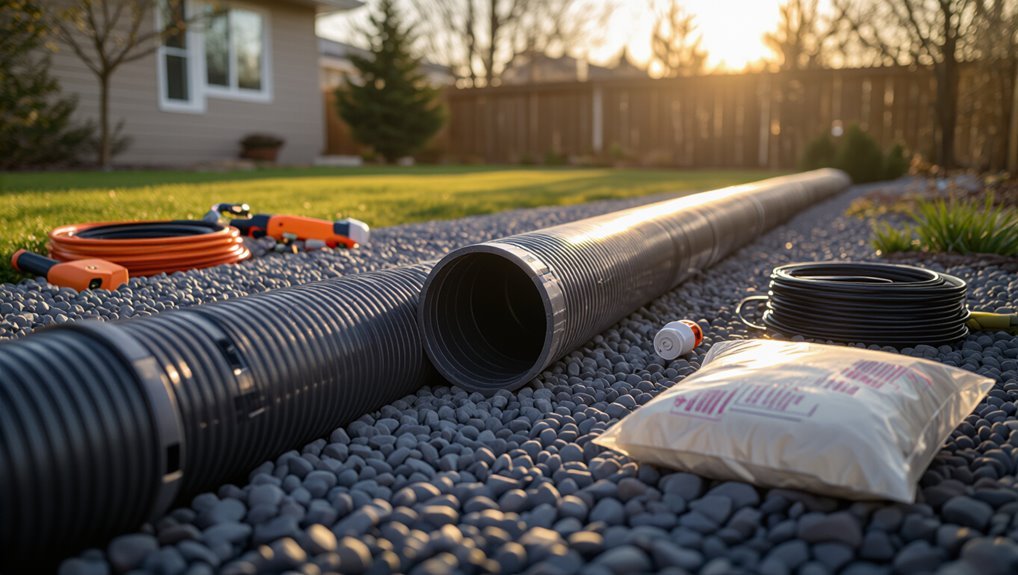
Freezing in buried drain systems occurs when groundwater or retained moisture in pipes and surrounding soil drops below freezing, forming ice plugs that block flow.
Frozen underground drains can cause backups, pipe ruptures from frost heave, and costly excavation or repair.
Early signs include reduced drainage, gurgling noises, localized wet spots that become icy, and sudden pressure changes in connected fixtures.
How freezing occurs in buried drain systems
Cold temperatures penetrate soil and can lower the temperature of buried drain pipes below the freezing point, causing water inside to solidify and obstruct flow.
Frost fronts advance from surface cooling, conductive heat loss through pipe walls, and stagnant water pockets encourage ice formation.
Soil moisture, pipe depth, insulation, and thermal bridges determine vulnerability; guidance on how to keep underground drain pipes from freezing targets these factors.
Common consequences of frozen underground drains
Having outlined how soil temperature, moisture, and pipe factors promote ice formation in buried drains, attention turns to the effects that result when those pipes freeze.
Blockages halt drainage, causing backups, localized flooding, and overflows.
Pressure from expanding ice can crack pipes or joints, leading to leaks and costly excavations.
Prolonged freezing promotes corrosion, sediment buildup, and microbial growth that impair long-term function.
Signs that underground drain pipes are freezing
How can homeowners and maintenance crews tell when buried drain lines are beginning to freeze? Indicators include slow or gurgling drains, foul odors from trapped sewage, unusually cold ground above lines, higher-than-normal water bills, and intermittent backups.
Frost or ice near cleanouts, sounding hollow when tapped, and repeated clogs despite clearing suggest progressive freezing that requires inspection and preventive action to avoid rupture.
Quick Solutions to Prevent Immediate Freezing
Immediate steps can help prevent drain pipes from freezing before permanent measures are in place.
Temporary insulation wraps or heat tape can be applied, flow can be increased to keep water moving, and controlled use of hot water or steam can clear small ice blockages.
Each method carries limits and safety considerations that will be addressed next.
Temporary insulation wraps and heat tape application
Apply temporary insulation wraps and heat tape to vulnerable sections of pipe to reduce heat loss and prevent rapid freezing during cold snaps.
Install closed-cell foam or fiberglass wraps snugly, sealing joints with waterproof tape.
For heat tape, follow manufacturer instructions: secure along pipe, plug into a GFCI outlet, and avoid overlap.
Monitor regularly for damage and remove when temperatures stabilize to prevent degradation.
Increasing flow to keep water moving
Increase the flow through vulnerable pipes to keep water moving and reduce the chance of ice forming during sudden cold snaps.
Briefly opening faucets, running a slow continuous drip, or combining multiple fixtures raises circulation and prevents stagnation in exposed runs.
Monitor water use and local freeze advisories, restore normal flow when temperatures stabilize, and prioritize controlled, minimal flows to conserve water.
Safe use of hot water and steam to clear minor ice
Use hot water or steam cautiously to melt small ice blockages in exposed pipes, focusing on localized, controlled warming rather than prolonged heating.
Apply warm—not boiling—water, or gentle steam from a safe distance, working gradually toward the blockage.
Monitor pipe material and joints for stress, avoid open flames, and stop if fittings or insulation show damage.
Call a professional for persistent or internal freezes.
Long-Term Strategies to Protect Underground Drain Pipes
Long-term protection of underground drain pipes begins with proper burial below the local frost line and correct slope to prevent standing water.
Selecting frost-resistant materials of appropriate diameter and adding insulation sleeves or a protective conduit further reduce freeze risk.
These measures together extend service life and minimize winter maintenance.
Proper burial depth and frost line considerations
Because ground temperatures remain more stable below the frost line, installing drain pipes at or beneath that depth is the most reliable way to prevent freezing over multiple winters.
Local frost depth guides dictate minimum burial depths; installers should verify regional codes, seasonal variations, and soil composition.
Insulating backfill and avoiding shallow runs near exposed foundations further reduce freeze risk while ensuring long-term pipe integrity.
Slope and pitch adjustments to prevent standing water
Proper grading and consistent pipe pitch are essential to keep water moving and prevent pockets of standing liquid that can freeze.
Install continuous fall—typically 1/4 inch per foot for horizontal drains—avoiding flat runs and low spots. Use laser levels or digital inclinometers during installation.
Periodic inspections and slight regrading correct settling. Verify joints don’t create sags that trap water.
Use of frost-resistant pipe materials and sizing
Select materials and correct diameters to reduce freeze risk and maintain flow under cold conditions.
Durable, frost-resistant plastics (HDPE, PVC Schedule 40/80 where appropriate) and ductile iron resist cracking.
Slightly oversizing drains lowers flow velocity, reducing ice formation and clogging.
Match wall thickness and thermal properties to local frost depth.
Proper joint selection and pressure ratings guarantee longevity and reduced freeze-related failures.
Installing insulation sleeves and protective conduit
Install insulation sleeves and protective conduit to create a continuous thermal barrier and mechanical shield around underground drain lines.
Closed-cell foam sleeves, mineral wool wraps, or polyethylene conduit reduce heat loss and prevent soil compaction.
Verify seams are sealed, joints overlapped, and conduit slopes allow drainage.
Combine with proper burial depth and backfill material for long-term freeze protection and physical damage resistance.
Heating Options for Buried Drain Lines
Heating options for buried drain lines include electric heat cable systems—self-regulating or constant-wattage—and hydronic soil-warming methods that circulate warmed fluid around pipe runs.
Control components such as thermostats and ground sensors enable automated activation only when needed.
Selection should weigh installation complexity, energy use, and long-term operating costs.
Electric heat cable systems: types and installation
Several types of electric heat cable systems are available for preventing buried drain lines from freezing, each designed for specific pipe materials, depths, and installation constraints.
Self-regulating cables adjust output with temperature; constant-wattage cables provide uniform heat.
Proper installation includes insulating over cable, securing to pipe, maintaining manufacturer spacing, using GFCI protection, and following burial depth and soil-contact ratings to guarantee reliable freeze prevention.
Hydronic heating and soil-warming techniques
Where electric heat cable systems may be limited by power availability, pipe material, or long burial depths, hydronic heating and soil-warming techniques offer an alternative that uses circulated warm fluid to raise surrounding ground temperatures and keep buried drains free of ice.
Trench-mounted coils, embedded manifolds, or closed-loop glycol systems distribute heat efficiently; installation requires insulation, frost-depth assessment, and durable underground piping to prevent leaks and freezing.
Thermostats, sensors, and automatic control for heat systems
Control systems regulate and optimize heat delivery to buried drain lines by using thermostats, sensors, and automated controllers that respond to changing ground and pipe temperatures.
Temperature sensors detect cold spots and trigger heating circuits or circulate warm fluid.
Timers, differential controllers, and remote monitoring allow adaptive operation.
Proper placement, calibration, and frost-setback parameters prevent freezing while minimizing unnecessary runtime and system wear.
Energy use and cost considerations for heating methods
When selecting a method to keep buried drain lines from freezing, energy consumption and lifecycle costs often determine feasibility and long-term sustainability.
Electric tape heaters use moderate electricity but are simple to install; insulated heated enclosures reduce runtime.
Hydronic tracing has higher upfront cost but lower operating expense in cold climates.
Solar-assisted systems cut utility bills but require backup.
Maintenance and monitoring affect total cost.
Site and Soil Considerations That Affect Freezing Risk
Soil characteristics—texture, moisture content, and compaction—directly affect frost depth and thus the vulnerability of buried drain lines.
Landscaping features, nearby tree roots, and the presence or absence of insulating snow cover can either reduce or increase freezing risk.
Evaluating microclimates near foundations, driveways, and other hard surfaces helps identify localized cold spots that may require additional protection.
How soil type, moisture, and compaction influence frost penetration
Because ground composition governs how heat moves, the type of soil, its moisture content, and the degree of compaction together determine how deeply frost will penetrate.
Sandy, well-drained soils transmit cold faster but drain moisture, reducing freeze depth. Clay and loam retain water, increasing freeze potential.
Compacted soils conduct cold more effectively than loose soils, deepening frost lines and elevating pipe-freezing risk.
Effects of landscaping, tree roots, and snow cover
Beyond soil properties alone, surface features and vegetation considerably reshape how frost reaches buried pipes.
Landscaping alters insulation and drainage; mulch, lawn, and paved areas change heat flow.
Tree roots can disrupt soil, creating voids that concentrate freezing or, conversely, retain warmth via ground disturbance.
Snow cover acts as an insulating blanket, reducing frost depth where accumulated and exposing shallow lines where wind scours it away.
Assessing microclimates around foundations and driveways
When evaluating freezing risk, small shifts in elevation, sun exposure, and surface materials around foundations and driveways can create distinct microclimates that change frost depth and duration.
Assess slope, paving, and thermal masses; note south-facing warmth versus shaded cold pockets.
Test seasonal soil temperatures at likely pipe depths, map wet versus well-drained spots, and prioritize insulation or rerouting where freeze risk concentrates.
Installation Best Practices to Prevent Freezing
Proper trench construction and the use of insulating backfill materials help keep drain lines below the frost line and reduce thermal transfer from the surface.
Pipes should be routed and spaced in relation to foundations, walkways, and existing utilities to avoid cold pockets and mechanical damage.
Well-sealed joints, minimized exposed access points, and strategically placed inspection ports and cleanouts guarantee weather-tightness while preserving maintenance access.
Recommended trench construction and backfill materials
Several key trench construction details and choice of backfill materials greatly reduce the risk of buried drain pipes freezing.
Trenches should be deep enough for frost-free placement, uniformly graded, and free of sharp rocks.
Use clean granular backfill—sand or pea gravel—around and above pipes for drainage and thermal buffering.
Compact in layers to prevent settling, and avoid organic or moisture-retentive soils near pipes.
Placement relative to foundations, walkways, and utilities
Having selected appropriate trench depth and clean granular backfill, attention should turn to how buried drain lines are routed in relation to foundations, walkways, and existing utilities.
Lines should remain clear of foundation footings, maintain frost-free depth, and avoid concentrated load zones beneath walkways.
Maintain safe horizontal offsets from utility lines, provide measurable access points, and route to permit adequate drainage slope without creating thermal bridges.
Joint sealing and access points to minimize infiltration of cold
Seal joints and design access points to limit air and water paths that introduce cold into drain systems.
Use compatible gaskets, solvent-welded fittings, and sealed mechanical couplings at grade and below.
Surround penetrations with closed-cell foam or non-shrinking sealant.
Position vent terminations and roof/wall outlets to reduce drafts.
Guarantee buried access covers are watertight and insulated to prevent conductive and convective heat loss.
Inspection ports and cleanouts for maintenance access
Properly located and well-sealed inspection ports and cleanouts reduce pathways for cold air while providing routine maintenance access.
Placement above frost line where feasible prevents freezing risks. Use insulated, gasketed covers and seal penetrations with foam or elastomeric sealant.
Guarantee covers are removable for service yet tight-fitting. Regularly inspect seals and clear debris to maintain thermal integrity and allow prompt drainage maintenance.
Retrofitting Existing Drain Lines for Freeze Protection
An assessment of existing drain routes and fittings identifies exposure, shallow depths, and compromised insulation that increase freeze risk.
Practical retrofit options include sleeving vulnerable sections, re-routing lines away from cold zones, or excavating to bury pipes deeper.
Cost, expected remaining service life, and long-term performance should guide the decision to repair versus replace.
Assessing current vulnerability and detecting weak points
Begin by mapping the existing drain layout and noting locations exposed to cold—uninsulated runs in crawlspaces, exterior wall penetrations, and shallow buried lines are common weak points.
Inspect vents, cleanouts, joints, and fittings for gaps or frost evidence. Measure burial depth and proximity to foundations.
Document insulation gaps, moisture intrusion, and soil type to prioritize targeted interventions and monitoring.
Options for sleeving, re-routing, or deeper burying
With vulnerabilities mapped and weak points documented, attention turns to retrofit methods that reduce freeze risk by altering a drain line’s physical environment.
Options include inserting insulating sleeves or conduit to limit cold transfer, rerouting lines away from shallow, exposed corridors into warmer trenches, and lowering depth where feasible.
Each approach demands soil assessment, proper bedding, and access planning to guarantee long-term protection.
When to replace versus repair: cost and longevity factors
Deciding whether to repair or replace a compromised drain line hinges on balancing upfront costs against expected lifespan and performance under freeze conditions.
Repair suits minor damage, localized insulation, or sleeving when budget constraints exist.
Replacement is justified for extensive corrosion, frequent failures, improper slope, or when upgrading materials and depth provides long-term freeze protection.
Calculate lifecycle cost and downtime.
Troubleshooting Frozen Underground Drain Pipes
When confronting frozen underground drain pipes, the first task is to pinpoint where and how severely the freeze has formed using visual clues, pressure tests, and thermal imaging if available.
Thawing should proceed with safe methods—controlled heat sources, warmed water circulation, or professional electrical tracing—while monitoring for pressure changes.
Care must be taken to avoid common errors such as applying open flames, rapid reheating, or forcing water through compromised sections, which can worsen damage.
Diagnosing the location and extent of a freeze
Begin by confirming that a freeze has occurred and then localize it before attempting any repair.
Inspect accessible fixtures, note low-flow symptoms, and test multiple taps to narrow affected branches.
Trace pipe routes from indoors to outdoors, check meter activity, and probe soil for cold spots.
Use acoustic listening or thermal imaging if available to pinpoint blockage depth and estimated frozen length.
Safe thawing techniques for buried pipes
Assess safe thawing options before applying heat to buried drain pipes, prioritizing methods that limit thermal shock, groundwater refreezing, and hazard to nearby utilities.
Use controlled, gradual warming: warm from the access point toward the freeze, employ circulating hot water where possible, or use electric tracing tapes and low-wattage heaters.
Monitor temperatures, check for leaks, and keep nearby soil thawed to prevent re-freezing.
Avoiding common mistakes that cause damage during thawing
Exercise caution to prevent common errors that turn a manageable freeze into costly damage: applying open flames, using high-wattage space heaters directly against pipe access, forcing rapid temperature changes, and neglecting nearby utilities are frequent causes of bursts, joint failures, and soil destabilization.
Inspect fittings before thawing, use controlled gentle heat, monitor adjacent lines, avoid heavy equipment over saturated ground, and call professionals when uncertainty exists.
Comparing Materials, Methods, and Costs
A concise comparison of pipe materials, insulation methods, and heating options helps homeowners balance upfront costs, maintenance, and expected lifespans. The table below summarizes common choices and their typical cost and longevity ranges to frame practical decisions. Further discussion will compare performance and long-term value for each option.
| Option | Cost / Lifespan |
|---|---|
| PVC vs. Copper pipe | PVC: low cost, 20–50 years; Copper: higher cost, 50+ years |
| Foam insulation vs. Fiberglass | Foam: $1–3/ft, 10–30 years; Fiberglass: $2–5/ft, 20–30 years |
| Heat tape vs. Electric trace heating | Heat tape: $20–$100, 5–15 years; Trace: $100–$500+, 10–25 years |
| Buried pipe replacement vs. wrapping | Replacement: $1,000–$5,000+, 50+ years; Wrapping: $5–$50/ft, varies by material |
Comparative table of pipe materials, insulation methods, and heating options
Selecting the right combination of pipe material, insulation, and active heating determines both freeze resistance and long-term cost-effectiveness; the table that follows summarizes common pipe types (copper, PEX, PVC), insulation options (foam wrap, fiberglass, closed-cell), and heating choices (heat tape, self-regulating cable, trace systems) alongside installation complexity, performance in subfreezing conditions, expected lifespan, and approximate upfront and operating costs.
| Option | Notes |
|---|---|
| Copper + closed-cell + trace | High durability, excellent freeze protection, higher install complexity |
| PEX + foam wrap + self-regulating cable | Flexible, good protection, moderate cost |
| PVC + fiberglass + heat tape | Low cost, variable performance, shorter lifespan |
Typical cost ranges and expected lifespans for solutions
Costs and lifespans for freeze-prevention solutions vary widely based on material choice, insulation quality, and the type of active heating used.
PVC or HDPE piping: low cost, 30–50 years.
Foam insulation: inexpensive, 10–25 years.
Heat tape or cable: moderate cost, 5–15 years.
Electric buried heating systems: higher upfront, 15–25 years.
Regular maintenance extends service life and reliability.
Maintenance Checklist to Prevent Future Freezes
A concise maintenance checklist helps prevent drain pipe freezes by assigning clear seasonal, ongoing, and escalation actions.
- Seasonal inspection tasks: check insulation, clear gutters, and test outdoor spigots before cold weather.
- Year-round monitoring and control actions: watch for leaks, maintain consistent indoor temperatures, and run occasional flows through seldom-used drains.
- When to call a professional plumber or contractor: persistent slow drains, recurrent freezing, or visible pipe damage warrant expert assessment.
Seasonal inspection tasks
One clear seasonal inspection checklist helps homeowners identify vulnerabilities before temperatures drop:
inspect visible pipe insulation for gaps or compression,
confirm soil cover depth over underground runs,
check access lids and vent caps for seals,
clear debris from drainage inlets,
test slope and flow with a water run,
and note any new cracks or animal burrows for timely repair scheduling.
Year-round monitoring and control actions
Following seasonal inspections, a year-round monitoring and control routine sustains protection against frozen drain pipes by catching issues before they escalate.
Monthly checks verify insulation integrity, temperature sensors, and valve operation. Clear signage and access to shutoffs are maintained.
Automated alerts and simple manual log entries track anomalies. Rapid corrective steps—reinsulation, heat trace adjustments, debris removal—minimize freeze risk and preserve system reliability.
When to call a professional plumber or contractor
When should a homeowner escalate issues to a professional plumber or contractor? A professional is needed for persistent freezing despite preventive steps, visible pipe damage, repeated backups, unusual noises, significant ground heaving near lines, or when trenching, insulation upgrades, heating cable installation, or rerouting are required.
Timely hiring prevents costly repairs, guarantees code compliance, and provides durable solutions beyond basic DIY measures.
Case Examples and Practical Scenarios
The section presents concise case examples illustrating low-cost fixes for typical residential drain layouts.
It then compares strategies suited to rural properties with deep frost lines, including insulation and trenching methods.
Finally, it outlines commercial and municipal approaches that emphasize system redundancy and scalable heat or flow controls.
Low-cost fixes for simple residential setups
Begin by outlining straightforward, low-cost interventions homeowners can apply to protect exposed drain pipes in typical single-family and small multiunit residences.
Insulate accessible sections with foam pipe wrap and heat tape where permitted.
Seal gaps in crawlspaces, reroute or raise low pipes slightly, add skirting to basements, and encourage slow trickle drips during extreme cold.
Monitor periodically for damage or moisture.
Solutions for rural properties with deep frost lines
For rural properties where frost penetrates far below grade, simple indoor fixes are often insufficient; solutions must account for long, exposed runs and buried lines below the frost line.
Case examples: route drains deeper than frost depth, insulate and heat trace long exterior runs, employ directional boring to minimize exposure, use insulated enclosures at vulnerable junctions, and design slope and drainage to prevent standing water and refreezing.
Commercial and municipal drain protection approaches
Addressing frozen drains at a commercial or municipal scale requires integrated strategies that combine hydraulic design, robust materials, active heating, and maintenance protocols tailored to higher flow rates, longer runs, and greater public-safety stakes.
Case examples include heated manholes with thermostatic controls, insulated large-diameter mains, redundant bypass pumping, and routine CCTV inspections.
Contracts specify response times, asset monitoring, and winterization budgets to guarantee reliable operation.
Resources and Standards for Safe Installation
This section outlines the key resources and standards governing safe drain pipe installation to prevent freezing.
It highlights relevant building codes and plumbing standards, recommends essential tools, materials, and professional certifications, and points to manufacturer guidelines and technical references.
Readers are directed to consult these authoritative sources before planning or performing work.
Relevant building codes and plumbing standards
Codes and plumbing standards establish the minimum requirements for pipe insulation, slope, venting, and heat-tracing that reduce the risk of frozen drain pipes and consequent damage.
Jurisdictions reference model codes (IPC, UPC) and local amendments specifying burial depths, materials, joint types, and testing.
Compliance guarantees longevity, safety, and insurance validity; inspectors verify installations against these documented requirements and approved plans.
Recommended tools, materials, and professional certifications
After outlining applicable codes and inspection expectations, attention turns to the concrete tools, materials, and certifications that guarantee installations meet those standards.
Recommended tools include trenching shovels, compaction plates, calibrated thermometers, and insulated tape.
Materials: frost-resistant pipe (HDPE, SDR), closed-cell foam, thermal blankets, and heat-trace cable rated for burial.
Certifications: licensed plumbers, certified backflow testers, and manufacturer-trained installers.
Links to manufacturer guidelines and technical references
Consult manufacturer guidelines and authoritative technical references to validate installations comply with product limits and industry best practices.
Documentation confirms correct heat-trace selection, burial depth, joint methods, and freeze-protection ratings. Referencing standards reduces liability and prevents failures.
- Manufacturer installation manuals and datasheets.
- ASTM, ASME, and ISO standards relevant to piping and insulation.
- Local building codes and utility provider specifications.
Conclusion
In the epic battle against frozen underground drains, homeowners become tactical geniuses: insulating, trenching deeper, adding heat tape, and rerouting like plumbing heroes. Ignoring pipes risks midnight waterfalls and arctic-sculpted plumbing nightmares, so smart planning and regular maintenance turn potential disasters into dull routine. With proper materials, soil awareness, and occasional professional help, frozen drains retreat from fearsome legend to solved puzzle—calm, dry, and utterly unremarkable.
