How to Keep a Bath Warm: 12 Simple Tricks to Extend Your Soak
To keep a bath warm, focus on minimizing heat loss and replacing lost warmth effectively. Cover the tub between soaks, preheat the bathroom and tub, and ensure doors and windows are closed to prevent drafts. Fill the tub deeply to cover more of your body, and periodically add hot water from a kettle, stirring to evenly distribute the heat. You can also use insulating materials or a fitted lid for added warmth. For extended soaks, consider immersion or recirculating heaters, as well as heat-retaining stones. Follow the additional tips and safety notes below for the best results.
How to Keep a Bath Warm: Quick Answer and What Works Best
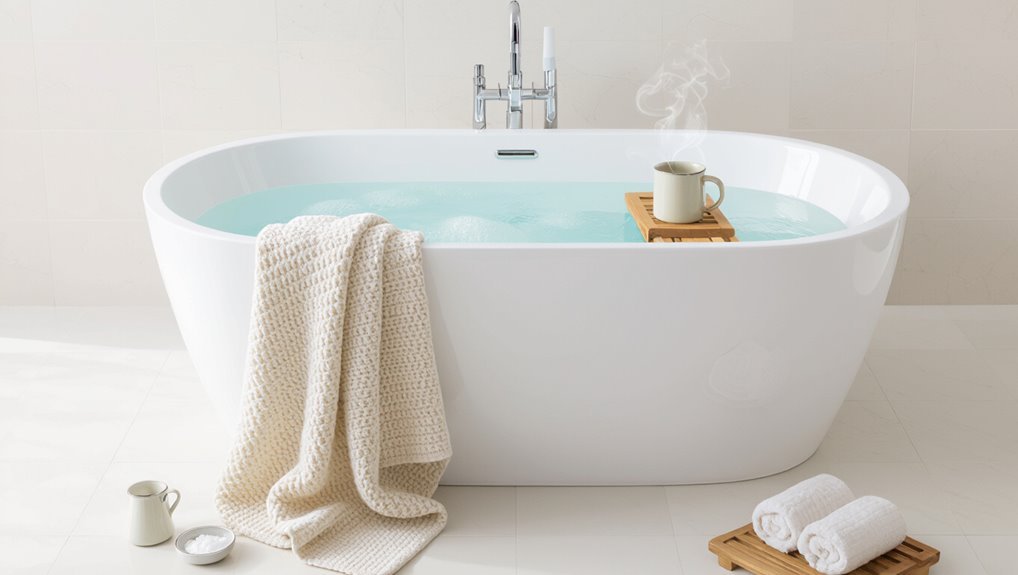
The quickest ways to keep a bath warm are immediate, high-impact actions like covering the tub, adding a lid or shower curtain, and topping up with hot water.
Passive methods—insulation, preheating the tub, and minimizing drafts—work best for longer soaks without intervention.
Active methods—recirculating heaters or immersion heaters—are appropriate when sustained warmth is needed or when frequent temperature boosts are required.
Immediate, high-impact actions to extend bath temperature
Act quickly: raising the water temperature, adding hot water periodically, and covering exposed surface area produce the largest immediate gains in bath warmth.
The guide explains how to keep a bath warm by directing hot taps, using a small kettle for top-ups, draping a towel or lid over the bath, and minimizing drafts.
These actions yield rapid, measurable temperature retention.
When to use passive vs. active warming methods
Choose passive methods—insulation, covers, and minimizing drafts—when steady, low-effort warmth is desired, and opt for active measures—adding hot water, using a kettle, or a portable heater—when rapid temperature recovery or higher heat is needed.
Passive suits long soaks and energy conservation; active fits brief dips, quick reheats, or cold bathrooms.
Combine both for balanced comfort and efficiency.
How Bath Heat Loss Happens: The Basics
Heat leaves a filled tub through conduction to the tub and floor, convection with surrounding air, thermal radiation, and especially evaporation from the water surface.
The rate of that heat loss depends on water volume, the temperature difference with the room, the tub’s material and insulation, and how much body heat the bather contributes or removes.
Understanding these mechanisms clarifies which measures—like increasing volume, insulating the tub, warming the room, or limiting exposed surface—most effectively slow cooling.
Heat transfer mechanisms in a filled tub (conduction, convection, radiation, evaporation)
When a filled tub loses warmth, four physical processes—conduction, convection, radiation, and evaporation—operate together to transfer thermal energy from the water to the surrounding environment.
Conductive loss occurs through contact with the tub and air; convective currents redistribute heat within the water and toward surfaces.
Radiation emits infrared to surroundings; evaporation removes latent heat at the surface, accelerating cooling.
Factors that affect bath temperature (water volume, ambient temperature, tub material, user heat loss)
Several key factors determine how quickly a bath cools: the water volume sets the thermal mass, ambient air and bathroom surfaces control the external temperature gradient, tub material and thickness influence conductive losses, and the bather’s body exchanges heat with the water and increases evaporative loss at the surface.
Smaller volumes cool faster; colder, drafty rooms hasten loss; metal tubs conduct away heat quicker; movement and exposed skin boost evaporation.
Preparing the Perfect Warm Bath
The guide recommends starting with water at a slightly higher temperature than desired and checking it with a reliable waterproof thermometer.
It explains that filling the tub to a level that covers most of the body while minimizing exposed surface area preserves heat longer.
It also notes that warming the bathroom and briefly heating the tub surface before filling reduces initial heat loss.
Ideal starting water temperature and how to measure it
How warm should the water be to start a relaxing bath? Ideal starting temperature typically ranges 37–39°C (98–102°F) for comfort and safety.
Use a waterproof digital thermometer or an instant-read bath thermometer placed at mid-depth; wait a minute for stabilization.
Adjust slightly for personal preference or sensitivity—lower for children, higher for adults—then begin filling carefully to maintain that baseline.
How much water to fill for maximum heat retention
Although bathtub size and material influence heat loss, filling to a level that submerges the bather’s torso while leaving enough room to prevent overflow offers the best compromise between warmth and safety; this maximizes body contact area and reduces exposed surface cooling.
Minimal air gaps and covering shoulders when possible retain heat. Avoid overfilling, which cools more water and increases refill need, lowering overall efficiency.
Pre-warming the bathroom and tub surface
After filling the tub to the ideal level, attention shifts to warming the room and the tub surface to reduce conductive and convective heat loss once the bather enters.
Pre-warm with a short burst of hot air from a heater or towel radiator, run hot water over the tub rim, and use warmed towels or a bathmat.
These measures minimize initial chill and preserve bath temperature.
12 Practical Ways to Keep a Bath Warm
Practical measures can considerably reduce heat loss and prolong a comfortable bath without constant reheating.
Simple additions—covers, insulating wraps, and heat-retaining items—work together to keep water warm while minimizing effort. Attention to room envelopes, such as keeping doors and windows closed, further preserves temperature.
- Use a fitted bath lid or cover to trap heat.
- Add a thermal blanket or towel and insulate the tub with a bath wrap or foam cover.
- Use heat-retaining items safely (e.g., hot stones) and keep the bathroom door and windows closed.
Use a fitted bath lid or cover
A fitted bath lid or cover seals the water surface, cutting convective and evaporative heat loss to keep a bath warmer for longer.
Designed to fit snugly, it minimizes drafts and maintains temperature without chemical additives.
Lightweight, rigid, or roll-up designs suit different tubs.
Removing the lid when entering prevents splashing; replacing it during breaks preserves heat and reduces reheating frequency.
Add a thermal blanket or towel over the water
Drape a thermal blanket or thick towel across the water surface to reduce heat loss by evaporation and radiation.
A lightweight, quick-drying layer limits airflow and preserves warmth without blocking taps.
Use a clean, absorbent fabric sized to cover most of the tub; periodically lift to stir or add hot water.
Remove before entering to prevent soaking and slipping hazards.
Insulate the tub with a bath wrap or foam cover
After covering the water surface to slow evaporation, insulating the tub itself further reduces heat loss by protecting its walls and base from colder air and fixtures.
A fitted foam liner or quilted bath wrap clamps or adheres to the exterior, creating a thermal barrier.
Lightweight, water-resistant materials minimize condensation and mold risk.
Properly sized insulation preserves heat without obstructing drains or taps.
Use hot stones or heat-retaining bath items safely
Place hot stones or heat-retaining items around and in the bath to extend warmth, but prioritize safe temperatures, stable placement, and materials designed for water use to prevent burns, cracking, or contamination.
Use smooth, heat-treated stones or commercial thermal packs; preheat gradually, test with a thermometer, wrap items in cloth if needed, and avoid direct skin contact or porous materials that leach.
Keep the bathroom door and windows closed
While insulating the tub itself helps retain heat, preventing drafts in the room is equally important.
Closing the bathroom door and all windows reduces cold air intrusion and limits convective heat loss. Check for gaps around frames and use weatherstripping or a simple draft snake at the door bottom.
Minimizing airflow stabilizes ambient temperature, preserving bath warmth longer without active heating.
Preheat the room with a space heater or towel warmer
If the bathroom is warmed before the bath begins, the water will lose heat more slowly and the overall experience feels more comfortable.
A compact space heater or electric towel warmer raises room temperature and preheats linens, reducing heat loss from water and skin.
Position devices safely away from water, follow manufacturer instructions, and allow a few minutes to reach a steady, comfortable warmth.
Add small amounts of hot water periodically
Topping up the tub with small amounts of hot water at intervals helps maintain temperature without shocking the bather or wasting energy.
A pitcher or kettle poured gently near the drain mixes gradually, restoring warmth where heat loss is greatest.
Timed, modest additions avoid drastic temperature swings and reduce overall reheating.
This method is simple, controlled, and complements insulation strategies to extend soak time.
Use a bathtub heat exchanger or in-line heater
Install a bathtub heat exchanger or in-line heater to maintain temperature continuously without manual topping-up.
These devices circulate water through a compact heat exchanger or electric inline element, restoring lost heat while preserving circulation. They allow precise temperature control, reduce water waste, and extend soak time.
Professional installation and appropriate flow rates guarantee safety, efficiency, and compatibility with existing plumbing and water heaters.
Choose the right tub material and liners
Because different materials retain and radiate heat differently, selecting the right tub shell and using insulating liners can greatly extend soak time and reduce reheating.
Acrylic and cast iron hold heat well; stone or concrete radiate slowly but feel cooler.
Add a fitted foam or neoprene liner beneath the tub or an interior thermal sleeve to slow conductive loss and preserve water temperature longer.
Reduce evaporation with an oil or bath balm
Add a thin layer of bath oil or balm to the water to form a surface film that slows evaporation and helps retain heat.
This barrier reduces convective cooling and prolongs warmth without altering water temperature.
Choose lightweight, non-staining formulations and use sparingly to avoid slippery surfaces.
Rinse the tub after draining to prevent residue buildup and maintain safe, clean bathing conditions.
Use double-layer towels and robe for immediate warmth after soaking
After applying an oil or balm to slow evaporation, the next simple step is to prepare immediate warming layers for when the bather exits the tub.
Two plush towels layered—one to blot gently, another to wrap—trap residual heat. A pre-warmed robe completes the system, minimizing heat loss and shivering.
This quick shift preserves body warmth and prolongs post-soak comfort efficiently.
Schedule shorter, hotter top-up soaks instead of one long cool soak
Break the soak into several shorter, hotter top-ups rather than one prolonged lukewarm bath.
The bather exits briefly, towels dry exposed skin, then returns to add hotter water, restoring temperature and comfort.
This cyclical pattern conserves energy compared with continuous reheating, reduces time in tepid water, and maintains desired warmth without overfilling.
Timing and modest additions guarantee safety and efficiency.
Step-by-Step Guide to Applying Multiple Methods Safely
The text outlines a clear sequence for preparing the bath, maintaining heat, and revitalizing temperature as needed.
It includes a concise safety checklist for adding hot water or using supplemental heaters.
Practical tips explain how to top up without risking scalding.
Sequence to prepare, maintain, and refresh bath heat
Plan a clear sequence before entering the tub so each step—preheat, maintain, and refresh—flows logically and minimizes heat loss.
First, preheat room and water, layering towels or a lid.
Then, maintain temperature with insulating covers and timed stirring or circulation.
Finally, refresh discreetly with brief hot-water additions or warmed stones.
Follow the sequence to conserve warmth efficiently.
Safety checklist for adding hot water or using heaters
Several precautions guarantee safe addition of hot water or operation of auxiliary heaters during a bath: confirm appliance certification and dry-condition suitability, verify temperature settings and maximum safe limits, keep controls and cords away from water, use a thermometer to monitor tub temperature, add hot water in small increments while stirring to avoid scalds, and never leave heating devices unattended or within reach of children or pets.
Follow grounding, GFCI use, secure placement, ventilation, and inspection routines.
How to avoid scalding while topping up
Start by evaluating water temperature and sources before adding any hot water, since careful measurement and controlled increments are the foundation of scald prevention.
Use a reliable thermometer, add hot water slowly and mix thoroughly, and keep hands clear.
Consider pre-mixing in a separate container, test with an elbow, set faucet limits or anti-scald devices, and communicate with others in the bathroom.
Comparison of Common Heat-Retention Solutions
A concise comparison of common heat-retention solutions highlights differences in effectiveness, cost, ease of use, and safety to guide appropriate selection. A simple table below summarizes relative performance for a bath lid, insulation wrap, and in-line heater. Recommendations follow from the trade-offs shown and typical user needs.
| Solution | Strength | Best use case |
|---|---|---|
| Bath lid | Low cost, good at reducing evaporative loss | Short soaks in small tubs |
| Insulation wrap | Moderate cost, high retention | Longer soaks, energy-conscious users |
| In-line heater | High effectiveness, higher cost/safety needs | Extended baths or continuous temperature control |
Effectiveness, cost, ease of use, safety (bath lid vs. insulation wrap vs. in-line heater)
Comparing a bath lid, an insulation wrap, and an in-line heater reveals distinct trade-offs in heat retention, upfront and operating costs, user effort, and safety considerations.
A lid is cheap, low-effort, moderate retention, minimal hazard.
An insulation wrap improves retention, moderate cost and installation effort, low risk if waterproofed.
An in-line heater offers best warmth, higher cost, continuous energy use, and greater safety requirements.
Recommended use cases for each solution
With the trade-offs in retention, cost, effort, and safety outlined previously, recommended use cases emerge for each solution based on user priorities and bathing contexts.
A fitted bath lid suits quick soaks and households prioritizing safety and low effort.
Insulation wraps suit longer soaks and budget-conscious users.
In-line heaters suit frequent long baths, colder climates, or those valuing precise temperature control despite higher cost.
Products and Materials That Help Retain Heat
The discussion turns to specific products and materials that improve bath heat retention, starting with practical features to seek in covers, wraps, and lids such as insulation thickness, fit, and water resistance.
It then compares tub materials—cast iron, stone, acrylic—and their relative thermal performance.
Finally, it highlights useful small appliances and accessories like insulated covers, thermal blankets, and compact water heaters that extend soak time.
Features to look for in bath covers, wraps, and lids
An effective bath cover, wrap, or lid should combine insulating materials, a tight seal, and durable construction to minimize heat loss.
Look for closed-cell foam or reflective foil layers, waterproof outer fabrics, and reinforced edges.
Secure fastening—elastic hems, Velcro, or clips—prevents gaps.
Lightweight rigidity aids handling.
Machine-washable components and mildew-resistant coatings extend lifespan and maintain performance.
Best tub materials for thermal retention
Having chosen effective covers and seals, attention turns to the tub itself: material and construction greatly influence how long bathwater stays warm.
Cast iron and stone-retaining composites offer high thermal mass, slowing cooling. Acrylic with thick insulation and reinforced walls performs well and is lighter.
Fiberglass cools faster.
Surface finish and thickness, plus integrated insulation, determine practical heat retention more than aesthetic choice.
Recommended small appliances and accessories
While not as substantial as tub construction, small appliances and targeted accessories play an outsized role in preserving bath temperature: insulated covers, floating thermal blankets, electric tub heaters, and high-R-value bath pillows or wraps reduce surface heat loss and air exchange, while well-sealed drain plugs and foam gap fillers limit convective cooling around fixtures.
Additional items include heat-retaining faucet covers, insulated robes, and portable steam-catchment lids.
Mistakes That Cool Your Bath Faster and How to Avoid Them
Common mistakes that cause a bath to cool quickly include leaving doors or windows open and creating drafts, misjudging water level by overfilling or underfilling, and adding excessive bath products that increase evaporation.
Each error reduces retained heat in a different way and can be adjusted with simple habits. The following sections explain how to avoid these pitfalls and maintain temperature longer.
Opening doors/windows and drafts
A single open window or ajar door can erase minutes of warmth from a bath by allowing cold air to flow directly across the tub; drafts lower water temperature faster than slow conductive or evaporative losses and often catch bather attention only after the room feels noticeably cooler.
Close windows and doors, seal gaps with weatherstrips or towels, and direct exhaust fans away from the tub to reduce airflow.
Overfilling vs. underfilling trade-offs
Although filling a tub to the brim can create an initially steamy, immersive soak, it also increases heat loss through splashing, faster conduction to the colder tub walls, and greater evaporation once disturbed; conversely, underfilling reduces these losses but risks insufficient coverage for comfortable immersion and forces hotter water changes more often.
Ideal fill balances warmth retention with comfort: leave modest headspace, preheat the tub, and use a cover between refills.
Using too many additives that increase evaporation
Adding multiple bath additives—oils, salts, foaming agents, and alcohol-based fragrances—can noticeably accelerate evaporation and cool the water faster.
Multiple volatile ingredients increase surface vapor pressure and reduce surface tension, speeding heat loss.
To maintain temperature, limit fragranced or alcohol-containing products, use single-purpose salts or oils sparingly, and add nonvolatile moisturizing agents.
Rinse residue lightly after soaking to preserve warmth longer.
Energy and Cost Considerations
The section compares energy-efficient methods (insulation, lids, thermostatic controls) with energy-intensive options (continuous heating, repeated top-ups) to show their relative impacts.
It provides simple cost estimates for common solutions so readers can weigh upfront expenses against long-term savings.
It also lists eco-friendly, low-cost tips for keeping baths warm without high energy use.
Energy-efficient methods vs. energy-intensive options
When weighing ways to keep a bath warm, homeowners should contrast energy-efficient approaches—such as insulating the tub, using a tight-fitting cover, or preheating the room with a timer—to more energy-intensive options like running continuous heating or repeatedly topping up hot water.
The former reduce heat loss and operating costs, while the latter raise energy use and utility bills despite offering quicker temperature recovery.
Efficient choices prioritize retained heat and lower consumption.
Cost estimate examples for common solutions
Cost comparisons clarify trade-offs between upfront expenses and ongoing energy outlays for common bath-warming measures.
A basic insulated cover costs $10–$30 with negligible running cost.
A water heater boost (short refill) adds $0.50–$2 per use.
Portable electric heater or blanket runs $20–$100 purchase and $0.10–$0.50 per hour.
Professional tub insulation may cost $100–$400.
Eco-friendly tips to keep baths warm without high energy use
Moving from cost comparisons to practical choices, readers can prioritize low-energy strategies that balance upfront expense with long-term savings.
Insulation of the tub, using a fitted bath cover, and preheating towels reduce heat loss. Shorter, hotter fills minimize standing time.
Choosing solar-heated or high-efficiency water heaters, fixing drafts, and reusing warm rinse water conserve energy while maintaining comfort and lowering bills.
Troubleshooting: Why Your Bath Still Cools Quickly
Common causes of a bath cooling quickly include poor insulation, high room drafts, incorrect water temperature, and heat loss through the tub surface.
Each diagnosis suggests straightforward remedies such as improving bathroom sealing, preheating the tub, using a cover or thermal blanket, and topping up with hotter water as needed.
The following section outlines how to identify the specific issue and apply the quick fix that fits.
Diagnosing common causes of rapid cooling
Several factors can cause bath water to lose heat quickly, and diagnosing them requires a methodical check of environment, fixtures, and user behavior.
Assess room drafts, ventilation fan operation, and window or door gaps.
Inspect tub material, drain condition, and exposed plumbing for heat loss.
Note water temperature at fill versus after ten minutes and observe occupant movement or frequent additions of cold water.
Quick fixes for each diagnosis
After identifying the likely sources of heat loss—room drafts, ventilation, tub material, exposed plumbing, drain issues, or user habits—the next step is to apply targeted fixes that are quick to implement and effective.
Seal drafts, close vents or use exhaust intermittently, insulate or add a liner to the tub, wrap visible pipes, install a drain cover, and adjust refill temperature or minimize cooling behaviors during the soak.
Practical Routines and Schedules for Longer Soaks
The section outlines concise pre-bath, during-bath, and post-bath routines that help maintain water temperature and extend soak time.
It also covers scheduling strategies and quick adjustments for couples or multiple users to minimize heat loss between turnovers.
Practical tips focus on timing, simple equipment use, and coordinated habits to keep baths warm without extra energy waste.
Pre-bath, during-bath, and post-bath routines to maximize warmth
When planning a long soak, a consistent routine that covers preparation, conduct, and recovery preserves heat and comfort; thoughtful sequencing—warming the room, filling the tub at the right temperature, pacing time in the water, and drying and insulating the body afterward—minimizes heat loss and extends enjoyment.
Before bathing, heat space and pre-warm towels.
During, top up with hot water and limit drafts.
After, towel-dry, robe, and rest.
Tips for couples or multiple users sharing a bath
If sharing a soak, coordinating timing and simple roles keeps the water warm and the experience smooth: one person can fill and top up the tub while the other prepares towels and warms the room.
Then users stagger immersion or use brief exits to reheat between turns. They communicate preferred temperatures, limit splashing, consider insulating covers between uses, and schedule swaps to minimize heat loss.
Safety and Health Notes When Maintaining Bath Temperature
Guidance on safe water temperatures and sensible exposure times frames the discussion of maintaining a warm bath.
The text will outline risks of overheating, simple methods for monitoring body temperature and symptoms, and how those risks change for children, older adults, and pregnant bathers.
Practical precautions and recommended temperature ranges for each group will be provided.
Safe water temperatures and exposure times
How hot should the bath be to remain comfortable without causing harm?
Recommended tap temperature is 37–40°C (98–104°F) for adults; lower for children, elderly, or those with medical conditions.
Limit continuous soak times to 15–30 minutes to avoid lightheadedness or skin dryness.
Always test water before entering and discontinue if dizziness, numbness, or excessive discomfort occurs.
Risks of overheating and how to monitor body temperature
After setting a safe tap temperature and limiting soak time, attention should turn to the risks of overheating and methods for monitoring body temperature during a bath.
Elevated core temperature can cause dizziness, fainting, and heat stress. Bathers should notice symptoms, exit if unwell, and use a waterproof digital thermometer or wrist/ear sensor when needed.
Hydration and cool breaks help control warmth.
Special considerations for children, elderly, and pregnant bathers
Special populations such as children, older adults, and pregnant people require tighter control of bath temperature and closer observation because their thermoregulation, circulation, and awareness of discomfort differ from healthy adults.
Maintain lower target temperatures, limit soak duration, supervise infants and those with cognitive impairment, and avoid sudden temperature shifts.
Consult healthcare providers for pregnancy or cardiovascular conditions and discontinue the bath if dizziness, paleness, or rapid heartbeat occur.
Quick Reference Checklist to Keep a Bath Warm
A concise one-page checklist helps guarantee a bath stays comfortably warm from preparation through soaking.
It lists essential steps and quick checks so the bather can act efficiently without interrupting relaxation. The checklist is designed as a practical reference to follow before and during the soak.
- Preheat tub and room, test water temp, and insulate edges.
- Use lids, covers, or a floating blanket and top up with hot water as needed.
- Monitor time and temperature, and finish with a warm towel or wrap.
One-page action list to prepare and maintain a warm soak
Prepare a concise, step-by-step checklist that outlines actions to get a bath hot quickly and keep it that way without trial-and-error.
Include:
- preheat bathroom,
- run hot tap at full flow,
- add water to desired level and temperature,
- cover with insulated lid or towel,
- close door and vents,
- add hot water top-ups every 10–15 minutes,
- test temperature with thermometer,
- drain and dry after use.
Conclusion
Keeping a bath cozy calls for calm, clever choices. By combining covered containers, circulating warmth, and steady supplementary heat, a bather can sustain soothing steam and slow surface chill. Simple steps — sealing the spill, staggering refills, snuggling with insulating wraps — show sensible savings of temperature. With mindful maintenance and measured methods, a leisurely soak stays substantially warmer, safer, and more satisfying, summoning serene solace through smart, sustained strategies.