How to Unclog a Sewer Line From a Toilet: Step-By-Step Fixes for Homeowners
To unclog a sewer line from a toilet, first stop flushing and shut off the toilet water supply. Put on gloves and ventilate the area. Check if the backup affects just the toilet or multiple fixtures to identify if it’s a local clog or a sewer-line issue. Use a flange plunger or a toilet auger to clear the clog through the flange; only remove the toilet bowl if necessary and safe. Clean and sanitize the area afterwards. If the clog persists or affects multiple fixtures, it’s best to call a plumber. Additional steps cover tools, prevention, costs, and when to seek professional help.
What to do immediately when a toilet indicates a sewer line clog
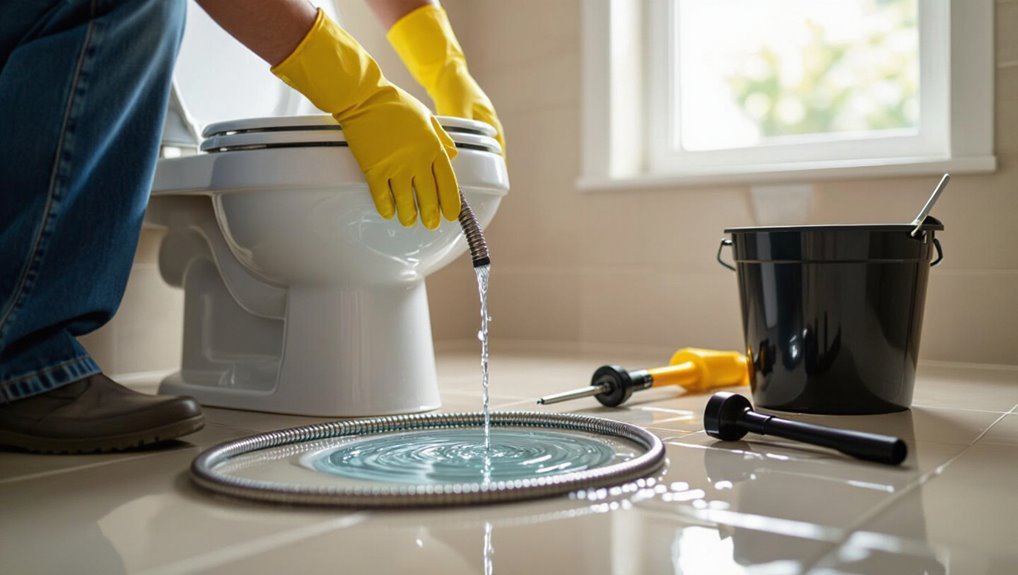
When a toilet signals a sewer line clog, the first actions focus on safety and hygiene: wear gloves, avoid direct contact with wastewater, and ventilate the area.
Next, implement quick temporary measures to prevent overflow, such as turning off the toilet’s water supply and using a bucket to catch backflow.
If sewage keeps rising, emits strong sewer gas, or affects multiple fixtures, shut off the main water and evacuate until a professional arrives.
Safety and hygiene precautions before any work
If a toilet begins to back up or emit sewage odors, the person on site should immediately stop flushing and cut off water to the bowl to prevent overflow.
They should don gloves, eye protection, and a mask, ventilate the area, and keep children and pets away.
Before attempting how to unclog sewer line from toilet, gather disinfectant, absorbent materials, and proper tools; avoid skin contact.
Quick temporary fixes to prevent overflow
Act quickly to limit damage: stop using water in the affected bathroom and close the shutoff valve to the toilet to prevent further filling of the bowl.
Place absorbent towels or a tray around the base, mop up minor spills, and set a bucket under slow leaks.
Remove excess water from the bowl with a small container.
Call for professional help if backups persist.
Signs that call for shutting off water or evacuating area
Although a slow gurgle or minor backup can seem manageable, certain signs require immediate action: foul gas odors, sewage rising above the bowl, water backing into sinks or tubs, visible sewage leaks, or multiple fixtures backing up simultaneously.
In those cases, shut off the main water supply, evacuate occupants from affected areas, ventilate the space, and contact a professional plumber or emergency services promptly.
How to determine if the toilet clog is a sewer line problem or a simple blockage
A clear distinction between a sewer line obstruction and a localized toilet trap or drain clog can be made by observing symptoms, running simple tests, and noting which fixtures are affected.
Flushing the toilet while checking nearby sinks, tubs, and basement drains for gurgling, slow drainage, or backups helps pinpoint whether the issue is confined or systemic.
When multiple fixtures back up or water rises in lower drains, the pattern typically indicates a sewer line problem rather than a single-fixture blockage.
Symptoms of a sewer line clog versus a toilet trap or drain clog
How can one tell whether a toilet problem is a localized trap or drain clog versus a deeper sewer line issue?
Observable signs: slow draining only in one fixture and gurgling limited to that toilet suggest a trap or local clog.
Multiple fixtures backing up, persistent sewage odors, wet patches in yard, and sewage bubbling indicate a sewer line blockage requiring professional attention.
Tests to run from the toilet and other fixtures (bathtub, sinks)
Where should testing begin when a toilet seems clogged: with simple fixture-to-fixture checks that isolate a local trap from a main sewer blockage.
Flush the toilet while running nearby sinks or the tub; observe simultaneous backups, slow drains, or gurgling.
Run isolated sink and tub tests, note water levels, and use dye or food coloring to track flow.
Record results before calling a plumber.
When multiple fixtures back up: interpreting the pattern
Start by mapping which fixtures show symptoms and how they behave: simultaneous backups or slow draining across multiple toilets, sinks, and tubs usually point to a sewer-line obstruction, while a single slow or gurgling fixture often indicates a localized trap or partial clog.
Note timing (after rainfall or appliance use), odor presence, and whether external cleanouts show standing waste; use pattern plus tests to decide next steps.
Tools and materials needed to clear a sewer line from a toilet
The section outlines the basic homeowner tools—plunger, toilet auger, protective gloves, and a bucket—useful for initial attempts to clear a sewer-line clog.
It also notes professional-grade options often rented or hired, such as long drain snakes and hydro-jet alternatives, for more serious obstructions.
Finally, it reviews chemical and enzyme-based cleaners, highlighting which formulations are effective yet safe for pipes and septic systems.
Essential homeowner tools (plunger, auger, gloves, bucket)
Prepare a small kit of reliable tools before attempting to clear a sewer line from a toilet: a flange-style plunger for sealing the bowl, a toilet auger (closet auger) long enough to reach the trap and short section of the drain, heavy-duty rubber gloves to protect hands from waste and chemicals, and a sturdy bucket for catching water or removing debris.
Additional items include disposable rags and a flashlight.
Professional-grade tools you might rent (drain snake, hydro-jet alternatives)
Renting professional-grade equipment can make the difference between a temporary fix and a fully cleared sewer line. Homeowners may rent powered drain snakes (electric or gas), drum augers, and compact sewer cameras for inspection.
For tough blockages, low-pressure water jetters or piston-style jetters provide alternatives to full hydro-jetting. Rental centers often include safety gear and usage guidance to reduce risk.
Chemicals and enzyme cleaners what’s safe and effective
After discussing rental options for mechanical clearing, attention shifts to chemical and enzymatic approaches that can safely complement or replace tools for certain clogs.
Enzyme cleaners digest organic buildup over time and are septic-safe; use per label and allow dwell time.
Avoid mixing drain cleaners, never pour strong acids or lye into toilets, and consult professionals for persistent or mixed-material blockages.
Step-by-step: Clearing a sewer line clog starting at the toilet
Before beginning, the area should be prepared and surfaces protected to contain spills and simplify cleanup.
First apply a flange plunger correctly, then use a closet auger if plunging fails; if access requires it, remove the toilet following safety steps.
Finally, feed a long drain snake into the sewer lateral to clear deeper blockages.
Preparing the area and protecting surfaces
Clearing the area around the toilet and protecting adjacent surfaces is essential to prevent water damage and contain debris when tackling a sewer-line clog.
Remove rugs and personal items, open windows for ventilation, and place absorbent towels or plastic sheeting around the base.
Wear gloves and eye protection.
Keep a bucket and disposable rags nearby for spill containment and quick cleanup.
Step 1 Use a flange plunger correctly for toilet clogs
Position the flange plunger so its extended rubber collar fits snugly into the toilet bowl’s drain opening, creating a tight seal over the outlet.
With steady downward pressure, push then pull sharply without breaking the seal.
Repeat 8–12 times, checking water movement.
If water drains freely and levels normalize, flush once cautiously.
Stop if overflow risk appears.
Step 2 Use a closet auger (toilet snake) safely and effectively
Reach for a closet auger when the plunger fails to restore flow: this specialized snake is designed to navigate the toilet’s curved trap and break up or retrieve blockages without damaging porcelain.
Wear gloves, insert the coiled end gently, crank the handle clockwise to advance, feel for resistance, then retract while maintaining tension.
Sanitize the auger and surrounding area after use.
Step 3 When and how to remove the toilet for access
If the closet auger cannot reach or resolve the blockage, removal of the toilet may be required to access the sewer line directly.
Turn off water, drain the tank and bowl, disconnect the supply line, and unbolt the flange.
Lift straight up with assistance, set the fixture aside on cardboard, and inspect the closet flange and trap for visible obstructions before proceeding.
Step 4 Feeding a long drain snake into the sewer lateral
Begin by inserting the long drain snake head-first into the toilet flange opening, keeping the cable taut to prevent kinking as it advances into the sewer lateral.
Rotate the drum slowly while feeding; pause if resistance is met. Work steadily, alternating gentle push and pull to break obstructions.
Mark depth periodically and avoid forcing past firm resistance to prevent pipe damage.
Step 5 Flushing and verifying successful clearing
After retracting the drain snake, the technician runs multiple test flushes to confirm the sewer lateral is clear and functioning normally.
Each flush is observed for smooth bowl drainage, proper refill, and absence of gurgling or slow draining nearby fixtures.
If issues persist, additional snaking or a camera inspection is scheduled.
Successful verification documents normal flow and readiness for restoration.
Cleanup and sanitizing after the repair
Once the obstruction is confirmed cleared, the technician proceeds to cleanup and sanitizing to eliminate biohazards and restore a safe environment.
Surfaces, tools, and affected fixtures are scrubbed with EPA-registered disinfectants; contaminated materials are bagged and removed.
Protective gear is inspected and laundered or disposed.
Airing and odor control follow.
Documentation of actions and client guidance on monitoring complete the service.
When to escalate: calling a professional plumber or sewer specialist
If repeated backups, sewage odors, multiple fixtures backing up, or visible pipe damage occur, professional intervention is warranted.
A plumber will typically perform diagnostic steps such as a camera inspection and use location tools to pinpoint the blockage.
Common professional remedies include hydro-jetting to clear roots and debris, targeted pipe repair, or excavation and replacement when damage is severe.
Clear indicators you need professional help
Recognize when a blockage surpasses homeowner remedies: persistent backups despite plunging and snaking, sewage odors that intensify or return quickly, water rising in multiple fixtures at once, or slow drainage throughout the house all signal a deeper sewer-line problem.
Additional indicators: sewage backing into drains, gurgling noises, soggy yard or sinkholes, and repeated clogs within days—prompt professional intervention is warranted.
What to expect from a plumber’s diagnostic process (camera inspection, location)
When symptoms such as repeated backups, widespread slow drains, or sewage in the yard point beyond simple DIY fixes, a licensed plumber will begin with a methodical diagnostic process to pinpoint the problem and its location.
They typically assess access points, run a sewer camera to inspect pipe condition and blockages, mark trouble spots aboveground, and provide a clear report with options and estimated costs before proceeding.
Typical professional solutions (hydro-jetting, pipe repair, excavation)
Professionals address sewer-line obstructions with targeted treatments chosen after inspection: hydro-jetting blasts away grease, roots, and scale with high-pressure water; spot pipe repair or relining fixes cracks and collapsed sections without full replacement; and excavation or trenchless replacement becomes necessary for severely damaged, offset, or collapsed mains.
Technicians recommend solutions based on camera findings, cost, longevity, and site access, escalating when backups persist or structural failure appears.
Common causes of sewer line clogs and how they affect repair approach
Common sewer line blockages stem from distinct physical and material failures that determine the proper repair method. Identifying whether roots, structural sagging, hardened grease and wipes, or failing jointed pipes are present guides the choice between cleaning, targeted excavation, or full pipe replacement.
Accurate diagnosis reduces repeat clogging and limits unnecessary work.
- Tree roots intruding through joints, often requiring root cutting and chemical treatment or pipe lining/replacement.
- Pipe bellies, sags, or partial collapses that trap solids and typically need excavation and regrading or relining.
- Accumulation of grease, wipes, and other non-flushables forming stubborn obstructions best addressed with hydrojetting and preventative maintenance.
- Bellied or separated joints allowing debris buildup and infiltration, which may be fixed by sectional repair or relining.
- Old clay or cast-iron pipes prone to corrosion and breaks, frequently necessitating full replacement or trenchless pipe-bursting.
Tree roots intrusion
Tree roots are a frequent and insidious cause of sewer line blockages, growing into joints and cracks in older clay or concrete pipes and gradually enlarging openings as they seek moisture and nutrients.
Roots can form dense mats that restrict flow, cause backups, and damage pipe structure.
Repair approaches favor mechanical root removal, targeted chemical treatments, relining, or section replacement depending on extent and recurrence risk.
Pipe bellies, sagging, or collapse
Inspecting for pipe bellies, sagging, or collapse reveals situations where a section of sewer pipe has lost slope or structural integrity, creating low spots that trap solids and cause chronic backups.
These defects result from soil settling, improper installation, or material failure.
Diagnosis uses camera inspection and level checks.
Repairs range from spot excavation and realignment to pipe replacement or trenchless relining, depending on severity.
Accumulation of grease, wipes, and non-flushables
Accumulation of grease, wipes, and other non-flushable items creates persistent obstructions by adhering to pipe walls and binding solids into dense mats that restrict flow.
These buildups often require mechanical removal—snaking, hydro-jetting, or augering—since chemical treatments prove ineffective.
Repair strategy emphasizes locating the blockage, protecting fixtures from backflow, and preventing recurrence through homeowner education and routine maintenance like grease disposal and disposal-only guidelines.
Bellied or separated joints and old clay/iron pipes
Bellied or separated joints and aging clay or cast-iron pipes undermine sewer flow by creating low spots, offsets, and shrinkage that trap solids and reduce hydraulic capacity.
These defects often require camera inspection to confirm. Small bellies may be rodded or hydroflushed, but extensive collapse, root intrusion, or corrosion typically mandates sectional repair or full replacement with modern PVC.
Trenchless options are preferred when feasible.
Preventive maintenance to avoid future sewer line clogs
Preventive maintenance focuses on habits and interventions that reduce the risk of sewer line blockages.
Key measures include proper flushing practices (and what not to flush), scheduled professional inspections with camera checks, and targeted root-control or trenchless repair options.
Installing backflow prevention devices and accessible cleanouts further protects the line and simplifies future service.
Proper flushing habits and what not to flush
Many homeowners can reduce the risk of sewer line clogs by adopting consistent flushing habits and knowing which items never belong in the toilet.
They should flush only human waste and toilet paper, avoid bulky paper products, wipes, feminine hygiene items, dental floss, cotton balls, grease, and medications.
Regularly using appropriate amounts of toilet paper and disposing of other items in the trash prevents buildup and blockages.
Regular professional inspections and camera checks
After adopting proper flushing habits, homeowners should schedule regular professional inspections and camera checks to catch developing problems before they escalate.
Licensed technicians perform visual and video assessments to identify blockages, sediment build-up, pipe corrosion, or joint failures.
Timely diagnostics enable targeted cleaning, preventative maintenance, and documented condition reports, reducing emergency repairs, extending pipe lifespan, and informing necessary future interventions.
Root-control strategies and trenchless repair options
Because tree roots are a leading cause of sewer blockages, homeowners should employ targeted root-control strategies and consider trenchless repair options to minimize disruption and prevent recurrence.
Routine chemical or mechanical root removal, strategic tree relocation, and buffer planting reduce invasion risk.
Trenchless methods—pipe bursting or cured-in-place lining—repair damaged lines with minimal landscaping impact, restoring flow and deterring repeat intrusions.
Installing backflow prevention and cleanouts
While root-control and trenchless repairs address existing intrusions and structural damage, preventing future backups often relies on proper backflow prevention and strategically placed cleanouts.
Homeowners should install a backflow preventer at the sewer connection and add accessible cleanouts at key bends and yards.
Regular inspections, winterizing, and labeling cleanouts simplify maintenance and speed professional response, reducing clog recurrence and sewage damage.
Costs, timelines, and deciding between repair options
Costs, timelines, and expected durability shape the choice between DIY efforts and hiring a professional. The table below summarizes typical cost ranges, repair durations, and warranty/longevity notes for common approaches. Readers should weigh immediate expense against long-term performance when selecting a solution.
| Option | Key notes |
|---|---|
| DIY snaking / plunging | Low cost; short time (hours); no warranty, short-term fix |
| Professional snaking / hydro jetting | Moderate cost; same-day to 1–2 days; limited service guarantees |
| Trenchless lining (CIPP) | Higher cost; 1–3 days; long lifespan (10–50 years), manufacturer/installer warranty |
| Full excavation and pipe replacement | Highest cost; several days to a week+; permanent solution with contractor warranty |
Estimated cost ranges for DIY vs. professional fixes
A few clear factors determine whether a toilet-to-sewer clog is a quick DIY fix or requires a paid professional solution: severity of the blockage, location of the obstruction, homeowner skill level and tool availability, and any signs of sewer-line damage or recurring backups.
DIY costs often range $10–$150 for plungers, augers, or enzyme treatments.
Professional service typically costs $150–$1,200+ depending on inspection, snaking, or repairs.
Typical timelines for different repair methods
Knowing the likely expense helps inform how quickly a homeowner should expect results from various repair choices.
Small clogs cleared DIY with plungers or augers often resolve within hours.
Hydro-jetting or professional snaking typically requires a day.
Localized pipe repairs may take one to two days; pipe relining two to three days.
Full replacement can span several days to a week, depending on access.
Longevity and warranty considerations for each solution
While immediate expense and repair time influence choice, long-term durability and warranty terms are equally decisive when selecting a sewer-line solution.
Trench repairs often last decades with limited warranties; pipe lining offers 25–50 year guarantees but higher upfront cost. Spot repairs carry shorter lifespans.
Homeowners should compare manufacturer warranties, contractor guarantees, prorated terms, and potential exclusion clauses when deciding between options.
Troubleshooting checklist if clog reoccurs after attempting fixes
If a toilet clog returns after attempted fixes, one should re-test other fixtures and inspect the sewer cleanout to confirm system-wide backup versus a localized block.
Persistent issues, unusual noises, foul odors, or repeated slow drains may indicate hidden structural problems in the line.
Document test results, photos, and recent repairs to streamline next steps and the plumber’s assessment.
Re-testing multiple fixtures and cleanout inspection
After initial repairs, systematically re-test every fixture served by the affected line—toilets, sinks, showers and floor drains—to confirm flow has been restored and to isolate any remaining blockage.
Inspect the main cleanout: remove the cap carefully, check for slow drainage or backups, and note odors or visible debris.
Document findings, retry problematic fixtures, and determine whether professional camera inspection or further mechanical clearing is required.
Signs that indicate hidden structural problems
Once routine re-testing and cleanout checks fail to resolve recurring backups, attention should turn to signs that point beyond ordinary clogs toward hidden structural problems.
Look for persistent sewage odors, multiple fixtures backing up simultaneously, slow drains throughout the home, unexplained lawn sinkage or soggy patches, hairline foundation cracks near sewer runs, and sewage surfacing in cleanouts — all suggesting pipe collapse, intrusion, or severe misalignment.
Next steps and documentation to prepare for a plumber visit
Gather clear, concise information and evidence before calling a plumber to streamline diagnosis and reduce time on-site.
Note dates, times, and symptoms (gurgling, backups, slow drains). Record attempted remedies and their outcomes, take photos or video of standing water, odor, or visible damage, and identify access points and sewer cleanouts.
Provide property layout, recent work, and utility contact info for efficient assessment.
Conclusion
Homeowners confronting sewer-line toilet backups should act promptly to reduce damage, using basic tools or calling professionals when needed; about 10–20% of sewer backups stem from tree-root intrusion, underscoring the importance of preventive landscaping and routine inspections. Regular maintenance, mindful flushing habits, and timely professional assessment balance cost and risk, helping guarantee reliable plumbing and avoid costly emergency repairs down the line.