How to Find a Backflow Preventer: Step-by-Step Guide for Homeowners
To locate a backflow preventer in your home, start by following the main water service line from the meter to your house and outdoor systems. Look for it near the water meter, at the service entry in your basement or utility room, or along irrigation or pool lines. You’ll recognize it by a valve assembly with test cocks and a tag. During your inspection, check for signs of corrosion, leaks, or outdated test stickers. Follow these steps for a thorough inspection, compliance checks, and maintenance tips.
What a backflow preventer is and why it matters for homeowners
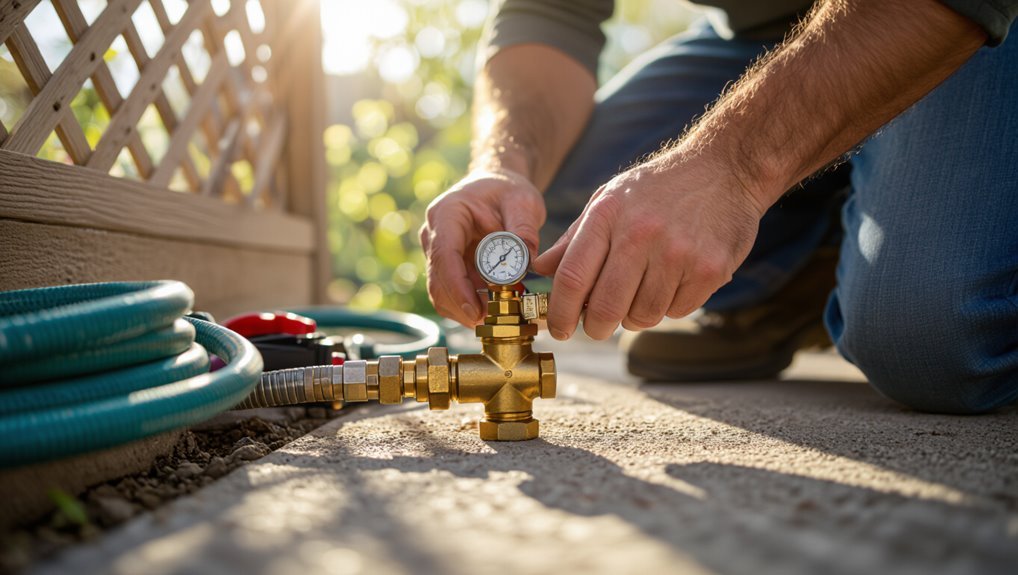
Backflow occurs when water in a home’s plumbing reverses direction, allowing contaminants from garden hoses, irrigation systems, or fixtures to enter the potable supply.
This can introduce bacteria, chemicals, and sediment that pose health hazards and can damage pipes and appliances.
To prevent these outcomes, homeowners commonly use devices such as double-check valves, reduced pressure zone (RPZ) assemblies, or pressure vacuum breakers (PVB) selected to match the installation and risk level.
How backflow happens in residential plumbing
Water in a home’s pipes can reverse direction when pressure drops or external pressure rises, allowing contaminated sources—like lawn irrigation, sewer lines, or stagnant fixtures—to enter the potable system.
Backflow occurs via backpressure or backsiphonage at fixtures, cross-connections, or irrigation ties.
Homeowners learning how to find backflow preventer should inspect service lines, meter pits, and irrigation connections for valves or assemblies designed to stop reversal.
Common health and property risks from backflow
When pressure reversals allow contaminated sources to enter a home’s plumbing, the consequences extend beyond discoloration or foul odors to real health and property hazards.
Contaminants can carry bacteria, viruses, and chemicals that cause illness. Corrosive or particulate-laden water damages fixtures, appliances, and pipework, increasing repair costs.
Structural damage and mold growth may follow from leaks or contaminated irrigation, posing long-term remediation needs.
Typical types of residential backflow preventers (double-check valve, RPZ, PVB)
A mechanical assembly installed at key plumbing points prevents contaminated or non-potable sources from reversing into a home’s potable supply. These devices are collectively called backflow preventers and are essential for protecting health and property.
Typical residential types include devices suited to varying hazards and installation needs:
- Double-check valve assemblies (general low-to-moderate hazard)
- Reduced pressure zone (RPZ) for high hazards
- Pressure vacuum breakers (PVB) for irrigation
- Check valves combined with meters
- Air gaps where feasible
How to identify whether your home needs a backflow preventer
Determining whether a home requires a backflow preventer begins with checking local plumbing codes and utility mandates, which often specify required devices for certain connections.
Particular systems such as irrigation lines, sprinkler systems, boilers, pools, and auxiliary water supplies commonly trigger protection requirements.
Homeowners can also look for signs of an installed device near the main water meter, service entry, or attached to outdoor spigots.
Local code and utility requirements to check
Because water systems and health codes vary by municipality, homeowners should first consult local plumbing codes and their water utility’s regulations to see if a backflow preventer is required.
Review municipal ordinances, utility service rules, required permits, inspection and testing schedules, and approved device types.
Confirm installation and certification obligations, penalties for noncompliance, and any rebate or assistance programs the utility offers.
Situations and appliances that typically require protection (sprinklers, boilers, irrigation, pools)
After checking local codes and utility rules, homeowners should assess specific fixtures and systems that commonly pose backflow risks.
Typical situations include systems with potential cross-connections or chemical contact. Evaluate each to decide if protection is required:
- Lawn irrigation and sprinkler systems
- Outdoor hose bibs with attachments
- Boilers and hydronic heating loops
- Swimming pools and spas
- Well systems and pressure tanks
Signs you might already have a device installed
How can a homeowner tell whether a backflow preventer is already present on the property?
Inspect near the main water shutoff, meter, irrigation valves, boiler and pool equipment for brass or iron assemblies with test cocks and levers.
Check utility records, past inspection tags, municipal maps, or ask a licensed plumber.
Visible signage, annual test stickers or external housings also indicate installation.
Where to physically locate a backflow preventer on your property
A homeowner checking for a backflow preventer should inspect typical indoor spots such as basements and utility rooms as well as common outdoor locations near the water meter, inside meter boxes, or at irrigation supply lines.
Tracing the main supply line from the street or meter often reveals the device’s placement.
Recognizable visual features—valve assemblies, test cocks, or a brass-bodied assembly—help distinguish different types of backflow devices.
Typical indoor locations (basement, utility room)
Basements and utility rooms are the most common indoor sites for installing a backflow preventer because they provide sheltered, accessible space near where the main water line enters the building.
Typically mounted on or near the main shutoff, they allow easy inspection, maintenance, and winter protection.
Placement favors clearances for valves and test cocks and convenient access for licensed testers and plumbers.
Common outdoor locations (near water meter, in meter box, at irrigation supply)
Indoor installations often give way to outdoor placements when the main supply, irrigation systems, or municipal connections are more accessible outside the building.
Backflow preventers commonly sit adjacent to the water meter, housed in a buried meter box, mounted on an exterior wall near the main shutoff, or installed at irrigation supply lines and valve assemblies.
Visibility varies by region and property layout.
How to trace the supply line to find the device
Start at the point where water enters the property—typically the meter, main shutoff, or where the supply pipe exits the foundation—and follow the pipe visually or by touch, noting changes in material, fittings, or buried conduit that indicate shifts to exterior routing; tracing inward from irrigation controllers, hose bibs, and exterior wall penetrations also helps pinpoint hidden backflow assemblies.
Proceed along obvious runs, check junctions, and inspect utility corridors, gardens, and garage walls where supply lines turn or branch.
Visual features to recognize different backflow devices
A homeowner or inspector can often spot a backflow preventer by its distinctive shape and placement: reduced-pressure assemblies resemble a compact metal box with two shutoff valves and test cocks.
Double-check valves appear as two cylindrical checks in series with accessible test ports.
Pressure vacuum breakers sit above the pipe with a noticeable vented cap.
Look where the supply line exits the building, near irrigation manifolds, beside water meters, or mounted on exterior walls or in shallow concrete pits.
Note any paired shutoff handles, brass test fittings, or protective cages that signal a backflow device.
- Check exterior walls and meter boxes
- Inspect irrigation manifolds
- Look for paired shutoff handles
- Identify brass test cocks
- Note protective cages or concrete pits
Step-by-step process to find and inspect a backflow preventer yourself
Before beginning, necessary tools and safety precautions should be assembled and the main water shutoff and meter located.
The inspector then traces the main line and branches to appliances, irrigation, and outdoor services while looking for any inline devices.
Any suspect unit should be identified by model and tag and given a brief visual inspection for obvious damage or missing components.
Tools and safety precautions before searching
Gather necessary tools and establish safety measures to reduce risk during the search and inspection of a backflow preventer.
The homeowner should prepare basic equipment, wear protective gear, and guarantee stable footing; avoid confined-space entry and electrical hazards.
Keep a phone nearby and work with a partner when possible.
- Gloves
- Safety glasses
- Flashlight
- Sturdy shoes
- Phone or radio
Step 1: Locate the main water shutoff and meter
First, locate the property’s main water shutoff and meter, since the backflow preventer is most commonly installed nearby. These components are typically found where the water service enters the building—either in a utility room, basement near the foundation wall, or in an exterior meter box by the street.
Note valve types, orientation, accessible clearances, and any visible fittings or assemblies that resemble a double-check or RPZ unit.
Step 2: Follow the main line and branch lines to appliances
Trace the main service line away from the meter and follow each branch toward fixtures and outdoor connections, pausing at tees and valves to look for installed backflow preventers or space where one could be mounted.
Inspect near water heaters, boilers, laundry, sinks, and supply risers for test cocks, unions, or unusual fittings.
Note pipe sizes, materials, and visible model tags for later verification.
Step 3: Check irrigation and outdoor service lines
Begin at the outdoor meter or main shutoff and follow the irrigation lateral and any visible service lines toward hose bibs, irrigation controllers, backflow boxes, and separate service risers.
Note where lines branch, cross property boundaries, or enter enclosures.
Lift accessible lids, trace buried lines to valve locations, and mark probable backflow box positions for closer inspection or for professionals to access without disturbing landscaping.
Step 4: Identify and visually inspect the device for model and tag
Locate the backflow preventer visually and examine it methodically for manufacturer markings, model numbers, and the official test tag.
Document visible condition: corrosion, leaks, missing caps, or loose fittings.
Note valve orientation and access points.
Photograph tags and overall unit.
If markings are unreadable, inspect nearby piping for stamps or plaques.
Do not attempt internal disassembly.
Step 5: Document location, model, and condition for records
With the device identified and photographed, the next step is to record its exact location, model, and observable condition for official records.
Note GPS coordinates or landmark description, serial and model numbers, installation date if present, visible wear, leaks, corrosion, and tag details.
Log measurements, valve orientations, and a clear photo filename.
Store records physically and digitally for inspections and maintenance.
How to confirm installation, testing, and compliance status
Checks begin with reading the device tag and noting the test dates stamped on it.
Test stickers and certifying plumber records clarify pass/fail status and who performed the work, while the water utility or local building department can verify registration and required testing intervals.
A professional inspection or official retest is required where local codes or a failed record mandate it.
Reading tag information and test dates
When inspecting a backflow preventer, the tag affixed to the device provides the primary record of installation details, test dates, tester identity, and compliance status.
The inspector should note model, serial number, installation date, most recent test date, next due date, and pass/fail notation.
Missing or illegible entries suggest contacting the certified tester or local authority for records and clarification.
How to interpret test stickers and certifying plumber records
After noting tag entries and any gaps in the record, the inspector examines test stickers and certifying plumber records to confirm that the device was installed, tested, and maintained according to local requirements.
Dates, tester initials, result codes, and sequential test history are checked. Discrepancies, missing annual tests, or nonconforming results trigger documentation requests or scheduling of a certified retest to restore compliance.
Contacting your water utility or local building department
Contact the local water utility or building department to verify a backflow preventer’s installation and compliance history.
Staff can confirm permit records, installation dates, tested device models, and certified tester reports.
Request inspection outcomes, outstanding violations, and renewal requirements.
Provide property address and device location for faster lookup.
Record reference numbers and contact names for follow-up and documentation.
When a professional inspection or test is legally required
If local codes or a water utility’s regulations mandate routine verification, a licensed tester must inspect and test backflow preventers at specified intervals or after events such as repairs, service interruptions, or confirmed contamination incidents.
Homeowners should obtain written test certificates, check municipal compliance lists, and confirm installation records.
Failure to comply can trigger fines, service restrictions, or mandatory corrective work by certified professionals.
When to call a professional and what to expect
Certain situations—failed inspections, visible damage, complex assemblies, or jurisdictional requirements—warrant a licensed backflow tester or plumber.
Typical service steps include diagnostic testing, on-site repair or replacement if needed, and issuance of a certification or compliance report.
Costs vary by region, device type, and extent of work, so quotes should itemize testing, parts, labor, and any permit fees.
Situations that require a licensed backflow tester or plumber
When a backflow device fails testing, shows visible damage, or has been exposed to flooding or contamination, a licensed backflow tester or plumber should be engaged promptly. They assess hazards, determine compliance, and recommend corrective action.
Homeowners should call a pro for complex valves, municipal notifications, recurring failures, commercial systems, or health‑risk exposures.
- Complex valve assemblies
- Municipal or code issues
- Recurrent test failures
- Commercial or irrigation systems
- Potable water contamination
Typical service steps: testing, repair, replacement, certification
Engage a licensed tester or plumber as soon as a backflow device shows failure, damage, or contamination risk. The professional follows a standard sequence of diagnostic testing, targeted repairs or replacement, and formal certification to restore compliance and protect potable water.
Inspection includes pressure and valve checks, parts replacement if needed, and post-repair retesting. Certified paperwork and notification to authorities conclude the service.
Average costs and factors that affect pricing
Costs for backflow testing, repair, and replacement vary by device type, location, and severity of the issue. Homeowners should call certified plumbers for annual tests, obvious leaks, or failed certifications. Expect diagnostic fees, parts, labor, and permit costs; complex assemblies cost more. Obtain written estimates and ask about certification included.
| Item | Typical range |
|---|---|
| Test | $50–$150 |
| Repair/Replace | $100–$1,200 |
Common problems and warning signs of a failing backflow preventer
Visible leaks, reduced water pressure, and unusual noises often signal a failing backflow preventer.
Corrosion, freezing damage, and debris-related failures are common causes that compromise internal seals and moving parts.
Temporary measures—such as shutting off the supply or installing a bypass—may limit damage until a professional performs repairs.
Leaks, reduced water pressure, and unusual noises
Leaks, reduced water pressure, and unusual noises often signal that a backflow preventer is failing or obstructed.
Homeowners may notice steady drips, intermittent spurts, or a constant hissing near the device.
Faucets and irrigation losing pressure, sudden pressure drops when valves operate, or banging and rattling within pipes indicate internal seals, check valves, or chambers need inspection or service by a qualified technician.
Corrosion, freezing damage, and debris-related failures
Examine backflow preventers regularly for signs of corrosion, freezing damage, and debris buildup, which can compromise seals and moving parts.
Rusted bodies, pitted fittings, or flaking metal indicate corrosion. Cracked housings, split insulation, or warped components suggest freeze damage.
Accumulated sediment, plant material, or mineral deposits can obstruct valves and pilot lines.
Prompt inspection prevents progressive failure and contamination risk.
Temporary measures until professional repair
After noting corrosion, freeze damage, or debris that impair function, owners should implement short-term safeguards to limit risk until a qualified technician can perform repairs.
Shut off affected valves, isolate outdoor fixtures, and avoid using irrigation or hose bibs.
Drain lines to prevent freezing, place warning tags, and contact a licensed plumber promptly.
Temporary measures reduce contamination and property damage.
Replacement and upgrade considerations for homeowners
When replacing or upgrading a backflow preventer, homeowners should evaluate the correct type and size for their plumbing layout, choose durable materials, and account for frost protection and easy access for maintenance.
They must also verify local permit and inspection requirements before work begins.
Warranty terms and the availability of certified installers factor into the long-term reliability of the replacement.
Choosing the right type and size for your system
Selecting the correct backflow preventer requires matching device type and size to the home’s plumbing layout, water pressure, and the level of hazard posed by downstream connections.
Homeowners should review system demand, pipe diameters, and local code classifications to choose between atmospheric, double-check, reduced-pressure, or other assemblies.
Professional flow testing and manufacturer specifications confirm capacity and pressure loss before installation or upgrade.
Materials, frost protection, and accessibility best practices
While upgrading a backflow preventer, homeowners should prioritize durable materials, reliable frost protection, and clear accessibility to confirm long-term performance and code compliance.
Use corrosion-resistant metals or engineered plastics, install insulation, heat tape, or buried housings where needed, and position units for easy service and testing access.
Label components, provide a stable mounting surface, and guarantee adequate clearance for valve removal and replacement.
Permits, inspection, and warranty considerations
After choosing durable materials, frost protection, and an accessible location, homeowners should confirm permit requirements, inspection schedules, and warranty terms before replacing or upgrading a backflow preventer.
Verify local codes, obtain required permits, and schedule certified inspections to guarantee compliance.
Review manufacturer and installer warranties, note maintenance obligations and registration deadlines, and retain documentation for future resale or claim support.
Preventive maintenance checklist and schedule
A concise preventive maintenance checklist helps homeowners spot visible issues such as leaks, corrosion, or debris around the backflow preventer.
Recommended testing intervals and clear recordkeeping guarantee compliance and provide a history for technicians and inspectors.
Seasonal actions—winterizing, shutting down irrigation lines, and flushing before cold snaps—reduce freeze and contamination risks.
Regular visual checks homeowners can do
Inspecting a backflow preventer visually once a month helps detect obvious problems before they escalate.
The homeowner should note leaks, corrosion, loose fittings, debris, and evidence of freezing. If any concern appears, contact a licensed tester. Simple checks prevent damage and inform professionals promptly.
- Look for visible leaks
- Check for rust or corrosion
- Verify fittings are tight
- Remove debris nearby
- Note freeze damage
Recommended testing intervals and recordkeeping
Recommended testing intervals for backflow preventers should follow local regulations and manufacturer guidance, typically requiring annual testing by a certified tester with more frequent checks after repairs, seasonal freezes, or unusual pressure events.
Records of tests, repairs, serial numbers, tester credentials, and dates must be kept for municipal inspection and warranty purposes. A simple log—digital or paper—ensures compliance and trend tracking.
Seasonal tips (winterizing, irrigation shutdown)
With annual testing and accurate records in place, attention turns to seasonal precautions that protect backflow preventers from freeze damage and contamination risks.
Homeowners should drain and insulate exposed assemblies, relocate portable units indoors when feasible, and shut off irrigation supply lines before hard freezes.
Implement a checklist: winterize in late fall, inspect insulation mid-winter, and reopen systems after frost danger passes.
Helpful resources and next steps
The reader is directed to local building departments and industry directories to locate certified backflow testers and confirm applicable codes.
Before contacting a professional, gather clear photos, any existing test tags or serial numbers, and the precise installation location.
These details streamline quotes, scheduling, and code compliance checks.
How to find certified backflow testers and local code information
Where can property owners locate certified backflow testers and the local codes that govern backflow prevention?
Local water utility websites list certified testers and ordinance links.
State plumbing boards and public health departments maintain registries.
Industry associations and trade directories offer vetted professionals.
Community forums and reviews provide experience-based feedback.
- Water utility website
- State plumbing board
- Public health department
- Industry association directory
- Local reviews and forums
What information to have ready before contacting professionals (photos, tag details, location)
After locating potential testers and code resources, gather specific details to streamline the service call: clear photos of the backflow assembly and surrounding piping, the test tag number and any previous service dates, the exact install location (meter, building side, or GPS coordinates), and information about water uses served by the device (irrigation, boiler, fire line).
- Photos of assembly and pipes
- Tag number and dates
- Exact location description
- Served water uses
- Accessibility notes and shutoff locations
Conclusion
Homeowners benefit from knowing backflow preventers preserve potable water; locating and inspecting them needn’t require specialist skills. If someone objects that assessments demand licensed plumbers, reminding them that basic visual checks, shut-off familiarity, and documentation review are safe, practical first steps can encourage action. For confirmed issues or required testing, hire a certified pro. Taking these measures protects health, guarantees compliance, and prevents costly repairs by catching problems early.