How to Style a Rustic Coffee Table: 12 Chic Ideas to Elevate Your Living Room
A rustic coffee table can transform your living room by adding warmth and texture while serving as a practical centerpiece. To style it effectively, consider using layered trays to create defined zones, stacking books to add height, and incorporating greenery or dried botanicals for an organic touch. Mix various metals and textures for visual interest, and ensure safety with coasters and rounded edges. Adjust your accessories seasonally—pastels in spring, vibrant ceramics in summer, amber hues in fall, and cozy knits with metallics in winter. By following proportions and maintenance tips, you can achieve a cohesive and inviting look.
Transforming Your Living Room with a Rustic Coffee Table
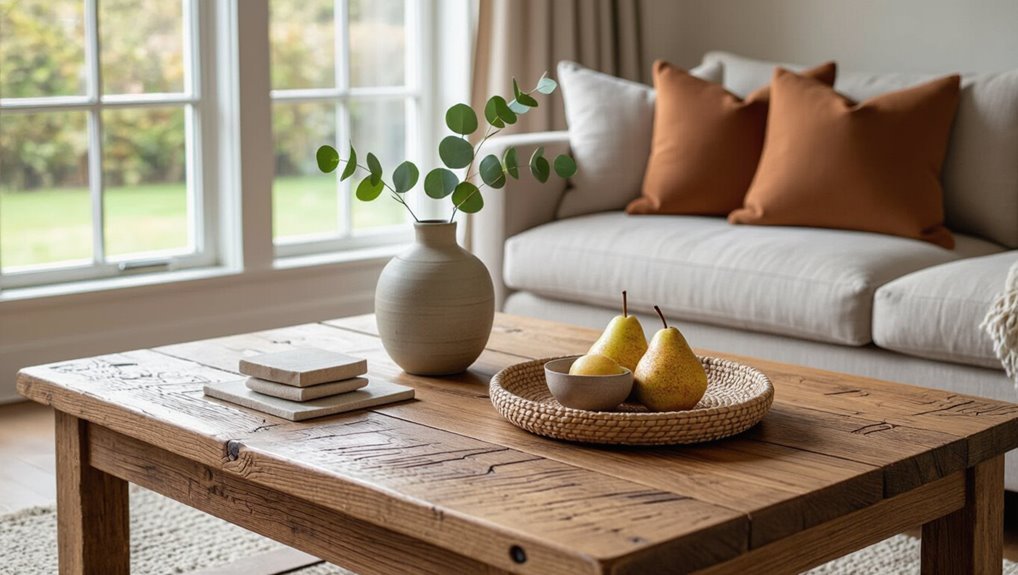
A rustic coffee table can anchor a modern living room by introducing natural materials and simple craftsmanship that contrast clean lines.
Its texture and warm tones add tactile interest and cozy atmosphere without overwhelming a contemporary palette.
Positioned thoughtfully, the table becomes a subtle focal point that unifies seating and décor.
Quick overview of why a rustic coffee table works in modern living rooms
Although modern interiors often favor clean lines and sleek materials, a rustic coffee table introduces warmth, texture, and visual contrast that grounds the room.
It complements minimalist palettes, balances metallic or glass pieces, and establishes an approachable centerpiece.
Readers exploring how to style a rustic coffee table will find it adaptable across scales and schemes, creating cohesion without overpowering contemporary furnishings.
Key benefits: texture, warmth, focal point
Balance emerges when a rustic coffee table is introduced into a modern living room: its textured surfaces and natural tones create immediate warmth, draw the eye, and anchor seating arrangements.
The piece adds tactile contrast, softens sleek lines, and becomes a visual focal point. It also fosters cozy gatherings, highlights curated décor, and ties varied materials into a cohesive, inviting scheme.
Choosing the Right Rustic Coffee Table for Your Space
Selecting the right rustic coffee table requires attention to size and scale, ensuring proportions suit the seating layout and room dimensions.
Consider the specific rustic style—farmhouse, reclaimed wood, industrial-rustic, or mid-century rustic—alongside materials and finishes such as wood species, metal accents, distressing, and stains.
Evaluate construction and durability (joinery, leg design, weight) and set a budget that prioritizes splurges on structural elements while economizing on surface treatments.
Sizing and scale: how to measure and choose proportions
When planning a rustic coffee table, precise measurements guarantee the piece fits both functionally and visually: Measure seating height (table should be within 1–2 inches of sofa seat), allow 18–24 inches clearance from sofa front, and leave 36–48 inches for traffic paths.
Consider table length at two-thirds the sofa width and choose scale that balances room proportions without overwhelming sightlines.
Styles within “rustic”: farmhouse, reclaimed wood, industrial-rustic, mid-century rustic
Style categories within the rustic aesthetic offer distinct visual and material cues that guide the choice of a coffee table:
farmhouse pieces prioritize painted or whitewashed frames and turned legs for a cozy, lived-in look; reclaimed-wood tables celebrate weathered boards and visible jointwork for authenticity; industrial-rustic designs pair raw timber with metal accents and simple silhouettes for utilitarian edge; and mid-century rustic blends clean lines and tapered legs with warm, knotty woods for a subtly modern feel.
Choosing among these styles helps align the table’s character with room scale, decor, and desired atmosphere.
Materials and finishes: wood types, metal accents, distressing, stains
Materials and finishes determine both the visual weight and longevity of a rustic coffee table, so choices should balance appearance with practical needs.
Solid hardwoods like oak or walnut offer warm grain and durability; reclaimed pine adds character.
Metal accents—blackened steel or brass—introduce contrast.
Distressing techniques and stains modulate color and age, while matte or satin finishes protect without glossing rustic charm.
Construction and durability: joinery, legs, weight considerations
A few key structural choices determine how well a rustic coffee table will stand up to daily use: robust joinery, sturdy leg construction, and appropriate overall weight.
Mortise-and-tenon or dovetail joints resist loosening; reinforced corner blocks and metal brackets add stability.
Tapered or splayed legs distribute load; heavier tops reduce wobble but need solid supports.
Inspect fastenings and test firmness.
Budget tiers and where to splurge vs. save
Many shoppers find that defining a clear budget tier—entry, midrange, or high-end—makes it easier to decide where to splurge and where to save when choosing a rustic coffee table. Prioritize solid tops and joinery, save on decorative finishes, splurge on hardware or reclaimed wood, and balance style with longevity.
| Save on | Splurge on |
|---|---|
| Veneers | Solid reclaimed wood |
| Simple legs | Quality joinery |
| Mass finishes | Unique hardware |
| DIY accents | Timeless proportions |
12 Chic Styling Ideas to Elevate Your Living Room
A rustic coffee table becomes a focal point when curated with simple, intentional pieces that balance form and function.
Below are five styling elements to contemplate that add texture, height, and warmth to the living room:
- Layered trays and curated vignettes
- Greenery and natural elements for contrast
- Books and stacks for height and personality
- Mixed metals and contrasting textures
- Cozy textiles: throws and folded blankets
1. Layered trays and curated vignettes
When styled thoughtfully, layered trays and curated vignettes transform a rustic coffee table from merely functional to intentionally composed.
Small trays anchor objects, define zones, and protect surfaces. Combine varied heights—books, a low ceramic bowl, a sculptural object—and limit palette and quantity for cohesion.
Rotate items seasonally and maintain negative space so the arrangement reads as deliberate, not cluttered.
2. Greenery and natural elements for contrast
Fresh greenery and tactile natural elements introduce contrast and warmth to a rustic coffee table, breaking up heavy woods and muted tones with lively shape and texture.
Small potted plants, a low bowl of succulents, driftwood, or a cluster of smooth stones add organic interest.
Keep arrangements simple and scaled, rotating seasonal stems to maintain freshness without overpowering the vignette.
3. Books and stacks for height and personality
Balance is achieved by stacking books to create deliberate height and introduce personality without clutter. Carefully selected volumes anchor vignettes, support a small lamp or decorative object, and invite curiosity through spines and covers.
Mix hardcover sizes, align edges for neatness, and rotate titles seasonally. Limit stacks to two or three to maintain visual rhythm and preserve the table’s rustic charm.
4. Mixed metals and contrasting textures
Stacked books can serve as a neutral anchor while introducing metal accents and varied textures lifts the ensemble into a more layered look.
A mix of brass, black iron and aged silver provides visual interest; pair with rough-hewn wood, smooth ceramic and woven rattan for contrast.
Keep proportions balanced, limit metallic finishes to two or three, and repeat textures subtly across the tabletop.
5. Cozy textiles: throws and folded blankets
A soft throw or neatly folded blanket instantly warms a rustic coffee table vignette, adding color, pattern, and tactile contrast without overwhelming the surface.
Placed beside a tray or stacked books, textiles introduce scale and softness.
Choose natural fibers—wool, linen, cotton—and restrained palettes or subtle patterns to complement wood grain.
Rotate textures seasonally for effortless, layered appeal.
6. Candle groupings and ambient lighting
Textiles and soft layers set the scene for gentle, intimate lighting that completes a rustic coffee table vignette.
Cluster candles of varying heights and widths on a tray or slate board, mixing pillar and votive styles.
Incorporate a low table lamp or dimmable LED accents for warmth.
Choose unscented or subtle fragrances to preserve ambiance without overpowering the room.
7. Artful bowls and sculptural decor
Sculptural bowls and objet d’art introduce intentional shape and texture to a rustic coffee table, anchoring the vignette with visual interest.
Select one statement piece or a small cluster with varied heights to create balance.
Natural materials—ceramic, stone, wood—or metal accents complement rustic grain.
Keep surfaces uncluttered; let negative space emphasize form while maintaining functional access and cohesive color harmony.
8. Seasonal swaps: easy transitions for spring, summer, fall, winter
Several small changes can refresh a rustic coffee table each season without a full restyle: swap linens, rotate decorative accents, and adjust color temperature to reflect spring’s lightness, summer’s vibrancy, autumn’s warmth, and winter’s coziness.
Introduce pastel florals and woven trays for spring, bright ceramics and glass for summer, amber candles and dried botanicals for fall, then knit throws and metallic accents for winter.
9. Functional styling: storage baskets and under-table organization
Functionality can coexist with rustic charm when storage baskets and under-table organization are approached as intentional design elements rather than afterthoughts.
Woven baskets, wooden crates, or metal bins tidy blankets, remotes, and magazines while complementing distressed finishes.
Arrange containers by height and texture for balance, keep pathways clear, and choose breathable materials to prevent moisture.
This maintains aesthetic coherence and everyday practicality.
10. Layering rugs and grounding the table
10. Layering rugs anchors a rustic coffee table, defining the seating area and adding texture.
A larger neutral base rug stabilizes proportions; a smaller patterned or natural-fiber rug introduces contrast and warmth.
Keep colors cohesive with surrounding tones and guarantee rug sizes allow furniture to partially sit on the top layer.
Secure edges and choose durable materials for high-traffic use.
11. Gallery-worthy coffee table books and magazines
After anchoring the seating area with layered rugs, attention shifts to the surface styling that completes the vignette: curated coffee table books and magazines.
Selections prioritize visual appeal—large-format photography, textured covers, art and travel tomes—stacked or fanned for balance.
Titles reflect the room’s palette and interests, inviting browsing while adding scale, color, and cultured charm without cluttering the rustic surface.
12. Minimalist approach: negative space and single striking piece
A single sculptural object—a ceramic vase, a reclaimed-wood bowl, or a metal candleholder—can define a rustic coffee table by introducing deliberate negative space around it.
This minimalist approach emphasizes material and form, allowing texture and patina to stand out.
One striking piece creates visual calm, directs attention, and complements surrounding decor without clutter, reinforcing a refined, intentional aesthetic.
Styling by Room Aesthetic
Styling a rustic coffee table shifts depending on the surrounding aesthetic, from pared-back accents in a modern minimalist living room to layered textiles and vibrant trinkets in a boho or eclectic space.
In a traditional or shifting room, the table can bridge classic lines with warm, weathered textures, while in an industrial loft it pairs with metal and concrete for a rugged, cohesive look.
Each context calls for specific materials, colors, and object groupings to reinforce the chosen style.
Rustic coffee table in a modern minimalist living room
While sleek lines and sparse surfaces define the room, a rustic coffee table introduces tactile warmth and visual contrast without disrupting the minimalist ethos.
It anchors the seating area with organic texture and restrained presence.
Styling remains simple: a singular sculptural vase, a low stack of neutral books, and a small tray for essentials, preserving airy geometry and purposeful restraint.
Rustic coffee table in a boho or eclectic space
When layered with patterned textiles, woven baskets, and a mix of found objects, a rustic coffee table becomes a lively focal point that ties together boho and eclectic rooms. Its weathered textures invite curated clutter—stacked art books, a ceramic planter, and a brass dish for small treasures—while still allowing for impromptu additions like a beaded tray or vintage candleholder.
Accent with mismatched ceramics, macramé coasters, layered rugs, and ambient lighting to balance color and texture without overcrowding.
Rustic coffee table in a traditional or transitional room
How does a rustic coffee table read in a traditional or shifting room? It grounds classic moldings and tailored upholstery with warm, tactile texture.
Pair with refined accessories—porcelain, brass trays, structured books—and restrained greenery.
Balance aged wood with symmetrical arrangements and neutral textiles to maintain formality while introducing gentle, lived-in character that bridges heritage and contemporary comfort.
Rustic coffee table in an industrial loft
A rustic coffee table in an industrial loft anchors raw materials with lived-in warmth, its distressed wood and sturdy silhouette softening exposed brick, concrete floors, and metal beams.
It pairs with leather seating, iron accents, and a minimalist rug; layered books, a simple metal tray, and a sculptural plant add texture without clutter, balancing utilitarian architecture and cozy, tactile charm.
Practical Tips for Maintenance and Longevity
Practical care extends a rustic coffee table’s life through routine cleaning tailored to its finish and prompt protection against scratches, water rings, and sun damage.
Simple DIY repairs—such as filling chips, treating stains, and tightening loose joints—can restore appearance and function quickly.
More extensive wear calls for a judgment between refinishing or re-staining and replacing, based on structural integrity and desired outcome.
Cleaning and weekly care for different finishes
Several simple routines tailored to the table’s finish keep a rustic coffee table looking its best and extend its lifespan.
For sealed wood, dust weekly with a soft cloth and use a mild, pH-balanced cleaner sparingly.
For waxed or oil-finished surfaces, dust and replenish oil or wax monthly.
For painted or distressed finishes, dust gently and spot-clean with a damp cloth.
Preventing scratches, water rings, and sun damage
Guard a rustic coffee table from common damage by establishing simple habits: use coasters and placemats to block water rings, lift rather than drag objects to prevent scratches, and rotate or shade the piece to minimize sun exposure that fades finishes.
Add felt pads under décor, avoid harsh cleaners, promptly blot spills, and maintain consistent humidity to preserve wood and finish integrity over time.
Quick DIY fixes for chips, stains, and loose joints
Address small chips, stains, and loose joints quickly to prevent them from worsening and to keep the table functional and attractive.
Fill tiny chips with matching wood filler or wax sticks, sand lightly, and blend stain.
Remove surface stains with mild cleaners or baking soda paste.
Tighten loose joints with wood glue and clamps or replace worn screws.
Test repairs discreetly before display.
When to refinish or re-stain vs. replace
Decide whether to refinish, re-stain, or replace a rustic coffee table by evaluating the extent of structural damage, the condition of the finish, and the piece’s sentimental or monetary value.
Minor surface wear or color fading favors re-staining; scratches, gouges, or inconsistent patina suit refinishing.
If core support, rot, or pests exist, replacement is cost-effective.
Factor time, budget, and desired aesthetic outcome.
Common Styling Mistakes and How to Avoid Them
A rustic coffee table can be undermined by a few common styling missteps that affect both appearance and practicality.
Overcrowding the surface, using items with mismatched scale, ignoring storage or child- and pet-friendly needs, and choosing colors that clash with the room all lead to a disjointed result.
Addressing these issues early makes the table both attractive and functional.
Overcrowding the surface
Crowding a rustic coffee table with too many objects not only hides its natural texture and silhouette but also makes the living space feel cluttered and chaotic.
A restrained arrangement—one focal piece, a low tray, and a single stack of books—preserves warmth and function.
Prioritize negative space, rotate accessories seasonally, and keep surfaces easy to clear for everyday use and visual calm.
Mismatched scale and imbalance
One common mistake is combining pieces of wildly different scale so that small accessories disappear beside oversized elements or a single tall item makes the table feel top-heavy.
This imbalance undermines the rustic table’s grounded, approachable character. To correct it, choose a cohesive mix of low, medium and one taller focal piece, maintain visual weight across the surface, and test arrangements from different viewing angles.
Ignoring functional needs (storage, child/pet-friendly)
After addressing scale and balance, attention should turn to how the coffee table serves daily life; ignoring storage needs or the presence of children and pets quickly turns a styled surface into a liability.
Practical solutions—hidden drawers, lower shelves, rounded edges, durable finishes, and secured decor—preserve aesthetics while preventing accidents and clutter.
Prioritizing function guarantees long-term beauty and usability.
Clashing color palettes with the rest of the room
When the coffee table’s palette clashes with the room, the entire space can feel disjointed rather than cohesive.
A rustic table should harmonize through shared undertones, accent repeats, or neutral grounding. Avoid pairing vibrant, unrelated hues; instead select one dominant tone from existing textiles or art.
Small accessories—books, trays, or plants—can bridge colors without overpowering the room’s balance.
Shopping and Sourcing Tips
When sourcing a rustic coffee table, the writer recommends evaluating secondhand and vintage pieces for structural soundness, patina authenticity, and repair history.
They suggest specific questions to pose to sellers and key inspections to perform in person, while also noting reputable online retailers and independent makers worth considering.
For unique needs, commissioning a bespoke table or customizing an existing find is presented as a practical alternative.
How to evaluate secondhand and vintage rustic tables
Although rustic appeal often comes from age and wear, evaluating a secondhand or vintage table requires a clear checklist of structural integrity, finish authenticity, and repair history.
Assess join stability, leg wobble, and wood rot; note replaced parts or modern fasteners.
Verify patina versus artificial distress, odours, and insect damage.
Estimate restoration needs and realistic costs before purchase.
What to ask sellers and what to inspect in person
After evaluating structural soundness and finish authenticity, shoppers should prepare a concise list of questions to ask sellers and a focused inspection checklist for in-person visits.
Ask about provenance, repairs, age, joinery, and delivery options.
Inspect underside, legs, drawer function, wood movement, insect damage, odor, and finish consistency.
Photograph concerns and confirm return or warranty terms before purchase.
Best online retailers and makers to consider
A targeted shopping list helps buyers find reliable sources for rustic coffee tables online: specialty furniture makers for handcrafted authenticity, reputable retailers for returnable purchases, and curated marketplaces for vintage or reclaimed pieces.
Recommended options include independent artisans on Etsy, boutique makers with clear materials lists, major retailers offering quality price tiers, and vetted consignment platforms showcasing authenticated vintage finds with shipping and return policies.
Customization and commissioning a bespoke piece
When opting for a bespoke rustic coffee table, buyers should first define nonnegotiables—dimensions, wood species, finish, joinery style, and budget—so conversations with makers start from clear expectations.
Provide reference images, prioritize functionality (storage, height, traffic flow), request material and finish samples, clarify lead time and warranty, and obtain written estimates.
Inspect maker portfolios and reviews before commissioning.
Visual Examples and Layout Inspirations
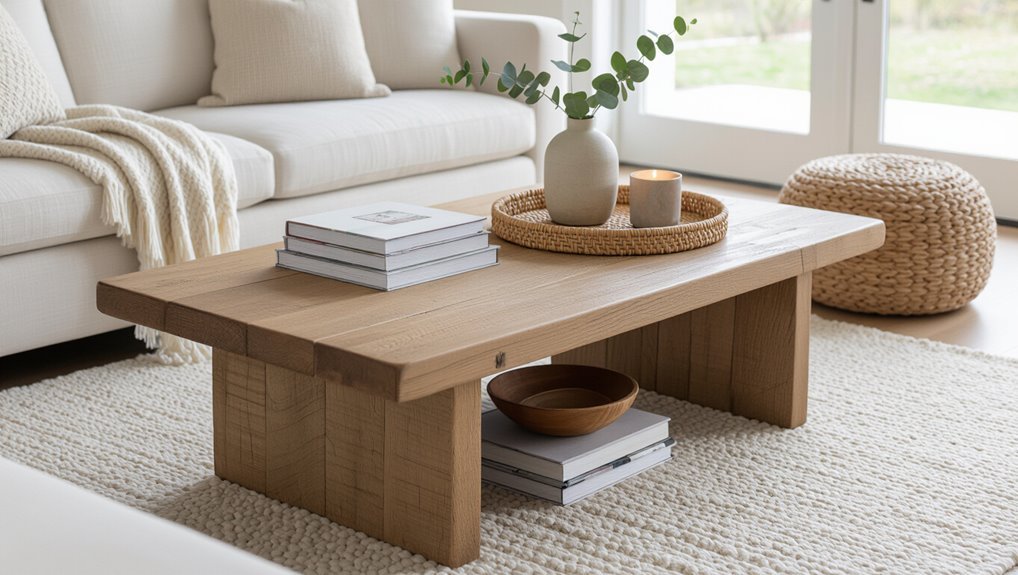
The section presents visual examples showing how a rustic coffee table functions in compact living rooms, highlighting space-efficient placement and scaled accessories.
It contrasts those arrangements with open-plan and larger living room layouts to illustrate balance and flow.
Also included are suggested accent pairings—sofas, armchairs, and side tables—that complement rustic textures and proportions.
Small living room arrangements with a rustic coffee table
Although space is limited, a small living room can feel intentional and warm by centering the layout around a rustic coffee table that balances scale and function.
Pair a slim sofa and nesting stools to preserve circulation, use mirrors and light textiles to amplify space, and select multifunctional accents—tray organizers, baskets, or ottomans—to maintain a tidy, layered look without overcrowding the footprint.
Open-plan and large living room layouts
In expansive, open-plan living rooms a rustic coffee table becomes an anchoring element that defines distinct zones while reinforcing a cohesive aesthetic.
Visual examples show it positioned to mediate seating groups, delineate traffic paths, and balance larger furniture without competing with abundant space.
Photographs illustrate varied placements, scaled proportions, layered rugs, and complementary lighting to maintain flow, scale, and focal interest across connected areas.
Accent pairings: sofas, armchairs, and side tables
How might a rustic coffee table inform choices of sofas, armchairs, and side tables to create a coherent seating vignette?
The table anchors material and tone: pair distressed wood with neutral linen sofas, leather armchairs for contrast, and metal-framed side tables for lightness.
Scale, height, and finish coordinate rhythm; repeat a color or texture to unify the group and maintain functional flow.
Quick Styling Checklist Before You Finish
Before finalizing the arrangement, a brief checklist reviews balance and proportion to guarantee the table feels intentional rather than crowded.
It also confirms cohesive color and texture choices so finishes and fabrics complement one another.
Finally, a quick scan for functionality and safety verifies stable objects, accessible surfaces, and secure decor.
Final balance and proportion checklist
Though the last touches may seem minor, a quick checklist guarantees the table reads as a unified arrangement: confirm visual weight is distributed (no heavy cluster on one side), vary object heights for rhythm, maintain negative space around edges, make certain centerpiece scale suits table size, check sightlines from seating, and adjust alignment so groupings read as intentional rather than accidental.
Cohesive color and texture checklist
A cohesive color and texture checklist affirms each element on the rustic coffee table contributes to a unified look rather than competing for attention.
Assess base tones, accent hues, and metallic finishes for harmony. Limit palette to three coordinating colors.
Vary textures—wood grain, woven fibers, glass, matte ceramics—for depth. Confirm contrast balances without clashing and repeat a motif to tie the arrangement together.
Functionality and safety checklist
After confirming color and texture harmony, attention shifts to how the arrangement will be used and kept safe.
The checklist evaluates surface clearance for daily use, stable object placement to prevent tipping, heat-resistant coasters, non-scratch pads, and accessible storage for remotes and clutter.
It also recommends child- and pet-safe choices, secure tray anchors, and routine inspections to maintain function and safety.
Conclusion
A rustic coffee table, like an old harbor buoy, grounds a living room with weathered charm and steady purpose. Thoughtful selection, layered styling, and practical upkeep let it bridge aesthetics and function—whether minimal, farmhouse, or industrial. Avoid clutter, choose complementary textures, and refresh arrangements seasonally to keep the vignette alive. With purposeful sourcing and mindful maintenance, the table becomes a lasting centerpiece that quietly anchors the space and invites everyday moments.