How to Clean a Pop-Up Drain Quickly: Step-by-Step Guide for a Clog-Free Sink
Cleaning a pop-up drain quickly is essential for maintaining a clog-free sink. Start by wearing gloves and protecting the surrounding area. Loosen the pivot rod to remove the stopper, then use a brush or paper towel to clean away hair and soap scum. For deeper clogs, use a bent wire or small drain snake. Flush the drain with hot water, followed by a mixture of baking soda and vinegar, and finish with another hot-water rinse. Finally, reassemble the drain, test it for proper function, and consider preventive measures for the future.
What a Pop-Up Drain Is and How It Works
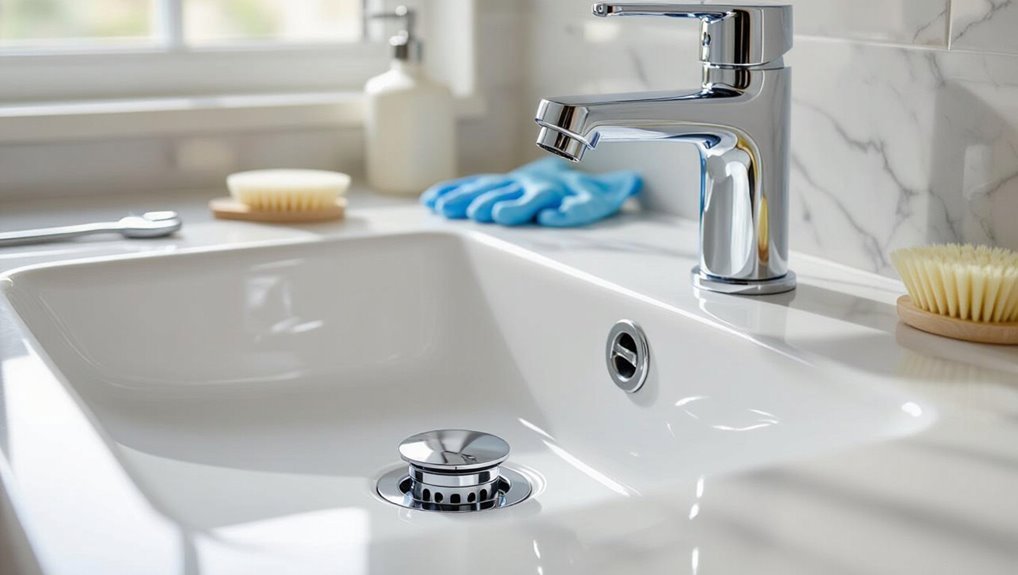
A pop-up drain typically consists of a stopper, pivot rod or lift mechanism, flange, and tailpiece, with variations including push-button and levered styles.
The stopper moves up and down via a linkage or spring action to open or seal the drain.
Hair, soap scum, and mineral buildup are the most common causes of blockages that impair this mechanism.
Common pop-up drain types and components
Pop-up drains are mechanical assemblies that control sink drainage by raising and lowering a stopper via a linkage or internal mechanism. They come in several common configurations—lift-and-turn, push-and-pull (click-clack), flip-top, and plunger-type—each with distinct components such as the stopper, tailpiece, pivot rod or spring mechanism, flange, and seal.
Knowledge of parts aids how to clean a pop-up drain efficiently.
How the pop-up mechanism operates
Operate the stopper and water either holds or drains from the sink through a simple mechanical sequence: lifting, twisting, or pressing the visible stopper moves an internal linkage or spring assembly that opens or seals the drain passage.
A tailpiece and flange channel water into the waste line and a rubber or silicone gasket guarantees a watertight seal. The linkage transfers motion to a pop-up plug, creating closure or flow.
Typical causes of pop-up drain clogs
When water slows or stops draining, the cause is often buildup where hair, soap scum, and mineral deposits converge around the stopper and tailpiece. These materials bind together, restrict flow, and can trap other debris.
Other common causes include foreign objects lodged in the trap, deteriorated seals that collect grime, and corroded or misaligned components that impede movement and create additional snag points.
Quick Safety and Preparation Checklist
Before beginning, gather required tools and supplies such as gloves, a wrench, bucket, and cleaning agents to guarantee the job proceeds smoothly.
Take basic safety precautions and protect the sink area with towels or a tray to catch spills and prevent damage.
If leaks, stubborn blockages, or unfamiliar plumbing connections are encountered, a professional plumber should be contacted.
Tools and supplies to have on hand
Although the task is straightforward, setting up the right tools and safety items prevents delays and reduces risk. The checklist should include gloves, eye protection, a basin or bucket, adjustable pliers, a flashlight, plumber’s putty or tape, replacement gaskets, a screwdriver, towels or rags, and a drain snake or wire coat hanger.
Essential additional items:
- Replacement stopper hardware
- Small brush or toothbrush
- Plumbing lubricant
- Disposable rubbish bag
Safety precautions and what to protect in the sink area
A brief safety and preparation checklist minimizes accidents and protects fixtures and finishes in the sink area.
Wear gloves and eye protection; ventilate if using cleaners. Remove jewelry and secure loose clothing.
Lay down towels or a rubber mat to catch drips and protect countertops. Use a bucket under the P-trap.
Keep children and pets away until work and cleanup are complete.
When to call a professional instead
When should a homeowner call a professional instead of tackling a pop-up drain cleanup?
If repeated clogs recur, foul odors persist, water backs up into fixtures, or visible corrosion or broken components exist, a licensed plumber should be contacted.
Also call a pro if chemical cleaners were used without improvement, if the homeowner lacks tools or confidence, or if leaks and water damage are present.
Fast Step-by-Step Guide to Clean a Pop-Up Drain Quickly
The following concise procedure outlines the key actions for a quick pop-up drain cleaning: clear surface debris and run hot water, then remove the pop-up stopper safely.
Next, manually extract hair and gunk from the stopper and clean inside the drain with a snake or bent wire.
Finish by flushing with hot water and applying a brief baking soda and vinegar treatment.
Step 1 Clear surface debris and run hot water
Begin by removing visible hair, soap scum, and residue from around the pop-up stopper using gloved fingers or a tissue to prevent pushing debris down the drain.
Then run hot tap water for 30–60 seconds to loosen greasy buildup and flush small particles away.
Inspect the drain opening for remaining solids, wipe the surrounding surface, and repeat rinsing until water flows freely and surface residue is gone.
Step 2 Remove the pop-up stopper safely
Carefully lift the stopper assembly to check how it’s attached and to avoid forcing any parts.
The person locates the pivot rod under the sink, loosens its retaining nut, and retracts the rod to free the stopper.
If threaded, the stopper is unscrewed counterclockwise.
Components are placed on a clean surface in order, preserving linkage orientation for easier reassembly.
Step 3 Manually remove hair and gunk from the stopper
Using gloved hands, they pull the stopper apart and pick away trapped hair and sludge with a small brush or pointed tool, working methodically to avoid pushing debris deeper into the drain.
They inspect the rubber gasket, hinge and channels, removing buildup and rinsing parts in warm water.
Reassemble only when components are clean and moving freely, testing for smooth operation.
Step 4 Clean inside the drain with a drain snake or bent wire
They feed a drain snake or a straightened wire into the pipe to dislodge hair and buildup, rotating and retracting slowly until resistance eases.
They probe deeper to catch trapped debris, pulling out strands and gunk with each pass.
They repeat until the tool returns clean, wiping the tool and rim.
They inspect visually for remaining obstructions before proceeding.
Step 5 Flush with hot water and a quick baking soda + vinegar treatment
With visible debris removed and the snake returning clean, the next step is to flush the line with hot water and a brief baking soda–vinegar treatment to clear residual grime and odors.
Boil or heat water safely and pour slowly down the drain.
Sprinkle about half a cup baking soda, follow with half a cup white vinegar, wait five minutes, then rinse with hot water.
Step 6 Reassemble the stopper and test drainage
Reinstall the stopper assembly by aligning the pivot rod and hinge components, sliding the stopper back into the drain, and tightening the retaining nut so the linkage moves smoothly without binding.
Operate the stopper several times to confirm full travel and proper seating.
Run hot water to verify swift drainage and absence of leaks under the sink.
Adjust linkage if lift or seal is imperfect.
Troubleshooting immediate problems during the process
After verifying the stopper operates smoothly and no leaks appear, the next step addresses common immediate problems that can arise during cleaning.
If the stopper still sticks, inspect linkage for misalignment or debris; tighten or realign clips.
For slow drainage, check for residual hair or gunk and clear with a snake.
If a leak develops, retighten seals and test again before finishing.
Alternative Fast Cleaning Methods
The article outlines several alternative rapid techniques for clearing a pop-up drain, including effective use of a hand or sink auger to mechanically remove clogs.
It also explains when enzymatic drain cleaners are appropriate and how to apply them safely to protect pipes and finishes.
Finally, it describes using a wet/dry vacuum to create suction for pulling out debris without disassembly.
Using a hand auger or sink auger effectively
Feed a hand auger into the drain until resistance is felt, then rotate the handle to break up or hook the clog and retrieve debris.
Withdraw slowly, clearing collected material into a bucket.
Repeat insertion and rotation until the cable passes freely.
Sanitize the auger and surrounding area afterward.
Use steady pressure to avoid pipe damage and maintain control of the cable during extraction.
When and how to use enzymatic drain cleaners safely
Consider enzymatic drain cleaners when clogs are organic—hair, soap scum, food residue—and plumbing is metal or durable plastic; they work slowly by using enzymes and bacteria to digest organic matter without harsh chemicals.
Apply per label, maintain warm water flow afterward, avoid combining with chemical cleaners, allow recommended dwell time (often overnight), and repeat weekly for prevention rather than immediate heavy-duty clearing.
Using wet/dry vacuum for suction removal
A wet/dry vacuum can rapidly remove standing water and loose debris from a clogged pop-up drain by creating strong suction at the drain opening. It is most effective for shallow blockages like hair, soap scum, and small objects that are not tightly lodged.
The operator should seal the hose around the flange, use high suction, protect nearby surfaces, and inspect the trap afterward for remaining obstructions.
How to Prevent Future Clogs
Preventive care focuses on simple daily and weekly routines that keep hair and soap scum from accumulating in a pop-up drain.
Recommended products and accessories—such as fine-mesh strainers, hair traps, and enzyme cleaners—can greatly reduce future buildup.
Small installation adjustments, like optimizing trap pitch or replacing corroded parts, further improve drainage and lower clog risk.
Daily and weekly maintenance routines
Establishing simple daily and weekly routines keeps a pop-up drain flowing and minimizes the need for deep cleaning or repairs.
Daily rinses with hot water and brief debris checks prevent buildup.
Weekly actions target developing clogs before they harden:
- Run hot water for 30–60 seconds after use
- Remove visible debris from the stopper
- Flush with baking soda and vinegar monthly
- Inspect and clean the stopper assembly weekly
Best products and accessories to reduce hair buildup
Many households find that a few targeted products and accessories dramatically reduce hair buildup before it reaches the pop-up drain.
Silicone drain covers, mesh hair catchers, and rubber sink strainers capture strands while allowing water flow.
Shower squeegees and comb-style traps remove hair quickly.
Biodegradable enzyme drain cleaners break down organic residue safely.
Regular replacement of worn catchers maintains effectiveness.
Installation adjustments that improve drainage
Adjusting installation details can considerably improve drainage and reduce future clogs.
Professionals recommend ensuring proper trap alignment, correct slope of tailpieces, and unobstructed venting.
Replacing narrow or corroded tailpieces, installing a larger-diameter P-trap where code permits, and sealing loose connections prevents debris buildup.
Periodic inspection and tightening of fittings maintain flow and reduce the likelihood of recurring blockages.
Signs of Deeper Issues and When Cleaning Won’t Help
Persistent slow drainage, foul sewage odors, gurgling sounds, or sudden wet spots can indicate pipe damage, misalignment, or sewer-line failure beyond a simple pop-up clog.
A quick inspection of the P-trap and under-sink connections for leaks, corrosion, or loose fittings can confirm whether the issue is accessible or more systemic.
If damage, recurring backups, or sewer odors are present, the problem should be escalated to a professional for repair or replacement.
Indications of pipe damage, misalignment, or sewer line problems
When slow drainage, foul odors, or recurring backups continue after cleaning attempts, they often signal problems beyond a clogged pop-up—such as cracked pipes, misaligned fittings, root intrusion, or a compromised sewer line.
Persistent gurgling, wet spots, sewage odors in multiple fixtures, sudden sink settling, or unexplained water bills indicate structural or sewer issues requiring camera inspection and professional repair rather than routine cleaning.
How to inspect the P-trap and under-sink plumbing
Begin by shutting off the water and clearing the area beneath the sink to access the P-trap and surrounding connections; a visual and tactile inspection will reveal the most common signs that cleaning alone won’t resolve the problem.
Look for hairline cracks, warped fittings, persistent moisture, corrosion, loose slip nuts, misaligned joints, and foul odors indicating trapped waste or slow backups requiring further assessment.
When to escalate to plumbing repair or replacement
If visual and tactile inspection of the P-trap and fittings reveals problems beyond surface clogs, it is time to contemplate professional repair or replacement.
Persistent backups, recurring slow drains after cleaning, visible corrosion, cracked or warped pipes, foul odors indicating sewer gas, or leaks despite tightened connections signal structural or venting failures.
A licensed plumber can diagnose and recommend targeted repair or full replacement.
Quick Reference Troubleshooting Chart
A compact troubleshooting chart helps readers match common symptoms to likely causes and quick fixes without reading through long text. Below is a simple 3×4 table to scan common pop-up drain issues and remedies at a glance. Use it as a first step before attempting more involved repairs.
| Symptom | Likely cause | Fast fix |
|---|---|---|
| Slow drainage | Hair/clog near stopper | Remove stopper, clear debris |
| Gurgling sound | Partial blockage in trap | Clean P-trap or use snake |
| Water backing up | Blockage deeper or vent issue | Plunge or call plumber |
Symptom → Likely cause → Fast fix
Refer to the quick-reference chart to match common pop-up drain symptoms with their most likely causes and immediate remedies. The chart below helps identify issues and apply fast fixes safely.
| Symptom | Fast action |
|---|---|
| Slow drain | Remove stopper, clear hair |
| Gurgling | Check vent, plunge gently |
| No water flow | Inspect trap, remove clog |
| Leaks | Tighten connections, replace seal |
Conclusion
To sum up, the pop-up drain is a small hero in daily plumbing, and cleaning it quickly restores sink sanity with minimal fuss. Following the steps and alternatives prevents most clogs, though persistent blockages may signal deeper trouble requiring professional help. With routine care, the drain will perform like a dream—almost ridiculously efficient—saving time and frustration. Regular maintenance keeps plumbing problems small and easily managed, preserving sink function and peace.