White Smoke From Exhaust Pipe: Causes, Fixes & When to Worry
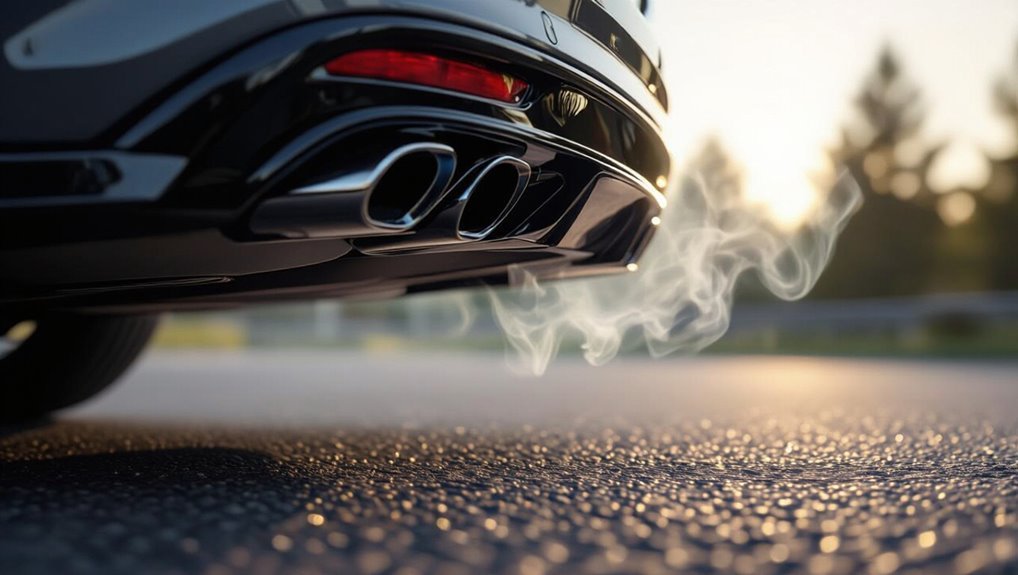
White smoke from the exhaust can indicate either harmless condensation or serious engine issues. If you notice thin, transient white vapor during cold starts, it’s typically just condensed water that dissipates quickly. However, if you see dense, persistent white smoke, it often means coolant is leaking into the combustion chamber due to a blown head gasket, cracked head, or block, and it may have a sweet smell. Additionally, oil-related problems can cause colored emissions. It’s crucial to check your coolant and oil levels immediately and pursue further investigation to determine the cause and necessary fixes.
Short Answer: Is White Smoke From the Exhaust Dangerous?
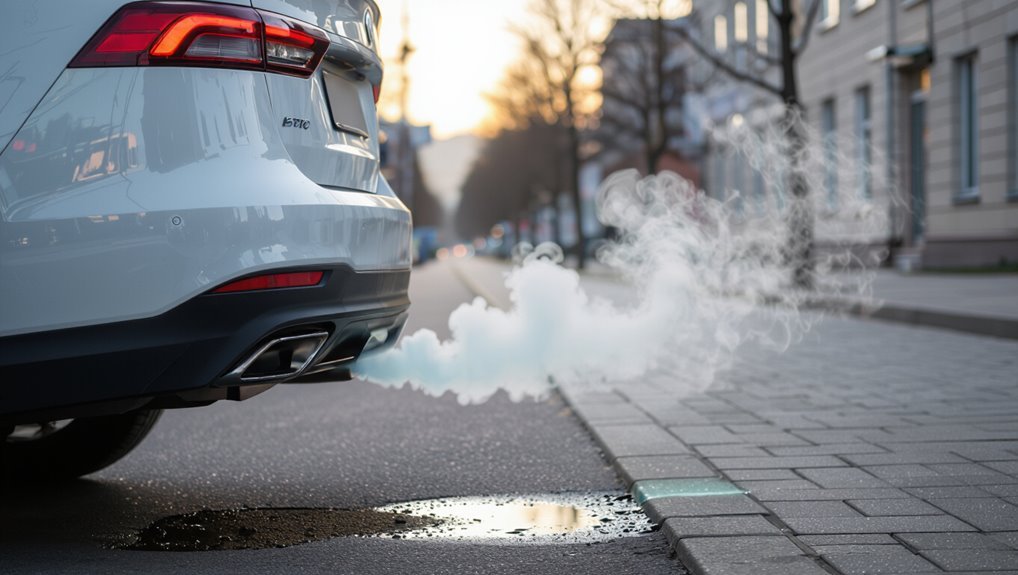
Occasionally, white smoke from an exhaust signals a serious problem: when it is thick, persistent, and accompanied by coolant loss or overheating, it often indicates coolant entering the combustion chamber—an engine head gasket, cracked head, or block failure—which is dangerous and requires prompt repair.
In contrast, brief, translucent vapor on cold starts is usually harmless condensation. Light blue-tinted white smoke suggests oil burning from valve seals or piston rings, a different concern.
Diesel engines may emit white smoke from injection or glow-plug faults. Severity depends on duration, color, and associated symptoms; diagnosis should prioritize patterns and corroborating engine signs.
Roadside Checks: What To Do Right Now
When white smoke appears from the exhaust while driving, a quick set of roadside checks can help determine urgency and reduce further damage. The driver should safely pull over, park, and switch off the engine; note smell, color intensity, and whether heat or loss of power occurred. Visual inspection avoids touching hot parts.
- Check coolant level and visible leaks around the engine bay.
- Look for oil on the dipstick and any milky residue indicating contamination.
- Observe exhaust behavior after a short restart: persistent heavy smoke warrants towing to prevent engine or head gasket damage.
White Exhaust Smoke : What It Means
How does white smoke from the exhaust differ from other emissions? Observers note it often signals vapor, coolant, or incomplete combustion rather than soot or blue oil burn. Interpretation depends on color density, persistence, and smell. Thin, transient vapor typically indicates condensation; dense, persistent white smoke suggests coolant entering the combustion chamber or head gasket failure. Sweet odor reinforces coolant presence; misfires or rough idle point toward combustion issues. Immediate diagnosis requires inspection of coolant level, oil condition, and spark function. The table summarizes common indicators and probable causes.
| Indicator | Likely meaning |
|---|---|
| Thin, brief | Condensation |
| Dense, continuous | Coolant leak |
| Sweet smell | Antifreeze burned |
| Oily residue | Oil contamination |
| Misfire present | Combustion fault |
Is White Smoke Normal When an Engine Is Cold?
After noting that thin, transient white exhaust often reflects harmless condensation while dense, persistent white smoke signals coolant or combustion problems, attention turns to startup behavior in cold conditions.
Cold engines commonly emit brief, pale vapor as water condenses in the exhaust; this clears within minutes as temperatures rise.
Persistent, opaque white emissions after warm-up are abnormal and merit inspection.
- Brief vapor at startup: normal, disappears quickly as exhaust heats.
- Repeated heavy white smoke on cold starts: indicates possible head gasket, intake, or turbo issues.
- Monitor duration and frequency; seek diagnostics if smoke persists.
How To Tell White Steam From True White Smoke
In cold weather, a quick, translucent plume that dissipates within seconds is typically steam from condensed water vapor, whereas persistent, thick, milky-white emissions that linger or increase with RPM indicate coolant entering the combustion chamber or a fuel-related white smoke issue.
To distinguish them, note opacity, smell, and duration: steam is thin, odorless, and vanishes; coolant smoke smells slightly sweet, feels oily, and may leave residue.
Monitor coolant level and oil appearance for contamination, and check exhaust under load — true white smoke often grows with throttle.
Immediate inspection is advised when smoke persists, smells, or coincides with fluid loss.
White Smoke Right After Startup : Common Explanations
On cold starts, brief white vapor is often harmless condensation burned off during warm-up, but persistent, milky-white exhaust immediately after ignition signals problems such as coolant leakage into the combustion chamber (head gasket, cracked head/block) or a rich, improperly atomized fuel spray from a failing injector or carburetor; diagnosing requires noting duration, odor, coolant level changes, and whether the smoke appears only at idle or increases with throttle.
Common explanations include:
- Faulty fuel delivery causing unburned fuel and white smoke.
- Coolant entering cylinders from a compromised seal or crack.
- Excessive oil consumption producing whitish, bluish-tinted exhaust.
Sweet-Smelling White Smoke: Coolant in the Combustion Chamber
What does a sweet odor mixed with persistent white exhaust usually indicate? It signals coolant entering the combustion chamber, often from a blown head gasket, cracked head, or cracked block. This produces continuous white, sweet-smelling vapor and can foul spark plugs, overheat the engine, and contaminate oil. Immediate inspection is advised: pressure test the cooling system, inspect oil for milky discoloration, and perform a combustion leak test. Repairs range from gasket replacement to engine rebuild. Monitor coolant level and exhaust behavior; driving extensively risks severe engine damage.
| Symptom | Possible cause |
|---|---|
| Sweet smell | Coolant burn |
| Continuous white smoke | Combustion chamber leak |
| Milky oil | Coolant contamination |
| Overheating | Reduced cooling efficiency |
| Misfires | Fouled plugs |
White Smoke With Loss of Power: Why It’s Serious
A sudden loss of power accompanied by white exhaust smoke signals a potentially urgent engine fault.
This combination can indicate overheating and reduced combustion efficiency, increasing the risk of further damage.
One common and serious cause is a failing head gasket allowing coolant into the cylinders.
Sudden Power Drop
Encountering white smoke from the exhaust alongside a sudden drop in engine power signals a potentially serious internal problem rather than a cosmetic issue. The combination often indicates coolant entering combustion chambers, serious misfires, or turbocharger failure, each reducing torque and acceleration. Immediate inspection prevents escalation to complete loss of drive.
Typical diagnostic steps focus on pressure tests, compression checks, and turbo examination.
- Compression and leak-down tests to detect head gasket or cracked head.
- Coolant system pressure test to reveal external or internal leaks.
- Turbocharger inspection for shaft play or oil seal failure causing ingestion of fluids.
Engine Overheating Risk
When white smoke appears from the exhaust accompanied by a sudden loss of power, it often signals that the engine is at imminent risk of overheating due to coolant entering the combustion chambers or compromised cooling flow.
Immediate attention is required: continued operation can warp heads, damage pistons, and destroy bearings. Symptoms include rising temperature gauge, steam from the hood, and persistent misfire or rough idle. The vehicle should be stopped safely, cooled down, and towed for inspection.
Diagnostics focus on cooling system integrity, coolant levels, and evidence of contamination. Temporary fixes are limited; professional repair prevents catastrophic engine failure.
Possible Head Gasket Failure
How can white smoke coupled with a sudden loss of power indicate a failing head gasket? A blown head gasket can allow coolant into combustion chambers, producing white exhaust smoke and diminishing compression, which reduces power.
Immediate attention is advised to prevent engine damage.
- Compression loss: Cylinders leak, lowering performance and causing misfires.
- Coolant contamination: Burning coolant produces sweet-smelling white smoke and can foul spark plugs.
- Overheating cascade: Continued coolant loss raises temperatures, warping heads and worsening failure.
Diagnosis requires pressure tests, coolant inspection, and compression checks; replacement of gasket and possible head machining follow confirmation.
Continuous White Smoke Versus Occasional Puffs
Frequently, continuous white smoke and occasional puffs signify different underlying problems: sustained, thick white smoke usually indicates coolant entering the combustion chamber from a blown head gasket, cracked head, or failed intake manifold gasket, while intermittent small puffs often result from condensation in the exhaust, valve stem seals, or brief oil seepage.
Continuous smoke is persistent across speeds and loads, often accompanied by overheating, milky oil, or loss of coolant.
Occasional puffs appear mainly at startup or under specific conditions, clear as temperature equalizes, and typically lack coolant loss or oil contamination.
Diagnosis hinges on pattern, symptoms, and simple tests.
White Smoke Only at Idle: Common Causes
Having distinguished continuous white smoke from occasional puffs, attention turns to white smoke that appears only at idle. This symptom often indicates issues that manifest when engine load and speed are low, not those tied to heavy acceleration.
- Coolant seepage past a failing head gasket can produce thin white vapor at idle as combustion chambers leak under lower pressure.
- Condensation in the exhaust system—especially after short trips or in cold weather—condenses into visible steam until the system warms.
- Valve stem seals or intake manifold gasket leaks can drip small amounts of oil or coolant when oil pressure and airflow are minimal.
Inspection and smoke diagnostics confirm causes.
White Smoke Under Acceleration: Likely Problems
When white smoke appears primarily during acceleration, it usually signals that fluids are entering the combustion chamber under load rather than simple condensation or idle-only leaks. Likely causes include failing head gasket, cracked cylinder head/block, or oil control ring failure allowing coolant or oil to be forced into cylinders under pressure. Symptoms often include loss of power, overheating, or milky oil. Diagnosis requires pressure testing, compression/leak-down checks, and inspection of oil/coolant. Repairs range from gasket replacement to engine rebuild. Early attention prevents worse damage.
| Likely Cause | Key Sign |
|---|---|
| Blown head gasket | Coolant loss/power drop |
| Cracked head/block | Overheat/mixed oil |
Differences Between Diesel and Gasoline White Smoke
How do white exhaust emissions differ between diesel and gasoline engines? Diesel white smoke often indicates incomplete combustion of fuel or high-pressure injection issues, appearing dense and lingering.
Gasoline white smoke tends to be thinner and may signal condensation or transient fuel-rich startups.
Key distinctions include:
- Appearance and persistence: diesel smoke is thicker and longer-lasting; gasoline is light and dissipates.
- Common causes: diesel faults involve injectors, turbo, or low compression; gasoline causes are often cold starts, short-term rich mixtures, or evaporative condensation.
- Odor and ash: diesel smoke smells oilier and can leave soot; gasoline smoke is less oily and cleaner.
Coolant in the Combustion Chamber : How It Creates White Smoke
By entering the combustion chamber as vapor or liquid, engine coolant produces thick, white smoke that is created when coolant contacts hot combustion gases and vaporizes. Coolant presence dilutes the air–fuel mix, disrupts combustion, and leaves visible, sweet-smelling white exhaust. Sources include coolant leaks past seals, cracked components, or intake pathways allowing antifreeze into cylinders. Symptoms may be intermittent or persistent depending on leak severity. Repair requires locating the intrusion path and replacing damaged parts, followed by flushing remaining coolant. Early detection limits corrosion and catalytic converter damage; prolonged burning raises repair complexity and cost.
| Symptom | Meaning |
|---|---|
| Sweet odor | Coolant burning |
| White plume | Vaporized antifreeze |
| Misfire | Contaminated combustion |
Head Gasket Failure : Signs, Tests, and White Smoke
Head gasket failure often presents as coolant loss, milky oil, overheating, and persistent white exhaust smoke.
Technicians confirm the issue with compression and leakdown tests that reveal cylinder sealing problems. These diagnostic results help distinguish a blown head gasket from other causes of white smoke.
Head Gasket Symptoms
A failing head gasket produces several recognizable symptoms that can help diagnose the problem before extensive engine damage occurs. Common indicators include persistent white exhaust smoke, milky oil, and coolant loss without visible leaks.
Additional signs are overheating, rough idle, and poor performance. Routine inspection focuses on odor, bubbles in the coolant reservoir, and unexplained coolant contamination.
- Visible white smoke from the exhaust, often after startup and under load.
- Milky or frothy oil on the dipstick or under the oil filler cap, signaling coolant contamination.
- Rapid coolant depletion with no external leak and intermittent overheating.
Compression And Leakdown Tests
How can compression and leakdown tests pinpoint a blown head gasket when symptoms alone are ambiguous? Compression gauges measure cylinder pressure; low or unequal readings suggest leakage. Leakdown testing pressurizes a cylinder and locates leaks — intake, exhaust, crankcase, or cooling system — by listening and watching for escaping air and fluid. Combined, results distinguish head gasket failure from cracked head or worn rings. Technicians use both to confirm diagnosis before costly repairs.
| Test | What it measures | Indicative result |
|---|---|---|
| Compression | Peak pressure | Low, uneven cylinders |
| Leakdown | Air escape path | Hissing into coolant system |
Cracked Cylinder Head : How It Causes White Smoke
Developing under thermal stress and mechanical fatigue, a cracked cylinder head lets coolant seep into combustion chambers, where it turns to steam and exits the exhaust as white smoke.
The intrusion dilutes fuel, fouls spark plugs, and reduces combustion efficiency, producing consistent white vapor rather than intermittent puffs.
Localized cracks often affect specific cylinders, causing misfires and coolant loss without external leaks.
Diagnosis relies on pressure tests, evidence of coolant in oil, and compression asymmetry.
Repair requires head removal, crack inspection, and welding or replacement depending on severity; temporary measures do not resolve progressive metal fatigue.
- Leak path identification
- Cylinder-specific symptoms
- Repair options
Cracked Engine Block and Exhaust Smoke
Whereas a cracked cylinder head typically allows coolant into individual combustion chambers, a cracked engine block can create more extensive coolant and oil pathways through multiple cylinders or between oil and coolant galleries, producing persistent white smoke and rapid fluid contamination.
A block crack often causes milky oil, low coolant without visible leaks, overheating, and loss of compression across cylinders. Exhaust emits continuous white vapor regardless of throttle.
Diagnosis requires compression or leak-down tests, coolant pressure testing, and inspection for cross-contamination. Repair usually mandates engine replacement or professional block repair; temporary measures are unreliable. Prompt action prevents further engine damage and safety hazards.
When Fuel Injection Problems Produce White Smoke
Fuel injection faults can produce white exhaust smoke when injectors leak or spray fuel improperly, allowing unburned liquid to enter the combustion chamber.
Leaking injectors often coat cylinder walls and dilute oil, leading to white or milky smoke on startup or under load. An incorrect air‑fuel ratio from worn or miscalibrated injectors similarly promotes incomplete combustion and visible white emissions.
Fuel Injector Leaks
A leaking fuel injector can allow unburned gasoline to enter the combustion chamber or exhaust system, producing white or light-gray smoke as the fuel vaporizes or burns incompletely. Leaks may stem from worn seals, cracked bodies, or improper seating, permitting excess fuel that cools combustion, creates vapor, and fouls catalytic converters.
Diagnosis relies on pressure tests, visual inspection, and injector balance checks. Repair options include seal replacement, injector reconditioning, or full replacement. If left unchecked, corrosive vapors and fuel dilution of oil can cause broader engine damage.
- Symptoms: intermittent white smoke, strong fuel odor, misfire
- Tests: injector leak-down, fuel pressure
- Fixes: seal rebuild, replace injector, check fuel rail
Incorrect Air‑Fuel Ratio
How does an incorrect air–fuel ratio caused by fuel injection faults lead to white smoke from the exhaust? An overly rich mixture from leaking, clogged, or mis-timed injectors can leave unburned fuel or oil-like particulates that vaporize as white or grayish smoke on startup or under load.
Conversely, a lean condition may cause higher combustion temperatures, burning oil seals or valve guides and producing similar smoke. Sensors (MAF, O2) or ECU faults that mismanage fuel delivery exacerbate the problem.
Diagnosis requires scanning for codes, inspecting injectors, checking sensor signals, and performing a fuel trim test; repair or replace faulty components.
Turbocharger Faults That Cause White Smoke
Pointing to internal seal or bearing failures, turbocharger faults can allow engine oil to enter the exhaust and produce white or bluish-white smoke.
Diagnosis focuses on verifying oil pathways, shaft play, and housing cracks.
Symptoms often include smoke at boost, intermittent blue-white plumes, and reduced boost pressure.
Repair priorities are sealing and bearing integrity to prevent oil ingestion and contamination of exhaust components.
- Inspect turbo shaft play, seals, and compressor/turbine housings.
- Check for oil in intercooler and downstream pipes.
- Replace or rebuild turbo when wear, scoring, or leakage is confirmed.
Intake Manifold Leaks and White Exhaust Smoke
An intake manifold leak can allow coolant to enter the combustion chamber, producing persistent white smoke and a sweet odor from the exhaust.
Typical symptoms include coolant loss without visible external leaks, rough idle, and occasional misfires as the air–fuel mixture is disrupted.
Detection relies on pressure testing the cooling system, a smoke machine or dye to trace the leak, and inspection of intake gasket mating surfaces.
Coolant Entering Combustion
Detecting white smoke that smells sweet and appears during startup or under load often indicates coolant entering the combustion chamber, a condition frequently caused by intake manifold gasket failures or cracks in the manifold itself.
Coolant intrusion alters combustion, dilutes oil, and can catalyze corrosion or hydrolock if unaddressed. Typical remediation prioritizes locating the leak, replacing faulty gaskets, and repairing or replacing cracked manifold components.
Preventive measures include routine coolant system inspections and torque-checking intake fasteners to factory specs. Consequences worsen with continued operation, so timely repair preserves engine longevity and avoids extensive internal damage.
- Pressure-test cooling system
- Replace intake gasket
- Inspect manifold for cracks
Symptoms And Detection
After confirming coolant intrusion from a failed intake gasket or cracked manifold, attention turns to the observable symptoms that signal intake-manifold leaks and white exhaust smoke.
Drivers notice persistent white vapor during startup and under load, sometimes accompanied by sweet antifreeze odor. Engine misfires, rough idle, loss of power, or overheating may coincide. External coolant puddles or residue near the intake manifold indicate leakage. Compression tests, coolant pressure tests, and exhaust gas analysis reveal combustion-chamber coolant presence. Inspecting spark plugs shows steam-cleaned or corroded tips. Smoke that clears when warm suggests condensation; continuous dense white smoke indicates coolant burning and requires immediate repair.
Condensation and Short Trips: Benign White Steam
Often during cold mornings, thin white steam exits the tailpipe and dissipates quickly as the engine warms; this is usually harmless condensation turning to vapor, not coolant leakage.
Short trips prevent full warm-up, allowing residual water from combustion and exhaust condensation to vaporize on restart.
The phenomenon is brief, translucent, and odorless, differing from persistent, sweet-smelling coolant smoke.
Drivers can observe patterns and frequency to confirm benign causes.
Recommended checks include:
- Monitor duration: steam should stop within minutes.
- Note temperature and trip length: cold, short drives increase occurrence.
- Inspect for leaks only if steam persists or has odor.
When Oil Appears Like White Smoke: Misconceptions and Causes
Observers should distinguish true white steam from oil mist that can look similar when oil is heated and atomized. Misconceptions often arise because external oil leaks or oil burning in the engine can produce a bluish-white haze that is not the same as condensation-based steam.
Clarifying whether oil is entering the combustion chamber or simply contaminating the exhaust externally helps pinpoint the cause.
Oil Mist Vs. Steam
Distinguishing oil mist from steam is essential when white vapor issues arise from an exhaust pipe: oil mist consists of tiny suspended oil droplets produced by burning or shearing of lubricant, while steam is pure water vapor from condensation or coolant combustion. Visual, olfactory, and behavior cues help differentiate them.
- Oil mist: bluish-white, oily smell, persists at idle and under load.
- Steam: bright white, odorless, dissipates quickly as temperature rises.
- Diagnostic approach: check oil consumption, coolant level, and use a cold/hot test to note changes.
Accurate identification directs appropriate inspection and repair steps.
External Oil Sources
After separating oil mist from steam, attention turns to external oil sources that can create the appearance of white smoke.
Leaks onto hot exhaust components vaporize oil, producing thin, transient white or bluish plumes. Overfilled crankcases force oil past seals and breathers, amplifying misting. Faulty turbocharger seals eject oil into intake or exhaust, mimicking combustion smoke. Oil on manifold gaskets or spilled during maintenance also burns off, causing episodic white vapor.
These sources differ from internal engine failures: they are often localized, smell of burning oil, and diminish as surfaces cool or leaks are repaired. Inspection and targeted sealing usually resolve the issue.
Assessing Coolant Loss When You See White Smoke
When white smoke appears from the exhaust, checking for coolant loss is a priority because it signals possible head gasket failure, cracked cylinder head, or intake manifold leaks that allow antifreeze into combustion chambers.
The observer should note coolant reservoir behavior, unexplained drops, and accompanying symptoms such as overheating or milky oil.
Rapid loss with visible white vapor implies internal leakage; slow loss may still indicate intermittent sealing failures.
Diagnostic urgency increases with performance decline or recurring overheating.
Recommended initial considerations include:
- Correlate coolant drop with smoke episodes.
- Monitor engine temperature trends.
- Look for contamination signs in oil and exhaust.
How To Inspect Coolant Level and Look for Leaks
The next step is to check the coolant reservoir level with the engine cool, confirming it sits between the “min” and “max” marks.
If the level is low, a careful visual inspection of hoses, the radiator, and the area beneath the vehicle should follow to spot puddles or wet spots.
Any visible external leaks or a rapidly dropping reservoir level suggest a system breach that requires repair.
Check Coolant Reservoir Level
A translucent plastic reservoir mounted near the engine bay gives a quick visual indication of coolant level and condition.
The observer notes the level against MIN and MAX markings with the engine cold; discoloration, oil sheen, or debris suggest contamination.
If low, top with the manufacturer-specified coolant mix; avoid opening a hot system.
Record levels over days to detect gradual loss.
Use the list below for immediate checks:
- Confirm cold-level between MIN and MAX.
- Inspect reservoir cap for cracks, tightness, and damaged seals.
- Note coolant color and presence of bubbles or oily film; document for further diagnosis.
Inspect For External Leaks
After confirming reservoir level and condition, attention shifts to the exterior of the cooling system to locate visible leaks.
The vehicle is cooled and on level ground; hoses, clamps, radiator, water pump, heater core connections, and the overflow tank are inspected for wetness, crusted coolant, or white/pink residue.
Engine run-up reveals pressure-driven leaks; a cooling-system pressure tester aids detection.
Under-carriage and around the head gasket area are checked for drips or puddles.
Small leaks often show staining or corrosion.
Any discovered leak is documented, photographed, and evaluated for temporary sealing versus prompt mechanical repair to prevent coolant loss.
Check Oil for Coolant: Milky Oil and Other Signs
Owners should inspect the engine oil for signs that coolant is mixing in—most especially a thick, creamy, tan or milky residue on the dipstick or under the oil cap—because this often indicates a blown head gasket, cracked head, or damaged block allowing coolant to enter the oil passages.
Other signs include unexplained oil level rises, sweet coolant smell from oil, or metallic sludge. Immediate attention limits engine damage and contamination of bearings.
Recommended responses include:
- Drain and inspect oil for emulsion and debris.
- Check coolant level and color for unexplained loss or contamination.
- Arrange professional diagnosis and repair promptly.
Compression Test to Confirm a White-Smoke Head Gasket
When diagnosing persistent white exhaust smoke that suggests combustion-chamber coolant intrusion, a compression test provides a quick, objective check for a leaking head gasket or cracked head by comparing cylinder pressures and consistency across all cylinders. The technician removes spark plugs, cranks each cylinder with throttle open, and records peak PSI. Low or uneven readings indicate compromised sealing between combustion chambers and coolant passages. Results guide whether further testing or teardown is required. Readings should be compared to manufacturer specs and between adjacent cylinders to spot cross-cylinder leakage.
| Cylinder | Measured PSI | Notes |
|---|---|---|
| 1 | 145 | within spec |
| 2 | 90 | low |
| 3 | 150 | within spec |
| 4 | 92 | low |
Leak-Down Test to Find Cracked Heads or Blocks
For pinpointing the source of combustion-chamber leakage beyond what a compression test reveals, a leak-down test pressurizes each cylinder at top dead center and measures how much air escapes, allowing the technician to distinguish between leaking valves, a blown head gasket, and cracks in the head or block.
The measured leakage percentage and the audible escape path guide diagnosis: escaping air at the intake suggests valve issues; at the exhaust, exhaust-valve or manifold concerns; bubbling in the coolant (observe but avoid an explicit coolant-pressure procedure) indicates head gasket failure or internal cracking.
Typical interpretation steps:
- Assess leakage percentage.
- Localize escape path.
- Correlate with visual/pressure evidence.
Coolant Pressure Test to Find External Leaks
Before pressurizing the cooling system, the technician makes certain the engine is cool and the radiator or expansion tank is filled to the proper level and capped.
A hand-operated pressure tester is attached to the filler neck and the system is pressurized to the vehicle-specified PSI while inspectors watch for rapid pressure loss, visible drips, or hissing at hose connections, water pump, and thermostat housing.
Any sustained pressure drop or obvious external leak pinpoints a failed component or seal that may explain coolant entering the combustion chamber and producing white exhaust smoke.
Preparing The Cooling System
With the engine cold and parked on level ground, the cooling system must be brought to a safe, testable state before applying pressure. Drain or recover coolant to below the radiator neck if required, and make certain the battery is disconnected to prevent fan engagement. Inspect visible hoses, clamps, and radiator fins for obvious damage. Fitments for pressure adapters should be clean and undamaged. Prepare tools and a coolant catch pan. Follow manufacturer service limits for temperature and pressure.
- Wear safety glasses and gloves.
- Allow system to cool fully.
- Keep a fire extinguisher nearby.
Performing A Pressure Test
Having prepared the cooling system and confirmed safety measures, attention turns to performing a coolant pressure test to detect external leaks.
The technician fits a hand pump or shop pressure tester to the radiator or expansion tank, matching specified pressure for the vehicle.
The system is pressurized slowly while monitoring the gauge for steady pressure drops.
Visual inspection focuses on hoses, clamps, water pump, heater core connections, intake manifold gaskets, and freeze plugs.
Use a UV dye or soapy water to reveal small leaks.
Allow time for hidden leaks to appear, then depressurize before any repairs or repeated testing.
Interpreting Test Results
Interpreting coolant pressure test results requires comparing the test gauge behavior and observed leak evidence against expected system response to determine leak location and severity.
The inspector notes pressure hold time, visible drips, seepage, or wet stains and correlates them with engine compartments, hose connections, and radiator seams.
Sudden pressure loss with no external trace suggests internal breach; steady decline with puddles points to hose or clamp failure.
Small weeps under prolonged hold indicate slow gasket or hairline crack.
- Record pressure curve and time to drop.
- Match leak site to component under pressure.
- Assess urgency by leak rate.
Detecting Exhaust Gases in the Coolant (Block Test)
To determine whether combustion gases are entering the cooling system, a block test captures and detects exhaust products in the coolant by isolating the coolant passage and introducing a test fluid that changes color in the presence of combustion gases. The technician pressurizes the system, places the test adapter over the radiator or coolant reservoir, and pumps the reagent into the captured headspace. A color shift indicates exhaust leakage from a cracked head, warped surface, or failed head gasket. Results guide repair priority and further diagnostics. Proper ventilation and following reagent instructions are essential for accurate, safe testing.
| Step | Purpose |
|---|---|
| Prepare | Isolate coolant access |
| Apply | Introduce reagent |
| Observe | Watch color change |
| Decide | Plan repairs based on result |
When To Scan the ECU for Related Fault Codes
A scan of the ECU should be performed to check for stored trouble codes whenever white exhaust smoke is present.
Technicians also scan after completing repairs to confirm faults were cleared and no new codes appeared.
Additional scans are warranted if symptoms recur or evolve during testing.
Check For Trouble Codes
When should the ECU be scanned for fault codes related to white exhaust smoke? The technician should prioritize scanning when persistent white smoke appears, especially with misfires, coolant loss, or warning lights. Reading stored and pending codes narrows causes: head gasket breach, injector faults, turbo issues, or sensor failures.
- Scan immediately if smoke repeats after start or driving, and note freeze-frame data.
- Scan after basic checks (coolant level, oil condition) to correlate codes with symptoms.
- Record and clear codes only after documenting; re-scan to verify persistent faults before diagnosing or replacing components.
After Repairs Or Symptoms
Following initial scans and basic checks, the technician should rescan the ECU after repairs or if symptoms persist to confirm fault resolution and detect any new or intermittent codes.
A follow-up scan verifies that pending or stored codes cleared, guarantees adaptive learned parameters reset appropriately, and reveals recurrence from unresolved mechanical issues like coolant ingress, injector leaks, or turbo failures.
If new codes appear, they guide targeted diagnostics rather than guesswork.
Documenting pre- and post-repair code snapshots, freeze-frame data, and live parameters provides evidence of repair effectiveness and informs warranty or further troubleshooting decisions, reducing repeat visits and missed root causes.
Temporary Fixes To Stop White Smoke Until Repair
For short-term relief before professional repairs can be made, several practical measures can reduce or mask white exhaust smoke and limit engine damage: topping off coolant and oil to the correct levels, checking for loose or damaged hose connections, using a stop-leak product formulated for head gasket leaks only as a last resort, and avoiding hard acceleration or heavy loads that force coolant past a compromised seal.
- Monitor fluids and temperature closely; stop if overheating occurs.
- Replace cracked hoses or clamps and secure loose fittings to prevent leaks.
- Use compatible stop-leak sparingly, following product instructions, then schedule a mechanic promptly.
DIY Head Gasket Repair: Limits, Risks, and When Not To Try
In evaluating a DIY head gasket repair, a homeowner should weigh achievable tasks against the procedure’s technical demands and potential for causing greater harm. DIY may suit small leaks, simple gasket swaps on accessible engines, or temporary sealants; limitations include hidden warpage, cracked heads, or improper torque sequences. Risks: coolant loss, engine seizure, increased repair costs. When not to try: complex overhead cam timing, aluminum heads, high-mileage engines, or lack of proper tools and workspace. Honest assessment reduces danger and expense; choose professional service if uncertainty or signs of severe internal damage appear.
| Suitable DIY | Not suitable |
|---|---|
| Accessible gasket swaps | Warped or cracked heads |
| Temporary sealants | Complex timing systems |
| Low-tech engines | Aluminum head repairs |
When You Need a Professional Engine Machine Shop
When white smoke indicates major internal damage, the repair often exceeds the scope of home garages and basic shop tools. A professional engine machine shop has the equipment and expertise to inspect for warped heads, cracked blocks, or severe bearing and piston wear.
Precision cylinder work, including boring, honing, and finish measurements, is essential to restore proper sealing and compression.
Major Internal Damage
Detecting white smoke that persists after basic fixes often signals major internal engine damage requiring a professional machine shop.
Thorough inspection identifies root causes such as cracked heads, blown head gaskets, or piston/cylinder failures. Repair scope and prognosis depend on severity, contamination, and wear.
- Cracked cylinder head or block: permits coolant into combustion, causes continuous white smoke and requires machining or replacement.
- Blown head gasket: common but may hide warped heads; pressure testing and resurfacing are typical.
- Piston or cylinder wall damage: scoring or holes necessitate honing, sleeving, or full rebuild decisions by specialists.
Precision Cylinder Work
Faced with piston or cylinder wall damage that exceeds simple repairs, owners must turn to a professional engine machine shop for precision cylinder work. Technicians measure bore taper, out-of-round conditions, and surface finish, then determine whether honing, reboring, or sleeving is required. Crankshaft and piston fitment are verified to restore proper clearances and compression. Machine shops use specialized tooling, fixtures, and micrometers to maintain concentricity and cylinder alignment with the crank centerline. After machining, parts are balanced and checked against factory tolerances. Proper precision work prevents oil consumption, blow-by, and recurring white smoke, ensuring reliable long-term engine performance.
Replacing a Cracked Head Versus Replacing the Engine
Between repairing a cracked cylinder head and replacing the entire engine, the decision hinges on extent of damage, cost, and long-term reliability; a head repair can be economical if cracks are limited and machining restores sealing surfaces, while a full engine replacement becomes preferable when multiple internal components are compromised, repair costs approach replacement value, or downtime must be minimized. Assessment should include compression tests, leak-down, and coolant inspection.
Considerations:
- Repair: lower cost, preserves original engine history but risks unseen damage.
- Replace: higher upfront cost, restored reliability, faster turnaround.
- Warranty and resale impact guide final choice.
Turbocharger Repair or Replacement Options
When a vehicle emits white exhaust smoke and the turbocharger is suspected, the owner must weigh repair versus replacement based on the turbo’s damage, cost, and desired outcome.
A technician inspects rotor play, oil leakage, shaft scoring, and compressor/turbine wheel condition to determine feasibility of rebuild.
Rebuilding replaces seals, bearings, and worn components, often cheaper but limited if housings or wheels are damaged.
A remanufactured or new turbo provides warranty, improved reliability, and suits severe damage or performance upgrades.
Consider labor, parts availability, vehicle value, and planned use; choose the option that balances longevity, cost, and risk.
Fuel System Repairs for Diesel White Smoke
Attention to the fuel system can resolve many causes of diesel white smoke.
Technician assessment should consider injector nozzle replacement, correcting fuel pressure regulation, and routine fuel filter servicing.
Each repair targets specific symptoms and restoration of proper combustion.
Injector Nozzle Replacement
Inspecting injector nozzles is often the decisive step when white smoke persists in a diesel engine, as worn or damaged nozzles can misdirect fuel and cause incomplete combustion.
Replacement restores correct spray pattern, improves atomization, and reduces unburned fuel that produces white vapor.
Technicians check nozzle spray, seating, and leakage before removal; replacement requires clean work, proper torque, and new sealing washers to prevent air ingress and leaks.
- Diagnose: bench test or flow check to confirm nozzle fault.
- Replace: use OEM-spec nozzles and torque per manual.
- Verify: run engine and confirm white smoke elimination.
Fuel Pressure Regulation
Faulty injector nozzles often point to upstream pressure issues, so attention to fuel pressure regulation is the next logical area of repair for white smoke in diesel engines.
Technicians assess the fuel pump’s delivery and the common-rail or low-pressure circuit’s ability to maintain stable pressure under load. Pressure relief valves, regulators and rail sensors are inspected and tested for leaks, sticking, or incorrect reference signals.
Calibration, replacement of faulty regulators, or actuator repairs restore proper injection timing and spray pattern, reducing unburned fuel and vaporization that create white exhaust. Accurate pressure restores combustion efficiency and resolves many white-smoke complaints.
Fuel Filter Servicing
Begin by replacing or servicing the fuel filter as a fundamental step in resolving white smoke caused by fuel-system contamination. A clogged or saturated filter permits water, debris, or degraded fuel to reach injectors, causing incomplete combustion and visible white exhaust.
Inspection, scheduled replacement, and drainage of water separators restore flow and protect high-pressure components. Technician checks for bypass valves, contaminated fuel lines, and proper priming after service.
Document results and monitor smoke reduction during varied loads. Expected outcomes hinge on timely maintenance and fuel quality; persistent white smoke warrants injector or pump diagnosis beyond simple filter servicing.
- Inspect and drain
- Replace at interval
- Verify priming
Repair Cost Ranges for Common White-Smoke Causes
Frequently, repair costs for white smoke from an exhaust fall into predictable ranges based on the underlying cause: minor issues like coolant leaks into the intake or a blown head gasket typically run from a few hundred to a couple thousand dollars, turbocharger failures or major coolant system repairs often cost between $1,000 and $4,000, and full engine replacements or severe internal damage can exceed $5,000.
Diagnostics generally add $100–$300.
Simple repairs such as hose replacement, thermostat, or injector seals tend toward the low end.
Cylinder head machining, turbo replacement, or extensive gasket work sit midrange.
Engine replacement, long labor, and parts drive costs highest.
How To Prioritize Repairs Based on Symptoms
After estimating likely costs and diagnostic fees, repair choices should be ranked by immediate safety, risk of further damage, and expense impact.
Priority aligns with symptom severity: persistent heavy white smoke with coolant loss rates higher than minor intermittent vapor.
Consider shorter-term fixes only when risks are low and inspection confirmed no head gasket or cracked block.
- Immediate: coolant consumption, overheating, and continuous dense white smoke.
- High: recurring white smoke plus misfires or loss of compression.
- Low: brief white vapor on cold start without fluid loss; monitor and schedule routine service.
Safety Steps Before Driving With White Smoke
Before operating the vehicle, one should check for visible coolant leaks under the engine and around hoses.
The oil level must be inspected to rule out cross-contamination or loss of lubrication.
The exhaust should be smelled from a safe distance to detect sweet coolant odor or burning oil before deciding to drive.
Check For Coolant Leaks
When white smoke appears from the exhaust, checking for coolant leaks is a priority because escaping coolant can indicate a failing head gasket or cracked engine component that risks engine damage and overheating.
Visually inspect under the vehicle and around the radiator, hoses, and coolant reservoir for fresh puddles, wetness, or dried residue.
Smell for sweet antifreeze odors.
If accessible, examine the coolant level when the engine is cold. Do not drive if significant loss is evident.
- Look for puddles and stains beneath engine bay.
- Inspect hoses, clamps, radiator, and reservoir.
- Note sweet odor or rapid level drop.
Inspect Oil Level
To confirm whether oil is contributing to white exhaust smoke, check the engine oil level and condition while the vehicle is on level ground and the engine is cool; low or milky oil can indicate coolant contamination from a head gasket failure or cracked component. The inspector notes oil color, smell, and level against the dipstick marks. Any frothy, creamy texture or rapid level rise after running suggests coolant mixing. Record findings and avoid driving if contamination is suspected. Seek professional diagnosis to prevent engine damage.
| Check | Indicator | Action |
|---|---|---|
| Level | Low/high | Note and monitor |
| Color | Milky | Stop driving |
| Texture | Frothy | Tow for repair |
| Smell | Sweet (coolant) | Diagnose immediately |
Assess Exhaust Smell
How does the exhaust smell change the urgency of the situation? The scent provides immediate diagnostic clues and guides safe action.
A sharp, sweet odor suggests coolant burning from a head gasket leak; driving risks overheating and severe engine damage. A sharp, acrid chemical or rotten-egg smell may indicate fuel or catalytic converter issues, posing fire or toxic-fume hazards. A neutral, faint exhaust odor with intermittent white vapor is less urgent but still warrants inspection.
- Note scent character and intensity.
- Avoid driving if sweet, chemical, or overpowering.
- Seek professional diagnosis promptly to prevent escalation.
When White Smoke Warrants Immediate Towing
In cases where white smoke is thick, persistent, or accompanied by coolant loss or overheating, immediate towing is usually required to prevent severe engine damage or a dangerous breakdown.
A vehicle exhibiting continuous white vapor, sweet coolant odor, visible coolant reservoir drop, or rapid temperature rise indicates internal coolant leakage (blown head gasket, cracked head/block) or catastrophic failure.
Driving risks flooding cylinders, seizing the engine, or causing fire.
Towing to a repair facility avoids roadside hazards and limits secondary damage.
Operators should stop safely, switch off the engine, and arrange professional transport rather than attempting further driving or roadside fixes.
How To Document Symptoms for the Mechanic
The driver should note the color, density, and timing of the white smoke, including whether it appears at startup, during acceleration, or continuously.
They should also record engine behavior and relevant conditions such as coolant level, oil smell, recent maintenance, and ambient temperature.
Clear, concise notes and photos or short videos can speed diagnosis by the mechanic.
Describe The Smoke Clearly
When did the smoke first appear, and what exactly does it look like? Observations should be concise, objective, and focused on visual and behavioral details so a technician can triage quickly.
- Color and density: note pure white, bluish-white, translucent steam, or thick opaque plumes.
- Timing and duration: record whether smoke occurs at startup, continuously, under load, or only briefly.
- Smell and residue: indicate any sweet, burning, or oil-like odor and visible wetness or powder on tailpipe.
Avoid speculation; stick to what was seen, smelled, and how long each episode lasted.
Record Engine And Conditions
How precisely did the engine behave at the time the smoke was observed? Note idle rpm, acceleration response, misfires, stalling, roughness, knock, or hesitation. Record engine temperature, coolant level, oil level and color, and whether the check-engine light illuminated. Log recent driving conditions: startup cold or hot, duration of driving, load (towing, uphill), and weather. Specify smoke onset: continuous, intermittent, only on startup, or under load. Include exhaust smell, color changes, and any fluid leaks beneath the vehicle. Time-stamp entries and attach photos or short videos showing smoke and dashboard readings for the mechanic.
Questions To Ask Your Mechanic About White Smoke
Prepare a concise list of focused questions to bring to a mechanic when white smoke appears from the exhaust, since clear, specific inquiries speed diagnosis and reduce unnecessary repairs. The owner should ask about likely sources, required tests, and estimated costs. Relevant, targeted questions clarify urgency and avoid assumptions.
- What diagnostic tests will you run to determine whether the smoke is coolant, fuel, or condensation?
- If the issue is a head gasket, turbo, or injector, what are the repair options, timelines, and parts/labor estimates?
- Are there temporary measures to safely drive the vehicle until repairs are performed, and what risks remain?
Preventive Maintenance To Reduce the Risk of White Smoke
Keep up with scheduled maintenance to minimize the chance of white smoke by routinely inspecting cooling, fuel, and ignition systems and promptly addressing any anomalies.
Regularly replace worn hoses, belts, and clamps to prevent leaks that can allow coolant into combustion chambers.
Maintain proper fuel injector and spark plug condition to guarantee complete combustion and avoid unburned vapor.
Monitor engine temperature and repair thermostats or radiators showing irregularities.
Use diagnostic scans to catch early misfires or sensor faults.
Promptly fix gasket or seal concerns when detected.
Consistent service intervals and timely repairs reduce failure risk and prolong engine reliability.
How Coolant and Oil Maintenance Lower Risk
By regularly maintaining proper coolant and oil levels and quality, the likelihood of white smoke caused by coolant entering combustion chambers or oil burning is materially reduced.
Routine checks detect leaks, low levels, and contamination before failure.
Timely oil changes preserve seal integrity; correct coolant mix prevents corrosion and overheating that can warp heads.
Together they limit pathways for fluids into combustion spaces.
Follow manufacturer schedules and use specified fluids to maintain system health.
- Inspect for external leaks and monitor fluid levels weekly.
- Replace oil and coolant at recommended intervals.
- Test for contamination (emulsions, glycol) during service.
Long-Term Signs That White Smoke Will Recur
Frequently, recurrence of white smoke presents through persistent, measurable symptoms rather than sudden failure: a vehicle that intermittently emits thin white vapor on startup, coolant level drops without visible external leaks, elevated oil consumption, or recurring overheating all indicate underlying faults (blown head gasket, cracked head or warped block) that will likely produce white smoke again unless repaired. Owners should track patterns: milky oil, sweet coolant odor from exhaust, combustion misfire codes, and repeat coolant loss despite top-offs. Timely diagnostics prevent repeated failures.
| Sign | Implication |
|---|---|
| Milky oil | Coolant contamination |
| Sweet exhaust odor | Combusted coolant |
| Repeated coolant drop | Internal leak |
| Misfire codes | Head/cylinder damage |
Cost-Effective Inspection Checklist for Used Cars
After noting signs that white smoke may recur, a buyer should prioritize a compact, cost-effective inspection checklist when evaluating a used car. The checklist targets likely causes and affordable tests a buyer or technician can perform before purchase. Emphasis is on quick wins that reveal coolant leakage, combustion issues, or intermittent faults without expensive disassembly. Recommended steps include visual, smell, and simple pressure checks that focus resources efficiently.
- Inspect coolant level, cap, hoses, and for milky oil.
- Run engine cold-to-warm, watch exhaust, note persistent white vapor.
- Perform a basic compression or leak-down test and smoke test.
Is White Smoke Covered by Warranty or Insurance?
When evaluating coverage, warranty and insurance policies treat white exhaust smoke according to its underlying cause and the policy terms.
Manufacturer warranties often cover defects like blown head gaskets or failed turbochargers if still within mileage/time limits; wear-and-tear exclusions may apply.
Extended warranties vary by contract—read covered components, labor, and exclusion clauses.
Full-coverage auto insurance typically excludes mechanical failures but may cover damage from covered events (e.g., coolant contamination after collision).
Roadside assistance may handle towing.
Owners should document symptoms, obtain diagnostic reports, and contact providers promptly.
Claims hinge on cause, policy wording, maintenance history, and repair authorization.
Conclusion
White exhaust vapor can seem both innocuous and ominous: harmless steam on a frosty morning contrasts sharply with persistent, burning-smell white smoke that signals coolant loss or failed seals. Owners who ignore transient signs for convenience risk expensive engine damage, while prompt roadside checks and fluid maintenance often avert catastrophe. This juxtaposition—small, fixable habits versus sudden, costly failure—underscores the value of attention and inspection before a minor puff turns into a major repair.