What Are PVC Pipes Made Of? Simple Guide to Materials & Uses
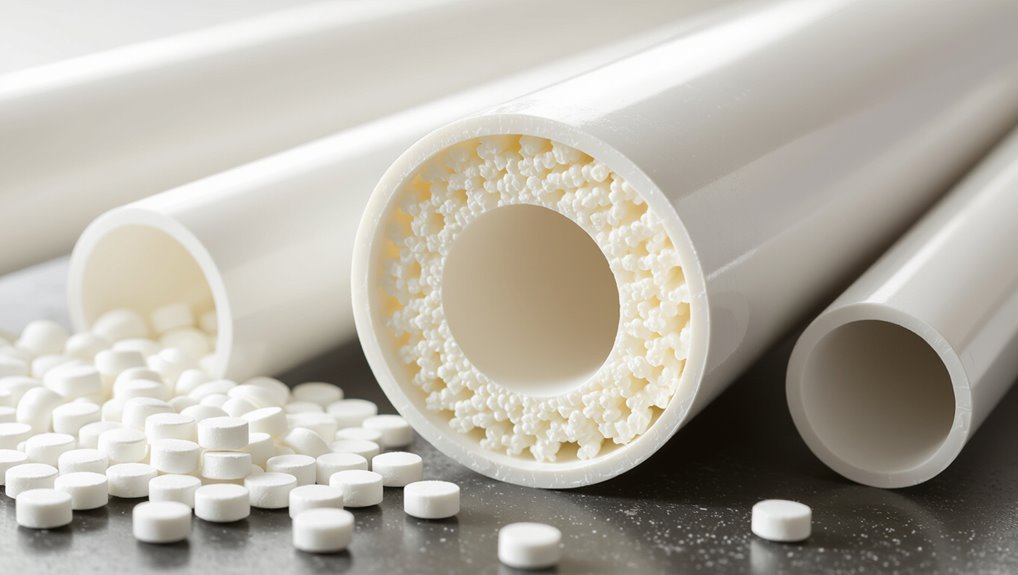
PVC pipes are made from polyvinyl chloride (PVC) resin, a rigid thermoplastic derived from ethylene and chlorine. This resin is combined with various additives, such as stabilizers, lubricants, impact modifiers, pigments, and occasionally plasticizers or fillers, to enhance performance characteristics. The specific resin grade and additives influence factors like pressure rating, temperature limits, chemical resistance, and overall toughness. The manufacturing process involves extruding, cooling, and finishing the pipes to ensure dimensional accuracy. Additionally, recycled PVC can be utilized for non-pressure applications. For more details on formulations, grades, joining methods, and service considerations, continue reading.
What Is PVC and Why It Matters for PVC Pipe
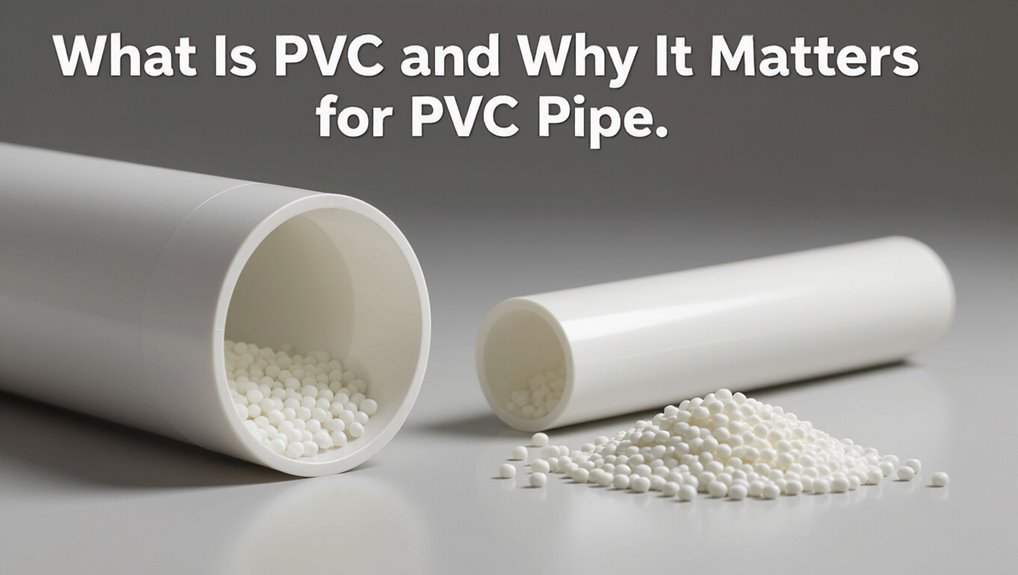
What is PVC and why does it matter for PVC pipe? PVC, or polyvinyl chloride, is a thermoplastic polymer valued for rigidity, chemical resistance, and cost-effectiveness.
Its molecular structure yields a balance of strength and processability, allowing extrusion into consistent, durable pipe forms. Additives—stabilizers, plasticizers, impact modifiers, and lubricants—tailor flexibility, UV and heat performance, and long-term stability.
These material choices determine pressure ratings, temperature limits, solvent compatibility, and expected service life. For engineers and installers, understanding PVC’s properties guides specification, jointing methods, and application selection, ensuring safe, economical water, drainage, and conduit systems.
How Ethylene and Chlorine Make PVC Resin
The production of PVC resin begins with two key feedstocks: ethylene, typically derived from cracking hydrocarbons, and chlorine, produced via electrolytic processes from salt brine.
These raw materials are converted into vinyl chloride monomer through intermediate chemical steps. Polymerization of vinyl chloride then yields PVC resin used for pipe manufacturing.
Ethylene Source And Production
Sources of ethylene for PVC production are primarily derived from steam cracking of hydrocarbons—naphtha, ethane, or propane—followed by purification to remove impurities that could interfere with downstream chlorination and polymerization.
The cracked gas is separated in fractionators to isolate ethylene, then further purified (drying, hydrogenation, and distillation) to meet purity specifications.
Ethylene quality impacts vinyl chloride monomer yield and catalyst performance.
Feedstock choice affects economics, energy use, and co-product streams like propylene and butadiene.
Transport to chlorination units typically occurs via pipeline or refrigerated tankers under controlled conditions.
- Steam cracking feedstocks
- Fractionation steps
- Purification methods
- Logistics and handling
Chlorine Manufacturing Process
In producing PVC resin, chlorination of ethylene begins with industrial-scale chlorine manufacture—typically via electrolysis of brine—which supplies the chlorine gas required for vinyl chloride monomer (VCM) synthesis. Chlorine is compressed, purified, and metered into reactors where it reacts with ethylene to form intermediate 1,2-dichloroethane (EDC) via direct chlorination or oxychlorination routes.
EDC is then thermally cracked or catalytically converted to VCM, releasing hydrogen chloride that is recycled to regenerate chlorine through oxychlorination or electrolysis feedstock. Process control focuses on stoichiometry, corrosion management, and byproduct handling to guarantee feedstock quality and safe, continuous operation.
Polymerization To PVC Resin
Following production of vinyl chloride monomer (VCM) from ethylene and chlorine intermediates, polymerization converts VCM into polyvinyl chloride (PVC) resin through free-radical chain-growth reactions.
Initiation, propagation, and termination steps build long PVC chains; process conditions (temperature, pressure, initiator type) control molecular weight and microstructure.
Suspension, emulsion, and bulk polymerization methods yield resins with distinct particle sizes, purity, and additive compatibility.
Stabilizers, plasticizers, and fillers are introduced post-polymerization to tailor thermal stability, flexibility, and processing behavior.
Quality control monitors residual VCM, viscosity, and particle distribution to make certain safe, consistent feedstock for pipe extrusion.
- Initiation mechanisms
- Polymerization methods
- Additive incorporation
- Quality control
Vinyl Chloride Monomer (VCM) in PVC Resin Production
How is vinyl chloride monomer (VCM) central to polyvinyl chloride (PVC) production? VCM is the basic molecular building block used to create PVC resin.
It is a volatile, colorless gas produced industrially from ethylene or acetylene feedstocks via chlorination and oxychlorination steps.
Purity and handling of VCM influence resin quality, contaminant levels, and downstream processing safety.
Storage and transport require pressurized, refrigerated, or dissolved-in-solvent systems to manage volatility and flammability.
Regulatory limits and monitoring minimize occupational and environmental exposures.
Industrial protocols control VCM losses and emissions to guarantee product consistency and compliance with safety standards.
Polymerization: Turning VCM Into PVC Resin
Polymerization converts vinyl chloride monomer (VCM) into solid polyvinyl chloride (PVC) resin through controlled chain-growth reactions, primarily free-radical vinyl polymerization. Initiators generate radicals that open VCM double bonds, creating growing polymer chains. Reaction conditions—temperature, pressure, solvent or emulsion medium—control molecular weight, particle size, and resin properties. Stabilizers and chain transfer agents modulate reactivity and polymer structure. After polymerization, PVC is recovered by coagulation, washing, and drying, yielding a powder or granules for compounding and processing.
- Initiation: radical generation from initiators
- Propagation: chain growth via VCM addition
- Termination: radical combination or disproportionation
- Workup: coagulation, washing, drying
Rigid PVC vs Flexible PVC: Material Differences
Rigid PVC is formulated with a high proportion of vinyl chloride units and minimal plasticizers, producing a hard, dimensionally stable material.
Flexible PVC incorporates significant amounts of additives—chiefly phthalate or non‑phthalate plasticizers—along with stabilizers and impact modifiers to impart softness and flexibility.
Comparing these compositions clarifies why rigid grades suit structural pipework while flexible grades are used where bendability and vibration resistance are required.
Rigid PVC Composition
In comparing rigid and flexible PVC, the primary distinction lies in their formulation: rigid PVC is a high-crystallinity, relatively unplasticized polyvinyl chloride designed for structural strength, while flexible PVC incorporates plasticizers and sometimes modifiers to increase softness and elongation.
Rigid PVC composition emphasizes high molecular weight PVC resin, limited additives, and heat-stabilizers to preserve rigidity, plus impact modifiers only when needed.
Its formulation targets stiffness, chemical resistance, and dimensional stability for pipes and fittings.
Typical constituents and roles:
- PVC resin — base polymer providing rigidity
- Heat stabilizers — thermal processing and service protection
- Fillers — cost control and stiffness enhancement
- Lubricants — processing aid and surface finish
Flexible PVC Additives
Where rigid PVC relies on a minimal additive package to preserve stiffness and dimensional stability, flexible PVC achieves softness and elongation through a carefully balanced blend of plasticizers, stabilizers, and performance modifiers.
Primary plasticizers, often phthalates or alternatives like adipates and citrates, reduce intermolecular forces to impart flexibility.
Heat and UV stabilizers prevent degradation during processing and service life.
Impact modifiers and processing aids enhance toughness and melt flow.
Fillers adjust cost and mechanical traits; flame retardants may be added where required.
Formulations are tailored to application-specific needs, balancing softness, durability, chemical resistance, and regulatory constraints.
PVC Pipe Grades: uPVC, CPVC, and Others
Several distinct grades of PVC—most prominently unplasticized PVC (uPVC) and chlorinated PVC (CPVC)—serve different pressure, temperature, and chemical-resistance requirements across plumbing, industrial, and electrical applications.
uPVC is rigid, UV-resistant, and common for drainage, conduit, and cold-water supply; CPVC is chlorinated for higher temperature service and hot-water plumbing.
Other formulations include flexible PVC for low-pressure or insulating uses and impact-modified grades for mechanical toughness.
Selection depends on rated temperature, chemical exposure, and mechanical load; standards and markings guide appropriate choice for safety and longevity.
- uPVC
- CPVC
- Flexible PVC
- Impact-modified PVC
Typical Composition of Schedule 40 and Schedule 80 PVC Pipe
Schedule 40 and Schedule 80 PVC pipes are primarily composed of a rigid PVC base resin, with Schedule 80 often formulated for higher wall thickness and mechanical strength.
Both grades incorporate additives such as impact modifiers, lubricants, and fillers to tailor processing and performance.
Heat stabilizers and UV inhibitors are included where needed to preserve long-term dimensional and chemical stability.
Base Resin Composition
The base resin for Schedule 40 and Schedule 80 PVC pipe is primarily a suspension-polymerized polyvinyl chloride (PVC) resin selected for its molecular weight distribution and particle morphology to meet targeted mechanical and processing requirements.
This resin provides the fundamental strength, stiffness, and thermal properties; its formulation and intrinsic viscosity influence extrusion behavior, fusion, and final wall integrity. Resin grade differences explain variation in toughness and pressure rating between schedules without invoking additives. Manufacturers choose resin based on processability, melt stability, and consistency to achieve dimensional tolerances and long-term performance.
- Intrinsic viscosity and molecular weight
- Particle size and morphology
- Gel content and crystallinity
- Melt flow and thermal stability
Additives And Stabilizers
Although the base PVC resin provides core properties, additives and stabilizers are essential to tailor processing behavior, long-term durability, and performance differences between Schedule 40 and Schedule 80 pipe.
Common additives include impact modifiers to improve toughness, plasticizers in limited use for flexibility, lubricants for extrusion, and fillers like calcium carbonate to control cost and stiffness.
Heat stabilizers (lead-free tin or calcium-zinc systems) prevent degradation during processing and service.
UV stabilizers and pigments protect appearance and resist sunlight.
Flame retardants may be added for specific codes.
The final formulation balances mechanical strength, chemical resistance, thermal stability, and manufacturing efficiency.
Common Additives in PVC Pipe Formulations
Several key additives are incorporated into PVC pipe formulations to modify processing behavior, mechanical properties, and long-term performance. These additives are selected to balance flexibility, impact resistance, coloration, and manufacturability without addressing thermal stabilization chemistry.
Typical categories include lubricants, plasticizers, impact modifiers, and pigments, each serving specific roles during compounding and extrusion. Lubricants ease melt flow; plasticizers impart controlled flexibility where required; impact modifiers improve toughness at low temperatures; pigments provide consistent color and UV masking.
Careful dosing and compatibility testing guarantee dimensional stability, weldability, and regulatory compliance for potable water, drainage, and industrial applications.
- Lubricants
- Plasticizers
- Impact modifiers
- Pigments
Stabilizers: Preventing PVC Degradation
Stabilizers are added to PVC formulations to inhibit degradation from heat and ultraviolet light, preserving mechanical properties and color during processing and service.
Both organic heat and light stabilizers and traditional metal-based stabilizers, such as calcium-zinc or lead compounds, are used depending on performance requirements and regulatory limits.
The choice balances effectiveness, processing conditions, environmental impact, and long-term durability.
Heat And Light Stabilizers
Frequently exposed to heat and UV radiation, PVC undergoes dehydrochlorination and chain scission that compromise its mechanical and aesthetic properties.
Heat and light stabilizers retard these reactions by scavenging HCl, quenching free radicals and absorbing UV energy.
Organic tin alternatives, epoxidized oils and hindered amine light stabilizers (HALS) are common in non-metal formulations.
Selection balances processing temperature, end-use exposure and regulatory limits for leachables.
Effective packages extend service life, preserve color and maintain flexibility without affecting weldability.
Compatibility with other additives and long-term migration behavior determine formulation success.
- HCl scavengers
- Radical quenchers
- UV absorbers
- Migration controllers
Metal-Based Stabilizers
Drawing on strong acid-scavenging and radical-neutralizing chemistry, metal-based stabilizers—chiefly lead, calcium-zinc, and mixed metal systems—have long been used to protect PVC from thermal and photochemical degradation. They neutralize hydrogen chloride released during heating, quench free radicals, and form surface films that slow further attack.
Lead salts offer excellent short-term performance but face environmental and health restrictions, prompting migration toward calcium-zinc and organotin alternatives. Calcium-zinc systems balance efficacy, cost, and regulatory acceptance for many pipes.
Mixed metal formulations tailor heat stability, processing window, and color retention, enabling manufacturers to meet application-specific durability and compliance requirements.
Plasticizers: Making PVC Pipe Flexible
Adding plasticizers alters PVC’s rigid molecular structure to produce flexible, resilient pipe suited for applications like irrigation, conduit, and soft tubing.
Plasticizers reduce intermolecular forces, lowering glass phase-change temperature and imparting softness without compromising chemical resistance. Selection balances flexibility, longevity, and regulatory limits; some are phthalate-based, others are non-phthalate alternatives with improved environmental profiles.
Processing considerations include migration, compatibility, and impact on mechanical properties.
End-use determines formulation: outdoor hoses require UV-stable, low-migration types; underground conduit favors heat-resistant blends. Proper formulation and testing assure performance across temperatures, pressures, and exposure conditions.
- Function
- Types
- Processing
- Performance
Pigments & Colorants: Why PVC Pipes Are Colored
Having adjusted PVC formulations for flexibility through plasticizers, manufacturers next modify appearance and identification by incorporating pigments and colorants. These additives provide consistent coloration, UV stability, and coding for application or pressure ratings.
Organic and inorganic pigments disperse into the PVC matrix during extrusion or compounding; selection balances colorfastness, heat stability, and cost. Titanium dioxide delivers opacity and brightness, while iron oxides and phthalocyanines offer durable hues.
Colorants can also include UV absorbers and stabilizers to reduce fading. Proper pigment loading preserves mechanical integrity and processing behavior, ensuring pipes meet aesthetic, regulatory, and functional identification requirements.
Impact Modifiers and Toughness Enhancers for Pipes
The section examines common impact modifier types used in PVC pipe formulations, including acrylics, MBS, and elastomeric copolymers, and how they alter fracture behavior.
It outlines standard toughness testing methods such as Izod, Charpy, and drop-weight impact to quantify performance under expected service conditions.
It also describes additive dispersion techniques—masterbatches, grafting, and high-shear compounding—that guarantee uniform modifier distribution and reliable mechanical properties.
Impact Modifier Types
Impact modifiers—specialized additives incorporated into PVC formulations—alter fracture behavior and energy absorption to prevent brittle failure in pipes used across pressure, drainage, and industrial applications.
Common types differ by chemistry and performance trade-offs. Block copolymers provide low-temperature impact resistance and good compatibility; chlorinated polyethylene offers weathering and chemical resistance with moderate stiffness retention; acrylic-based modifiers deliver clarity and surface toughness for pressure systems; core–shell rubber particles balance toughness and processability for heavy-duty and sewer pipes.
Selection depends on temperature range, chemical exposure, stiffness requirements, and extrusion or molding conditions.
- Block copolymers
- Chlorinated polyethylene
- Acrylic modifiers
- Core–shell rubber
Toughness Testing Methods
When evaluating PVC pipe performance under real-world loading, quantifiable toughness metrics are established through standardized impact and fracture tests that isolate energy absorption, crack initiation, and propagation behavior.
Common methods include Izod and Charpy impact tests for notched specimens, falling-weight impact tests simulating blunt strikes, and dynamic fracture toughness tests measuring KIC or JIC parameters.
Fatigue-crack-growth testing under cyclic loads evaluates subcritical propagation.
Instrumented pendulum and drop-weight setups capture force–displacement and absorbed energy.
Results guide selection and formulation of impact modifiers and processing limits, providing reproducible criteria for regulatory compliance, quality control, and end-use design validation.
Additive Dispersion Techniques
Introduce additives into PVC formulations through well-controlled dispersion methods to guarantee consistent distribution of impact modifiers and toughness enhancers throughout the polymer matrix.
Processing techniques such as high-shear mixing, masterbatch dilution, and reactive extrusion minimize agglomeration and assure interfacial adhesion.
Proper temperature control and residence time preserve modifier efficacy while avoiding degradation.
Characterization via rheology, microscopy, and impact testing verifies uniformity and performance gains.
Additive choice balances stiffness retention with improved fracture resistance for pressure and burial applications.
- High-shear melt mixing
- Masterbatch incorporation
- Reactive extrusion
- Ultrasonic dispersion
Lubricants and Processing Aids for Extrusion
In PVC extrusion, lubricants and processing aids control melt rheology, surface finish, and die release while preventing thermal degradation and equipment fouling.
External lubricants (paraffinic waxes, fatty acid esters) reduce friction at metal interfaces, improving output and preventing die build-up. Internal lubricants (stearates, metal soaps) modify polymer–polymer interactions to aid melt flow and fusion. Processing aids, often acrylic or vinyl copolymers, stabilize melt viscosity, enhance surface gloss, and suppress melt fracture.
Selection balances lubricant polarity, migration rate, and thermal stability to avoid bloom, hazing, or mechanical property loss. Correct dosing and compatibility are essential for consistent extrusion performance.
Fillers and Reinforcements: Cost vs Performance
Balancing cost and performance, fillers and reinforcements in PVC formulations modify mechanical properties, dimensional stability, and processing economics across a wide range of applications. Choices trade stiffness, impact resistance, and weight against raw material cost and ease of processing. Common fillers reduce cost and thermal expansion but can lower toughness; reinforcements like glass fibers increase strength and heat resistance while raising expense and requiring controlled dispersion. Selection depends on service conditions, regulatory limits, and recycling goals.
Performance-driven designs use minimal filler with targeted reinforcement; economy-focused pipes maximize inexpensive fillers with formulation tweaks to retain acceptable durability.
- Cost reduction vs toughness
- Dimensional stability gains
- Reinforcement trade-offs
- Recycling and regulatory impacts
Extrusion Process for PVC Pipe Manufacturing
The extrusion process begins with careful raw material preparation, where PVC resin, stabilizers, and additives are blended to specified formulations.
Molten material is forced through a die to shape the pipe, with control of temperature and pressure determining wall thickness and dimensional accuracy.
After shaping, pipes are cooled, cut, and inspected, with finishing steps addressing surface quality and tolerance compliance.
Raw Material Preparation
During raw material preparation for PVC pipe extrusion, carefully measured polymer resin, stabilizers, lubricants, and plasticizers are blended to meet targeted melt flow, thermal stability, and impact resistance specifications. Compound formulation follows strict recipes; additives are screened for compatibility, moisture is removed, and pigments or fillers are metered.
Quality control tests verify particle size, bulk density, and additive dispersion before feeding. Batching systems record weights and lot numbers for traceability. Preconditioning guarantees uniform feedstock properties and reduces processing variability, improving final product consistency while minimizing defects and downtime.
- Formulation verification
- Drying/dehumidification
- Additive dispersion checks
- Batch traceability
Extrusion And Shaping
With verified feedstock and controlled moisture levels, the compound is fed to a single- or twin-screw extruder where heat, shear, and pressure convert the pelletized PVC blend into a homogeneous melt.
The melt is forced through a calibrated die that defines pipe diameter, wall thickness, and profile features.
Downstream vacuum sizing and mandrels maintain concentricity and tolerances while continuous measurement systems monitor dimensions and surface quality.
Melt temperature, screw speed, and back pressure are adjusted to control viscosity and prevent degradation.
Cutters or haul-off units determine length and promote straightness prior to cooling and subsequent finishing operations.
Cooling And Finishing
After exiting the haul-off, the still-molten PVC pipe enters a controlled cooling and finishing stage where rapid, uniform heat removal and precise dimensional stabilization are paramount.
Water tanks, vacuum calibrators, and chill rolls solidify the wall while maintaining roundness, ovality limits, and concentricity.
Temperature, line speed, and vacuum pressure are adjusted to prevent sagging, residual stress, and surface defects.
Post-cooling trimming, end bevelling, and inspection guarantee length accuracy and joinability.
Final processing readies pipes for marking and packaging.
- Vacuum calibration for dimensional control
- Quench cooling to set wall structure
- Trimming and end finishing
- Visual and dimensional inspection
Cooling, Cutting, and Finishing Steps
In cooling, cutting, and finishing PVC pipes, controlled cooling prevents warping and internal stress that can compromise dimensional accuracy.
After extrusion, pipes pass through calibrated water baths or air conveyors to stabilize shape before cutting.
Cutting employs cold saws, rotary cutters, or automated trains to guarantee square, burr-free ends; feed rates match wall thickness to avoid melting.
Subsequent finishing removes flash and sharp edges via deburring tools or tumbling, and chamfering prepares ends for solvent or mechanical joints.
Marking, measurement verification, and protective end caps complete the process, readying pipes for handling, storage, and downstream assembly.
Quality Tests for PVC Pipe Integrity
For evaluating PVC pipe integrity, a coordinated program of mechanical, dimensional, and material tests verifies that products meet specified performance and safety criteria.
Testing includes pressure burst and hydrostatic tests to confirm strength and leak resistance under expected service loads.
Dimensional inspections guarantee wall thickness, diameter, and ovality conform to standards for fit and flow.
Impact and tensile testing assess toughness and elongation properties to detect brittle or weak batches.
Visual and non-destructive evaluations identify surface defects and internal voids without damaging samples.
- Pressure/hydrostatic testing
- Dimensional inspection
- Mechanical strength tests
- Visual/NDT evaluations
Chemical Resistance of PVC Pipe
PVC pipe exhibits strong resistance to many inorganic acids and common chlorinated disinfectants, making it suitable for many water and wastewater applications.
Its susceptibility increases with exposure to strong oxidizers and concentrated chlorine over time, requiring selection of appropriate formulations or protective measures.
Prolonged contact with solvents and fuels can cause swelling, softening, or embrittlement, so compatibility testing is recommended for chemical service.
Resistance To Acids
Most common acid solutions cause little to no degradation of polyvinyl chloride at ambient temperatures, thanks to the polymer’s strong carbon-chlorine backbone and dense, nonporous structure.
PVC resists many inorganic acids (e.g., hydrochloric, sulfuric at low concentrations) and organic acids under normal conditions.
Performance depends on concentration, temperature, exposure time, and mechanical stress.
Concentrated hot acids can promote swelling, softening, or surface attack.
Chemical compatibility charts and empirical testing guide selection for specific applications.
When in doubt, engineers specify temperature limits, use protective liners, or choose alternate materials for aggressive acid services.
- Compatibility varies by acid type and concentration
- Higher temperatures increase attack risk
- Long exposures can cause gradual degradation
- Testing and charts confirm safe service conditions
Chlorine And Oxidizers
Chlorine and other oxidizing agents can attack polyvinyl chloride under certain conditions, so exposure limits and service conditions must be carefully managed.
PVC generally resists low-concentration disinfectants used in potable water but prolonged contact with strong oxidizers, high temperatures, or elevated pressures accelerates degradation.
Damage manifests as surface embrittlement, cracking, color changes, and reduced mechanical strength.
Manufacturers specify maximum concentrations, temperatures, and contact durations for chlorine and common oxidizers.
Routine monitoring, adherence to standards, and choosing appropriate PVC grades mitigate risks.
For high-oxidizer applications, alternatives or protective linings are recommended to assure long-term reliability and safety.
Solvent And Fuel Exposure
Evaluating solvent and fuel exposure is essential when specifying polyvinyl chloride for piping systems, since many organic solvents and hydrocarbon fuels can swell, soften, or otherwise degrade the polymer under certain conditions.
PVC resists many aqueous chemicals but shows variable resistance to ketones, esters, aromatic hydrocarbons, and chlorinated solvents.
Compatibility depends on concentration, temperature, pressure, and contact duration.
For fuel handling or solvent drainage, select specialty formulations (CPVC, plasticized grades) or alternative materials.
Testing and manufacturer compatibility charts guide selection; transient exposure may be tolerated, while continuous contact often requires different polymers or protective liners.
- Check solvent class and concentration
- Assess temperature and duration
- Consult manufacturer compatibility data
- Consider alternative materials or liners
Temperature Limits and Testing for PVC Pipe
Temperature tolerance governs allowable service conditions and informs selection, installation, and safety procedures for PVC piping systems.
PVC softens as temperature rises; typical rigid PVC is rated for continuous use up to about 60°C (140°F), while CPVC extends that range. Low temperatures increase brittleness and risk of cracking.
Manufacturers provide standardized test results—heat deflection, tensile properties, and impact resistance—measured per ASTM and ISO methods.
Thermal cycling, accelerated aging, and hydrostatic tests simulate field conditions to verify performance over time.
Proper specification references these test data and temperature limits to prevent deformation, embrittlement, and premature failure.
Pressure Ratings and Material Strength
Having established how thermal conditions affect PVC performance, attention turns to how material properties and manufacturing define allowable internal pressures. PVC compound formulation, wall thickness, and molecular weight determine tensile strength and hoop stress capacity. Manufacturing quality—extrusion uniformity and annealing—affects flaw prevalence and pressure endurance. Standards assign pressure ratings (e.g., SDR/PSI) based on tested long‑term hydrostatic strength at specified temperatures. Designers must consider safety factors and degradation from chemicals or UV when assessing service pressure. Remaining within rated limits guarantees longevity; exceeding them risks creep, cracking, and sudden failure.
- Compound formulation
- Wall thickness
- Manufacturing quality
- Standards and testing
Which PVC Pipe to Choose: Plumbing, Drainage, Irrigation?
Which PVC formulation and schedule best suit a project depends on the application’s pressure requirements, chemical exposure, and installation conditions.
For potable plumbing, schedule-rated, NSF-approved white PVC with appropriate fittings and primer guarantees pressure integrity and water safety.
For drainage and sewer, thin-walled, non-pressure DWV (typically gray or white) offers easier handling and solvent-welded joints optimized for gravity flow.
For irrigation, pressure-rated PVC or Class-based piping with UV-resistant additives resists sunlight and chemicals from fertilizers; use pressure class matching pump output.
Correct joint methods, supports, and ambient temperature considerations complete selection to guarantee longevity and code compliance.
PVC vs CPVC vs Other Plastics: Selection Guide
When selecting piping materials, the decision between PVC, CPVC, and other plastics hinges on operating temperature, chemical compatibility, pressure requirements, and cost.
PVC suits cold-water, drainage, and general-purpose uses; it is economical and chemically resistant but limited by temperature.
CPVC tolerates higher hot-water temperatures and remains compatible with many potable systems, costing more.
Other plastics—PE, PP, PEX—offer flexibility, abrasion resistance, or enhanced thermal performance for specific applications.
Choice should match service conditions, installation methods, and lifecycle costs.
- Match temperature and pressure ratings.
- Verify chemical compatibility.
- Consider installation and fittings.
- Assess total lifecycle cost.
Health and Safety Concerns With PVC Pipe Materials
Examining health and safety concerns around PVC pipe materials requires attention to chemical leaching, combustion byproducts, and installation exposures. PVC can release additives like plasticizers or vinyl chloride under stress, high temperatures, or improper disposal; combustion emits hydrochloric acid and dioxins, posing inhalation risks. During cutting and solvent cementing, workers may inhale dust and VOCs; proper ventilation and PPE mitigate exposure. For potable water, certified food-grade PVC reduces contamination risk. Regular inspection prevents degradation-related hazards. Below compares common concerns and controls.
| Concern | Mitigation |
|---|---|
| Chemical leaching | Use certified materials |
| Combustion byproducts | Fire safety measures |
| Installation fumes | Ventilation and PPE |
| Mechanical damage | Routine inspection |
Environmental Impacts of PVC Pipe Production and Disposal
Beyond immediate health and safety concerns, the lifecycle of PVC pipe raises distinct environmental questions tied to raw material sourcing, manufacturing emissions, and end-of-life handling.
- Fossil feedstocks: PVC production relies on vinyl chloride derived from petroleum or natural gas, contributing to fossil fuel extraction impacts.
- Energy and emissions: Manufacturing consumes significant energy and can emit hazardous byproducts, including dioxins if processes are uncontrolled.
- Additives and leaching: Stabilizers and plasticizers used in pipes may persist in the environment or leach under certain conditions.
- Disposal burdens: Incineration and landfill disposal pose risks of toxic releases and long-term persistence, affecting ecosystems and waste management systems.
Recycling PVC Pipe: Methods and Limitations
In addressing PVC pipe sustainability, recycling presents both practical routes and clear constraints. Mechanical recycling grinds clean, uncontaminated pipes into regrind for noncritical applications; it is simple but degrades properties and tolerates limited contamination. Chemical recycling—depolymerization and feedstock recovery—can restore monomers for virgin-quality resin yet is energy-intensive and commercially limited.
Collection and sorting pose logistical challenges: mixed plastics, additives, and soil or adhesive residues complicate processing. Regulatory and market factors further restrict recycled PVC use in potable lines. Consequently recycling reduces waste but cannot fully substitute virgin production; strategies require careful segregation, quality control, and realistic end-use specifications.
How Additives Affect PVC Pipe Longevity and Maintenance
With specific blends of stabilizers, plasticizers, fillers, pigments, and impact modifiers, PVC pipe formulations determine resistance to heat, UV, chemical exposure, and mechanical stress, thereby shaping service life and maintenance needs.
Appropriate stabilizers limit thermal and UV degradation, reducing inspections.
Plasticizers affect flexibility and fatigue resistance, altering joint strain and repair frequency.
Fillers change hardness and abrasion resistance, influencing cleaning and wear.
Pigments and additives can signal formulation and guide compatible cleaners or solvents.
- Stabilizers: extend thermal/UV life, lower maintenance.
- Plasticizers: increase flexibility, affect joint care.
- Fillers: modify wear and cleaning needs.
- Pigments: aid identification and compatible treatments.
Signs of PVC Pipe Failure and When to Replace
When does a PVC line move from serviceable to failing? Visible cracks, persistent leaks, bulging sections, or discoloration indicate structural compromise.
Reduced water pressure or recurring blockages may signal internal collapse or deformation.
Brittle, powdery surfaces after long UV or chemical exposure show material degradation.
Joint separation, recurring joint leaks, or softened areas around fittings suggest loss of integrity.
Sudden failure after a freeze-thaw event or impact requires immediate replacement.
If repair frequency increases or safety and function are uncertain, replacement is prudent.
Professional inspection is advised for buried, concealed, or load-bearing PVC to determine timely, reliable replacement.
How to Read PVC Pipe Markings (Identify Material & Rating)
After identifying signs that a PVC line may be failing, attention shifts to the pipe’s markings to determine material type, pressure rating, and designed use. The printed codes indicate resin (PVC, CPVC, or CPVC blend), schedule or SDR number, nominal size, pressure rating (psi), standards (ASTM, NSF), and manufacturing date. Color and lettering style can hint at planned application (white for PVC, cream for CPVC, gray for electrical).
Understanding these markings helps match replacement parts and guarantees proper service conditions.
- Read resin abbreviation (PVC, CPVC)
- Note schedule/SDR and nominal size
- Check pressure rating/psi
- Verify standards and date
Conclusion
PVC pipe combines ethylene-derived hydrocarbons and chlorine into a versatile plastic whose many formulations serve countless jobs—sometimes seeming to do the work of a hundred other materials. Understanding VCM polymerization, rigid versus flexible PVC, additives, recycling limits, failure signs, and pipe markings equips users to choose, maintain, and replace pipes wisely. Proper selection and care extend service life, minimize environmental impact, and prevent costly failures before they cascade into larger problems.