How to Prevent Soap Scum Buildup in Drains: Simple Steps to Keep Pipes Clear and Odor-Free
To prevent soap scum buildup in drains and keep your pipes clear and odor-free, regularly rinse fixtures, wipe surfaces dry, and use drain strainers. After using soap, run hot water to wash away residues, and opt for low-residue or liquid soaps. Implement a weekly hot-water flush, monthly treatments with baking soda and vinegar or enzymes, and conduct occasional hair removal to maintain clear lines. Establish a simple maintenance schedule for long-term effectiveness, ensuring your plumbing remains in optimal condition.
Why soap scum forms in drains and why it matters
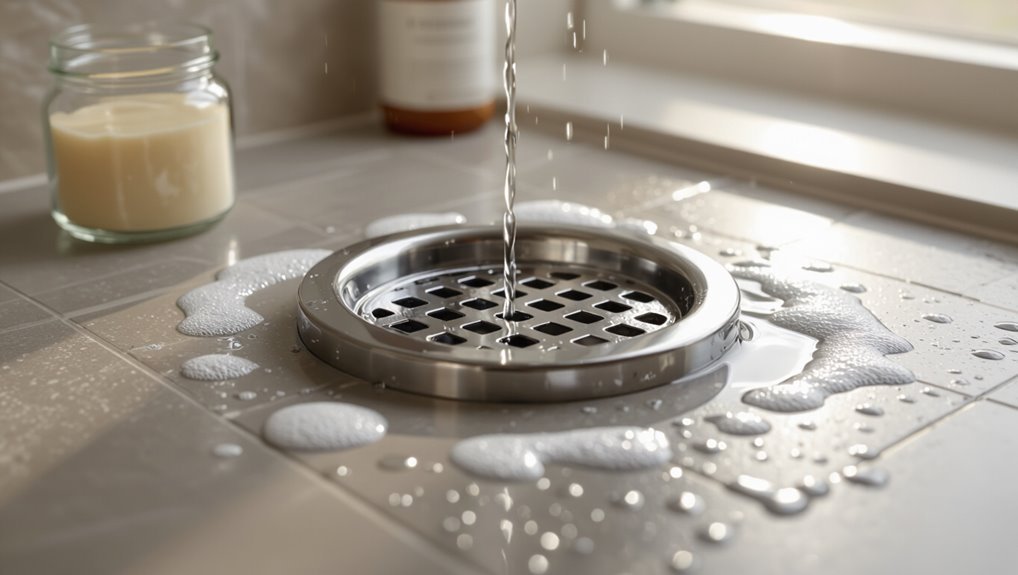
Soap scum forms when soap molecules react with minerals in hard water and trap oils and skin residues, creating a sticky, insoluble residue.
It commonly accumulates in showers, sinks, and bathtub drains and is indicated by slow drainage, visible films, and musty odors.
If left untreated, buildup can cause clogs, persistent smells, pipe corrosion, and promote mold growth.
The chemistry of soap scum (soap + minerals + oils)
Mineral-laden water, fatty acids from soaps and the oils washed off skin combine through simple chemistry to form stubborn soap scum: calcium and magnesium ions replace the sodium or potassium in soap molecules, creating insoluble salts, while unrinseable oils form a greasy matrix that traps particulates and microorganisms.
Understanding these reactions explains how to prevent soap scum buildup in drains by reducing minerals, oils, and residue.
Common locations and signs of buildup (showers, sinks, bathtub drains, slow drainage, odors)
With the chemical reactions that produce insoluble salts and greasy residues in mind, attention turns to where those products accumulate and how they reveal themselves.
Soap scum commonly builds in shower drains, bathtub traps, and sink P-traps.
Signs include slow drainage, surface filmy rings around fixtures, sticky residue on drain grates, and faint musty or soapy odors emanating from drains, especially after hot water use.
Risks of untreated buildup (clogs, odors, pipe corrosion, mold growth)
Neglected buildup in drains accelerates into a range of problems: trapped residues and hair form stubborn blockages, residue-fed bacteria create persistent odors, alkaline salts and trapped moisture promote metal corrosion in pipes, and damp scum provides a substrate for mold and biofilm growth.
Left unchecked, these issues reduce flow, increase maintenance costs, risk leaks and structural damage, and pose health hazards from allergens and pathogens.
Quick, effective actions to stop soap scum before it starts
Simple daily habits—rinsing fixtures after use, wiping surfaces dry, and removing hair from drains—significantly reduce residue before it accumulates.
Choosing low-residue products or liquid soaps designed to rinse clean further limits scum formation.
Adjusting water quality with softening or filtration can cut mineral buildup that binds soap into stubborn deposits.
Daily habits to minimize residue (rinsing, wiping surfaces, removing hair)
Adopting a few brief daily habits can dramatically reduce soap scum buildup before it starts.
Rinse shower walls and fixtures after use to wash away residue.
Wipe sinks and tubs with a squeegee or microfibre cloth.
Remove visible hair from drains and strainers daily to prevent clogs.
Run hot water briefly after shaving or washing to clear remaining suds.
Best practices for soap and product selection (liquid vs bar soap, low-residue formulas)
When choosing cleansing products, selecting low-residue formulas and the right format can greatly reduce soap scum formation at the source; liquid, synthetic-based cleansers generally leave less mineral-laden film than traditional hard bar soaps, especially in areas with hard water.
Opt for labeled “low-residue” or rinse‑clean formulas, use concentrated pumps to minimize excess, and prefer gels or liquid body washes for sinks, tubs, and showers.
Water quality adjustments that reduce mineral buildup (softeners, filtration)
Treating the water supply is the most direct way to prevent mineral-driven soap scum: installing a water softener or targeted filtration reduces calcium and magnesium levels that react with soap to form residue.
Whole-house softeners, point-of-use filters, or reverse osmosis units cut scale formation, extend pipe life, and reduce cleaning frequency.
Maintenance and correct sizing guarantee consistent performance and cost-effective prevention.
Step-by-step routine cleaning methods for drains
A concise maintenance routine keeps soap scum from forming in drains: a weekly hot-water flush and a baking soda–vinegar treatment prevent buildup before it starts.
Once a month, a deeper clean—using enzyme drain cleaners, manual removal of hair and debris, or a plumbing snake—removes accumulated residue.
Commercial chemical cleaners should be reserved for stubborn clogs and chosen by checking compatibility with pipes, safety instructions, and environmental impact.
Simple weekly maintenance (hot water flush, baking soda + vinegar ritual)
Perform weekly maintenance on drains to prevent soap scum from accumulating and hardening into clogs.
Start with a hot water flush: pour boiling or very hot water down each drain to melt residue.
Follow with a half-cup baking soda, then a cup of vinegar. Allow fizzing for 10–15 minutes, then rinse with hot water.
Repeat weekly for consistent results.
Monthly deeper clean (enzyme drain cleaners, manual removal, plumbing snake)
Once a month, deeper drain cleaning removes soap scum that weekly flushes can’t dislodge by combining enzymatic breakdown, targeted manual removal, and mechanical snake clearing.
Apply enzyme product per label, let act overnight, then remove grate and clear visible residue with gloves and a tool.
Finish by running hot water while operating a plumber’s snake to dislodge remaining buildup and rinse thoroughly.
When to use commercial cleaners and how to choose them safely
When routine flushing and monthly enzymatic treatments fail to clear persistent soap scum or slow drainage, commercial cleaners can be used selectively.
The next section outlines when they’re appropriate and how to choose products that balance effectiveness with safety for pipes, fixtures, and the user.
Use enzyme or mild alkaline formulas for regular clogs; reserve caustic or acid-based cleaners for severe, infrequent blockages and follow label precautions, ventilation, and PPE.
Tools and materials that make prevention and cleaning easier
Practical tools and the right supplies reduce the effort required to prevent and remove soap scum from drains.
The following list separates essentials, effective cleaning agents, and optional upgrades to match different needs and budgets. Choosing appropriately can shorten maintenance time and extend drain life.
- Must-have tools: drain strainer, plunger, drain snake, brush
- Recommended cleaning supplies: baking soda, vinegar, enzymatic cleaner, gloves
- Optional upgrades: water softener, hair catchers, mesh screens
Must-have tools (drain strainer, plunger, drain snake, brush)
A few reliable tools make preventing and removing soap scum from drains far simpler: a drain strainer to catch hair and residue, a plunger for dislodging clogs, a drain snake for deeper blockages, and a stiff brush for scrubbing buildup from visible surfaces.
Proper selection and regular use of these items reduces blockages, eases maintenance, and extends pipe life while minimizing odors and recurring buildup.
Recommended cleaning supplies (baking soda, vinegar, enzymatic cleaner, gloves)
Keep a small, well-chosen kit of cleaning supplies on hand to prevent and remove soap scum efficiently.
Include baking soda and white vinegar for safe, reactive scrubs; a bottle of enzymatic drain cleaner for organic buildup; disposable gloves for protection; a soft scrub brush or old toothbrush for crevices; and a spray bottle for diluted solutions.
Store items labeled and accessible for routine maintenance.
Optional upgrades (water softener, hair catchers, mesh screens)
Several straightforward upgrades can greatly reduce soap scum buildup and make maintenance easier: installing a water softener to limit mineral deposits, fitting hair catchers to trap strands before they reach the drain, and using fine mesh sink or shower screens to catch smaller debris.
These tools simplify routine cleaning, extend pipe life, reduce clogs and odors, and lower reliance on chemical cleaners for long-term prevention.
How to remove established soap scum blockages step-by-step
The section begins by outlining how to assess a drain to determine whether soap scum is a surface issue or a deeper blockage.
It then summarizes safe DIY options for light buildups—mechanical removal and hot water—and escalation steps for persistent clogs, such as using a plumber’s snake or an overnight enzyme treatment.
Finally, it notes clear signs that professional plumbing assistance is warranted.
Diagnosing the severity of the clog
Before attempting removal, assess the clog’s severity by observing water flow, listening for gurgling or bubbling, and checking for slow drainage in multiple fixtures that might indicate a shared line issue.
Determine whether water ponds, drains very slowly, or backs up when other fixtures run.
Note odors, recent repairs, and frequency of recurrence to decide if professional inspection or targeted treatment is warranted.
Safe DIY removal for superficial buildup (mechanical removal, hot water)
If the clog appears limited to a single fixture and water still moves—albeit slowly—simple DIY measures can often restore flow without calling a plumber.
Remove the drain cover, extract visible soap scum with a gloved finger or hook tool, flush with several liters of boiling water, repeat extraction and flush until flow normalizes.
Rinse and reinstall the cover.
Intensive DIY methods for stubborn clogs (snake, enzyme overnight treatment)
When minor measures fail, escalate to intensive DIY techniques that tackle compacted soap scum deep in the pipe:
use a hand snake to physically break and pull out deposits, and apply an overnight enzyme soak to biologically loosen residues without harsh chemicals.
Insert snake gently, rotate and extract debris; flush with hot water.
Pour enzyme cleaner per instructions, let sit overnight, then flush to confirm improved flow.
When to call a professional plumber
At the point where repeated DIY efforts — plunging, snaking, and enzyme soaks — fail to restore reliable flow or when water backs up despite corrective steps, a licensed plumber should be contacted.
A professional evaluates pipe damage, uses powered augers or hydro-jetting for hardened soap scum, inspects traps and venting, and provides lasting solutions.
Call sooner for recurring clogs, foul odors, or slow drains.
Preventive installations and modifications to reduce future buildup
Practical hardware and system changes can greatly reduce future soap scum buildup in drains.
Simple additions like reliable hair and debris strainers, replacing fixtures and pipes with smooth, low-residue materials, and installing water-softening or filtration equipment each target different causes of accumulation.
The following section compares these options and outlines installation and maintenance considerations.
Installing hair and debris strainers that work
Although small in appearance, properly chosen hair and debris strainers dramatically reduce soap scum accumulation by catching solids before they enter the drain; selecting a model that fits the fixture, resists corrosion, and is easy to remove for cleaning guarantees consistent performance and minimal maintenance.
Regularly emptying, rinsing, and inspecting strainers prevents clogs, reduces odors, and extends drain lifespan without altering plumbing.
Upgrading fixtures and piping to low-residue materials
Upgrade sinks, shower bases, and drain lines with smooth, nonporous materials to limit soap scum adhesion and simplify cleaning.
Choose glazed ceramics, stainless steel, or engineered composites with seamless joints and minimal crevices.
Replace old, rough piping with PVC or CPVC rated for residential drains.
Properly sealed connections and accessible cleanouts further reduce residue accumulation and shorten maintenance time.
Water-softening solutions and plumbing filters
Beyond selecting low-residue fixtures and smooth piping, controlling the water chemistry feeding those components further reduces soap scum formation.
Installing a water softener removes calcium and magnesium that react with soaps, while point-of-use filters trap oils and sediments.
Regular backwashing and resin maintenance guarantee effectiveness.
Properly sized, maintained systems minimize buildup, extend plumbing life, and reduce the need for harsh chemical cleaning.
Common mistakes that worsen soap scum and how to avoid them
Common mistakes frequently accelerate soap scum buildup and reduce the effectiveness of long-term solutions.
These errors include unsafe cleaning practices, ignoring early signs of trouble, and depending on quick fixes instead of addressing underlying causes. Identifying and correcting these habits preserves drainage and extends the life of preventive measures.
- Harmful cleaning habits (mixing chemicals, overusing harsh caustics)
- Ignoring early warning signs (slow drain, faint odors)
- Relying solely on temporary fixes
Harmful cleaning habits (mixing chemicals, overusing harsh caustics)
Using the wrong cleaners or combining them can make soap scum problems worse and create safety hazards.
Mixing bleach with acids or ammonia produces toxic gases. Excessive use of caustic drain cleaners can corrode pipes, damage seals, and push residue deeper.
Instead, follow label instructions, use gentler enzymatic or vinegar-based treatments, and apply targeted, infrequent treatments to protect plumbing and health.
Ignoring early warning signs (slow drain, faint odors)
Ignore early signs like a slow-draining sink or a faint, persistent odor at your peril: these subtle signals often mark the start of soap scum accumulation that, left unaddressed, hardens and traps hair, grease, and mineral deposits.
Timely inspection and simple measures — removing visible debris, flushing with hot water, and routine mechanical cleaning — prevent blockages and costly plumbing repairs.
Relying solely on temporary fixes
Relying on quick fixes like vinegar rinses, abrasive scrubbing, or repeated chemical drain cleaners often masks underlying soap scum buildup rather than eliminating it; these approaches can push residue deeper, damage pipes or fixtures, and encourage more frequent recurrence.
Instead, professionals recommend regular mechanical cleaning, enzyme-based treatments, and preventive habits—proper rinsing, hair traps, and periodic inspections—to address root causes and prolong pipe integrity.
Maintenance schedule and checklist for long-term prevention
A clear maintenance schedule helps keep soap scum from accumulating and turning into stubborn clogs.
The checklist should separate concise daily, weekly, and monthly tasks—like rinsing surfaces, flushing drains with hot water, and using a mild descaler—so routines are easy to follow.
Seasonal and annual items, such as water-softener service and a professional plumbing inspection, should be scheduled to catch issues before they escalate.
Daily, weekly, and monthly tasks (concise checklist)
Several simple chores, scheduled daily, weekly, and monthly, keep soap scum from accumulating and turning into stubborn clogs.
Daily: rinse faucets and shower walls, run hot water after use, remove hair.
Weekly: scrub drains and strainers, flush with baking soda and vinegar, clear visible residue.
Monthly: deep-clean traps with brush, inspect for slow drainage, repeat flush if necessary.
Seasonal and annual maintenance items (softener service, professional inspection)
Long-term prevention depends on scheduled seasonal and annual tasks that address sources beyond daily cleaning—water softener servicing, mechanical inspections, and professional drain assessments.
Homeowners should service softeners annually, replace media per manufacturer, and monitor salt.
Schedule a plumbing inspection every 1–2 years to check trap seals, vents, and buildup.
Keep records, note odors or slow drains, and act promptly on recommendations.
Comparison of popular drain-cleaning methods and products
A concise comparison of common drain-cleaning methods highlights trade-offs in effectiveness, safety, cost, and environmental impact to help readers choose appropriately. The table below summarizes these factors and suggests best choices by scenario such as hair-heavy bathrooms, hard-water homes, and tub versus sink use. This comparison frames practical recommendations for routine and occasional cleaning without prescribing a single universal solution.
| Method/Product | Best scenarios | Key trade-offs |
|---|---|---|
| Enzymatic cleaners | Regular maintenance, sinks | Gentle, eco-friendly, slower acting |
| Mechanical tools (snake, hair catcher) | Hair-heavy bathrooms, tubs | Immediate, low chemical risk, labor needed |
| Chemical cleaners (caustic/oxidizing) | Severe clogs in drains | Fast and powerful, higher safety and environmental concerns |
Effectiveness, safety, cost, and environmental impact across methods
When evaluating methods for preventing and removing soap scum in drains, effectiveness, safety, cost, and environmental impact should be weighed together rather than in isolation; a solution that clears buildup quickly may pose health risks, damage pipes, or create chemical runoff.
Mechanical cleaning is safe and low-cost but labor-intensive. Enzymatic cleaners balance safety and biodegradability.
Chemical caustics act fast but risk pipes, health, and ecosystems; professional services add expense.
Best choices by scenario (hair-heavy bathroom, hard-water home, tub vs sink)
Many households benefit from tailoring drain-care strategies to specific conditions: hair-heavy bathrooms require physical hair removal and guards, hard-water homes need descaling and water-softening measures, and tubs, sinks, and shower drains each favor different tools and cleaners based on flow, accessibility, and pipe materials.
Choose enzymatic cleaners for routine maintenance, mechanical tools for clogs, vinegar or citric acid for mineral deposits, and avoid harsh caustics on old pipes.
Troubleshooting common odor and drainage problems after cleaning
After cleaning, persistent odors warrant inspection of residual organic buildup and trap seals, with targeted treatments such as enzyme cleaners or trap flushing recommended.
Recurrent clogs should prompt assessment for deeper issues like tree roots, pipe collapse, or improper venting that require professional diagnosis.
Monitoring outcomes over time and adjusting prevention — frequency of cleaning, product choice, and mechanical removal methods — helps prevent repeat problems.
Persistent smells after treatment and how to eliminate them
Why does a lingering odor persist even after visible soap scum and clogs seem gone?
Residual organic residue, bacterial biofilms, or trapped water in traps and vents can emit smells despite surface cleaning.
Effective elimination requires enzymatic cleaners, targeted scrubbing with brush access, flushing with hot water, and airing or inspecting P-traps and venting.
Repeat treatments and professional inspection if odors persist.
Recurrent clogs and when they indicate deeper issues
When clogs recur soon after cleaning, what started as routine soap scum buildup may signal a deeper issue in the plumbing system.
Repeated blockages can indicate pipe damage, improper slope, tree root intrusion, or failing traps and vents.
Professional inspection with a camera or pressure test is advisable when DIY clearing fails repeatedly, since underlying defects can worsen odors, backups, and structural harm.
Monitoring results and adjusting prevention strategy
Monitor the drain’s performance for several days after cleaning to confirm whether odors and slow drainage return.
If issues recur, document frequency, timing, and associated activities (shampooing, shaving, heavy grease).
Adjust prevention: increase flushing frequency, install hair traps, apply enzymatic treatments weekly, or inspect venting.
If problems persist despite measures, recommend professional inspection to diagnose pipe damage, blockages, or sewage issues.
Conclusion
Prevention of soap scum in drains saves time and frustration, and one who “nips problems in the bud” keeps plumbing healthier. Regular simple habits—rinsing, using strainers, occasional hot-water flushes, and targeted cleaning—minimize buildup and odors. When deposits form, mechanical removal and appropriate cleaners restore flow. Avoid harsh chemicals and neglect; routine checks and a modest maintenance schedule guarantee drains remain clear, efficient, and odor-free over the long term.