How to Keep Sewage Pipes Clean: Easy DIY Maintenance Tips That Prevent Clogs
To keep sewage pipes clean and prevent clogs, regular maintenance is essential. Homeowners should monitor for slow drains, gurgling sounds, and wet spots. Utilize sink strainers, avoid flushing wipes or grease, and run hot water through drains frequently. Monthly enzyme treatments and careful plunging or snaking can resolve minor clogs. Always wear protective gear, loosen cleanouts gradually, and consider scheduling camera inspections for persistent issues. Additionally, proper landscaping can minimize root intrusion, while professional repairs are necessary for significant damage. Follow these practical tips to maintain clear sewage pipes effectively.
Why Regular Sewage Pipe Maintenance Matters
Neglected sewage pipes pose health, safety, and environmental risks through contamination, backups, and structural failure.
Regular maintenance reduces long-term costs by preventing major repairs and extending system lifespan.
Early warning signs—slow drains, odors, gurgling sounds, or wet spots—indicate when professional attention is needed.
Health, safety, and environmental risks of neglected pipes
When sewage pipes go unrepaired or uncleaned, they create escalating health, safety, and environmental hazards: backups and leaks spread pathogens and foul odors, structural failures increase collapse and flood risk, and untreated discharges contaminate soils and waterways, threatening public health, property, and ecosystems.
Regular inspection and simple DIY measures explain how to keep sewage pipes clean, limit exposure, prevent contamination, and protect communities.
Long-term cost savings from preventive care
Regular, proactive maintenance of sewage pipes greatly reduces long-term costs by preventing small issues from escalating into major repairs or replacements.
Routine inspections, timely cleaning, and minor fixes extend pipe lifespan, lower emergency service calls, and avoid property damage.
Budgeting for periodic care yields predictable expenses, smaller overall investment, and improved resale value compared with costly, unplanned sewer rehabilitation or replacement.
Signs your sewer system needs attention
Although often out of sight, early warning signs of sewer trouble can appear in everyday household symptoms: slow drains, persistent odors, gurgling pipes, or unexplained soggy patches in the yard.
Ignoring these signs risks backups, structural damage, and costly repairs.
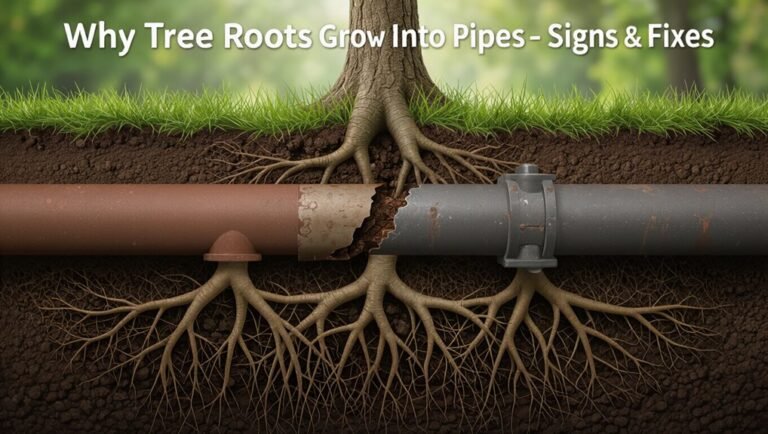
Prompt inspection identifies blockages, tree root intrusion, or pipe collapse.
Timely maintenance preserves function, health, and property value while preventing emergencies.
Quick Assessment: How to Tell If Sewer Pipes Are Starting to Clog
Early warning signs such as slow drains, gurgling noises, and foul odors often indicate a developing sewer clog.
Identifying the pipe layout and approximate problem location helps determine whether simple clearing methods will work.
If symptoms persist, worsen, or involve sewage backup, a professional should be called rather than attempting further DIY fixes.
Common early warning signs (slow drains, gurgling, odors)
When drains start to slow, gurgling noises emerge, or persistent sewage odors appear, these symptoms often indicate developing clogs in the sewer line.
Additional signs include toilets that bubble when sinks drain, multiple fixtures backing up simultaneously, and water pooling near drains or yard low spots.
Early detection prompts prompt cleaning or inspection, reducing risk of backups, damage, and costly repairs.
How to identify pipe location and layout
Before attempting any cleaning, a quick assessment of pipe location and layout helps determine whether slow drains and odors stem from a localized clog or a main sewer issue.
Inspect visible traps, cleanouts, and access points; map fixtures to branch lines; note slope and low spots where buildup collects.
Check basement, yard, and municipal connection positions to trace likely blockage zones efficiently.
When to call a professional vs DIY
If slow drains, gurgling noises, or persistent odors appear across multiple fixtures—or sewage backs up into the lowest drains—a professional inspection is warranted; homeowners should attempt basic DIY first: plunging, enzyme treatments, and trap cleaning.
Call a plumber when problems recur, drains remain slow after simple fixes, multiple fixtures are affected, sewage is visible, or inspection tools (camera, auger) are required.
Immediate action prevents damage.
Essential Tools and Materials for DIY Sewage Pipe Maintenance
A concise inventory of tools and materials helps homeowners prepare for routine sewage pipe maintenance without unnecessary expense.
Protective gear and basic hand tools form the first line of defense, while drain-cleaning supplies and eco-friendly chemicals address common blockages.
Guidance on when to employ power tools or camera inspection equipment completes the overview and informs safe escalation.
- Personal protective equipment and basic hand tools
- Drain-cleaning supplies and biodegradable chemicals
- Power tools for stubborn obstructions
- Camera inspection gear for diagnosis and planning
Basic hand tools and protective gear
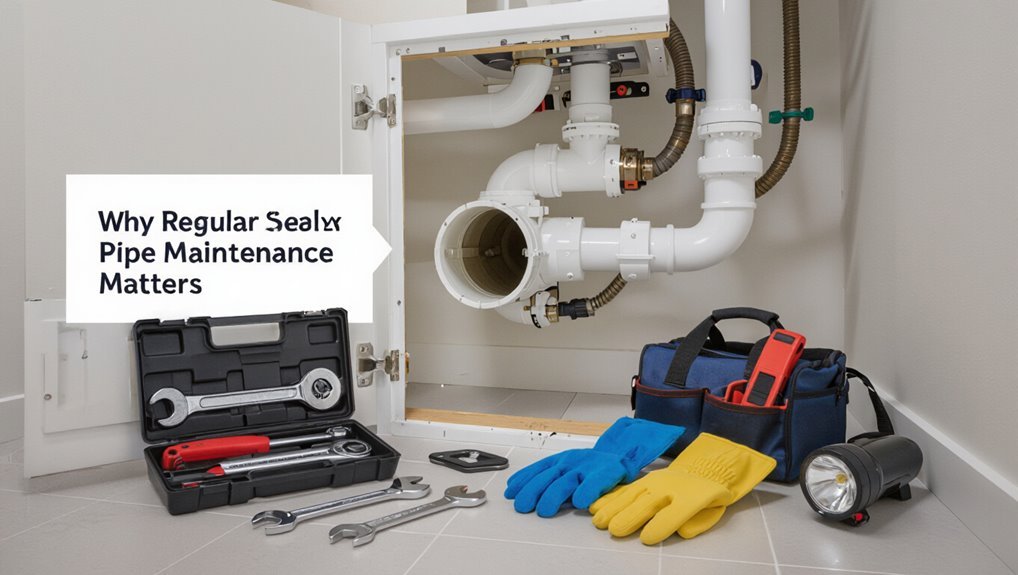
Several simple hand tools and basic protective gear form the core kit for routine sewage pipe maintenance, enabling safe, effective work on common clogs and inspections.
Essential items include adjustable wrenches, plumber’s snake or hand auger, durable screwdrivers, pipe wrench, and utility knife.
Protective gear: nitrile gloves, safety goggles, waterproof boots, and disposable coveralls to prevent contamination and injury.
Drain-cleaning supplies and eco-friendly chemicals
Many homeowners keep a small assortment of drain-cleaning supplies and eco-friendly chemicals on hand for routine blockages and preventive maintenance.
Kits typically include plungers, hand augers, enzyme-based cleaners, biodegradable degreasers, and drain strainers.
Enzyme formulas digest organic buildup safely; biodegradable degreasers tackle grease.
Labels guide safe use; gloves and eye protection remain essential.
Proper storage prevents accidental mixing and child access.
When to use power tools and camera inspection equipment
For routine clogs, handheld tools and enzyme cleaners suffice, but tougher obstructions or recurring backups call for power tools and camera inspection equipment.
Power augers, high-pressure water jets, and motorized snakes remove compacted debris; video inspection pinpoints root intrusions, collapses, and offsets.
Use these tools when manual methods fail or when diagnostics are needed; hire professionals if structural repairs or confined-space risks appear.
Step-by-Step Routine Maintenance to Prevent Clogs
Routine maintenance should include simple monthly tasks homeowners can perform to reduce buildup and spot early problems.
Seasonal checks — including inspecting cleanouts, accessible traps, vent openings, and visible pipe runs — help catch weather- or debris-related issues before they worsen.
When a manual cleanout is needed, one should follow clear safety steps: shut off water, wear protective gear, open accessible traps/cleanouts slowly to release pressure, remove blockages, and reassemble and test the line.
Monthly tasks for homeowners
Homeowners should set aside a short, consistent block of time each month to inspect and perform basic maintenance on sewage-accessible fixtures and visible drainlines.
Check and clear strainers, run hot water through seldom-used drains, use a plunger on slow sinks, and flush toilets deliberately.
Apply enzyme-based drain treatments per label, tighten minor fittings, and note any persistent odors or slow drainage for professional evaluation.
Seasonal checks and what to inspect
Although seasonal checks vary by climate and household use, a quarterly inspection schedule focuses attention on the key components that most commonly lead to clogs and sewage backups.
Inspect roof vents, visible sewer lines, drain grate screens, and exterior cleanouts for debris, sagging, or roots.
Check sump pumps, basement floor drains, and toilet seals for leaks or slow drainage; schedule professional camera inspections if issues recur.
How to perform a safe manual cleanout of accessible traps and cleanouts
When a clog or odor indicates a problem in accessible traps or exterior cleanouts, a careful manual cleanout can resolve buildup quickly and prevent larger backups; however, safety and correct procedure are essential to avoid injury or damage.
Wear gloves and eye protection, close nearby fixtures, loosen cleanout caps slowly, catch debris and wastewater, inspect trap for blockages, clear with a plumber’s snake, then reseal and test flow.
Safe Chemical and Natural Treatments to Keep Sewers Clear
This section compares enzyme-based cleaners with caustic chemicals, outlining efficacy and risks for pipe materials and the environment.
It also explains safe procedures for using baking soda and vinegar as a mild treatment, and recommends application frequency based on pipe condition.
Safety precautions for handling, PPE, and avoiding harmful chemical mixtures are summarized.
Comparisons of enzyme-based cleaners vs caustic chemicals
While both enzyme-based cleaners and caustic chemicals are marketed for clearing sewer blockages, they operate through fundamentally different mechanisms and carry distinct safety and environmental profiles. Enzymes digest organic buildup slowly and are biodegradable; caustics react quickly but can harm pipes and aquatic life. Choose based on severity, pipe material, and environmental concern.
| Type | Action | Safety/Impact |
|---|---|---|
| Enzyme | Digest organic matter | Low toxicity |
| Caustic | Chemical dissolution | Corrosive/high impact |
| Use case | Maintenance vs emergency | Eco vs fast |
How to use baking soda and vinegar safely
Several common household ingredients—baking soda and vinegar—can be combined to loosen minor organic buildups in sewer lines without using harsh caustics.
A measured sequence—dry baking soda, followed by vinegar—creates fizz that helps dislodge soft residue.
Flush thoroughly with hot water afterward to carry loosened material forward.
This method suits maintenance of minor blockages, not severe or mineral-heavy clogs.
How often to apply treatments and safety precautions
After using a baking soda-and-vinegar rinse for routine maintenance, homeowners should establish a schedule and follow clear safety precautions for any chemical or natural treatments applied to sewer lines.
Apply gentle enzymatic or biological additives monthly, harsher chemical treatments only when necessary and sparingly, and avoid mixing products.
Use gloves, eye protection, adequate ventilation, and follow manufacturer instructions and local disposal regulations to protect people and plumbing.
Mechanical Cleaning Techniques for Tough Blockages
Mechanical methods address blockages that resist chemical or biological treatment, starting with proper use of a drain snake and common operator errors to avoid.
High-pressure hydro-jetting offers powerful cleaning but carries specific benefits, limitations, and safety requirements.
Guidance on augers and rotary tools focuses on techniques that clear obstructions without compromising pipe integrity.
Using a drain snake: technique and common mistakes
A drain snake—also called an auger—provides targeted mechanical force to dislodge hair, grease, tree roots, and other stubborn obstructions by extending and rotating a flexible cable into the line; proper use requires choosing the right auger size, steady feed and rotation, and attention to pipe material to avoid damage.
Technique: insert gently, rotate while advancing, withdraw debris steadily.
Common mistakes: forcing cable, using wrong tip, neglecting gloves.
Hydro-jetting: benefits, limitations, and safety
Many homeowners and professionals turn to hydro-jetting when tough blockages resist snaking, because it uses high-pressure water streams to scour pipe interiors, remove grease, scale, roots, and biofilm with minimal chemical use.
Benefits include thorough cleaning and restored flow.
Limitations: not suitable for fragile or compromised pipes and requires professional equipment.
Safety demands trained operators, pressure controls, and protective gear.
How to use augers and rotary tools without damaging pipes
When hydro-jetting is inappropriate for older, fractured, or tightly curved lines, augers and rotary drain tools offer a controlled alternative for breaking up clogs.
Operators should match tool size and head type to pipe diameter and material, use moderate feed pressure, rotate at recommended speeds, and avoid aggressive blades in fragile lines.
Inspect before and after, wear protection, and stop if resistance feels abnormal.
Preventive Habits to Reduce Sewer Clogs
Practical daily habits in kitchens and bathrooms, such as scraping food into compost and using drain strainers, greatly reduce the buildup that leads to clogs.
Clear guidance on items never to flush or pour—wipes, grease, and harsh chemicals—prevents avoidable blockages and pipe damage.
Routine landscaping and control of nearby tree roots protect sewer lines from intrusion and costly repairs.
Kitchen and bathroom practices that protect pipes
Adopting simple habits in the kitchen and bathroom greatly reduces the risk of sewer clogs by keeping solids, grease, and fibrous materials out of drains.
Regular use of sink strainers, scraping plates into compost or trash, wiping greasy pans before washing, flushing toilets only when necessary, and disposing of personal-care lint and hair in bins prevents buildup.
Routine quick rinses maintain flow.
What not to flush or pour down drains
After establishing kitchen and bathroom habits that keep solids, grease, and fibers out of pipes, attention turns to specific items that should never be flushed or poured down drains.
Avoid disposing of wipes, paper towels, feminine hygiene products, cotton swabs, dental floss, cooking oils, grease, paint, solvents, medications, and food scraps.
Use proper disposal, recycling, or hazardous-waste collection instead.
Landscaping and tree-root management near sewer lines
Because tree roots naturally seek moisture and nutrients, landscaping choices near sewer lines directly influence the risk of root intrusion and resulting clogs.
Homeowners should locate sewer lines, plant trees at safe distances, favor shallow-rooted species, and avoid planting over pipes.
Regular inspections, root barriers, and prompt removal of problematic vegetation reduce damage risks and maintenance costs while preserving yard aesthetics.
Monitoring and Advanced Inspection Methods
Routine camera inspections are recommended after persistent slow drains, repeated clogs, or any post-repair verification.
Interpreting footage focuses on identifying roots, scale, cracks, and offset joints to prioritize repairs and cleaning methods.
Complementary approaches include smart sensors and continuous monitoring systems that detect flow changes, blockages, or leaks before they become emergencies.
When to schedule a camera inspection
When should property owners call for a sewer camera inspection? They should schedule one after repeated slow drains, unexplained backups, foul odors, or after tree planting near lines.
Inspections are prudent following aging-pipe concerns, significant home renovations, or unexplained water bill spikes.
Routine checks every few years help detect early damage. A qualified plumber can recommend timing based on risk and prior issues.
How to interpret common camera findings
After a camera inspection is scheduled and completed, the recorded footage and accompanying report become the primary tools for diagnosis and planning.
Inspectors identify blockages, grease buildup, tree root intrusion, scale, corrosion, and misaligned joints. Each finding is rated by severity and location, guiding repair priority—cleaning, mechanical removal, spot repairs, or full replacement—and informing cost estimates and preventative recommendations.
Smart sensors and ongoing monitoring options
Installations of smart sensors and continuous monitoring systems transform periodic inspections into a proactive maintenance strategy by providing real-time data on flow rates, pressure changes, water quality, and early indicators of blockages or intrusion.
Remote alerts, cloud dashboards, and analytics enable trend detection and predictive scheduling. Low-power acoustic, pressure, and conductivity sensors suit retrofit projects, reducing emergency repairs and optimizing cleaning frequency with documented performance records.
Repair and Rehabilitation Options When Pipes Are Damaged
When damage is found, options range from targeted spot repairs and cured-in-place pipe (CIPP) relining to full pipe replacement, each with distinct procedures and suitability.
Cost and expected lifespan vary widely by method, pipe condition, and access constraints, so owners should weigh upfront expense against long-term performance.
Prior to any work, a clear site assessment, service access plan, and temporary shutoff or diversion strategy should be arranged to streamline the professional repair.
Spot repairs, relining (CIPP), and full replacement overview
Evaluating damaged sewer lines leads to three primary rehabilitation strategies: targeted spot repairs for localized defects, cured-in-place pipe (CIPP) relining for continuous restoration without excavation, and complete pipe replacement for extensively compromised segments. Each option suits different damage patterns and access conditions; selection depends on defect extent, site constraints, and desired disruption.
| Method | Scope | Access |
|---|---|---|
| Spot repair | Local | Minimal |
| CIPP relining | Continuous | Trenchless |
| Replacement | Full | Excavation required |
Cost factors and lifespan expectations for each method
After outlining spot repairs, CIPP relining, and full replacement, attention turns to how cost drivers and expected service life differ among these approaches.
Spot fixes are lowest cost short-term solutions, often lasting 5–15 years.
CIPP relining costs more upfront but typically restores service for 25–50 years.
Full replacement carries highest immediate expense yet offers the longest lifespan and asset renewal.
How to prepare for a professional repair job
Schedule a pre-repair inspection and secure access to the affected area to guarantee the crew can work efficiently and safely.
Occupants should clear furniture, provide utility shutoff locations, and disclose pipe history and prior repairs.
Confirm permits, warranties, timeline, and payment terms.
Arrange temporary water or waste diversion if needed and obtain a written scope of work to prevent misunderstandings during rehabilitation.
Common Mistakes That Make Sewage Problems Worse
Homeowners and contractors often worsen sewage issues through overuse of harsh chemicals, DIY repair mistakes, and neglect of early warning signs.
Ignoring slow drains, odors, or minor leaks can allow small problems to escalate into major backups.
Improper landscaping or construction—like planting deep-rooted trees near lines or altering grade—adds further risk by damaging pipes and obstructing flow.
Overuse of harsh chemicals and DIY errors
Using powerful drain cleaners and tackling complex repairs without proper knowledge can intensify blockages and damage pipes.
Chemical overuse corrodes seals, weakens joints, and kills beneficial bacteria that break down waste.
Incorrect tool use or improper disassembly can bend, crack, or misalign pipes.
Professional assessment is safer for persistent issues; conservative, recommended products and correct techniques reduce long-term repair costs.
Ignoring early warning signs
When did the slow drip, gurgling drain, or faint sewage odor first appear?
Homeowners who ignore such early signs allow minor issues to escalate into blockages, backups, and costly repairs.
Prompt inspection, clearing hair and debris, and monitoring unusual sounds or smells prevent deterioration.
Delaying diagnosis risks pipe corrosion, root intrusion, and full system failure that require professional intervention.
Improper landscaping and construction practices
If landscaping and construction ignore underground sewage routes, misplaced trees, deep-rooted shrubs, and heavy machinery can damage pipes, cause cracks, and create blockages that lead to backups and costly repairs.
Professionals recommend mapping sewer lines before planting or building, choosing shallow-root-tolerant plants, and restricting heavy equipment near pipe corridors.
Regular inspections and prompt corrective work prevent root intrusion, collapse, and recurring clogs.
Simple Maintenance Schedule Checklist for Homeowners
A concise maintenance schedule helps homeowners prevent blockages and detect issues early by assigning clear weekly, monthly, and annual tasks.
Routine checks should include quick visual inspections and simple cleaning, while more thorough annual inspections and professional servicing are scheduled and recorded. Records of each inspection and any interventions should be logged immediately to track trends and justify repairs.
- Weekly: clear strainers, run water in infrequently used drains, check for slow drainage or odors.
- Monthly: inspect cleanouts, test backflow prevention devices, remove minor buildup with safe methods.
- Annual: arrange professional camera inspection, service septic systems or pumps, flush main lines if recommended.
- Records: date each task, note findings and actions, keep receipts and photos for at least 2–3 years.
Weekly, monthly, and annual tasks
Establishing a simple maintenance schedule helps homeowners prevent clogs, odors, and costly repairs by dividing tasks into weekly, monthly, and annual checks.
Weekly: clear sink and shower strainers, run hot water, and flush rarely used drains.
Monthly: inspect visible pipes, use enzyme cleaner, and check outdoor drains.
Annual: professional inspection, sewer line camera check, and clean mainline if needed.
When to keep records and document inspections
Homeowners should document inspections and maintenance activities immediately after they occur to create a reliable timeline of pipe condition and repairs.
Records should note date, task, tools used, observations, and photos of problem areas. Keep a simple logbook or digital file accessible to occupants and service professionals.
Review entries before seasonal maintenance and share reports with plumbers when seeking repairs or warranty claims.
Resources and When to Hire a Licensed Plumber
When recurring backups, sewage odors, or visible pipe damage occur, immediate professional intervention is recommended to prevent health risks and property damage.
Homeowners should select a licensed sewer contractor with verifiable references, insurance, and experience handling similar systems.
Before hiring, confirm licensing and permits, ask about inspection methods, warranties, and pricing, and request written estimates.
Situations requiring immediate professional intervention
Several clear signs indicate that immediate professional intervention is required: persistent backups despite attempts at clearing, sewage odors permeating the property, multiple fixtures draining slowly at once, sewage surfacing in yards or basements, and visible damage to sewer lines after nearby excavation or heavy storm events.
In these cases, licensed plumbers should inspect, diagnose blockages or breaks, perform safe repairs, and coordinate emergency remediation to protect health and property.
How to choose a qualified sewer contractor
After recognizing signs that require immediate professional attention, selecting the right sewer contractor becomes the next priority to affirm repairs are safe, effective, and compliant with local codes.
Homeowners should verify licensing, insurance, and bonding, check references and recent reviews, confirm experience with sewer systems and trenchless methods, request written estimates, and consider local utility referrals or municipal contractor lists to guarantee reliable, timely service.
Questions to ask before hiring and permit considerations
Why ask specific questions before hiring a sewer contractor?
Homeowners should verify license, insurance, references, experience with similar jobs, guarantees, and detailed estimates.
Ask about required permits, who obtains them, inspection processes, and compliance with local codes.
Confirm timeline, payment terms, and disposal of waste.
When complexity or sewer lateral issues arise, hiring a licensed plumber is essential.
Conclusion
Like a well-tended garden that lets water find its way, routine care keeps the home’s veins flowing free. Small, steady acts—inspections, mindful disposal, simple treatments—serve as pruning shears against deeper rot, while timely repairs replace worn roots before they topple the tree. By treating pipes as living systems rather than hidden burdens, homeowners transform potential chaos into quiet order, ensuring the household’s unseen currents remain clear, resilient, and reliable.