How to Keep a Bathroom Smelling Fresh With No Windows: 15 Easy, Low-Maintenance Solutions
To keep a windowless bathroom smelling fresh, focus on controlling moisture, eliminating odor sources, and improving airflow. Implement simple daily habits like wiping surfaces, hanging towels to dry, and emptying the trash. Utilize exhaust or inline fans, set timed runs, and consider passive door vents for better air movement. Neutralize odors with baking soda, activated charcoal, or enzyme cleaners, and opt for moisture-resistant materials. Schedule weekly drain cleanings and monthly deep cleans. By following these straightforward steps, you can maintain a consistently fresh bathroom without windows.
Why Bathrooms Without Windows Tend to Smell and What to Expect
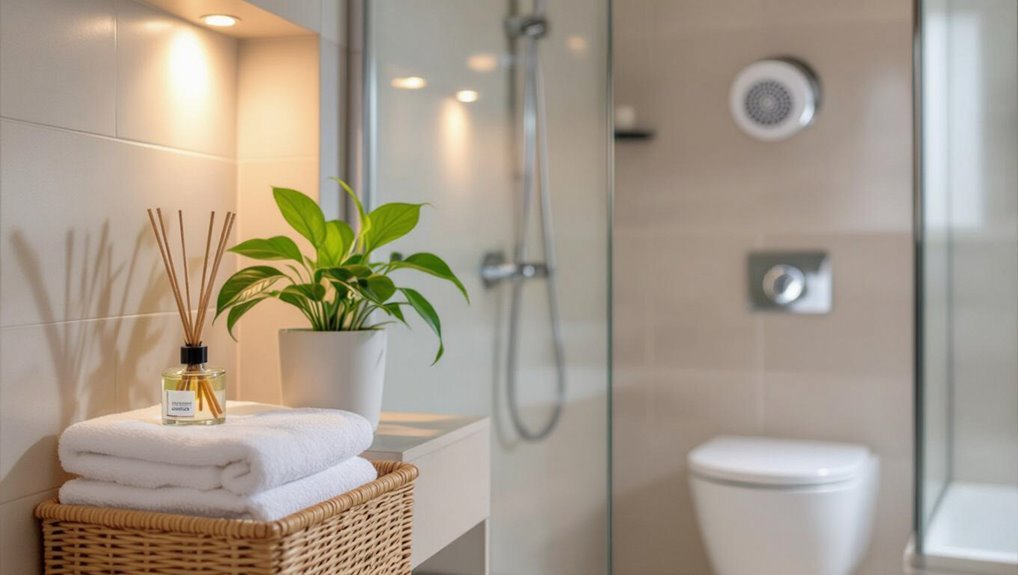
Windowless bathrooms often trap moisture from showers and sinks, which, combined with poor ventilation, lets odors from drains, fabrics, and hidden mold accumulate.
Without an outlet for air exchange, these sources behave more persistently and can become concentrated over time.
Persistent sewage smells, rapidly spreading mold, or unexplained dampness signal issues that may require a plumber or mold remediation professional.
Common causes of persistent bathroom odors (moisture, poor ventilation, drains, mold, fabrics)
Many bathrooms without an exterior window develop persistent odors because limited airflow, trapped moisture, and hidden sources like slow drains and damp textiles create an environment where bacteria and mold thrive.
Common causes include chronic humidity from showers, inadequate ventilation systems, biofilm in P-traps and grout, lingering mildew in towels and rugs, and porous materials retaining odors.
Practical routines support how to keep bathroom smelling fresh with no windows.
How odor sources behave differently in windowless spaces
Why do bathrooms without exterior windows often hold onto odors longer?
In windowless rooms, reduced air exchange traps volatile compounds; humidity remains elevated, promoting microbial growth and slow evaporation.
Odor molecules adsorb to porous surfaces and fabrics, releasing gradually.
Without natural convection, localized sources—drains, towels, grout—dominate persistence, making routine ventilation and moisture control essential to prevent buildup.
When a smell indicates a serious problem requiring professional help
Recognize that certain persistent or unusual bathroom odors can signal underlying issues beyond routine cleanliness and warrant professional inspection.
Foul, sulfuric, sewage, or chemical smells that persist despite cleaning often indicate blocked drains, sewer line leaks, mold behind walls, or gas leaks.
A licensed plumber or mold remediation specialist can diagnose causes, recommend repairs, and prevent health risks and structural damage.
Quick Immediate Fixes to Neutralize Bathroom Odor
To address acute bathroom odors, quick solutions focus on fast-acting absorbers like baking soda or activated charcoal, short-term neutralizers such as odor-eliminating sprays and enzyme cleaners, and temporary ventilation hacks.
Practical tips include placing absorbent sachets, misting a neutralizer after use, and maximizing airflow with the exhaust fan or a door gap.
These measures provide immediate relief while longer-term fixes are implemented.
Fast-acting odor absorbers (baking soda, activated charcoal)
Reach for fast-acting odor absorbers like baking soda and activated charcoal when immediate neutralization is needed; both substances trap and neutralize volatile compounds rather than just masking smells, making them effective short-term fixes.
Place open containers or sachets near the toilet, sink, or trash.
Refresh baking soda monthly and reactivate charcoal by sun exposure or replacement every few months for consistent performance.
Short-term neutralizers (odor-eliminating sprays, enzyme cleaners)
After deploying absorbers like baking soda or charcoal for ongoing odor control, many will turn to short-term neutralizers for an immediate fix.
Spray-on odor eliminators chemically bind or mask smells briefly; enzyme cleaners break down organic residues at the source.
Use products labeled non-toxic and fragrance-balanced, apply sparingly to fabrics and surfaces, and follow instructions to avoid buildup or irritation.
Temporary ventilation hacks (exhaust fan tips, door-gap airflow)
Crack the bathroom door and run the exhaust fan to move stale air out and draw fresh air in, creating a simple, immediate airflow that reduces lingering odors.
Position a small clip-on fan near the gap to boost circulation. Keep the fan on for several minutes after use.
For stronger extraction, prop the door slightly and aim a box fan toward the hall to force airflow.
Low-Maintenance Daily Habits to Keep Smells Away
A practical daily routine keeps bathroom smells from returning: a quick wipe of sinks and counters, a brief toilet brush pass, and a fast sweep or mop of floors and mats.
Simple habits to cut moisture—hanging towels to dry, using a shower squeegee, and running a short exhaust fan—prevent mildew and musty odors.
Swapping heavily scented products for unscented or mild formulations can also reduce odor buildup and make cleaning more effective.
Simple cleaning schedule for sinks, toilets, floors, and mats
One quick routine can keep sinks, toilets, floors, and mats from becoming odor sources: brief daily actions paired with a short weekly reset.
Wipe sink and faucet daily, empty trash, and spot-clean mats. Flush-clean the toilet seat and rim each day; deep-clean bowl weekly.
Sweep or vacuum floors daily; mop high-traffic areas weekly. Rotate and launder mats every one to two weeks.
Habits to reduce moisture buildup (towel routines, shower squeegee)
Keeping sinks, toilets, floors, and mats dry reduces the surfaces where mold and bacteria thrive, so daily moisture-management habits further limit odors.
Residents should hang towels to dry spread out, launder bath linens regularly, and replace damp hand towels promptly.
Using a squeegee after showers clears glass and tile, speeds drying, and prevents mildew.
Airing the room briefly after use also helps.
Routine product swaps that minimize odor (unscented vs scented)
Swap scented products for unscented or lightly fragranced options to reduce competing smells and prevent scent masks from hiding underlying problems.
Choose fragrance-free soap, laundry detergent, and toilet bowl cleaners; opt for enzyme-based cleaners that neutralize odors rather than merely covering them.
Replace synthetic air fresheners with activated charcoal or baking soda containers.
Regularly check and switch items as needed to maintain true freshness.
Permanent Ventilation and Airflow Solutions
Permanent ventilation and airflow upgrades address persistent odors by moving moist, stale air out and fresh air in.
Recommendations cover optimizing existing exhaust fans—selecting appropriate CFM, correct placement, and routine maintenance—plus options for windowless bathrooms such as inline fans and timer controls.
Simple passive measures like door vent grilles and transfer fans are also effective for continuous airflow without high energy use.
Optimizing existing exhaust fans (CFM selection, placement, maintenance)
Although often overlooked, properly sized and located exhaust fans are central to maintaining unobtrusive, continuous ventilation in a bathroom.
Selecting the right CFM, positioning the fan to capture moisture and odors, and keeping the unit clean and well-serviced together determine its effectiveness and longevity.
Calculate CFM by room volume and usage, mount near shower or toilet, clean grille and duct annually, and replace worn motors.
Installing or upgrading ventilation without windows (inline fans, fan timers)
When a bathroom lacks operable windows, relying solely on a wall- or ceiling-mounted fan may not provide sufficient continuous airflow. Homeowners should consider installing inline fans or adding fan timers to create a controlled, higher-capacity ventilation path.
Inline fans reduce noise and boost extraction by locating the motor in the attic or chase. Timers guarantee consistent post-shower run time, preventing lingering humidity and odors.
Passive airflow improvements (door vent grilles, transfer fans)
Passive airflow improvements use simple, low-energy components to improve room-to-room air movement without modifying existing ductwork.
Door vent grilles, transfer fans, and undercutting doors enable consistent pressure equalization and odor dispersal. Grilles are inexpensive and discreet; transfer fans actively move air through a small opening when needed.
Combined with sealing gaps, these measures reduce stale air accumulation and complement mechanical ventilation.
Odor-Blocking and Absorbing Materials and Products
For windowless bathrooms, choosing compact odor-absorbing products is essential to maintain fresh air without relying on ventilation.
Long-lasting options such as activated charcoal, zeolite, and silica gel trap and neutralize smells for weeks to months with minimal maintenance.
Natural absorbents and low-light tolerant houseplants can provide supplemental odor control and a small, passive air-cleaning benefit.
Best odor-absorbing products for windowless bathrooms
Choose products that actively neutralize or absorb odors rather than merely masking them. In windowless bathrooms, materials like activated charcoal, zeolite, baking soda, and catalytic air purifiers remove volatile compounds at the source.
Meanwhile, gel-based odor absorbers, enzyme cleaners, and moisture-controlling desiccants address specific causes such as sewage smells, organic buildup, and high humidity.
- Gel odor absorbers
- Enzyme drain cleaners
- Moisture desiccants
- Odor-neutralizing sprays
- Compact catalytic purifiers
Long-lasting solutions: activated charcoal, zeolite, silica gel
Considered the most durable frontline options for windowless bathrooms, activated charcoal, zeolite, and silica gel each trap or chemically bind odorous molecules rather than simply masking them.
They require minimal upkeep: periodic sun exposure or oven reactivation for charcoal, occasional shaking or replacement for zeolite, and microwave or oven drying for silica gel.
Discreet containers or sachets provide continuous, silent odor control without added fragrances.
Natural absorbents and houseplants that work in low-light
When artificial deodorizers are undesirable or ineffective in windowless bathrooms, natural absorbents and low-light-tolerant houseplants provide a subtler, maintenance-light alternative.
Materials like baking soda, coffee grounds, and peat moss capture volatile odors, while plants such as snake plant, pothos, and ZZ plant can modestly improve air quality and humidity without direct sunlight.
Rotate absorbents, replace weekly, and avoid overwatering plants to prevent mold.
Cleaning Products and Routines Targeted at Common Odor Sources
Addressing specific odor sources requires targeted cleaners and consistent routines: bio‑enzymatic products and occasional trap maintenance tackle drain and sewer smells, while mold‑killing cleaners and humidity control prevent mildew.
Regular toilet and urinal cleaning, including attention to seats and undersides, reduces persistent ammonia and bacterial odors. A schedule that pairs the right product with the right task keeps problem areas from recurring.
Drain and sewer smell elimination (bio-enzymatic cleaners, trap maintenance)
Start by targeting the most common source: the drain and its trap.
Regularly pour bio-enzymatic cleaner down sinks and shower drains to digest organic buildup instead of masking odors.
Inspect and clean P-traps; remove standing water or debris and reseal loose connections.
For persistent sewer smells, verify venting and consult a plumber to address deeper plumbing issues rather than relying solely on fragrances.
Mold and mildew removal and prevention (cleaners, humidity control)
Mold and mildew are common sources of persistent bathroom odors and should be removed and prevented through targeted cleaning and humidity control.
Regularly clean grout, tile, and caulk with mold-specific cleaners or diluted bleach, then rinse. Use mildew-resistant sealants and washable shower curtains.
Control humidity with exhaust fans, timed ventilation, and a small dehumidifier.
Inspect for leaks and repair promptly to eliminate growth sites.
Toilet and urinal odor management (cleaning techniques, seat care)
After removing mold and mildew from tiles and fixtures, attention should turn to toilets and urinals, which are frequent sources of lingering bathroom odors.
Regular cleaning with enzyme-based cleaners and descalers prevents buildup in traps and urinal drains.
Seats and hinges benefit from disinfectant wipes; replace damaged seals and use in-tank or rim blocks sparingly to avoid residue while maintaining freshness.
Smart and Automated Options for Low-Maintenance Freshness
Automated solutions can reduce effort by combining timed deodorizers, subscription refills, and automatic air freshener dispensers that deliver steady scent but may mask rather than eliminate odors and require ongoing maintenance.
Integrating smart exhaust fans and humidity sensors helps prevent mold and mustiness by running ventilation only when needed, improving air exchange and energy use.
Choosing the right mix depends on priorities for scent control, maintenance frequency, and upfront cost.
Automatic air fresheners and dispensers: pros and cons
Automatic air fresheners and dispensers offer a hands-off solution for maintaining a consistently pleasant scent in a bathroom, using timed sprays, motion sensors, or smart controls to deliver fragrance without daily intervention.
Pros: convenience, consistent odor masking, adjustable intensity.
Cons: masking vs. eliminating odors, chemical sensitivities, ongoing cost for refills, potential for overuse and scent fatigue.
Smart exhaust fan controls and humidity sensors
While dispensers mask odors at the source, managing moisture addresses a root cause of persistent smells. Smart exhaust fan controls paired with humidity sensors remove damp air proactively to prevent mold, mildew, and lingering bathroom odors.
These systems activate fans based on humidity thresholds, run-on timers, or remote settings, reducing manual intervention, energy use, and odor recurrence while preserving indoor air quality and fixtures.
Timed deodorizers and subscription refill services
Many homeowners find scheduled deodorizers and subscription refill services simplify bathroom maintenance by delivering continuous, low-effort freshness.
Timed dispensers release measured fragrance or neutralizer at set intervals, preventing odor buildup without manual effort.
Subscription refills guarantee consistent supply, often with eco-friendly or adjustable-strength options.
Installation is typically simple; costs are predictable, and users can tailor scent types and frequencies to household needs.
Design and Material Choices to Reduce Odors Long-Term
Thoughtful design and material choices help minimize long-term bathroom odors by addressing moisture retention and microbial growth.
Selecting non-porous flooring and stain-resistant grout, moisture-resistant cabinets and open or ventilated storage, and paints or finishes with antimicrobial or low-VOC formulations reduces odor sources.
These elements work together to limit trapped humidity, inhibit mold, and maintain fresher air over time.
Flooring and grout options that resist odor-trapping
Because flooring and grout form the bathroom’s primary contact surfaces, selecting nonporous materials and narrow, sealed joints minimizes places where moisture and organic residue accumulate and produce odors.
Porcelain, large-format porcelain tiles, and sealed natural stone reduce penetration.
Epoxy or urethane grout resists staining and microbial growth.
Waterproof vinyl plank with welded seams offers low-maintenance alternatives that limit odor sources.
Cabinets, shelves, and storage that prevent humidity and mold
Moving from moisture-resistant flooring into the vertical storage plane, cabinets, shelves, and other storage surfaces play a major role in preventing humidity buildup and mold growth.
Choose ventilated, water-resistant materials (marine plywood, PVC, sealed laminate), raised or slotted shelving, and recessed toe kicks.
Include adjustable shelving for airflow, avoid enclosed damp cavities, and install simple passive vents or moisture-absorbing liners to reduce long-term odor sources.
Paints and finishes with antimicrobial or low-VOC properties
Several types of paints and finishes can actively reduce odor sources by inhibiting microbial growth and minimizing volatile organic compound (VOC) emissions.
Antimicrobial paints contain silver or zinc additives that limit mold and bacteria on surfaces.
Low-VOC and zero-VOC finishes reduce off-gassing that causes stale smells.
Durable, mildew-resistant bathroom-specific coatings extend cleanliness with minimal maintenance, improving long-term air quality.
Odor Prevention for Shared or High-Use Bathrooms
In shared or high-use bathrooms, clear policies and simple routines help occupants coordinate cleaning and minimize prolonged odor buildup.
Short, targeted actions between uses—wiping surfaces, running a fan, or a quick spray—can keep the space fresh without requiring a full clean each time.
Thoughtful product placement (concealed dispensers, wall-mounted holders) reduces visual clutter while keeping deodorizers and cleaning supplies accessible for fast maintenance.
Policies and routines for roommates or family members
When multiple people share a bathroom, clear policies and simple routines greatly reduce odor problems and misunderstandings.
Assigning responsibilities, setting expectations for ventilation and cleanup, and scheduling regular deep cleans help keep the space consistently fresh.
A concise roster, agreed rules for trash and laundry, designated storage, and brief post-use air and surface checks create accountability and minimize buildup without policing or excessive effort.
Quick turnaround cleaning strategies between uses
Adopt quick, targeted tasks between uses to prevent odors from accumulating in shared or high-traffic bathrooms: brief ventilation bursts, a fast surface wipe of sinks and counters, a quick flush-and-rinse of the toilet rim, and a sweep of visible hair or debris keep sources of smell from building up.
Encourage short, consistent actions: spot-clean spills, empty small trash, replace damp towels, and air out mats briefly.
Product placement to minimize visual clutter and maximize function
Arrange essential odor-control items so they are accessible but out of sight to reduce clutter and reinforce routine use.
Install narrow recessed shelves, over-the-toilet cabinets, or slim baskets inside vanity doors to store sprays, gels, and spare deodorizers.
Group items by frequency and label discreetly.
Keep countertops clear; rotate supplies to avoid expired products.
Prioritize durable, moisture-resistant containers for shared high-use bathrooms.
Cost Estimates and DIY vs Professional Interventions
Cost considerations guide whether a homeowner can handle ventilation upgrades, deep cleaning, or repairs as DIY projects or should call a professional. A simple table below summarizes typical cost ranges and which specialist to contact when issues exceed basic maintenance. When persistent odors, mold, or complex plumbing/ventilation problems appear, hiring a licensed plumber, HVAC technician, or mold remediation pro is recommended.
| Intervention | Typical Cost Range | Recommended Professional |
|---|---|---|
| Ventilation upgrade | $150–$1,200 | HVAC technician |
| Deep cleaning & sealants | $50–$400 | Cleaning service / mold pro |
Typical costs for ventilation upgrades, deep cleaning, and repairs
Typical bathroom ventilation upgrades, deep-cleaning sessions, and common repairs vary widely in price depending on scope, materials, and labor: expect small DIY tasks like replacing a fan cover or deep scrubbing grout to run under $100.
Mid-range projects such as installing a new exhaust fan or professional tile cleaning to fall between $200–$800, and more extensive interventions—vent ducting, mold remediation, or replacing fixtures and flooring—to reach $1,000 or more when performed by tradespeople.
Routine maintenance, sealant replacement, and targeted odor treatments often cost $25–$300; preventive investment typically reduces long-term expenses.
When to hire a plumber, HVAC tech, or mold remediation pro
After weighing the expense ranges for ventilation upgrades, deep cleaning, and repairs, homeowners must decide when a project is appropriate for DIY and when to call in a professional.
Minor tasks—cleaning fans, replacing seals, unclogging drains—suit DIYers.
Hire a plumber for persistent leaks or sewer odors, an HVAC tech for ventilation or fan replacement, and a mold remediation pro for visible mold, systemic dampness, or health symptoms.
Troubleshooting Guide: Identify and Fix Persistent Smells
A concise troubleshooting checklist guides readers through sequenced tests to pinpoint the odor source, from drains and traps to vents and fixtures.
Common diagnosis scenarios are paired with targeted fixes—such as cleaning P-traps, resealing grout, or addressing vent blockages—so the appropriate remedy is clear.
The section concludes with steps to prevent recurrence, including regular maintenance, proper ventilation, and moisture control.
Step-by-step checklist to locate odor source (sequenced tests)
Begin systematically: a sequenced checklist guides inspection from the most common to the less obvious sources, so the inspector can quickly rule out routine problems before moving to complex fixes.
Step 1: sniff pattern, note location and timing.
Step 2: check drains, traps, and overflow.
Step 3: inspect toilet seal and base.
Step 4: examine vents, exhaust fan, and hidden leaks.
Common diagnosis scenarios and recommended fixes
When odors persist despite basic cleaning, the guide breaks common scenarios into clear diagnostic pathways—bathroom-wide mildew and dampness, localized sewer or drain smells, intermittent sulfur or rotten-egg odors, and fecal or urine ammonia—so a homeowner or inspector can match symptoms to probable causes and proceed with targeted fixes.
For each: inspect vents, seals, traps, grout, and fixtures; perform cleaning, trap refill, seal repair, vent unclogging, or professional sewer assessment as indicated.
Preventing recurrence after remediation
Having matched symptoms to causes and completed targeted repairs, attention shifts to preventing smells from returning.
Establish routine checks for seals, drains, vents and traps; schedule occasional deep cleaning and enzymatic treatments; maintain consistent ventilation and humidity control; replace worn gaskets and liners promptly; document fixes and monitor recurrence patterns.
Minor, timely upkeep prevents major odor sources and reduces need for repeat interventions.
Maintenance Checklist and Seasonal Tasks
A concise maintenance plan separates tasks by frequency and keeps a windowless bathroom consistently fresh.
Suggested items to include in regular upkeep:
- Weekly: quick clean of surfaces and deodorizer refill
- Monthly: deep clean drains and replace disposable air fresheners
- Seasonal: inspect seals, vents, and grout for moisture damage
- Supplies: enzyme cleaner, microfiber cloths, disposable air fresheners, and drain treatment
- Stock level: maintain a one-month supply of consumables to avoid lapses
These checkpoints and stocked supplies prevent minor odors from becoming persistent problems.
Weekly, monthly, and annual tasks to keep a windowless bathroom fresh
Several routine actions, scheduled weekly, monthly, and annually, keep a windowless bathroom consistently fresh and prevent small problems from becoming persistent odors.
Weekly: clean surfaces, empty trash, launder mats, and run exhaust fan.
Monthly: deep-clean drains, descale fixtures, check grout and seals.
Annually: inspect ventilation system, replace exhaust fan if underperforming, reseal grout and address persistent damp spots.
Supplies to keep stocked for low-effort upkeep
Essential supplies for low-effort upkeep form a compact maintenance checklist that enables quick interventions before odors develop: a mild disinfectant, enzymatic cleaner, grout brush, microfibre cloths, disposable gloves, drain sticks, refillable air freshener, moisture-absorbing packs, toilet bowl cleaner, and a compact dehumidifier or fan.
Restock seasonally—replace absorbers and fresheners every 1–3 months; deep-clean tools annually.
Recommended Products and Brands for Windowless Bathroom Freshness
Recommended products and trusted brands can make keeping a windowless bathroom fresh straightforward and low-effort.
- High-efficiency exhaust fans with humidity and motion sensors
- Compact inline fans for small spaces
- Odor-eliminating sprays and enzymatic cleaners
- Charcoal and silica gel absorbers for continuous control
- Automatic dispensers and timed air fresheners for hands-off maintenance
A concise list of top-rated models and formulations helps readers choose solutions that match bathroom size and maintenance preferences.
Top-rated exhaust fans and sensors
For windowless bathrooms, a high-quality exhaust fan paired with humidity or motion sensors is the most reliable way to remove odors and control moisture.
Recommend models include Panasonic WhisperCeiling for quiet continuous ventilation, Broan-NuTone with integrated humidity sensors, and Delta Breez with energy-efficient DC motors and motion-trigger options.
Prioritize CFM appropriate to room size, low sone ratings, and ENERGY STAR certification.
Best odor eliminators, absorbers, and cleaners for low maintenance
After selecting an appropriate exhaust fan and sensors, attention shifts to products that directly neutralize, absorb, or clean away bathroom odors with minimal upkeep.
Recommended options include enzymatic toilet cleaners (e.g., Bio-Clean), activated charcoal or bamboo charcoal sachets, ozone-free automatic sprays (e.g., Febreze ONE), and concentrated vinegar-based cleaners.
Combine a scent-free enzymatic deodorizer with charcoal absorbers for consistent, low-maintenance freshness.
Final Practical Routine: A Simple 5-Minute Daily Plan
A concise five-minute daily routine combines quick morning and evening micro-tasks—such as wiping surfaces, emptying the waste bin, and running a short ventilation cycle—to stop odors before they start.
Weekly checks focus on deeper cleaning of drains, vents, and used textiles, while monthly actions include inspecting grout, replacing filters, and evaluating product effectiveness.
This structured cadence keeps the bathroom consistently fresh with minimal effort.
Morning and evening micro-tasks that prevent odors
Several brief actions, done twice daily, keep bathroom odors from building up by addressing sources before they escalate.
Each morning and evening, the person sprays a quick mist of neutralizing product, opens the exhaust fan for five minutes, wipes sink and counters, squeegees the shower, and empties small trash.
These micro-tasks are efficient, consistent, and prevent lingering smells with minimal effort.
One-week and one-month checkpoint actions
Set brief weekly and monthly checkpoints to catch buildup that twice-daily micro-tasks miss.
Once a week, inspect and wipe grout, drains, trash, and frequently touched surfaces; replace or refresh air absorbers.
Once a month, deep-clean toilet rims, showerheads, vents, and wash mats; descale fixtures and launder shower curtains.
Record issues and adjust routines to prevent recurring odors.
Conclusion
A windowless bathroom, like a sealed jar, can still hold sunlight—small acts of care become the air that frees it. Daily habits, thoughtful products and honest repairs are the keyholes through which freshness slips back in. Each scrub, vent and sachet is a tiny wind, a promise that enclosed spaces need not trap life’s scents. With steady attention, the room transforms from a closed vessel into a quietly breathable corner of home.