How to Clean Aluminum Sink: Safe, Step-by-Step Methods for a Sparkling Finish
To clean an aluminum sink effectively and safely, follow these simple steps for a sparkling finish. Begin by rinsing away any debris, then wash the sink with warm water and mild dish soap using a soft sponge. Rinse and dry immediately to prevent spots. For light stains, apply a baking soda paste; for mineral or rust discoloration, use diluted white vinegar briefly, testing first in an inconspicuous area. Avoid harsh abrasives and strong acids, and finish by applying a light coat of mineral oil for added sheen. This method will help maintain your aluminum sink without causing scratches or discoloration.
How to Safely Clean an Aluminum Sink: Quick Overview
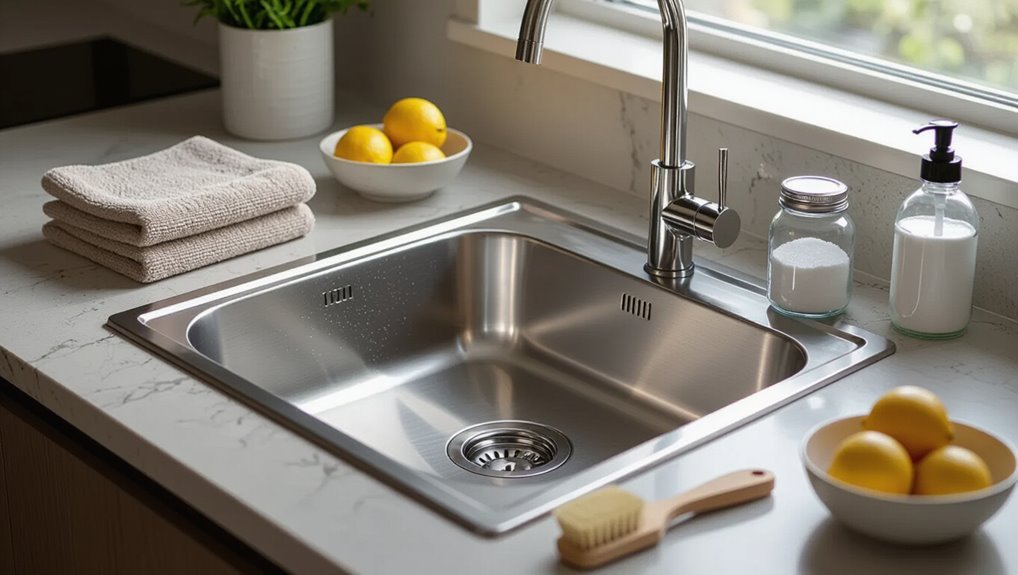
After cleaning, the aluminum sink should show a brighter finish with any light staining reduced and a neutral smell from rinsing.
Lingering discoloration, pitting, or persistent chemical damage that does not improve after gentle treatments indicates the need for professional assessment.
Professional help is also advisable if structural issues, deep scratches, or uncertainty about repair methods arise.
What to expect after cleaning and when professional help is needed
Several signs indicate a successful cleaning: a uniformly brighter surface, reduced water spots, and smooth-feeling metal without residue.
After learning how to clean aluminum sink, expect temporary dulling from mineral films that polish restores, and no lingering odors.
Seek professional help for deep scratches, corrosion, structural dents, or persistent stains that DIY methods cannot remove; technicians can assess and repair or recommend replacement.
Understanding Aluminum Sink Surfaces
Aluminum sinks come in styles ranging from polished and brushed to textured or anodized finishes, each reacting differently to cleaners and abrasives.
Because aluminum is softer and more reactive than stainless steel, specialized cleaning methods are necessary to prevent scratches, discoloration, or pitting.
Identifying dull spots, chalky white oxidation, or dark stains helps determine whether surface buildup, chemical damage, or physical abrasion is present.
Common types of aluminum sinks and finishes
Sinks come in a range of aluminum-based types and surface finishes, each affecting appearance, durability, and maintenance needs.
Common options include cast aluminum (thicker, heavier), stamped/aluminum alloy (lighter, economical), and composite blends.
Finishes range from brushed and satin to polished and anodized coatings.
Each finish varies in scratch resistance, sheen, and tendency to show water spots or fingerprints, guiding care choices.
Why aluminum requires special cleaning methods
Many common aluminum surfaces react differently to everyday cleaners and conditions, so understanding their vulnerabilities is essential.
Aluminum is softer and more chemically reactive than stainless steel, prone to scratching, discoloration, and dulling when exposed to harsh abrasives, strong alkalis, or acidic solutions.
Protective coatings and gentle, pH-neutral cleaners preserve appearance and prevent progressive surface damage.
How to identify stains, oxidation, and surface damage
Because aluminum’s surface reacts differently to cleaners and wear, recognizing specific types of damage makes proper care possible.
Distinguish light stains (dull film from soap or minerals), dark spots (organic staining or pitting), white chalky areas (oxidation), and scratches or gouges (surface abrasion exposing softer metal).
Diagnosis guides selection of mild cleaners, deoxidizers, or professional repair to avoid worsening damage.
Essential Tools and Safe Cleaning Supplies
The section outlines recommended everyday cleaners and common household ingredients that effectively clean aluminum without causing damage.
It also notes commercial products formulated as safe for aluminum and how to identify appropriate labels.
Finally, it lists tools and cloths to avoid, emphasizing non-abrasive options and gentle materials.
Recommended everyday cleaners and household ingredients
Select mild, nonabrasive cleaners and common household ingredients that safely remove grime without etching aluminum.
Recommended options include simple, gentle solutions and tools for routine care:
- Warm water with a few drops of mild dish soap for daily wiping.
- Baking soda paste for light stains and gentle scrubbing.
- White vinegar diluted with water for mineral deposits and rinsing.
Commercial products that are safe for aluminum
Choose commercially formulated cleaners labeled safe for aluminum when everyday household solutions can’t handle buildup; these products balance effective grease- and mineral-removal with nonabrasive chemistry to prevent dulling or pitting.
Recommended options include:
- Mild aluminum-specific liquid cleaners for regular maintenance.
- Nonabrasive cream cleaners for stubborn stains.
- pH-neutral degreasers formulated for soft metals.
Always follow manufacturer instructions and rinse thoroughly.
Tools and cloths to avoid with aluminum sinks
Avoid abrasive pads, steel wool, and stiff-bristled brushes, as these tools can scratch and dull aluminum surfaces; likewise, acidic or chlorine-based scrubbers and harsh scouring powders should be excluded because they can pit or discolor the metal.
- Metal scourers — cause scratches and accelerate corrosion.
- Bleach or acid wipes — chemically damage finish.
- Hard-bristle brushes — leave permanent abrasion marks.
Step-by-Step Cleaning Process for Routine Maintenance
Before cleaning, the surface is rinsed and inspected for debris or damage.
For routine care, a soft cloth or sponge with mild detergent is used to gently remove residue. The sink is then thoroughly rinsed and dried to prevent water spots and oxidation.
Pre-clean preparation: rinsing and surface inspection
Start by clearing the sink of dishes and loose debris. Then rinse thoroughly with warm water to remove surface grime and loosen stuck-on residue.
Inspect the basin, edges, and drain for stains, mineral buildup, or scratches. Note discoloration patterns and soft deposits needing attention.
Check seals and fittings for damage. Record observations before proceeding to targeted cleaning steps.
Gentle daily cleaning method with mild detergent
With the sink cleared and inspected, daily maintenance focuses on a gentle cleaning routine using a mild, phosphate-free detergent to remove light grime and prevent buildup.
Apply diluted detergent with a soft sponge, working in circular motions across all surfaces. Rinse the sponge frequently, tackle edges and drain areas gently, and repeat as needed until visible residues are gone, avoiding abrasive pads or concentrated chemicals.
Rinsing and drying to prevent water spots and oxidation
After rinsing away soap and loosened debris, the sink should be thoroughly flushed with clean water to remove detergent residues that can cause spotting or accelerate oxidation.
Remaining droplets are wiped immediately with a soft microfiber or cotton cloth, working from edges toward the drain.
Drying prevents mineral deposits and dulling; periodic buffing with a dry cloth restores subtle sheen and protects the finish.
Removing Common Stains and Problems
The following section outlines targeted methods for common aluminum sink issues:
step-by-step removal of hard water deposits and mineral buildup,
non-abrasive techniques for oxidation and dark spots,
and safe treatments for rust transfer and metallic stains.
It also covers approaches for cutting grease, food stains, and general discoloration without damaging the finish.
Each procedure emphasizes compatible cleaners, gentle tools, and clear safety precautions.
How to remove hard water deposits and mineral buildup step-by-step
Tackle hard water deposits and mineral buildup on an aluminum sink by using gentle, nonabrasive methods that dissolve minerals without scratching the metal.
Rinse, then apply white vinegar or diluted lemon juice to affected areas, let sit 5–10 minutes, scrub softly with a microfiber cloth or nylon brush, rinse thoroughly, and dry.
Repeat for stubborn spots and ventilate work area.
How to clean oxidation and dark spots without scratching
Remove oxidation and dark spots on aluminum sinks with mild, nonabrasive treatments that lift discoloration without harming the finish.
Apply a paste of baking soda and water or a diluted vinegar solution, gently rub with a soft cloth or sponge, rinse thoroughly, and dry.
Repeat sparingly until spots fade.
Test any cleaner in an inconspicuous area first to verify compatibility.
How to remove rust transfer and metallic stains safely
Address rust transfer and metallic stains on aluminum sinks with gentle, nonabrasive methods that dissolve iron deposits without etching the surface.
Apply a diluted white vinegar or citric acid solution briefly, then rinse thoroughly.
For persistent spots, use a commercial iron remover formulated for aluminum, following label instructions.
Always test inconspicuously, avoid scrubbing pads, and dry the area to prevent recurrence.
Tackling grease, food stains, and discoloration
Grease, food stains, and general discoloration on an aluminum sink respond best to mild, nonabrasive cleaning that lifts soils without dulling the finish.
Use warm water with a few drops of dish soap and a soft cloth or nylon brush to dissolve grease.
For stubborn spots, apply a paste of baking soda and water, rub gently, rinse thoroughly, then dry to prevent water spots.
Deep Cleaning and Restoration Techniques
The section addresses methods to restore shine to dull aluminum sinks, contrasting gentle mechanical polishing with chemical approaches.
It includes a concise homemade paste cleaner recipe and safe application steps for routine use.
Guidance is provided on when a commercial brightener or an aluminum-safe polish is appropriate versus continued home treatment.
Restoring shine on dull aluminum sinks
Restoring shine to a dull aluminum sink requires targeted cleaning and gentle polishing to remove oxidation, mineral buildup, and fine scratches without damaging the metal.
Begin by rinsing and removing debris, then use nonabrasive cleaners and a soft cloth to lift deposits.
Polish with a microfiber pad or designated aluminum polish, working along grain lines.
Finish by rinsing, drying, and buffing for even luster.
Using a homemade paste cleaner safely recipe and method
Mix a gentle, effective paste from common household ingredients—baking soda for mild abrasion, white vinegar or lemon juice for dissolving mineral deposits, and a few drops of liquid dish soap for cutting grease—to tackle deep stains and oxidation on an aluminum sink.
Apply with a soft cloth, rub gently in circular motions, let sit 5–10 minutes, rinse thoroughly, and dry to prevent water spots and residue.
When to use a commercial brightener or aluminum-safe polish
Occasionally, a homemade cleaner will not remove deep oxidation, heavy staining, or etched watermarks, and that is when a commercial brightener or aluminum-safe polish becomes appropriate.
Choose products labeled for aluminum, follow manufacturer dilution and safety instructions, and test on an inconspicuous area.
Use gloves, ventilate, and apply sparingly with nonabrasive pads. Rinse thoroughly and neutralize any residue to prevent further corrosion.
Preventing Damage and Extending Sink Life
Routine care, such as rinsing after use and gentle weekly cleaning, helps preserve the aluminum finish and prevent stains.
Avoiding acidic foods, bleach, and abrasive pads, and rinsing away harsh chemicals promptly, reduces corrosion and discoloration.
When appropriate, applying a recommended sealant or protective wax following manufacturer instructions can add a durable barrier and extend the sink’s life.
Daily and weekly habits to protect aluminum finish
Although aluminum resists rust, simple daily and weekly habits are essential to preserve its finish and prevent etching or dark spots.
Regular care minimizes wear and staining. Recommended routines:
- Rinse and dry after use to remove residues and prevent water spots.
- Wipe with a soft cloth and mild soap weekly.
- Apply a light mineral oil polish monthly to maintain sheen and repel grime.
Foods, chemicals, and practices to avoid
Maintaining those simple cleaning habits helps keep an aluminum sink looking its best, but equal care involves avoiding specific foods, chemicals, and practices that cause permanent damage.
- Acidic foods (lemon, tomato) left to sit — cause etching.
- Bleach and strong alkaline cleaners — strip finish and discolor.
- Abrasive scrubbing pads and metal utensils — scratch and expose bare metal.
How to seal or protect the sink surface (products and application)
Apply a protective layer to an aluminum sink to reduce scratching, staining, and chemical damage and to extend its usable life.
After thorough cleaning and drying, apply a thin coat of a nonabrasive automotive or marine-grade wax, clear lacquer formulated for aluminum, or a food-safe mineral oil.
Reapply wax or oil quarterly; lacquer requires professional application and occasional touch-ups.
Avoid silicone sealants on food-contact areas.
Quick Problem-Solving and Repairs
The section outlines practical steps for minimizing scratches and buffing out small abrasions to restore surface appearance.
It then explains how to identify and treat pitting, etching, and early-stage corrosion to prevent further damage.
Finally, it describes clear criteria for when replacement is a more sensible choice than attempting repairs.
How to minimize scratches and buff small abrasions
Minimize visible scratches on aluminum sinks by addressing them promptly with the right tools and techniques.
Use a non-abrasive cloth and fine-grade (0000) steel wool or a dedicated aluminum polish, rubbing gently along the grain.
For small abrasions, apply a tiny amount of polish, buff with circular motions, then wipe clean.
Finish with a protective coat of wax or oil to reduce future marks.
Addressing pitting, etching, and permanent corrosion
Addressing pitting, etching, and permanent corrosion requires recognizing when surface damage is superficial versus structural: light etching and small pits can often be mitigated with careful cleaning and polishing, while deeper corrosion or metal loss will need more intensive repair or part replacement.
For superficial defects, use nonabrasive cleaners, mild polishing compounds, and a soft cloth; for deeper damage, consult a professional for localized metal buildup or patching.
When replacement is a better option than repair
When corrosion, structural damage, or recurring failures exceed the cost and effort of patching, replacement becomes the prudent choice.
The owner should assess severity, hygiene risks, and long-term expense. If leaks, extensive pitting, warped basins, or compromised mounting persist, replacement restores function, aesthetics, and warranty coverage.
Professional installation often prevents recurrence and guarantees proper fit and finish.
Comparison of Cleaning Methods and Products
A clear comparison of cleaning methods and products highlights their effectiveness, safety for aluminum, and potential for surface damage. The detached overview ranks gentle non-abrasive cleaners, mild acids, and abrasive pads by outcome, noting residue, discoloration risk, and required rinsing. Choose based on stain type and finish; test discreetly.
| Method | Key note |
|---|---|
| Non-abrasive cleaner | Safe, mild |
| Mild acid (vinegar) | Effective, test first |
| Abrasive pad | Risky, avoid finish damage |
HH3: Pros and cons of home remedies vs. commercial cleaners
Many households weigh home remedies against commercial cleaners based on cost, convenience, and perceived safety; each option carries distinct advantages and drawbacks.
Home remedies typically cost less, use common ingredients, and suit light maintenance but may lack strength on tough stains.
Commercial cleaners deliver consistent, quicker results and specialized formulas but cost more and require careful use to avoid surface damage or residue buildup.
Safety and Environmental Considerations
Consideration of safe disposal of cleaning residues and selection of aluminum-safe, eco-friendly cleaners helps minimize harm to people and the environment.
Guidance on neutralizing and disposing of rinse water or paste remnants prevents contamination of drains and local waterways.
Recommendations favor biodegradable, non-abrasive products that clean without etching aluminum or introducing toxic chemicals.
Safe disposal of cleaning residues
Several straightforward steps guarantee that residues from cleaning an aluminum sink are disposed of safely and in an environmentally responsible manner.
Rinse diluted solutions into the sink with plenty of water only when biodegradable and permitted by local regulations.
Collect concentrated residues or paint/chemical chips in sealed containers for hazardous-waste facilities.
Avoid pouring oily, acidic, or solvent-rich mixtures down drains; consult municipal disposal guidance.
Choosing eco-friendly cleaners that are aluminum-safe
Select cleaners that balance efficacy with aluminum compatibility and low environmental impact.
Choose pH-neutral or mildly alkaline formulas labeled safe for aluminum; avoid strong acids, bleach, or ammonia.
Prefer biodegradable ingredients, minimal fragrance, and recyclable packaging.
Test any product on an inconspicuous area first.
When possible, dilute concentrates to reduce chemical use and follow manufacturer disposal guidance to protect plumbing and waterways.
Maintenance Checklist and Seasonal Care Plan
A concise maintenance checklist helps keep an aluminum sink looking its best through routine care and seasonal tasks.
Suggested cadence:
- Daily: rinse and wipe;
- Weekly: mild scrub and dry.
- Monthly/Annual: deeper clean, polish, and inspect for wear or corrosion.
Daily, weekly, monthly, and annual tasks for a sparkling aluminum sink
Establishing a clear maintenance rhythm preserves an aluminum sink’s finish and prevents buildup: daily rinsing and gentle drying remove food particles and water spots.
Weekly light scrubbing with a nonabrasive cleaner addresses mild grime and mineral deposits.
Monthly inspections and deeper cleaning tackle stains and small scratches.
Annual polishing or professional touch-ups restore luster and repair any persistent damage.
Routine recordkeeping tracks issues and services.
Visual Guide: Before-and-After Care Steps
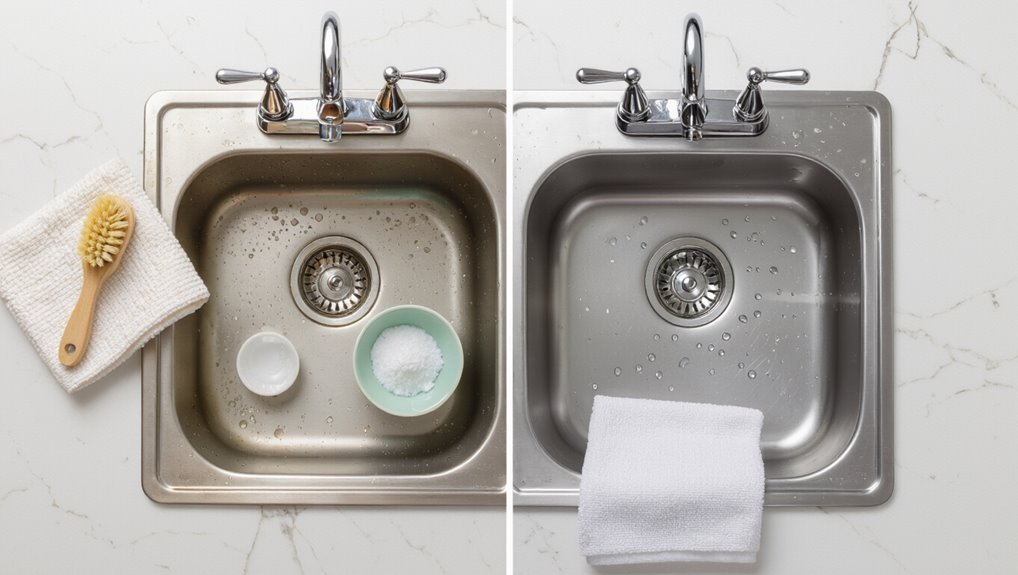
Begin with a clear visual reference showing the sink’s condition before cleaning—photographing from the same angle, lighting, and distance—so stains, scratches, and dull areas are accurately documented.
Capture intermediate stages: after rinsing, after scrubbing, after polishing.
Conclude with consistent after photos highlighting restored shine and repaired spots.
Include brief captions noting products, durations, and techniques used for reproducibility.
Conclusion
Routine, gentle care preserves an aluminum sink’s finish and extends its usefulness. For example, a small café manager who switched from abrasive pads to a soft cloth, baking soda paste, and occasional vinegar rinses found water spots vanished and light scratches diminished within weeks. By following simple, nonabrasive steps, avoiding harsh chemicals, and scheduling seasonal deep cleans, homeowners and businesses alike can maintain a bright, functional sink without risking corrosion or dulling the metal.