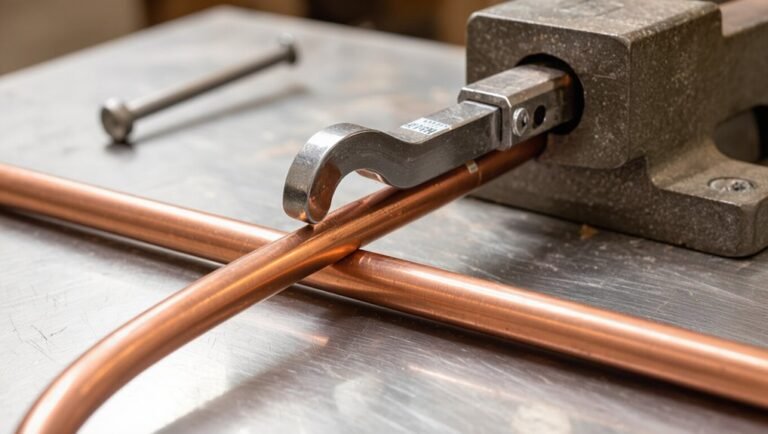
How to Bend Stainless Steel Tube: Step-by-Step Methods for Clean, Crack-Free Bends
To bend stainless steel tubing effectively and achieve clean, crack-free bends, choose the right method based on the material, wall thickness, and desired radius. For tight, wrinkle-free curves, use rotary-draw or mandrel bending. For simpler bends, techniques like spring-fill, sand, or internal plugs can be effective. If working with cold-worked alloys, applying heat or annealing can help prevent cracking. Ensure you have the proper tooling, supports, and personal protective equipment (PPE), and inspect the tubing for straightness and wall thickness before starting. Control the bending speed, lubrication, and cooling to reduce work hardening and springback. For more detailed methods, tooling options, and troubleshooting tips, continue reading.
Overview of Stainless Steel Tube Bending
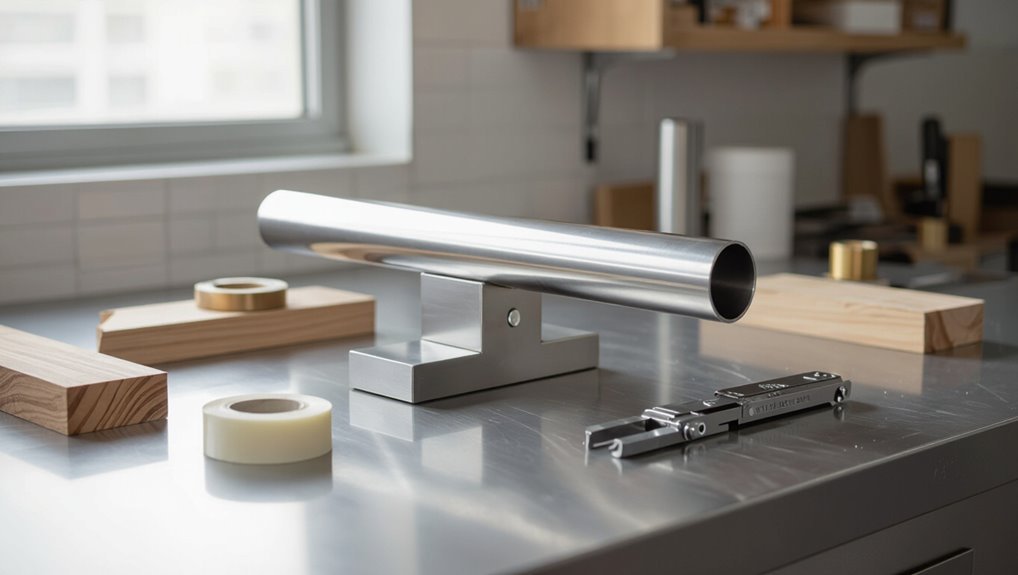
Stainless steel tube bending is required whenever design, space constraints, or fluid routing demand smooth, continuous curves rather than fittings.
It is commonly used in industries such as plumbing, HVAC, automotive, food processing, and medical equipment where corrosion resistance and hygiene are critical.
Tube material and wall thickness—ranging from thin-walled 304 to heavier 316L or duplex grades—directly influence bend method, tooling and achievable radius.
When and why you need to bend stainless steel tubing
Bending stainless steel tubing is required whenever a piping route, structural component, or aesthetic design demands a curved profile to fit confined spaces, navigate obstacles, or achieve streamlined flow.
Decisions to bend depend on space constraints, mechanical performance, weld reduction, and fluid dynamics.
Knowing how to bend stainless steel tube guarantees proper tooling, bend radius selection, and process control to prevent cracking, thinning, or collapse.
Common applications and industries
Tubes formed into curves serve countless roles across industries, from fluid delivery and heat-exchange systems to structural frames and aesthetic trim.
Precision-bent stainless tubing appears in food and beverage processing, pharmaceuticals, petrochemicals, HVAC, automotive exhaust and fuel lines, marine systems, medical devices, and architectural façades.
Each sector demands specific tolerances, surface finishes, and joint integrity to guarantee performance, cleanliness, and corrosion resistance.
Types of stainless steel tubing and how they affect bending
After outlining the industries and functions that rely on curved metal tubing, attention turns to how variations in alloy, wall thickness, diameter, and manufacturing method influence formability and final performance.
Seamless versus welded, austenitic (304/316) versus ferritic/duplex, thin versus thick walls, and small versus large diameters each alter bend radius limits, springback, annealing needs, and risk of wrinkling or cracking, guiding tooling and process choice.
Key Properties That Affect Bending Stainless Steel
The behavior of stainless steel during bending depends chiefly on its grade and hardness—for example, annealed 304 or 316 bends more easily than cold‑worked variants.
Wall thickness, outer diameter, and chosen bend radius interact to determine required force and the risk of wrinkling or flattening.
Work hardening, springback, and any applied heat further modify bendability and final geometry.
Material grades and hardness (304, 316, annealed vs. cold-worked)
Many stainless steel bending decisions hinge on alloy grade and prior cold work: 304 and 316 differ primarily in corrosion resistance and nickel/molybdenum content, while whether the metal is annealed or cold‑worked determines ductility and springback.
Annealed tubing is softer, more formable, and less prone to cracking; cold‑worked material is harder, stronger, shows greater springback, and requires more force or intermediate anneals for tight bends.
Wall thickness, outer diameter, and bend radius relationships
Because wall thickness, outer diameter, and bend radius interact predictably, selecting bend parameters requires balancing section geometry with material behavior.
Thicker walls resist collapse and allow tighter radii but increase required force. Larger diameters amplify bending stresses and risk wrinkling on the intrados.
Standard practice uses minimum radius-to-diameter ratios and wall-thickness checks to prevent ovalization and cracking during forming.
Work hardening, springback, and heat effects
Following considerations of section geometry and bend radii, attention turns to the material responses that govern formability: work hardening, springback, and thermal effects.
Stainless steel hardens during plastic deformation, raising yield strength and reducing ductility. Elastic recovery causes springback requiring overbend or compensation.
Controlled heating softens material, lowers springback, and restores ductility, but excessive heat risks scale, sensitization, or grain growth.
Tools and Equipment Needed
A range of tools and equipment is required to bend stainless steel tube effectively, from simple manual tube benders and handheld spring benders to hydraulic and electric rotary draw benders.
Proper bending also requires mandrels, wiper dies, and support tooling, plus heating equipment such as torches, induction heaters, or ovens when needed.
Accurate measuring and marking tools, jigs, and appropriate safety gear complete the essential kit.
Manual tube benders and handheld spring benders
Choose the right bender to match tube diameter, wall thickness, and the required bend radius:
Manual tube benders offer controlled, accurate bends for larger-diameter or thicker-walled stainless steel, while handheld spring benders suit thin-walled, small-diameter tubing and simple radius bends.
Manual benders provide dies and leverage for repeatable bends; spring benders prevent kinking on light tubing but limit achievable radii and precision.
Hydraulic and electric rotary draw benders
Use hydraulic or electric rotary draw benders when consistent, tight-radius bends in stainless steel of larger diameters or thicker walls are required.
These machines deliver controlled, repeatable force and precise rotation, reducing springback and deformation. Electric models offer programmability and faster cycles; hydraulic units provide high torque for heavy sections.
Proper die selection and machine setup guarantee accuracy and minimize surface damage.
Mandrels, wiper dies, and support tooling
Mandrels, wiper dies, and support tooling form the critical internal and external contact points that control tube shape, prevent collapse, and protect the surface during bending.
Mandrels support the ID to maintain roundness; wiper dies smooth the intrados to avoid wrinkling near the bend.
External supports, clamps, and backup rollers stabilize tubing, distribute stresses, and guarantee consistent, crack-free radii.
Heating equipment: torches, induction heaters, and ovens
When forming stainless steel tubing, controlled heat application alters ductility and reduces springback.
So selecting between torches, induction heaters, and ovens depends on part geometry, alloy, and production rate.
Torches offer localized, portable heating for small jobs; induction heaters provide rapid, repeatable, non-contact heating for production; ovens guarantee uniform, batch tempering.
Choose based on required control, cycle time, and distortion risk.
Measuring and marking tools, jigs, and safety gear
After selecting the appropriate heating method for a bend, accurate layout and secure fixturing determine whether the tube is bent to the correct shape and length.
Essential tools include calipers, tape measures, angle finders, and center punches for precise marks; bending jigs, mandrels, and clamps for consistent form; and PPE—welding gloves, eye protection, respirator, and heat-resistant clothing—to prevent injury and contamination.
Recommended tooling selection by tube size and wall thickness
Match tooling to tube dimensions and wall thickness to guarantee consistent bends and prevent collapse or wrinkling. The operator selects mandrel types, die radii, and supports per tube OD and wall gauge. Use plug mandrels for thin walls, full mandrels for heavy walls, and radius dies matching bend ratio. Proper clamps and backup jaws minimize distortion.
| Tube OD | Recommended Tooling |
|---|---|
| 1/4″ | Plug mandrel |
| 1/2″ | Slip mandrel |
| 1″ | Full mandrel |
Preparatory Steps Before Bending
Before bending, the tube should be inspected and measured for straightness, wall thickness, and any surface defects.
Edges must be deburred and the tube cleaned, internal supports or fillers positioned as required, and bend allowance, centerline radius, and any necessary bend relief calculated.
Appropriate lubricants and internal fillers should be selected to prevent wrinkling, collapse, or surface damage during forming.
Inspecting and measuring the tube
Careful inspection and precise measurement of a stainless steel tube are essential initial steps that determine the success of any bending operation. The tube is examined for surface defects, wall uniformity, dents, corrosion, and ovality.
Length, bend locations, centerline radius, and bend angles are measured and marked. Material grade and wall thickness are confirmed to select appropriate tooling and bending parameters.
Deburring, cleaning, and internal support placement
Prepare the tube by removing burrs, degreasing surfaces, and positioning internal supports to prevent deformation during bending.
Use a deburring tool or fine file to smooth cut edges, then solvent-clean and dry to eliminate oils and debris.
Insert appropriate mandrels, sand or rubber plugs, or a ball-and-socket support to maintain shape, ensuring snug fit without scoring the ID.
Determining bend allowance, centerline radius, and bend relief
After deburring, cleaning, and seating internal supports, the next step is to calculate bend allowance, establish the centerline radius, and plan any bend relief to guarantee dimensional accuracy and prevent cracking or collapse.
The technician computes developed length using material thickness, angle, and K-factor. Centerline radius is chosen per tube OD and wall thickness to avoid wrinkle or ovality.
Relief cuts are positioned at high-stress zones.
Selecting lubricants and internal fillers
Several factors determine the choice of lubricant and internal filler for stainless steel tube bending: tube diameter and wall thickness, bending method (mandrel, compression, or roll), material grade, desired bend radius, and finished-surface requirements.
Preference goes to high-pressure, non-staining lubricants and solid or granular mandrel fillers for thin walls.
Use soluble lubricants when flushing is needed; choose filler hardness to prevent wrinkling without scoring.
Step-by-Step Methods for Bending Stainless Steel Tubing
The following section outlines common methods for bending stainless steel tubing and when each is appropriate.
It will compare cold bending with rotary draw and mandrel benders, spring bending using internal plugs or sand, heat-assisted bending (induction or torch), and roll bending for large-radius curves.
Each method’s basic steps, advantages, and limitations will be presented.
Cold bending with a rotary draw bender
Cold bending with a rotary draw bender provides precise, repeatable bends in stainless steel tubing by holding the tube against a shaped die while a clamping mechanism and bend die guide the tube around a controlled radius.
It suits thin- to medium-wall tubing and minimizes ovality when correctly set up.
- Set die radius to tube spec.
- Use proper clamp pressure.
- Backoff supports tubing feed.
Cold bending with a mandrel bender
Use a mandrel bender when tight-radius or wrinkle-free bends in stainless steel tubing are required; this machine inserts a series of internal links or a ball mandrel into the tube to support the wall during bending and prevent collapse or excessive ovality.
It produces smooth, accurate bends ideal for thin-walled tubing.
- Maintains internal support
- Minimizes wrinkles and flat spots
- Suited for precise, repeatable work
Spring bending with internal plug or sand
Moving from mandrel bending’s internal support, spring bending with an internal plug or packed sand offers a simpler method for preventing collapse in stainless steel tubing when mandrels are unavailable or impractical.
Springs or sand fill maintain shape while a bender applies steady pressure. After bending, remove filler, deburr, and inspect for cracks.
- choose appropriate spring or fine sand
- fill tightly, secure ends
- bend slowly, check alignment
Heat-assisted bending (induction or torch)
Apply controlled heat to the bend zone when mechanical methods risk cracking or excessive springback: heat-assisted bending—using an induction heater or oxy-acetylene/propane torch—softens stainless steel locally, lowering forming forces and reducing work hardening so the tube can be shaped with less distortion.
Safety, temperature control, and cooling protocols matter.
- Preheat to specified temperature range
- Monitor with pyrometer
- Quench or cool uniformly
Roll bending for large-radius bends
Roll bending provides a controlled, low-stress method for producing large-radius curves in stainless steel tubing by passing the tube through a set of adjustable rollers that progressively induce curvature.
It minimizes ovality and work hardening while preserving surface finish.
Typical considerations include:
- Roller spacing and pinch pressure settings
- Feed rate and number of passes
- Material grade and wall thickness limitations
Tube bending using custom jigs and fixtures
Using custom jigs and fixtures enables precise, repeatable bends in stainless steel tubing by physically controlling tube geometry and supporting surfaces throughout the bending cycle. They minimize distortion, prevent collapse, and guarantee alignment.
Typical considerations include:
- Properly matched mandrels and die radii for wall support
- Clamping fixtures to prevent slippage and ovality
- Modular designs for quick changeover and consistent production
How to Prevent Cracking, Wrinkling, and Ovalization
Preventing cracking, wrinkling, and ovalization requires selecting an appropriate bend radius and mandrel type to match tube geometry and material.
Proper support placement, die selection, and controlled heat/cooling rates minimize local stress and wall deformation.
Annealing, either before or after bending depending on alloy and work-hardening, restores ductility and reduces the risk of failure.
Choosing correct bend radius and mandrel type
Selecting the correct bend radius and mandrel type is fundamental to avoiding cracking, wrinkling, and ovalization when bending stainless steel tube.
Appropriate radius (usually ≥ 2–3× tube OD for thin-wall alloys) reduces material strain.
Match mandrel style—plug, Form, or ball—to wall thickness and bend severity to support ID, prevent collapse, and maintain cross-section.
Hardened, lubricated mandrels yield best results.
Proper support placement and die selection
Proper placement of supports and the correct die profile work together to control material flow, minimize bending stresses, and preserve tube geometry.
Supports should contact neutral axis regions, prevent inward collapse, and align with mandrel position.
Choose dies matching tube OD and wall thickness: larger throat radii reduce wrinkling, contoured grooves limit ovalization, and polished surfaces reduce friction that promotes cracking.
Controlling heat and cooling rates
Manage heating and cooling carefully to maintain microstructure and geometry during stainless steel tube bending. Controlled, uniform heating reduces thermal gradients that cause cracking; localized induction or torch heating should be monitored.
Slow, consistent cooling prevents hardening and residual stresses that lead to wrinkling or ovalization. Use thermocouples, insulation, and staged cooling to guarantee predictable metallurgical and dimensional outcomes.
When to anneal before or after bending
When bending stainless steel tubing, deciding whether to anneal before or after forming hinges on alloy, wall thickness, bend severity, and desired surface and mechanical properties.
Pre-bend annealing softens work-hardened material to reduce cracking during tight radii, while post-bend annealing restores ductility, relieves residual stresses, and mitigates wrinkling and ovalization introduced by forming.
Selection favors pre-anneal for severe bends, post-anneal for stress relief.
Troubleshooting Common Problems
Common failure modes are identified quickly by inspecting bends for cracks, splits, wrinkles, flat spots, or kinks and noting deviations from planned angles.
Remedies range from adjusting tooling and bending speed to using internal supports, controlled heating, or mandrels to correct forming defects and minimize springback.
Minor damage can often be repaired by careful reshaping, local annealing, or welding and blending while preserving corrosion resistance.
Identifying and fixing cracks and splits
Detecting cracks and splits early prevents failures and costly rework.
Inspect bends visually and with dye penetrant or magnetic particle testing; focus heat-affected zones and tight radii.
Small surface cracks may be removed by light grinding and blended, then stress relieved by low-temperature anneal.
Replace tubes with through-thickness splits.
Record causes—overbending, improper mandrel support, excessive tooling wear—to prevent recurrence.
Correcting wrinkles, flattening, and kinks
Addressing wrinkles, flattening, and kinks requires prompt, methodical assessment to determine severity, cause, and whether repair or replacement is appropriate.
Minor wrinkles can be smoothed with internal mandrels and controlled compression while kinks may need localized heating, backing support, and incremental reshaping.
Severely flattened sections usually require section replacement.
Inspect for wall thinning and restore dimensional tolerances after repair.
Addressing springback and achieving accurate angles
Compensate for springback by anticipating the elastic recovery inherent to stainless steel and adjusting bend parameters accordingly: select appropriate bend radius, tooling, and overbend angle based on material grade and wall thickness, and verify with test bends.
Measure post-bend angles, calculate necessary overbend percentages, and document settings.
Use calibrated mandrels, dies, and repeatable CNC or rotary draw setups to minimize variation and guarantee consistent, accurate angles.
Repair techniques for minor damage
When minor nicks, surface scratches, or small dents occur during bending, technicians should assess damage severity, document locations, and select the least invasive repair method that restores function and appearance.
Light scratches are polished with nonabrasive pads and fine grit; shallow dents are massaged outward with mandrels or soft mallets. Deeper blemishes may require localized filler, blending, and final passivation to prevent corrosion.
Quality Control and Inspection After Bending
Following bending, inspectors verify dimensions against specified tolerances to guarantee fit and function.
Non-destructive testing methods such as dye penetrant, eddy current, or ultrasonic inspection are used to detect cracks and subsurface defects.
Surface finish restoration and passivation are then performed as required to restore corrosion resistance and appearance.
Dimensional verification and tolerances
Dimensional verification after bending confirms that tube geometry meets specified tolerances for bend angle, radius, wall thickness, straightness, and end-to-end length, ensuring fit, function, and structural integrity in the final assembly.
Inspection uses calibrated gauges, digital protractors, radius templates, wall micrometers, and laser/coordinate measurements. Recorded deviations are compared to engineering drawings; out-of-tolerance parts are flagged for rework or rejection.
Non-destructive testing methods for cracks and defects
Inspectors employ a range of non-destructive testing (NDT) methods to detect cracks, subsurface flaws, and surface defects introduced during stainless steel tube bending.
Visual inspection, dye penetrant testing for surface-breaking discontinuities, magnetic particle testing for ferromagnetic-compatible alloys, eddy current for thin-walled tubes, and ultrasonic testing for internal defects are described.
Acceptance criteria reference applicable codes and project specifications for disposition.
Surface finish restoration and passivation
After NDT has confirmed structural integrity, attention shifts to restoring the tube’s surface and re-establishing corrosion resistance through cleaning, mechanical blending, and chemical passivation.
Residual scale, heat tint, and tooling marks are removed by pickling, electropolishing, or abrasive blending. Surfaces are neutralized, rinsed, and passivated with nitric or citric acid per specification.
Final inspection verifies finish, oxide restoration, and absence of contaminants.
Safety Considerations and Best Practices
Attention to safety is essential when bending stainless steel tube, including proper personal protective equipment and safe handling to prevent cuts, burns, and eye injuries.
Controlled heating and cooling procedures minimize thermal shock and surface damage while reducing fire and burn risks.
Regular maintenance and inspection of bending equipment guarantee reliable operation and help prevent accidents from worn or faulty components.
Personal protective equipment and safe handling
Personal protective equipment and careful handling are essential whenever bending stainless steel tube to prevent injury from sharp edges, flying debris, and heavy tooling.
Operators should wear cut-resistant gloves, safety glasses or face shields, hearing protection, and steel-toed footwear.
Use proper lifting techniques, clamps, and supports to secure tubing.
Inspect PPE and tools before use, and remove jewelry or loose clothing that could catch.
Safe heating and cooling procedures
Implement controlled heating and cooling to prevent warping, cracking, or surface discoloration when bending stainless steel tubing.
Use gradual, uniform heating—torch, induction, or oven—keeping temperatures within alloy-specific limits. Monitor with thermocouples or temperature-indicating crayons.
After forming, allow parts to cool slowly in still air or insulated wraps to avoid thermal shock. Avoid rapid quenching and document cycles for repeatable, safe results.
Maintenance of bending equipment
Maintain bending equipment with a regimented schedule and clear safety protocols to guarantee reliable performance and reduce risk of operator injury.
Inspect dies, clamps, and mandrels for wear; replace or recondition damaged parts. Lubricate moving components and verify guards, emergency stops, and electrical grounding.
Calibrate pressure and angle controls regularly. Train staff on lockout/tagout and document all maintenance and safety checks for traceability.
Material-Specific Recommendations and Case Examples
The section compares bending behavior of thin-wall 304 and thick-wall 316 tubing and outlines practical workflows for beverage, marine, and architectural uses.
It highlights how material choice affects cost, cycle time, and required surface finish.
Case examples illustrate trade-offs between speed, tooling expense, and final appearance.
Bending thin-wall 304 vs. thick-wall 316 tubing
Material choice markedly influences bending strategy: thin-wall 304, valued for ductility, typically tolerates tighter radii and less aggressive tooling but demands careful support to prevent collapse and wrinkling.
Whereas thick-wall 316, with higher strength and work-hardening tendency, requires greater force, larger bend radii, and slower, more controlled forming to avoid cracking and surface stress concentration.
Specific tooling, mandrels, lubrication, and heat-treatment adjustments vary accordingly.
Example workflows for beverage, marine, and architectural applications
Building on the distinctions between thin-wall 304 and thick-wall 316 bending behavior, practical workflows for beverage, marine, and architectural uses are presented with specific tooling, clear process steps, and material-tailored checks.
Beverage: electropolish-compatible mandrels, tight radii, leak-testing.
Marine: corrosion-resistant fixtures, larger radii, post-bend passivation.
Architectural: visible-surface dies, springback compensation, finishing verification and alignment jigs for aesthetic consistency.
Cost, speed, and finish trade-offs
Efficiency in stainless steel tube bending hinges on balancing cost, speed, and surface finish, with choices varying by alloy and wall thickness. Trade-offs dictate tooling, mandrels, and heat treatment: thin 304 favors speed with light support; thick 316 demands slower, costly methods for mirror finishes.
| Case | Recommendation |
|---|---|
| Beverage | 304, soft mandrel |
| Marine | 316, anneal |
| Architectural | 316L, polish |
Tips to Improve Efficiency and Repeatability
Practical improvements often start with physical aids such as templates, gauges, and index fixtures to guarantee consistent tube placement and bend geometry.
Clear, standardized processes combined with focused operator training reduce variation and cycle time.
For complex or high-volume jobs, outsourcing to specialized tube-bending services can be more efficient and yield greater repeatability.
Creating templates, gauges, and index fixtures
Templates, gauges, and index fixtures standardize setup and measurement for repeatable stainless steel tube bending, reducing trial-and-error and scrap.
Durable templates outline bend centers and machine positions; gauges verify bend radius, angle, and springback.
Index fixtures clamp tubes to repeatable reference points, speeding changeovers.
Properly labeled, durable, and easy to mount, these tools cut setup time and guarantee consistent, traceable results.
Process standardization and operator training
Consistency in stainless steel tube bending hinges on well-documented processes and trained operators who follow them precisely.
Standardized work instructions, clear quality checkpoints, and visual aids reduce variation.
Regular hands-on training, competency assessments, and feedback loops maintain skills.
Documented setup sheets and adjustment limits speed changeovers.
Continuous monitoring of metrics and corrective actions guarantees repeatable, efficient production with fewer defects and rework.
When to outsource to specialized tube-bending services
When should a fabricator turn to specialized tube-bending services? When volumes, complexity, tight tolerances, or repeatability demands exceed in-house capabilities.
Outsourcing is advised for prototype-to-production shifts, uncommon materials, severe radii, or difficult wall thicknesses.
Specialists provide validated tooling, CNC programming, quality inspection, and traceability, reducing scrap, lead time, and cost per part while improving consistency and compliance with specifications.
Tools, Materials, and Sources for Further Learning
The article lists trusted tooling manufacturers and suppliers for tube benders, dies, mandrels, and abrasives to help readers source quality equipment.
It references key standards and specifications such as relevant ASME and ASTM documents to guarantee compliant material selection and procedures.
Curated tutorials, instructional videos, and recommended courses are suggested for practical demonstrations and deeper technical training.
Recommended manufacturers and tooling suppliers
A concise list of reputable manufacturers and tooling suppliers helps fabricators source reliable dies, mandrels, benders, and consumables for stainless steel tube work; recommended names include Rohrbacker/Carbotech for precision mandrels, Baileigh and Ercolina for shop-scale tube benders, Winton for heavy-duty mandrels and tooling, and Sandvik and Outokumpu for high-quality stainless tubing.
- Rohrbacker/Carbotech: mandrels
- Baileigh, Ercolina: benders
- Winton, Sandvik, Outokumpu: tooling and tubing
Standards and reference materials (ASME, ASTM)
Having identified reliable manufacturers and tooling suppliers, the next focus shifts to the standards and reference materials that govern stainless steel tube bending practices.
Relevant codes include ASME B31.3 for process piping, ASTM A213/A269/A312 for tubing specifications, and ASTM E290 for bend testing.
Reference handbooks, manufacturer bend-data, and material certificates guarantee compliance, quality control, and proper selection of bend radii and procedures.
Suggested tutorials, videos, and courses
Often, experienced fabricators and newcomers alike benefit from structured tutorials, videos, and courses that demonstrate stainless steel tube bending techniques, tooling selection, and safety practices with visual clarity.
Recommended resources highlight practical demos, inspection criteria, and common troubleshooting. Examples include:
- Manufacturer tutorials (tube bender makers) for setup and tooling.
- Technical courses (welding/fabrication schools) covering metallurgy and heat control.
- Short expert videos demonstrating bend methods and inspection.
Conclusion
In sum, successful stainless steel tube bending requires understanding material behavior, selecting appropriate tools, preparing components carefully, and controlling heat and radius to prevent cracks. It demands patience in setup, precision in execution, and diligence in inspection. It rewards practice in technique, investment in quality tooling, and attention to safety. By combining knowledge with consistent process control, crews achieve cleaner bends, longer part life, and repeatable results across projects.