How Does a Water Tank Work? Simple Explanation of Types, Components, and Operation
A water tank functions as a storage system that supplies water using gravity, pressure, or pumps, catering to the needs of homes, farms, and industries. There are various types of tanks—above ground, underground, rooftop/elevated, and pressure vessels—each with unique requirements for pressure, space, and maintenance. Essential components include the tank body, inlet and outlet fittings, float valves, overflow vents, and pumps or pressure systems. To ensure efficient operation and prevent leaks or contamination, proper installation and regular maintenance are crucial.
How Water Tanks Function: A Simple Summary
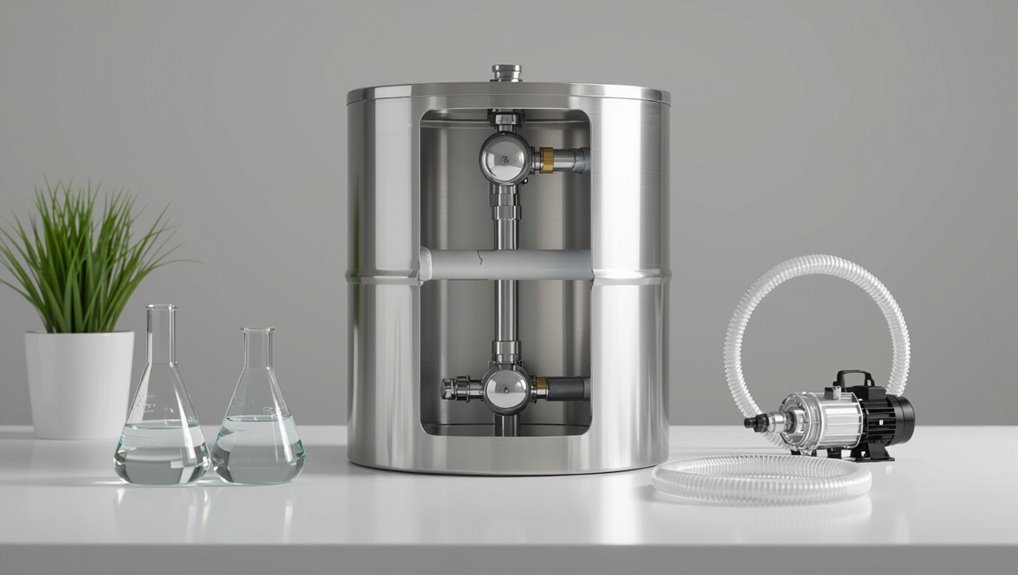
A water tank stores a reserve of water at atmospheric or elevated pressure and releases it through gravity or pumps to meet demand.
It is used for domestic supply, irrigation, fire protection, and industrial processes.
Tanks are commonly installed on rooftops, in basements, at ground level, or in elevated towers depending on space, pressure needs, and local infrastructure.
Core principle of water storage and delivery
Water tanks store a volume of water and release it on demand by using gravity or pumps to create flow; the stored water acts as both a reservoir and a buffer, smoothing out variations between supply and consumption.
The core principle explains how does a water tank work: maintaining pressure head, providing flow rate, and enabling controlled delivery while isolating supply fluctuations and supporting system reliability.
Typical uses and where they’re installed
Serve multiple roles across residential, commercial, agricultural, and industrial settings, providing stored supply for drinking, firefighting, irrigation, process use, and emergency backup.
Tanks sit on rooftops, basements, yards, farms, and factory floors; underground cisterns and elevated towers address pressure and space needs.
Selection depends on capacity, material compatibility, local codes, water quality requirements, and access for maintenance and delivery.
Main Types of Water Tanks
The main types of water tanks vary by placement and function, including above-ground, underground (buried), elevated, and rooftop units.
They also differ by delivery method—pressure tanks use pumps while gravity-fed tanks rely on elevation—and by planned use, from domestic to commercial and industrial systems.
Understanding these categories clarifies design, materials, and installation considerations.
Above-ground tanks
Above-ground tanks sit on or above the ground surface and are widely used for residential, agricultural, and commercial water storage where excavation or submersion is impractical.
Constructed from steel, polyethylene, or fiberglass, they offer easy access, inspection, and maintenance.
Variations include vertical, horizontal, and modular designs.
Installation is faster and less costly than buried tanks, but they require weather and UV protection.
Underground (buried) tanks
Although out of sight, underground (buried) tanks are engineered for long-term, space-saving water storage beneath the surface, commonly used where aesthetic, temperature stability, or land-use constraints matter.
Constructed from corrosion-resistant materials, they resist freezing and solar exposure, reduce contamination risk, and preserve landscaping.
Installation demands excavation, proper bedding, ventilation, access points, and measures to prevent buoyancy and groundwater infiltration for safe, durable operation.
Elevated and rooftop tanks
Elevated and rooftop tanks provide pressurized water delivery by using gravity to create head, commonly installed on stilts, towers, or building roofs to serve municipal, commercial, and residential systems.
They store treated or raw water, stabilize supply during peak demand, enable firefighting reserves, and reduce pump cycling.
Construction materials vary (steel, concrete, plastic); overflow, vents, and access hatches guarantee safety and maintenance.
Pressure tanks vs. gravity-fed tanks
When comparing pressure tanks and gravity-fed tanks, the fundamental difference lies in how they generate usable pressure: pressure tanks store water under compressed air or a flexible bladder to deliver immediate pressurized flow, while gravity-fed tanks rely on elevation to create hydrostatic head.
Pressure systems suit consistent indoor supply and pump cycling reduction; gravity systems offer passive reliability, low energy use, and simple maintenance.
Domestic vs. commercial and industrial tanks
Domestic water tanks are designed for household-scale storage and delivery, prioritizing compact size, ease of installation, and materials that meet potable-water standards.
Commercial and industrial tanks, by contrast, are engineered for much larger capacities, higher duty cycles, and application-specific requirements such as fire suppression, process water, or bulk storage.
These larger tanks often incorporate reinforced construction, access for maintenance, and instrumentation for level and quality control.
Small units focus on domestic plumbing integration and pressure consistency, while larger systems emphasize throughput, redundancy, regulatory compliance, and serviceability to support continuous operations and specialized processes.
Materials compared
Materials for water tanks vary widely in strength, corrosion resistance, cost, and suitability for potable or industrial use. Choices—plastic, steel, concrete, fiberglass, and aluminum—are weighed by durability, maintenance, weight, and chemical compatibility. Selection depends on volume, site conditions, budget, and regulatory requirements; coatings or liners often extend service life.
| Material | Typical Advantages |
|---|---|
| Plastic | Lightweight, affordable |
| Steel | Strong, repairable |
| Concrete | Durable, heavy |
| Fiberglass | Corrosion-resistant, light |
| Aluminum | Lightweight, corrosion-prone |
Key Components of a Water Tank System
A water tank system comprises several essential components that determine performance and reliability.
Key elements include the tank body and its material, inlet/outlet fittings, float valves or level sensors, overflow and venting systems, and any pumps or pressure vessels used for delivery.
Understanding each part’s function and interaction helps explain how storage, supply regulation, and safety are achieved.
Tank body and material
Tank shells enclose and protect stored water while determining durability, weight, and suitability for specific uses.
Materials vary: polyethylene offers corrosion resistance and lightness; steel provides strength and high-pressure tolerance but requires coatings to prevent rust; concrete gives thermal stability and permanence but is heavy and porous without liners.
Selection depends on capacity, water quality, climate, installation type, and budget constraints.
Inlet and outlet fittings
When water enters or leaves a storage system, inlet and outlet fittings control flow, prevent contamination, and enable connection to piping and pumps.
These fittings include threaded or flanged ports, check valves, strainers, and isolation valves.
Proper sizing, material compatibility, and secure seals reduce leaks, pressure loss, and backflow risk, facilitating maintenance and integration with supply and distribution systems.
Float valves and level sensors
Float valves and level sensors regulate and monitor liquid levels to prevent overflow, dry-running of pumps, and improper dosing.
Float valves mechanically open or close in response to level changes, controlling inlet flow.
Electronic level sensors (float switches, ultrasonic, pressure, or conductivity types) provide alarms, control signals, and integration with controllers or PLCs for automated filling, emptying, and pump protection.
Overflow and venting systems
After level-control devices prevent overfilling, systems must still manage excess water and air exchange to protect structural integrity and maintain proper flow.
Overflow outlets route surplus water away from the tank to safe drains or secondary containment, preventing structural damage and flooding.
Venting allows air to enter and exit during filling and emptying, reducing vacuum or pressure buildup and minimizing spillage and tank deformation.
Pumps and pressure vessels
Pumps and pressure vessels provide the active control that converts stored water into usable flow and stable delivery pressure: pumps move water from the tank to distribution points or to higher elevation, while pressure vessels (including bladder or diaphragm tanks) smooth pressure fluctuations, reduce pump cycling, and maintain a reserve supply.
Controllers, pressure switches, and check valves coordinate operation, protect equipment, and prevent backflow.
Filtration and treatment attachments
Once water is moved and pressure stabilized, maintaining quality requires a suite of filtration and treatment attachments mounted at tank inlets, outlets, or within distribution lines.
These include sediment filters, activated carbon units, UV disinfection, chlorination or dosing pumps, and backwashable strainers.
Placement and sizing match flow rates and contaminant profiles; routine inspection, media replacement, and automated controls guarantee consistent treated-water delivery.
Access hatches, ladders, and safety features
Multiple access hatches, ladders, and integrated safety features provide authorized personnel with secure entry and safe movement around and inside a water tank while protecting the system from contamination and unauthorized access.
Lockable, gasketed hatches seal openings; fixed and removable ladders, platforms, and fall-arrest anchors permit inspection and maintenance.
Safety signage, lighting, and confined-space procedures enforce compliance and reduce risk during operations.
How Different Tank Types Operate
Different tank designs follow distinct operational sequences that control how water is stored, pressurized, and delivered.
The next section compares common systems and outlines the step-by-step cycles that make each type function. This prepares the reader to understand practical differences in performance and maintenance needs.
- Gravity-fed tank operation sequence
- Pressure tank operation sequence
- Pump-fed (booster) system sequence
- Rainwater harvesting tank cycle
- Typical control and safety steps common to most tanks
Gravity-fed tank operation sequence
Gravity-fed tanks deliver water by relying on elevation differences to create pressure: water stored in an elevated reservoir flows downward through outlets and distribution piping under the influence of gravity, with flow rates determined by head (height of the water column), pipe size, and outlet restrictions.
Operation sequence: fill reservoir, maintain overflow and vents, open outlet valves; gravity induces flow until level drops.
Pressure tank operation sequence
Pressure tanks regulate water delivery by storing pressurized water and using a compressed air cushion to maintain system pressure. When a faucet opens, the tank supplies water until pressure falls to a set cut-in point, triggering the pump to run and restore pressure to the cut-out level.
A diaphragm or bladder separates air and water, preventing waterlogging. Pressure switches and gauges monitor and control cycling.
Pump-fed (booster) system sequence
Moving from standalone pressure tanks to systems where a pump actively boosts supply, the pump-fed (booster) sequence centers on coordinated control between the pump, the tank type, and system valves.
A controller senses demand, starts the pump to pressurize the tank or network, maintains setpoints via pressure switches or VFDs, and stops the pump when reservoirs or pressure thresholds are reached to prevent cycling.
Rainwater harvesting tank cycle
Many rainwater harvesting systems cycle water through a collection, storage, and distribution sequence that differs depending on tank type—cisterns, bladder tanks, and modular underground tanks each influence inlet arrangement, overflow handling, and drawdown behavior.
The cycle begins with roof runoff diversion and first-flush exclusion, proceeds to storage with sedimentation and inlet baffling, and ends with gravity or pump withdrawal, filtration, and controlled overflow or recharge.
Sizing, Capacity, and Selection Guidelines
The section outlines methods for calculating required capacity for residential use and scaling up for commercial and agricultural needs.
It highlights key sizing considerations—daily demand, peak flow, and storage reserves—and contrasts typical capacities for homes versus larger installations.
Selection guidelines address space constraints, material and budget choices, and water quality requirements that influence tank type.
Calculating required capacity for homes
Determining the appropriate water tank capacity for a home requires calculating peak daily usage, factoring in household size, fixture flow rates, and intermittent high-demand activities such as laundry or irrigation.
Then estimate safe reserve for emergencies, add buffer for pressure losses and maintenance, and account for refill frequency from supply or pump.
Select a tank meeting required usable volume, material, and installation constraints.
Sizing for commercial and agricultural use
Commercial and agricultural applications require a different approach than residential sizing, focusing on larger volumes, variable demand profiles, and regulatory or operational constraints.
Sizing methodology emphasizes peak hourly and daily demands, storage for fire suppression or irrigation cycles, and redundancy for maintenance or outages.
Designers calculate combined process loads, seasonal variability, and required turnover, then select capacity with appropriate safety margins and supply replenishment rates.
Factors that affect tank selection (space, material, budget, water quality)
While siting and capacity govern performance, selecting an appropriate water tank also depends on space constraints, construction material, budget limits, and the required water quality; each factor alters design trade-offs and long-term operating costs.
Decision-making balances footprint, vertical versus horizontal options, material durability and corrosion resistance, upfront and lifecycle cost, maintenance complexity, and treatment needs to meet potable or process standards.
Installation and Setup Considerations
Attention to site preparation and a properly engineered foundation is essential to guarantee tank stability and longevity.
Plumbing layout and valving must be planned alongside electrical requirements for pumps and controls to assure safe, efficient operation.
Compliance with permits, building codes, and local regulations governs allowable installations and should be confirmed before work begins.
Site preparation and foundation requirements
A stable, level site is the foundation of a reliable water tank installation; proper preparation removes vegetation, secures adequate drainage, and provides a compacted, load-bearing surface that prevents settling and corrosion.
Foundations vary: concrete slabs, reinforced pads, or compacted gravel depending on tank size and soil bearing capacity.
Edge restraint, frost protection, and access for inspection guarantee long-term stability and safe operation.
Plumbing connections and valving layout
Begin by laying out the inlet, outlet, overflow, and drain connections to minimize flow restrictions and allow clear access for maintenance.
Use isolation valves, unions, and check valves to enable service and prevent backflow. Include pressure relief and air/vacuum vents where required.
Orient piping to avoid siphoning, provide sediment traps and accessible cleanouts, and label valves for operational clarity.
Electrical needs for pumps and controls
After routing mechanical connections and installing service valves, attention turns to the electrical provisions required to power pumps, sensors, and control panels.
Circuit sizing, voltage matching, dedicated breakers, grounding, and surge protection are specified to meet motor and control loads.
Conduit runs, cable types, junction boxes, and isolation switches are planned for safe access, maintenance, and reliable automated operation.
Permits, codes, and local regulations
When installing a water tank, compliance with permits, codes, and local regulations is essential to secure safety, legal operation, and long-term reliability.
Authorities often require site permits, structural and plumbing inspections, and adherence to setback, overflow, and backflow prevention standards.
Installers should verify zoning, environmental, and health department rules, obtain documented approvals, and schedule required inspections to avoid fines and guarantee code-compliant performance.
Operation, Maintenance, and Monitoring
The section outlines key tasks for keeping a water tank functional and safe, including a concise routine inspection checklist and standard cleaning and decontamination procedures.
It also covers methods for monitoring water level and quality and recommended seasonal maintenance actions.
Practical guidance will help prioritize inspections, schedule cleanings, and interpret monitoring results.
Routine inspection checklist
Because regular inspections catch small faults before they escalate, a concise routine checklist guides operators through critical checks of structural integrity, coatings, fittings, valves, access points, and monitoring equipment.
It prioritizes safety, records findings, and schedules corrective actions to prevent leaks, contamination, and downtime.
- Visual structural survey
- Coating and seal condition
- Valve and fitting operation
- Access and safety gear condition
- Instrumentation and alarm function
Cleaning and decontamination procedures
Initiate cleaning and decontamination with a systematic plan that defines scope, chemicals, equipment, personnel roles, isolation procedures, and verification criteria to restore and maintain tank hygiene without compromising structural integrity or water quality.
Procedures include draining, sediment removal, manual scrubbing or pressure washing, targeted biocide or disinfectant application, controlled contact time, thorough rinsing, safe waste disposal, and documented validation through visual inspection and swab testing before return to service.
Monitoring water level and quality
Monitor water level and quality continuously using calibrated sensors and scheduled manual checks to guarantee supply reliability and regulatory compliance.
Data logging and alarms enable prompt response to leaks, overflows, or contamination events.
Periodic sampling for microbiological, chemical, and turbidity parameters verifies treatment effectiveness.
Integration with SCADA or building management systems supports trend analysis, maintenance scheduling, and regulatory reporting without delay.
Seasonal maintenance tips
Prepare for seasonal changes by scheduling targeted inspections and adjustments that address temperature, precipitation, and usage patterns.
Inspect insulation, seals, and vents before cold or hot seasons; flush sediment after heavy runoff; check floats, pumps, and heaters for frost or overheating risk; treat and test stored water for microbial growth following warm periods; update emergency plans and spare parts inventory annually.
Common Problems and How to Fix Them
Common issues with water tanks include leaks and structural failures, biological growth such as algae, sediment buildup and contamination, pump malfunctions and pressure problems, and corrosion or material degradation.
Each problem has distinct signs and corrective actions ranging from seal repairs and routine cleaning to filter replacement, pump servicing, and protective coatings.
Regular inspection and prompt remediation reduce downtime and extend tank service life.
Leaks and structural failures
Leaks and structural failures in water tanks reduce capacity, contaminate supplies, and can cause cascading damage to surrounding infrastructure.
Typical causes include corrosion, foundation settling, seam fatigue, impact, and poor welds.
Inspection, prompt patching or section replacement, cathodic protection, foundation stabilization, and pressure management restore integrity.
Emergency measures include isolating the tank, draining, and temporary containment to protect people and property.
Algae, sediment buildup, and contamination
Beyond structural breaches, water tanks face quality threats from biological growth and accumulating solids that degrade stored water and equipment.
Algae flourish with light and nutrients; sediment settles from suspended particulates, fostering microbes and clogging outlets.
Routine inspection, cleaning, desludging, and fitted screens reduce risks.
Disinfection (chlorination, UV) and secured covers prevent contamination; sampling verifies water quality and guides corrective actions.
Pump malfunction and pressure issues
Diagnose pump malfunctions and pressure problems promptly to maintain reliable water delivery and protect system components.
Inspect electrical supply, motor, and wiring for faults; verify pump priming and impeller condition.
Check pressure switches, gauges, and tank precharge for correct settings.
Address leaks, blockage, or air entrainment that cause cycling or low output.
Replace worn seals or faulty controls to restore consistent pressure.
Corrosion and material degradation
Corrosion and material degradation gradually undermine tank integrity and performance, attacking metal surfaces, seals, and fittings through chemical reactions, microbiological activity, and mechanical wear.
Regular inspection, surface coating, cathodic protection, and use of corrosion-resistant materials reduce risk.
Prompt replacement of compromised components, water chemistry control, and flushing to remove sediments prevent accelerated decay, preserving structural safety and water quality.
Energy Efficiency and Cost Considerations
Attention to energy use and lifetime expenses helps determine the most practical water tank setup.
Considerations include reducing pump energy through efficient motors and placement, comparing long-term costs and durability across materials and tank types, and evaluating incentives or savings from integrating rainwater capture.
These factors together influence both upfront investment and ongoing operating costs.
Reducing pump energy use
Optimizing pump operation and system design can substantially reduce the energy consumed by a water tank installation.
Selecting appropriately sized pumps, reducing head losses with shorter, straighter piping, using variable speed drives to match demand, scheduling runs during low-tariff periods, and maintaining impellers and seals all lower consumption.
Regular monitoring and controls prevent cycling and inefficient operation, improving overall system efficiency and longevity.
Long-term cost trade-offs by material and type
Having addressed operational measures that cut pump energy use, the discussion now shifts to how tank material and type influence long-term energy and ownership costs.
Steel tanks have high upfront cost and potential corrosion maintenance but lower footprint;
plastic tanks are cheap, lightweight, and low maintenance though UV degradation may shorten life;
concrete offers durability and thermal stability but higher installation energy and repair complexity.
Incentives and savings from rainwater capture
Rainwater capture can deliver measurable energy and cost benefits by reducing reliance on treated municipal supply and lowering pump run-times for nonpotable uses.
Financial incentives—rebates, tax credits, and reduced stormwater fees—offset installation costs. Ongoing savings come from lower water bills, deferred infrastructure upgrades, and reduced energy for treatment and distribution.
Payback periods vary by climate, system size, and local incentives.
Comparison of Popular Tank Types and Use Cases
When choosing a water tank, users should weigh material, capacity, installation requirements, and planned use because those factors determine performance, longevity, and cost-effectiveness. Common options suit different needs: polyethylene for affordability, steel for strength, concrete for permanence, and bladder/pressure tanks for distribution systems.
| Type | Strength | Best Use |
|---|---|---|
| Polyethylene | Corrosion-resistant | Domestic storage |
| Steel | High durability | Industrial |
| Concrete | Long-lasting | Large reservoirs |
| Bladder | Pressurized delivery | Plumbing systems |
Practical Tips for Choosing and Using a Water Tank
A concise checklist helps prospective buyers match capacity, material, and installation needs to their site and budget.
Essential safety and compliance reminders cover water quality, overflow protection, and local code requirements.
Clear indicators for when to call a professional include structural concerns, complex plumbing integration, and contamination issues.
Checklist for buyers
Although buyers face many choices, a concise checklist helps identify the right tank by focusing on capacity needs, material durability, installation constraints, and maintenance requirements.
- Estimate daily and emergency capacity
- Compare materials for lifespan and water quality
- Verify footprint, access and delivery limitations
- Check required fittings, pumps and overflow provisions
- Assess routine maintenance needs and spare parts availability
Safety and compliance reminders
Why prioritize safety and compliance? Owners must follow local codes, plumbing standards, and health regulations to guarantee potable water safety and legal installation.
Regular inspections, verified materials, proper venting, backflow prevention, and secure anchoring mitigate risks.
Maintain documentation for warranties and inspections.
Noncompliance can cause contamination, fines, or voided insurance; adherence preserves system integrity and public health.
When to call a professional
When should an owner call a professional for water tank work?
Complex issues—structural damage, persistent leaks, contamination, pump failure, or storage integrity concerns—require licensed technicians.
Professionals should handle installations, major repairs, relocations, and compliance inspections.
Regular maintenance can be DIY, but when safety, water quality, or code compliance is at stake, prompt professional assessment prevents costly failures and health risks.
Visuals and Diagrams to Understand Tank Operation

Clear diagrams and labeled visuals make the components and flow paths of a water tank immediately understandable, translating abstract descriptions into concrete relationships between inlet, outlet, overflow, and level controls.
Simple cross-sections, flow arrows, and color-coded parts clarify float valves, vents, drains, and pumps.
Schematic sequences showing filling, steady-state, and overflow incidents aid troubleshooting and training for operators and homeowners.
Conclusion
Water storage systems provide reliable supply and pressure for homes, farms, and businesses by combining tanks, pumps, valves, and controls. One striking statistic highlights their scale: a typical residential pressure tank holds 20–40 liters of usable water, while a household uses about 300–400 liters daily—illustrating why larger storage or mains backup is often needed. Choosing the right tank type, capacity, and efficiency measures reduces costs, improves performance, and guarantees long-term water availability.