How to Tell If Your Pool Main Drain Is Clogged: 7 Signs and Quick Fixes
If you suspect your pool main drain is clogged, look for these signs: swirling debris over the grate, weak or uneven suction at skimmers and returns, visible air bubbles in pump lines, cloudy water or rapid debris accumulation, and unusual noises or pressure changes from the pump. To quickly diagnose the issue, inspect the grates, observe the return flow, and use a vacuum gauge. Common fixes include clearing debris from grates, using a snake to unclog, or backwashing the system. For detailed diagnostics, DIY solutions, safety precautions, and guidance on when to call a professional, continue reading.
How to Recognize a Clogged Pool Main Drain Quickly
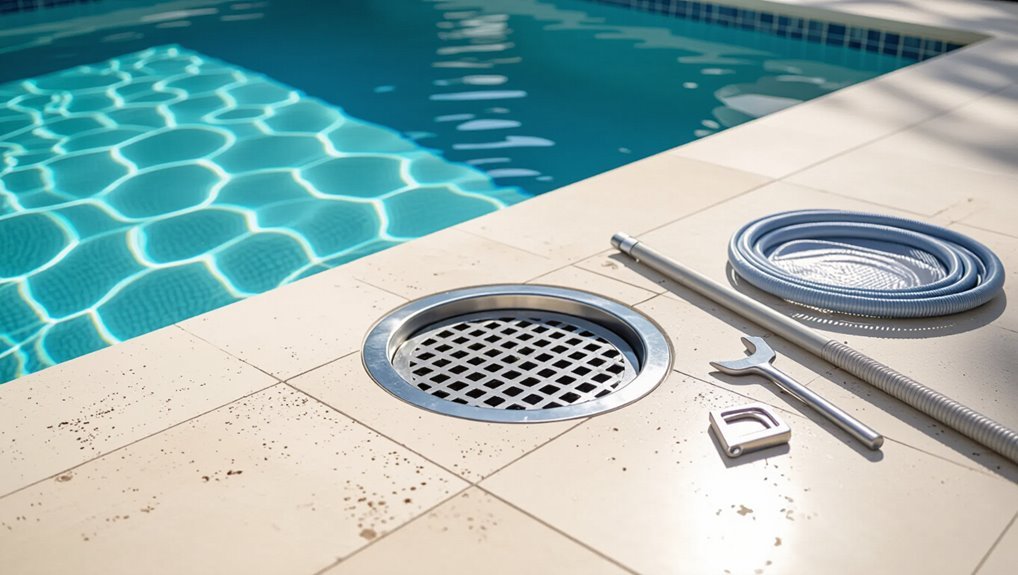
The text outlines clear visual and operational signs that suggest a main drain is blocked, such as swirling debris, low skimmer flow, and unusual pump noise or pressure fluctuations.
It explains how a clogged main drain disrupts overall circulation, strains the pump, and can lead to uneven chemical distribution and overheating.
It also indicates which warning signs—rapid pressure spikes, loss of suction, or visible debris accumulation—require immediate action to prevent equipment damage.
Immediate visual and operational signs to watch for
A sudden change in water movement and filter performance often signals a blocked main drain. Observers note uneven suction, weak return jets, swirling debris near the drain, and air in pump lines.
Cloudy water or rapid debris accumulation at the drain lip are immediate visual and operational signs. These indicators help homeowners quickly assess how to tell if pool main drain is clogged.
How a clogged main drain affects pool circulation and equipment
Noticing weakened flow or debris collecting at the main drain often precedes more systemic issues: reduced circulation forces the pump to work harder, skews chemical distribution, and increases strain on filters and heaters.
Cooler or stagnant zones develop, promoting algae and debris buildup. Pressure fluctuations and air in lines signal impaired flow.
Long-term neglect shortens equipment life and raises energy and maintenance costs.
When a warning sign indicates urgent action
Watch for sudden drops in flow, gurgling noises, persistent air in the pump basket, or rapidly rising filter pressure—these symptoms often indicate a main drain obstruction that requires immediate attention.
Immediate checks should include shutting off the pump, inspecting skimmer and pump basket, and visually evaluating the drain if accessible.
Prompt professional service prevents equipment damage, unsafe suction hazards, and worsening circulation issues.
Seven Clear Signs Your Pool Main Drain Is Clogged
A clogged main drain reveals itself through specific, observable symptoms that affect pump performance and pool circulation.
Notable indicators include weakened suction at skimmers and returns, the pump losing prime or running dry, and air appearing in the pump basket or return lines.
Additional signs are visible debris around the drain grate and persistent uneven water levels or poor circulation zones.
- Weak suction at skimmers and returns
- Pump losing prime or running dry
- Unusual air in pump basket or return lines
Weak suction at skimmers and returns
When both skimmers and return jets produce noticeably less pull or flow than usual, it often points to an obstruction at the main drain reducing overall circulation.
Reduced suction across skimmers and returns signals impaired water movement; debris, sediment, or collapsed piping near the main drain can restrict intake, lowering surface skimming and return pressure.
Inspect lines, valves, and the drain for blockages promptly.
Pool pump losing prime or running dry
Detecting a pump that repeatedly loses prime or runs dry can indicate a compromised main drain allowing air into the suction line or failing to supply adequate water.
The pump may cavitate, hum, or overheat as flow drops. Causes include partial blockage, collapsed pipe, or a stuck grate.
Inspect lines, valves, and basket; clear debris and test with the skimmer isolated to confirm restoration.
Unusual air in pump basket or return lines
Repeated loss of prime or dry-running conditions often accompanies the ingress of air elsewhere in the suction system; one clear symptom to watch for is air visibly collecting in the pump basket or bubbling through return lines.
Persistent air indicates a suction-side leak, partial blockage, or trapped pockets caused by impaired flow.
Technicians should inspect valves, unions, and fittings and test for obstructions in line.
Visible debris buildup around the drain grate
A visible accumulation of leaves, algae, or sediment caught at the main drain grate is a straightforward indicator of impaired suction.
Such buildup restricts flow, forces the pump to work harder, and can harbor organic matter that accelerates clogging.
Regular inspection and prompt removal with a skimmer or brush prevent escalation; persistent or compacted debris warrants a deeper grate and plumbing check.
Uneven water level or poor circulation zones
Uneven water levels or stagnant zones along pool edges often point to a main drain that isn’t drawing water properly. Such conditions create localized debris accumulation, algae growth, and reduced skimming effectiveness.
Regularly observe surface movement and test circulation near returns; weak flow or calm pockets suggest impaired suction at the drain. Addressing the issue restores uniform circulation and prevents water-quality decline.
Increased pressure on the pump or filter system
When localized calm pockets and poor edge circulation are present, strain often shifts elsewhere in the circulation system, revealing another common indicator: rising pressure on the pump or filter.
Technicians note steady high PSI or frequent backwashing as signs the main drain flow is restricted.
Watch pressure gauges and unusual pump noise; consistent elevation usually signals blockage requiring inspection or debris removal.
Persistent cloudy water despite normal chemical levels
If circulation is impeded at the main drain, water can remain suspended with fine particulates and biofilm even though chemical readings fall within target ranges.
Cloudiness persists because skimming and filtration draw from surface only; poor bottom turnover leaves contaminants trapped.
Technicians should inspect the main drain for partial blockage, improve circulation patterns, backwash or clean filters, and vacuum to waste if needed.
Quick Diagnostic Checks You Can Do Safely
Before any inspection begins, basic safety steps—shutting off the pump, removing jewelry, and using a pole or goggles—should be confirmed to prevent injury.
Simple checks of suction and flow at returns and skimmers, plus a vacuum gauge or pump performance measurement, can quickly indicate reduced circulation.
A visual inspection of the drain grate and hair/suction fittings finishes the quick diagnostic array and helps decide if professional service is needed.
Pre-check safety steps before inspecting the drain
A few quick safety checks help guarantee a safe visual inspection of the main drain:
Verify pump is off and locked out, power to pool equipment isolated, and skimmer/return valves set to neutral.
Confirm no swimmers are present and emergency equipment (life ring, pole) is accessible.
Use non-slip footwear and a flashlight for clear, hands-free viewing before any further action.
How to test suction and flow at returns and skimmers
Start by observing water movement at each return and skimmer to gauge relative suction and flow.
Note weak or absent currents, air bubbles, or surging. Compare multiple returns; one weak skimmer suggests blockage or valve misalignment.
Temporarily close individual return valves slightly to see changes.
Record findings and proceed to targeted cleaning or professional inspection if discrepancies persist or safety concerns arise.
Using a vacuum gauge and pump performance checks
Several practical checks can quickly indicate whether the main drain or pump is compromised: attach a vacuum gauge to the pump suction, record steady-state vacuum and flow readings, and compare them to the pump’s expected performance curves or manufacturer specifications.
Deviations—higher vacuum or lower flow than specified—suggest restriction at the drain or suction line.
Repeat checks after cleaning prefilter and backwashing to confirm improvement.
When to inspect the drain grate and hair/suction fittings
After confirming abnormal vacuum or flow readings and ruling out clogged prefilters and backwash issues, attention should move to visible suction components: the main drain grate and any hair/suction fittings.
Inspect grates for debris, broken or missing screws, and filament buildup.
Check hair fittings for entrapment or collapsed hoses.
Perform these checks with the pump off and power locked out; document findings for repair.
Fast DIY Fixes for a Clogged Main Drain
The next section outlines quick, practical remedies homeowners can try before calling a pro, starting with simple clearing of surface debris from the grate and using a pool vacuum or manual suction to dislodge shallow blockages.
It also covers temporary measures like backwashing and filter cleaning, safe use of a plumber’s snake or pool-specific auger to reach deeper clogs, and the cautious use of chemical or enzymatic cleaners including what to avoid.
Safety precautions and limits of DIY methods are emphasized so readers know when to stop and seek professional help.
Clearing surface debris from the drain grate
Start by removing visible leaves, twigs, and other debris that accumulate on the drain grate, since surface clogs are the most common and easiest to fix.
Wear gloves, lift the grate per manufacturer guidance, clear debris into a bucket, and inspect the opening.
Rinse the grate with a hose, reseat it securely, and run the pump to confirm improved flow and proper seating.
Using a pool vacuum or manual suction to dislodge blockages
Employing a pool vacuum or manual suction offers a quick, low-cost method to clear moderate blockages from a main drain without opening plumbing.
The operator attaches a manual vacuum plate or uses a wet/dry shop vacuum with long hose, seals around the grate, and applies steady suction to extract debris.
Repeat as needed, inspect flow improvement, and avoid aggressive force that could damage fittings.
Backwashing and filter cleaning as a temporary remedy
If manual suction fails to restore adequate flow, attention often shifts to the filtration system because a clogged filter or dirty media can mimic a blocked main drain.
Backwashing a sand or DE filter often clears trapped debris and temporarily improves circulation.
Cartridge filters require removal and rinsing.
After cleaning, monitor pressure and flow; repeat as needed while planning a thorough inspection or professional service if problems persist.
How to use a plumber’s snake or pool-specific auger safely
For a confined clog that resists suction, a plumber’s snake or a pool-specific auger provides a direct mechanical option:
Wear gloves and eye protection, shut off pump and power, and remove strainer covers.
Feed the flexible cable slowly into the main drain, rotate gently to break debris, and retract often to clear material.
Reassemble, restore power, and test flow before leaving the system unattended.
Using safe chemical or enzymatic cleaners’ what to avoid
After attempting mechanical removal with a snake or auger, many homeowners turn to chemical or enzymatic cleaners to tackle remaining organic buildup; however, care is required.
Avoid mixing cleaners, using harsh acids or drain cleaners that damage plumbing, and overdosing enzymes.
Check product compatibility with pool surfaces, seals, and filtration media.
Rinse thoroughly and follow label instructions; when unsure, consult a professional.
When to Call a Professional and What to Expect
If persistent poor circulation, gurgling, visible debris at the drain, or a sudden loss of suction occurs, a professional should be called immediately.
Technicians can perform suction tests, run camera inspections, and use hydro-jetting or other equipment to locate and clear blockages.
Readers should expect variable costs and repair times depending on severity and should ask about inspection fees, warranty, methods used, and estimated timelines before hiring.
Signs that require immediate professional service
Any sudden loss of suction, persistent air in the pump, visible debris escaping from the main drain, or a rapidly falling water level are clear signs that immediate professional attention is required.
Technicians should be called when unsafe hydraulics, unusual noises, electrical faults, or suspected structural damage occur.
Professionals will diagnose severity, secure the system, advise on safety, and recommend repairs or replacements to prevent hazards.
Professional methods: suction testing, camera inspection, and hydro-jetting
When signs such as sudden loss of suction or visible debris indicate possible main‑drain blockage, a professional assessment typically follows that uses targeted diagnostic and clearing techniques.
Technicians perform suction testing to locate flow restrictions, deploy waterproof cameras to visualize obstructions and pipe damage, and apply hydro‑jetting or specialized suction tools to dislodge debris safely, preserving plumbing integrity and confirming successful clearance.
Typical costs and timeframes for repairs
Typical repair timelines and costs vary with the problem’s scope: simple debris removal or reattaching a loose drain cover can be resolved in an hour or two for a modest service call, whereas diagnosing and repairing a collapsed or blocked underground line with camera inspection and hydro-jetting—or replacing damaged piping—can take a day or more and run into several hundred to a few thousand dollars depending on labor, parts, and regional rates.
Technicians typically charge diagnostic fees, hourly labor, and additional costs for parts, permits, excavation, or restoration. Emergency or weekend service increases rates; warranties or maintenance plans may reduce out‑of‑pocket expense.
Questions to ask a pool technician before hiring
Knowing potential timelines and costs helps homeowners decide whether a DIY fix is feasible or professional help is warranted.
Before calling a technician, however, it pays to prepare a focused list of questions to guarantee competence, clear expectations, and transparent pricing.
Ask about licenses, insurance, references, specific experience with clogged main drains, diagnostic methods, estimated timeframe, parts and labor costs, warranty terms, and clean-up responsibilities.
Preventive Maintenance to Keep the Main Drain Clear
Preventive maintenance focuses on routine tasks that reduce the risk of main drain blockages. This includes a regular cleaning schedule for drains and skimmer baskets, seasonal checklists, and recommended equipment upgrades such as anti-entrapment covers and sturdier grates.
Clear usage practices—like limiting leaves and large debris—and timely inspections help keep the system flowing properly.
Regular cleaning schedule for drains and skimmer baskets
Consistency is the cornerstone of keeping a pool’s circulation system reliable: establishing a regular cleaning schedule for skimmer baskets and visible drain grates prevents debris buildup that can lead to reduced flow or clogging.
Weekly inspections, prompt removal of leaves and hair, and monthly deeper cleanings guarantee unobstructed intake.
Record tasks and adjust frequency after storms or heavy use to maintain maximum circulation.
Recommended equipment upgrades (anti-entrapment covers, stronger grates)
Upgrade pool drain hardware to reduce clogging risks and enhance safety: replacing old grates with stronger, corrosion-resistant models and installing certified anti-entrapment covers improves debris clearance and prevents hazardous suction incidents.
Choosing ASTM- or ANSI-compliant covers, impact-resistant grates, and stainless or polymer alloys reduces corrosion and warping.
Professional installation and periodic inspection guarantee secure fittings and sustained flow, minimizing blockage and safety hazards.
Seasonal maintenance checklist to prevent clogs
A seasonal maintenance checklist helps pool owners and service technicians systematically keep the main drain clear by outlining timed inspections, cleaning tasks, and component checks tied to weather and usage cycles.
Include monthly skimmer and pump-basket clearing, quarterly main-drain grate removal and debris inspection, biannual suction-line pressure checks, pre-winter chemical balancing and winterizing, and spring start-up walkthroughs with flow verification and leak assessment.
Best practices for pool use to minimize debris intake
When pool users follow simple habits and rules, debris entry is greatly reduced and the risk of main-drain blockages declines. Regular swimmer rinsing, limiting leaf- and grass-prone activities near the pool, and using covers when inactive all cut down on material that can reach the drain.
Additional practices include routine skimming, strategic landscaping to reduce windblown debris, enforcing shower-before-entry, and removing toys after use.
Troubleshooting Related Problems
Troubleshooting related problems requires distinguishing symptoms and matching them to targeted fixes rather than assuming the main drain is always at fault.
Technicians should check skimmer performance, pump behavior, and signs of underground damage to determine the correct course of action.
Practical interventions range from simple skimmer clearing to addressing pump cavitation and repairing root or pipe failures.
- Differentiating skimmer clogs from main drain clogs
- Addressing low pressure and pump cavitation issues
- Fixes for recurring clogs caused by root intrusion or plumbing collapse
Differentiating skimmer clogs from main drain clogs
How can a pool owner tell whether poor circulation stems from a skimmer clog or a blocked main drain?
Observation of flow differences helps: reduced skimmer suction, debris pooling near the skimmer, and clearer water at the main inlet point to a skimmer clog.
Conversely, weak overall circulation, uneven vacuuming, and visible debris sinking centrally suggest a main drain obstruction.
Perform targeted inspections accordingly.
Addressing low pressure and pump cavitation issues
Low pump pressure and cavitation signal that air or flow restrictions are disrupting the suction side of the system and require prompt, focused action.
The technician inspects for air leaks at fittings, trapped air in the pump lid, collapsed suction lines, closed valves, and clogged skimmer baskets.
Pressure gauges and visual pump behavior guide diagnosis; prompt sealing or debris removal prevents impeller damage and restores reliable flow.
Fixes for recurring clogs caused by root intrusion or plumbing collapse
Addressing recurring clogs from root intrusion or collapsed piping requires a different approach than routine debris removal, because the problem originates in the underground distribution network rather than surface fittings.
Technicians consequently prioritize locating the breach, evaluating pipe condition, and choosing a permanent repair method—root excavation and pipe replacement, hydro-jetting combined with root treatment for minimally damaged lines, or relining/trenchless replacement when excavation is impractical.
Technicians recommend CCTV inspection, targeted repairs, and preventive root barriers to restore flow and prevent recurrence.
Safety Considerations and Legal Requirements
Before inspecting a suspected clogged main drain, the article notes that anti-entrapment fittings, compliant safety covers, and applicable local standards must be verified.
It recommends following specific, low-risk procedures—such as shutting off pumps, using tools instead of hands near suction points, and testing with professional assistance—to prevent suction entrapment during inspection.
Differences in enforcement and required certifications for public pools versus residential owners are highlighted so readers understand their distinct compliance obligations.
Anti-entrapment and safety cover standards
While pool owners focus on circulation and filtration, compliance with anti-entrapment and safety cover standards is essential to prevent drownings and legal liability.
Regulations require anti-entrapment drain covers, safety vacuum release systems, and compliant cover installation.
Regular inspections, replacement of damaged covers, and documentation of compliance reduce risk and meet local codes.
Noncompliance can result in fines and increased liability exposure.
Proper procedures to avoid suction entrapment during inspection
Having guaranteed that anti-entrapment devices and safety covers meet code, inspectors must follow strict procedures during any main-drain examination to prevent suction entrapment.
They should isolate pumps, close valves, shut off electrical power, and lock out equipment.
A trained observer must monitor the pool, maintain clear communication, use non-entry inspection tools when possible, and document all actions and safety checks.
Compliance tips for public pools versus residential pools
Public pools and residential pools are subject to different layers of regulation and enforcement, so inspectors and owners must apply compliance measures appropriate to each setting.
Public facilities require documented routine inspections, anti-entrapment covers, dual drains or SVRS systems, and compliance with local/state codes.
Residential owners should follow manufacturer guidance, perform regular checks, and consult local ordinances; maintain records when required.
Quick Reference Checklists and Tools
A concise one-page diagnostic checklist helps homeowners quickly identify signs of a clogged main drain and determine whether professional help is needed. A companion list of recommended tools and supplies supports common DIY fixes while emphasizing safety and efficiency. The table below summarizes key items to keep on hand and quick actions to run through before calling a technician.
| Checklist item | Recommended tool/supply |
|---|---|
| Reduced suction or strange noises | Screwdriver, flashlight |
| Visible debris at skimmer or drain cover | Gloves, pool skimmer net |
| Weak circulation on returns | Telescoping pole, vacuum hose |
| Air in pump or cavitation | Wrench, replacement O-rings |
| Uncertain or persistent issues | Contact info for local pool pro |
One-page diagnostic checklist for homeowners
When a homeowner suspects a clogged main drain, a one-page diagnostic checklist condenses the essential observations and quick tests into a single, actionable reference so problems can be identified before they escalate.
Include:
- visual water level
- skimmer flow
- pump suction sound
- pressure gauge reading
- return flow strength
- visible debris at grate
- time since last vacuum
- recommended next step (call pro or proceed with safe DIY inspection).
Recommended tools and supplies for DIY fixes
After completing the quick diagnostic checklist, homeowners ready to attempt safe DIY inspection or minor fixes should assemble a compact kit of tools and supplies tailored to pool main-drain issues. Essentials: adjustable wrench, wet/dry vacuum hose adapter, long brush, replacement strainer, PVC glue. Emotional checklist:
| Tool | Purpose | Feeling |
|---|---|---|
| Wrench | Filter access | Confidence |
| Vacuum adapter | Debris removal | Relief |
| Brush | Scrubbing | Control |
| Glue | Repairs | Assurance |
| Strainer | Safety | Calm |
Conclusion
Like a narrow river choked by unseen debris, a neglected main drain stifles the pool’s pulse. Observers watch from the bank as surface ripples falter and filters strain, knowing small steps—clearing leaves, checking suction, calling a diver—restore flow. Regular tending keeps the channel open, preventing the slow suffocation of water and machinery. In this way, mindful upkeep guarantees the pool’s lifeblood runs clear, safe, and renewed.