How to Remove Rust From Toilet Bowl Fast: 7 Easy DIY Methods That Work
To quickly remove rust stains from your toilet bowl, try these effective DIY methods: use vinegar and baking soda, lemon juice with salt, or a borax paste. For stubborn stains, consider cola soaking or gentle pumice scrubbing. If these methods aren’t enough, oxalic-acid commercial cleaners or professional help may be necessary. Always ensure good ventilation, wear gloves, and test any cleaning solution on the porcelain first. This guide will provide step-by-step instructions, safety tips, and preventative measures to help you eliminate stains and keep your toilet rust-free.
How to Remove Rust From a Toilet Bowl Quickly and Safely
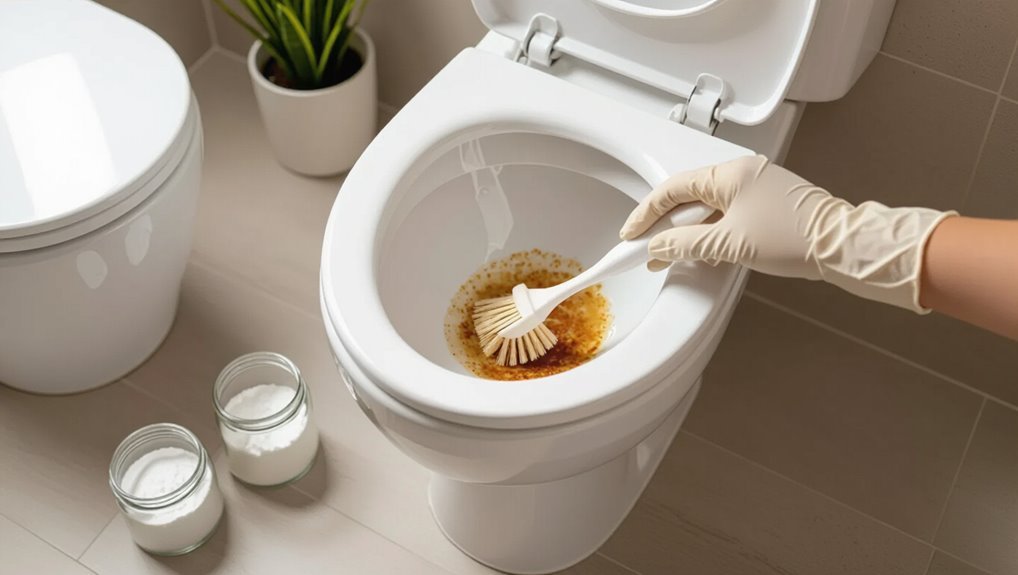
Rust stains in toilet bowls typically form when iron in water or corroding pipes oxidizes and deposits on porcelain.
They can be distinguished from mineral scale or organic discoloration by their reddish-brown color and tendency to flake or powder when scrubbed.
Identifying the cause and appearance helps determine the fastest and safest removal method.
What causes rust stains in toilet bowls
Iron deposits in water lines and corroding metal components are the primary culprits behind reddish-brown stains in toilet bowls.
Mineral-rich groundwater, aging pipes, and dissolved iron precipitate onto porcelain where water evaporates. Flaking fixtures, iron-rich sediment, and prolonged dampness worsen buildup.
Recognizing these sources helps prioritize treatment methods and informs choices when learning how to remove rust from toilet bowl effectively.
How to tell rust stains apart from mineral or organic stains
How can one distinguish reddish-brown staining caused by metal deposits from other toilet discolorations?
Visual cues: rust appears reddish-brown, flaky or powdery, and often forms rings near the waterline.
Mineral (hard-water) deposits are chalky, white to gray, crystalline, and resist wiping.
Organic stains are darker, brown to black, may smear, and respond to bleach.
Simple spot tests (vinegar, bleach) confirm type.
Quick-Start Solutions You Can Use Right Now
A set of quick-start options can be used immediately to tackle rust spots with common household products or faster commercial treatments.
Each method balances speed, availability, and surface safety, so selection depends on stain severity and user preference. Below are four practical approaches to evaluate right now:
- Vinegar and baking soda — fast-reacting home remedy for light to moderate stains.
- Lemon juice and salt — acidic abrasive for targeted, localized rust.
- Borax and vinegar — boosted cleaning power for tougher deposits.
- Cola drinks or commercial rust removers — convenient acid treatment or high-speed professional solution.
Vinegar and Baking Soda fast-reacting home remedy
Combine household vinegar and baking soda for a fast, chemical-free rust treatment that foams to loosen mineral deposits in minutes.
Pour vinegar into the bowl, sprinkle baking soda over stains, let fizz for 10–20 minutes, then scrub with a toilet brush or pumice stone.
Repeat for stubborn spots and flush.
Safe for most porcelain when used gently and rinsed thoroughly.
Lemon Juice and Salt acidic abrasive for localized stains
Apply lemon juice with coarse salt directly to localized rust spots for a quick, natural abrasive that dissolves mineral buildup.
Allow fizzing for several minutes, then scrub gently with a pumice stone or firm brush.
Rinse thoroughly and repeat if necessary.
This method targets small, stubborn stains without harsh chemicals; protective gloves are recommended to protect skin from prolonged acidity.
Borax and Vinegar boosted cleaning power
Boost rust-removing power by sprinkling borax around the stained area, then pouring white vinegar over it to create a bubbling reaction that loosens mineral deposits.
Allow 15–30 minutes for action, scrub with a toilet brush or pumice stone, then flush.
Repeat for stubborn rings.
This method is inexpensive, nonbleaching, and effective on light to moderate rust when used with gloves and ventilation.
Coca’Cola or Cola Drinks convenient acid treatment
Pouring a cola drink into a rust-stained toilet bowl provides a convenient, low-effort option because the beverage’s phosphoric and carbonic acids help dissolve mineral deposits and loosen surface rust.
Simply pour, let sit for 1–3 hours, scrub with a toilet brush or pumice stone, then flush.
Repeat if needed; avoid mixing with other cleaners and ventilate the area while treating.
Commercial rust removers what to choose for speed
After using a cola drink for a low-effort test, many homeowners opt for faster results with commercial rust removers formulated specifically for mineral stains.
Choices include acid-based gels (muriatic alternatives, oxalic acid) and chelating cleaners; gels cling to vertical surfaces for better contact.
Select products labeled for toilets, follow ventilation and glove precautions, and test a small area to confirm effectiveness and porcelain compatibility.
Pumice stone immediate mechanical removal for tough spots
Scrub stubborn rust spots with a wet pumice stone to remove mineral buildup quickly without harsh chemicals.
The user wets both stone and porcelain, applies gentle, controlled strokes, and checks progress frequently to avoid scratching.
Small, dark deposits come off with steady pressure; rinse debris and inspect.
Finish by flushing and wiping dry to prevent immediate reformation of stains.
CLR or oxalic-acid cleaners professional-strength option
Choose a commercial rust remover like CLR or an oxalic-acid cleaner when mechanical methods fall short: these professional-strength products dissolve iron and mineral stains quickly and are formulated specifically for porcelain and ceramic toilet bowls.
Follow label directions, ventilate the bathroom, use gloves and eye protection, apply to stained areas, allow recommended dwell time, scrub with a nonabrasive brush, and rinse thoroughly to prevent surface damage.
Step-by-Step Instructions for Each Method
The following section provides concise, step-by-step instructions for each rust-removal method listed.
It covers required materials and timing for vinegar and baking soda, safe application of lemon juice and salt to avoid scratching, borax-and-vinegar proportions and dwell time, the cola procedure and its limitations, and the correct pumice stone scrubbing technique.
Each method is presented so a reader can follow it reliably and safely.
Vinegar and Baking Soda: materials, timing, and technique
Begin by gathering plain white vinegar, baking soda, a measuring cup or spoon, a spray bottle (optional), and a stiff toilet brush; these materials target rust with mild acid and abrasive action.
Pour one cup vinegar into a bowl, sprinkle baking soda over stains, let fizz for 10–15 minutes, scrub firmly with the brush, flush, repeat for persistent marks, and allow ventilation.
Lemon Juice and Salt: how to apply without scratching
Sprinkle coarse salt over rust spots, then pour fresh lemon juice to soak the area and let citric acid work on mineral deposits without abrasive scraping.
Allow 15–30 minutes for softening.
Gently rub with a soft cloth or non-scratch sponge in circular motions, rinsing and repeating if needed.
Avoid steel wool or harsh brushes to prevent glazing or scratches on the porcelain.
Borax and Vinegar: proportions and dwell time
After treating stains with lemon and salt, move to a borax-and-vinegar method for more stubborn rust: mix 1/2 cup borax with enough white vinegar to form a thick paste (about 2–3 tablespoons), apply directly to rusted areas, let sit 30–60 minutes, then scrub gently with a non-abrasive sponge and flush;
for heavy deposits, repeat or let the paste sit overnight before scrubbing.
Repeat once if needed.
Cola Method: procedure and limitations
Pour cola over the rust-stained areas so the liquid fully covers the deposits and reaches under the rim where possible.
Let it sit one to three hours, longer for heavy stains.
Agitate gently with a toilet brush, then flush.
Repeat if needed.
Limitations: cola is acidic but mild, may require multiple applications, can stain porous porcelain and is slower than stronger rust removers.
Using a Pumice Stone: safe scrubbing method
Use a wet pumice stone to gently abrade rust without damaging glazed porcelain when used correctly; keep both the stone and the stained surface soaked to prevent scratching, work in small sections with light pressure, and rinse frequently to check progress.
Move in straight strokes, avoid circular scrubbing, replace the stone if gritty, and flush to remove residue. Inspect until stain lifts.
Applying Commercial Rust Removers: safety steps and rinsing
Having finished gentle pumice work, attention can shift to commercial rust removers for tougher stains.
These products require careful handling, clear safety steps, and thorough rinsing to protect both user and porcelain.
Read label instructions, ventilate the bathroom, wear gloves and eye protection, apply product sparingly, wait recommended time, scrub gently with a nonabrasive brush, then flush and rinse several times until no residue or odor remains.
Oxalic Acid Treatment: precautions and neutralization
Oxalic acid is an effective option for removing stubborn rust stains from porcelain but requires strict precautions:
wear chemical-resistant gloves, eye protection, and a mask;
ventilate the bathroom;
avoid skin contact.
Dilute per label, apply briefly with a nonmetal brush, rinse thoroughly with plenty of water, and neutralize spills using baking soda solution.
Dispose of residues per local regulations.
Safety Precautions and Protective Measures
Before starting rust removal, the article emphasizes proper ventilation and the use of chemical-resistant gloves and eye protection to reduce inhalation and contact risks.
It warns against mixing cleaners (especially bleach and acids) and instructs readers to follow product labels to prevent dangerous reactions.
If stains persist after safe attempts or if heavy corrosion or plumbing damage is suspected, the reader is advised to stop and contact a professional.
Ventilation, gloves, and eye protection guidance
When removing rust from a toilet bowl, verify the area is well-ventilated and wear chemical-resistant gloves and splash-proof eye protection to minimize inhalation and skin or eye contact with cleaners.
Ensure windows and exhaust fans run, keep doors open, and limit nearby occupants.
Choose gloves rated for acids/alkalis, inspect for tears, and fit goggles snugly.
Dispose of contaminated disposable PPE properly.
Chemical mixing risks to avoid
Why mix chemicals at all if it can create far greater hazards than stains? One should never combine bleach with acids, ammonia, or toilet cleaners containing acids; toxic gases and violent reactions can result.
Always read labels, use single-product treatments, flush thoroughly between different cleaners, and store chemicals separately. Seek fresh-air ventilation and avoid improvising mixtures.
When to stop and call a professional
After discussing the dangers of combining cleaners and the need for caution, it becomes important to recognize signs that a DIY approach should stop and a professional should be called.
Persistent stains after repeated safe treatments, damaged porcelain, leaking connections, strong chemical reactions or fumes, and respiratory or skin irritation warrant stopping.
A plumber or restoration specialist can assess structural issues and apply safer, stronger remediation.
Tools and Supplies Checklist
A concise checklist helps specify which household items, commercial cleaners, and gentle tools are best suited for rust removal without harming porcelain. The following list highlights practical options and explains why certain products and brushes are recommended. Readers will learn which supplies remove rust effectively while protecting the bowl’s finish.
- Common household options (vinegar, baking soda, lemon) and when they’re effective
- Recommended commercial rust removers and their active ingredients
- Non-abrasive tools (soft-bristled brush, nylon scrub pads) to avoid scratching porcelain
- Occasional-use tools (pumice stone, specialty brushes) and precautions for safe use
Household items that work
Gather essential household items before beginning rust removal to guarantee the process is effective and efficient.
Common items include white vinegar, baking soda, lemon juice, borax, a pumice stone or non-scratch scrub pad, rubber gloves, an old toothbrush, a plastic scraper, and microfiber cloths.
A spray bottle and bucket help dilute and apply solutions; keep safety goggles nearby.
Recommended commercial products and why
Household items provide basic rust removal options, but commercial products offer targeted formulations for tougher stains and faster results.
Recommended options include oxalic acid cleaners for effective rust dissolution, hydrochloric-acid-based toilet cleaners for stubborn mineral deposits, and rust-removal gels that cling to vertical surfaces.
Choose pH-appropriate products, follow label safety instructions, and prefer gel or thick formulas for longer contact time and improved stain removal.
Tools that prevent damage (brushes, pumice, scrub pads)
Select tools that remove rust while protecting porcelain and coatings: soft-bristled toilet brushes for routine scrubbing, nonmetal pumice stones used wet and with light pressure for localized mineral buildup, and nonabrasive scrub pads or nylon scouring pads for tougher spots without scratching.
Wear gloves, test pumice/pads in an inconspicuous area, replace worn brushes, and avoid metal tools that gouge glaze or damage protective coatings.
Comparison of Methods: Speed, Effectiveness, and Surface Safety
A concise comparison helps readers choose the fastest, most effective, and safest option for porcelain. The table below summarizes reaction time, stain types treated, and porcelain safety for common methods. The following section evaluates these factors to guide method selection.
| Method | Summary |
|---|---|
| Vinegar + Baking Soda | Fast on light stains; safe for porcelain with rinsing |
| Lemon Juice | Moderate speed; effective on mild rust; generally safe |
| Commercial Rust Remover | Fast and strong on heavy stains; check porcelain compatibility |
| Pumice Stone | Immediate results on surface stains; use gently to avoid scratches |
Quick reference table: reaction time, stain types treated, porcelain safety
When choosing a rust-removal method, the quick reference table summarizes reaction time, types of stains treated, and porcelain safety to help compare options at a glance.
It lists chemical cleaners (fast, heavy rust, porcelain-safe if labeled), acidic DIYs like vinegar/borax (moderate, light to medium stains, generally safe), abrasive pads (instant, surface stains, risk of scratching) and commercial gels (fast, stubborn stains, formulated for porcelain).
Common Mistakes to Avoid When Removing Toilet Rust
When tackling toilet rust, common errors can worsen damage or create safety hazards if not recognized. Care should be taken to avoid abrasive scrubbing that scratches porcelain, mixing cleaners that react dangerously, or overlooking sources that cause rust to return.
The following list highlights key mistakes to prevent during rust removal:
- Using steel wool, metal brushes, or harsh pads that abrade the glaze.
- Combining bleach with acids or ammonia-based products.
- Relying solely on surface treatments without identifying plumbing or water-quality causes.
- Leaving strong cleaners on too long, which can weaken finishes or seals.
Abrasives that can scratch porcelain
Avoid using harsh abrasives on porcelain surfaces, as gritty pads, steel wool, and abrasive powders can quickly etch the glaze and leave visible scratches that trap stains and promote future staining.
Instead, use nonabrasive cleaners, soft cloths, or nylon brushes and test products in an inconspicuous area.
When in doubt, choose gentler methods to remove rust without compromising the bowl’s protective finish.
Mixing incompatible chemicals
Mixing cleaning agents can create dangerous reactions that release toxic gases or produce corrosive mixtures, so care must be taken to never combine products—especially bleach and acids—while treating toilet rust.
Users should read labels, use single-product treatments, and ventilate the area.
When uncertain, consult manufacturer guidance or switch to milder alternatives like diluted vinegar or a commercial rust remover designed for toilets.
Ignoring underlying causes of recurring rust
Several homeowners treat surface stains and call the job done, overlooking the plumbing or water-quality issues that cause rust to return.
Ignoring pipe corrosion, iron-rich supply water, or faulty seals leads to rapid recurrence. Effective removal includes diagnosing source—testing water, inspecting fittings, replacing corroded parts—and addressing mineral buildup.
Otherwise repeated cleaning wastes time and resources without solving the root problem.
Preventing Future Rust Stains
Preventing future rust stains begins with addressing water quality, such as installing appropriate treatment or filtration systems to reduce iron content.
Regular maintenance—a simple cleaning schedule using nonabrasive, rust-targeting products—helps stop stains before they set.
Identifying and repairing corroded pipes, tank components, or fixtures eliminates common sources of iron that cause recurring rust.
Water treatment and filtration options
A range of water treatment and filtration options can reduce the iron and mineral content that causes rust stains in toilet bowls.
Point-of-entry systems like whole-house iron filters, water softeners, and oxidizing filters remove dissolved iron and hardness.
Point-of-use filters for toilets and toilets with built-in filtration offer localized reduction.
Professional water testing guides appropriate system selection and maintenance schedules.
Routine cleaning schedule and products
After addressing water quality through filtration or treatment, maintaining a regular cleaning schedule keeps mineral deposits from becoming stubborn rust stains.
Weekly scrubbing with a nonabrasive brush and a mild acid cleaner (vinegar or citric-acid product) prevents buildup.
Monthly deeper treatments with a rust-specific cleaner or pumice stone tackle early discoloration.
Always ventilate, follow product instructions, and wear gloves for safety.
Fixing plumbing or tank issues that cause rust
Inspecting and repairing the plumbing and tank components that introduce iron or oxygen into the bowl is essential to stop recurring rust stains.
A qualified person should check inlet pipes, corroded valves, and disintegrating tank liners. Replace rusty supply lines, install a corrosion-resistant fill valve, and consider an inline sediment or iron filter.
Correcting leaks and improving ventilation reduces oxidation and long-term staining.
When Rust Removal Fails: Next Steps
If repeated cleaning and targeted rust removers do not restore the bowl, more extensive restoration may be required, such as professional re-glazing or full toilet replacement.
Assessment of underlying damage and plumbing issues can determine whether a restoration specialist or a licensed plumber should be called.
The decision should weigh cost, expected lifespan after repair, and the severity of surface or structural corrosion.
Deep restoration options (re-glazing, replacement)
When rust removal methods prove ineffective or the porcelain surface is deeply pitted, homeowners should consider deep restoration options such as re-glazing or full toilet replacement.
Re-glazing restores the finish, seals pits and can extend service life at lower cost than replacement.
Replacement eliminates structural damage, offers warranty and modern features.
Decisions depend on extent of corrosion, budget and desired longevity.
When to hire a plumber or restoration specialist
After considering re-glazing or replacement, homeowners should recognize the limits of DIY rust removal and know when professional help is warranted.
Call a plumber or restoration specialist if stains persist despite multiple treatments, porcelain is pitted or cracked, water chemistry causes recurring rust, or odors and leaks emerge.
Professionals assess structural damage, perform safe repairs or replacement, and prevent repeated corrosion.
Conclusion
Rust stains mar toilets but are usually solvable with common supplies. Studies show about 20% of U.S. households report visible bathroom rust, underscoring its prevalence. With quick-start options like vinegar, citric acid, or commercial descalers, most stains respond within minutes to an hour. Choose a method matching the surface and severity, follow safety precautions, and use the prevention tips provided; if stubborn rust remains, consider professional assessment or replacement.