
How to Keep Sewer Line From Freezing: 9 Proven Prevention Methods
To prevent sewer lines from freezing, implement these nine effective methods: insulate exposed pipes, use pipe sleeves or heat tape, maintain a slow trickle of water, seal outdoor cleanouts, reroute or deepen vulnerable segments, install ground heating or heat mats, select cold-tolerant pipe materials, ensure proper slope and drainage, and consult professionals for heat tracing. For detailed step-by-step instructions, cost estimates, and regional considerations, continue reading.
Why Sewer Lines Freeze and Why It Matters
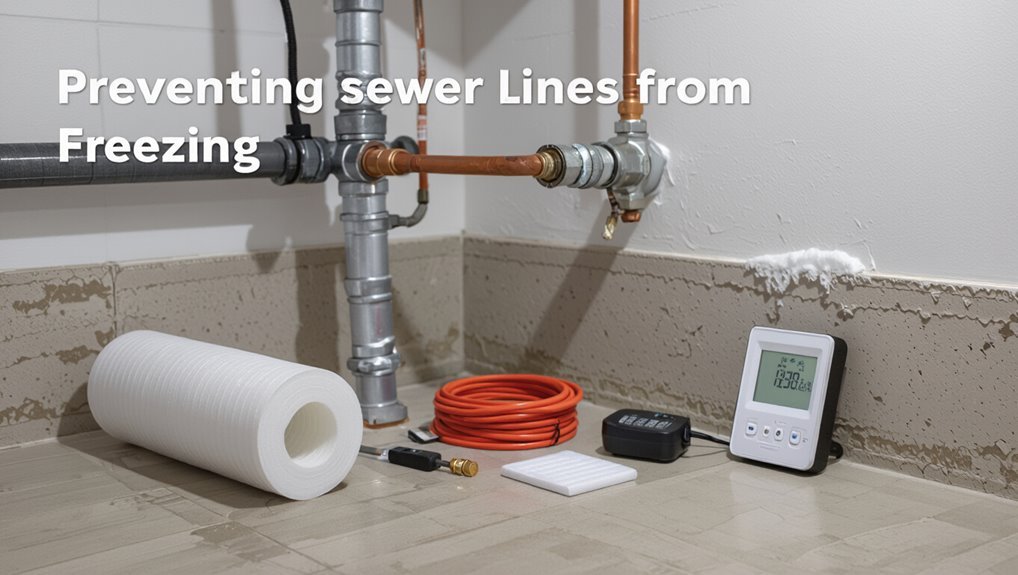
Freezing occurs in sewer pipes when low temperatures lower wastewater and standing water to the point of ice formation, especially where flow is slow or intermittent.
Pipes closer to the surface, made of certain materials, or subjected to cold climates and reduced household usage are at higher risk.
A frozen sewer line can cause blockages, sewage backups, and cracking or burst pipes, making prevention and timely intervention important.
How freezing occurs in sewer pipes
When temperatures drop below the water’s freezing point, standing or slow-moving sewage in pipes can solidify, creating blockages and pressure that strain joints and vents.
Ice formation narrows flow paths, promotes backups, and can rupture weak sections.
Understanding how to keep sewer line from freezing focuses interventions on maintaining flow, insulating vulnerable segments, and relieving trapped air that accelerates freezing.
Common risk factors (climate, pipe material, depth, usage)
Because several variables interact to determine vulnerability, evaluating why sewer lines freeze requires attention to local climate, pipe construction and placement, and patterns of use.
Cold regions, shallow or poorly insulated pipes, and materials with high thermal conductivity elevate risk.
Infrequent flow, seasonal vacancies, and surface runoff influence temperature and ice formation potential, demanding tailored prevention based on site-specific assessments.
Consequences of a frozen sewer line (blockage, backups, pipe damage)
A frozen sewer line can quickly transform a routine plumbing issue into a hazardous and costly problem. Ice plugs cause blockages that prevent drainage, leading to backups into fixtures, basements, and soil.
Pressure from expanding ice can crack or burst pipes, joints, and seals. Contamination, mold growth, structural damage, and expensive emergency repairs commonly follow, amplifying health and financial risks.
Quick Prevention Overview: Immediate Actions to Reduce Freezing Risk
A quick checklist can help homeowners identify vulnerable sewer sections before the cold sets in, including inspecting exposed pipes, checking for gaps in insulation, and confirming proper slope and drainage.
If pipes approach freezing, straightforward temporary measures—such as applying heat tape, wrapping pipes with insulated blankets, or running a slow trickle of water—can reduce immediate risk.
These steps are practical stopgaps until professional repairs or permanent winterization can be completed.
Simple checks to perform before cold weather
Before temperatures drop, homeowners should run a few focused checks to reduce the risk of sewer-line freezing:
inspect exposed pipes for insulation gaps, confirm outdoor cleanouts are sealed, clear debris from drainage areas, verify sump pump and backups operate, and check for low spots where water pools.
Schedule a professional inspection for older lines or suspected damage to address vulnerabilities promptly.
Emergency temporary fixes for near-freezing pipes
With outdoor checks completed, homeowners can take a handful of quick, temporary steps to protect near-freezing sewer pipes until permanent repairs or professional help arrive.
Wrap exposed sections with insulating tape or foam, apply heat cable cautiously if available, open nearby cabinet doors to circulate warm air, and run a slow drip from an indoor faucet.
Monitor frequently and call a plumber promptly.
9 Proven Methods to Prevent Sewer Line Freezing
The following concise measures are recommended to prevent sewer line freezing and reduce the risk of costly blockages.
- Insulate exposed pipes
- Increase burial depth where feasible
- Install heat tape or cable
- Maintain steady water flow and seal drafts in crawlspaces/basements
Each method targets a common vulnerability in winter conditions and can be combined for better protection.
Ensure proper pipe insulation
Effective insulation is essential for preventing sewer line freezing, with different materials suited to buried versus exposed sections.
Common options include foam pipe sleeves, closed-cell spray foam for joints, and specialized underground wraps, each with specific installation requirements.
Proper fitting, sealing of seams, and avoiding gaps or compression are key installation tips, while improper overlap, inadequate depth, and neglecting freeze-prone fittings are frequent mistakes.
Types of insulation for underground and exposed pipes
Insulation choices for underground and exposed sewer pipes include foam sleeves, fiberglass wraps, and high-density polyethylene (HDPE) casings, each suited to different depths, soil conditions, and exposure levels.
Closed-cell polyethylene foam resists moisture; fiberglass offers high R-value where dry; HDPE provides durable, impact-resistant protection.
Reflective wraps and mineral wool serve niche situations requiring heat reflection or higher temperature tolerance.
Installation tips and common mistakes
Begin by planning the layout and material selection around soil depth, frost line, and pipe exposure to guarantee insulation performs as designed.
Install continuous, sealed insulation with proper overlap and weatherproofing. Secure fasteners without compressing foam.
Avoid gaps, mismatched materials, shallow burial, and poor drainage.
Test heat-trace systems and monitor for settling.
Document installation for future inspection and maintenance.
Increase pipe burial depth where possible
Recommended burial depths vary by region and should meet local frost-line guidelines to keep sewer lines below freezing temperatures.
Homeowners in colder zones may need deeper trenches than those in milder climates.
When uncertainty or complex site conditions arise, a licensed contractor should be consulted to determine appropriate depth and guarantee code compliance.
Recommended frost depth guidelines by region
Because ground freezing varies widely by climate, local frost depth maps are essential when planning burial depth for sewer lines.
Recommended depths differ: shallow in mild coastal zones, moderate in temperate inland areas, and deepest in northern continental regions.
Use municipal codes, state guidelines, and published frost figures to set minimum cover.
Adjust for soil type, drainage, and microclimates to guarantee pipes remain below active freezing.
When to consult a contractor
After determining appropriate burial depths using local frost maps and site conditions, a homeowner should consider professional consultation when proposed adjustments approach structural limits, involve excavation near foundations or utilities, or require permits.
A contractor assesses soil stability, drainage, and pipe materials, provides load-bearing guidance, secures permits, locates underground services, and offers excavation and backfill expertise to guarantee compliant, durable frost protection.
Install heat tape or heat cable
Choosing an appropriate heat cable for sewer lines requires matching cable type and wattage to pipe material, diameter, and expected outdoor temperatures.
Proper installation includes securing the cable along the pipe, following manufacturer guidelines, and ensuring waterproof connections and GFCI-protected power.
Consideration of power source capacity and local electrical codes is essential before energizing the system.
Selecting the right heat cable for sewer lines
Selecting an appropriate heat cable for a sewer line requires matching the product’s output, construction, and installation method to the pipe material, exposure conditions, and local climate.
Choose self-regulating or constant-wattage based on temperature variability; favor waterproof, UV-resistant jackets for exposed runs.
Verify compatibility with PVC or cast iron and select length and wattage per manufacturer recommendations to guarantee consistent freeze protection.
Safe installation and power considerations
Install heat cable with attention to safe wiring practices and adequate power capacity to prevent short circuits, overloads, or ineffective freeze protection.
Qualified electricians should verify circuit load, GFCI protection, and wiring methods. Use manufacturer-approved connectors, secure cables to pipes, maintain required clearances, and avoid insulating over thermostats.
Regular inspections guarantee integrity; replace damaged sections promptly to maintain continuous, safe freeze prevention.
Maintain consistent water flow during cold spells
Maintaining a slow, steady flow through drains reduces the chance of standing water freezing without requiring large volumes of wasteful runoff.
Practical techniques include timed trickles, recirculation loops, and using low-flow fixtures or appliance cycles that periodically move water.
The discussion also covers appliances and fixtures—such as recirculating pumps and frost-proof hose bibs—that help prevent stagnation in vulnerable lines.
Techniques to keep drains active without wasting water
Keep drains moving at low volumes to prevent standing water from freezing while avoiding wasteful continuous flushing.
Homeowners should schedule brief, periodic taps—pouring a few cups of water down sinks and floor drains every few hours during cold snaps.
Combine with insulating exposed pipes and clearing debris so low flows travel.
Monitor outdoor temperature and increase frequency only when frost risk rises.
Appliances and fixtures that help prevent stagnation
Several compact fixtures and simple appliances can sustain low, regular flows through household drains to reduce stagnation without wasting water.
Timed drip valves, low‑flow trickle faucets, and leakproof recirculating pumps keep water moving during freezes.
Insulated, thermostatically controlled heat tape paired with small circulation units prevents localized freezing.
Selection prioritizes efficiency, reliable low output, simple installation, and minimal energy use.
Seal drafts and insulate crawlspaces and basements
The discussion shifts to sealing drafts and insulating crawlspaces and basements to protect sewer lines from cold air intrusion.
It covers how to identify air leaks around sewer penetrations and which insulation materials and installation methods work best for pipes and surrounding spaces.
Practical sealing and insulation choices are presented with emphasis on durability and thermal performance.
Identifying air leaks near sewer penetrations
When cold air finds gaps around sewer penetrations, it can rapidly lower pipe temperatures and increase the risk of freezing; consequently, accurately identifying those air leaks is a critical first step.
Inspect visible wall and floor junctions, utility penetrations, and access panels. Use visual checks, smoke pencils, or a handheld thermal camera to pinpoint drafts.
Mark and document each leak for targeted sealing.
Best insulation materials and methods
Because trapped cold air and conductive heat loss are the primary drivers of frozen sewer lines, selecting the right insulation and applying it correctly around penetrations, pipes, and cavity walls is essential.
Recommended materials include closed-cell spray foam for sealing gaps, foam pipe insulation for runs, rigid foam for crawlspace walls, and mineral wool for fire-rated assemblies.
Proper vapor control and continuous coverage prevent cold bridges.
Use pipe sleeves and protective conduits for exposed runs
For exposed above-ground sewer runs, choosing appropriate pipe sleeves or rigid conduits—such as foam insulation jackets, polyethylene sleeves, or PVC covers—affects ease of installation and durability.
Installation typically involves measuring runs, securing sleeves with straps or tape, and sealing joints to prevent wind-driven cold; more robust enclosures may require brackets or trenching.
The upfront cost of materials and labor should be weighed against reduced freeze risk and potential repair savings to determine the most cost-effective solution.
Materials and installation for above-ground sections
While exposed sewer runs are often inevitable in changing zones, selecting appropriate sleeves and conduits is critical to prevent freezing, minimize heat loss, and protect pipes from physical damage.
Rigid PVC, insulated foam sleeves, and metal conduits with thermal liners are common.
Install continuous insulation, seal joints against drafts, provide drainage clearance, and secure supports to prevent sagging and moisture accumulation along above-ground sections.
Cost vs. benefit considerations
Having outlined suitable sleeves and conduits for exposed sewer runs, attention turns to weighing their costs against performance gains.
Decision-makers compare material, installation and maintenance expenses with reduced freeze risk, repair frequency and liability. Higher-grade insulating sleeves increase upfront cost but lower long-term outages.
Budget-conscious options require more frequent inspection. A simple payback estimate clarifies which solution yields the best value for specific site conditions.
Add ground heating or thawing systems for vulnerable sections
Consideration of ground heating or thawing systems for vulnerable sewer runs includes electric heating mats and hydronic loops as the primary options.
Each type differs in upfront cost, energy consumption, and installation complexity, with electric mats generally simpler to install but potentially more costly to operate over time.
Selection should weigh expected energy use, site accessibility, and maintenance requirements.
Types of ground heating (electric mats, hydronic)
Ground heating systems for sewer protection fall into two main categories: electric mats and hydronic loops.
Electric mats consist of self-regulating heating cables embedded beneath soil or pavement for targeted thawing and freeze prevention.
Hydronic loops circulate warmed fluid through buried tubing, providing broader, evenly distributed heat.
Both types suit different soil conditions and pipe layouts; selection depends on site-specific thermal requirements and access constraints.
Energy use and installation complexity
Installing ground heating or thawing systems involves a trade-off between upfront complexity and ongoing energy consumption.
Designers assess site access, pipe depth, soil thermal properties, and power availability.
Electric mats are simpler to install but use more electricity; hydronic loops require boilers or heat sources and piping but offer lower operating costs.
Controls, insulation, and monitoring reduce runtime and optimize efficiency.
Regular maintenance and professional inspection
In cold climates, routine inspections of sewer lines are recommended at least annually, with additional checks after severe freezes or ground shifts.
Professionals assess pipe insulation, slope, and signs of moisture intrusion using CCTV cameras, thermal imaging, and pressure testing.
These diagnostics help identify vulnerable sections early and guide targeted repairs or preventative measures.
How often to inspect sewer lines in cold climates
A routine inspection schedule is a cornerstone of preventing sewer line freezing in cold climates, with frequency determined by age of the system, local freeze severity, and previous problems.
Annual inspections suit newer, well-maintained systems in moderate zones.
Semiannual checks are advisable for older lines, properties near water, or areas with severe freeze–thaw cycles.
Increase frequency after repairs or unusual weather events.
What plumbers look for and diagnostic tools
When evaluating a sewer system for freeze risk, a plumber systematically checks line slope, joint condition, material age, and any sagging or standing water that could promote icing.
They also inspect insulation, proximity to cold air paths, and frost heave evidence.
Diagnostic tools include camera inspection, thermal imaging, pipe locators, and flow tests to identify obstructions, leaks, and vulnerable segments needing repair or insulation.
Upgrade to frost-resistant pipe materials and layouts
The article next considers upgrading to frost-resistant pipe materials and reconfigured layouts to reduce freeze risk.
Materials such as high-density polyethylene or insulated PVC offer improved cold tolerance compared with older rigid pipes.
Rerouting lines to deeper trenches or away from exposed runs further minimizes vulnerability in severe weather.
Pipe materials with better cold tolerance
Consider replacing standard sewer piping with materials engineered for low-temperature resilience to reduce freeze risk and maintenance needs. Options include high-density polyethylene (HDPE), ductile iron with appropriate coatings, and PVC variants rated for cold climates.
These materials resist cracking, tolerate thermal contraction, and maintain joint integrity.
Selection should consider soil conditions, load requirements, and compatibility with existing systems to guarantee long-term performance.
Rerouting options to avoid exposed or shallow runs
Having selected pipe materials that tolerate low temperatures, attention shifts to routing strategies that keep lines below the frost zone and away from exposed or shallow runs.
Practical options include deeper burial, rerouting through heated basements or crawlspaces, following building foundations, or consolidating runs to minimize exposed length.
Where relocation is impractical, insulating and installing trace heating on vulnerable sections prevents freezing without full reroute.
How to Diagnose a Frozen Sewer Line
The author outlines clear indicators that distinguish a frozen sewer—sudden backups, gurgling drains, and cold spots along buried lines—from other blockages caused by grease or tree roots.
Recommended diagnostic steps include using an infrared thermometer, a sewer camera, and simple flow tests to confirm temperature and obstruction location.
Guidance is given on safe DIY thawing for accessible, small freezes and when conditions or equipment limitations warrant calling a licensed plumber.
Signs of a freeze vs. other sewer problems
How can a homeowner tell whether sluggish drains, gurgling toilets, or sewage odors stem from a frozen sewer line rather than a different blockage or system failure?
Indicators favoring freeze include symptoms during prolonged cold spells, simultaneous outdoor and indoor backup, hard, frosty ground near the line, and abrupt onset after temperature drop.
Continuous slow drains, isolated fixtures, or persistent backups point to other clogs or venting faults.
Tools and methods for checking pipe temperature and flow
When signs point toward a freeze rather than a mechanical blockage, homeowners can use several simple tools and observational methods to confirm low pipe temperature and impaired flow before calling a professional.
Use an infrared thermometer to scan accessible pipe surfaces, check for frost or condensation, listen for reduced or absent drainage sounds, observe backflow or slow fixtures, and monitor outdoor sewer vents for ice buildup indicating internal freezing.
When to attempt DIY thawing and when to call a pro
Assess risk and feasibility before attempting thawing: homeowners should weigh pipe location, access, severity of symptoms, and personal skill against potential hazards.
DIY thawing suits accessible, short frozen sections with mild backups using heat tape, hair dryers, or electric snake cautiously.
Call a professional for deep, underground, or sewer-cleanout freezes, extensive backups, gas odor, structural risk, or when confident tools and permits are lacking.
Safe Methods to Thaw a Frozen Sewer Line
When a sewer line freezes, recommended thawing approaches begin with controlled hot water flushing to melt ice without overstressing pipes.
Electric heating tools—heat guns, space heaters, and heat tape—can be effective if used at safe distances, with proper power supplies, and with attention to manufacturer guidelines.
Open flames, harsh chemical thawers, and applying excessive pressure are unsafe and should not be used.
Controlled hot water flushing procedures
A controlled hot water flush uses gradually warmed water introduced in stages to thaw a localized freeze without shocking pipes or backing up the system.
Technicians begin with lukewarm flows, monitor downstream drainage and pipe temperature, then incrementally increase temperature and flow. Flow rates remain moderate to prevent pressure spikes.
Wastewater is checked for melt progression; operations stop if leaks, odors, or backups appear, then reassess.
Using heat guns, electric heaters, and heat tape safely
After controlled hot water flushing has been used to soften or localize a freeze, technicians often turn to direct-applied heat methods—heat guns, electric space heaters, and heat tape—to complete thawing in exposed sections.
Operators follow manufacturer guidelines, maintain safe distances, monitor temperatures, avoid prolonged concentrated heat on fittings, use GFCI protection, and inspect insulation and wiring afterward to prevent damage and guarantee reliable thawing.
What not to do (open flames, chemicals, excessive pressure)
Avoid open flames, corrosive chemicals, and forceful pressure when addressing a frozen sewer line; each can cause catastrophic damage to pipes, fittings, and surrounding structures or create hazardous conditions for technicians and occupants.
Instead, avoid chemical drain openers, propane torches, and high-pressure flushing.
Use controlled electrical heat, warm water applied cautiously, and professional service to prevent ruptures, toxic reactions, and structural collapse.
Cost Estimates and When Upgrades Are Worth It
A quick cost comparison helps homeowners weigh upfront expenses against potential emergency repairs when preventing sewer line freezing. Typical prevention options include insulation, heat cable, and rerouting, each with different price ranges and benefits. The table below summarizes typical costs and how they compare to likely emergency repair expenses.
| Item | Typical Cost (USD) |
|---|---|
| Insulation / wrapping | $100–$600 |
| Heat cable installation | $150–$800 |
Typical costs for prevention methods (insulation, heat cable, rerouting)
Budgeting for sewer-freezing prevention requires balancing upfront expense with long-term risk reduction.
Typical costs: foam pipe insulation runs $1–5 per linear foot; preformed jacket insulation $10–25 per foot installed.
Self-regulating heat cable installs range $3–12 per foot plus $100–300 labor.
Rerouting or trenching can cost $2,000–15,000 depending on distance, depth, permits, and site complexity.
Long-term savings vs. emergency repair costs
When freeze prevention investments are weighed against emergency repair expenses, homeowners should compare likely upfront costs with realistic failure scenarios and their financial impact.
Calculations should include installation, maintenance, energy, and replacement versus emergency excavation, pipe replacement, sewage cleanup, and potential property damage.
Often moderate preventive upgrades amortize within a few years, making proactive measures more economical than sporadic, high-cost emergency repairs.
Regional Considerations and Climate-Specific Advice
Recommendations vary by climate: in subarctic zones, deeper trenching, increased insulation, and active heat tracing are often necessary, while temperate areas may get by with shallow insulation and preventive thawing techniques during occasional freezes.
Local building codes and permit requirements can dictate allowable methods and minimum burial depths, so homeowners should check regulations before altering a sewer run.
Professionals familiar with regional practices can tailor solutions to meet both climate demands and legal standards.
Strategies for subarctic/very cold regions
Prepare for prolonged subzero temperatures by prioritizing depth, insulation, and redundancy in sewer line planning and maintenance.
In subarctic zones, bury mains below frost line, use high-R-value pipe insulation and heated enclosures around critical junctions.
Install backup heat tracing with thermostat control, slope lines for self-draining, protect vents, and adopt frequent inspections with remote sensors to detect ice formation before failures occur.
Strategies for temperate regions with occasional freezes
Moving from strategies for subarctic conditions, attention shifts to temperate areas where freezes are infrequent but still pose risk.
Emphasize simple, cost-effective measures: increased insulation at vulnerable pipe sections, maintaining minimal heat in crawlspaces, ensuring adequate slope and drainage, and using temporary heat cables during cold snaps.
Regular inspections after storms and prompt repair of leaks reduce freeze vulnerability.
Local codes and permit considerations
Why does local regulation matter when protecting sewer lines from freezing? Local codes dictate allowable insulation, trench depth, heater permits, and approved materials.
Compliance prevents fines, guarantees safety, and aligns with municipal stormwater and wastewater standards.
Contractors and homeowners should verify permits, inspection requirements, and utility-marking rules before altering lines.
Consultation with local authorities reduces liability and project delays.
Checklist: Preparing Your Sewer Line for Winter
A concise checklist helps guarantee sewer lines survive winter conditions with minimal damage. Key moments include a pre-winter inspection, actions to take during sudden cold snaps, and a post-thaw inspection and repair review.
Recommended items to confirm before and during winter include:
- Inspect and insulate exposed pipes
- Clear and secure access points
- Maintain steady indoor temperatures during cold snaps
- Schedule post-thaw camera inspection and necessary repairs
Pre-winter inspection checklist
Before the first freeze, homeowners should complete a focused pre-winter inspection of their sewer line to identify vulnerabilities that could lead to costly backups or bursts.
Inspect visible pipes for cracks, check outdoor cleanouts and caps for seal integrity, clear nearby debris and vegetation, verify proper slope and drainage, confirm trap seals, and schedule professional camera inspection and repairs for any suspected damage before temperatures drop.
Actions during a cold snap
When temperatures plunge unexpectedly, homeowners should move from inspection to active cold-snap measures to protect the sewer line.
Shut off outdoor faucets, drain external lines, and insulate exposed pipes with foam or heat tape.
Maintain a slow indoor water trickle to keep flow.
Monitor basements and clean gutters to prevent ice dams.
Call a plumber if any flow restriction or freezing is suspected.
Post-thaw inspection and repair checklist
Begin by conducting a systematic post-thaw inspection to identify damage, blockages, or lingering weak spots in the sewer line that could cause future freezes or failures.
Verify pipe alignment, joints, and slope; inspect cleanouts and traps; run a camera for internal assessment; clear debris and roots; test flow with a water run; document findings; schedule immediate repairs for cracks, sagging, or compromised insulation.
Resources and When to Hire a Professional
The section outlines key questions homeowners should ask plumbers and contractors, such as experience with frozen sewer lines, warranty terms, and estimated timelines.
It identifies certifications and specialties to prioritize, including licensed plumbers, backflow specialists, and technicians certified in trenchless repair.
It also lists reliable references for DIY guides and safety standards from industry associations and government sources.
Questions to ask plumbers and contractors
Why ask targeted questions before hiring a plumber or contractor?
A concise checklist helps assess experience with frozen sewer issues, proposed prevention methods, timeline, written estimates, warranty or guarantee terms, emergency availability, liability insurance, and references.
Request past job photos, clarify materials and costs, and confirm permit responsibilities.
Clear answers reduce misunderstandings and guarantee appropriate, timely solutions for preventing sewer line freezing.
Certifications and specialties to look for
Look for licensed plumbers and contractors who carry relevant certifications—state plumbing licenses, backflow prevention certificates, and HVAC or trenchless-repair credentials—alongside specialty training in freeze-protection techniques such as pipe insulation, heat-tracing installation, and sewer line relining.
Verify professional insurance, manufacturer-authorized installer status for heating products, and experience with local codes.
Prefer technicians with documented project references and warranty-backed workmanship.
References for DIY guides and safety standards
When homeowners research DIY methods and safety standards for preventing frozen sewer lines, reliable resources include government plumbing codes, utility company guidelines, industry trade groups, and manufacturer installation manuals.
These sources clarify accepted practices, required clearances, electrical and grounding rules for heat-tracing, and personal-protection protocols.
Additional references include NFPA, local building departments, utility hotlines, and certified plumber consultations to determine when professional installation or inspection is necessary.
Conclusion
Sewer line freezing is preventable with targeted, affordable steps that protect homes and avoid costly repairs. Some may worry prevention is expensive or time-consuming, but many measures—insulation, trenching adjustments, heat cables, and simple routine checks—are low-cost, quick, and DIY-friendly, while professional options provide lasting peace of mind. With basic seasonal preparation and timely upgrades where needed, homeowners can confidently minimize freeze risks and maintain reliable wastewater flow through winter.