
How to Get Grease Out of a Drain Quickly: 7 Safe, Effective Methods
To quickly clear grease-clogged drains, use a combination of hot water with dish soap, a baking soda-vinegar fizz, and boiling water with coarse salt. These methods effectively melt, loosen, and dissolve grease buildup. Additionally, enzyme cleaners can biodegrade fats overnight, while plungers and drain snakes help mechanically remove blockages. For long-term prevention, regularly wipe pans, use strainers, and dispose of oil properly. Below are detailed instructions on when to use each method and when to seek professional help.
Fast Ways to Remove Grease from a Drain
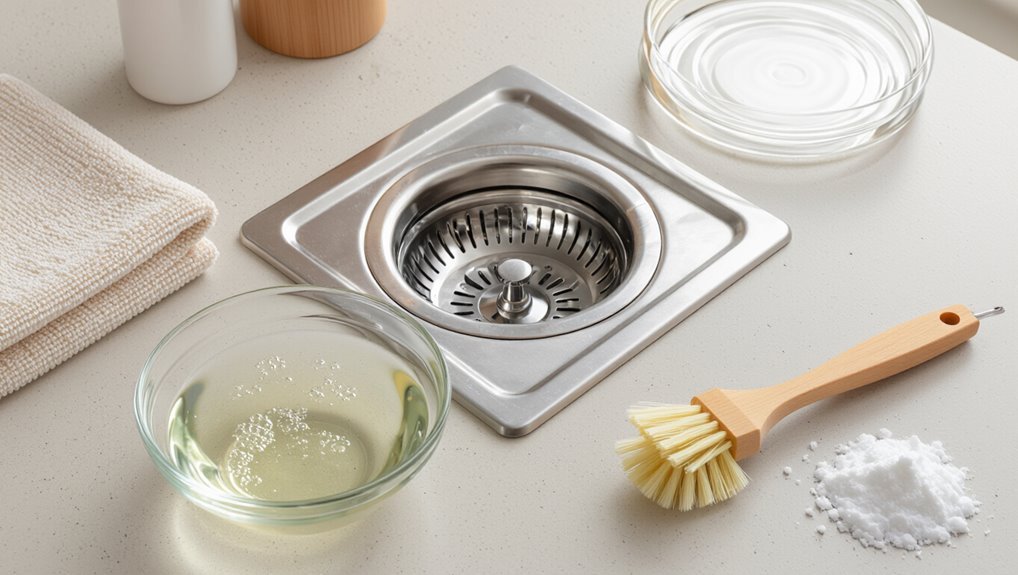
A variety of rapid, practical methods can address grease-clogged drains depending on severity and available supplies.
Options include a hot water and dish soap flush, a baking soda–vinegar reaction, pouring boiling water with salt, using enzyme-based cleaners for biological breakdown, or employing a plunger to dislodge blockages.
Each approach has advantages and limitations to take into account before application.
Quick chemical-free flush with hot water and dish soap
Flushes of hot water combined with dish soap offer a fast, chemical-free method for breaking up and moving grease through a drain: the heat softens the fat while the soap reduces surface tension so grease can emulsify and flow.
To learn how to get grease out of drain, pour boiling water in stages, add concentrated dish soap, wait five minutes, then flush with more hot water to clear residue.
Baking soda and vinegar reaction method
For a slightly more reactive approach, baking soda and vinegar combine to loosen and carry away grease through a fizzy, effervescent reaction.
Sprinkle baking soda down the drain, follow with white vinegar, allow bubbling to work for 10–15 minutes, then flush with warm water.
Repeat once if needed. This method is eco-friendly and safe for most plumbing when used sparingly.
Boiling water plus salt pour-through technique
Pour a kettle of boiling water mixed with a few tablespoons of coarse salt directly down the drain to help dissolve and dislodge fresh grease buildup; the salt provides mild abrasion while the heat melts fat, allowing it to flow toward the trap.
Repeat in stages, flushing with hot water after each pour.
Use with caution on PVC and sealed fixtures to avoid damage.
Enzyme-based drain cleaners for grease buildup
Enzyme-based drain cleaners use natural enzymes and bacteria to break down the fats, oils, and organic matter that cause grease clogs, converting them into water-soluble compounds and carbon dioxide.
They work slowly but safely, suitable for regular maintenance and biodegradable.
Users should follow product directions, allow several hours or overnight action, and avoid combining with caustic chemical cleaners to preserve enzyme activity and plumbing.
Using a plunger to dislodge greasy clogs
While enzyme cleaners suit preventative maintenance, mechanical methods can clear active blockages more quickly; a plunger is often the simplest tool to dislodge grease that has congealed in a sink trap or near the drain opening.
Use a tight-sealing cup, add enough water to cover the lip, forceful radial thrusts create pressure pulses, and repeat until flow resumes.
Then flush with hot water.
Manual removal with a drain snake or auger
Feed a drain snake or hand auger carefully into the drain to reach and extract congealed grease that a plunger cannot dislodge.
Rotate and advance slowly, feeling for resistance. Withdraw accumulated debris periodically, disposing of it in a sealed bag.
Repeat until flow improves.
Sanitize the snake afterward and run hot water to remove residues, preventing reaccumulation and ensuring smooth drainage.
Commercial grease-cutting drain cleaners (when to use)
After removing visible clogs with a snake or auger, a commercial grease-cutting drain cleaner can be considered when residue remains or flow is still slow.
Choose enzyme-based or biodegradable formulations for regular maintenance; use caustic or solvent-based products sparingly for stubborn, heavy buildup.
Follow label instructions, ventilate the area, avoid mixing chemicals, and protect skin and plumbing to prevent damage or injury.
Step-by-Step Instructions for Each Method
The following section provides concise, step-by-step instructions for each grease-removal technique.
It covers safe hot water and dish soap flushes, precise baking soda and vinegar mixes with timings and quantities, and the correct way to pour boiling water and salt to protect pipes.
Practical guidance for enzyme cleaner dosages and wait times, plus proper plunging technique for sinks and kitchen drains, is also included.
How to do the hot water and dish soap flush safely
Begin by running a controlled stream of hot water while adding a small squirt of liquid dish soap directly into the drain; this combination melts and loosens fresh grease so it can be carried away.
Maintain moderate temperature to avoid scalding, keep flow steady for several minutes, and use a plunger if needed.
Finish with cool water to solidify residual grease for easier removal.
Exact steps for baking soda + vinegar, timings and quantities
Mix precise amounts of baking soda and vinegar and follow timed steps to reliably break up grease without harming pipes.
First, pour 1/2 cup baking soda into the dry drain. Wait 1 minute.
Slowly add 1 cup white vinegar; cover drain for 3–5 minutes to contain fizz.
After reaction subsides, flush with warm (not boiling) water for 2–3 minutes to clear residue.
Proper way to pour boiling water and salt without damaging pipes
Several simple precautions guarantee pouring boiling water and salt clears grease without harming pipes: confirm pipe material and age, use a kettle or sturdy container with a spout for controlled flow, add about 1/4–1/2 cup coarse salt into the drain first to loosen residue, then slowly pour boiling water in a steady stream to avoid thermal shock;
if pipes are PVC or aged, let water cool slightly (to near boiling but not rolling) before pouring.
Stay clear, ventilate, repeat once if needed.
How to use enzyme cleaners effectively (dosage, wait time)
After using boiling water and salt to flush loose grease, enzyme cleaners offer a biological approach for breaking down remaining fats and organic build-up.
Read label for concentration; typical liquid formulas require 4–8 ounces per sink, granules follow package measures.
Pour directly into drain, run minimal water to carry enzymes to the clog, then wait 4–12 hours or overnight for full action before rinsing.
Correct plunging technique for sinks and kitchen drains
Start by selecting a plunger designed for the fixture—cup plungers for sinks and flange or accordion plungers for kitchen drains—to guarantee a proper seal and maximize suction.
Block overflow vents, add enough water to cover the plunger lip, position firmly, and plunge vertically in short, forceful strokes.
Repeat 15–20 times, test drainage, and clear residual grease with hot water.
Using a hair/grease-catching tool and snake: step-by-step
Use a hair or grease-catching tool for shallow clogs and a manual snake for deeper blockages, following each method step by step to remove trapped debris without harsh chemicals.
Insert the tool, rotate and pull slowly to extract hair and grease; dispose contents.
For snakes, feed cable, turn handle to snag debris, retract steadily.
Repeat until flow clears, flush with hot water.
When and how to apply commercial drain cleaners safely
Apply commercial drain cleaners only when mechanical methods (plunging, snaking, or hand removal) have failed or when a professional has recommended chemical treatment, and follow product instructions and safety precautions precisely to avoid damage or injury.
Ventilate the area, wear goggles and gloves, remove standing water, pour manufacturer’s recommended amount, wait specified time, flush with hot water, and never mix products or use on damaged pipes.
Identifying the Cause and Severity of the Grease Blockage
An inspection begins by noting symptoms that distinguish minor grease build-up—slow draining and gurgling—from major clogs that cause standing water or backups.
Attention should be paid to whether grease has bonded with hair, food particles, or wipes, which often makes removal more difficult.
The drain and trap can be examined visually and by hand after disconnecting the trap or using a flashlight and snake, taking care to avoid forcing tools or damaging seals.
Signs of minor vs major grease clogs
How can one tell if a grease buildup is a minor nuisance or a serious obstruction?
Minor clogs: slow drainage, occasional gurgling, localized odor, water pools but still drains with plunging.
Major clogs: persistent backups, strong rancid smell, multiple fixtures affected, bubbling or sewage return, plunging ineffective.
Frequency, spread, and response to simple remedies indicate severity and need for professional intervention.
When grease has combined with other debris
Recognizing when grease has bonded with hair, food scraps, coffee grounds, or soap scum is key to evaluating blockage severity.
Such mixtures create sticky, resilient masses that resist simple rinsing. The presence of multiple materials often indicates progressive buildup, foul odors, slower drainage, and recurring clogs.
Identifying these signs helps determine whether enzymatic cleaners, mechanical removal, or professional intervention is appropriate.
How to inspect the drain and trap without causing damage
Begin by clearing the immediate area around the sink and placing a bucket under the trap to catch water.
Then visually inspect the visible portions of the tailpiece and P‑trap for grease coating, solidified residue, or unusual buildup.
Confirm tightness of slip nuts without over‑torquing, note odors or slow drainage, and use a flashlight and gloved hand to assess blockage depth before deciding on removal or professional service.
Preventing Future Grease Clogs
Preventing future grease clogs requires consistent habits and the right tools to keep oil out of the drain. Proper disposal of cooking oil, daily practices like scraping pans before washing, and installing strainers or grease traps can greatly reduce buildup.
A simple routine of monthly checks and quick cleanings of strainers and traps helps catch residue before it hardens.
Best practices for disposing cooking oil and grease
Proper disposal of cooking oil and grease substantially reduces the risk of drain clogs and sewer problems.
Solidify small amounts by chilling or freezing, then discard in regular trash.
Pour cooled liquid into a sealable container and compost where facilities accept fats, or take to local recycling or hazardous-waste collection.
Avoid pouring oils down sinks; label containers and store until proper disposal.
Everyday habits to reduce grease entering drains
After handling disposal, households can further reduce grease entering drains by adopting a few simple, consistent habits.
Wiping pans with paper towels before washing, scraping plates into compost or trash, using cold water when rinsing, cleaning sink edges and stoppers regularly, and scheduling routine checks for slow drains all minimize grease buildup.
Consistent practice prevents clogs and reduces maintenance needs.
Recommended strainers, grease traps, and sink accessories
Installations and accessories such as sink strainers, under-sink grease traps, and oil-collecting cans provide targeted barriers that stop fats and solids before they enter plumbing.
Mesh and perforated strainers capture food debris; compact under-sink traps separate and store grease for disposal; countertop pour jars collect used oil.
Choose stainless steel or BPA-free materials, appropriate capacity, and easy-to-clean designs for reliable prevention.
Routine maintenance schedule and simple monthly fixes
A simple, consistent maintenance routine prevents grease buildup and keeps drains flowing smoothly.
Once monthly, cold water flushes, biodegradable degreaser or baking soda and vinegar treatments, and removal of collected solids from strainers are recommended.
Inspect and clean P-trap quarterly, and document actions.
Promptly address odors or slow drainage.
Regular habits minimize clogs, reduce emergency repairs, and extend plumbing lifespan.
Safety, Pipe Compatibility, and Environmental Considerations
Guidance should specify which grease-removal methods are safe for PVC, metal, and older or corroded pipes to prevent damage.
It should compare environmental impacts of caustic chemical cleaners versus enzyme- or bacteria-based alternatives.
It should also outline essential personal protective measures and safe handling, storage, and disposal practices.
Which methods are safe for PVC, metal, and older pipes
Different pipe materials tolerate grease-removal methods in distinct ways, so choosing an approach requires matching the treatment to the pipe type and considering environmental impact.
PVC accepts mild enzymatic cleaners, hot water, and mechanical plunging. Metal pipes tolerate stronger alkaline solutions but avoid prolonged caustic exposure.
Older, corroded pipes need gentle mechanical clearing and enzymatic products; professional inspection is advised before chemical use.
Environmental impact of chemical cleaners vs enzyme options
Although chemical cleaners often promise fast results, their safety profile, pipe compatibility, and environmental consequences differ markedly from enzymatic options.
Chemical caustics can corrode pipes, harm septic systems, and release toxic effluents affecting aquatic life.
Enzyme-based products act slower but biodegrade, target organic build-up, and pose lower risks to plumbing and ecosystems.
Selection balances urgency, pipe age, and environmental responsibility.
Personal protective steps and handling instructions
Wear appropriate personal protective equipment—gloves, eye protection, and, if using strong chemical cleaners, a respirator—before handling drain treatments, and read product labels for specific precautions.
Guarantee adequate ventilation, avoid mixing chemicals, and keep cleaners away from children and pets.
Confirm product compatibility with pipe materials to prevent corrosion.
Dispose of waste per local regulations and choose eco-friendlier options when possible.
Troubleshooting Common Problems
If grease remains after repeated efforts, the guide recommends escalating to stronger methods or calling a professional.
Clear signs that a plumber is needed include recurring backups, foul odors, or slow draining despite treatments.
While awaiting service, simple temporary measures like using a sink stopper to prevent runoff, avoiding water use that could worsen blockages, and placing a bucket under leaks can reduce damage.
What to do if grease persists after multiple attempts
When grease remains after several cleaning attempts, a systematic troubleshooting approach helps identify whether the issue is buildup depth, pipe configuration, or an ineffective method.
Inspect accessible traps and clean mechanically with a brush or plumbing snake.
Repeat solvent treatments with heat applied cautiously.
Flush with hot water and biodegradable detergent.
Monitor results; adjust technique, product concentration, or mechanical access until flow restores.
Signs you need professional plumbing help
Several clear signs indicate that a professional plumber should be called: persistent backups despite repeated cleaning, foul sewage odors, slow drainage in multiple fixtures, gurgling sounds, visible leaks or corrosion near pipes, sewage surfacing, or recurring clogs after temporary measures.
Complex plumbing systems, commercial kitchens, or uncertainty about repairs also warrant expert assessment to prevent damage and guarantee code-compliant solutions.
Temporary fixes while waiting for a plumber
Use simple, temporary measures to reduce damage and restore basic function until a plumber arrives.
A person can stop water flow, remove excess grease with paper towels, run hot water briefly to soften deposits, and apply a sink strainer to catch solids.
Avoid chemical drain cleaners and disassembling traps unless experienced; document leaks and odors for the technician.
Comparison of Effectiveness, Speed, Cost, and Safety
The following brief comparison weighs common grease-removal methods by speed, effectiveness, cost, pipe safety, and environmental impact. A simple table highlights representative trade-offs for quick reference. Readers can use this overview to select the most suitable approach for their situation.
| Method | Notes |
|---|---|
| Hot water and soap — fast, low cost; moderate effectiveness; safe for pipes; low environmental impact | |
| Enzyme cleaners — moderate speed; effective on organic build-up; moderate cost; pipe-safe; low impact | |
Table: Method | Speed | Effectiveness on grease | Cost | Pipe safety | Environmental impact
A comparative table summarizes common methods for clearing grease from drains, listing expected speed, grease-removal effectiveness, cost, impact on pipe materials, and environmental considerations. The concise table below compares three methods across key factors to guide safe, effective choices.
| Method | Effectiveness | |
|---|---|---|
| Hot water/deg | Fast | Moderate |
| Enzyme cleaners | Moderate | High |
| Mechanical snaking | Fast | High |
Recommended Tools and Products
Recommended tools and products focus on safe, grease-targeting cleaners and simple mechanical gadgets that prevent or clear clogs.
Practical selections include enzyme-based cleaners and grease-cutting detergents, plus strainers and hand tools for removal. The following items are commonly recommended for home use:
- Enzyme cleaner (biodegradable) and grease-cutting detergent
- Sink strainer, mesh trap, or basket to catch solids
- Plunger (cup or flange) and a manual drain snake
List of safe enzyme cleaners and grease-cutting detergents
Several enzyme-based cleaners and grease-cutting detergents are effective and safe for routine drain maintenance; they break down organic buildup without harsh chemicals that can corrode pipes or harm septic systems.
- Bio-enzymatic drain cleaner: digests fats, proteins, and starches safely overnight.
- Citrus-based degreaser: cuts grease with biodegradable solvents and pleasant scent.
- Enzyme powder packets: long shelf life, dose-controlled for regular maintenance.
List of useful gadgets (plunger types, drain snakes, strainers)
Tools matter when tackling grease-clogged drains, and selecting the right gadget speeds removal and prevents damage. Practical choices include plungers, snakes, and strainers designed for kitchen use.
Durable materials, appropriate shaft length, and flexible heads improve effectiveness. Proper selection reduces chemical reliance and pipe stress.
- Cup plunger (for sink seals)
- Hand auger/drain snake (flexible)
- Mesh or silicone strainer (catches solids)
Conclusion
Grease clogs, once treated promptly, surrender to several safe, effective tactics that balance speed, cost and pipe care. The right method depends on severity—mechanical clearing, enzymatic cleaners, hot water with detergent, or a baking soda–vinegar fizz can work. Preventive habits are essential: catch grease, wipe pans, and avoid pouring fats down the sink. Like a gardener tending soil, steady maintenance keeps drains flowing and costly blockages from taking root.