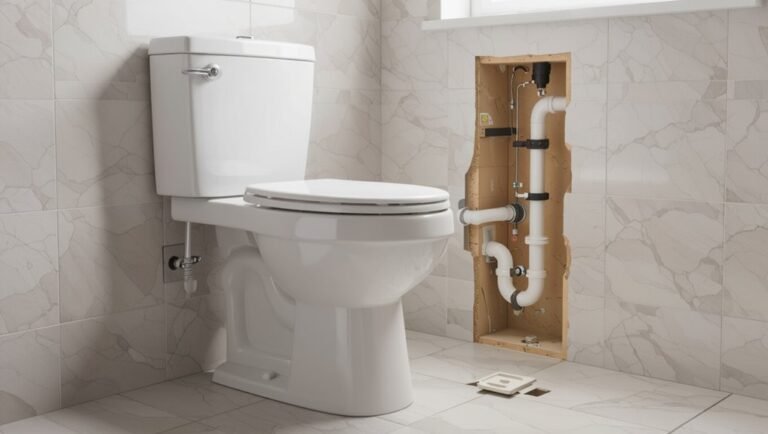
How to Safely Remove Roots From a Leach Field: Step-By-Step Methods and Preventive Tips
To safely remove roots from a leach field, start by assessing the area for any signs of damage or blockage, such as lush patches or backups. Utilize noninvasive methods like mechanical cutters, hydrojetting, or EPA-registered foaming root killers. If issues persist, carefully excavate after utility locates to replace any damaged pipes or gravel. Finally, install barriers and select shallow-root plants to prevent future growth. Regular inspections and adherence to safety regulations are crucial for maintaining your leach field’s health. For further guidance, refer to the detailed steps below.
Overview of Removing Roots from a Leach Field
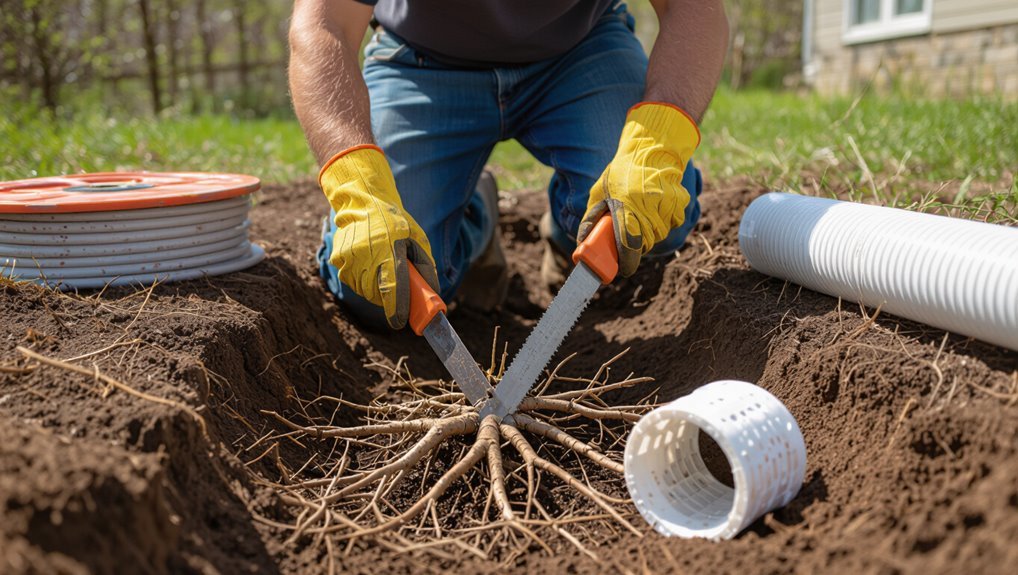
Roots enter leach fields primarily in search of moisture and nutrients, with common warning signs including slow drains, sewage odors, and wet or soggy ground above the field.
Removing roots requires care because improper methods can damage pipes, collapse trenches, or compromise system performance.
This overview outlines typical causes, detection clues, and the risks associated with incorrect removal so readers can weigh repair options safely.
Why roots invade leach fields and common warning signs
Because leach fields provide steady moisture, nutrients, and oxygen, tree and shrub roots are naturally drawn to them and can infiltrate pipes and distribution lines over time.
Practitioners evaluating how to remove roots from leach field note causes: proximity of vegetation, damaged or aging piping, and soil composition.
Common warning signs include slow drains, sewage odors, soggy or lush patches above trenches, and unexplained system backups.
Risks of improper root removal to septic system function and property
Improper attempts to remove roots from a leach field can quickly worsen septic function and damage property if done without care.
Inexperienced cutting or chemical use can collapse trenches, break pipes, and spread root fragments that regrow.
Compromised drainage causes backups, soil contamination, and costly repairs.
Professional assessment minimizes disruption, preserves system integrity, and prevents long‑term environmental and financial consequences.
Quick Safety and Legal Considerations Before You Start
Before attempting any work, a professional should be called if the system is under warranty, the damage is extensive, or the homeowner is unsure of proper procedures.
Local regulations, required permits, and utility locates must be confirmed to avoid legal or safety violations.
Appropriate personal protective equipment and precautions—gloves, eye protection, and safe handling of tools and biological material—should be used at all times.
When to call a licensed septic professional
Recognize situations that exceed DIY scope and require a licensed septic professional: persistent backups, sewage odors that permeate the property, evidence of system collapse (soggy patches, sinkholes, or unusually lush vegetation over the drainfield), or any work that involves the septic tank, distribution box, or buried piping.
A professional evaluates contamination risk, performs safe excavation, repairs structural failures, and issues documentation for insurance or warranty claims.
Local regulations, permits, and utility locates
After situations that require a licensed septic professional are identified, attention turns to legal and safety steps homeowners must take before any work begins.
Verify local codes and obtain required permits; contact the health department or permitting office for leach field work rules.
Call national and local utility locate services to mark buried lines.
Keep permit documentation on site and follow municipal restrictions.
Personal protective equipment and safety precautions
Wear appropriate personal protective equipment and follow strict safety protocols when working on a leach field to minimize exposure to pathogens, chemicals, and physical hazards.
Personnel should use gloves, waterproof boots, eye protection, masks or respirators, and coveralls.
Confirm tetanus vaccination is current, wash thoroughly after tasks, decontaminate tools, restrict site access, and follow confined-space and excavation safety guidelines and local regulations.
Assessing the Leach Field and Root Problem
The leach field should be located using property plans, probe mapping, or visible access risers to identify trench lines and cleanouts.
Technicians then inspect for root intrusion via surface signs, camera inspection through access points, and dye or smoke tests to trace flow and blockages.
Finally, severity is assessed by distinguishing shallow surface roots that can be cut back from deeper lateral infiltration requiring targeted removal or professional repair.
How to locate leach field lines and access points
How can one accurately find leach field lines and access points before attempting root removal? Utility maps, septic system records, and municipal permit files provide initial layouts.
Electronic locators, soil probes, and ground-penetrating radar refine line positions.
Locate distribution boxes, inspection ports, and cleanouts; mark boundaries and avoid planting near identified trenches.
Document findings before excavation to minimize damage and guarantee safe access.
Inspecting for root intrusion: visual, camera, and dye tests
Begin by conducting a systematic inspection that combines visual checks, camera surveys, and dye tests to determine whether roots are entering the leach field and where intrusion is concentrated.
Visually examine access risers and drain lines for surface cracks, soil mounding, or wet spots.
Use a sewer camera to locate root masses inside pipes and inject nonstaining dye to trace flow disruptions and leak points.
Determining severity: shallow surface roots vs. lateral infiltration
When should a homeowner treat surface roots differently from roots that have penetrated laterally into pipes and aggregate? A homeowner should differentiate based on depth, symptom severity, and system performance.
Superficial roots disrupt soil and minor distribution lines; pruning and barrier installation often suffice.
Lateral infiltration indicates compromised pipes or chambers, requiring camera inspection, targeted excavation, mechanical removal, and possible component replacement to restore function.
Step-by-Step Methods for Removing Roots (Non-Destructive First)
The next section outlines practical, non-destructive approaches for removing roots from a leach field, beginning with mechanical cutting using root saws and augers and progressing to hydro jetting and high-pressure water root cutting.
It also covers the use of a sewer camera to guide cutting and confirm clearance, as well as options for chemical root control with foaming root killers and selection of safe products.
Finally, biological and enzymatic treatments to reduce regrowth are introduced as complementary, preventative measures.
Mechanical cutting with root saws and augers
Mechanical cutting with root saws and augers offers a targeted, non-destructive way to clear root intrusions from leach field lines by physically severing obstructions without excavating soil.
Operators insert flexible blades or rotating auger heads into pipes, advance slowly to cut roots, and withdraw debris.
Proper sizing, steady rotation, and inspection cameras minimize damage.
Follow manufacturer guidelines and local regulations to guarantee safe, effective removal.
Hydro jetting and high-pressure water root cutting
Employing high-pressure water, hydro jetting slices through roots and flushes debris from leach field lines without excavation.
Operators advance a nozzle through cleanouts or access ports, varying pressure and nozzle type to sever and dislodge root material. Flow carries fragments downstream to a temporary containment point.
Safety protocols, pressure settings, and controlled passes minimize pipe damage while restoring flow and preventing immediate regrowth.
Using a sewer camera to guide cutting and confirm clearance
After hydro jetting has loosened and flushed much of the root material, a sewer camera is inserted to locate remaining obstructions and guide targeted cutting.
The technician advances the scope, documents root entry points, and marks pipe orientation.
Live video directs mechanical cutters or hand tools to precise spots, ensuring removal while avoiding pipe damage.
A post-cut inspection verifies clearance and records conditions for follow-up maintenance.
Chemical root control with foaming root killers (safe product selection)
Several foaming root-killing products are formulated to penetrate pipe joints and coat root interiors, offering a non-destructive option for controlling regrowth in leach fields.
Select EPA-registered formulations labeled for septic systems, follow manufacturer dilution and contact-time instructions, avoid persistent herbicides near groundwater, and use protective equipment.
Apply only after mechanical clearance and camera confirmation; document treatments and monitor follow-up inspections to assess efficacy.
Biological and enzymatic treatments to reduce regrowth
Consider biological and enzymatic treatments as complementary, non-destructive measures that target root regrowth by altering the root environment and degrading organic material inside pipes.
These products use microbes or enzymes to break down biofilm and organic debris, reducing attraction for roots.
Application follows manufacturer dosing and scheduled maintenance.
Effectiveness depends on consistent use, proper dosage, and upstream cleaning to maximize contact with clogged areas.
Step-by-Step Methods for Removing Roots (When Lines or Trenches Must Be Opened)
When trenches or lines must be opened, the guide outlines excavation best practices to expose leach field pipes safely and prevent further system damage.
It then describes careful hand-removal and root-pruning techniques near pipes, followed by options for repairing or replacing damaged pipes and restoring the gravel bed.
Finally, the section covers proper backfill, soil compaction, and regrading to stabilize the field and promote correct surface drainage.
Excavation best practices for exposing leach field pipes
Begin excavation only after utility locates and permits are confirmed. Then mark the trench route and surface features to minimize unnecessary disturbance.
Use hand tools near utilities, mechanized equipment for deeper, distant soil, and slope banks to prevent collapse.
Maintain safe distances, shore trenches over 1.2 m, keep spoil back from edges, document pipe locations, and avoid cutting or jarring pipes during exposure.
Hand-removal and root pruning techniques around pipes
After pipes are exposed safely and utilities confirmed, hand-removal and targeted pruning offer the least invasive methods for clearing roots near leach field lines.
Workers use gloves, root saws, and pruners to cut roots back to healthy wood, extracting loosened material by hand. Cuts are clean, angled away from pipes; debris is removed to prevent re-entry and inspected for remaining fibers.
Repairing or replacing damaged pipes and gravel bed restoration
Inspect the exposed line and gravel bed thoroughly to determine the extent of pipe damage and sediment displacement before any repair work begins.
Damaged sections are cut out and replaced with compatible pipe and watertight couplings; cracked laterals may require full section replacement.
Remove contaminated gravel, wash surrounding media, and replenish with clean, properly graded aggregate to restore distribution and permeability prior to backfill.
Soil compaction and regrading after backfill
With damaged piping repaired and clean aggregate returned to the trench, attention shifts to restoring proper ground profile and density to prevent future settling and root intrusion.
Backfill in 6–12 inch lifts, lightly tamping each layer to achieve uniform compaction without damaging lines.
Regrade surface to original slope for drainage, restore topsoil, reseed or mulch, and monitor for differential settlement over several seasons.
Tools, Equipment, and Materials Needed
This section outlines the essential hand tools, power tools, and personal protective equipment required for safe root removal from a leach field.
It will indicate when homeowners might rent specialized machinery or should instead hire a contractor, and list recommended root-control products and pipe repair materials.
Practical considerations such as tool capacity, safety, and cost-effectiveness will guide equipment choices.
List of hand tools, power tools, and PPE
A compact set of hand tools, a few power tools, and appropriate personal protective equipment are essential before beginning root removal from a leach field.
Required items include a digging spade, root saw, pry bar; a reciprocating saw with carbide blade and a wet/dry vacuum; gloves, eye protection, steel-toe boots, and a respirator.
Emotional stakes: safety, relief, responsibility.
- Digging and cutting tools
- Power tools and cleanup
- PPE and confidence
When to rent specialized equipment vs. hire a contractor
After assembling hand and power tools and confirming proper PPE, homeowners must decide whether to rent specialized equipment or hire a contractor for stubborn roots or large-scale leach field work.
Rent when scope is small, access is good, and operator familiarity exists.
Hire a licensed contractor for extensive clogging, buried pipe damage, limited access, warranty needs, or when permits and safety risks exceed homeowner capabilities.
Recommended root-control products and pipe repair materials
Select root-control products and pipe repair materials that match the scale of intrusion and the septic system’s pipe material.
Recommended items include herbicide gels formulated for septic systems, root-killing foams, flexible pipe repair wrap, stainless clamps, and quick-setting epoxy for PVC or clay.
Choose biodegradable, septic-safe formulations and durable repair kits to prevent recurrence and avoid corrosion.
- Herbicide gel
- Repair wrap
- Quick epoxy
Preventive Strategies to Minimize Future Root Intrusion
Effective prevention focuses on vegetation choices and placement, keeping trees and large shrubs well clear of leach field boundaries.
Professional-grade root barriers, correctly sited and installed, combined with proper soil grading and drainage, reduce the incentive for roots to invade.
A regular septic inspection and maintenance schedule completes the strategy by catching early signs of intrusion before costly repairs are needed.
Choosing and positioning vegetation away from leach fields
A few careful planting choices can greatly reduce the risk of roots invading a leach field by combining species selection with strategic placement and spacing.
Select shallow‑rooted, drought‑tolerant groundcovers and ornamental grasses.
Locate trees and large shrubs well beyond the leach field perimeter, following mature root spread estimates.
Maintain a vegetation-free buffer zone, using regular inspections and selective pruning to prevent encroachment.
Root barriers: types, placement, and installation tips
After choosing low‑risk plants and establishing a buffer around the leach field, installing root barriers provides a physical line of defense that redirects or stops root growth before it reaches buried pipes and drain lines.
Rigid plastic, metal, or geotextile barriers suit different soils. Place barriers vertically beside trenches, extending below pipe depth and sloping outward. Seal joints, avoid damaging lines, and backfill firm.
Routine septic maintenance schedule and inspections
Regular inspections and a consistent maintenance schedule reduce the likelihood of root intrusion by catching early signs of trouble and ensuring components function as planned.
Technicians should inspect tanks, lids, baffles, and distribution boxes annually, pump tanks based on usage, check for soggy areas or slow drains, and document findings.
Prompt repairs and vegetation management around the field minimize future disruption and root access.
Soil and drainage management to discourage root growth
Inspections and maintenance reveal where roots exploit moisture and weak drainage, so addressing soil and surface water patterns becomes the logical next step to keep roots away from leach fields.
Grade soil to divert runoff, install French drains or swales to redirect water, guarantee topsoil compaction discourages root penetration, and maintain vegetation with shallow-rooted groundcover.
Regularly monitor moisture and repair erosion promptly.
Signs of Failure After Root Removal and When to Reassess
Persistent seepage, slow drains, or sewage odors after root removal indicate ongoing blockage or system stress and warrant prompt attention.
A defined monitoring timeline—typically checks at 1, 3, and 12 months—helps determine if follow-up treatments are needed.
Recurring intrusions should prompt consideration of long-term fixes such as pipe replacement, barrier installation, or altering nearby vegetation.
Ongoing indicators of blockage or system stress
Monitor the leach field closely after root removal for clear signs that blockage or system stress persists.
Persistent soggy patches, recurring odors, slow drains, sewage backups, or unusually lush vegetation indicate ongoing issues.
Elevated tank levels or repeated need for pump-outs also signal stress.
If these indicators appear, reassessment and diagnostic inspection are warranted to determine whether roots returned, piping remains compromised, or biological clogging persists.
Monitoring timeline and when to perform follow-up treatments
After root removal, a structured monitoring timeline helps determine whether the treatment was effective and when further action is needed.
Inspect surface drainage, soggy areas, and odors weekly for the first month, then monthly for six months.
Measure water usage and tank levels, and schedule camera inspections at three and six months.
If signs recur, perform targeted follow-up treatments promptly.
Long-term solutions for recurring root problems
Evaluate signs of failure promptly when roots reappear or system performance declines, because early reassessment prevents small issues from becoming costly repairs.
Inspect soggy patches, slow drains, sewage odors, and unusual vegetation. If problems persist after treatment, consider mechanical excavation, barrier installation, rerouting lines, or full system replacement.
Consult a licensed septic professional to assess longevity, costs, and regulatory compliance before committing to long-term remedies.
Cost Estimates, Timeframes, and Decision Factors
Typical cost ranges are outlined for non-invasive treatments (often lower) versus excavation and replacement (substantially higher).
Timeframes for procedures and system recovery are summarized to set expectations for hours-to-days for treatments and days-to-weeks for repairs or replacements.
Guidance is provided on choosing treatment, repair, or full replacement based on cost, extent of damage, system age, and long-term risk.
Typical cost ranges for non-invasive vs. excavation methods
Repair costs for leach-field root removal span a wide range depending on method, site conditions, and access: non-invasive techniques such as chemical treatments, mechanical rooters, or hydrojetting commonly cost from a few hundred to a few thousand dollars and often require minimal disturbance, while excavation and replacement typically run several thousand to tens of thousands of dollars due to labor, soil disposal, pipe replacement, and restoration.
| Method | Typical Range |
|---|---|
| Non-invasive | $200–$3,000 |
| Excavation/Replacement | $5,000–$30,000+ |
Time required for common procedures and recovery of the system
Cost and method choice also influence how long work will take and when the leach field can return to service.
Chemical root treatments often act within days but may require repeat applications over weeks; mechanical cutting usually completes in hours with limited immediate disruption.
Excavation and pipe replacement can take days to weeks, followed by soil settling and system testing before normal use resumes.
How to decide between treatment, repair, or full replacement
When should a homeowner choose chemical or mechanical root treatment versus partial pipe repair or full leach field replacement?
Decision hinges on extent of root intrusion, soil saturation, system age, inspection findings, and budget. Treatments suit minor, localized blockages; repairs fit damaged pipe sections or shallow roots.
Full replacement is warranted for widespread collapse, persistent failures, or long-term system degradation despite repairs. Cost and downtime vary accordingly.
Case Examples and Practical Scenarios
Several brief case examples illustrate common outcomes: a minor root intrusion cleared with hydro jetting, a major infiltration that required trenching and pipe replacement, and a preventive landscaping plan that stopped recurrence.
Each scenario highlights different costs, timelines, and risks. Readers can compare these practical outcomes to determine the most appropriate response for their situation.
Minor root intrusion resolved with hydro jetting
Hydro jetting effectively clears minor root intrusions in leach field lines by blasting high-pressure water through pipes to dislodge and flush out fibrous growth before it causes blockages or structural damage.
Technicians inspect with a camera, apply controlled jets to cut roots, then re-inspect to confirm clearance.
Routine jetting plus targeted root inhibitors restores flow and delays recurrence without excavation.
Major infiltration requiring trenching and pipe replacement
Addressing major root infiltration often requires excavating affected trenches and replacing collapsed or crushed distribution lines to restore proper effluent flow and prevent recurrent system failure.
Technicians document damage, locate unaffected connections, and remove roots mechanically. New pipe and gravel are installed with proper slope and bedding.
Post-repair testing verifies flow and leak-free joints before backfilling and restoring surface grade to guarantee long-term function.
Preventive landscaping plan that prevented recurrence
Implemented landscaping strategies illustrate how targeted plant selection and site design can prevent root intrusion after leach field repairs.
A case described drought-tolerant grasses and shallow-rooted perennials replacing trees; impermeable root barriers installed along trenches; a gravel buffer and raised planting beds redirected moisture.
Regular inspections and documented maintenance schedules guaranteed early detection, eliminating recurrence and preserving system integrity without future excavation.
Checklist for Homeowners Before and After Root Removal
Before hiring a contractor, the homeowner should confirm credentials, clarify the scope of work, and document site access and utility locations.
After service, a concise maintenance checklist should outline inspection intervals, vegetation controls, and signs of recurrence to watch for.
These lists help guarantee work quality and reduce the likelihood of future root intrusion.
Pre-service checklist for hiring a contractor
A homeowner preparing to hire a contractor for leach field root removal should compile key information and complete basic checks to assure the service is safe, legal, and cost-effective. This includes locating septic system maps, documenting problem signs and recent maintenance, confirming local permitting requirements, and obtaining multiple written estimates and proof of contractor licensing and insurance.
- Verify credentials to avoid liability.
- Compare bids to prevent overspending.
- Collect references to assure trust.
Post-service maintenance checklist to prevent return
Once the contractor completes root removal and repairs, the homeowner should follow a concise post-service checklist to reduce the chance of regrowth and protect the leach field.
Regular inspections, gentle watering patterns, and immediate reporting of symptoms are essential to long-term success.
- Schedule quarterly inspections and document changes.
- Avoid planting near the field; maintain root barriers.
- Monitor odors, soggy spots, and backups; call a professional promptly.
Conclusion
Removing roots from a leach field demands care, planning, and prompt follow-up. One in ten septic failures is linked to invasive roots, underscoring the importance of early detection and professional guidance. Homeowners benefit from trying non‑destructive methods first, documenting work, and monitoring performance afterward. If problems persist, consult licensed septic contractors. With preventive landscaping and routine inspections, most root issues can be managed before they cause systemwide failures or costly replacements.