How to Use a Drain Snake: Step-by-Step Guide to Unclog Your Sink Fast
A drain snake is an effective tool for clearing sink clogs when plungers don’t work. To use one, start by wearing gloves and eye protection, then remove any standing water. Access the drain or P-trap, and carefully feed the snake into the pipe while turning it clockwise. Work gently to break up or snag the clog, then retract the snake and remove any debris. Afterward, flush the drain with hot water and reassemble your fixtures. If you encounter stubborn or deep blockages, consider using a power auger or calling a professional. Follow the detailed steps and tips provided for best results.
What a Drain Snake Is and When to Use It
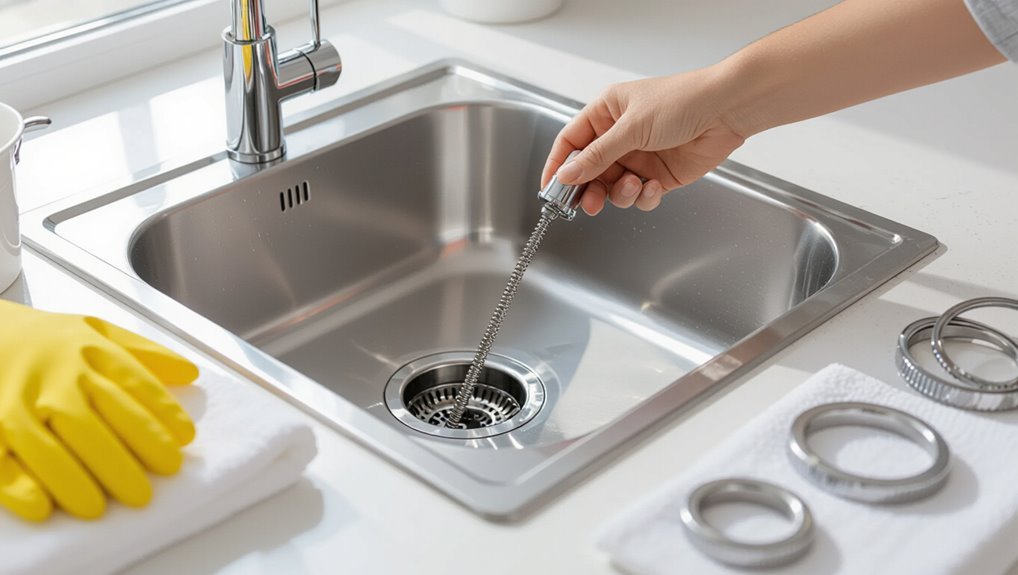
A drain snake, also called a plumbing snake, auger, or drain auger, is a flexible metal cable used to clear clogs by reaching and breaking up obstructions inside pipes.
Variations range from handheld spring coils for sinks to powered drum or sectional augers for long or deep lines, each differing in length, diameter, and head type.
It is typically used when a plunger or chemical cleaner fails or is inappropriate, while severe blockages, damaged pipes, or main-line issues may require professional inspection or heavier equipment.
Definition and common names (plumbing snake, auger, drain auger)
Plumbing professionals and DIYers refer to a drain snake—also called an auger or drain auger—as a flexible, elongated tool designed to dislodge blockages deep within pipes.
Common names reflect regional and trade usage. It is used when plungers fail or slow drains persist, and basic guidance on how to use a drain snake emphasizes feeding, rotating, and retracting the cable to clear obstructions.
Types of drain snakes and how they differ
When choosing a drain snake, users should match the tool type to the pipe size, blockage location, and material—handheld drum snakes suit shallow sink and tub clogs, long cable augers reach deeper household drains, and motorized snakes or sewer machines handle heavy or municipal lines.
- Handheld drum: compact, short cables, best for sinks/tubs.
- Cable auger: flexible, longer reach for main household drains.
- Motorized snake: power for stubborn blockages.
- Toilet auger: U-shaped, protects porcelain and seals.
Situations where a drain snake is the right tool versus alternatives
Many household clogs—hair, soap scum, grease, and small debris—are best treated with a drain snake because it mechanically breaks up or retrieves obstructions without chemicals or disassembly.
A snake suits accessible P-traps, bathroom and kitchen sinks, and slow drains.
Use alternatives—plungers, enzyme cleaners, or professional hydro-jetting—when seals, deep blockages, pipes with fragile finishes, or tree-root intrusion are suspected.
Safety Precautions and Preparation
Before beginning work with a drain snake, the operator should equip gloves, eye protection, and appropriate clothing, and plan for handwashing and disinfecting afterward.
They should also gather supplies such as towels, a bucket, flashlights, and the correct snake head or attachment.
Finally, care must be taken to select the proper technique and cable size to avoid scratching fixtures or bending pipes.
Personal protective equipment and hygiene
Proper personal protective equipment and strict hygiene practices reduce injury and contamination risk during drain snake use.
Gloves protect against chemicals and biohazards; safety glasses shield eyes from splashes and debris. Wear long sleeves and closed-toe shoes.
Wash hands thoroughly after work, disinfect tools and surfaces, and launder contaminated clothing separately to prevent cross-contamination in the home.
Tools and supplies to have on hand
After addressing protective gear and hygiene, attention shifts to the tools and supplies that support safe, effective use of a drain snake.
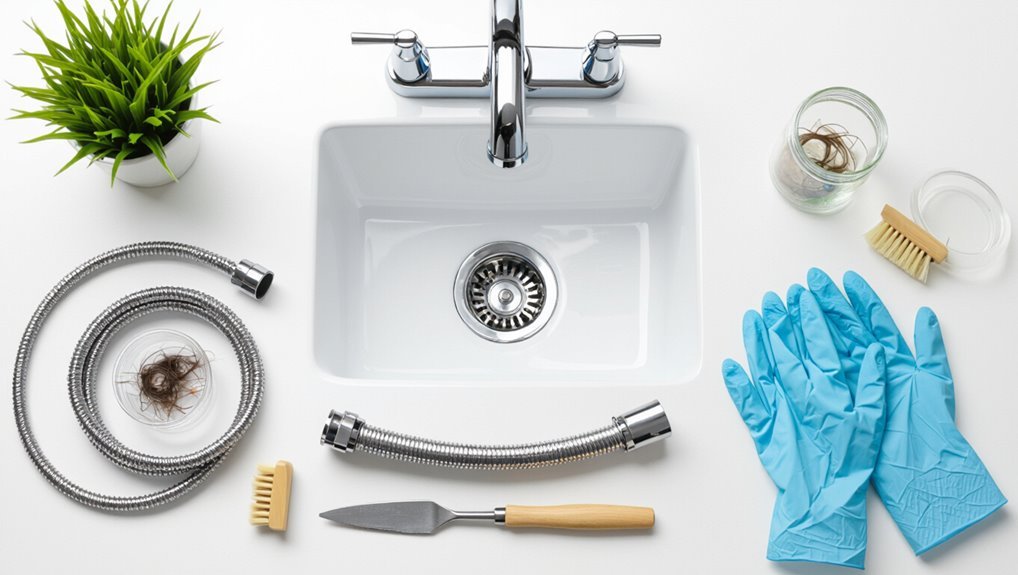
Essential items streamline the job, limit mess, and aid inspection. Recommended basics include the snake itself, disposal bags, cleaning brush, and a flashlight for visibility.
- Drain snake (appropriate length/type)
- Disposable gloves and bags
- Small brush and rags
- Flashlight and bucket
Preventing damage to pipes and fixtures
Take measured steps to protect plumbing and fixtures when preparing to use a drain snake: confirm the snake type and length suits the pipe material, clear surrounding areas of valuables and slip hazards, and shut off water sources and any nearby electrical outlets to prevent accidents.
Inspect fittings, remove delicate aerators, use a rubber sleeve or cloth to cushion connections, and proceed gently to avoid gouging or bending.
Quick Checklist Before You Start
Before inserting the snake, the reader should confirm the clog’s location and depth to assess whether it is reachable with a manual snake.
If the obstruction is deep in the main line, produces foul odors suggesting sewer backup, or resists several attempts, the reader should stop and call a plumber.
Clear criteria help prevent wasted effort and avoid making a small problem worse.
Signs the clog is reachable with a snake
A few simple observations can indicate whether a drain snake is likely to reach and clear a clog; clear signs include slow but steady drainage (not a complete backup), gurgling noises when other fixtures are used, water level that slowly drops after standing, and clogs located in sinks or tubs with accessible pop-up or trap access.
Additionally, absence of foul odors and recent buildup from hair or grease suggest a reachable blockage.
When to stop and call a plumber
Stop and call a plumber if attempts to snake the drain produce persistent backups, foul odors, sewage surfacing, or no improvement after several minutes of careful effort; likewise, if the snake meets firm resistance beyond the trap, water levels rise dangerously, or multiple fixtures are affected, professional assessment is warranted.
Additional triggers: repeat clogs, visible pipe damage, aging plumbing, or lack of appropriate tools or confidence to proceed safely.
Step-by-Step Guide to Using a Handheld Drain Snake
The following steps outline a concise method for using a handheld drain snake, starting with removing standing water and clearing the work area.
Next, access the drain by removing the stopper or P-trap if necessary, then insert and feed the snake into the pipe.
Finally, rotate and work the head to break or catch the clog, retrieve the snake, and remove any collected debris.
Step 1 Remove standing water and clear the area
Before using a handheld drain snake, remove any standing water and clear the surrounding area so work can proceed safely and efficiently.
The person should dry surfaces, gather towels and a bucket, and move personal items away from the sink.
Clearing under-sink cabinets and protecting floors prevents damage and slips.
Proper lighting and unobstructed access improve visibility and reduce the chance of accidents.
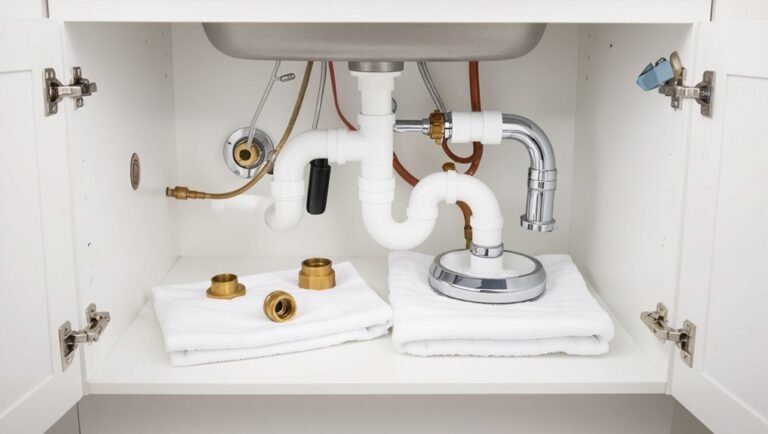
Step 2 Access the drain (remove stopper or P-trap if needed)
Gain clear access to the drain by removing the sink stopper or, when necessary, the P-trap — this creates a direct path for the snake and reveals the blockage location.
Use pliers or screwdriver as required, place a bucket under the P-trap before loosening, and keep slip nuts and washers organized.
Clean visible debris and dry the pipe entrance to ease snake insertion.
Step 3 Insert the snake and feed it into the drain
Once the path is clear, position the snake’s tip at the drain opening and begin feeding the cable slowly while turning the handle clockwise.
Advance gently, guiding any bends with steady pressure to prevent kinking. Feed until resistance is felt or the expected clog depth is reached.
Keep control of the cable, retracting slightly if binding occurs, then continue feeding to reach the obstruction.
Step 4 Rotate and work the head to break or catch the clog
With the snake positioned at the clog, the operator rotates the handle clockwise while applying gentle back-and-forth pressure to engage the head with debris.
The head’s coils either snag fibrous material or break compacted buildup. Rotation continues slowly, feeling for resistance changes.
If resistance eases, the operator reverses slightly, repositions, and repeats until the obstruction loosens or can be retrieved in the next step.
Step 5 Retrieve the snake and remove debris
The operator slowly retracts the snake, keeping steady tension on the cable to prevent sudden spring-back, and watches for debris emerging from the drain or clinging to the head.
Upon withdrawal, they inspect the coil and head, using gloves and a disposable towel to remove hair, sludge, and gunk.
Collected waste is placed in a trash bag; visible residue on the cable is wiped away.
Step 6 Flush the drain and reassemble fixtures
After removing visible debris and wiping the cable, the operator prepares to flush the line and restore the fixture to service.
Cold then hot water run for several minutes clears residual buildup while observing flow.
Reassemble pop-up or trap components, ensuring seals and slip nuts align.
Tighten fittings hand‑firm, check for leaks, and run a final flow test to confirm complete drainage.
Using a Power Auger or Electric Drain Snake
When a hand-held snake cannot clear a stubborn clog or the line is deep, a power auger or electric drain snake is the appropriate choice.
Before use, the operator should follow a setup and safety checklist specific to the electric unit, including PPE, proper grounding, and correct cable attachment.
Operation requires controlled feeding and speed adjustments, followed by thorough post-use cleanup and maintenance of the cable and drum.
When to choose a power auger
How can one tell if a power auger is the appropriate tool: opt for a motorized or electric drain snake when blockages are deep, stubborn, or located in larger-diameter pipes where a manual hand snake cannot reach or deliver sufficient torque; such machines are best for main sewer lines, commercial drains, and recurring clogs that resist plunging and chemical treatments.
Choose a power auger when DIY hand methods repeatedly fail.
Setup and safety checklist for electric units
A concise setup and safety checklist guarantees electric drain snake operation starts with hazards minimized and equipment functioning correctly.
Inspect cord and plug for damage, confirm GFCI protection, and wear eye and glove protection.
Clear work area, remove standing water if possible, and position unit on stable surface.
Verify correct cable size and cutter, test rotation briefly before insertion, and keep bystanders clear.
Step-by-step operation and speed/control tips
Begin by positioning the auger at the drain entrance, engaging the power briefly to confirm smooth rotation.
Then feed the cable slowly while maintaining a firm, controlled grip on the drum or handle. Advance until resistance is felt, pause, reverse slightly, then reapply forward rotation to break clogs.
Adjust feed speed to match resistance, use short bursts, and avoid forcing the cable.
Post-use cleanup and maintenance
After finishing a job, the operator should immediately power down and unplug the auger.
Then carefully retract the cable while wearing gloves and eye protection to prevent contact with debris or wastewater.
The cable and drum should be wiped with disinfectant, dried, and lightly lubricated.
Inspect for kinks or wear, tighten fittings, store coiled in a dry place, and schedule periodic professional servicing.
Common Types of Clogs and Targeted Techniques
Common household clogs vary by source and require different approaches.
Hair and soap scum often respond to a hand auger and enzyme cleaners, while grease and food-related blockages may need mechanical scraping or a power auger.
Solid foreign objects and severe issues like tree root intrusions may require specialized tools or professional excavation when a snake proves insufficient.
Hair and soap scum clogs
Many household drains are slowed or blocked by a mix of hair and soap scum that entangles and adheres to pipe walls, creating dense, stubborn obstructions.
A drain snake with a corkscrew or brush head loosens and extracts fibrous buildup; gentle, repeated passes prevent pipe damage.
After clearing, flush with hot water and a mild cleaner to remove residue and reduce recurrence.
Grease and food-related clogs
Grease and food debris congeal into thick, adhesive blockages that narrow pipes and trap other solids, requiring different handling than fibrous hair clogs.
A drain snake with a corkscrew or spiral head loosens congealed grease; slow, steady rotation breaks adhesions.
Combine mechanical removal with hot water flushes and degreasing agents to clear residues, then inspect for remaining buildup before restoring normal use.
Foreign objects and solid obstructions
Foreign objects and solid obstructions — toys, jewelry, sanitary products, and mineral buildups — create compact, immovable blockages that require targeted techniques.
Inspect with a flashlight and remove visible items with pliers or a retrieval hook.
For hidden solids, use a rigid auger head, apply steady pressure, rotate slowly, and extract debris gradually.
Flush and recheck; repeat if necessary.
Tree root intrusions (when a snake is insufficient)
Occasional tree root intrusions can penetrate sewer lines, creating dense, fibrous blockages that a standard drain snake cannot fully clear.
Such intrusions demand professional assessment, typically involving camera inspection, hydraulic root cutting, or chemical root treatment.
In severe cases, pipe relining or replacement may be required.
DIY snakes risk damage and temporary relief; licensed plumbers provide lasting, code-compliant solutions.
Tools, Accessories, and Replacement Tips
Recommended snake sizes and head types are matched to pipe diameter and clog material to improve clearing efficiency.
Complementary tools—such as a plunger, biodegradable drain cleaners for organic buildup, and a wet/dry vac for standing water—can increase success on stubborn clogs.
The snake should be replaced or upgraded when the cable kinks, the head wears, or it routinely fails on tougher blockages.
Recommended snake sizes and head types
Choosing the correct drain snake size and head type depends on the pipe diameter, run length, and the nature of the clog; small 1/4–3/8-inch cables with a simple spiral or corkscrew head suit bathroom sinks and short runs, while 1/2–5/8-inch cables with an accordion, bulb, or cutter head handle kitchen and utility drains or tougher blockages.
Additionally, 3/4-inch or larger industrial cables with cutting or drum heads are reserved for long sewer lines and tree-root removal.
- Match cable diameter to pipe size.
- Select head by clog type.
- Prefer flexible cables for tight runs.
- Use reinforced cables for abrasive or root-laden obstructions.
Complementary tools (plunger, drain cleaner, wet/dry vac)
Complementary tools such as plungers, chemical or enzymatic drain cleaners, and wet/dry vacuums provide quick, low-cost options for treating minor clogs before resorting to a drain snake.
A plunger dislodges soft blockages; enzymes slowly digest organic buildup; chemical cleaners dissolve grease and hair (use cautiously).
Wet/dry vacuums extract debris and trapped water, reducing the need for mechanical snaking.
When to replace or upgrade your snake
A drain snake should be replaced or upgraded when its performance declines, it shows visible wear, or job requirements exceed its capabilities.
Signs include frayed cable, bent or broken tip, slipping or uneven feeding, persistent clogs despite proper technique, corrosion, or motor strain on power models.
Upgrade for longer reach, stronger cable, specialized heads, or improved ergonomics to handle evolving plumbing needs.
Troubleshooting and Avoiding Mistakes
Signs that a clog is worsening include faster rotation without progress, increased resistance, or new leaks around fittings.
If the snake becomes stuck, gentle clockwise and counterclockwise motions and careful retraction usually free it; avoid excessive force that could damage pipes.
When the snake cannot clear the blockage or damage is suspected, the next steps are to stop, document what was attempted, and call a professional plumber or consider alternative methods such as hydro-jetting or pipe inspection.
Signs you’re making the clog worse
If a clog worsens after snaking, observable changes usually appear quickly: water drains more slowly, gurgling noises emerge, or foul odors intensify.
Additional signs include increased backups, bubbling in adjacent fixtures, or sudden debris surfacing. These indicate the obstruction may have been compacted or pushed deeper.
Stop further attempts and reassess to avoid worsening damage or causing a complete blockage.
How to free a stuck snake
When a snake becomes stuck after attempts to dislodge a clog, immediate recognition and careful response prevent further pipe damage or a broken tool.
Pause rotation, gently retract with steady pressure while rotating counterclockwise. Add plumbing lubricant or warm water to loosen debris.
If resistance persists, feed a few inches more, then try slow, alternating push-pull motions.
Stop if grinding or unusual sounds occur; call a professional.
When a snake can’t clear the clog and next steps
Stop and reassess if the snake fails to clear the clog after reasonable attempts; persistent resistance or repeated setbacks indicates a more complex obstruction, a damaged pipe, or limitations of the tool rather than operator error.
Recommend inspecting accessible traps, trying higher-capacity equipment, using chemical-free enzymatic cleaners, or consulting a professional plumber.
Document conditions and avoid forcing tools to prevent further damage.
Preventive Measures to Reduce Future Clogs
Routine habits such as wiping food scraps from plates, using hair catchers, and running hot water after use help keep drains clear.
Regular periodic maintenance—using a manual snake or enzyme treatments—prevents buildup before it becomes a blockage.
A professional inspection should be scheduled if recurring slow drainage or odors persist despite these measures.
Daily habits to keep drains clear
Adopting a few simple daily habits can greatly reduce the chance of future clogs by preventing solids and grease from entering pipes.
The homeowner rinses dishes promptly, uses sink strainers, wipes greasy pans before washing, and limits hair down bathroom drains.
Small routines prevent buildup and reduce reliance on intensive fixes.
- Rinse dishes promptly
- Use sink strainers
- Wipe grease first
- Limit hair down drains
Periodic maintenance with a snake or enzyme treatments
Incorporating periodic use of a drain snake and occasional enzyme treatments helps prevent small buildups from becoming full clogs.
Recommended routine: snake slow-moving drains quarterly, remove debris, flush with hot water.
Use enzyme products monthly for organic residue, following label instructions.
Avoid harsh chemical blends that can damage pipes.
Record maintenance dates to track effectiveness and adjust frequency based on drain performance.
When to schedule professional inspection
How often a homeowner should call a professional for inspection depends on factors like pipe age, past clogs, and visible drainage problems.
Annual inspections suit older systems or frequent backups; biennial checks may suffice for newer plumbing.
Schedule an inspection after recurring clogs, slow drains, foul odors, or after any repair.
Proactive assessments catch deterioration, tree-root intrusion, and buildup before emergencies arise.
Cost, Time, and Effectiveness Comparison
A brief comparison of costs, time requirements, and effectiveness helps readers choose between a handheld snake, a power auger, and hiring a professional. The table below summarizes typical ranges for each option to clarify trade-offs at a glance. Further discussion will note scenarios where one choice outperforms the others.
| Option | Typical Cost | Typical Time to Resolve |
|---|---|---|
| Handheld snake | $10–$50 | 10–30 minutes |
| Power auger | $50–$200 (purchase/rental) | 15–60 minutes |
| Professional service | $100–$400+ | 30 minutes–2 hours |
Handheld snake vs. power auger vs. professional service
When choosing between a handheld snake, a power auger, and hiring a professional, users should weigh upfront cost, time investment, and likely effectiveness for the specific clog. Handheld tools suit minor blockages; power augers handle tougher, deeper clogs; professionals resolve severe or recurring issues safely. Choose based on severity, budget, and urgency.
| Tool | Best for |
|---|---|
| Handheld snake | Minor clogs, low cost |
| Power auger | Stubborn/deep clogs, moderate cost |
Visual Aids and Step Demonstrations
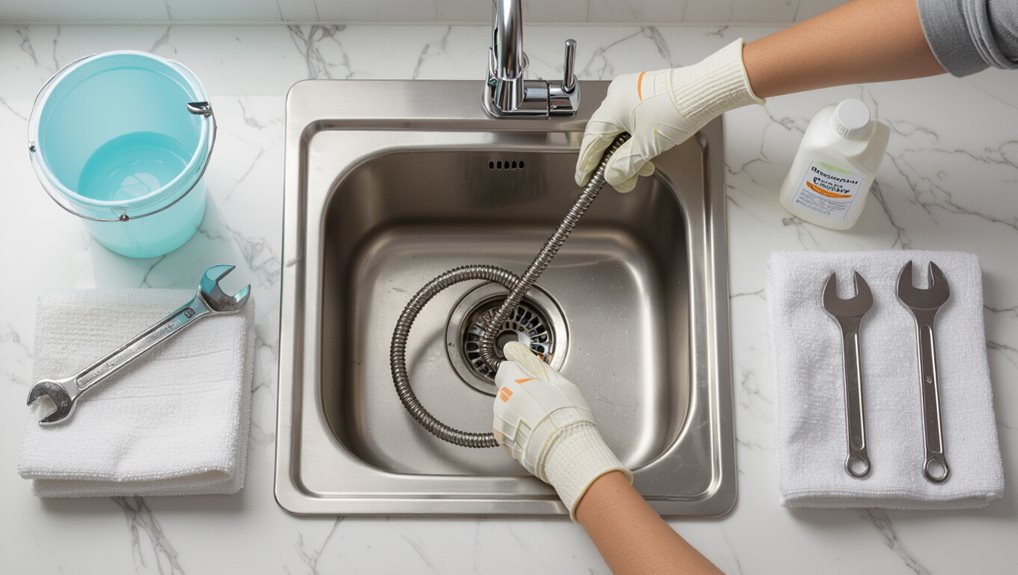
Clear photos illustrate correct insertion and retrieval of the snake, reducing guesswork during use.
Simple diagrams of pipe sections and typical clog locations help identify where the snake should be directed.
Together, these visual aids make each step of the process easier to follow and safer to perform.
Photos showing correct snake insertion and retrieval
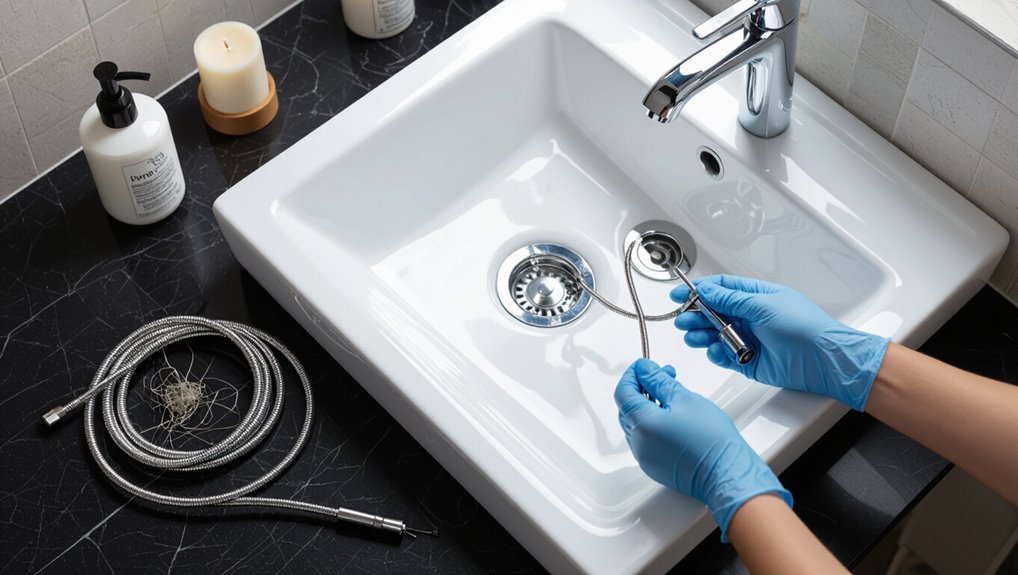
Several close-up photos should sequentially illustrate correct snake insertion and retrieval to make each motion unambiguous.
Images show hand positioning, cable feed through the drain, tip negotiation past the trap, and clockwise rotation while advancing.
Subsequent shots capture retraction with debris attached, gentle back-and-forth motions to clear obstructions, and final inspection of the tip and removed material before proper disposal and tool cleaning.
Diagrams of pipe sections and common clog locations
A simple schematic of typical household drain runs—showing sinks, P-traps, horizontal branches, and the main stack—helps users visualize where blockages most often form.
Clear labeled diagrams indicate hair and grease buildup at P-traps, debris in horizontal runs, and heavier obstructions near the main stack.
Step-by-step visuals paired with short captions guide snake placement, rotation direction, and likely snag points.
Conclusion
The homeowner understands that a drain snake is a simple tool for a common problem, that preparation prevents injury and frustration, that steady technique retrieves hair and gunk while forceful plunging can worsen blockages. They learn to choose the right snake, to use gloves and goggles, to proceed slowly, and to call a pro when roots or persistent backups persist. They adopt routine maintenance, prevent buildup, and save time and money over repeated emergencies.