How to Turn Off an Electric Water Heater Safely: Step-by-Step Guide
To safely turn off an electric water heater, start by cutting power at the circuit breaker and confirming there’s no voltage with a tester. Next, close the cold-water inlet valve and open a hot tap to relieve pressure. Attach a hose to the drain valve to empty the tank. Always wear insulated gloves and goggles, and inspect for leaks or electrical damage. If you encounter any hazards or ongoing issues, contact a licensed professional. For detailed step-by-step instructions, continue reading below.
How to Turn Off an Electric Water Heater Safely: Quick Action Steps
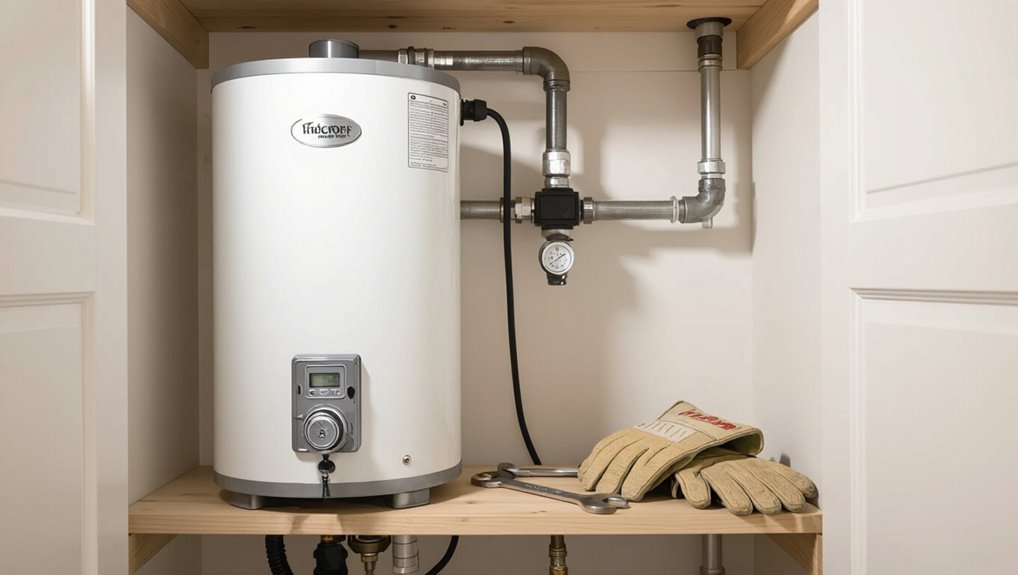
The section provides a concise immediate shutdown checklist of quick actions to power down an electric water heater safely.
It lists steps such as switching off the circuit breaker, shutting off the water supply, and confirming power loss before touching components.
Guidance also explains clear conditions that warrant turning the heater off right away, including leaking tanks, burning smells, or electrical sparks.
Immediate shutdown checklist (quick bullet actions)
Start by cutting power and stopping water flow to eliminate immediate hazards.
The responder follows a brief checklist for how to turn off a electric water heater safely and quickly:
- Switch off circuit breaker powering the heater.
- Close cold-water supply valve to tank.
- Open a hot faucet to relieve pressure.
- Shut gas/secondary systems if present and secure surroundings.
When to turn off the water heater right away
When visible leaks, burning odors, electrical sparks, or rapidly rising pressure occur, the water heater should be shut off immediately to prevent fire, shock, or scalding.
Immediate shutdown is warranted for sudden flooding, exposed wiring, tripped breakers linked to the unit, or if the temperature/pressure relief valve discharges.
After powering down, evacuate if hazards persist and contact a qualified technician for inspection and repair.
Understanding Your Electric Water Heater Before You Start
Before attempting to turn off an electric water heater, one should recognize common residential types—tank and tankless—and where key components are located.
Important parts to identify include the electrical breaker, thermostat, heating elements, shutoff valves, and the drain.
Be aware of safety hazards such as electrical shock, scalding hot water, and leaks before proceeding.
Common types of residential electric water heaters
Residential electric water heaters come in several common configurations—tank-style, tankless (on-demand), heat pump (hybrid), and point-of-use units—each differing in capacity, energy use, and shutdown procedure requirements.
Tank models store heated water; tankless heat on demand. Heat pump units transfer ambient heat for efficiency. Point-of-use units serve a single fixture.
Familiarity with type informs safe, appropriate shutdown steps and precautions.
Key components to identify: breaker, thermostat, heating elements, shutoff valves, drain
A quick visual and tactile inspection helps locate the breaker, thermostat(s), heating element access panels, shutoff valves, and drain so the operator knows what to control and where to expect hazards.
Identify the breaker in the service panel, note thermostat access and element covers on the tank sides, locate the cold-water shutoff above the inlet, and find the tank drain at the bottom for controlled draining.
Safety hazards to be aware of (electrical shock, scalding, leaks)
Several clear hazards demand attention when working on an electric water heater: electrical shock from live wiring, scalding from hot water or steam, and water leaks that can cause flooding and electrical shorting.
Workers should de-energize circuits, wear insulated gloves and eye protection, confirm water temperature before draining, isolate water supply, and monitor for corrosion or loose connections that increase risk.
Tools and Preparation Needed
Before beginning work, gather recommended tools and personal protective equipment such as insulated screwdrivers, a multimeter, safety goggles, and gloves.
They should verify the circuit is dead by testing with a multimeter at the heater’s junction box after switching off the breaker.
The work area should be cleared, water and electrical sources identified, and household members notified to avoid accidental re-energizing.
Recommended tools and PPE (gloves, goggles, insulated tools)
Gather appropriate tools and personal protective equipment to reduce injury and electrical risk when working on an electric water heater.
Recommended items include:
- Dielectric-insulated screwdrivers and pliers
- Non-conductive voltage tester probe covers
- Rubber-insulated gloves rated for electrical work
- Safety goggles
- Durable work gloves for sharp edges
Also include a flashlight, wrench set, and a lockout/tagout kit to prevent accidental re-energizing.
How to confirm power is off safely (multimeter use)
Use a properly rated digital multimeter and verified test leads to confirm the water heater’s circuit is de-energized before touching any wiring.
Verify multimeter operation on a known live source, set to appropriate AC voltage range, and test at the heater’s terminal block or breaker output.
Check both hot-to-hot and hot-to-ground.
Only proceed when readings show zero volts and leads remain secure.
Preparing the work area and notifying household members
Clear the area around the water heater and inform household members of the planned shutdown so work can proceed safely and without interruption.
Remove obstacles, flammable materials, and pets; guarantee adequate lighting and ventilation.
Place warning signs or tape and designate a safe work perimeter.
Confirm who will handle hot water needs during the outage and provide contact instructions for emergencies.
Step-by-Step: Turning Off Power at the Circuit Breaker
The section explains how to identify and mark the correct circuit breaker for the water heater to prevent confusion.
It then describes the safe procedure for switching the breaker to the off position.
Finally, it covers simple methods to confirm the heater is de-energized before any work begins.
Locating the correct breaker and labeling tips
Before attempting any electrical work, identify the water heater’s dedicated circuit by inspecting the home’s breaker panel for labels, a double-pole breaker sized to the heater’s amperage, or wires routed from the heater’s location.
If labels are missing or unclear, verify by turning off a suspect breaker and checking that power to the heater is interrupted.
Once found, mark the breaker clearly with a durable label, date, and brief description.
How to switch off the breaker safely
With the breaker identified and labeled, proceed to shut off power at the panel using a methodical, safety-focused sequence.
Wear insulated gloves and safety glasses, stand to the side of the panel, grasp the breaker handle firmly, and move it to the OFF position.
Confirm a deliberate motion; avoid rapid toggling.
Close the panel door and keep the area clear until work begins.
Verifying the heater is de-energized
Confirm power removal by testing the heater’s circuits with a properly rated multimeter or non-contact voltage tester after the breaker has been switched off.
Verify no voltage at the heater’s terminal block and thermostat connections.
Test both hot legs to neutral and between hots.
If any voltage is present, do not proceed; reset the breaker to off and consult a qualified electrician before performing further work.
Step-by-Step: Turning Off the Water Supply and Draining the Tank
Next, the cold water supply valve should be closed to stop incoming water to the tank.
A nearby hot water faucet is opened to relieve built-up pressure and allow air in as the tank is drained.
The tank is then emptied through the drain valve using a suitable hose directed to a safe outdoor or floor drain.
Shutting off the cold water supply valve
Locate the cold water supply valve on the pipe entering the top of the heater and shut it off to stop incoming water.
Confirm the valve is fully closed by turning clockwise until resistance is felt; use a wrench if necessary.
Check nearby fittings for visible leaks after closure.
Leave the valve closed while proceeding to drain or service the heater to prevent refilling.
Opening a hot water faucet to relieve pressure
Open a hot water faucet in the house—preferably the highest one or a nearby sink—to relieve pressure and allow air into the tank so it can drain.
Doing this prevents a vacuum, speeds tank emptying after the supply is shut off, and reduces backflow risk.
Leave the faucet slightly open until draining procedures are complete, then close it once the system is stabilized.
How to drain the tank safely (using drain valve and hose)
Turn off the cold-water supply to the heater at the shutoff valve.
Attach a garden hose to the tank’s drain valve, and route the hose to a suitable drain, floor drain, or outside area to avoid water damage.
Open a hot faucet to vent.
Open the drain valve slowly, monitor flow for sediment, close the valve when empty, detach the hose, and restore supply as needed.
Turning Off the Water Heater Using Built-In Controls
Many electric water heaters include built-in controls such as a thermostat or cutoff switch that allow the unit to be shut down without touching the electrical panel.
Some models also feature an emergency shutoff switch or a pilot-light style indicator that can be used to stop heating quickly.
The following section explains how to identify and operate these controls safely.
Using the thermostat or cutoff switch on the unit
Locate the thermostat or cutoff switch on the heater’s exterior panel to begin shutting off the unit using its built-in controls.
The person should switch the thermostat to “off” or flip the cutoff to the open position, then verify power loss by checking indicator lights or listening for element noise.
After switching, allow time for temperature to stabilize before handling plumbing or maintenance.
Models with emergency shutoff switches or pilot lights
When a heater includes an emergency shutoff switch or a standing pilot light, the built-in controls provide an immediate, safe way to stop operation without accessing the circuit breaker.
The technician or homeowner locates the clearly marked switch or pilot access, flips the switch to OFF or extinguishes the pilot per manufacturer instructions, confirms the burner and indicators are inactive, and records the action for safety checks.
What to Do After the Heater Is Off
Once the heater is off, a visual inspection for leaks, corrosion, and any signs of electrical damage should be performed.
Before restoring power, the unit should be allowed to cool, drained or flushed if needed, and fittings tightened per the manufacturer’s guidance.
If corrosion, persistent leaks, exposed wiring, or uncertain diagnoses are found, a licensed plumber or electrician should be contacted.
Inspecting for leaks, corrosion, and electrical damage
After the power and water supply are off, inspect the tank and surrounding components for leaks, rust, and signs of electrical damage.
Check fittings, valves, and the pressure relief for moisture.
Look for corrosion on the tank, wiring insulation melting, scorch marks, or loose connections at access panels and junction boxes.
Note any issues and document locations for repair.
Steps before restarting the heater
Begin by verifying that the heater remains isolated from power and water before proceeding with any preparatory tasks.
Drain any cooled water to reduce pressure, inspect fittings and the pressure relief valve, and guarantee all repairs or replacements are complete and secure.
Refill slowly to expel air, check for leaks, and confirm controls and thermostats are set correctly before restoring power.
When to call a licensed electrician or plumber
A homeowner should evaluate the situation carefully before attempting further work and call a licensed electrician or plumber whenever signs point to electrical faults, persistent leaks, gas smells, or unknown failures.
Professionals should be contacted for tripped breakers that reset repeatedly, burnt odors, visible corrosion, major flooding, or when repairs exceed basic shutoff and inspection.
Document conditions and avoid DIY fixes beyond simple isolation.
Common Problems and Troubleshooting While Shutting Down
While shutting down an electric water heater, several common issues can impede the process and require specific troubleshooting.
These include a breaker that fails to trip or is stuck, a drain valve that will not release water or is seized, and visible signs of electrical faults such as burnt wiring or scorch marks.
Each problem warrants immediate attention and, when electrical concerns are present, professional intervention.
Breaker won’t trip or is stuck
If the circuit breaker for an electric water heater fails to trip or appears stuck, it creates a safety concern that prevents a straightforward shutdown and requires prompt, methodical troubleshooting.
Confirm power at the panel, test with a multimeter, and try resetting the breaker.
If it remains stuck, power should be cut at the main breaker and a qualified electrician called to inspect or replace the faulty breaker.
Water won’t drain or drain valve is stuck
When electrical isolation has been achieved but the tank still needs to be emptied, attention shifts to the drain—the common cause of delays and frustration during shutdown.
If water won’t drain or the valve is stuck, try loosening with pliers, attach a garden hose to flush air into the tank, open a hot faucet upstairs, and gently tap the valve.
Replace faulty valves if immobile.
Signs of electrical faults or burnt wiring
Although electrical isolation should prevent shock hazards, visible signs of faults or burnt wiring demand immediate attention before any further work proceeds.
Discoloration, melting insulation, scorch marks, burning smells, buzzing or arcing sounds, and tripped breakers indicate hazardous conditions.
The operator should stop, keep distance, de-energize at the service panel if safe, and contact a qualified electrician for inspection and repair.
Safety Tips and Best Practices to Prevent Future Emergencies
Preventive measures reduce the likelihood of emergency shutoffs and extend the heater’s service life.
A routine maintenance schedule should list inspections and checks (anode rod, heating elements, pressure, and signs of leakage), while safety devices such as leak detectors, T&P valves, and automatic shutoffs provide layered protection.
Clear labeling and written shutoff procedures, kept where household members can easily find them, guarantee faster, safer responses if problems occur.
Regular maintenance schedule and what to check
A simple, consistent maintenance schedule helps guarantee an electric water heater runs safely and reliably over its lifespan.
Monthly checks should include inspecting the power switch, circuit breaker, and visible wiring for signs of damage.
Quarterly tasks include flushing the tank to remove sediment and testing thermostat accuracy.
Annually, inspect anode rod condition, drain valve operation, and overall tank integrity; schedule professional service as needed.
Installing safety devices: leak detectors, temperature/pressure relief (T&P) valves, automatic shutoffs
When homeowners add leak detectors, temperature/pressure (T&P) relief valves, and automatic shutoffs to an electric water heater, they considerably reduce the risk of flooding, scalding, and catastrophic failure.
Each device addresses a specific hazard and together form a layered defense.
Install T&P valves per code, place detectors near the tank and drain, and fit automatic shutoffs that cut power or water when sensors trigger.
How to label and document shutoff procedures for household members
After installing detectors, T&P valves, and automatic shutoffs, households should clearly label and document how to operate those devices and shut off power and water to the heater.
Labels and a concise procedure sheet reduce confusion.
Recommended elements:
- Main breaker and unit switch location.
- Cold-water shutoff valve location and direction.
- T&P reset and drain steps.
- Emergency contact and maintenance schedule.
Comparison of Emergency Shutdown Options
How should homeowners choose between emergency shutdown options for an electric water heater? They should weigh speed, accessibility, safety, and required expertise. Consider likely scenarios and household capabilities to favor simple, reliable methods. Compare options:
| Factor | Consideration |
|---|---|
| Speed | Time to stop power |
| Access | Location and ease |
| Safety | Risk level |
| Skill | Required knowledge |
| Cost | Installation/maintenance |
HH3: Manual breaker vs. built-in cutoff vs. professional isolation
Although each shutdown method can cut power to an electric water heater, homeowners must balance immediacy, convenience, and reliability when choosing between a manual breaker, a built-in cutoff, or professional isolation.
A manual breaker is immediate but user-dependent; built-in cutoffs offer automatic protection and ease.
Professional isolation provides thorough, code-compliant disconnection for complex or hazardous situations beyond routine homeowner capability.
When to Seek Professional Help Immediately
Signs of danger—sparks, burning smells, exposed live wiring, persistent tripping, or flooding—warrant immediate emergency service.
The text will outline how to select an appropriate licensed electrician or plumber with electrical experience and what key details to convey (model, symptoms, recent work, breaker status).
Clear, concise reporting of those facts speeds diagnosis and reduces risk.
Scenarios that require emergency services
If visible flames, persistent burning smells, sparking at electrical connections, leaking water near electrical components, or sudden loss of power occur, emergency services should be contacted immediately to prevent fire, electrocution, or flooding.
Other emergencies include active gas odor from nearby appliances, large uncontrolled leaks flooding structures, exposed live wiring, or suspected structural instability; occupants should evacuate and await responders.
How to choose the right professional and what information to provide
When immediate professional help is required, homeowners should prioritize licensed electricians or certified plumbing/heating contractors whose credentials match the water heater’s power source and system type.
Provide model, serial number, symptom timeline, visible damage, recent maintenance, circuit breaker info, and any gas or water shutoff status.
Ask about licensing, insurance, warranty coverage, estimated arrival, diagnostic fees, and safety protocols.
Quick Reference: One-Page Shutdown Checklist
Consult the one-page shutdown checklist for a concise sequence of steps to power down an electric water heater safely and efficiently.
The list consolidates required actions—cut power, close valves, drain if necessary, and confirm isolation—so a single quick scan provides the essential actions and safety checks needed before any service or emergency response.
- Cut power at breaker.
- Close cold-water inlet.
- Open drain and relief valve.
- Verify electrical isolation and label breaker.
Conclusion
Turning off an electric water heater demands calm precision: like a conductor silencing an orchestra, one must cut power at the breaker, stop the water feed, and relieve tank pressure in orderly steps. With the right tools and awareness of built-in cutoffs versus manual breakers, most shutdowns are straightforward; however, corrosion, leaks, or unfamiliar wiring are red flags. When doubt arises, calling a licensed professional guarantees safety and prevents costly damage.