
40 Inspiring Fruit Garden Ideas for Delicious Home Harvests
To create an inspiring fruit garden, start by choosing a sunny spot with good drainage. Select fruit varieties that thrive in your climate and consider companion planting for healthier growth. If space is tight, explore vertical gardening and container options. Heirloom varieties add uniqueness, while integrating fruits with other edibles maximizes your harvest. Don’t forget to connect with neighbors for shared resources and experiences. There’s so much more to discover to enhance your fruit garden success!
Choosing the Right Location for Your Fruit Garden
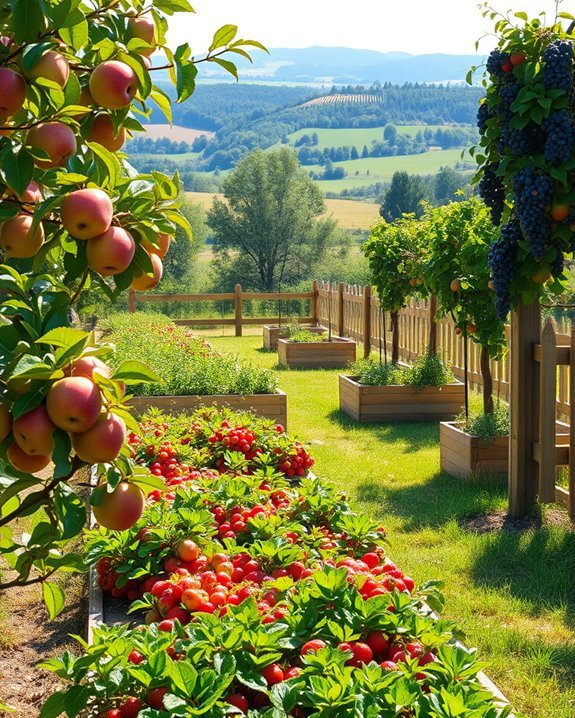
When you’re planning your fruit garden, one of the most critical steps is choosing the right location.
Look for a spot with excellent sunlight exposure, ideally receiving at least six hours of direct sunlight daily.
Additionally, guarantee the soil drainage is good; soggy soil can harm your plants.
Finding the perfect balance of these elements will set you up for a successful harvest.
Selecting the Best Fruit Varieties for Your Climate
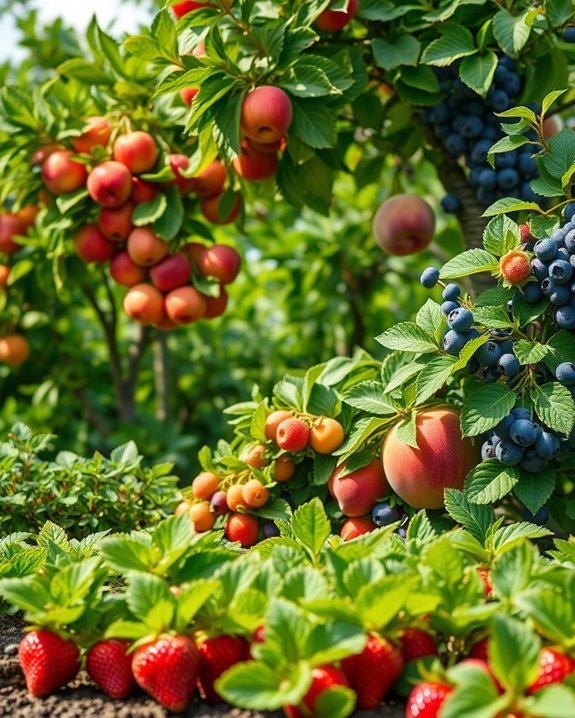
As you begin your journey in selecting the best fruit varieties for your climate, it’s essential to take into account your region’s specific conditions, including temperature, humidity, and frost dates.
Focus on climate adaptability to guarantee your fruit selection thrives.
Research local varieties that perform well in your area, as this will lead to a more fruitful and enjoyable gardening experience.
Companion Planting for a Thriving Fruit Garden
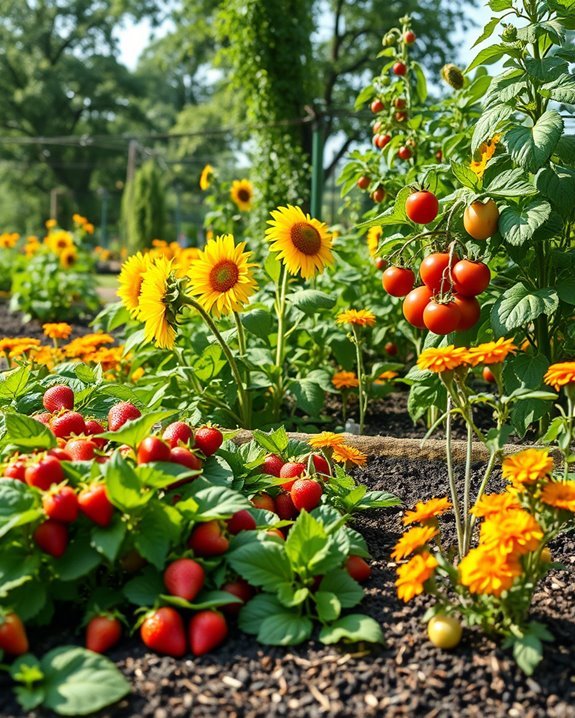
Companion planting can greatly enhance the health and productivity of your fruit garden by fostering beneficial relationships between plants.
Use herb companions for pest deterrents and seasonal companions for growth enhancement.
Incorporate nitrogen fixers to improve soil enrichment and flowering partners for pollination support.
This plant synergy promotes fruit diversity and guarantees a thriving environment for your garden’s success.
Vertical Gardening Techniques for Small Spaces
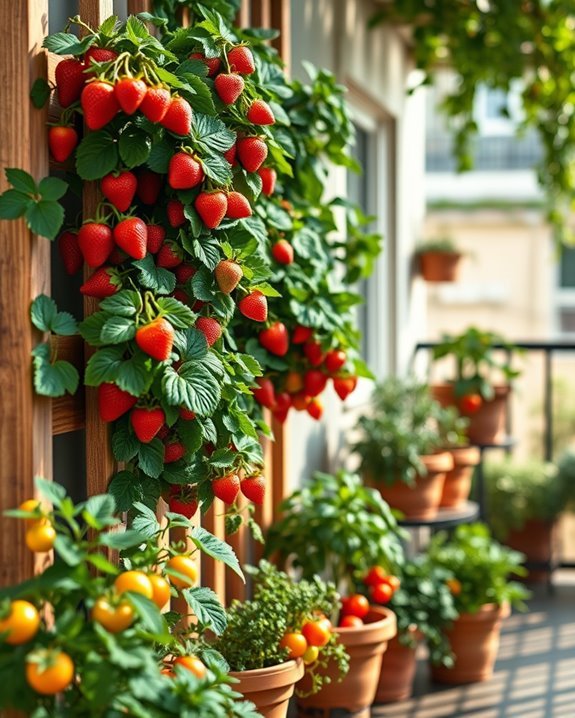
If you’re working with limited outdoor space, vertical gardening techniques can transform your fruit garden into a lush oasis.
By maximizing vertical space utilization, you’ll create a vibrant display while saving ground area.
Using trellises, wall planters, or hanging baskets not only enhances aesthetics but also provides vertical gardening benefits, like improved air circulation and easier access to sunlight for your plants.
Container Gardening for Fresh Fruit at Home
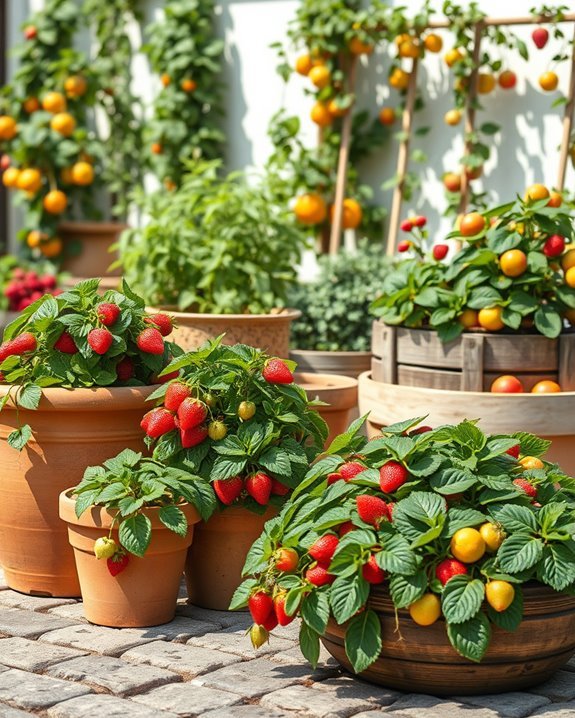
While you might think that growing fresh fruit is only possible in sprawling gardens, container gardening opens up a world of opportunities right at home.
Choose container types like pots or hanging baskets to fit your space. For best results, focus on soil selection; use well-draining potting mix enriched with organic matter.
With the right care, you’ll enjoy delicious homegrown fruit!
Creating Raised Beds for Optimal Growth
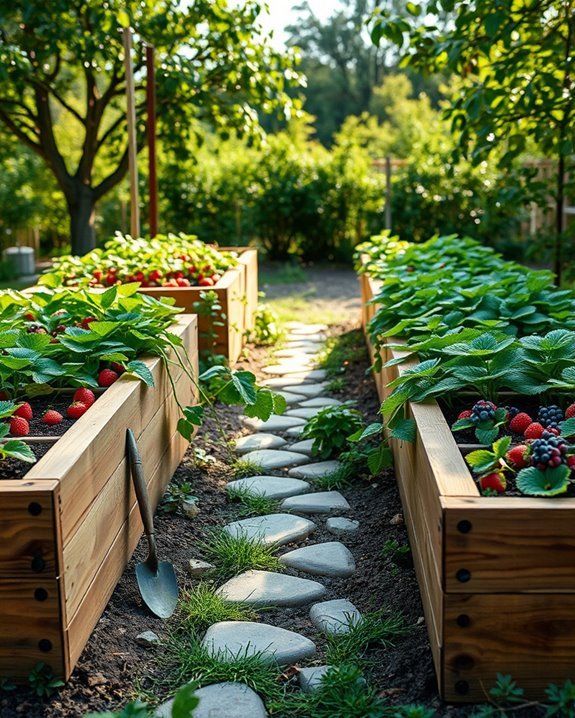
Creating raised beds for your fruit garden not only enhances drainage but also provides better soil quality, which is essential for ideal growth.
Choose bed materials like cedar, redwood, or composite to resist rot. Mix various soil types to improve aeration and nutrients.
With proper construction, your raised beds will promote healthier plants and yield a bountiful harvest for your home.
Intercropping Strategies for Diverse Harvests
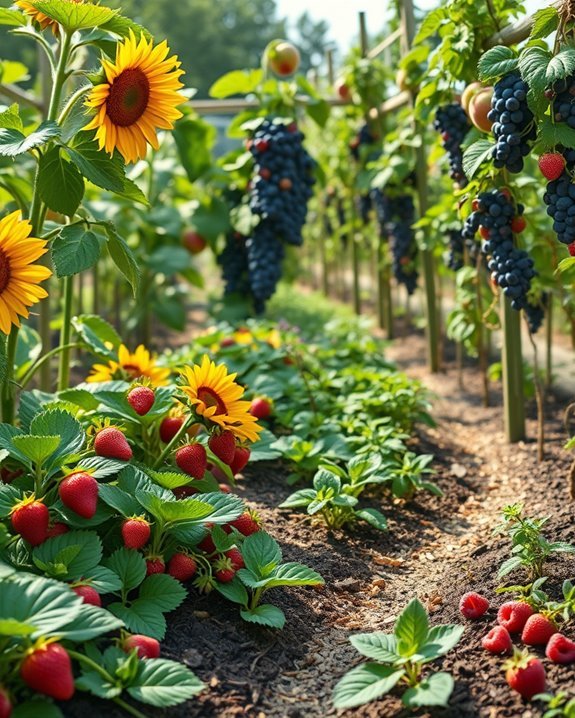
Maximizing your garden space doesn’t stop with trellises; intercropping can further enhance your harvest.
By planting complementary crops together, you promote soil diversity and reduce pests.
Consider crop rotation to keep nutrients balanced and prevent depletion.
For example, pair nitrogen-fixing legumes with fruiting plants.
This strategy not only boosts yields but also creates a sustainable ecosystem right in your backyard.
Pruning Techniques for Healthy Fruit Production
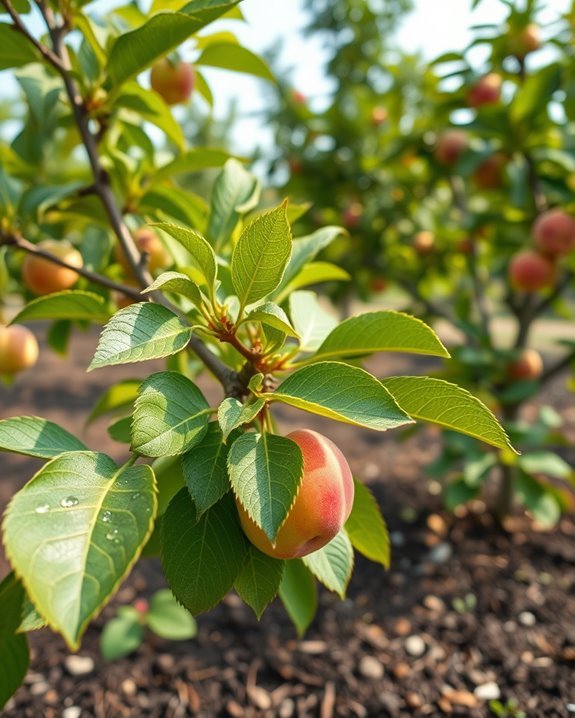
Pruning is essential for promoting healthy fruit production in your garden.
To achieve the best results, pay attention to pruning timing; late winter or early spring is often ideal.
Use sharp, clean pruning tools to make precise cuts, encouraging better air circulation and sunlight penetration.
Regularly prune dead or crossing branches, ensuring your plants stay vigorous and productive throughout the growing season.
Mulching Benefits for Fruit Plants
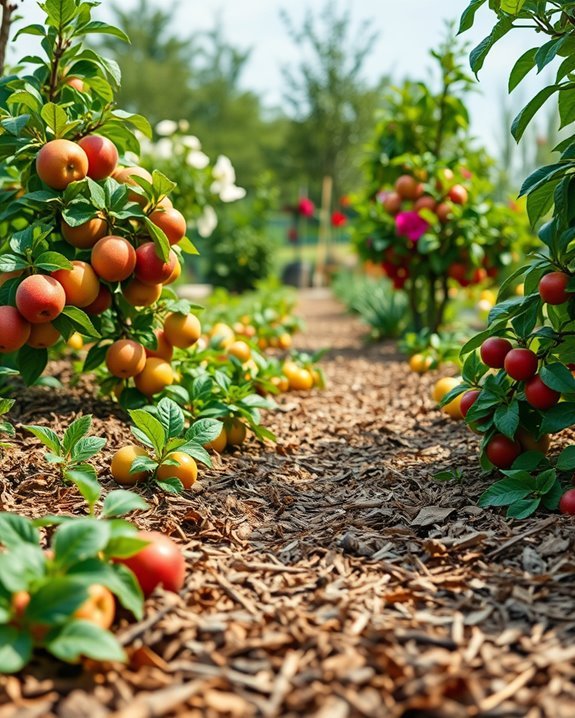
After ensuring your fruit plants are well-pruned, mulching can further enhance their health and productivity.
Different mulch types improve soil structure and promote moisture retention. This layer helps with weed control, allowing your plants to thrive.
Additionally, it aids in temperature regulation and pest reduction, creating a more favorable environment for your fruit plants and boosting your home harvests.
Attracting Beneficial Insects to Your Garden
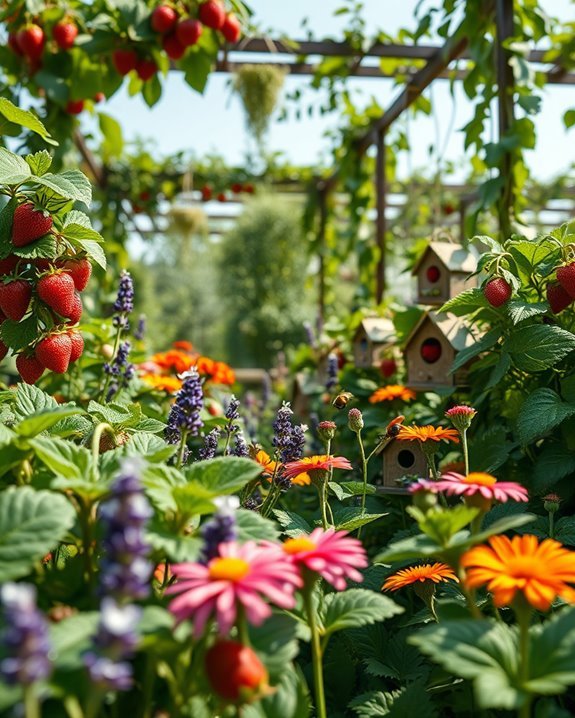
While you focus on growing healthy fruit plants, attracting beneficial insects can greatly enhance your garden’s ecosystem.
Create pollinator habitats by planting a variety of beneficial plants like lavender and sunflowers. These flowers not only attract bees and butterflies but also encourage natural pest control.
Using Shade Cloth for Sun-Sensitive Fruits
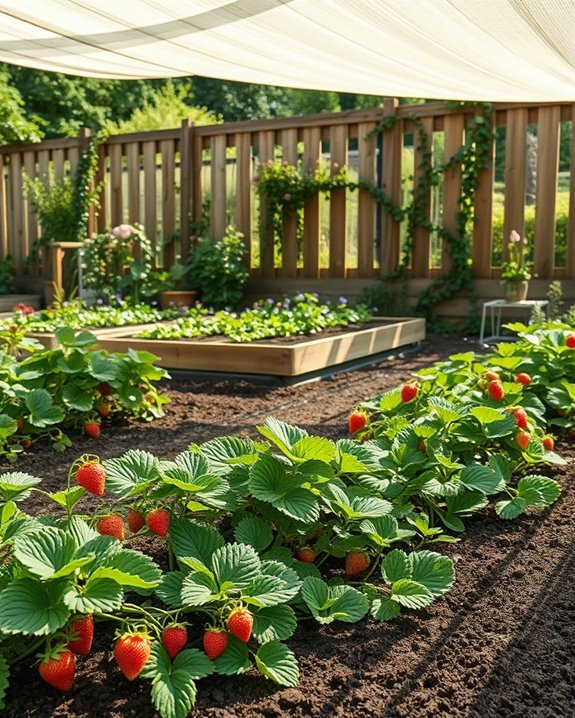
If you want to protect your sun-sensitive fruits from harsh sunlight, using shade cloth can be a game-changer.
It offers shade cloth benefits like reducing heat stress and preventing sunburn on delicate fruits.
Space-Saving Ideas for Urban Fruit Gardens
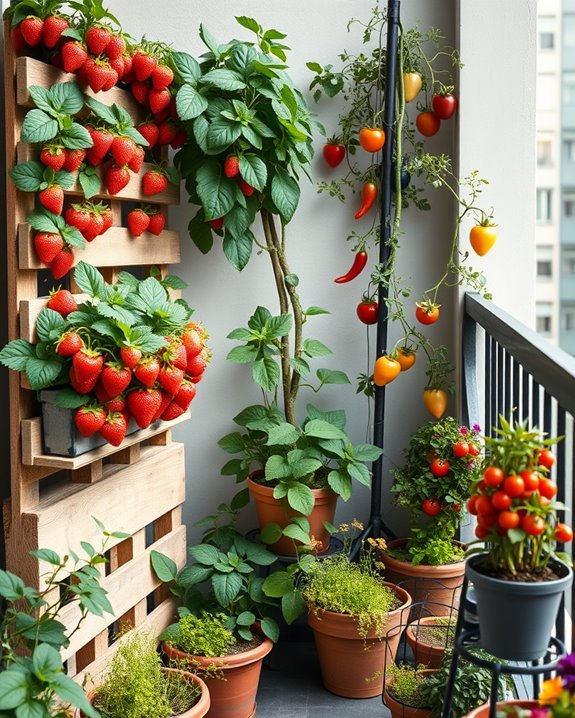
Creating a thriving fruit garden in an urban setting can be a rewarding challenge, especially when space is limited.
Consider growing dwarf fruit trees in pots for your balcony gardening. They take up less room while still providing a bountiful harvest.
Vertical gardening is another excellent option; use trellises or wall planters to maximize your space and enjoy fresh fruits right at home.
Planning a Perennial Fruit Garden

When you plan a perennial fruit garden, you’re investing in a sustainable source of fresh produce that can thrive for years with minimal maintenance.
Start with careful perennial planning, selecting varieties suited to your climate. Create a thoughtful garden layout that maximizes sunlight and space.
Incorporate companion plants to enhance growth and pest resistance, ensuring a bountiful harvest season after season.
Incorporating Nuts Into Your Fruit Garden
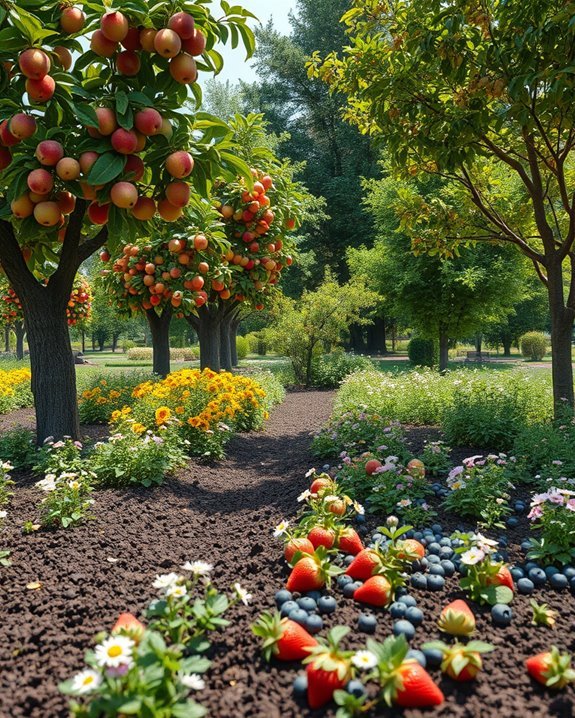
To enhance the diversity and productivity of your perennial fruit garden, consider incorporating nut trees alongside your fruit-bearing plants.
Various nut varieties, like walnuts and pecans, can thrive together with fruits, offering unique flavors and textures.
Just verify you check for nut compatibility; some trees may compete for nutrients or space.
This combination can lead to a bountiful and varied harvest.
Harvesting and Storing Your Fruit Bounty
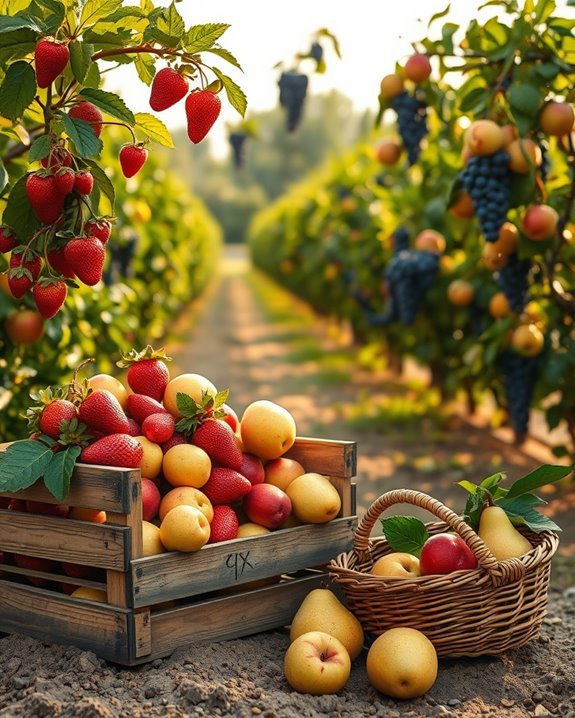
Successful grafting sets the stage for a fruitful harvest, but knowing how to properly gather and store your bounty is just as important.
Use seasonal harvesting tips to pick your fruit at peak ripeness. Employ fruit preservation techniques like canning or freezing to enjoy your harvest year-round.
Creating a Fruit Garden for Kids
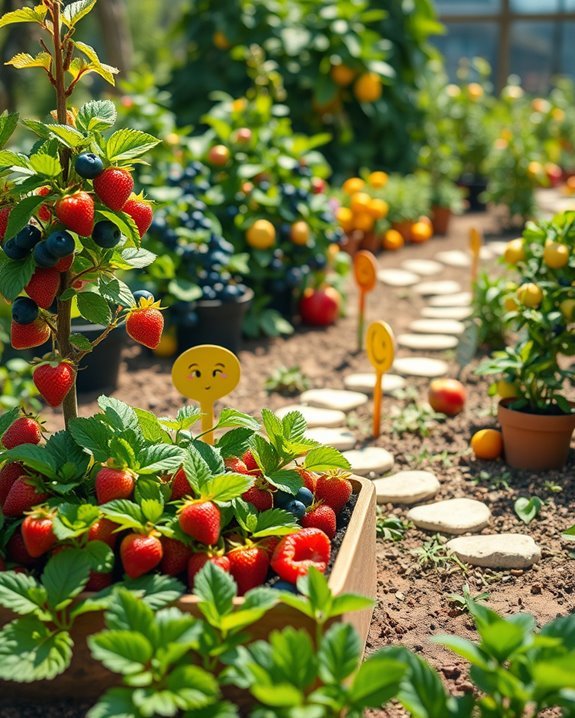
How can you make gardening fun and educational for kids? Start by planting kid-friendly fruits like strawberries, blueberries, and raspberries.
Involve them in engaging gardening activities like planting seeds, watering plants, and harvesting fruits.
Encourage their creativity with colorful garden markers and fun designs.
Watching their efforts bloom into delicious snacks will spark their interest in nature and healthy eating!
Maintaining Soil Health for Fruit Plants
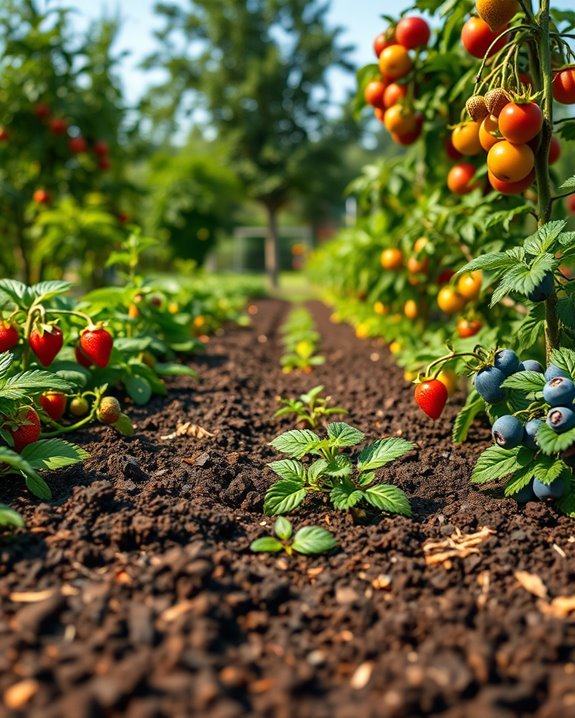
After kids have enjoyed planting and harvesting their favorite fruits, it’s important to guarantee those plants thrive for seasons to come.
Focus on maintaining soil health by regularly adding soil amendments like compost, which boosts nutrient cycling.
Keep an eye on soil moisture and pH levels, ensuring your fruit plants have the nutrients they need to flourish and produce delicious harvests year after year.
Designing a Fruit Garden for Year-Round Harvests
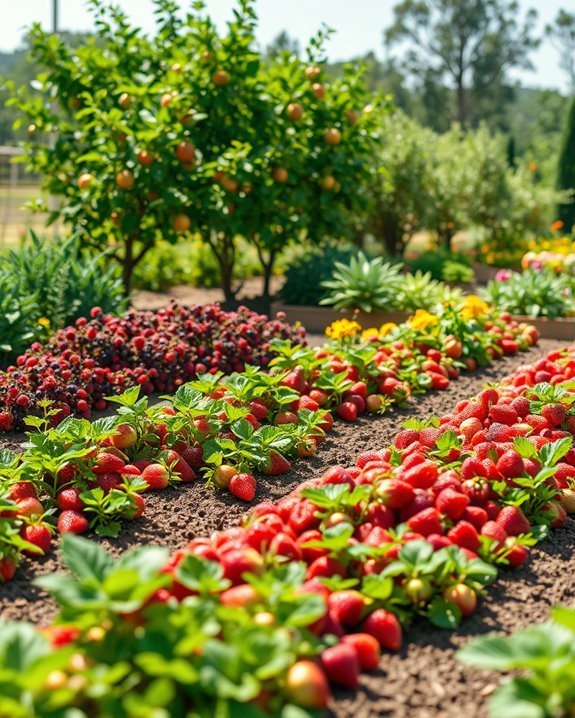
While you might envision a fruit garden bursting with summer berries and autumn apples, designing for year-round harvests requires thoughtful planning and a variety of plants.
Incorporate a mix of perennials and annuals, and practice crop rotation to maintain soil health.
Regular seasonal maintenance, like pruning and mulching, guarantees your fruit garden thrives and provides bountiful harvests throughout the year.
Cooking and Preserving Your Homegrown Fruits
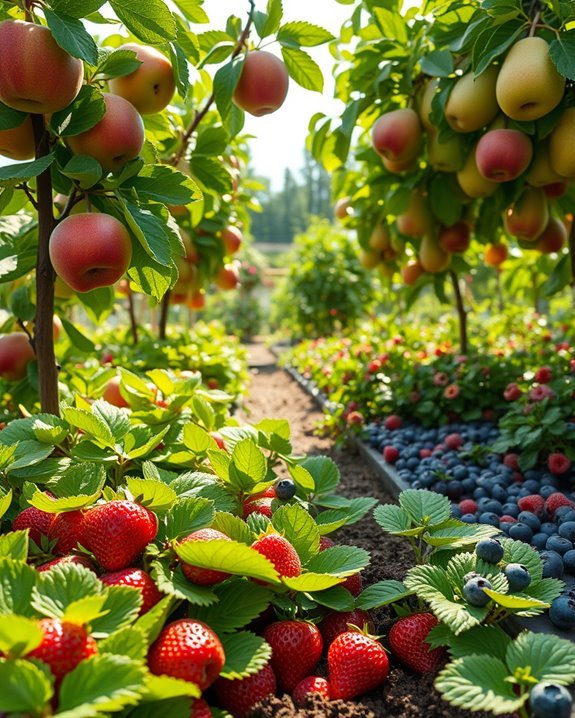
Once you’ve harvested your fruits, you might wonder how to make the most of your bounty.
Explore canning techniques to preserve your delicious harvest for months to come. Whether you’re making fruit jams or canning whole fruits, these methods lock in flavor and nutrients.
Get creative with flavors, mix and match fruits, and enjoy the taste of summer all year round!
Using Natural Fertilizers for Fruit Plants
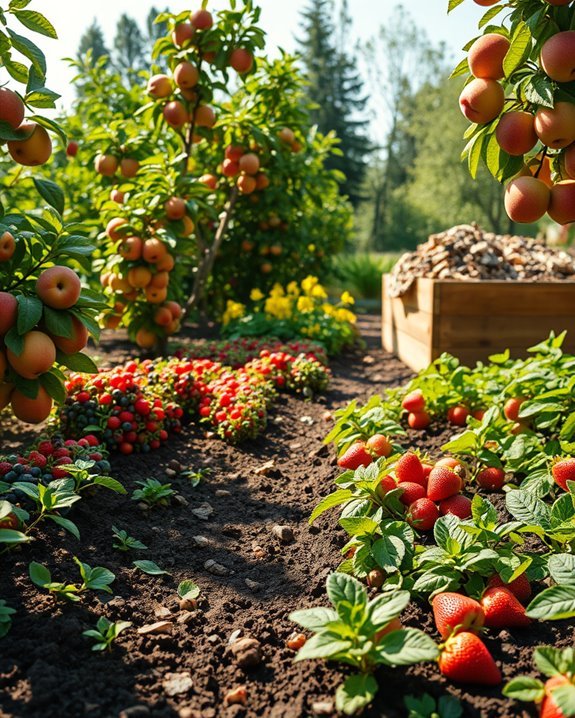
When you want to boost the health and yield of your fruit plants, using natural fertilizers can make a significant difference.
Consider natural composting to enrich your soil with essential nutrients. You can also incorporate organic amendments like bone meal or fish emulsion to enhance growth.
These eco-friendly options not only support your plants but also contribute to a healthy garden ecosystem.
Crafting Fruit-Infused Water and Beverages
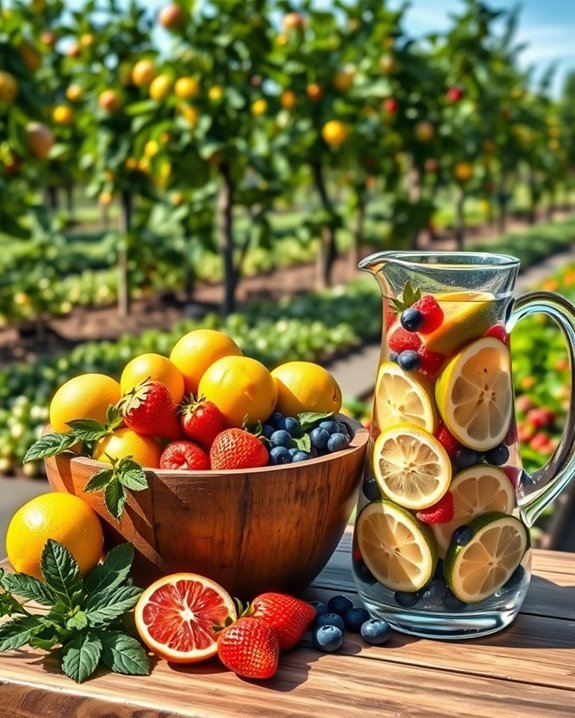
After nurturing your fruit plants with natural fertilizers, it’s time to enjoy the fruits of your labor in a rejuvenating way.
You can create invigorating fruit water by infusing your favorite fruits—like berries or citrus—with water. For an extra twist, add herbal infusions such as mint or basil.
This delicious combination not only hydrates but also delights your taste buds. Enjoy your creations!
The Benefits of Biodynamic Gardening for Fruits
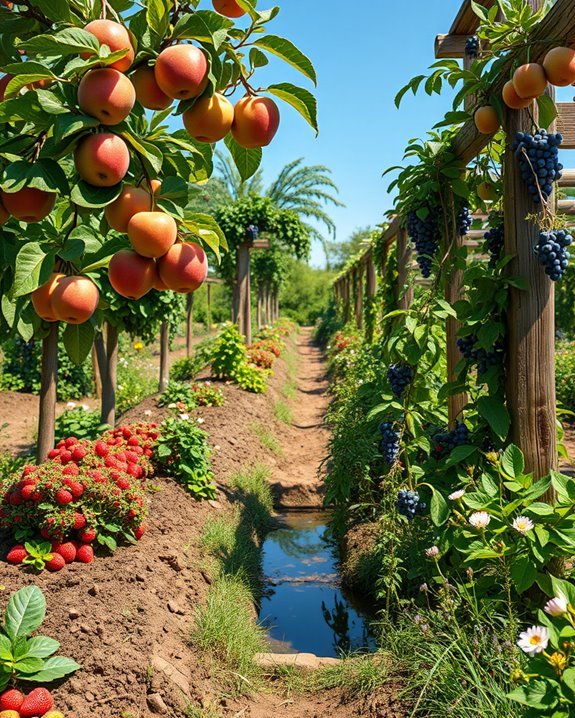
Although many gardeners focus solely on conventional methods, embracing biodynamic gardening can markedly enhance the quality and flavor of your fruits.
By applying biodynamic principles, you boost soil fertility and promote ecosystem health. Natural pest control and compost practices support plant diversity, while honoring seasonal cycles creates a holistic approach.
This method not only yields delicious fruits but also nurtures the environment.
Setting Up a Fruit Garden Journal
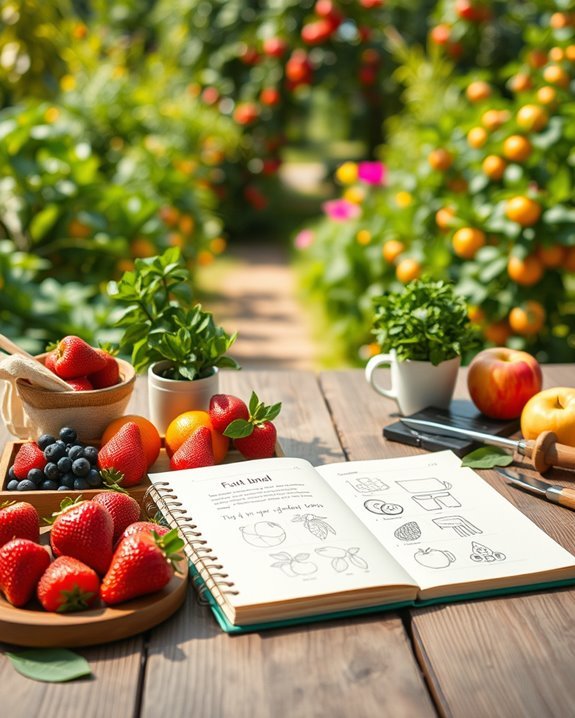
Creating a fruit garden journal can greatly enhance your gardening experience.
By using journal templates, you can easily track progress, noting what works and what doesn’t. Record planting dates, growth observations, and harvest yields to refine your practices.
This personalized resource not only keeps you organized but also helps you plan for future seasons, ensuring a bountiful fruit harvest every year.
Planning for a Fruit Garden Aesthetic
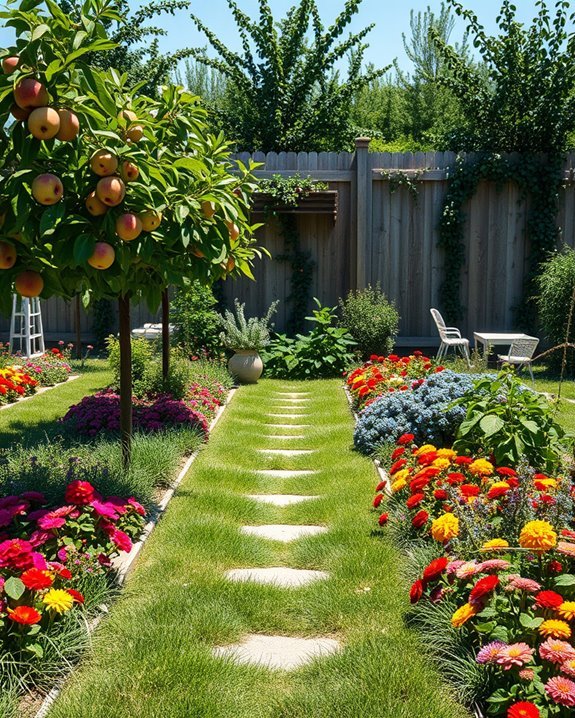
As you envision your fruit garden, consider how the arrangement of plants can enhance both beauty and functionality.
Focus on fruit garden aesthetics by choosing a mix of colors, heights, and textures. Use pathways to create flow and designate areas for different fruit types.
This visual design not only pleases the eye but also makes harvesting easier, ensuring a delightful experience in your garden.
Creative Ways to Use Fruit in Home Decor
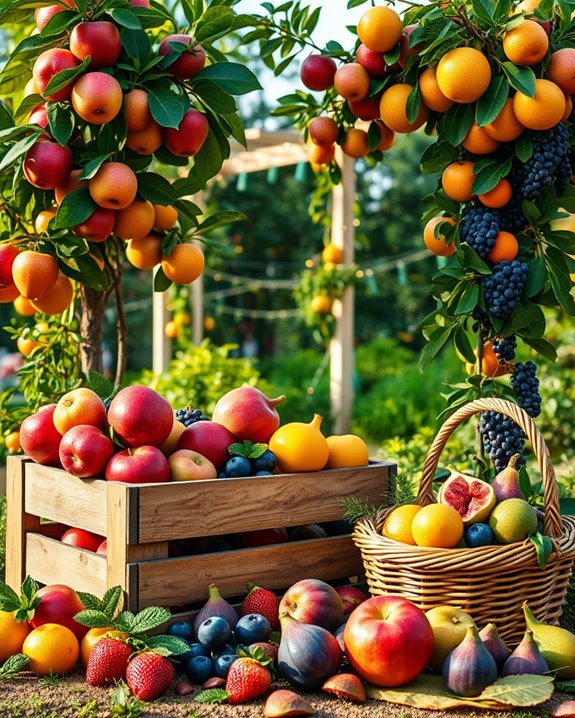
Incorporating fruit into your home decor can add a vibrant and fresh touch to your spaces.
Use colorful fruit arrangements as eye-catching accents on your dining table or kitchen counter.
Create fruit inspired centerpieces by mixing seasonal fruits in decorative bowls.
You’ll not only enhance your decor but also enjoy the delightful aroma and visual appeal of fresh produce throughout your home.
Building a Fruit Garden in a Community Space
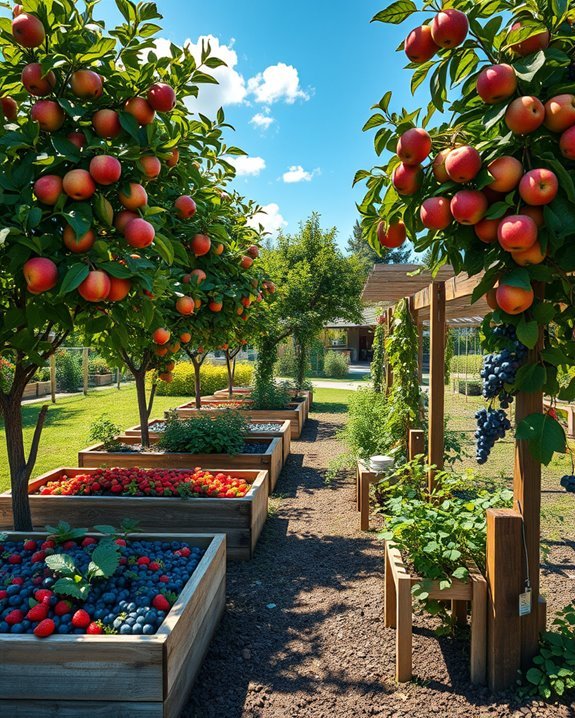
Building a fruit garden in a community space can transform an underutilized area into a vibrant hub for neighbors to gather and enjoy nature’s bounty.
You’ll foster community gardening by sharing resources like tools, seeds, and knowledge. Engaging local residents not only strengthens bonds but also enhances the garden’s productivity, ensuring everyone can savor the delicious harvest together.
Exploring Heirloom Fruit Varieties
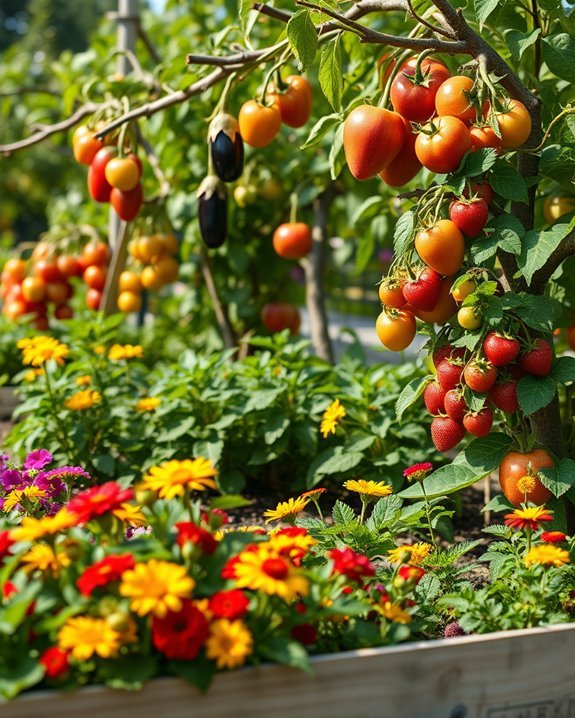
Have you ever tasted a fruit that bursts with flavor and a story behind it?
Heirloom varieties offer unique heirloom characteristics, bringing rich histories and diverse tastes to your garden.
Using heirloom preservation methods, you can cultivate these extraordinary fruits, ensuring they thrive for generations.
Discover the unmatched sweetness of heirloom tomatoes, apples, and berries, and savor the difference in every bite.
Starting a Fruit Garden From Seeds
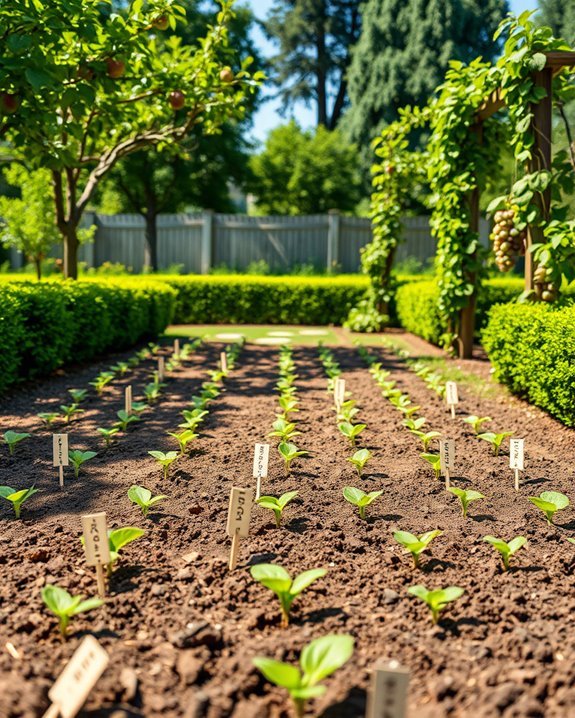
Starting a fruit garden from seeds can be a rewarding journey, allowing you to nurture your plants from the very beginning.
Use effective seed germination techniques to guarantee your seeds sprout successfully.
For an early start, consider indoor seed starting; it gives you control over temperature and light, helping your plants thrive before transferring them outdoors.
Enjoy watching your garden flourish!
Integrating Fruit Gardens With Other Edibles
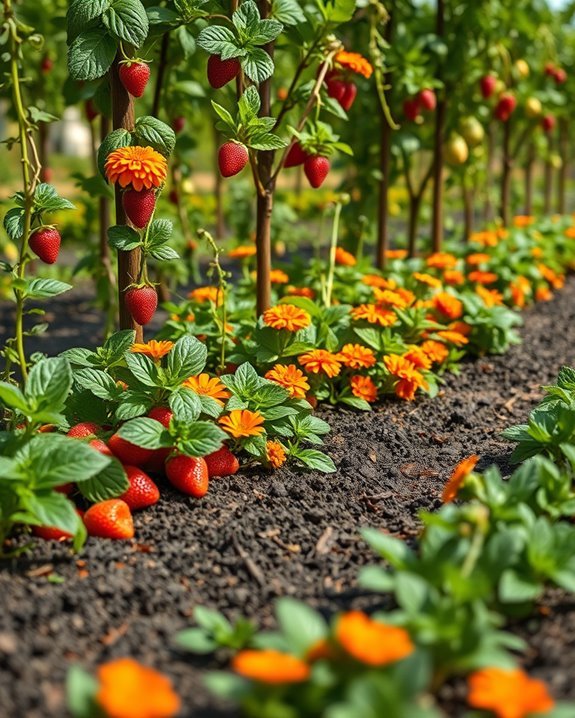
Integrating a fruit garden with other edibles not only maximizes your growing space but also creates a diverse ecosystem that benefits all your plants.
Consider edible plant combinations like strawberries with spinach or blueberries alongside herbs.
This fruit garden integration boosts pollination and pest control, ensuring healthier plants.
Embrace companion planting to enhance flavors and yields, making your garden more productive and enjoyable.
Collaborating With Neighbors for Shared Harvests
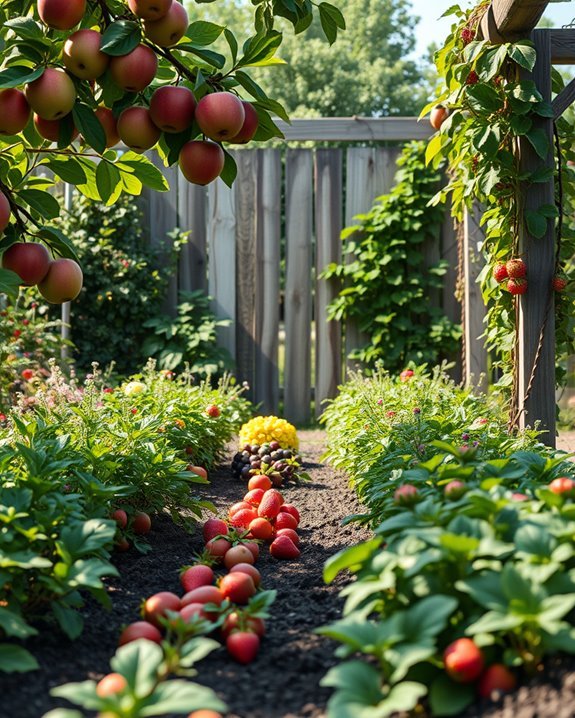
When you collaborate with neighbors to create shared harvests, you not only expand your growing potential but also foster a sense of community.
Organizing fruit swaps can help you diversify your produce while building friendships.
Consider forming garden co-ops, where you can share resources and knowledge, ensuring everyone benefits from each other’s efforts.
Together, you’ll enjoy bountiful harvests and strengthen neighborhood bonds.
Conclusion
With the right location, suitable fruit varieties, and a little creativity, you can create a thriving fruit garden that yields delicious harvests. Don’t forget to contemplate companion planting and vertical or container gardening if space is tight. Exploring heirloom varieties adds uniqueness to your garden, while starting from seeds is a rewarding challenge. By integrating your fruit garden with other edibles and collaborating with neighbors, you’ll not only enjoy fresh produce but also build a sense of community. Happy gardening!


