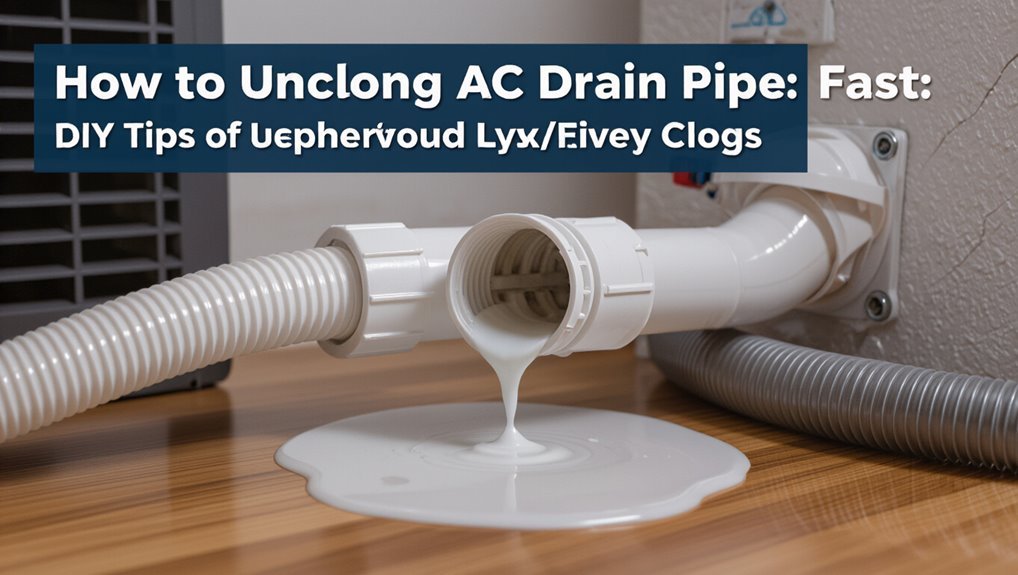
How to Unclog AC Drain Pipe Fast: DIY Tips to Fix Clogs
Key Takeaway: To quickly unclog your AC drain pipe, follow these steps:
- Shut Off Power: Turn off the power to the air handler for safety.
- Access the Condensate Pan: Remove the access panel to reach the condensate pan.
- Clear the Drain Line: Use a wet/dry vacuum to suction out blockages or a stiff nylon brush to dislodge debris.
- Flush the Line: Pour a mixture of distilled white vinegar and water down the line to help clear any remaining clogs.
- Inspect for Damage: Check the condensate pan for cracks and ensure the float switch is functioning properly.
- Safety First: Wear gloves and eye protection, and ensure you’re working from a stable surface.
- Test the Flow: After completing these steps, test the flow to ensure the clog is cleared.
For ongoing maintenance, consider additional troubleshooting and preventative measures to avoid future clogs.
Is It a Clogged AC Drain or Something Else?
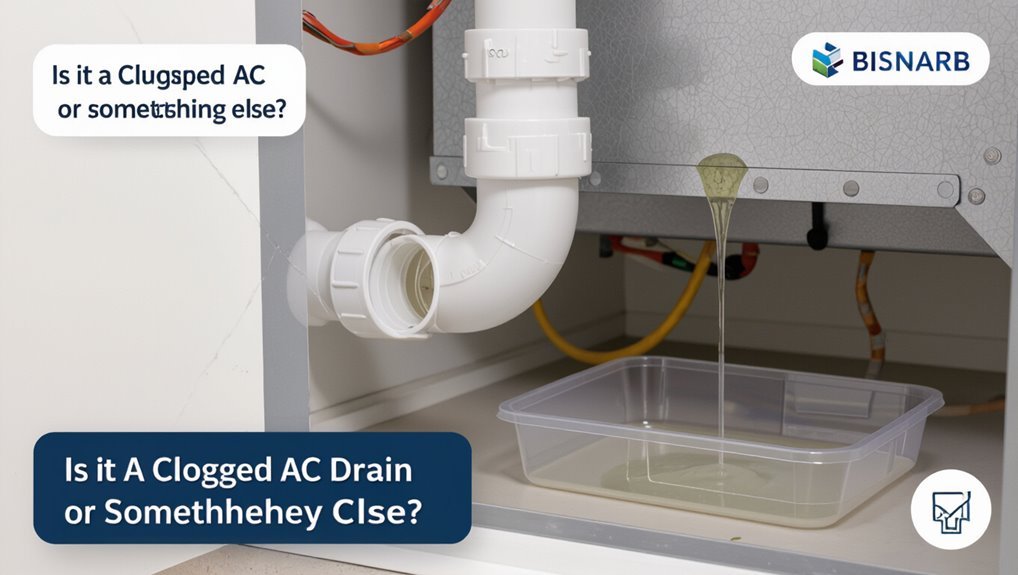
How can one tell whether a malfunctioning air conditioner is due to a clogged drain line or another issue? Observers note symptoms: water pooling around the indoor unit or a drip pan overflow suggests a blocked condensate line.
Reduced cooling, iced evaporator coils, or unusual airflow point toward refrigerant, compressor, or filter problems instead. A tripped float switch commonly indicates condensate backup, while drain pan rust or algae buildup supports a clog diagnosis.
Electrical faults, thermostat errors, and duct obstructions produce different noise or cycling patterns. Accurate identification hinges on isolating water-related signs from performance and electrical indicators before choosing a repair path.
5‑Minute Quick Fix to Clear the AC Drain
A quick wet-vac pull can often remove loose debris from the condensate line within minutes, restoring proper flow.
Following that, a vinegar flush helps break down biofilm and inhibits future clogs without harsh chemicals.
These simple steps provide a fast, low-cost fix before calling for professional service.
Quick Wet-Vac Pull
Attach a wet-dry vacuum to the condensate drain access and create a tight seal to pull built-up water and debris out of the line.
The operator should set the vacuum to liquid mode, block any auxiliary openings, and run suction for short intervals while monitoring flow.
Periodically release the seal to check for dislodged material. If water drains steadily, continue until clear; if resistance remains, repeat after a brief pause.
After suctioning, inspect the vacuum canister and dispose of collected residue.
Reattach the drain cap and test the system by running the air conditioner to confirm normal condensate flow.
Flush With Vinegar
Pour a cup of white vinegar into the condensate drain access to break down algae and mineral buildup quickly and safely.
The solution seeps through the line, softening clogs without harsh chemicals. After 10–15 minutes, flush with clean water to carry debris out.
Repeat monthly to prevent recurrence. If the drain remains slow, combine this with a brief wet-vac or inspect the trap for obstructions.
Vinegar is safe for most plastics and disposal systems, but avoid concentrated acids and never mix with bleach.
- Use plain white vinegar.
- Wait 10–15 minutes.
- Flush with water.
- Repeat monthly.
Safety Checks Before You Start (Power, Ladder, Water)
Before beginning work on the AC drain pipe, the homeowner should confirm three critical safety items: power isolation, ladder stability, and nearby water hazards. Verify the unit is powered off at the breaker, use a non-contact tester, set a stable ladder on level ground, and clear the area of spills or standing water to prevent slips and electrical risk. Wear gloves and eye protection. If uncertain about electrical isolation or roof access, hire a professional.
| Check | Action |
|---|---|
| Power | Turn off breaker; test |
| Ladder | Inspect feet; angle properly |
| Water | Remove puddles; dry area |
| PPE | Gloves; goggles |
Accessing the Condensate Pan and Outdoor Drain Line
Once the power is confirmed off and the work area is safe, the technician locates the indoor condensate pan beneath the evaporator coil and traces the PVC or vinyl drain line running from it to the outdoor termination. Access panels or a few screws may need removal to expose the pan and the drain connection.
The technician inspects the pan for standing water, sludge, rust, or visible blockages at the trap and outlet. Outside, the technician follows the line to the termination, checking for pests, algae, or debris clogging the external opening. Notes are taken before attempting any clearing.
- Inspect indoor pan condition
- Trace drain line route
- Check outdoor termination
- Document findings
Tools You Need to Clear an AC Condensate Drain
Clearing an AC condensate drain requires a small set of specific tools to do the job safely and effectively.
Essential items include a wet/dry vacuum for suctioning blockages, a shop-grade funnel or condensate pump attachment, and a stiff nylon brush or flexible drain brush to dislodge buildup.
A flashlight and inspection mirror help locate clogs inside tight spaces. Pipe-safe bleach or enzymatic cleaner, in measured quantities, aids organic residue removal.
Gloves, safety goggles, and a dust mask protect the user. Basic hand tools—screwdrivers, pliers, and adjustable wrench—allow access to panels and fittings without forcing components.
Flush the Drain: Water + Wet/Dry Vacuum (Step‑by‑Step)
To flush the condensate drain, the technician alternates bursts of clean water with vacuum suction to dislodge and remove trapped debris; this controlled push-and-pull clears organic buildup and restores proper flow without dismantling the system.
First, attach the wet/dry vacuum to the drain line or access port, seal snugly, and run short suction cycles. Next, pour measured water into the pan or access opening between vacuum cycles to push loosened material toward the vacuum.
Repeat until water flows freely. Finish by testing continuous drainage and reattaching any removed covers.
- Prepare vacuum and safety gear
- Seal connection tightly
- Alternate water pours and suction
- Confirm clear flow and reassemble
Use Vinegar or Bleach Safely to Kill Algae (Step‑by‑Step)
If algae and biofilm are suspected in the condensate line, a controlled chemical treatment using white vinegar or diluted household bleach can disinfect the drain and restore flow when mechanical flushing alone is insufficient. The technician should turn off the unit, ventilate the area, and choose 1 cup white vinegar or 1 tablespoon bleach per gallon water; never mix chemicals. Pour slowly into the access point, let sit 30 minutes, then flush with clean water. Repeat monthly if needed. Document concentration, exposure time, and observations.
| Chemical | Ratio | Safety |
|---|---|---|
| Vinegar | 1 cup per use | Non‑toxic |
| Bleach | 1:64 | Corrosive |
| Rinse | Flush 1–2 min | Required |
Clear Stubborn Clogs With a Flexible Drain Snake
A flexible drain snake can mechanically break up and extract compacted debris that flushing and chemicals cannot reach, allowing a technician to restore flow without disassembling major components.
Insert a nylon- or coated snake into the condensate line access, rotate gently, and push until resistance is felt; withdraw slowly to remove sludge. Clean the snake between passes and use a wet vacuum afterward to pull remaining material.
Inspect for damage or root intrusion and repeat as needed. Wear gloves and eye protection; avoid metal snakes in thin PVC.
- Choose appropriate snake length and diameter
- Feed slowly with rotation
- Clear removed debris immediately
- Rinse and sanitize tools
If Water Keeps Backing Up: Troubleshooting Checklist
What next when condensate keeps pooling instead of draining?
Begin by confirming the condensate pan isn’t cracked and that the float switch hasn’t tripped.
Check the visible drain line for kinks, disconnections, or high loops restricting flow.
Inspect the secondary drain or overflow pipe for blockages.
Verify the air handler is level; a tilted unit can prevent proper drainage.
Test the condensate pump, if present, by pouring water into the pan to confirm activation.
Look for excessive moisture indicating clogged coils or poor airflow.
If electrical components or internal access are needed, contact a professional to avoid damage or safety risks.
Simple Maintenance to Prevent Future Clogs
Regular, simple maintenance can greatly reduce the chance of condensate drain clogs by keeping debris, biofilm, and mechanical faults from developing.
Routine checks guarantee proper drainage and extend system life. Recommended tasks are quick, inexpensive, and safe for most homeowners.
- Inspect and clear the access panel and visible drain line monthly to remove dust and blockages.
- Flush the drain with a cup of distilled white vinegar followed by water every 1–3 months to limit biofilm.
- Replace disposable filters on schedule to reduce airborne debris entering the coil.
- Keep the area around the indoor unit clean and level to prevent accidental spills and misalignment.
Hidden Problems That Need a Professional (Pump, Coil, Piping)
When homeowners notice repeated backups, slow draining despite basic cleaning, or unusual noises near the drain assembly, the cause may lie beyond simple blockages and requires a trained technician.
Hidden issues include a failing condensate pump that intermittently stops, corroded or disconnected drain piping inside walls or ceilings, and clogged or frozen evaporator coils that produce excess water.
Technicians can diagnose refrigerant leaks, improper condensate slope, microbial biofilm within inaccessible runs, and damaged float switches.
These problems demand tools, parts, and safety protocols beyond typical DIY scope; attempting repairs without expertise can cause water damage or void warranties.
When to Call an HVAC Pro and What to Ask Them
Why call a professional? A technician should be engaged when persistent backups, mold, strange noises, electrical issues, or visible refrigerant leaks occur.
An expert diagnoses root causes, guarantees safety, and prevents costly damage.
- Ask about diagnosis: request a clear explanation of the clog source and inspection steps.
- Ask about repairs: get specifics on parts, labor, estimated timeline, and warranty.
- Ask about costs: request a written estimate, potential additional fees, and payment options.
- Ask about prevention: inquire about routine maintenance, recommended condensate treatments, and follow-up service schedules.
Conclusion
About 1 in 4 homeowners will face an air‑conditioning drainage issue each year, illustrating how common clogged condensate lines are. With quick safety checks, a 5‑minute vinegar flush or a wet/dry vacuum can often restore flow, but persistent backups signal deeper problems. Routine monthly maintenance greatly reduces recurrence. If ice, foul odors, or recurring leaks appear, a licensed HVAC technician should inspect the pump, coils, and piping to prevent water damage and system failure.