
How to Turn Off the Gas Valve in Your House Safely: Step-by-Step Guide
If you suspect a gas leak, it’s crucial to act quickly and safely. First, locate the main gas valve at your meter or service line and shut it off immediately. Ensure all flames are extinguished, evacuate everyone to a safe area with fresh air, and then turn the valve a quarter turn until it’s perpendicular to the pipe, using a wrench or valve key. After securing your safety, contact the gas company and emergency services from a safe location. For additional steps and troubleshooting, refer to the complete guide.
Why You Might Need to Turn Off the Gas Immediately
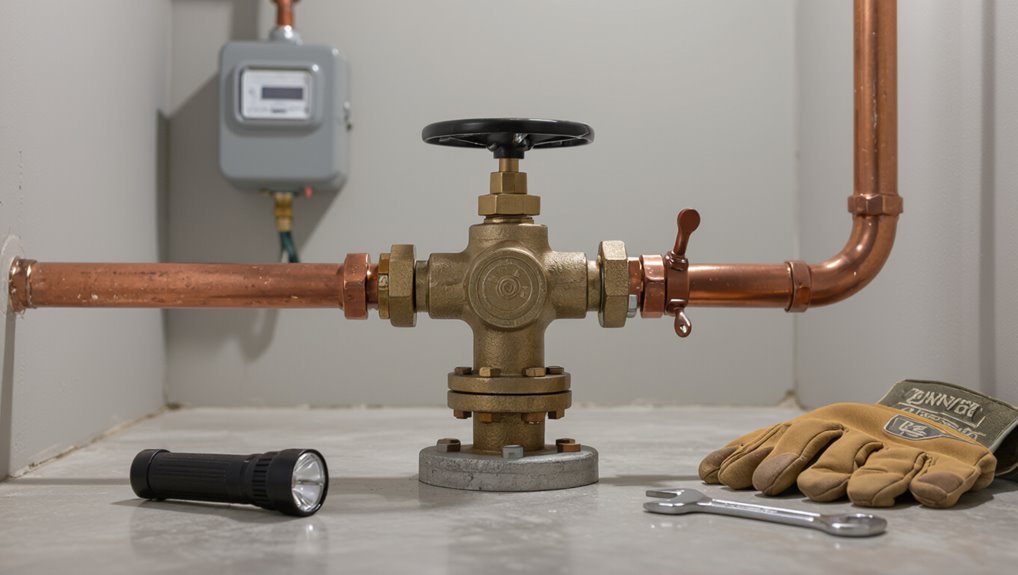
Situations such as a strong gas odor, suspected leak after a quake, or visible damage to gas appliances can necessitate immediate shutoff.
Failure to act quickly risks fire, explosion, carbon monoxide poisoning, and widespread property damage.
Prompt valve closure can reduce those dangers and protect occupants until professionals arrive.
Common emergency situations requiring gas shutoff
Several clear emergencies warrant shutting off a gas valve immediately: a strong smell of gas, persistent hissing, visible damage to gas lines after an impact, or flames or sparks near a gas source. The guide explains how to turn off gas valve in house and when immediate action is required.
| Emergency | Indicator | Immediate action |
|---|---|---|
| Leak | Smell | Shut off |
| Impact | Visible damage | Shut off |
| Fire | Flames/sparks | Shut off |
Risks of not shutting off the gas promptly
Delay in shutting off a leaking gas valve can rapidly escalate hazards: accumulated gas raises the risk of explosion, inhalation of methane or other gases can cause dizziness, unconsciousness, or asphyxiation, and lingering leaks increase the chance of fire when an ignition source appears.
Immediate shutdown reduces acute blast and fire danger, limits toxic exposure, prevents property loss, and eases emergency responders’ mitigation efforts.
Quick Action: How to Turn Off the Main Gas Valve Right Now
The text identifies where the main gas valve is typically located for various home types—inside near the meter, outside on a service line, or in a utility room.
It then provides a concise, step-by-step immediate shutoff procedure: turn the valve perpendicular to the pipe, use a wrench if needed, and avoid open flames or sparks.
Finally, it explains how to confirm the gas is off safely by checking for the absence of smell, listening for leaks, and using a gas detector or calling the utility if uncertain.
Where to locate the main gas valve in different home types
Although layouts vary, the main gas shutoff is usually located where the service pipe enters the building or near the gas meter; in detached houses it is often outside at the meter, in rowhouses it may be on an exterior wall or in a meter box, and in apartments it is typically at a utility room, corridor meter bank, or at the building’s main riser.
Homeowners should also check basements, garages, crawlspaces, and utility closets for valves, note valve orientation, and guarantee access is unobstructed for quick identification during an emergency.
Step-by-step immediate shutoff procedure
Act quickly and calmly: locate the main gas valve, confirm any open flames are extinguished, and shut the valve by turning it a quarter turn so the slot across the valve aligns perpendicular to the pipe.
Then proceed with these immediate actions:
- Move everyone outside to fresh air.
- Avoid using electrical switches or phones indoors.
- Ventilate only if safe to do so from outside.
- Contact the gas company or emergency services.
How to confirm the gas is off safely
After shutting the valve and moving everyone outside, confirm the gas is off before re-entering: check that the valve handle is perpendicular to the pipe, listen for residual hissing, and smell for any lingering odor.
If any doubt remains, keep the area evacuated and contact the gas company or emergency services.
Verify pilot lights are out, appliances are off, and avoid using electronics or open flames until a professional declares the premises safe.
Tools and Safety Gear You Should Have Before Turning Off the Gas
Before attempting to shut off a gas valve, one should assemble basic hand tools—such as an adjustable wrench or valve key—and wear protective gear like gloves, safety glasses, and a flashlight.
If the valve is corroded, inaccessible, or gas odor persists after shutdown, a qualified technician or emergency service should be contacted instead of continuing DIY efforts.
Prioritizing the right tools and knowing when to call professionals reduces risk and guarantees a safer outcome.
Recommended hand tools and protective equipment
Gather essential hand tools and personal protective equipment (PPE) to guarantee a safe, controlled shutdown of a gas supply.
Recommended items include basics for valve access, protection, and emergency response.
- Adjustable wrench and pliers for valve operation and fittings.
- Flashlight or headlamp with fresh batteries.
- Gloves rated for mechanical tasks and eye protection.
- Respirator or NIOSH-approved mask for odor detection and fumes.
When to call professionals instead of doing it yourself
Having the right tools and protective gear on hand helps in many shutoff scenarios, but there are circumstances where a professional should handle the job.
Call a licensed technician if smelling gas persists after shutoff, if lines or fittings are damaged, if access requires altering appliances or structural components, or if unsure about valve types.
Professionals guarantee safe inspection, repair, pressure testing, and certification.
Detailed Step-by-Step Guide to Shut Off Gas at Various Valve Types
The following section outlines concise, step-by-step procedures for shutting off common gas valve types, beginning with round/knob-style valves and lever-style quarter-turn valves.
It also covers meter-mounted and exterior supply shutoffs and highlights special procedures for multi-unit or apartment building systems.
Each entry focuses on identification, safe operation, and when to contact a professional.
Round/knob-style valve:
Locate the round or knob-style shutoff valve, typically found on indoor gas lines near appliances or on the gas meter, and approach it calmly to confirm its type and condition before attempting to turn it.
- Grip the knob firmly with a cloth for better purchase.
- Turn clockwise slowly until resistance increases.
- Stop when fully seated; do not force past resistance.
- Check appliances and listen for leaks; ventilate area.
Lever-style (quarter-turn) valve:
Approach the lever-style (quarter-turn) valve with caution, visually confirming that the flat handle aligns with a short stem attached to the pipe and that the handle moves perpendicular to the flow when shut.
- Verify ignition sources are off and area ventilated.
- Grip handle firmly, turn 90° until perpendicular.
- Confirm valve indicator or handle alignment shows closed.
- Call gas provider if resistance, damage, or persistent odor appears.
Meter-mounted and exterior supply valves:
After handling a lever-style quarter-turn valve, attention should turn to meter-mounted and exterior supply valves, which often require different tools and actions.
- Locate the main shutoff at the meter; confirm orientation and access.
- Use an adjustable wrench or valve key; avoid forcing corroded fittings.
- Turn slowly clockwise until snug; do not overtighten.
- Notify the gas company if the valve resists or if odor is present.
Multi-unit or apartment building gas shutoff considerations
When multiple units share a service, shutting off gas requires coordination, knowledge of building-specific valve locations, and attention to tenant access and safety protocols.
Building managers should notify occupants, contact the utility or licensed technician, and identify main and riser shutoffs.
Secure permits if required, post clear warnings, and restore service only after inspections and leak checks.
Prioritize evacuation plans and record actions.
How to Handle Common Problems While Trying to Turn Off the Valve
The section outlines safe approaches for dealing with stuck, corroded, or painted-over valves, including when to apply lubricant or call a professional.
It explains immediate actions if a valve hisses or a leak is suspected, such as evacuating the area and shutting off ignition sources.
It also describes what to do if a gas odor is present but the valve cannot be located, emphasizing evacuation and contacting emergency services.
Stuck, corroded, or painted-over valves: safe methods to address
Encountering a stuck, corroded, or painted-over gas valve requires caution and methodical steps to avoid damage or leaks. Assess the valve condition visually, isolate the appliance if possible, and verify all ignition sources are extinguished before attempting intervention.
Apply penetrating lubricant sparingly, tap gently to free seized parts, remove paint around the handle with a utility tool, and use appropriate wrenches. Stop if resistance persists and call a professional.
Leaks or hissing during shutoff: immediate steps
Hear a hissing or detect a leak while attempting to shut off a gas valve: stop immediately and move everyone out of the area to a safe distance upwind.
Call emergency services and the gas provider from a safe location. Do not operate electrical switches, phones indoors, or re-enter the building.
If trained personnel advise, await their arrival; otherwise, keep clear until professionals declare it safe.
If you smell gas and cannot locate the valve
After moving everyone out and contacting emergency responders, attention should turn to situations where a gas odor is present but the shutoff valve cannot be found.
Occupants must not re-enter; ventilate from outside by opening windows and doors if safe.
Call the gas company and wait for trained technicians.
Avoid sparks, phones, or engines; keep neighbors and responders informed until professionals declare the area safe.
After Shutting Off the Gas: What to Do Next
After shutting off the gas, occupants should ventilate the home immediately and keep all potential ignition sources—phones, lights, and open flames—well away until the area is clear.
The gas company and emergency services must be notified so qualified personnel can assess the situation and authorize repairs.
Reintroducing gas and restarting appliances should only occur after a professional inspection and explicit instructions to restore service.
Ventilating the home and avoiding ignition sources
Once the gas supply is secured, occupants should immediately begin ventilating the home by opening windows and exterior doors to disperse any remaining gas and increase airflow.
They must avoid using open flames, electrical switches, appliances, phones, or vehicle engines indoors.
Continue ventilation until odors dissipate, and only reenter closed spaces cautiously, ensuring no spark-prone activities occur until fully cleared.
Notifying gas company and emergency services
Contact the gas company and emergency services immediately to report the incident, provide the address, describe the smell of gas or any known leak points, and inform them that the main valve has been shut off. A dispatcher will advise evacuation, response time, and next steps. Record names and times for follow-up.
| Who | What to report | Expected action |
|---|---|---|
| Gas co. | Leak location | Dispatch technician |
| Emergency services | Safety risk | Secure scene |
| Resident | Valve shut off | Await clearance |
Restarting appliances and safely restoring gas service
Begin by confirming that the gas company or a qualified technician has declared the system safe and the leak fully repaired before attempting to restore service.
Only then should the main valve be reopened and individual appliances relit or restarted according to manufacturer instructions.
Inspect appliance connections, ventilate spaces, follow pilot relighting procedures, and test appliances for proper operation.
Report any unusual odor, sound, or performance immediately.
Preventive Measures and Maintenance to Avoid Emergency Shutoffs
The article now turns to preventive measures that reduce the need for emergency shutoffs, starting with a concise valve inspection and maintenance checklist.
It will cover best practices for storing and clearly labeling valve locations to guarantee quick access.
Guidance will also be provided on when to schedule professional gas system inspections for thorough safety assurance.
Routine valve inspection and maintenance checklist
A concise, regular inspection and maintenance checklist helps confirm gas valves remain functional and reduces the risk of emergency shutoffs.
- Verify valve accessibility and clear surrounding debris.
- Check for corrosion, leaks, and loose fittings; use soapy water test.
- Operate valve quarterly to confirm smooth movement; note stiffness.
- Record dates, observations, and any professional servicing; schedule repairs promptly.
Best practices for storing and labeling valve locations
Several clear, consistent practices for storing and labeling valve locations greatly reduce response time and human error during an emergency.
Valve locations should be documented on a simple map, posted near entrances, and kept digitally accessible.
Labels must be durable, weatherproof, and use plain language with arrows.
Regularly update records after changes and train household members on label meanings and map use.
When to schedule professional gas system inspections
When should homeowners and facility managers arrange professional gas system inspections to prevent emergency shutoffs? Professionals should inspect annually, after renovations, following odor detection, or when appliances malfunction. Regular checks detect leaks, corrosion, and regulator issues, reducing emergency risk. Scheduled inspections align with local codes and insurance requirements.
| When | Reason |
|---|---|
| Annually | Routine safety |
| After renovations | Disturbed lines |
| Odor or faults | Immediate risk |
Safety Myths and Common Mistakes to Avoid
Many people take hazardous shortcuts—such as attempting repairs with open flames nearby or using force on seized valves—underestimating the risks.
There are also common misconceptions about when and how to restore gas service, including assuming that simply turning the valve back on is safe without a professional inspection.
Clarifying these mistakes helps prevent accidents and guarantees proper procedures are followed.
Dangerous actions people commonly take
Ignore quick fixes and common assumptions that increase risk when shutting off a gas valve; people often rely on incorrect shortcuts—like attempting to turn a seized valve forcefully, using a wrench on a plastic handle, or assuming an appliance is off without checking the meter—that can cause leaks, damage, or injury.
Other dangerous actions include DIY tampering with regulators, blocking vents, or relighting pilots without inspection.
Misconceptions about turning gas back on
Why is turning the gas back on after a shutoff often mishandled? Misconceptions include believing a household can safely relight appliances without inspection, that smell absence means safety, or that DIY fixes suffice. Professionals should assess lines and appliances before restoring service.
| Myth | Reality |
|---|---|
| No smell = safe | Invisible leaks possible |
| DIY relight is fine | Requires qualified technician |
| Minor fixes suffice | System-wide inspection needed |
Quick-reference Resources and Contact Information
The section outlines essential contact details and the specific information callers should have ready when contacting emergency services or the gas company.
It also recommends a concise checklist to post near the main shutoff valve, including valve location, meter number, provider phone numbers, and basic shutoff steps.
Clear, accessible resources aim to speed response and reduce confusion during a gas incident.
What information to have when calling emergency services or your gas company
When contacting emergency services or a gas company, callers should be prepared to provide concise, specific details:
- Exact address, unit number, and nearest cross-street.
- Nature of the incident (smell of gas, hissing, suspected leak) and time observed.
- Presence of people, pets, any injuries, and whether anyone has been evacuated.
- Whether appliances are off, main valve status, and any recent work or disturbances.
Useful reference checklist to keep near your main shutoff valve
A compact checklist posted near the main shutoff valve gives responders and residents immediate access to critical contacts and steps during a gas emergency.
It should be concise, legible, and laminated for durability.
- Emergency services number and local gas company hotline.
- Exact valve location and shutoff procedure (short).
- Utility account number and address.
- Nearby evacuation meeting point and medical contact.
Conclusion
When danger calls for decisive action, the homeowner moves quickly and the family stays calm; when preparedness matters, the resident gathers tools and the household reviews procedures. When confusion arises, the person consults professionals and the community resources; when routine maintenance is due, the occupier inspects appliances and the system is serviced. Through readiness, clarity, and prompt response, safety is preserved, risks are minimized, and confidence in handling gas emergencies is maintained.