How to Tell If Your Pipes Are Frozen: Fast Signs & Fixes
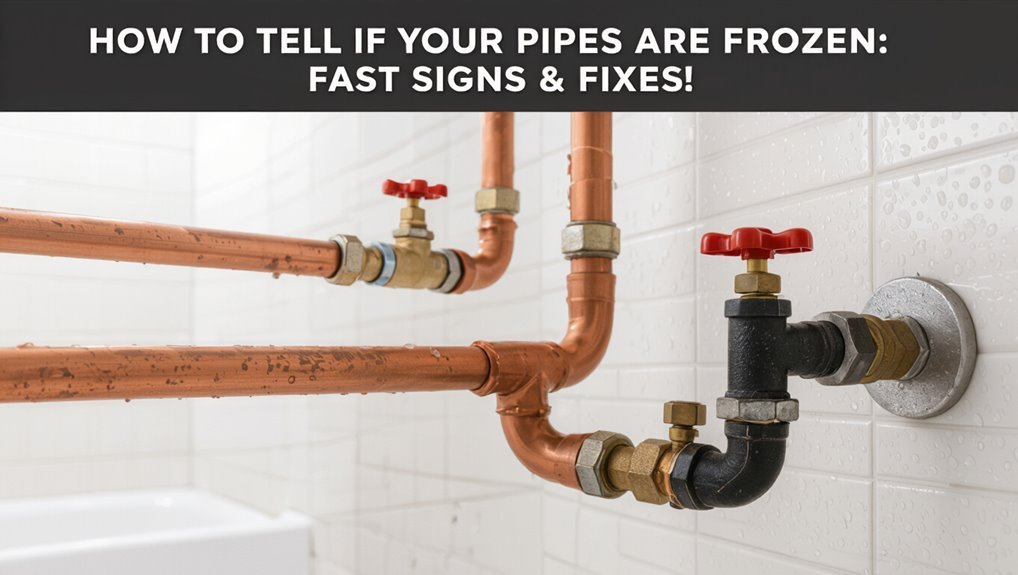
Key Takeaway: To determine if your pipes are frozen, look for reduced or no water flow at taps, especially in the morning. Exposed pipes may feel extremely cold or show frost. Signs of ice expansion include bulging, cracking, or wet spots on the pipes, and outdoor spigots may also fail.
If you suspect frozen pipes, take these immediate steps:
- Shut off the water supply if you notice any leaks.
- Open nearby faucets to relieve pressure.
- Apply gentle heat using a hair dryer or warm towels to thaw the pipes.
Continue reading for more detailed steps on locating, safely thawing, and preventing future pipe freezes.
Immediate Steps If a Pipe Is Frozen
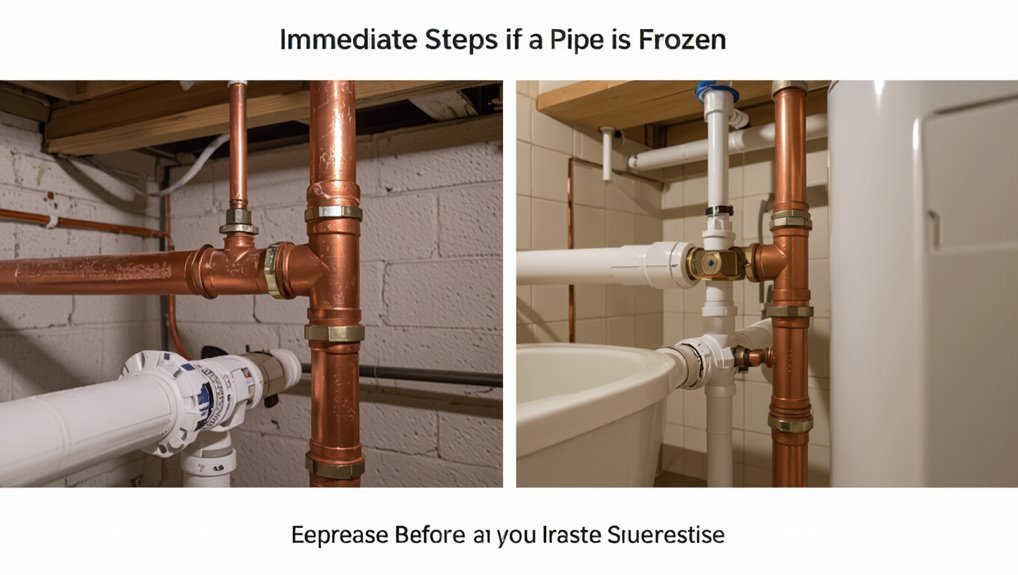
Shut off the water supply to the affected area immediately to prevent pressure buildup and further damage; locate the main shutoff valve for the home or the localized valve for the frozen line and close it.
Then relieve trapped pressure by opening nearby faucets. Inspect visible pipes for bulging, frost, or leaks; if a leak exists, keep valves closed and call a plumber.
Apply controlled heat—hair dryer, heating pad, or warm towels—moving from warm sections toward the frozen spot; avoid open flames.
Maintain cautious monitoring until flow resumes. Document the incident and plan insulation or preventive measures to reduce recurrence.
Where to Look First for Frozen Pipes
Where should one begin when searching for frozen pipes? Start at the coldest, least insulated parts of the plumbing system: exterior walls, basements, crawl spaces, attics and utility rooms.
Inspect pipe routes near windows, unheated garages, and along foundation walls. Follow visible supply lines from the main shutoff to fixtures, noting bulges, frost, or condensation.
Check shutoff valves, pipe joints and bends where water slows. Look where insulation is missing or damaged.
Use touch (carefully) and a noncontact infrared thermometer if available to detect abnormal cold spots. Prioritize areas that combine low temperature and poor airflow.
Check Taps, Drains & Outdoor Spigots to Find the Freeze
How can taps, drains, and outdoor spigots reveal a freeze in the system? A homeowner checks fixtures: slow trickles, no flow, or sputtering indicate restricted lines. Outdoor spigots that fail to run or produce air suggest an upstream freeze. Drains backing up while other fixtures work can localize the problem. Note temperature, time, and affected locations before calling help.
| Fixture | Symptom | Likely location |
|---|---|---|
| Kitchen tap | Weak flow | Interior supply line |
| Outdoor spigot | No flow | Exterior or sill valve |
| Basement drain | Backing up | Main drain or trap |
Quick, Safe Ways to Thaw a Frozen Pipe
Begin by locating the frozen section and turning off the water supply to that area if possible; then open nearby faucets to relieve pressure and provide an outlet for melting water.
Apply gentle heat: use a hair dryer, heat gun on low, or portable space heater aimed at the frozen pipe, moving heat along the length until full flow returns.
Wrap the pipe with warm towels soaked in hot water if outlets are limited.
Never use open flames.
For exposed pipes, increase ambient temperature and insulate afterward.
Monitor for leaks as ice melts and be prepared to shut water off if damage appears.
When to Shut Off Water and Call a Plumber
When a frozen pipe shows signs of cracking, persistent leakage, or cannot be safely thawed with household methods, the water supply should be shut off immediately and a professional plumber contacted.
A plumber evaluates structural damage, locates hidden breaks, and prevents full-system flooding. Immediate shutoff minimizes water intrusion and secondary damage; documenting visible issues aids insurance.
If multiple fixtures fail, discolored water appears, or thawing risks burst fittings, calling a pro is prudent.
Professionals can perform controlled thawing, repair or replace compromised sections, and verify system integrity before restoring service.
Err on the side of safety when uncertainty or ongoing leakage exists.
How to Prevent Frozen Pipes Next Winter
Although winter’s cold is inevitable, proactive measures can considerably reduce the risk of frozen pipes and the costly damage they cause.
Homeowners should insulate exposed pipes with foam sleeves, seal gaps where cold air enters, and maintain steady indoor temperatures. Drain and shut off outdoor faucets, and disconnect hoses.
For vulnerable areas, install pipe heating cables or tape thermostats to monitor temperatures. During extreme cold, allow faucets to drip slightly to prevent stagnation and freezing.
Schedule a professional inspection each fall to identify weak spots and replace deteriorated pipes. Routine preparation minimizes emergency repairs and preserves plumbing integrity.
No Water After Thawing or Suspect a Burst Pipe : Troubleshooting
If water does not return after thawing, the possibility of a burst pipe should be considered immediately.
The homeowner is advised to inspect visible piping and listen for running water or hissing sounds that indicate leaks.
Checking water pressure at faucets and the main shutoff helps confirm whether a break has occurred and where to focus repairs.
Possible Pipe Burst
Check the water supply and surrounding areas for signs of a burst pipe when flow fails to resume after thawing or significant damage is suspected. The observer should inspect ceilings, walls, exposed pipes, and utility areas for pooling water, stains, or bulging drywall. If visible rupture is found, shut off the main valve and isolate appliances. Document damage, capture photos, and contact a licensed plumber and insurance as needed. Avoid restoring power to submerged electrical devices. Temporary containment with buckets and towels mitigates harm until professionals arrive.
| Observation | Action |
|---|---|
| Pooling water | Shut main valve |
| Stains | Photograph |
| Bulging drywall | Evacuate area |
| Hissing sounds | Call plumber |
| No visible leak | Monitor closely |
Check Water Pressure
One clear step in troubleshooting after thawing or when a burst pipe is suspected is to assess water pressure at multiple fixtures to pinpoint the location and extent of a supply interruption.
Systematic checks begin at the closest fixture to the main supply, noting full, reduced, or absent flow.
Compare results across levels and rooms to determine whether the issue is localized or system-wide.
Reduced pressure may indicate partial blockage or a small leak; no pressure suggests a major break or closed valve.
Document observations, shut off the main if a burst is likely, and contact a plumber with precise findings.
Conclusion
Homeowners who follow quick checks—taps, drains and outdoor spigots—can often confirm a frozen pipe and use safe thawing methods to restore flow. If water remains absent or leakage appears, shutting off the main and calling a plumber prevents worse damage. Investigating the old theory that rattling pipes predict bursts proves partially true: noises can signal stress, but only inspection reveals severity. Preparedness and simple winterproofing cut future risk considerably.