Quick Fix for Leaky Pipe: Easy DIY Steps to Stop Drips Fast
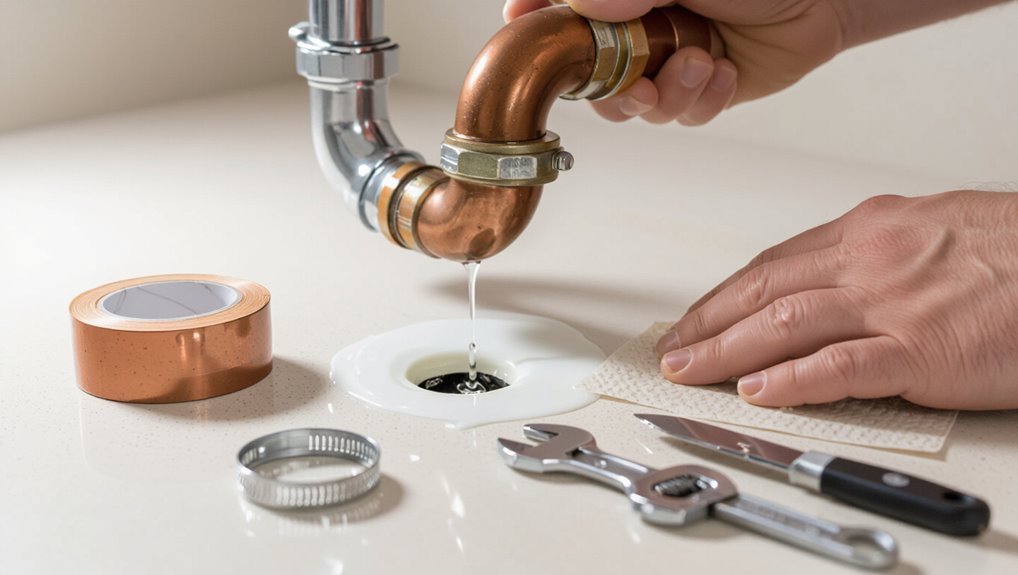
If you have a leaky pipe, here’s a quick fix to stop the drips fast:
Key Takeaways:
- Shut Off Water Supply: Turn off the local valve or main water supply. Open a nearby faucet to relieve pressure.
- Contain the Leak: Use towels or a bucket to catch any dripping water and take photos for documentation.
- Prepare the Area: Dry and clean the leak site.
- Apply a Temporary Fix: Use a rubber patch, self-fusing silicone tape, or knead epoxy putty over the hole, following the product instructions.
- Secure the Fix: If using hose clamps, make sure to tighten them evenly.
- Test the Repair: Turn the water back on under low pressure to check if the leak has stopped.
After applying this temporary fix, monitor the area closely, consider permanent repair options, and know when to contact a plumber for more extensive issues.
Stop a Leaking Pipe Now: First Steps
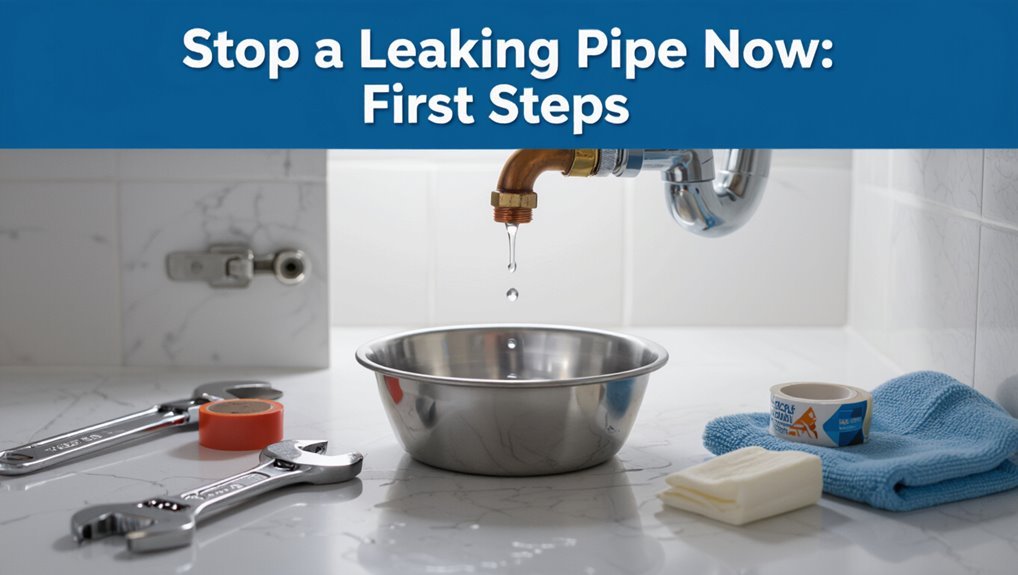
How should one respond when a pipe begins leaking? A calm, practical approach preserves property and safety.
Assess the leak source and spray pattern to gauge severity.
Move valuables and electronics away from water.
Contain spreading with towels, buckets, or pans placed beneath the drip.
Temporarily compress small pinhole leaks using a rubber patch or hose clamp if available, avoiding excessive force that may worsen damage.
For larger splits, apply epoxy putty or self-fusing silicone tape per product instructions to form a quick seal.
Document the scene with photos for records.
Arrange professional repair promptly to restore long-term integrity.
Shut Off the Water Supply Quickly and Safely
The homeowner locates the main shutoff valve to stop water to the entire building and prevent further flooding.
If the leak is confined, turning the local fixture valve can isolate the problem without shutting off the whole supply.
Both actions should be performed calmly and promptly to minimize damage.
Locate Main Shutoff Valve
Before attempting any repairs, locate the main shutoff valve so water can be stopped immediately in case of a major leak.
The main valve is typically near the water meter, basement wall, garage, or where the service pipe enters the home.
Identify its type—wheel, lever, or gate—and note the turn direction: clockwise usually closes.
Clear the area of storage or debris for quick access.
If the valve is corroded or stiff, record its location for a future replacement by a professional rather than forcing it.
Keep a flashlight and valve-turning tool nearby and inform household members of its whereabouts.
Turn Off Local Fixture Valve
With the main shutoff identified, attention shifts to the local fixture valve to isolate the leak without cutting water to the entire house. The individual locates the small shutoff near the affected sink, toilet or appliance; these are typically quarter-turn or multi-turn valves. Before turning, they clear the area, place a bucket beneath, and dry fittings to observe leaks.
For quarter-turn valves, a 90-degree turn stops flow; for multi-turn, rotate clockwise until snug. If seized, gentle penetrating oil and careful leverage are used to avoid damage. Once closed, test the fixture to confirm the leak is contained.
Relieve Pressure and Drain the Pipe Section
To relieve pressure and drain the affected section, first shut off the water supply serving that line and open the nearest faucets to release trapped pressure; this prevents sudden spray when the pipe is opened.
After isolation, open a downstream drain or fixture to let remaining water evacuate and collect runoff with a bucket or towels. If present, open an air vent to speed draining.
Once dry, inspect joints visually; dry pipe surfaces improve effectiveness of temporary seals or tape. Work methodically to avoid contamination and slow re-pressurization until repairs are ready.
- Shut off supply and open faucets.
- Open downstream drain and collect water.
- Vent air to speed draining.
- Dry and inspect pipe surfaces.
Locate the Exact Source of the Leak
The technician examines visible joints for signs of corrosion, loose fittings, or fresh water trails.
Attention then turns to hidden connections, including behind walls and under floors, using inspection tools or access panels as needed.
Identifying whether the leak originates at a joint or a concealed coupling directs the appropriate repair method.
Inspect Visible Joints
Starting at accessible connections, the inspector should visually examine each joint for telltale signs of leakage — wetness, mineral deposits, corrosion, or fresh drips — while noting the exact location and severity so repairs can be prioritized.
The observer documents thread fittings, compression nuts, soldered seams and slip joints, photographing suspicious areas and marking them for action.
Light cleaning removes deposits to confirm active leaks.
Tightness is checked without forcing fittings.
Prioritize leaks that drip steadily or show corrosion; minor weeps can be monitored.
Safety precautions include shutting off nearby valves and using a flashlight for better inspection.
- Thread fittings
- Compression nuts
- Soldered seams
- Slip joints
Check Hidden Connections
After inspecting visible joints, attention shifts to concealed connections where leaks often originate and escape detection. The homeowner is advised to trace pipes into walls, cabinets, and beneath appliances, watching for damp patches, staining, or mold.
Fixtures, valve packing nuts, and slip joints deserve close scrutiny; use a flashlight and mirror to inspect tight spots. For concealed runs, apply tissue or paper towels to suspected areas, run water, and check for wetting.
If necessary, remove access panels or cut small inspection holes to reveal hidden fittings. When unsure, consult a professional to prevent further damage.
Essential Tools & Supplies to Stop a Leak Fast
Gathering the right tools and supplies streamlines a fast, effective response to a leaking pipe: pipe clamps, rubber repair tape, epoxy putty, adjustable wrenches, a bucket, and replacement fittings form the core kit for most temporary and permanent fixes.
A flashlight, plumber’s tape (Teflon), hose cutters, and work gloves support safe access and reliable seals. Small parts organizer and replacement washers reduce downtime. Knowledge of pipe material guides selection of fittings and adhesives.
Properly sized tools prevent damage during repair and guarantee durable results.
- Pipe clamps and rubber repair tape
- Epoxy putty and plumber’s tape
- Adjustable wrenches and hose cutters
- Bucket, gloves, and spare fittings
Temporary Fixes That Stop Drips Immediately
Temporary fixes that stop drips immediately include a clamp with a rubber patch, epoxy putty, and threaded pipe tape.
Each method suits different leak types: a clamp seals larger punctures, epoxy fills and hardens over cracks, and thread tape tightens weeping joints.
Guidance on selection and proper application follows.
Clamp With Rubber Patch
Using a rubber patch and clamp provides a quick, reliable way to stop a pipe drip until a permanent repair can be made.
A suitable rubber piece (from tubing or a sleeve) is centered over the leak, clamped tightly with a hose or metal clamp, and checked for sealing. It works on small holes, pinholes, and loose joints, temporarily restoring function and minimizing water damage.
Remove power where needed, dry the area, and avoid overtightening to prevent further pipe damage. Inspect frequently and replace with a permanent repair promptly.
- Prepare surface
- Position rubber patch
- Tighten clamp evenly
- Test for leaks
Apply Epoxy Putty
Apply epoxy putty to stop active drips quickly by molding the compound around the leak to form a hard, watertight patch.
The surface must be clean and dry; scrape corrosion or paint, then roughen smooth metal for adhesion.
Knead equal portions until color is uniform, press firmly into and over the hole, and smooth edges to eliminate gaps.
Allow recommended cure time before restoring water pressure.
Epoxy putty bonds to brass, copper, PVC, and iron, providing a durable temporary repair that resists pressure and temperature variations.
Replace the damaged section with a permanent fix when practical.
Use Threaded Pipe Tape
For quick, reliable sealing of male pipe threads, wrap PTFE (threaded pipe) tape clockwise around the threads before reconnecting fittings so the tape compresses and prevents leaks.
A tight, even wrap fills gaps and eases disassembly later. Use three to five wraps, avoid overlapping the tape’s end into the pipe bore, and press the tape into thread grooves.
Clean threads and dry thoroughly first.
After hand-tightening, finish with an appropriate wrench but don’t over-torque.
Threaded tape is inexpensive, resists most household fluids, and serves as a fast temporary or permanent measure on threaded joints.
- Clean threads
- Wrap clockwise
- Use 3–5 layers
- Tighten carefully
Expected Lifespan of Common Temporary Fixes
Temporary repairs to a leaky pipe vary widely in longevity depending on method, materials, and conditions; simple solutions like pipe clamp kits or rubber-and-hose-clamp patches often hold for weeks to months, epoxy putty can last several months to a few years under low pressure, and quick-fix tapes typically provide days to weeks of protection.
Factors affecting lifespan include water pressure, temperature cycles, exposure to chemicals, and joint movement. Metal clamps resist longer than fabric tapes. Epoxy fails faster on wet, high-pressure lines.
All temporary fixes should be inspected regularly and replaced with permanent repairs to avoid sudden failure and water damage.
Use Pipe Repair Tape: Step-by-Step
When faced with a small leak, using pipe repair tape offers a quick, controlled method to slow or stop the flow while preparing for a permanent fix.
The surface must be clean and dry; wipe away corrosion, paint, and moisture. Stretch and wrap the tape tightly overlapping each turn by half, working from downstream toward the source to compress the leak. Smooth and press the tape to guarantee adhesion and eliminate air pockets.
Test the repair under low pressure before restoring full service. Replace the temporary wrap with a permanent repair or consult a professional if leakage persists.
- Clean surface thoroughly
- Start downstream
- Stretch and overlap tightly
- Test under low pressure
Patch With Epoxy Putty: Prep and Cure Times
After slowing a leak with tape, the next step may be to apply epoxy putty for a longer-lasting patch; proper surface prep and respect for the putty’s cure schedule determine success.
The area must be dry, clean, and free of corrosion, oil, and paint; sanding to bright metal increases adhesion.
Mix equal parts thoroughly until uniform, then press and shape the putty firmly over the hole, extending past damage.
Follow manufacturer cure times: initial set often in minutes, full cure in several hours to 24 hours depending on temperature and thickness.
Do not test pressure until the putty fully cures.
Use a Pipe Clamp for Leaking Joints
A pipe clamp provides a quick, mechanically secure repair for leaking joints without replacing fittings.
A clamp fitted over the joint compresses a gasket or sleeve, stopping seepage while retaining full flow.
It suits threaded, compression, and small soldered connections when leaks arise from minor gaps or corrosion.
Installation requires cleaning the area, selecting a clamp sized to the pipe, centering the gasket, and tightening the bolts evenly to manufacturer torque.
Periodic inspection guarantees longevity; clamps are temporary or long-term depending on damage.
Avoid using clamps over severely cracked fittings that need replacement.
- Clean joint area
- Choose correct clamp size
- Center gasket and seat clamp
- Tighten bolts evenly and test
Rubber Patch + Hose Clamps: Quick Method
For swift temporary repairs on small pipe leaks, a rubber patch secured with hose clamps offers a simple, effective solution.
The area should be cleaned and dried; corrosion or loose scale is removed to assure adhesion. Cut a piece of rubber (from an inner tube or commercial patch) slightly larger than the hole, center it over the leak, and position two hose clamps spaced apart for even compression. Tighten clamps incrementally until drips stop, avoiding over-tightening that might damage the pipe.
This method is meant as a temporary measure until a permanent repair or professional replacement is performed.
Solder a Small Copper Pipe Leak Safely
Before soldering a small copper leak, the pipe must be cleaned, cut squarely, and dried to guarantee a solid joint.
The writer then outlines safe soldering steps: flux application, proper heating technique, solder flow, and flame control to prevent damage.
Finally, attention is given to cooling, inspection for leaks, and ventilation and fire-safety precautions.
Preparing The Pipe
With the water supply shut off and the area dried, the pipe section around the leak must be exposed, cleaned, and inspected to guarantee a reliable solder joint.
The technician removes insulation, clears surrounding debris, and marks the leak boundaries. Corrosion and pitting are evaluated; compromised sections are cut back. Surfaces are cleaned to bright copper with an abrasive tool, then flux is applied sparingly to prevent oxidation. Fit and alignment are checked to assure gap consistency for capillary action. Proper preparation minimizes rework and assure a lasting repair.
- Remove insulation and debris
- Inspect for corrosion or pitting
- Clean to bright copper
- Apply flux and check fit
Safe Soldering Steps
Having prepared and fitted the joint, the technician proceeds to solder the repair, following safety protocols and methodical steps to guarantee a reliable seal.
He makes certain water is drained and the area ventilated, dons safety glasses and heat-resistant gloves, and clears combustible materials.
Flux is applied sparingly to the cleaned joint, and the torch is adjusted to a steady, controlled flame.
Heating targets the pipe, not the solder, until flux sizzles, then solder is fed to the heated joint and drawn in by capillary action.
After cooling, excess flux is wiped away and the repair is inspected and pressure-tested for leaks.
Replace a Faulty Compression Fitting
To replace a faulty compression fitting, isolate the water supply, drain the line, and clear the area around the joint so the old nut and ferrule can be accessed.
The damaged nut and ferrule are removed with two wrenches; the tubing end is inspected and cut square if nicked.
A new ferrule and nut are slid on, then the fitting body is positioned.
Tighten the nut to the manufacturer’s specification, avoiding overtightening that deforms components.
Restore water and check for leaks; tighten slightly if needed.
- Remove old nut and ferrule
- Inspect and cut tubing
- Install new ferrule and nut
- Test for leaks
Tighten Threaded Joints Without Damaging Threads
When tightening threaded joints, selecting the correct wrench size prevents slippage and uneven torque that can strip the threads.
Placing protective padding, such as non-marring tape or a cloth, between the wrench and fitting shields the metal surfaces from scratches and deformation.
Combining proper tools with thread protection guarantees a secure seal without compromising the integrity of the threads.
Proper Wrench Sizing
Select the correct wrench size to prevent rounded flats and stripped threads when tightening pipe joints. A properly fitted wrench grips flats, distributes force, and reduces slippage. Use adjustable or box-end wrenches sized to the nut; avoid pliers on hex fittings. Inspect wrench jaws for wear; replace tools that rock or deform. Apply steady, controlled torque rather than sudden force.
- Measure the nut flats with calipers or use a wrench set to find the snug fit.
- Prefer box-end or crowfoot wrenches for confined spaces.
- Match metric or SAE sizing to the fitting.
- Replace rounded or sprung wrenches immediately.
Protective Thread Padding
Protective-thread padding preserves male and female threads during assembly by providing a sacrificial, compressible barrier that prevents metal-to-metal abrasion and deformation. It cushions turns, equalizes torque, and helps maintain sealant placement. The DIYer selects foam, rubber, or PTFE wraps sized to fit the pipe profile. Installation is simple: slide padding over the male thread, apply thread sealant if used, assemble without over-torquing, then trim excess. Removal is straightforward for future maintenance. Proper padding extends component life and reduces leak recurrence. Below is a quick comparison to guide material choice:
| Material | Benefit |
|---|---|
| Foam | Compressible, cheap |
| Rubber | Durable, reusable |
| PTFE | Low friction |
| Tape | Conforms well |
| Felt | Gentle protection |
Replace a Short Damaged Pipe Section (Quick)
For a quick repair of a short damaged pipe section, the technician isolates the water supply, drains the line, and removes the compromised segment before installing a replacement coupling or short length of pipe. The worker deburrs edges, measures for correct replacement length, and selects a compatible coupling or slip joint.
After fitting and securing the new piece, seals are checked and the system is slowly pressurized to confirm no leaks. Clean-up and brief testing complete the job.
- Inspect damage and shut off water.
- Cut out damaged section cleanly.
- Fit and secure replacement coupling.
- Restore water and test for leaks.
Cut and Join PEX Quickly and Correctly
The procedure begins with assembling the right tools: a PEX cutter, deburring tool, and crimping or cinch kit.
The pipe must be cut squarely and deburred to guarantee a snug fit.
Finally, a properly sized crimp or cinch ring should be secured and checked with a gauge to prevent leaks.
Tools You’ll Need
A compact set of tools makes cutting and joining PEX fast and reliable: a sharp PEX cutter or tubing cutter for clean, square cuts; a deburring tool or reamer to remove burrs and guarantee proper fittings; crimp or clamp tools matched to the chosen connection method; a Go/No-Go gauge to verify crimp integrity; and heat or expansion tools if using press or expansion systems.
Essential supplies include fitting rings, spare fittings, and appropriate lubricant or tape for threads where applicable. Safety gear like gloves and eye protection is recommended.
Properly selected tools reduce leaks and rework, speeding repairs and ensuring durable connections.
- PEX cutter and deburring tool
- Crimp/clamp tool and gauge
- Expansion or press tool (if used)
- Fittings, rings, and safety gear
Cutting PEX Cleanly
Begin by ensuring the PEX line is depressurized and dry, then mark the cut point squarely with a felt-tip pen or tape.
Use a PEX-specific tubing cutter or fine-toothed saw for a straight, burr-free cut; rotate the cutter fully around the pipe rather than twisting.
Support the pipe close to the cut to prevent crushing or deformation.
After cutting, inspect the end for roundness and remove any burrs or plastic shavings with a deburring tool or utility knife, taking care not to widen the tube.
Clean the cut end of dust and oil so fittings slide on smoothly.
Secure Crimp Connections
Crimping a PEX fitting requires steady hands and the right tools to create a leak-free joint that holds under pressure. The technician measures, cuts squarely, and slides a ring, and seats the fitting fully. Using a calibrated crimper guarantees even compression; inspect the ring for uniform deformation. Remove burrs and test with water pressure before closing walls. If unsure, replace the ring rather than risk a slow leak.
- Mark pipe and cut squarely to specified length.
- Deburr, clean, and slide crimp ring flush to fitting shoulder.
- Use a calibrated crimper and check for even compression.
- Pressure-test the joint and replace rings if faulty.
Handle Leaks at Sweat‑Soldered Fittings
When water weeps from a sweat‑soldered joint, inspect the fitting to determine whether the leak stems from incomplete capillary flow, flux residue, corrosion, or a cracked component.
Tighten nearby mechanical supports to reduce stress, then dry the area and clean flux and corrosion with a wire brush.
If solder poorly filled the joint, cut out the fitting, ream and flux pipe ends, then sweat a new connection using proper heat and solder. For cracked fittings replace the part. Pressure‑test after cooling.
If uncertain about gas lines or concealed piping, recommend a licensed plumber to guarantee a safe, code‑compliant repair.
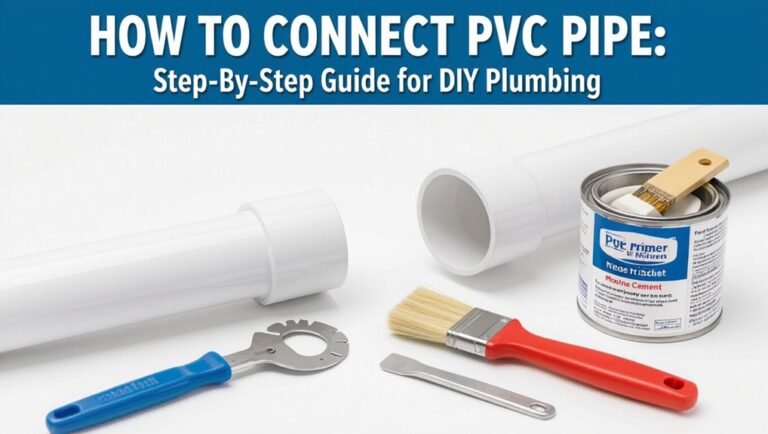
Repair PVC & CPVC Pipe Leaks the Right Way
The discussion now turns to repairing PVC and CPVC leaks, beginning with accurate identification of the leak location to determine scope and access.
Once located, the correct joint repair—whether cutting out a damaged section, using a slip coupling, or replacing a fitting—must be chosen to restore a solvent-welded, pressure-rated connection.
Emphasis remains on clean cuts, proper primer and cement application, and pressure testing before returning the line to service.
Identify Leak Location
Where exactly is the leak originating: at a joint, along a length of pipe, or from a fitting? The inspector examines the pipe visually, dries the area, then rechecks for fresh moisture to pinpoint the source. Access panels or insulation may need temporary removal. Tracing wetness back toward higher elevations helps locate slow weeps. Air or water pressure tests reveal hidden breaches without starting full repairs.
- Inspect visible joints, fittings, and pipe runs for corrosion or cracks.
- Dry suspected areas, then observe for new drips.
- Use flashlight and mirror to view obscured spots.
- Mark leak location clearly before proceeding.
Proper Joint Repair
In repairing PVC and CPVC joints, proper preparation, material selection, and technique determine whether a fix is durable or temporary.
Surfaces must be clean, dry, and free of old adhesive or burrs; sanding and solvent wipe guarantee adhesion.
For PVC use PVC cement; for CPVC use CPVC-specific cement and primer where required.
Apply primer then cement evenly, insert fittings with a quarter-turn twist, and hold alignment until initial set.
For threaded joints, use PTFE tape or pipe dope rated for the plastic type.
Allow full cure per manufacturer instructions and pressure-test the joint before restoring normal use.
Stop Leaks on Galvanized Steel Pipes
Galvanized steel pipes require specific treatment because their zinc coating and threaded joints behave differently from copper or PVC; addressing leaks typically involves cleaning corrosion, evaluating whether the leak is at a joint or along the pipe body, and choosing an appropriate repair method such as thread sealant, pipe wrap, epoxy putty, or replacing the damaged section.
The technician inspects for rust, loose fittings, or hairline fractures, then isolates water and prepares surfaces. Temporary fixes prioritize sealing threads or wrapping; permanent fixes replace corroded segments or fittings and restore proper thread engagement with sealant or tape.
- Clean corrosion and dry area.
- Tighten or reseal threaded joints.
- Apply epoxy putty or pipe wrap for temporary seals.
- Replace badly corroded sections for a permanent repair.
Treat Pinhole Leaks in Aging Pipes
Detecting and treating pinhole leaks in aging pipes requires quick assessment because small perforations can rapidly worsen and cause hidden water damage.
A visual inspection locates corrosion spots, verdigris, or dampness.
After shutting the water supply, dry the area and remove loose rust.
For temporary sealing, apply epoxy putty or self-fusing silicone tape per manufacturer directions, ensuring full coverage beyond the perforation.
For a longer-term solution, cut out the damaged section and install a coupling or replacement pipe of compatible material.
Document the repair and monitor for recurrence; consult a professional if multiple pinholes or extensive corrosion are present.
Pressure‑Test a Repair Before Restoring Water
Why verify the repair under pressure before turning the supply back on? A pressure test reveals leaks, seating issues, or weakened joints that visual checks miss. It guarantees the fix holds at operational pressure, preventing immediate failures and water waste.
- Close main valve, open nearby faucet to relieve pressure, then isolate the repaired section with test caps.
- Apply air or water at safe, moderate pressure using a pump or pressure gauge, staying within pipe rating.
- Monitor gauge and fittings for several minutes for drops or audible leaks.
- Release pressure slowly, inspect fittings, then restore supply.
Inspect for Hidden Water Damage After a Leak
After a leak is controlled, the area should be inspected for visible stains and discoloration that indicate prolonged moisture exposure.
The inspector should also check ceilings and walls for soft spots or sagging that may hide structural weakening. Any suspect areas warrant further probing or moisture metering to determine the extent of damage.
Visible Stains And Discoloration
Visible stains and discoloration on ceilings, walls, or floors often mark where water escaped and suggest a need to check for hidden damage; these changes in color and texture can indicate lingering moisture, mold growth, or compromised materials that may not be immediately obvious.
Inspection should note size, shape, and spread of stains, any musty odors, and whether discoloration darkens after drying.
Photograph findings and track progression.
If paint blisters or wallpaper peels, underlying layers may be affected.
Documented evidence aids repair decisions and communicates severity to professionals if replacement or mold remediation is required.
- Locate and measure stains
- Note color and edges
- Smell for mustiness
- Photograph and record
Hidden Ceiling And Wall Softness
Stains and discoloration can signal underlying deterioration, but softness in ceilings and walls reveals where materials have actually lost structural integrity from moisture exposure.
The inspector presses gently with a fingertip or the back of a screwdriver to detect sponginess, sagging, or crumbling drywall paper and plaster. Soft spots often extend beyond visible stains; probing edges and nearby joints helps map damage.
Once identified, note dimensions and locations before temporary drying measures. Soft areas may hide mold, weakened joists, or compromised insulation and require professional assessment for safe repair. Document findings for insurance and contractor consultations.
When to Call a Plumber : Clear Decision Points
Recognize that some plumbing issues require professional attention: persistent leaks, sudden pipe bursts, sewage backups, gas-scented water heaters, and loss of hot water despite functioning controls are clear signals to call a licensed plumber.
A homeowner should assess risk: structural damage, electrical proximity, health hazards, or inability to isolate water supply.
If temporary measures fail or the source is inaccessible, escalate to pros.
Document symptoms, locations, and timings for efficient diagnostics.
Prioritize safety over quick fixes when gas, sewage, or major flooding is involved.
- Structural damage risks
- Sewage or contamination
- Uncontrollable flooding
- Gas or electrical hazards
Choosing Temporary vs Permanent Repair Options
When should a homeowner opt for a temporary patch versus scheduling a permanent fix? A temporary patch suits immediate leak containment: shutting off water, applying epoxy putty, tape, or a rubber sleeve to prevent damage until a proper repair. Temporary measures address accessibility issues, delay until parts or professional help arrive, or bridge short-term financial constraints.
A permanent repair is chosen when structural integrity, recurring leaks, code compliance, or hidden damage exist; it involves replacing sections, soldering joints, or installing new fittings. Priority is preventing water damage and mold; homeowners should assess risk, duration, and availability of qualified repair before deciding.
Estimate Time & Cost for Common Fixes
Estimating time and cost for common pipe repairs helps homeowners prioritize fixes and budget accurately.
Typical minor repairs—tightening fittings, replacing washers, applying epoxy—often take 15–60 minutes and cost $5–$30 in materials.
Small section replacement or soldering may require 1–3 hours and $20–$80 for parts and supplies.
Replacing a joint or valve can take 1–2 hours for experienced DIYers, with parts $15–$60; plumbing service raises labor costs.
Emergency service calls and permits increase expenses.
Consider skill level, tools, and access when gauging whether to attempt a DIY repair or hire a pro.
- Tightening/fillers
- Washers/epoxy
- Section replacement
- Joint/valve replacement
Pick the Right Replacement Parts & Fittings
Selecting the correct replacement parts begins with confirming compatible pipe materials to guarantee proper bonding and longevity.
Next, choosing the proper fitting types prevents leaks and maintains correct flow characteristics.
Finally, installing quality seals and gaskets provides the essential barrier against seepage and reduces the need for future repairs.
Compatible Pipe Materials
Compatible pipe materials depend on the existing system, the fluid handled, and local code requirements; mismatching metals or plastics can cause corrosion, leaks, or premature failure. A homeowner should verify material compatibility before replacing pipe sections. Consider pressure rating, temperature limits, and chemical resistance. Use dielectric unions where dissimilar metals meet and avoid direct contact between copper and galvanized steel. For potable water, select approved materials; for drains, different plastics are acceptable. When uncertain, consult local codes or a plumber to prevent long-term damage and guarantee a safe, durable repair.
- Copper: durable, potable water approved
- PEX: flexible, corrosion-resistant
- CPVC/PVC: chemical and temp considerations
- Galvanized/steel: avoid with copper without dielectric fittings
Proper Fitting Types
Proper fitting types guarantee a reliable repair by matching the pipe material, connection method, and service conditions; using the wrong fitting leads to leaks, corrosion, or code violations.
Selection depends on pipe composition—copper, PVC, CPVC, PEX, or galvanized—and on joint type: threaded, compression, soldered, crimped, or push-fit. Use brass or plastic fittings rated for the system’s pressure and temperature.
Thread sealant compatibility matters for metal threads. For conversions, choose approved adapters rather than improvised couplings.
Verify local code requirements and prefer rated, labeled parts from reputable manufacturers to secure a durable, code-compliant replacement.
Quality Seals And Gaskets
After choosing the correct fitting types, attention turns to seals and gaskets that complete the joint.
The article explains selecting materials compatible with water type, temperature, and pressure.
Proper sizing prevents compression issues; thickness and inner diameter must match fittings.
Durable elastomers resist chemicals and aging; replace brittle or flattened seals.
Installation cleanliness, correct lubrication, and torque guarantee a leak-free connection.
Consider OEM parts when available and reliable aftermarket equivalents when not.
Regular inspection and timely replacement extend system life.
- Match material to application
- Verify exact dimensions
- Use proper installation technique
- Prefer OEM or certified replacements
Prevent Future Leaks With Simple Maintenance
By scheduling simple, regular inspections and routine tasks, homeowners can markedly reduce the risk of future pipe leaks. Regular checks for loose fittings, corrosion, and small drips catch problems early. Cleaning drains, insulating exposed pipes, and replacing worn seals extend system life. Promptly tightening fittings and addressing minor leaks prevents escalation. Keep records of inspection dates and actions to track trends and budget for replacements. When unsure, consult a licensed plumber for inspections beyond basic maintenance. Consistent, small efforts preserve plumbing integrity and avoid costly emergency repairs.
| Task | Frequency |
|---|---|
| Inspect joints | Monthly |
| Clean drains | Quarterly |
| Insulate pipes | Seasonal |
| Replace seals | Annually |
| Record actions | Ongoing |
How Water Quality Affects Leak Risk & Fixes
Often overlooked, water quality markedly influences both the likelihood of pipe leaks and the effectiveness of repairs. Hard water deposits accelerate corrosion and joint wear, while acidic or mineral-rich water degrades seals and solder over time. Chlorine and dissolved oxygen promote metal pitting; suspended sediments abrade internal surfaces. Repair choices and materials must reflect water chemistry to guarantee durability.
- Test water for hardness, pH, chlorine, and sediments.
- Choose compatible sealants, tapes, and pipe materials based on results.
- Remove scale before applying patches or adhesives.
- Consider filtration or water treatment to prolong repairs and pipes.
How Temperature Swings Cause Leaks : Prevention
Water chemistry influences how materials respond to temperature cycles, so preventing leaks from thermal movement starts with recognizing how expansion, contraction, and freeze-thaw stresses interact with corroded joints, brittle seals, and scale buildup. Inspect fittings for corrosion, replace aged seals with compatible materials, and remove scale to reduce stress concentration. Allow controlled movement with flexible connectors and properly sized fittings. Maintain stable ambient temperatures where feasible and relieve trapped water in dead legs. Monitor vulnerable spots after temperature swings and schedule timely maintenance to prevent small defects from becoming leaks.
| Issue | Preventive action |
|---|---|
| Corrosion | Clean/replace fittings |
| Brittle seals | Use compatible elastomers |
| Scale | Descale periodically |
| Thermal stress | Add flexible connectors |
| Dead legs | Drain or insulate |
Protect Exposed Pipes in Cold Weather
In cold weather, exposed pipes require targeted protection to prevent freezing and the resulting bursts that cause major leaks and repair costs. Proper insulation, strategic heating, and routine inspection reduce risk and extend pipe life. Focus on vulnerable sections: garages, crawlspaces, attics, and exterior walls. Implement straightforward measures before temperatures drop.
- Install foam pipe insulation or wrap with heat‑resistant tape to maintain warmth.
- Seal drafts and gaps near pipes to stop cold air infiltration.
- Use thermostatically controlled heat cables on metal or severely exposed lines.
- Allow slow faucet trickles during extreme cold and check fittings regularly.
Safety: Avoid Electrical Hazards During Repairs
Before touching damp areas or opening access panels, a qualified person should cut power to nearby circuits and confirm de-energization with a tester.
Repairs near wiring, junction boxes, appliances, or light fixtures require that circuits remain off and locks or tags be used when possible.
Use insulated tools and nonconductive gloves, and keep water away from temporary electrical devices.
If wiring is corroded, frayed, or submerged, hire a licensed electrician before proceeding.
Ground-fault circuit interrupters reduce shock risk for nearby outlets; verify their function.
Maintain clear communication among helpers about power status until work is complete and power is restored.
Clean and Dry Surfaces Before Permanent Fixes
After electrical hazards have been addressed and power is confirmed off, surfaces must be cleaned and thoroughly dried before any permanent repairs are made.
The area should be free of grime, corrosion, and residual sealant to guarantee adhesion and proper sealing.
Use appropriate cleaners for material type, rinse thoroughly, and allow adequate air or towel drying.
Inspect for hidden damage or pitting that could undermine a repair.
Prepare tools and replacement materials while surfaces cure.
Follow manufacturer instructions for primers or adhesion promoters when required.
- Remove loose debris and corrosion.
- Degrease with suitable cleaner.
- Rinse and dry fully.
- Inspect for surface damage.
Verify Long‑Term Reliability: Monitoring & Tests
Regularly scheduled monitoring and targeted tests confirm that a repaired pipe remains sound over time and that no hidden failures develop.
Inspections include visual checks for new dampness, smelling for mildew, and feeling surrounding fittings for warmth or vibration.
Pressure testing at slightly above normal operating pressure for a short, controlled interval reveals leaks that appear only under load.
Log results with dates, observations, and any corrective actions.
Repeat checks after seasonal temperature shifts and after any nearby work that could stress pipes.
Promptly address anomalies; small follow-up fixes prevent recurrence and avoid escalation to major repairs.
Document the Leak for Insurance Claims
One concise, well-organized record can determine the outcome of an insurance claim, so the person documenting a leak should collect clear evidence immediately: date and time of discovery, photographs of the leak and surrounding damage from multiple angles, video showing active dripping or flow if present, a log of any emergency repairs performed, and copies of invoices or estimates for repairs.
The documentation should be chronological, labeled, and stored in both physical and digital formats. Include contact details for witnesses and the contractor. Preserve original receipts and avoid altering damaged materials until the insurer inspects.
- Photos and video
- Chronological log
- Receipts and estimates
- Witness/contact info
Common Mistakes That Make Leaks Worse
Frequently, well-intentioned actions worsen a leak by overlooking basic principles of containment and safety: using improper temporary fixes (tape, glue, or paint) that fail under pressure, shutting off only part of the system and leaving residual flow, attempting repairs without isolating electrical hazards, and discarding evidence needed for insurance claims.
Other common errors include overtightening fittings, which splits threads or cracks fittings; applying heat near plastic pipes; leaving unsupported joints that fatigue; using incompatible sealants; delaying isolation and allowing corrosion to spread; ignoring manufacturer instructions; and neglecting to test repairs under normal pressure. Each mistake increases damage, cost, and safety risk.
Quick 30‑Minute Checklist to Stop a Drip
Act quickly: within thirty minutes a homeowner can stop most ordinary drips by isolating the supply, collecting escaping water, and applying a temporary seal while preparing for a permanent repair.
The checklist guides focused actions: locate the leak, shut valves, protect finishes, and choose a short‑term patch.
Safety, minimal tools, and documentation for later repairs are emphasized.
Calm, efficient steps limit damage and expense until a qualified plumber completes a lasting fix.
- Turn off water and open nearby taps to drain lines.
- Catch water with towels and containers; protect floors.
- Inspect pipe and fitting to select a temporary seal.
- Apply clamp, tape, or epoxy; monitor for holding.
Conclusion
When a leak appears, the homeowner acts like a calm captain steering away from a brewing storm: shut the water, relieve pressure, and pinpoint the drip. With basic tools and a steady plan, a temporary fix can halt water’s mischief until a permanent repair is made. Monitoring and photographing the site guarantees reliability and supports any insurance claim. Avoid rushed shortcuts; careful steps turn a panicked moment into controlled prevention.