How Thick Is SCH 10 Pipe? Quick Guide to Standard Wall Thickness
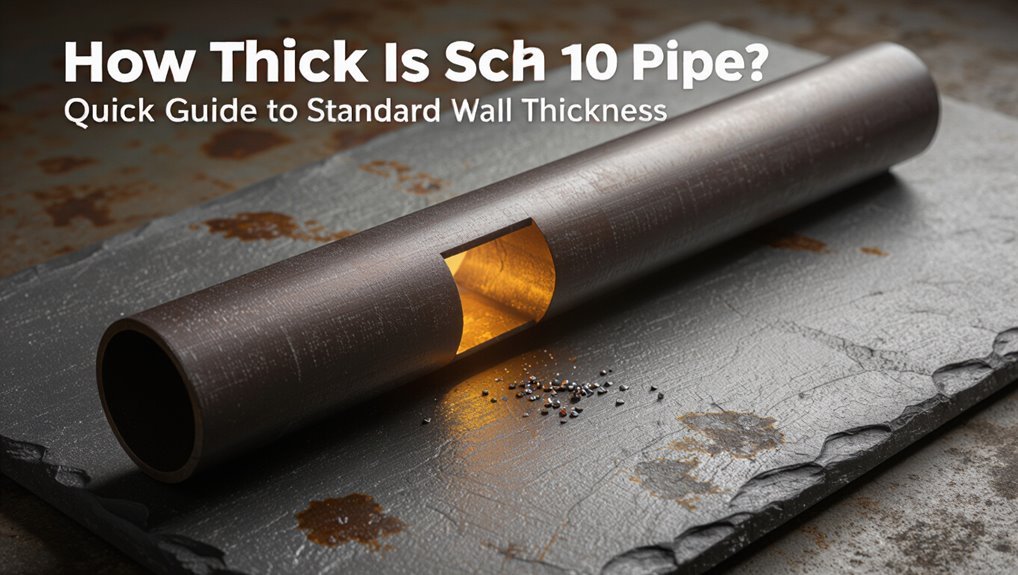
SCH 10 pipe features standardized, relatively thin wall thicknesses that vary by nominal pipe size (NPS) and fixed outside diameter (OD). This results in low weight, making it suitable for low- to moderate-pressure applications.
Key Takeaways:
- Wall Thickness: Ranges from very thin on small diameters to thicker, yet still light walls on larger sizes.
- Comparison: Lighter than SCH 40 and XS pipes, which are designed for higher pressures.
- Material & Inspection: Suitability is influenced by material choice and inspection methods.
For further details, refer to the quick chart below.
SCH 10 Wall Thickness by NPS and OD (Quick Chart)
For quick reference, the SCH 10 wall thickness chart lists standard thicknesses for pipe by NPS (Nominal Pipe Size) alongside the corresponding outside diameters (OD), enabling rapid selection for common piping applications.
The chart presents each NPS value with its fixed OD and the corresponding SCH 10 wall dimension in inches or millimeters.
It covers common sizes from small-diameter tubing up to larger industrial lines, allowing engineers to verify compatibility with fittings and pressure calculations.
The concise table format reduces selection errors, supports material ordering, and aids preliminary design checks without requiring complex calculations or conversions.
SCH 10 Vs SCHedule 40 and XS : Wall Thickness Comparison
Between standard thin-wall SCH 10, the more common SCH 40, and the heavier Extra Strong (XS) schedules, wall thickness increases progressively to provide greater pressure capacity and mechanical strength for a given nominal pipe size.
SCH 10 offers the thinnest walls and lowest weight, suitable for low-pressure applications and cost-sensitive installations.
SCH 40 is a general-purpose choice balancing strength and economy for many piping systems.
XS provides substantially thicker walls for higher pressures, severe mechanical loads, or when corrosion allowance is required.
Designers select schedules by matching required allowable stress, internal pressure, temperature, and operational safety margins for each service.
Materials & How They Affect SCH 10 Wall Thickness (Carbon, Stainless, Alloys)
When selecting SCH 10 pipe, material choice—carbon steel, stainless steel, or higher-performance alloys—directly influences required wall thickness because each material has distinct yield strength, allowable stress at temperature, corrosion behavior, and fabrication limits.
Carbon steels often meet SCH 10 nominal thicknesses for general service but may require corrosion allowance or heavier schedules in aggressive environments.
Austenitic stainless steels offer higher corrosion resistance but different allowable stresses and thermal expansion, sometimes altering required thickness or joint design.
Nickel and other alloys provide superior strength and corrosion resistance, allowing thinner sections for equivalent performance yet increasing cost and fabrication complexity.
Measuring SCH 10 Wall Thickness On-Site: Tools, Technique, Quick Checks
After selecting the appropriate material for SCH 10 pipe, field verification of wall thickness confirms design assumptions and detects corrosion or fabrication defects.
A concise on-site approach uses calibrated instruments, repeatable technique, and documented readings.
Ultrasonic thickness gauges are primary; calipers and pit gauges supplement accessible edges.
Surface prep, coupling compound, and multiple measurements around circumference secure reliability.
Quick checks identify obvious thinning prior to lab tests.
- Use a calibrated ultrasonic thickness gauge with appropriate transducer.
- Clean and prep surface; apply coupling gel.
- Take three readings at each location; record min/avg.
- Mark suspect areas for further inspection.
When to Use SCH 10 : Common Applications and Alternatives
In many low- to moderate-pressure piping systems, Schedule 10 pipe offers a cost-effective balance of weight and corrosion allowance.
It suits HVAC, drain, waste, vent, irrigation, compressed air, and noncritical water service where mechanical stresses and temperature extremes are limited.
Fabricators favor it for reduced material costs and easier handling compared with heavier schedules.
It is unsuitable for high-pressure, high-temperature, or high-corrosion environments; in those cases Schedule 40, SCH 80, or corrosion-resistant alloys (stainless, duplex) provide necessary strength and longevity.
Design codes, safety margins, and expected service life guide the final selection between options.
Conclusion
Like a thin riverbank holding back steady flow, SCH 10 pipe balances lightness and strength. Its modest wall thickness—thinner than Schedule 40 yet adequate for many services—meets practical needs across carbon, stainless, and alloy piping. Measured with calipers or ultrasonic gauges, its suitability becomes clear in context: low-pressure lines, drain systems, and space-limited installations. When demands rise, thicker schedules or specialty alloys stand ready, like reinforcements before a storm.