How Much Fall for Drain Pipe? Proper Slope Guide for DIY Plumbers
Key Takeaway: Proper Drain Pipe Slope Guidelines
For optimal drainage, small branch drains (1¼–2″) should have a slope of about 1/4 inch per foot, while larger main pipes (3–4″) can have a slope of approximately 1/8 inch per foot. In cases of very long runs or grease-laden lines, increase the slope up to 1/2 inch per foot as needed. Remember, too little slope may cause pooling and clogs, while too much slope can allow liquids to outrun solids. Use a level or inclinometer to ensure proper grade and support spacing.
For tools, fixture specifics, and troubleshooting, continue exploring more resources.
Why Slope Matters: Prevent Clogs, Backups, and Odors
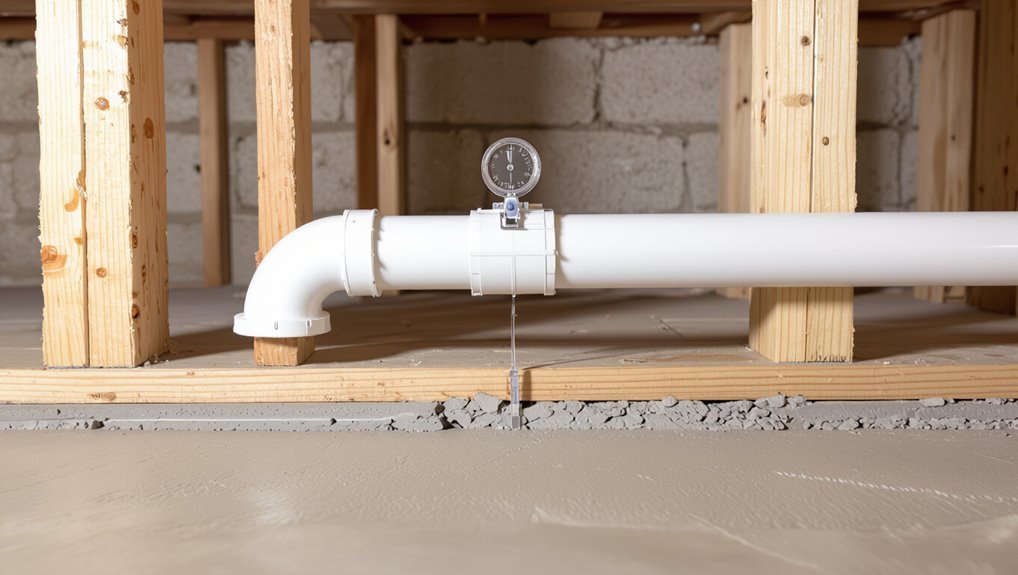
Because gravity moves water and waste, proper drain-pipe slope is essential to keep flows brisk and solids suspended; insufficient pitch lets debris settle, creating clogs, while excessive pitch can leave liquids ahead of solids and cause backups.
The correct gradient maintains velocity to carry particles while preventing scouring that erodes pipes. It also limits standing water that fosters odors and bacterial growth.
Consistent slope reduces stress on joints and fixtures, lowering leak risk. Proper venting and access for cleaning complement slope, enabling reliable self-cleaning flow and straightforward maintenance.
Attention to slope during installation avoids recurring blockages, repairs, and malodors.
Quick Answer: Standard Drain‑Pipe Slopes by Rule of Thumb
Providing clear rules of thumb for drain‑pipe slopes helps installers and homeowners size runs quickly and avoid common problems.
The following quick references summarize typical minimum falls used in residential drainage without math detail.
- 1/4 inch per foot for 1¼–2 inch branch and fixture drains (common sinks, showers).
- 1/8 inch per foot for 3‑inch and larger sewer mains where flow capacity and solids transport allow gentler pitch.
- Short runs (under a few feet) may accept slightly flatter slope if manufacturer or code permits.
- Steeper slopes can cause flow issues; avoid excessive drop unless required by code.
Measure Drain‑Pipe Slope: Rise Over Run (Simple Math)
To measure drain‑pipe slope, the method of rise over run provides a simple ratio: vertical drop divided by horizontal distance.
A level and a tape measure are used to record the vertical change and the corresponding run along the pipe.
From those two measurements, the installer calculates the slope as inches of fall per foot of run to confirm compliance with recommended values.
Rise Over Run
Measuring drain‑pipe slope uses the simple “rise over run” ratio: the vertical drop (rise) divided by the horizontal distance (run) between two points.
The concept quantifies fall: a 1:50 slope equals 1 unit drop per 50 units run, often expressed as a percentage or fraction.
It guides proper flow, preventing stagnation or excessive velocity.
Calculations are straightforward and applicable to any pipe length.
Practical planning records rise and run before cutting or joining sections.
- Compute run in inches or mm.
- Decide target ratio (e.g., 1:48).
- Multiply run by rise fraction.
- Mark pipe cut/fit locations.
Using A Level
After determining rise and run, the installer uses a spirit level to transfer the calculated slope onto the drain run. The level is placed along the pipe or a straight batten; a small shim or wedge under one end sets the required drop per foot.
Marks are made at pipe ends and intermediate supports to maintain consistent gradient. Bubble-centered alignment guarantees accuracy; a torpedo or digital level can speed readings in tight spaces.
Measurements are rechecked after supports are installed and before final joints are tightened. Consistent, verified slope prevents standing water and guarantees proper gravity drainage performance.
Slope Rules by Pipe Size and Common Run Lengths
The guide outlines recommended slope rates tied to pipe diameter, noting that larger pipes often require lower gradients per foot than smaller ones.
It also summarizes typical run length recommendations and when to change slope for common residential and commercial layouts.
Long runs are flagged for slope adjustments to prevent slow flow or trap siphoning and to maintain self‑scouring velocity.
Slope Per Pipe Diameter
Designing drain runs requires selecting a slope that matches the pipe diameter and the expected run length, because each size has a minimum and often a recommended slope to guarantee self-clearing flow without causing excessive velocity or solids washout.
Recommendations commonly used by plumbers correlate diameter with fall per foot: smaller pipes need steeper slopes; larger pipes can run flatter while still draining effectively.
Practical guidelines balance self-clearing flow and velocity control to avoid erosion or blockages.
Typical reference points for common installations:
- 1¼–1½” sinks: 1/4″ per foot.
- 2″ drains: 1/8–1/4″ per foot.
- 3″ lines: 1/8″ per foot.
- 4″ mains: 1/16–1/8″ per foot.
Run Length Recommendations
Practical slope choices must also consider the total run length, since a slope that clears solids on a short segment may be inadequate over longer distances where flow slows and solids settle. Guidance ties pipe diameter to recommended minimum slope and typical maximum run before maintenance or a drop is advised. Short runs tolerate gentler fall; long runs need standard slope to avoid buildup. Designers balance grade, access, and venting. The table below summarizes common pairings and run expectations.
| Pipe Size | Typical Max Run |
|---|---|
| 1¼–1½ in | 6–10 ft |
| 2 in | 10–20 ft |
| 3 in | 20–40 ft |
| 4 in | 40–80 ft |
Long Run Slope Adjustments
When accounting for long runs, slope adjustments must increase with distance to maintain self‑cleansing velocities and prevent sedimentation.
Long-run strategies vary by pipe size and typical lengths: small 1¼–2″ runs need steeper fall over extended distances; 3–4″ pipes tolerate gentler slopes but require incremental increases beyond 20–30 feet; 6″ mains can run flatter but still benefit from modest added grade for runs over 50 feet.
- 1¼–2″ pipes: 1/4″–1/2″ per foot past 10–15 ft.
- 3–4″ pipes: 1/8″–1/4″ per foot past 20–30 ft.
- 6″ mains: 1/16″–1/8″ per foot past 50 ft.
- Adjustments: consult local codes and flow calculations.
Slope Recommendations by Fixture: Sink, Shower, Tub, Toilet
For common plumbing fixtures, specific drainpipe slopes are recommended to guarantee efficient flow and prevent clogs: kitchen and bathroom sinks typically require a 1/4 inch per foot slope, showers and tubs can function with 1/4 to 1/8 inch per foot depending on drain type, and toilets need a straight, adequately pitched soil stack rather than a small horizontal slope—usually achieved by maintaining proper fall in the building drain and waste lines to meet local code.
Lavatories and utility sinks follow the 1/4 inch per foot rule. Shower pans tolerate 1/8 inch per foot when manufacturer instructions allow. Verify local code and manufacturer’s guidance.
When to Increase or Reduce Slope (Long Runs, Grease, Solids)
After outlining standard slopes for individual fixtures, adjustments become necessary where run length, waste composition, or flow volume alter drainage behavior. Long horizontal runs may need a slightly steeper pitch to prevent pooling and maintain self-cleansing velocity, while very short runs can tolerate near-minimum slope. Grease-prone drains (kitchens, commercial) benefit from increased slope and regular cleaning to reduce accumulation. Conversely, fragile solids or systems relying on retention (certain trap designs) might demand reduced slope to avoid stripping solids too quickly.
- Long runs: increase slope.
- Short runs: keep minimum slope.
- Grease: increase slope + maintenance.
- Solids-sensitive: consider reduced slope.
Tools to Set and Check Drain‑Pipe Slope on Site
On-site setting and verification of drain-pipe slope requires a small set of durable, accurate tools and a methodical approach to measurement and adjustment.
Essential items include a torpedo level or digital inclinometer for direct slope readings, a long carpenter’s level for extended runs, and a laser level for establishing consistent reference lines.
A tape measure and marked string help calculate rise over run; pipe supports, shims, and adjustable hangers enable fine adjustment.
A small slope gauge or smartphone app can confirm readings.
Carry thread sealant, marker, and safety gear.
Calibrate instruments before use and document measurements for installation records.
How to Avoid Common Slope Mistakes (and Quick Fixes)
Because small slope errors compound over long runs, installers should prioritize correct setup and routine checks to prevent common mistakes and simplify fixes.
Attention to level, consistent gradient, clean joints, and secure supports reduces leaks and backups.
When errors occur, measure from multiple points, isolate the bad segment, and correct by re‑bedding or adding shims under hangers.
Avoid over‑pitching that starves traps and under‑pitching that causes pooling.
Document measurements during installation to speed troubleshooting.
- Check multiple reference points for consistent fall.
- Re‑seat or replace misaligned fittings.
- Add or adjust supports to remove sag.
- Use temporary slope gauges for verification.
Local Code Basics and When to Call a Pro
In consulting local building and plumbing codes, installers must verify required slopes, pipe materials, trap arm lengths, cleanout placement, and support spacing before beginning work. Codes vary by jurisdiction; reading local amendments prevents rework and failed inspections.
When installations involve main stacks, sewer connections, fixture relocations, or work beyond simple repairs, professionals should be engaged. Licensed plumbers interpret code nuances, secure permits, perform pressure tests, and coordinate utility connections. Complex venting, cast-iron or buried lines, and systems serving multiple units particularly warrant expert attention. Calling a pro reduces liability, guarantees compliance, and preserves system performance and safety.
Conclusion
In short, getting drain-pipe slope right keeps systems flowing and problems at bay; a small error can snowball into big headaches. Follow standard rise-over-run rules for each pipe size and fixture, check runs with proper tools, and adjust slope for long runs or greasy waste. When in doubt, consult local code or a pro to avoid costly rework. Better safe than sorry, since a stitch in time saves nine.