How Long Does It Take a Pipe to Freeze? Cold Weather Guide (2026)
Key Takeaway: A pipe exposed to still, subfreezing air can freeze in approximately 1–4 hours. However, insulated or buried pipes may take days or may not freeze unless extremely cold temperatures persist.
Factors affecting freezing include:
- Material and Diameter: Metal and smaller diameter pipes chill faster than plastic and larger ones.
- Wind and Cold Duration: Wind, the length of the cold snap, and proximity to exterior walls can accelerate freezing.
- Insulation and Water Flow: Proper insulation and maintaining a slow flow of water can delay freezing.
For practical steps to assess and reduce the risk of pipe freezing, continue reading.
Quick Answer: How Long Until a Pipe Freezes?
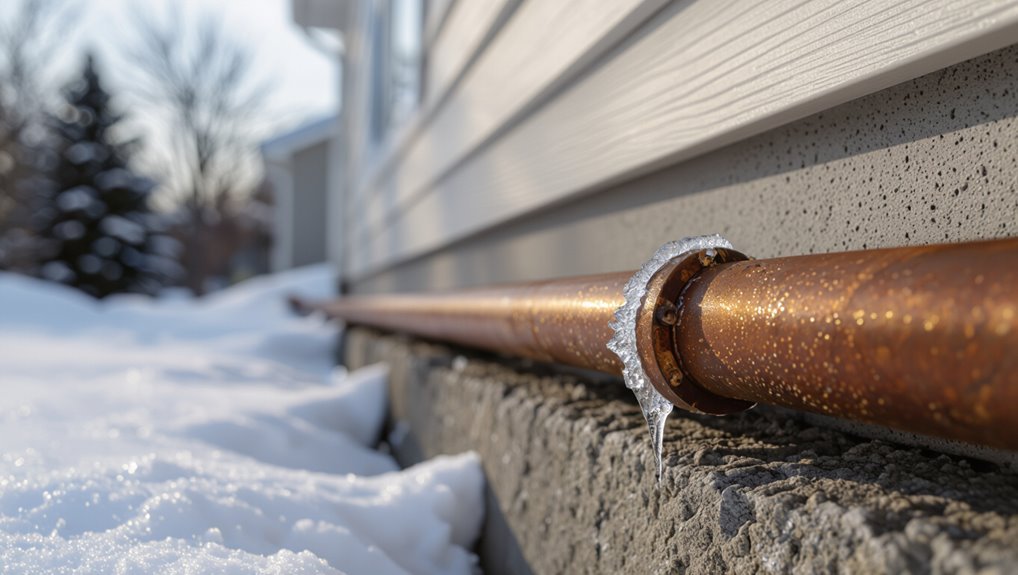
How quickly a pipe freezes depends on several variables: outdoor temperature, pipe material and diameter, whether the pipe carries moving water, insulation, and exposure to wind or drafts.
A concise estimate: uninsulated copper or PVC exposed to still air can freeze within 1–4 hours at well-below-freezing temperatures, while insulated or buried lines may take days or not freeze at all unless extremes persist.
Flowing water delays freezing; narrow pipes chill faster than wide ones.
Local conditions and installation matter more than a single timeframe.
For risk assessment, prioritize inspection of exposed, uninsulated sections and maintain minimal flow during cold snaps.
How Outdoor Temperature Controls Freeze Time
Why does outdoor temperature matter so much for pipe freeze time? Outdoor temperature sets the thermal gradient between piping and surroundings; lower air means faster heat loss from exposed and poorly insulated pipes.
Wind and radiation amplify cooling, reducing freeze time by increasing convective and evaporative heat transfer. Duration below freezing matters: a brief dip may not freeze water, prolonged subfreezing accelerates nucleation.
Solar gain, ground warmth and snow cover moderate ambient effects, slowing freezing. Therefore, hourly lows, wind chill, and persistence of cold episodes determine how quickly water inside a pipe reaches its freezing point and solidifies.
How Pipe Material and Diameter Affect Freeze Time
Different pipe materials conduct heat at different rates, so metal pipes chill and freeze faster than plastic types.
Pipe diameter alters the water volume and surface-area-to-volume ratio, with narrower pipes freezing sooner for the same conditions.
Comparing material thermal conductivity and internal volume helps predict freeze time.
Pipe Material Differences
Many factors influence how quickly water inside a pipe will freeze, but the pipe’s material and diameter are among the most critical.
Different materials conduct heat at different rates: metal pipes (copper, steel) transfer heat away faster, allowing internal water to cool more quickly during exposure to cold air, while plastic pipes (PEX, PVC) are more insulating, slowing heat loss. Thermal mass and wall thickness also matter: thicker walls retain heat longer. Joints, fittings, and surface corrosion alter local conduction. Material choice affects vulnerability to repeated freeze–thaw cycles and likelihood of cracking when ice expands, influencing long-term risk.
Diameter And Volume
A pipe’s internal diameter and the volume of water it contains strongly influence how long freezing takes: smaller diameters and lower volumes freeze faster because cold must penetrate less water mass to reach freezing point. Diameter affects surface-area-to-volume ratio; narrow pipes lose heat relatively faster. Larger-volume pipes retain heat longer, delaying ice formation. Flow pauses, insulation, and ambient temperature modulate these effects. Practical guidance uses approximate timescales by size and material to prioritize protection.
| Diameter (in) | Relative Volume | Freeze Risk |
|---|---|---|
| 1/2 | Low | High |
| 1 | Medium | Moderate |
| 2+ | High | Lower |
Effect of Pipe Location and Insulation on Freeze Risk
Placed within unheated spaces or against exterior walls, pipes face a much higher risk of freezing than those located in conditioned interiors. Temperature exposure varies: attic, crawlspace, garage, and exterior-wall runs cool faster than central locations.
Insulation level alters heat loss; foam sleeves, fiberglass wrap, and closed-cell spray reduce conduction and delay freezing by preserving residual warmth. Gaps, joints, and bends weaken insulation effectiveness, creating cold spots.
Pipe material and color affect radiant heat loss; metal conducts cold more readily than plastic. Proper placement and continuous, properly installed insulation markedly lower freeze risk by minimizing thermal bridging and exposure to outdoor air.
How Running Water and Pressure Delay Freezing
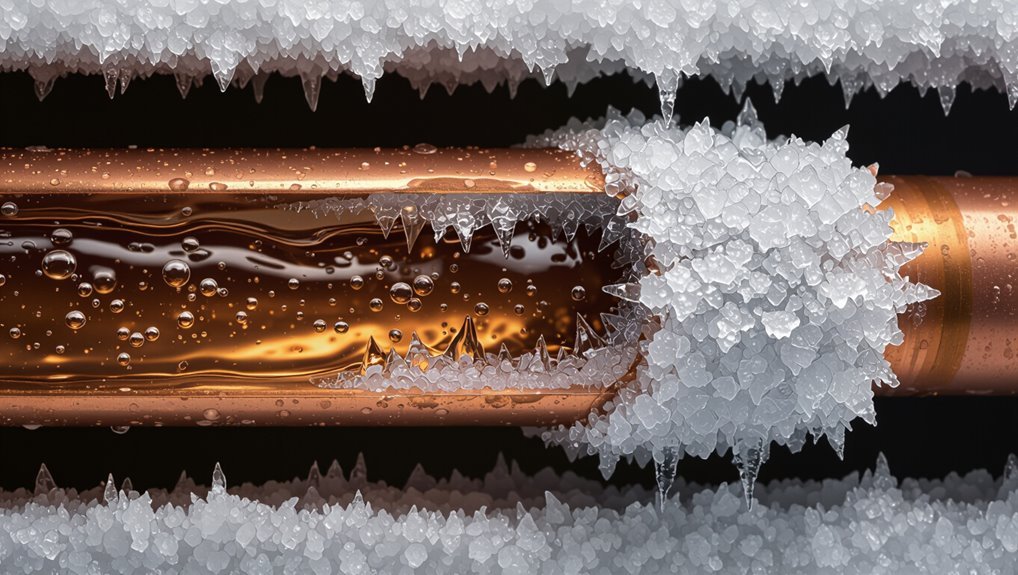
Flowing water and maintained pressure both slow the onset of freezing in pipes by interrupting the formation and growth of ice crystals and by transporting residual heat through the line.
A slow stream keeps molecules moving, requiring lower temperatures or longer exposure before nucleation stabilizes.
Pressure reduces air pockets and raises water’s freezing point slightly, while system pressure fluctuations discourage static zones where ice anchors.
Continuous flow also flushes warmer water from connected tanks or mains, delaying local cooling.
These effects vary with flow rate, pipe material, diameter, and ambient exposure; modest trickles often suffice to prevent freezing under marginal conditions.
Estimate Pipe-Freeze Time: Simple Rules and Calculator Tips
Estimate freeze time using simple heuristics and quick calculations that balance ambient temperature, pipe material and diameter, insulation, and exposure to drafts. A rule of thumb: uninsulated metal pipes in still air can freeze within hours once temperatures drop below 20°F (−7°C); plastic pipes take longer.
Smaller diameters freeze faster; indoors slows freeze compared with exterior or unheated spaces. Add insulation thickness and airflow reduction to extend time exponentially. A basic calculator multiplies base freeze time by factors for insulation (×1.5–3), diameter (×0.5–1), and exposure (×0.3–1). Use conservative estimates and verify with local conditions.
Immediate Steps to Prevent Pipes From Freezing Today
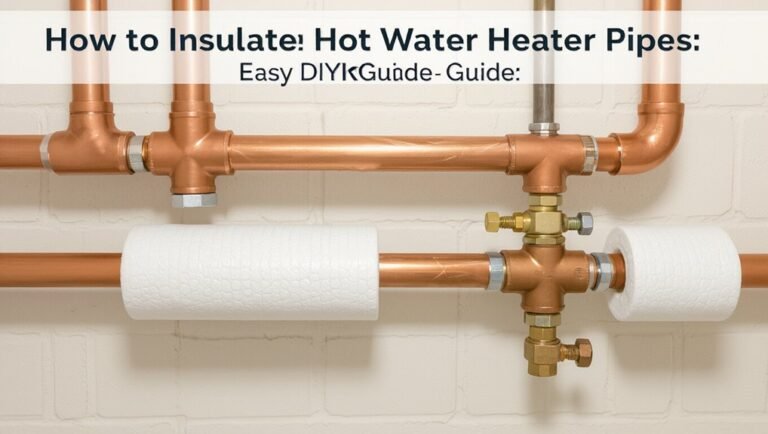
When temperatures approach freezing, immediate actions focus on maintaining heat around vulnerable pipes and ensuring water keeps moving: open cabinet doors to let warm air circulate, set the thermostat no lower than the day’s normal, wrap exposed pipes with insulating foam or towels, and allow a slow trickle from faucets served by at-risk lines. Additional steps include sealing gaps, directing portable heaters safely toward problem areas, and moving hoses indoors. Monitor indoor temperatures and check basements, crawlspaces, and attics. Communicate risks to occupants and document measures taken for follow-up.
| Action | Purpose |
|---|---|
| Insulation | Reduce heat loss |
| Trickle faucets | Prevent stagnation |
| Seal gaps | Limit cold drafts |
What to Do If a Pipe Has Already Frozen
If preventive measures fail and a pipe is already frozen, the next priority is to confirm the problem and reduce further damage before attempting repairs.
Inspect exposed pipes for frost, bulging, or leaking joints. Shut off water at the main valve if a burst is suspected. Open nearby faucets to relieve pressure and allow melting water to flow.
Apply gentle heat using a hair dryer, heat lamp, or towels soaked in warm water, working from the faucet toward the frozen section. Never use open flames.
If thawing fails, or if a leak appears, call a licensed plumber and avoid leaving the property unattended.
Conclusion
In chilly months, pipes may quietly enter a state of “temporary rest,” with outcomes ranging from minor inconvenience to costly disruption. By understanding outdoor temperature, pipe material and placement, insulation, and flow, homeowners can nudge that rest toward harmless dormancy rather than disaster. Prompt preventive steps—insulation, measured flow, and mindful heating—soften the risk; if freezing has already occurred, careful thawing and professional help can restore normal service and avert lasting harm.