How Long Do PVC Pipes Last? Lifespan, Factors & Maintenance Tips
Key Takeaway: Properly installed PVC plumbing can last between 25 to 50 years in residential settings, often achieving a longer lifespan when kept indoors and protected from UV light, extreme heat, chemicals, and mechanical stress.
In detail, the lifespan of PVC pipes can vary based on several factors, including the quality of resin, wall thickness (such as Schedule 40 vs. Schedule 80), the presence of additives, water chemistry, thermal cycling, and installation practices. Pipes that are exposed to UV light outdoors or are poorly supported tend to age more quickly. For hot-water service, alternatives like CPVC, PEX, or copper are recommended. To maximize the longevity of PVC pipes, regular inspections, proper support, winterization, and avoiding harsh solvents are essential. For additional tips and guidance, see below.
Quick Answer: How Long Do PVC Pipes Last?
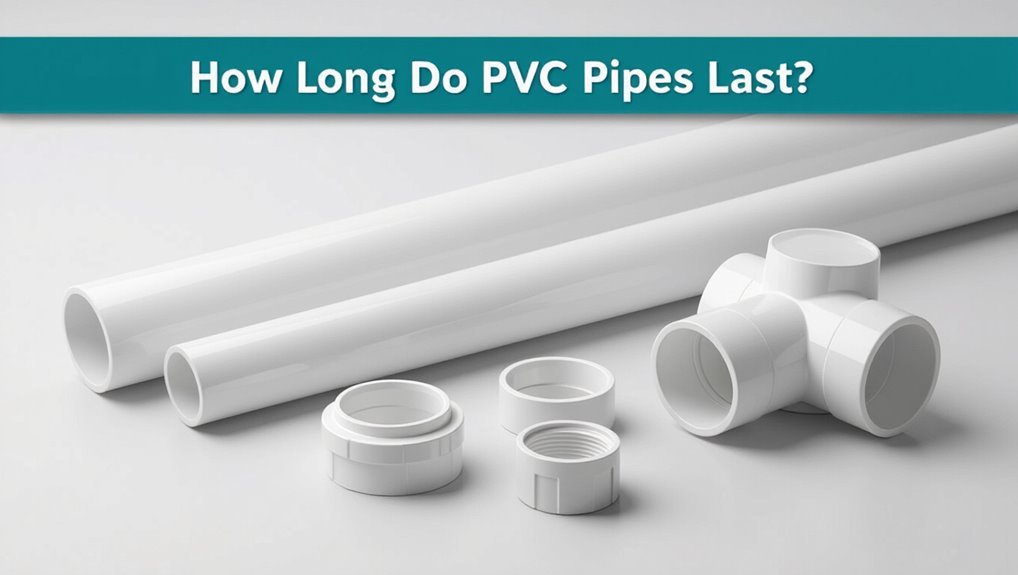
A properly installed PVC pipe typically lasts between 25 and 40 years in residential applications. This estimate reflects common usage for drainage, waste, and vent systems under normal conditions.
Commercial or industrial installations may show different ranges due to load and environment. Shorter service often results from physical damage, improper joining, or exposure to harmful chemicals and sunlight.
Regular visual inspections catch early signs of cracking, joint failure, or deformation. Replacement timing aligns with visible deterioration, recurring leaks, or when system performance declines.
Planning for eventual replacement avoids emergency failures and supports steady maintenance budgeting.
What Determines PVC Pipe Lifespan
Lifespan estimates for PVC pipe hinge primarily on the material composition, including PVC grade, additives, and manufacturing quality.
External environmental stressors—such as UV exposure, temperature fluctuations, soil chemistry, and mechanical load—also accelerate degradation or preserve integrity.
Evaluating both intrinsic material properties and site-specific conditions clarifies expected service life.
Material Composition Effects
Material composition plays the primary role in determining how long PVC pipe performs before failure.
Resin quality, molecular weight, and polymerization control mechanical strength and chemical resistance.
Stabilizers and impact modifiers improve toughness and thermal stability; plasticizers increase flexibility but can reduce long-term rigidity.
Fillers and reinforcements alter stiffness and abrasion resistance; improper additives promote embrittlement or stress cracking.
Wall formulation and extrusion consistency affect uniformity and defect prevalence.
Pigments and UV inhibitors mitigate surface degradation when applicable.
Certification standards (e.g., ASTM, NSF) reflect composition benchmarks.
Properly specified materials yield predictable, extended service life under intended application.
Environmental Stressors Impact
Exposed to temperature extremes, chemicals, mechanical loads, and sunlight, PVC pipe performance is governed by the nature, intensity, and duration of these environmental stressors.
Temperature cycling causes thermal expansion and contraction, accelerating joint fatigue and embrittlement over time.
UV radiation degrades surface polymers unless stabilizers or coatings are applied.
Chemical exposure—acids, solvents, hydrocarbons—influences swelling, leaching, and loss of mechanical strength depending on concentration and contact time.
Mechanical stresses from soil movement, vibration, or external loads promote cracking and stress-corrosion.
Proper installation, protective burial depth, UV barriers, and routine inspections mitigate these impacts and extend service life.
PVC Vs CPVC Vs Schedule 40/80: Lifespan Differences
Compare how PVC, CPVC, and Schedule 40/80 pipes age under typical conditions to understand which is best suited for a given application. PVC (rigid, cold-water use) resists corrosion and chemical degradation, often lasting 50+ years in non-pressurized or low-temperature systems.
CPVC (chlorinated PVC) tolerates higher temperatures and maintains structural integrity longer in hot-water service, typically matching or exceeding PVC longevity when heat exposure is significant.
Schedule 40 and 80 designate wall thickness; thicker Schedule 80 offers greater pressure capacity and slower wear, extending service life in high-pressure or impact-prone installations.
Material choice should match temperature, pressure, and chemical exposure.
PVC Pipe Lifespan: Household Plumbing Expectations
In typical indoor conditions, PVC pipe lifespans commonly range several decades when used for cold-water supply and drain lines.
Durability can be shortened by factors such as high temperatures, UV exposure, chemical attack, physical stress, and improper installation.
Routine inspection, proper installation practices, temperature control, and prompt repair of leaks can meaningfully extend service life.
Typical Indoor Lifespan
Many standard PVC pipes installed inside homes can reliably last between 25 and 50 years under normal conditions.
Typical indoor installations—drain, waste, vent, and cold-water supply—benefit from stable temperatures, limited UV exposure, and controlled pressure, all extending service life.
Proper installation, compatible fittings, and routine inspections reduce leak risk and maintain function.
Routine maintenance like clearing clogs and avoiding chemical solvents preserves joints and material integrity.
Performance often exceeds estimates when systems are well designed and used within intended limits.
End-of-life is usually signaled by discoloration, cracking at joints, or persistent leaks requiring targeted replacement.
Factors Shortening Durability
Several common stressors accelerate PVC deterioration in household plumbing, reducing expected service life.
Chemical exposure from solvents, strong acids or bases, and improper adhesive mixtures can embrittle or soften the polymer.
Elevated temperatures increase creep and hydrostatic stress, while repeated thermal cycling promotes microcracking.
UV radiation degrades surface layers when pipes are exposed outdoors or in unshielded attics.
Mechanical damage from impact, crushing, or improper support induces cracks and joint failures.
Excessive internal pressure, water hammer, and abrasive particulate-laden water accelerate wear.
Poor installation practices—sharp bends, over-tightened fittings, or incompatible materials—compound these effects and shorten functional lifespan.
Maintenance To Extend Life
Prioritizing routine inspections and timely repairs preserves PVC plumbing performance and delays deterioration.
Homeowners should check joints, fittings, and exposed runs for cracks, leaks, abrasion, and UV exposure.
Keep chemical exposure minimal by avoiding harsh solvents and limit high-temperature discharges that can soften PVC.
Clean drains with enzyme treatments rather than caustic cleaners to prevent joint stress.
Insulate pipes in unheated spaces to prevent freezing, and secure loose runs to reduce movement-related wear.
Document repairs and replace deteriorated sections rather than patching repeatedly.
Regular maintenance extends service life and reduces risk of sudden failures in household systems.
PVC Lifespan in Irrigation and Outdoor Use
In outdoor irrigation systems, PVC longevity depends on factors such as UV exposure, soil chemistry, mechanical stress, and water temperature.
Typical buried PVC can last 25–50 years; aboveground lines exposed to sunlight often degrade faster unless UV-stabilized or painted.
Acidic or alkaline soils, abrasive sediments, and frequent freeze-thaw cycles accelerate deterioration.
High operating temperatures and pressure fluctuations stress joints and walls.
Routine inspection for cracking, discoloration, and leaks helps detect degradation early.
Selection of schedule-rated pipe, pressure-appropriate fittings, and protective measures like burial depth or shading extends functional life in irrigation and other outdoor applications.
How Installation Quality Shortens or Extends PVC Life
When installed with care and attention to proper technique, PVC systems last far longer than assemblies assembled hurriedly or improperly. Installation quality determines stress points, joint integrity, and long-term reliability. Proper bedding, correct solvent welding, and accurate alignment reduce leaks and deformation.
Conversely, poor support, over-tight fittings, or contaminated joints accelerate wear and failure. Attention to codes and skilled workmanship mitigates risks and extends service life. Key installation factors include:
- Trench bedding and uniform support to prevent bending stress.
- Clean, correctly cured solvent-welded joints for maximum strength.
- Proper pipe alignment and thermal expansion allowances.
- Adequate mechanical protection and secure anchoring.
How Temperature and Water Chemistry Affect PVC Lifespan
Beyond installation practices, environmental factors such as temperature and water chemistry have a direct impact on PVC performance and service life.
Elevated temperatures accelerate polymer softening and creep, reducing pressure tolerance and increasing deformation over time; conversely, consistently low temperatures can make PVC more brittle and susceptible to impact cracking.
Aggressive water chemistries—high chlorine, extreme pH, or solvents—promote chemical degradation, stress-corrosion cracking, and leaching of additives.
Mineral-rich hard water may cause buildup, stressing joints and reducing flow.
Regular monitoring, selecting appropriate pressure ratings and chemical-resistant formulations, and maintaining stable operating conditions mitigate these risks and extend usable life.
UV and Sunlight: Protecting Outdoor PVC
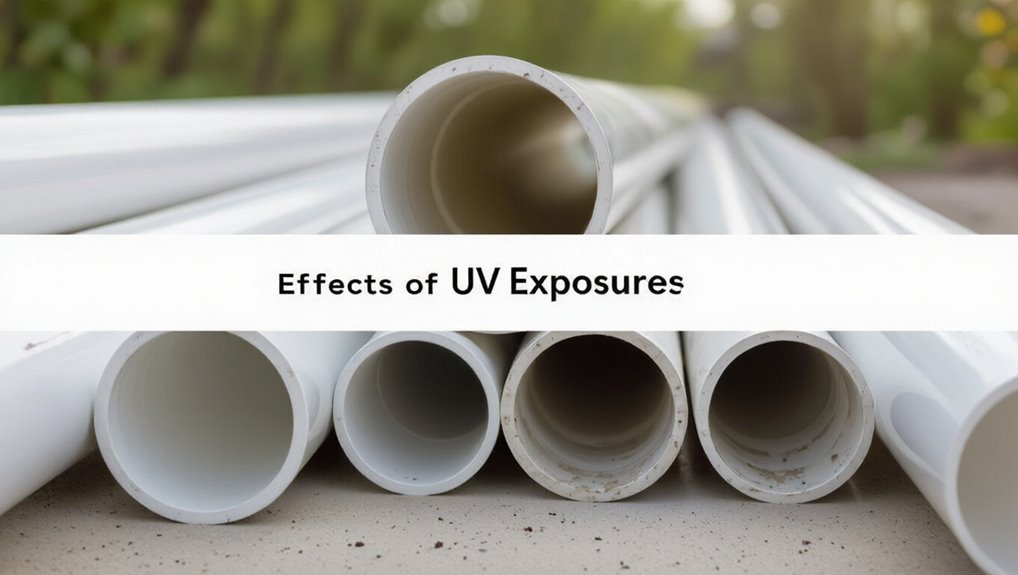
Frequently exposed to sunlight, outdoor PVC is vulnerable to ultraviolet (UV) radiation, which gradually breaks down polymer chains, causes surface chalking, and reduces mechanical strength and flexibility.
- Use UV-rated or pigmented PVC for new installations to slow degradation.
- Apply exterior-grade paints or UV inhibitors compatible with PVC to block radiation.
- Shield exposed runs with conduits, foam insulation, or physical covers to minimize direct sun.
- Inspect periodically for discoloration, brittleness, and microcracks; replace sections showing significant degradation.
Proper coating and periodic assessment extend service life outdoors, while ignoring UV effects accelerates aging and increases the likelihood of premature failure.
Mechanical Stress, Pressure Cycles, and Impact Damage
Under repeated loading and sudden impacts, PVC experiences fatigue, stress concentrations, and microfracture growth that progressively reduce its load-bearing capacity. Mechanical stress from misalignment, thermal expansion restraint, or heavy backfill causes deformation and crack initiation. Repeated pressure cycles accelerate crack propagation; impact events create brittle fractures especially in cold conditions. Regular inspection, proper bedding, and pressure regulation mitigate damage. Repairs or replacement are warranted when longitudinal cracks or permanent deflection appear.
| Stress Source | Typical Effect |
|---|---|
| Misalignment | Localized bending |
| Pressure cycling | Crack growth |
| Impact | Brittle fracture |
| Frost/low temp | Increased brittleness |
Chemicals and Solvents That Attack PVC
Chemical exposure can chemically degrade PVC by softening, swelling, embrittling, or dissolving the polymer matrix, with effects varying by chemical type, concentration, temperature, and exposure duration.
Certain acids, bases, and organic solvents interact aggressively with PVC, reducing structural integrity and shortening service life.
Selection and routing should consider chemical compatibility and containment.
- Strong solvents (ketones, esters, aromatic hydrocarbons) can swell or dissolve PVC, especially at elevated temperatures.
- Chlorinated solvents and concentrated alkalis may embrittle or craze the polymer over time.
- Oxidizers accelerate degradation through chain scission.
- Fuel and oil exposure risks stress cracking and joint failure.
Early Signs PVC Pipes Are Failing
After exposure to aggressive solvents, alkalis, oxidizers, or fuels, PVC piping often shows detectable physical and functional changes before catastrophic failure. Early signs include hairline cracks, surface crazing, brittleness, discoloration, and increased joint leakage. Flow irregularities, pressure drops, and unusual odors indicate chemical attack or microfractures. Unexplained soft spots or powdering suggest polymer breakdown. Noting these signs permits timely professional evaluation and targeted repairs, reducing collateral damage. The following simple table summarizes common indicators, likely causes, and typical consequences.
| Indicator | Likely cause | Typical consequence |
|---|---|---|
| Cracks | Chemical embrittlement | Leakage |
| Discoloration | UV/chem exposure | Reduced strength |
| Odor | Chemical permeation | Contamination |
| Softening | Solvent attack | Failure risk |
How to Inspect and Test PVC Pipes Yourself
Begin by visually examining exposed runs of PVC for surface changes, joint gaps, or stains, using good lighting and, if available, a magnifier. Document findings and note locations.
Use simple noninvasive tests to confirm integrity:
- Run a pressure check by isolating sections and applying low water pressure while observing leaks.
- Tap along pipe lengths; a clear sound suggests solidity, a dull thud may indicate cracking.
- Inspect joints and fittings under slight load or vibration to reveal looseness or stress.
- Smell for musty odors and inspect surrounding materials for moisture indicating hidden leaks.
Record results and plan professional follow-up if abnormalities appear.
Maintenance Tasks That Extend PVC Lifespan
Regularly scheduled maintenance preserves PVC pipe performance and prevents common failure modes.
Visual inspections, cleaning debris from drains and gutters, and flushing lines to remove sediment reduce stress and blockages.
Check and tighten fittings, support straps, and hangers to prevent sagging and joint stress.
Protect exposed runs from UV with paint or insulation and seal penetrations to avoid chemical exposure.
Monitor pressure and temperature conditions to stay within manufacturer limits.
Keep records of service dates and observed issues to identify trends.
These routine tasks minimize deterioration, extend functional life, and delay need for major intervention.
Repair vs Replace: How to Decide for PVC
When should a section of PVC be repaired rather than replaced depends on factors like extent of damage, age, cost, and system criticality. Decision-making follows practical criteria and risk assessment, balancing short-term fixes against long-term reliability.
- Small, localized cracks or pinholes in otherwise sound pipe: repair with solvent welds or epoxy patches.
- Multiple failures, extensive corrosion, or unknown material age: replacement is more reliable.
- Critical systems where failure risks loss or contamination: favor replacement despite higher cost.
- Budget and access constraints: temporary repairs can defer replacement with scheduled follow-up and monitoring.
Best Replacement Materials and Lifespan Comparisons
When considering replacement options for aging PVC, common alternatives include copper, PEX, and specialty plastics.
Each material offers distinct advantages and typical lifespans that affect cost, installation complexity, and suitability for different applications.
A concise comparison of durability, maintenance needs, and expected service life will guide appropriate selection.
Copper Versus PVC
Against the backdrop of pipe replacement decisions, copper and PVC emerge as the two most common alternatives, each offering distinct advantages in durability, installation, and cost. Copper typically lasts 50–70 years with resistance to UV and higher temperatures; PVC often exceeds 50 years indoors, offering chemical resistance and lower cost.
Corrosion, water chemistry, and installation quality shape longevity. Selection hinges on budget, local code, and performance needs.
- Lifespan: copper generally longer in hot-water systems, PVC excels cold-water and drain use.
- Cost: PVC is cheaper and easier to install.
- Corrosion: copper resists UV; PVC resists chemical attack.
- Maintenance: both require proper joins and protection.
PEX And Other Alternatives
Beyond the copper-versus-PVC comparison, alternative piping materials such as PEX, CPVC, HDPE, and stainless steel offer distinct mixes of flexibility, temperature tolerance, chemical resistance, and expected service life that influence replacement choices.
PEX is flexible, resists freeze damage, and typically lasts 40–50 years but may degrade with UV exposure and certain additives.
CPVC tolerates higher temperatures than PVC and can last 50 years in domestic use.
HDPE provides excellent chemical and impact resistance with potential lifespans exceeding 50 years in appropriate installations.
Stainless steel is durable and corrosion-resistant, often exceeding 75 years, albeit at higher cost.
Cost Tradeoffs: Longevity vs Upfront Price
In comparing PVC options, the tradeoff between initial purchase price and expected service life becomes a primary consideration for homeowners and specifiers. Choices favoring lower upfront cost may require earlier replacement; premium materials and thicker walls raise installation expense but extend service intervals. Decision factors include installation context, expected load, and access difficulty.
- Upfront savings: lower-grade PVC reduces immediate budget pressures.
- Longevity premium: higher-quality PVC increases lifespan and lowers lifetime cost.
- Replacement cost: difficult access amplifies the value of durable pipe.
- Risk tolerance: conservative buyers favor durability over minimal initial outlay.
Codes, Standards, and Manufacturer Warranties to Check
A review of applicable building codes, industry standards, and manufacturer warranties is essential before selecting PVC pipe, since compliance affects legality, safety, and long-term performance.
Inspect local plumbing and electrical codes, municipal approvals, and applicable national standards (ASTM, ISO, CSA) to match pipe type, pressure rating, and temperature limits to the intended application. Confirm UV, chemical, and burial ratings where relevant.
Review manufacturer installation instructions and limitations; warranties often require specific fittings, adhesives, and installation practices to remain valid. Note warranty length, coverage exclusions (e.g., misuse, freezing, chemical attack), and claim procedures before purchase and installation.
Quick Checklist to Maximize PVC Pipe Longevity
A concise checklist helps guarantee PVC systems reach their expected service life. It highlights regular visual inspections for cracks, joint integrity, and signs of UV or chemical damage.
It also notes preventive winterizing measures such as draining, insulating exposed runs, and securing fittings against freeze stress.
Regular Visual Inspections
Regularly inspecting PVC pipes provides an efficient way to catch minor issues before they escalate into costly failures.
A routine visual check highlights discoloration, surface cracks, joint movement, and moisture accumulation.
Inspections should be systematic, covering accessible interior and exterior runs, fittings, and supports.
Note any changes, photograph suspect areas, and log dates for trend tracking.
Immediate small repairs can prevent leaks and extend service life.
Prioritize areas under stress or exposed to UV and chemicals.
Train personnel on what to look for and when to consult a plumber to assure consistent, effective oversight.
- Check for cracks and crazing
- Inspect joints and seals
- Look for moisture and stains
- Verify secure supports
Preventive Winterizing Measures
Following routine visual inspections, winterizing steps protect PVC systems from freeze-related damage and reduce long-term wear.
A concise checklist includes draining outdoor lines, insulating exposed pipes with foam sleeves or heat tape rated for PVC, and sealing gaps where cold air enters enclosures.
Remove or bypass backflow preventers per manufacturer guidance, and make sure sump pumps and traps are functional.
For irrigation, blow out systems with compressed air at recommended pressures.
Store removable fittings and hoses indoors.
Schedule these measures before the first freeze and document actions and dates to track maintenance and verify yearly compliance.
Conclusion
PVC pipe often promises decades of service, yet longevity hinges on installation, environment, and use—so a seemingly indestructible white line can fail prematurely if UV, chemicals, or poor joints intervene. Juxtaposing quiet reliability with abrupt vulnerability highlights that lifespan is not an immutable number but a conditional outcome: well-chosen, correctly installed PVC endures for generations; neglected or misapplied PVC may need replacement far sooner, turning presumed permanence into costly surprise.