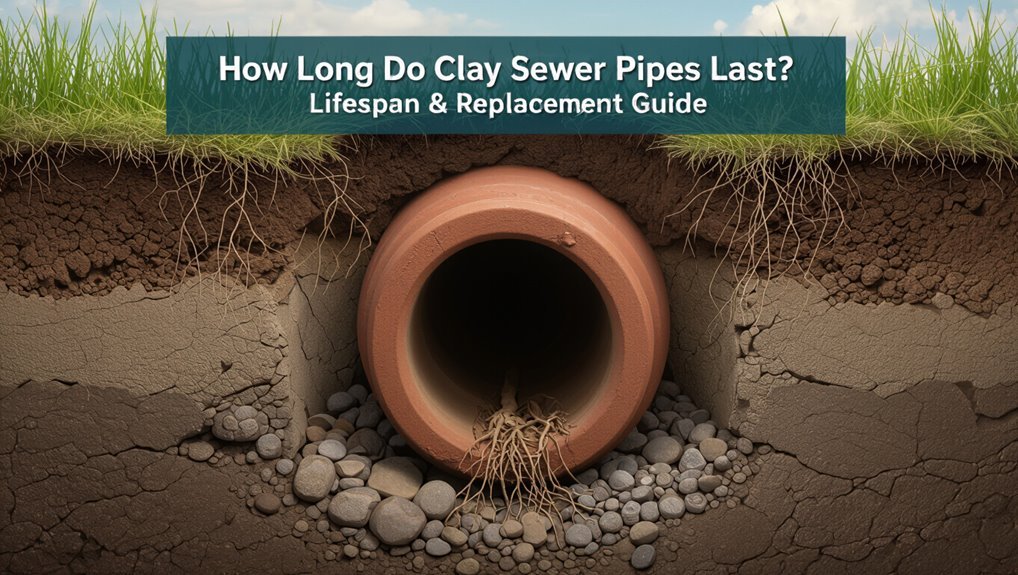
How Long Do Clay Sewer Pipes Last? Lifespan & Replacement Guide
Clay sewer pipes generally have a lifespan of 50 to 100 years. In optimal conditions—such as being buried in stable, non-aggressive soils—some pipes can even last over a century. However, their longevity can be compromised by factors like high groundwater levels, poor bedding, tree root intrusion, chemical exposure, or heavy traffic. Additionally, the durability of these pipes can be influenced by the manufacturing quality and type of joints used.
Key Takeaways:
- Lifespan: 50 to 100 years, with some lasting over 100 years in ideal conditions.
- Factors Affecting Longevity: High groundwater, poor bedding, tree roots, chemical exposure, heavy traffic, and manufacturing quality.
- Common Issues: Cracking, joint separation, and root intrusion.
- Maintenance: Regular inspections, relining, and repairs can help extend the service life of clay sewer pipes.
Clay Sewer Pipe: Definition and Types
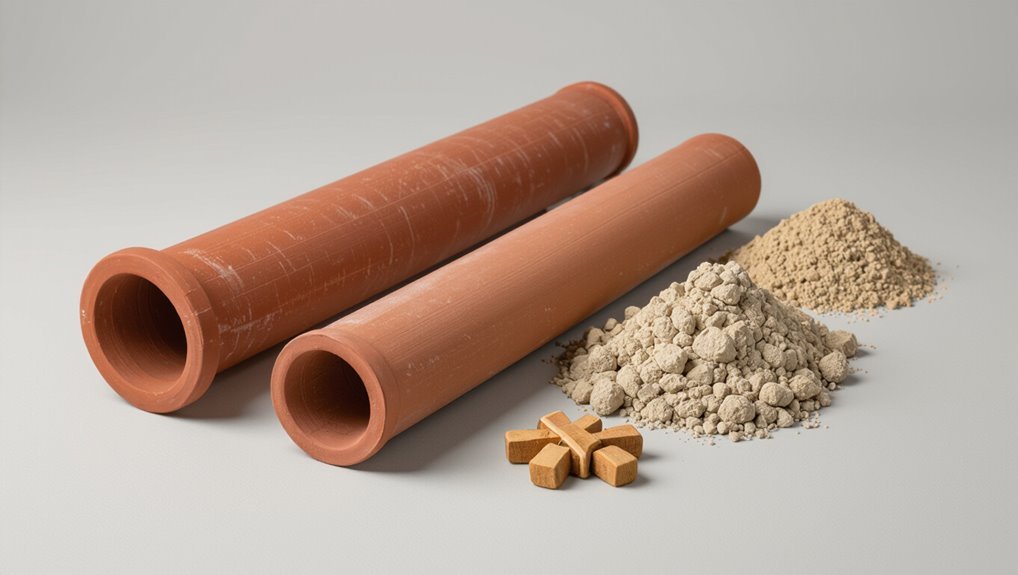
Clay sewer pipe refers to underground drainage conduit made from fired clay, typically formed into rigid, cylindrical sections joined by bell-and-spigot or hub-and-spigot connections.
Manufactured in varying diameters and wall thicknesses, classic types include vitrified clay pipe (VCP) and salt-glazed clay. VCP offers high compressive strength and chemical resistance; salt-glazed surfaces reduce soil adhesion.
Joint types range from mortar-sealed to rubber-gasketed flexible connections.
Sizes commonly serve lateral household lines to main sewers.
Installation practices and bedding affect performance.
Material brittleness and susceptibility to root intrusion distinguish clay from modern alternatives such as PVC or ductile iron.
How Long Do Clay Sewer Pipes Last?
How long can a properly manufactured and installed clay sewer pipe last under typical conditions? Studies and field experience indicate clay pipes commonly last 50 to 100 years, with many reaching beyond a century when soil, load, and water chemistry remain favorable.
Lifespan shortens with aggressive soils, tree root intrusion, poor bedding, or heavy traffic loads. Maintenance, inspection, and timely repairs extend service life; relining can add decades. Conversely, historic low-fired or damaged sections often fail sooner. Predicting individual pipe longevity requires evaluating installation quality, surrounding environment, usage patterns, and documented condition through CCTV inspection and maintenance records.
Why Clay Was Used Historically for Sewers
Having established typical service life and failure factors for clay sewer pipes, the historical reasons for their widespread use become clearer.
Clay offered abundant local raw materials, ease of shaping, and kiln-fired hardness that resisted chemical attack and abrasion better than early alternatives.
Jointing methods and modest installation depth suited gravity sewers in growing towns.
Cost-effectiveness arose from low material cost and simple manufacturing, plus long-term performance that reduced replacement frequency.
Additionally, clay’s inertness minimized odor and contamination concerns.
These practical advantages made clay the preferred choice for sewer systems until newer materials and installation methods emerged.
Manufacturing Eras and Pipe Durability
Clay sewer pipe durability varies with production methods used across different eras. Early 20th century production relied on hand-formed and less-fired clay, which affected uniformity and strength.
Midcentury manufacturing introduced mechanization and glazing, while modern ceramic processes further improved density, consistency, and resistance to chemical attack.
Early 20th Century Production
In the early 20th century, mass production techniques and regional manufacturing variations shaped the durability of vitrified sewer pipe, with factories adopting differing clay compositions, firing temperatures, and glazing practices that directly influenced longevity.
Production emphasized uniformity but tolerances varied; some plants used higher kaolin content and prolonged firing, producing harder, less porous walls. Other operations economized fuel, yielding softer, more fracture-prone products.
Joint designs were mostly bell-and-spigot with leaded joints, affecting infiltration risks.
Transportation and installation practices of the era also impacted service life.
Surviving examples show that material selection and process control were primary determinants of long-term performance.
Midcentury Manufacturing Changes
By the mid-20th century, shifts in raw-material sourcing, mechanization, and quality control reshaped vitrified sewer pipe production and its resulting durability. Factories adopted continuous extrusion and tunnel kilns, increasing consistency and reducing voids. Standardized clay blends limited impurities that previously promoted soft spots and early failure.
Mechanized glazing and firing cycles improved surface vitrification, enhancing abrasion and root resistance without yet reaching later ceramic formulations. Inspection protocols and emerging industry standards curtailed variance between batches, producing pipes with more predictable lifespans. However, installation practices and joint technology of the era still influenced real-world longevity despite manufacturing advances.
Modern Ceramic Improvements
Modern ceramic advances combined refined raw materials, precise firing control, and engineered glazes to markedly extend vitrified sewer pipe durability.
Production consistency reduced porosity, while controlled vitrification improved strength and chemical resistance; joint designs evolved to limit soil and root intrusion.
Contemporary quality assurance detects defects earlier, and standardized specifications guide installation and inspection practices.
Service life projections now factor improved material properties and modern installation methods, yielding longer, more predictable performance compared with older batches.
- Lower porosity and higher compressive strength increase resistance to loading and frost.
- Enhanced glaze and vitrification improve chemical and abrasion resistance.
- Better QA and standards reduce early failures and variability.
Common Failure Modes in Clay Sewer Lines
Frequently, clay sewer lines fail through a handful of predictable mechanisms that reflect material properties, installation practices, and soil or load conditions.
Cracking from ground movement or frost causes leaks and infiltration.
Joint separation and bell deterioration allow soil intrusion and misalignment.
Root intrusion exploits joints and hairline cracks, causing blockages and progressive breakage.
Abrasion from sediment-laden flow wears inner surfaces, reducing hydraulic capacity.
Chemical attack, especially from hydrogen sulfide and acidic soils, weakens the ceramic matrix over decades.
Point loads or repeated traffic-induced stressing produce brittle fracture.
Once compromised, localized failures propagate, increasing blockage frequency and repair urgency.
How Installation Mistakes Shorten Pipe Life
Improper installation practices markedly reduce the effective lifespan of clay sewer pipes by creating conditions that accelerate mechanical failure and deterioration. Poor bedding, insufficient joint sealing, and improper alignment concentrate stresses and allow infiltration, root entry, and abrasion. Contractors who ignore manufacturer specifications or skip compaction increase point loads and angular deflection. Inadequate backfill or heavy surface loads transmit pressure that clay cannot flexibly absorb, producing cracks and breaks over time.
- Bedding and compaction errors cause uneven support and stress concentrations.
- Faulty jointing permits infiltration and root intrusion.
- Misalignment and surface overloading induce cracking and accelerated wear.
How Soil Type Affects Clay Pipes
Against different earth compositions, clay sewer pipe performance varies markedly because soil properties control external loads, drainage, and chemical exposure.
Dense, compacted clayey soils exert higher lateral pressure, increasing risk of cracking if bedding is inadequate.
Sandy and silty soils shift under cyclic loading, causing settlement and joint misalignment.
Organic-rich or peat soils compress over time, leading to sagging and deflection.
Saline or sulfate-bearing soils promote chemical attack on joints and mortar.
Rocky or coarse-grained soils concentrate point loads, risking abrasion.
Proper material selection, engineered bedding, and periodic inspection mitigate soil-related deterioration and prolong functional service life.
Groundwater, Drainage, and Clay Pipes
Groundwater level influences external pressure and the likelihood of water intrusion into clay sewer pipes.
Surface and subsurface drainage patterns alter where stress and saturation concentrate along a run of pipe.
Interactions between soil moisture and clay expand or contract surrounding soil, affecting joint integrity and long-term stability.
Groundwater Table Impact
When the water table rises near a clay sewer pipe, hydrostatic pressure increases and the risk of external infiltration and pipe displacement grows.
The surrounding saturated soil exerts lateral and upward forces that can stress joints, shift bedding, and allow groundwater to enter through cracks or compromised seals.
Long-term saturation accelerates bedding erosion and promotes chemical interactions that weaken mortar or clay.
Monitoring groundwater levels and ensuring proper pipe bed compaction reduce exposure; however, persistent high tables shorten service life and raise inspection frequency.
Attention to site-specific hydrostatic conditions informs maintenance and timely replacement decisions.
- Assess pressure and infiltration signs.
- Verify bedding integrity and compaction.
- Schedule targeted inspections and repairs.
Drainage Pattern Effects
In areas with varied surface and subsurface drainage, patterning of water flow governs load distribution, erosion pathways, and the likelihood of external infiltration around clay sewer pipes. Drainage patterns concentrate forces unevenly; converging flows raise localized hydraulic pressure and increase scouring risks at joints and bedding. Divergent or well-dispersed drainage reduces focused stress but can expand areas exposed to fluctuating saturation. Surface runoff routes affect trench stability and cover loss, while shallow subsurface drains can redirect flows toward or away from lines. Management of surface grading and stormwater routing mitigates concentrated impacts and prolongs structural integrity.
| Factor | Effect |
|---|---|
| Converging flow | Localized pressure/scour |
| Divergent flow | Broader exposure |
| Surface runoff | Trench erosion |
| Subsurface drains | Flow redirection |
| Grading | Mitigation tool |
Soil Moisture Interaction
Around clay sewer pipes, the interaction of soil moisture, groundwater levels, and drainage dynamics determines both mechanical loads and chemical exposure that drive deterioration. Saturated soils increase hydrostatic pressure, promoting joint separation and root intrusion. Fluctuating groundwater alters buoyancy and cyclic stresses, accelerating cracks. Poor surface drainage concentrates water, raising local moisture and sulfate mobility that attacks clay. Soil chemistry and oxygen availability affect corrosion rates and microbial activity that can dissolve mortar.
- Hydrostatic pressure from saturation causes mechanical strain and joint displacement.
- Groundwater fluctuation induces fatigue and leak pathways.
- Concentrated surface drainage elevates chemical attack and biological degradation.
How Tree Roots Invade Clay Sewer Lines
Tree roots seek moisture and nutrients and will exploit any weakness in clay sewer pipe joints or small cracks to reach the steady water source within. Roots sense wet zones and grow toward hairline fractures, displaced sections, and poorly sealed joints. On contact, roots wedge into gaps, expanding as they thicken and exacerbating misalignment.
Organic debris and mineral deposits provide anchor points, encouraging further invasion. Reduced flow and recurring blockages result, often in the same locations. Detecting root intrusion requires camera inspection; remedies range from mechanical cutting and chemical treatments to pipe relining or replacement when structural integrity is compromised.
How Traffic and Loads Damage Clay Pipes
Root intrusion weakens clay lines at joints and cracks, making them more vulnerable to external pressures from surface loads.
Increased traffic, especially heavy vehicles, transmits dynamic and static loads through pavement to buried clay pipes, causing joint misalignment, cracking, and eventual collapse.
Soil consolidation under repeated loads reduces bedding support, amplifying stress concentrations on brittle clay.
Older installations with shallow cover or poor backfill are most at risk.
Regular inspection and load management reduce sudden failures.
Mitigation includes:
- Limiting heavy vehicle access over sewer alignments.
- Improving bedding and backfill materials.
- Increasing cover depth or using protective encasement.
Chemical Exposure and Clay Pipe Corrosion
Chemical exposure can accelerate deterioration of clay sewer pipes by attacking the glaze and clay matrix, especially at joints, cracks, and areas with compromised mortar.
Acids, alkalis, and certain industrial solvents alter mineral bonds, causing surface pitting and weakening structural integrity.
Hydrogen sulfide-related sulfuric acid formation from biological activity intensifies corrosion within crowns and invert zones.
Repeated chemical assault enlarges defects, promotes infiltration, and shortens service life.
Protective glazes and inert backfill mitigate risks, while source control and pretreatment reduce aggressive effluents.
Regular inspection and targeted repairs address chemically induced damage before collapse or costly replacement becomes necessary.
Freeze–Thaw Effects on Clay Lines
In regions subject to seasonal freezing, repeated freeze–thaw cycles impose mechanical stresses on clay sewer lines as water trapped within pores, joints, or cracks expands upon freezing and contracts on thawing.
Such cycling accelerates microfracture growth and can dislodge bedding or backfill, reducing structural integrity over time.
- Surface spalling and hairline cracks form first, increasing infiltration and soil intrusion risk.
- Progressive fracture widening follows, lowering load-bearing capacity and raising collapse potential under traffic or frost heave.
- Cumulative damage shortens service life, making monitoring and timely rehabilitation essential to prevent sudden failures.
Why Joint Type Matters in Clay Sewers
Joint type influences how a clay sewer resists infiltration, movement, and root intrusion over time.
Socket-and-spigot seals offer flexible connections that can accommodate slight shifts but may be more prone to leaking if seals age.
Cemented or mortared joints create rigid, durable bonds but can crack under ground movement, affecting long-term performance.
Socket-And-Spigot Seals
Among clay sewer connections, socket-and-spigot seals are the most common means of joining sections, and their condition directly affects leakage, infiltration, and long-term pipeline alignment.
These joints rely on a fitted spigot entering a socket with a compressible seal or simple tight fit; deterioration, misalignment, or missing seals accelerates failure and allows soil, roots, and groundwater access.
- Material compatibility — original clay sockets paired with early rubber or rope seals show varied longevity and failure modes.
- Installation quality — correct seating and alignment prevent point loads and uneven wear.
- Inspection access — visible gaps or displacement indicate impending leaks and need targeted repair.
Cemented Or Mortared Joints
With mortar or cement bonding pipe ends, cemented or mortared joints create a rigid connection that alters how loads and movement transfer through a clay sewer line.
This rigidity reduces relative motion at joints, limiting infiltration and root entry but concentrating stresses within pipe barrels and surrounding bedding.
Historically used to stabilize alignments or repair breaks, mortared joints resist minor settlement yet can crack under differential movement or freeze-thaw cycles.
Repair or replacement becomes more complex because bonded sections behave as continuous spans.
Inspection and design must account for decreased flexibility, potential for brittle failure, and the need for controlled bedding and load distribution.
Pipe Diameter, Wall Thickness, and Longevity
In evaluating clay sewer pipe longevity, pipe diameter and wall thickness are primary structural factors that determine resistance to external loads, internal abrasion, and chemical attack. Larger diameters may distribute loads differently, while thicker walls provide greater structural margin against cracking and excavation pressures. Manufacturers specify wall classes; selection should match expected soil loads and traffic. Proper bedding remains essential but is separate.
- Thicker walls: increase lifespan by reducing fracture risk under surcharge and settlement.
- Larger diameters: can alter load paths and require adequate support to prevent deformation.
- Specified wall class: guarantees design aligns with site conditions and codes.
Slope, Flow Rates, and Internal Wear
Beyond structural dimensions, hydraulic factors govern how quickly abrasive solids and corrosive constituents contact pipe surfaces. Flow velocity, established by slope and volume, determines shear stress and settling; low velocities promote deposition, high velocities increase abrasion. Uneven gradients create surges that strip joints and wear invert surfaces over decades. Maintenance frequency and load variability modulate cumulative damage rates, influencing effective lifespan more than nominal material ratings.
| Factor | Effect on Wear | Mitigation |
|---|---|---|
| Slope | Controls velocity and deposition | Design for minimum self-cleansing speed |
| Flow variability | Causes intermittent high shear | Regulate peak discharges and monitor |
Early Signs of Clay Pipe Failure
Often detectable well before total collapse, early signs of clay sewer pipe failure manifest as progressive, localized changes rather than sudden catastrophes.
- Cracks and displaced joints: small fissures, offset segments, and visible misalignment in exposed runs indicate structural weakening and soil movement around the pipe.
- Root intrusion evidence: root tangles, entry points at joints, and localized erosion inside the barrel reveal compromised seals and gradual penetration risks.
- Wet spots and subsidence near the line: localized dampness, sinkage, or depressions above the pipe suggest leaks, washouts, and loss of bedding support requiring prompt assessment.
What Slow Drains and Backups Mean
Slow drains and occasional backups signal more than routine clogging; they can indicate partial loss of flow capacity in a clay sewer line due to buildup, offset joints, or early collapse. Observations of slow emptying, gurgling fixtures, or recurring backups point to progressive obstruction or misalignment that reduces slope and flow. These symptoms often precede full failure and suggest intervention is needed to assess pipe integrity. Timely professional evaluation can distinguish surface clogs from structural issues, guiding repair or replacement decisions to prevent costly collapses and property damage.
| Symptom | Likely Cause | Urgency |
|---|---|---|
| Slow drains | Buildup/scaling | Medium |
| Gurgling | Partial blockage | Medium |
| Recurring backups | Offset joints/collapse | High |
How to Inspect Clay Sewer Pipes Yourself
Noticing slow drains, gurgling, or recurring backups should prompt a homeowner to inspect their clay sewer line before problems escalate. A visual and basic functional check can reveal signs of collapse, root intrusion, or persistent blockages. Follow simple, safe steps and stop if hazards or uncertainty arise.
- Examine exposed sections in basements or cleanouts for cracks, displacement, or misaligned joints; note odors and damp soil nearby.
- Use a hand-held drain auger to clear minor blockages, observing debris type and resistance to gauge severity.
- Run successive water tests at fixtures to identify affected zones and document findings for records.
When to Hire a Professional Camera Inspection?
Persistent or recurrent blockages that resist standard cleaning often indicate problems beyond surface clogs and warrant a professional camera inspection.
Similarly, signs of structural pipe damage—such as collapse, offset joints, or extensive root intrusion—require video assessment to determine severity and repair options. A camera inspection provides definitive evidence to guide appropriate remediation for both conditions.
Visible Recurrent Blockages
Frequently, recurring visible blockages in drains signal underlying issues that basic snaking cannot resolve. A professional camera inspection helps identify causes that repeat despite clearing, such as chronic intrusions, collapses, or misaligned joints. Visual confirmation guides targeted repairs and prevents wasted effort on temporary fixes.
- Confirm obstruction source: roots, debris buildup, or foreign objects visible on camera footage.
- Assess blockage pattern: recurring location and frequency indicate persistent problems beyond surface clearing.
- Guide intervention choice: inspection determines whether localized cleaning, root treatment, or pipe section replacement is appropriate.
Structural Pipe Damage
Schedule a professional camera inspection when signs point to structural pipe damage rather than a simple clog. Visible sinkholes, persistent offsets, foul odors despite clearing, or repeated collapses indicate fractures, joint separation, root intrusion, or bellied sections.
A camera reveals crack patterns, collapsed segments, misalignment, and root masses, guiding repair choices—spot repair, relining, or full replacement. Homeowners benefit from documented images for accurate estimates and insurance claims.
Technicians assess pipe material, depth, and surrounding soil to recommend durable solutions. Prompt inspection prevents worsening damage, reduces repair scope, and assure any intervention matches the pipe’s structural condition and lifespan.
What a Sewer Camera Report Should Include
In evaluating clay sewer pipe condition, a camera report should present a clear, objective summary of findings, including pipe material and dimensions, exact location and orientation of defects, photographic or video evidence with time stamps and distance markers, and a prioritized list of recommended repairs or maintenance actions.
The report should quantify defects (cracks, offsets, ovality), note service line connections and joint condition, and assess flow impediments without interpreting root causes.
It should state inspection equipment and operator, limit of visual reach, and risk ranking for urgency.
Clear, actionable recommendations enable informed decisions about repair, lining, or replacement.
- Defect catalog with locations and severity
- Visual media with metrics and notes
- Prioritized actions and inspection metadata
Interpreting Root Intrusion on Camera
Camera footage is examined for visible root density to assess how heavily vegetation has colonized the line.
Observers note pipe cracking patterns that indicate whether roots exploit seams or structural failures.
Root penetration depth is measured to determine the severity of intrusion and guide repair or remediation decisions.
Visible Root Density
Frequently, visible root density on an inspection recording offers the clearest indicator of how extensively vegetation has infiltrated a clay sewer line.
Observers gauge severity by coverage, thickness, and growth patterns; dense mats suggest long-term intrusion and higher blockage risk.
Cameras reveal whether roots hug joints, penetrate mortar, or form isolated tufts.
- Coverage: percentage of pipe circumference obstructed shows functional loss and cleaning frequency needed.
- Thickness: root bundle diameter suggests age and structural pressure on clay segments.
- Pattern: continuous bands versus spotty growth informs likely entry points and targeted remediation.
Pipe Cracking Patterns
Examine cracking patterns to distinguish where roots are exploiting weaknesses versus where fractures arose from external forces. Analysts review CCTV footage for hairline radial cracks radiating from joints or repairs—common signs of root seeking entry at mortar gaps.
Irregular, jagged fissures with soil displacement suggest external loading or ground movement. Repeated, localized scarring along a seam indicates chronic root abrasion rather than sudden impact.
Darkened edges and organic filaments protruding into gaps corroborate botanical origin. Technicians note crack orientation, continuity, and surrounding deposits to prioritize targeted root removal, sealing, or pipe section replacement based on likely causation and progression risk.
Root Penetration Depth
Building on crack-pattern interpretation, analysts next assess how far roots have advanced into the pipe to gauge repair urgency and method. Camera footage quantifies intrusion length, density, and anchoring points; shallow tangles often indicate recent invasion, while deep, dense masses signal long-term breach and potential joint displacement. Measurement informs whether chemical treatment, targeted cutting, sectional replacement, or full relining is appropriate.
Inspection reports note root origin direction, penetration depth from the nearest joint, and whether roots re-enter after clearing — critical for prioritizing lateral repairs and surface vegetation management to prevent recurrence.
- Measure intrusion length and density.
- Identify anchoring and joint displacement.
- Recommend targeted remedy level.
Evaluating Cracks, Offsets, and Fractures
Identify and classify visible cracks, offsets, and fractures to determine their cause, extent, and urgency for repair. Inspectors document hairline fissures, longitudinal splits, circumferential breaks, and joint separations, noting size, location, and associated infiltration. Small surface cracks may indicate aging; wide gaps or misaligned joints suggest ground movement or loading.
Use CCTV imaging and probing to assess structural compromise and flow disruption. Determine whether repairs can be local (patching, relining) or require section replacement. Prioritize defects causing leakage, blockage risk, or progressive deterioration. Record findings, recommend monitoring intervals, and estimate remediation timelines and costs.
How Bellies and Collapses Form in Clay Lines
Bellies and collapses in clay sewer lines develop when supporting soils shift, erode, or compact unevenly, causing sections of pipe to lose alignment and sag or fracture under their own weight and external loads. Soil washout around joints, sustained surface loads, tree root intrusion, and freeze-thaw cycles exacerbate weakened bedding.
Over time small deflections concentrate stress, promoting joint separation and sectional collapse. Observable signs include persistent low spots, sewage pooling, and increased infiltration. Remediation often requires excavation and realignment or replacement of compromised segments, with attention to bedding and backfill to restore uniform support and prevent recurrence.
- Soil erosion undermines bedding and creates voids.
- Differential compaction induces sagging and bellies.
- External loads and roots accelerate fractures and collapse.
How Often to Schedule Clay Pipe Inspections
Homeowners should arrange visual inspections of clay sewer lines at least once a year to catch early wear or joint issues.
Additional checks are recommended after heavy rain events, when ground movement and increased flow can reveal hidden damage.
A camera inspection is advisable before purchasing a property to identify any existing bellies, cracks, or collapses.
Visual Inspections Annually
Regular visual inspections of clay sewer pipes should occur at least once a year to catch early signs of cracking, joint separation, root intrusion, or mineral buildup before they escalate into major failures.
A yearly check by a homeowner or technician documents surface condition, odor changes, and accessible cleanout status, guiding maintenance and budgeting.
Inspections focus on visible joints, accessible line segments, and manhole rims; photographic records aid trend analysis.
Frequency may increase for older systems or nearby trees.
Prompt minor repairs based on inspection findings prevent costly collapses and extend functional life.
- Inspect joints, visible cracks, and cleanouts.
- Photograph and log findings annually.
- Schedule repairs for early defects.
Post-Heavy Rain Checks
After annual visual checks, inspections should be scheduled promptly after significant rainfall events because clay sewer pipes are more susceptible to infiltration, soil movement, and root activation when the ground is saturated.
Owners should arrange camera inspections or professional assessments within 72 hours of heavy storms if any symptoms appear: slow drains, gurgling toilets, surface pooling, or unusual odors.
For properties on clay-rich soils or near large trees, proactive post-storm checks are recommended even without symptoms.
Documentation of findings and corrective actions helps track progressive degradation and informs timing for repairs or full replacement decisions.
Pre-Purchase Assessments
When should a prospective buyer schedule a clay sewer pipe inspection? A pre-purchase inspection should occur before offer submission to identify defects, potential replacement costs, and negotiation points. Frequency depends on property age and visible symptoms.
- For homes over 50 years: mandate an inspection to check joint offsets, root intrusion, and brittle pipes.
- If the seller reports backups or repairs: request a camera inspection and recent repair records to verify recurring issues.
- For properties near trees or shifting soil: prioritize immediate evaluation; consider follow-up monitoring after heavy weather to assess stability and infiltration risks.
Estimating Remaining Useful Life for a Clay Line
In evaluating the remaining useful life of a clay sewer line, engineers combine inspection data, historical performance, and environmental factors to produce an objective service-life estimate. They quantify defects via video inspection, measuring joint separation, root intrusion, corrosion, and cracking severity.
Soil chemistry, groundwater levels, traffic loading, and freeze–thaw cycles are factored into deterioration models. Maintenance history and frequency of blockages adjust projections.
Probabilistic methods yield a remaining-life range rather than a single figure, expressing uncertainty. Resulting estimates guide planning horizons and budgeting while highlighting sections needing prioritized monitoring to validate or revise predicted service life.
Repair vs Replace: How to Decide
Deciding between repairing and replacing a clay sewer line requires weighing immediate condition, long-term performance, and lifecycle cost. Assessment focuses on crack severity, joint displacement, infiltration, and frequency of failures.
Age and remaining useful life guide choices alongside soil conditions and property plans. Cost comparisons include upfront replacement versus phased repairs and expected service years.
- Repair: suitable for isolated cracks, minimal displacement, and when expected remaining life outweighs replacement cost.
- Replace: favored for widespread deterioration, multiple failures, or when capacity and alignment are compromised.
- Decision: balance inspection data, projected expenses, and disruption tolerance.
Temporary Fixes to Extend Pipe Service
After weighing repair versus replacement, owners sometimes opt for temporary fixes to defer full replacement while managing performance and cost. Common interim measures include localized patching with epoxy or cement mortars, spot relining for short sections, and mechanical point repairs that seal cracks or joints.
Root cutting and cleaning remove immediate blockages and improve flow without altering pipe structure. Temporary supports or bedding adjustments can stabilize sagging segments.
These measures restore function short-term, reduce sewage backups, and buy planning time, but they do not address widespread deterioration; careful monitoring and scheduled inspections remain essential to avoid unexpected failures.
Chemical Root Control for Clay Pipes
Chemical root-killing options for clay sewer pipes range from foams and gels to copper sulfate and herbicidal formulations that target intruding roots.
Selection should consider effectiveness against the specific vegetation, pipe condition, and long-term impacts on soil and plumbing materials.
Application safety guidelines require correct dosages, protective equipment, adherence to local regulations, and precautions to prevent groundwater or landscaping damage.
Chemical Root-Killing Options
Homeowners and plumbers often use root-killing chemicals to manage intrusive tree roots in clay sewer lines, applying targeted herbicides or foaming root killers to dissolve or inhibit regrowth without excavating the pipe.
Chemical options vary by formulation, longevity, and mode of action; selection depends on root species, pipe condition, and desired maintenance frequency.
Benefits include reduced immediate blockage and extended intervals between mechanical cleanings, but chemicals do not repair structural damage already present in clay pipes.
- Copper sulfate: cheap, effective short-term necrosis for small roots.
- Dichlobenil: persistent systemic control for tougher regrowth.
- Foaming herbicides: distribute evenly, cling to roots for better contact.
Application Safety Guidelines
When applying root-killing products in clay sewer lines, practitioners must follow strict safety protocols to protect people, pets, and the environment.
Personnel should wear appropriate PPE—gloves, goggles, and respirators—and avoid skin contact or inhalation.
Products must be used per label instructions, mixed accurately, and applied with equipment that minimizes spills and splashes.
Notify occupants and post warning signs; keep pets and children away.
Prevent runoff into storm drains, wells, or surface water.
Store chemicals in labeled, secure containers and dispose of residues per regulations.
Maintain records of treatments and emergency procedures for exposures or accidental releases.
Mechanical Root Cutting: Pros and Cons
Mechanical root cutting uses rotating blades or cutters inserted into sewer lines to sever intrusive roots, restoring flow quickly and effectively.
It removes blockages without excavation, offering rapid relief and lower immediate cost than full replacement.
However, roots often regrow, requiring repeat interventions.
Cutting can nick brittle clay, risking hairline fractures that worsen over time.
Operators must balance frequency against pipe condition and consider complementary remedies to delay recurrence.
- Pros: fast, cost-effective, minimally invasive.
- Cons: temporary solution, potential for pipe damage.
- Best use: as interim maintenance while planning long-term fixes.
Spot Repairs on Clay Sewer Pipes
Addressing isolated defects through spot repairs can prolong the service life of clay sewer pipes without the expense of full replacement.
Technicians locate fractures, displaced sections, or small bell joint leaks via camera inspection, then excavate minimal areas to access the problem.
Repairs commonly include section replacement, short pipe inserts, joint sealing with approved mortars or elastomeric materials, and targeted brickwork restoration in older systems.
Advantages include lower cost, faster completion, and preservation of surrounding landscaping.
Limitations involve recurring issues near the repair, difficulty addressing extensive corrosion or misalignment, and the need for thorough inspection to secure long-term effectiveness.
Trenchless Relining (CIPP): What to Expect
If spot repairs are insufficient or multiple defects recur along a run, trenchless relining using cured-in-place pipe (CIPP) offers a less disruptive alternative to open excavation. Technicians inspect and clean the host clay pipe, invert or pull a resin-saturated liner into place, then cure it to form a seamless new pipe within the old.
Performance depends on host pipe alignment, defect size, and proper curing. Expected lifespan often matches or exceeds several decades when installed correctly.
Typical considerations include:
- Inspection and cleaning requirements
- Resin type and curing method
- Access points and cost implications
Pipe Bursting to Replace Clay Sewer Lines
Pipe bursting offers a trenchless option to replace failing clay sewer lines by fracturing the old pipe and pulling in a new one.
It is most effective where existing soil conditions and line alignment allow access pits and where the clay is too damaged for relining.
Costs and practical considerations — including pipe material choice, excavation needs, and surface restoration — determine whether pipe bursting is the economical choice.
When Pipe Bursting Works
When clay sewer lines are structurally compromised but largely aligned and accessible, pipe bursting can be an efficient replacement method; it fractures the old clay while simultaneously pulling in a new HDPE carrier of equal or larger diameter, minimizing excavation compared with full open-trench replacement.
It suits runs with continuous access pits, limited surface obstructions, and pipes without severe bends or collapsed sections.
Benefits include preserved landscaping and faster completion.
Limitations involve alignment constraints and required pull spaces.
- Continuous straight runs with intact alignment.
- Adequate access pits and pull length.
- Minimal existing collapses or severe bends.
Costs And Considerations
Having established where pipe bursting is a practical replacement method, attention turns to the costs and site-specific considerations that determine its suitability and total project price. Costs vary with pipe length, diameter, material (HDPE usually), access pits, and urban vs. rural location.
Soil type, obstructions, nearby utilities, and required permits influence mobilization, excavation reduction, and contingency for unexpected obstacles. Landscaping restoration, driveway or pavement removal, and traffic control add expenses. Crew experience and regional labor rates affect bids.
A thorough camera inspection and utility locate minimize surprises; a detailed quote should itemize permitting, materials, labor, and restoration.
Open‑Trench Clay Pipe Replacement Overview
In an open-trench clay pipe replacement, contractors excavate a continuous trench along the pipeline to expose and remove failing sections before installing new pipe, bedding, and backfill. The method suits straight runs and severely damaged lines, offering full access for inspection and precise alignment.
It requires traffic control, surface restoration, and coordination with utilities. Disturbance is greater than trenchless options, but longevity and ease of connecting laterals are advantages.
Typical steps include assessment, removal, and reinstatement; scheduling and permitting are essential. Site conditions and nearby structures determine feasibility and influence sequencing, safety measures, and final landscaping.
- Assessment and permitting
- Excavation and removal
- Installation and restoration
Comparing Repair Costs and Replacement Costs
Open‑trench replacement often prompts owners to weigh repair versus full replacement, because excavation provides a clear picture of pipe condition and failure modes. Cost comparison depends on extent of damage, access, and project scope. Repairs like spot replacement or lining are less disruptive and cheaper short‑term; full replacement carries higher upfront cost but reduces chronic failures. Long‑term value, expected remaining life, and future excavation likelihood inform decisions.
| Option | Typical cost drivers |
|---|---|
| Spot repair/lining | Labor, materials, access |
| Partial replacement | Excavation length, fittings |
| Full replacement | Trench, full pipe run |
| Indirect costs | Landscaping, permits, downtime |
Choosing Replacement Materials: PVC vs Clay
The choice between PVC and clay for sewer replacement hinges on differences in durability and expected lifespan, with each material offering distinct performance over decades.
Installation and upfront cost vary markedly, influencing the decision for homeowners and municipalities.
Long-term maintenance and ease of repair should also factor into material selection to balance lifecycle expenses and serviceability.
Durability And Lifespan
When comparing replacement options, homeowners and contractors weigh expected service life, resistance to common failure modes, and maintenance needs; PVC typically offers 50–100 years of corrosion-free performance under normal conditions, while vitrified clay historically reaches similar lifespans but is more vulnerable to joint displacement, root intrusion, and brittle fracture.
- PVC resists chemical corrosion and is flexible, reducing susceptibility to ground movement and sealing-related leaks.
- Clay resists many corrosive soils and solvents yet depends on intact joints; mechanical impacts and roots exploit weaknesses.
- Expected durability hinges on soil conditions, load exposure, and inspection frequency, informing material choice and lifecycle planning.
Installation And Cost
Choosing between PVC and clay for sewer replacement shifts the focus from lifespan factors to practical aspects of getting a new line in place and the costs that follow.
PVC typically offers lower material cost, lighter weight for easier handling, and faster installation with solvent-weld or gasketed joints, reducing labor hours.
Clay demands heavier equipment and careful bedding, increasing excavation and labor expense; however, its rigidity can suit certain soil conditions.
Long-term cost comparisons should include material price, installation time, required equipment, local labor rates, and any trenchless options like pipe bursting or relining that alter overall project budgets.
Maintenance And Repair
In comparing maintenance and repair needs for replacement materials, homeowners and contractors must weigh how PVC and clay perform over time under real-world conditions. PVC resists root intrusion, corrosion, and chemical degradation, reducing routine remediation. Clay offers longevity and abrasion resistance but is brittle, prone to joint failure, and often requires targeted repairs or relining.
- Repair frequency: PVC typically needs fewer interventions; clay may need spot repairs or joint resealing as soils shift.
- Maintenance complexity: PVC repairs are faster and less specialized; clay work can demand heavier equipment and skilled masons.
- Lifecycle costs: PVC often lowers short-term maintenance spend; clay can outlast when properly maintained.
HDPE vs Clay: Performance and Cost
Although both materials have long service histories, comparing HDPE and clay requires looking at structural performance, hydraulic efficiency, installation costs, maintenance needs, and lifecycle expenses.
HDPE offers flexibility, joint watertightness, and resistance to root intrusion and chemical corrosion, yielding fewer failures in shifting soils. Clay provides rigidity, proven longevity, and abrasion resistance but is brittle and vulnerable to settling and joint leakage.
Hydraulically, HDPE’s smooth interior improves flow.
Installation favors HDPE for trenchless techniques, reducing labor.
Upfront costs for HDPE can be higher per foot but lifecycle costs often lower due to reduced maintenance and repair frequency.
How to Get Accurate Bids for Clay Sewer Work
Accurate bids for clay sewer work begin with a clearly defined scope of work that specifies pipe lengths, access points, necessary demolition, and site restoration.
Contractors should provide detailed line-item estimates breaking costs into labor, materials, equipment, permits, and contingencies. Comparing these itemized bids allows owners to spot omissions, verify assumptions, and make informed choices.
Scope Of Work
When preparing to solicit bids for clay sewer work, a clear, itemized scope of work is essential to assure contractors price the same tasks and conditions. The document should define existing pipe condition, access points, required testing, excavation limits, backfill and compaction standards, traffic control, and site restoration expectations.
Include required permits, inspection schedules, and warranty terms to avoid post-contract disputes. Provide plans, photos, and any CCTV reports to assure uniform interpretation. Use measurable units and acceptance criteria so bids are comparable.
- Existing conditions and limits.
- Required materials, methods, and standards.
- Permits, inspections, and warranties.
Detailed Line-Item Estimates
Break down each task into discrete, measurable line items so bidders price identical work and assumptions.
Specify excavation depth, trench shoring, pipe removal, bedding material type and volume, pipe type and length, jointing method, backfill compaction requirements, surface restoration, and traffic control.
Include unit quantities, access constraints, connection details, inspection and testing, disposal fees, permits, and anticipated contingencies.
Request separate pricing for alternative methods (open cut, trenchless) and for unforeseen conditions like soil remediation or root removal.
Require itemized labor, equipment, and material rates, plus project schedule and payment milestones to enable direct bid comparison and auditing.
How to Pick a Contractor for Clay Sewer Jobs
Choosing the right contractor for clay sewer work requires evaluating experience, licensing, and references specific to clay pipe repair and replacement. Selection should prioritize firms with documented clay pipe projects, clear warranties, and insurance.
Inspect bids for scope, materials, and method—trenchless versus open-cut—without assuming lowest price equals best value. Verify local references and recent photos of completed clay pipe jobs. Confirm timeline, cleanup, and subcontractor use.
- Request itemized bids and clay-specific project histories.
- Check licenses, insurance, and warranty terms; confirm insurance limits.
- Contact references and review before-and-after documentation for similar jobs.
Permits, Codes, and Clay Pipe Replacement
Permits and local regulations often determine whether clay sewer pipe replacement requires formal applications or inspections. Homeowners and contractors should understand typical permit requirements and the permitting timeline before work begins.
Clear steps for demonstrating code compliance—plans, inspections, and approved materials—help assure successful, legal replacements.
Permit Requirements Overview
What rules govern clay sewer pipe replacement and when do they apply? A concise overview clarifies when permits are required, which agencies issue them, and typical documentation. Requirements depend on scope: repairs, full replacements, or relocations trigger different reviews. Local jurisdictions set application fees, inspection schedules, and contractor licensing standards. State environmental agencies may add protections near waterways. Homeowners should consult municipal permit offices or building departments before work begins to avoid penalties.
Typical elements covered include:
- Permit necessity based on project scope and location.
- Required contractor licensing and insurance.
- Inspection points and documentation for approval.
Code Compliance Steps
In managing clay sewer pipe replacement, compliance with building codes and permit procedures guarantees legal, safe, and durable outcomes. The process involves verifying local code requirements, obtaining proper permits before excavation, and scheduling inspections at key milestones. Documentation of materials, methods, and contractor credentials prevents delays and fines. Contractors should follow specified backfill, slope, and joint standards to meet longevity expectations. Final inspection confirms conformity and closes the permit. Record keeping supports future transfers or insurance claims.
| Step | Responsible Party | Purpose |
|---|---|---|
| Permit application | Owner/Contractor | Authorization |
| Inspections | Building Dept. | Verification |
| Documentation | Contractor | Record of compliance |
Typical Clay Sewer Pipe Replacement Costs
When evaluating replacement expenses for clay sewer lines, homeowners typically encounter a wide cost range influenced by pipe length, depth, local labor rates, and whether trenching or trenchless methods are used.
Typical budgets vary from targeted spot repairs to full runs, with material, excavation, disposal, permits, and restoration driving totals.
Regional pricing and access constraints further shift estimates.
- Spot repairs or short sections: lower labor and minimal restoration, often a few hundred to a few thousand dollars.
- Trenching full runs: higher due to excavation, replacement pipe, and landscaping restoration.
- Trenchless replacement: premium for equipment and specialized crews, but reduced surface repair.
Insurance, Warranties, and Clay Pipe Claims
Homeowners should review how insurance policies, manufacturer or contractor warranties, and local regulations intersect to determine coverage and recovery options for clay pipe failures. Claims often hinge on cause: sudden damage may qualify for homeowner coverage, while gradual deterioration usually does not. Warranties can cover workmanship or materials but require proof and timely filing. Document inspections, repairs, and communications. Consult local codes for responsibility distinctions between property owner and municipality. Legal advice may be necessary for disputed claims. Emotional stress is common; clear records and prompt action improve outcomes.
| Fear | Hope | Action |
|---|---|---|
| Uncertainty | Possible reimbursement | File quickly |
| Cost anxiety | Warranty relief | Gather proof |
Budgeting for Clay Sewer Replacement
A clear budget outlines the project cost breakdown, listing inspection, excavation, pipe replacement, permits, and restoration expenses.
Options for financing and loans should be compared for interest rates and terms to match the homeowner’s timeline.
A contingency buffer of 10–20% is recommended to cover unexpected expenses that commonly arise during sewer work.
Project Cost Breakdown
In outlining a project cost breakdown for clay sewer replacement, the key expenses include pipe removal, new materials, excavation, labor, permits, and contingency funds. A clear budget separates fixed costs (permits, inspections), variable costs (material quality, trench length), and indirect costs (site restoration, traffic control).
Cost drivers are site accessibility, pipe diameter, soil conditions, and disposal fees. Accurate estimates reduce overruns; contingency typically ranges 10–20%. Competitive bids and phased work can lower peak expenses. Monitoring progress against the budget enables timely adjustments and efficient resource allocation.
- Site preparation and excavation
- Materials and installation
- Permits, restoration, contingency
Financing And Loans
When facing a clay sewer replacement, property owners should evaluate financing options early to align the project scope with available funds and avoid delays. Financing choices—personal savings, home equity loans, contractor payment plans, municipal programs, or credit cards—should be compared for rates, terms, and impact on cash flow. A clear budget and bids enable informed borrowing decisions. Loan approval timelines can affect scheduling; therefore contingency plans for short gaps are prudent. Documentation of quotes and permits simplifies applications. Prioritizing lower-interest options and fixed payments reduces long-term cost and preserves future repair flexibility.
| Option | Typical consideration |
|---|---|
| Savings | No interest, reduces liquidity |
| Home equity | Lower rates, uses home as collateral |
| Contractor plan | Flexible, may have fees |
| Municipal aid | Subsidized, limited eligibility |
| Credit card | Quick, high interest |
Unexpected Expense Buffer
Several homeowners set aside an unexpected expense buffer equal to 10–30% of the clay sewer replacement estimate to cover hidden costs like extensive pipe collapse, root removal, or required permit changes. This reserve prevents project delays and protects household finances when inspections reveal additional repairs or unstable soil needing stabilization.
Clear documentation of estimates and potential contingencies helps determine an appropriate percentage. Homeowners should compare contractor warranties and insurance to possibly reduce the buffer. Periodic reassessment of the buffer during planning preserves flexibility without overcommitting funds.
- Inspection-driven adjustments
- Contingency versus insurance trade-offs
- Phased funding approach
Minimizing Yard Disruption During Repairs
For homeowners facing clay sewer pipe repairs, careful planning and targeted techniques can preserve landscaping while addressing structural issues.
Contractors assess access points and choose trenchless methods when feasible, minimizing surface disruption.
When excavation is unavoidable, crews isolate root zones, use smaller, strategic trenches, and protect sod with plywood and temporary mats.
Salvageable plants are relocated; topsoil and mulch are stockpiled for precise reinstatement.
Irrigation lines are mapped and capped to prevent damage.
Communication about schedules and restoration steps keeps property owners informed.
Final grading and prompt reseeding restore appearance rapidly, limiting long-term yard disturbance.
Preventing Root Ingress After Repair
Often, preventing root ingress after repairing clay sewer pipe requires selecting durable barriers and employing practices that discourage regrowth at the repair site.
The repair should include root-resistant materials, properly seated joints, and a clean backfill that reduces voids where roots can settle.
Regular inspections and targeted chemical root treatments can suppress reentry without broad vegetation changes.
Contractors may recommend root barriers placed adjacent to the pipe to redirect growth.
- Install impermeable root barrier panels or sleeves around repaired sections.
- Make compacted, root-unfriendly backfill and sealed joints.
- Schedule periodic camera inspections and targeted herbicide application.
Landscaping to Protect Your Sewer Line
After repairing and protecting a clay sewer line against root ingress, attention should turn to landscaping choices that reduce future risk and simplify maintenance. Homeowners should select shallow-rooted plants, maintain clear access paths for inspections, avoid planting trees near lines, and use mulch beds or decorative rock to discourage deep roots. Proper grading prevents pooling that can accelerate pipe deterioration. Surface irrigation and drip systems minimize subsurface moisture. Professional advice guarantees plant selections suit local soils and climates, balancing aesthetics with infrastructure protection.
| Strategy | Benefit |
|---|---|
| Shallow-root plants | Reduced root intrusion |
| Mulch/rock beds | Discourage deep roots |
| Clear access paths | Easier maintenance |
| Drip irrigation | Less subsurface moisture |
Monitoring a Repaired or Relined Clay Pipe
Regular inspections are essential to make sure a repaired or relined clay sewer pipe remains watertight and free of new intrusions. Periodic camera inspections, surface checks for soggy spots or sinkage, and monitoring flow rates detect early issues.
Owners should document findings and track changes over time, coordinating with a plumber for anomalies. Warranty terms often require scheduled inspections; adherence preserves coverage. Small defects may be addressed with spot repairs or localized relining before escalation.
- Schedule camera inspections annually or after heavy storms.
- Log surface indicators and compare quarterly.
- Engage a licensed plumber for any deviation.
When Full Replacement Becomes Unavoidable
Recognize the structural and functional limits of repairs: full replacement becomes unavoidable when repeated failures, extensive root intrusion, severe bellied or collapsed sections, widespread corrosion or joint separation, or persistent infiltration/exfiltration undermine flow capacity and structural integrity.
Decision criteria include frequency and cost of temporary fixes, extent of irreparable damage revealed by inspection, and risk to nearby structures or public health.
Replacement is recommended when rehabilitation cannot restore hydraulics or load-bearing capacity, when defects are pervasive along long runs, or when unpredictable failures would impose chronic disruption.
Contractors should document findings, present alternatives, and plan staged replacement to minimize service interruption.
Documenting Clay Pipe Condition for Resale
Documenting clay sewer pipe condition for resale requires clear, verifiable records that convey current performance, defects, and the scope of any repairs.
The seller should compile inspection reports, camera footage timestamps, and repair invoices.
Neutral summaries note material, remaining serviceability, odor or blockage history, and recommended actions.
Disclosures must match local disclosure laws and be appended to the transfer documents.
Buyers value objective evidence over anecdote; professional evaluations enhance credibility.
Digital copies and labeled still images simplify review.
Maintain chain-of-custody for records and guarantee accessibility during due diligence.
- Inspection report with camera images
- Repair invoices and warranties
- Disclosure statement and attachments
Conclusion
In the grand bureaucratic romance between homeowners and clay sewer pipe, longevity is a slow-motion soap opera: century-old cylinders sulk beneath roses, patched with hopeful epoxy and a prayer. Satirically, the pipe’s valiant fractures become family heirlooms, listed in real estate disclosures alongside “quaint original features.” When relining fails and replacement arrives, the clay’s obituary reads noble: served dutifully, retired with landscaping strewn across its eulogy, and forwarded to the sewerage afterlife.